Heriz rugs originate from the mountainous region of East Azerbaijan in the Middle East, specifically from the area surrounding the town of Heriz. This region has a long-standing reputation for producing some of the most durable and architecturally designed floor coverings in the world, often celebrated for their bold, rustic elegance.
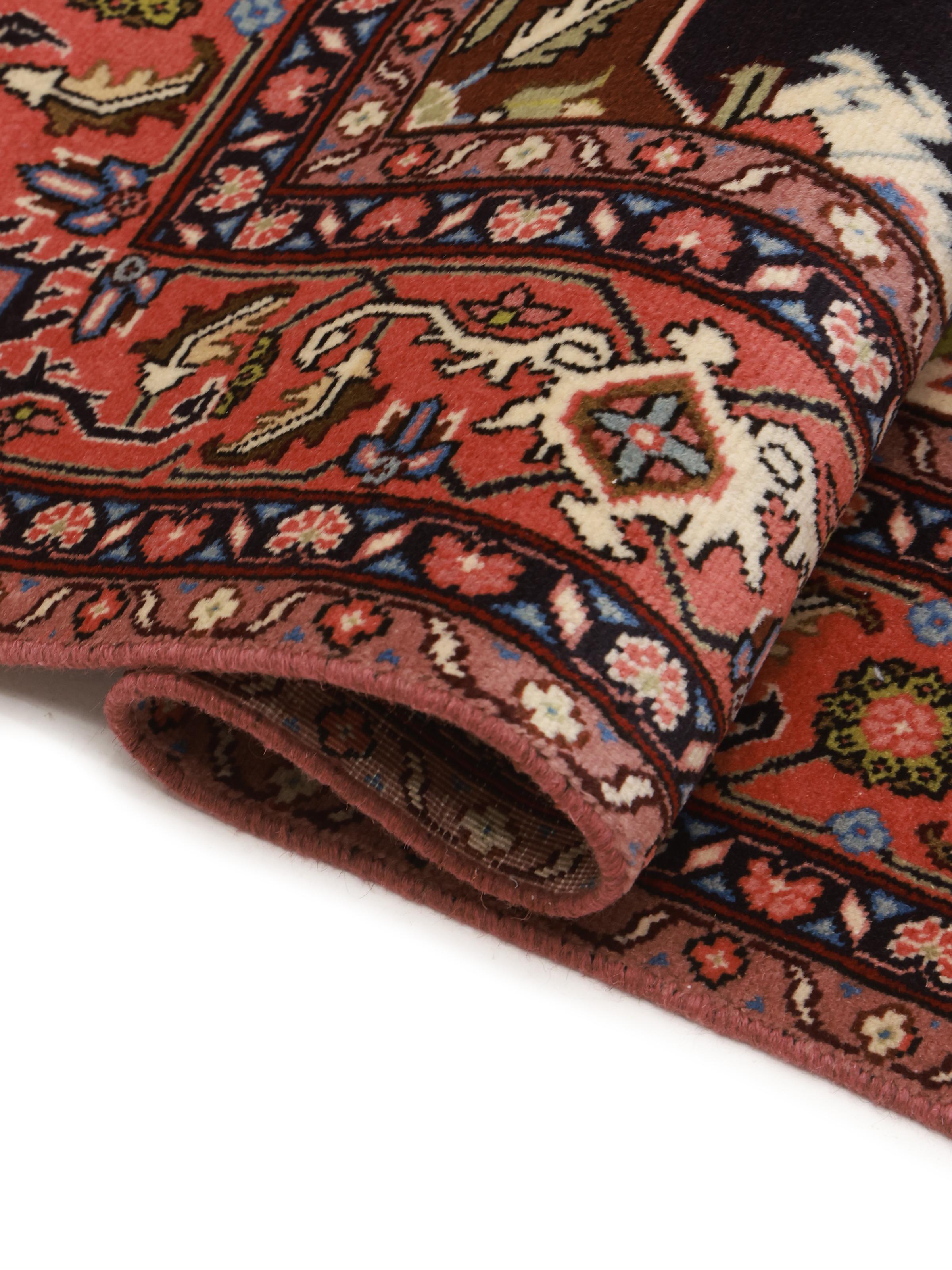
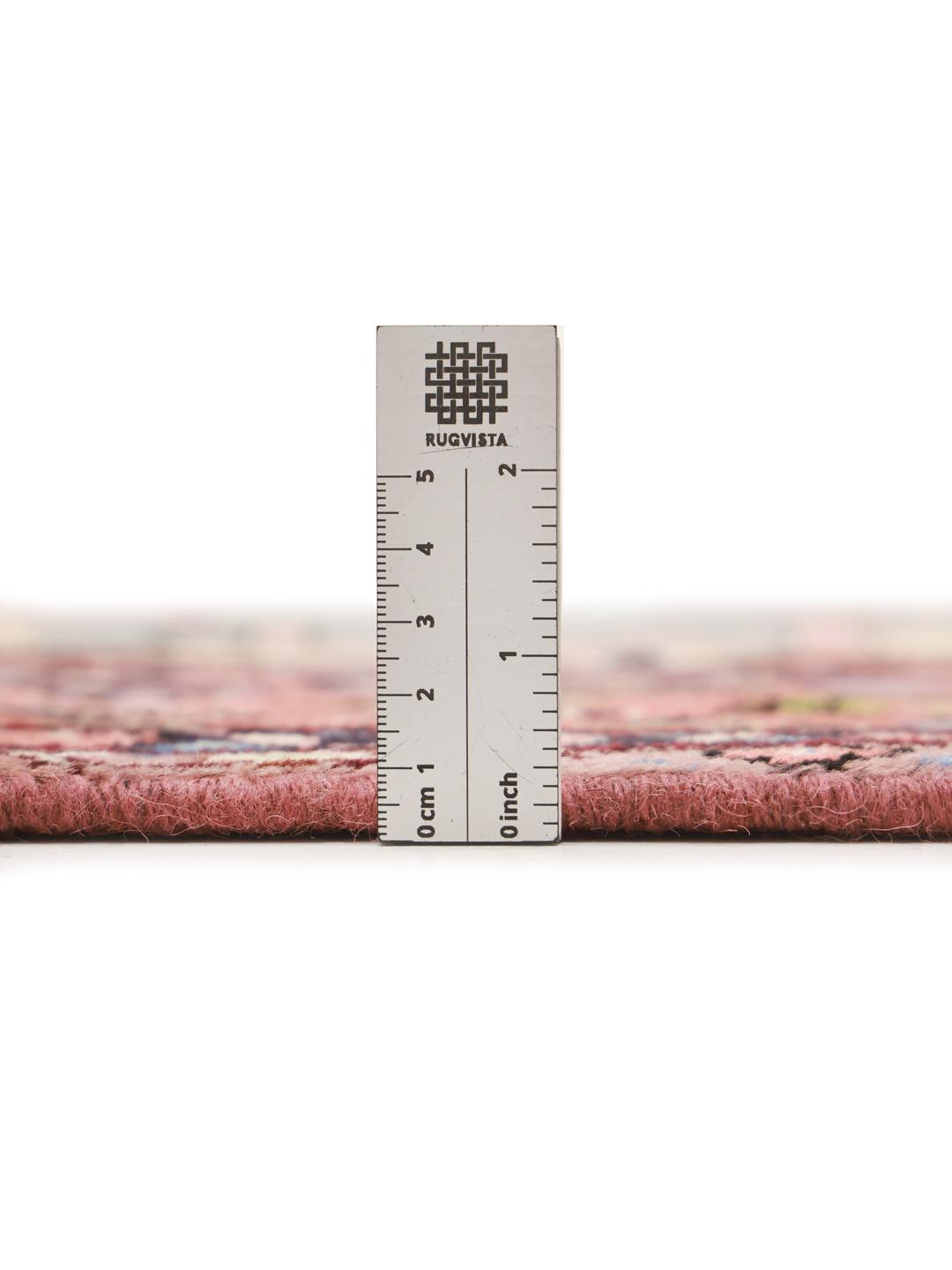
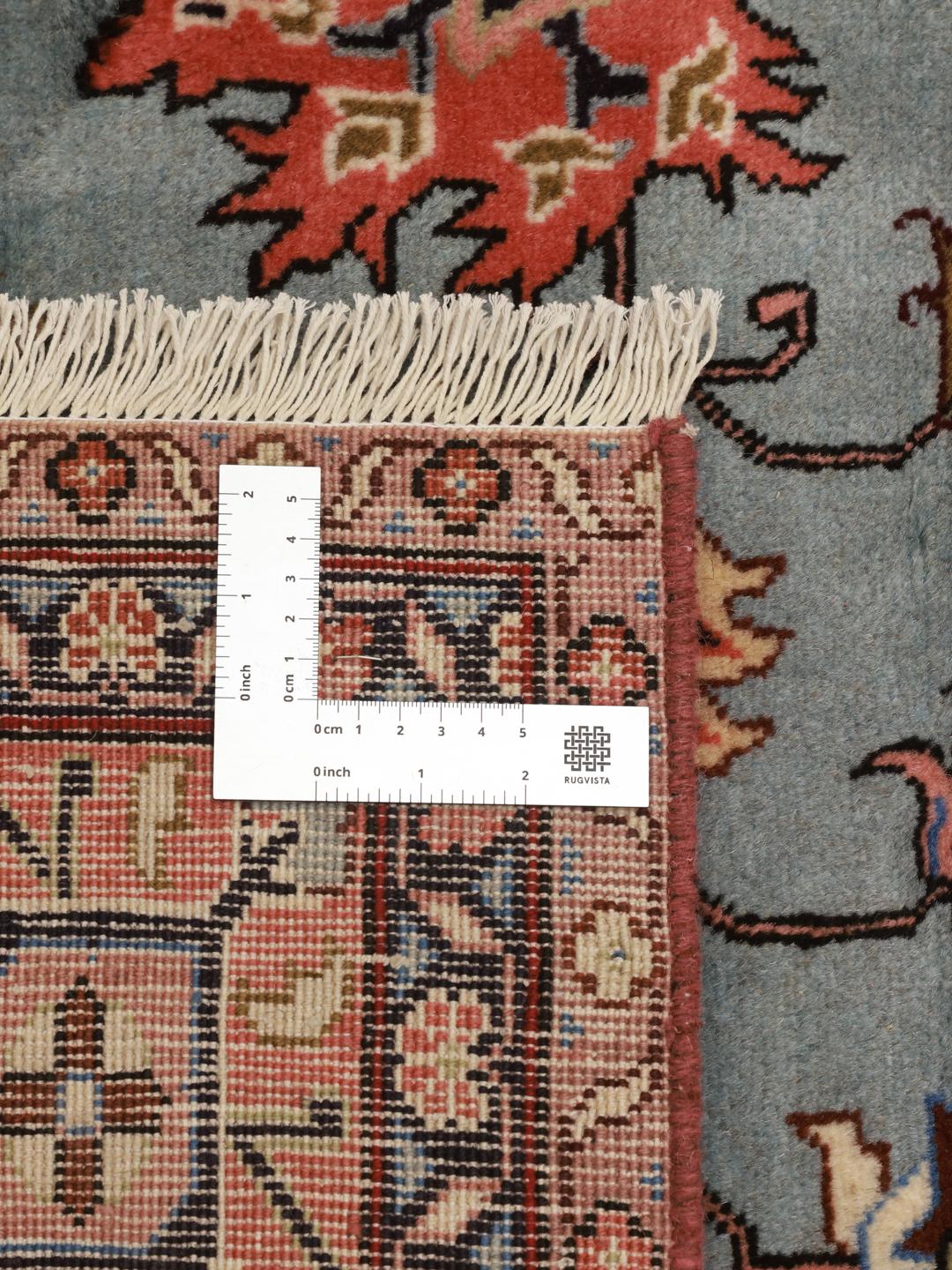
The construction of a Heriz rug is distinct, often utilising a sturdy cotton foundation that provides a firm base for the wool pile. This combination is intentional, designed to create a rug that is both heavy and resilient, capable of lasting for generations. The knotting technique used here is essential for maintaining the clarity of the large-scale geometric patterns that define the style.
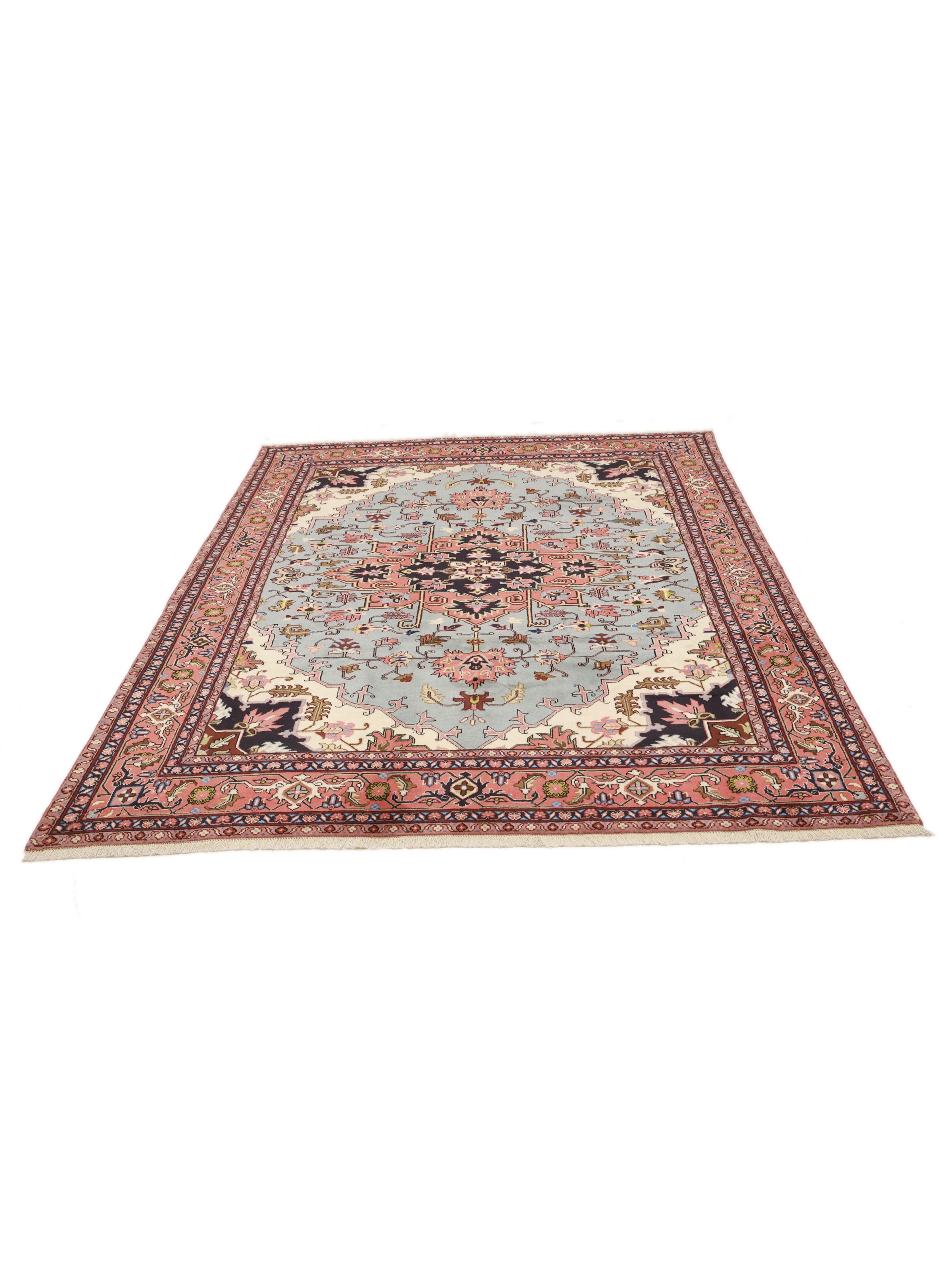
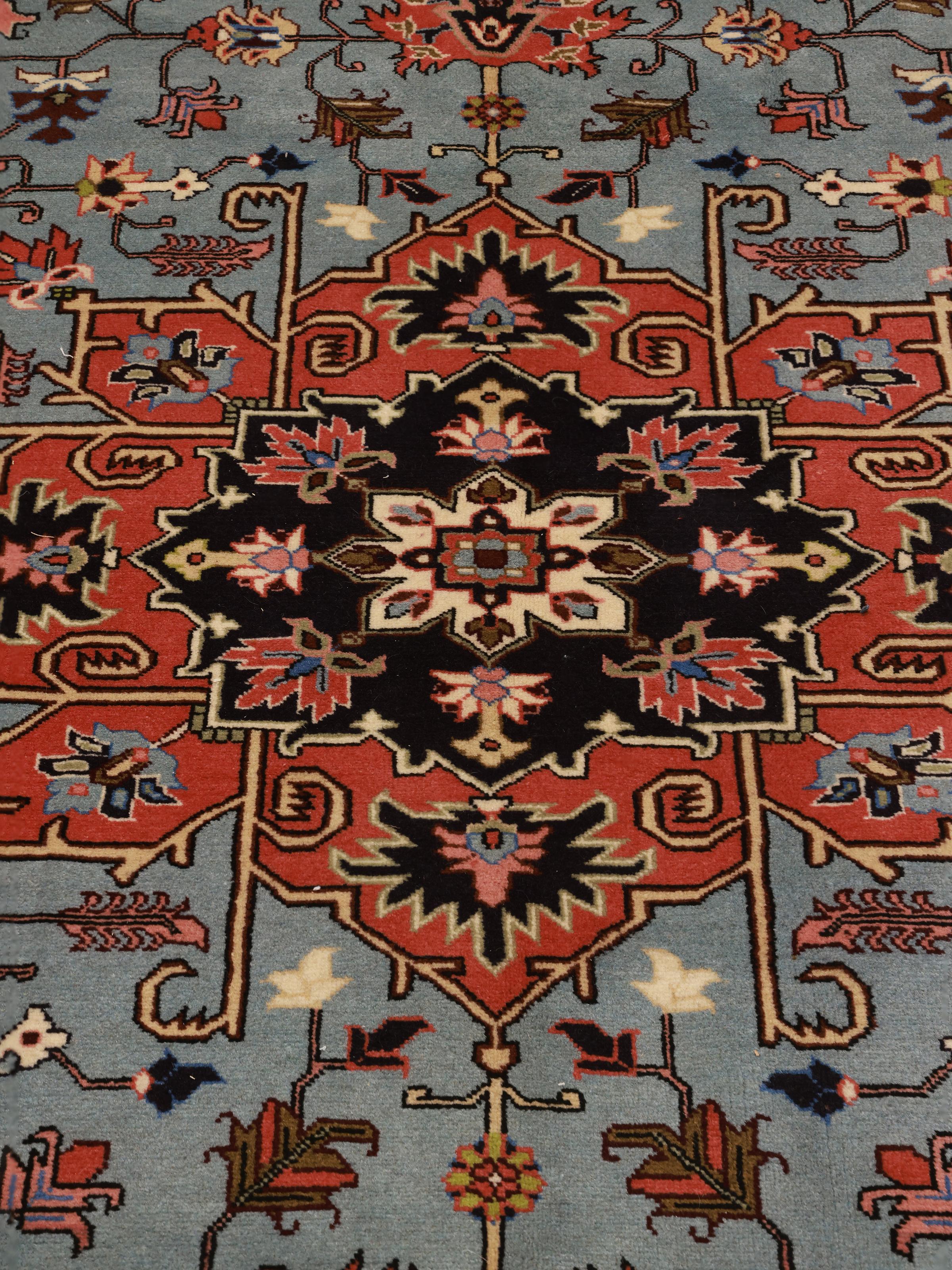
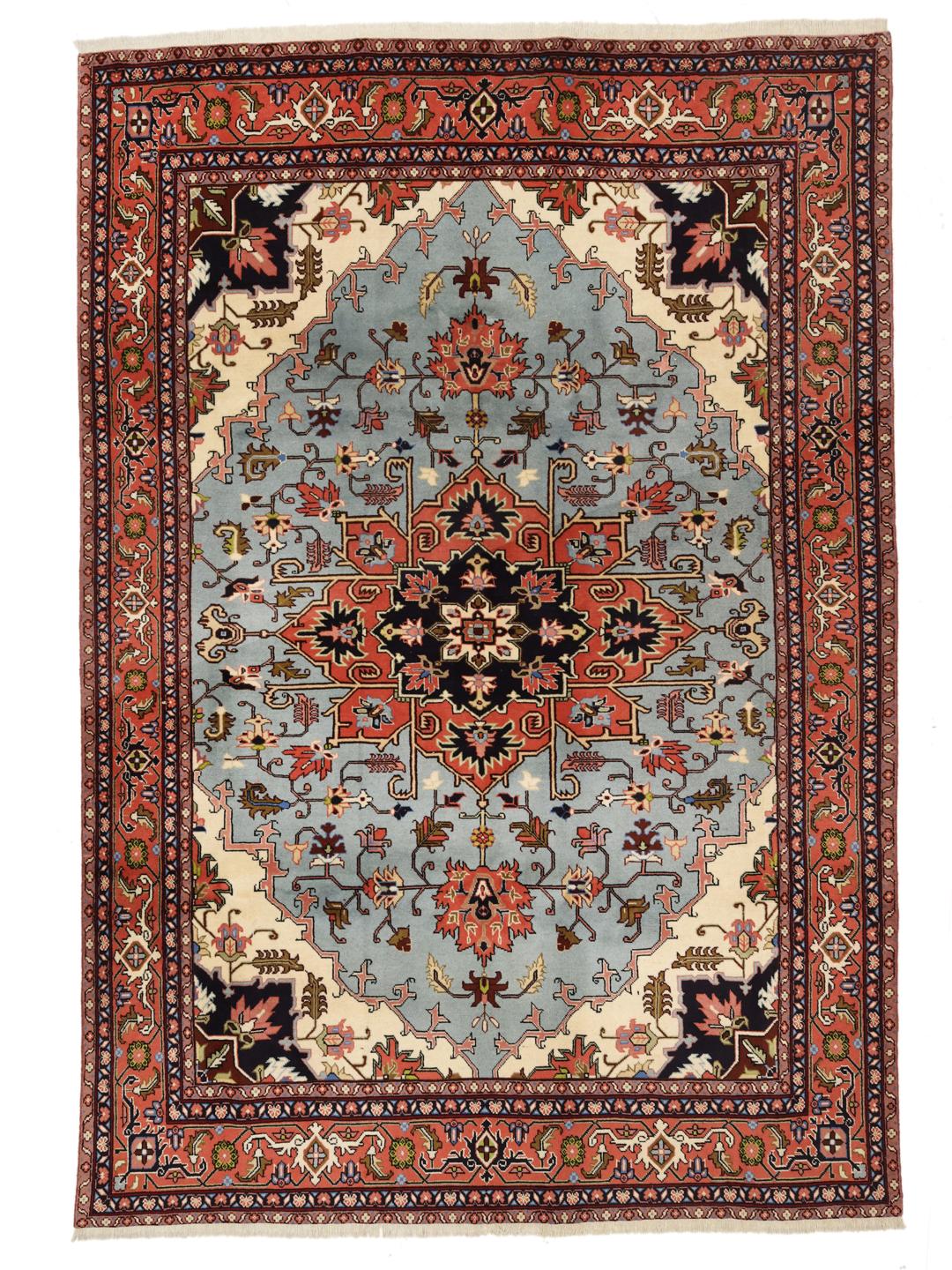
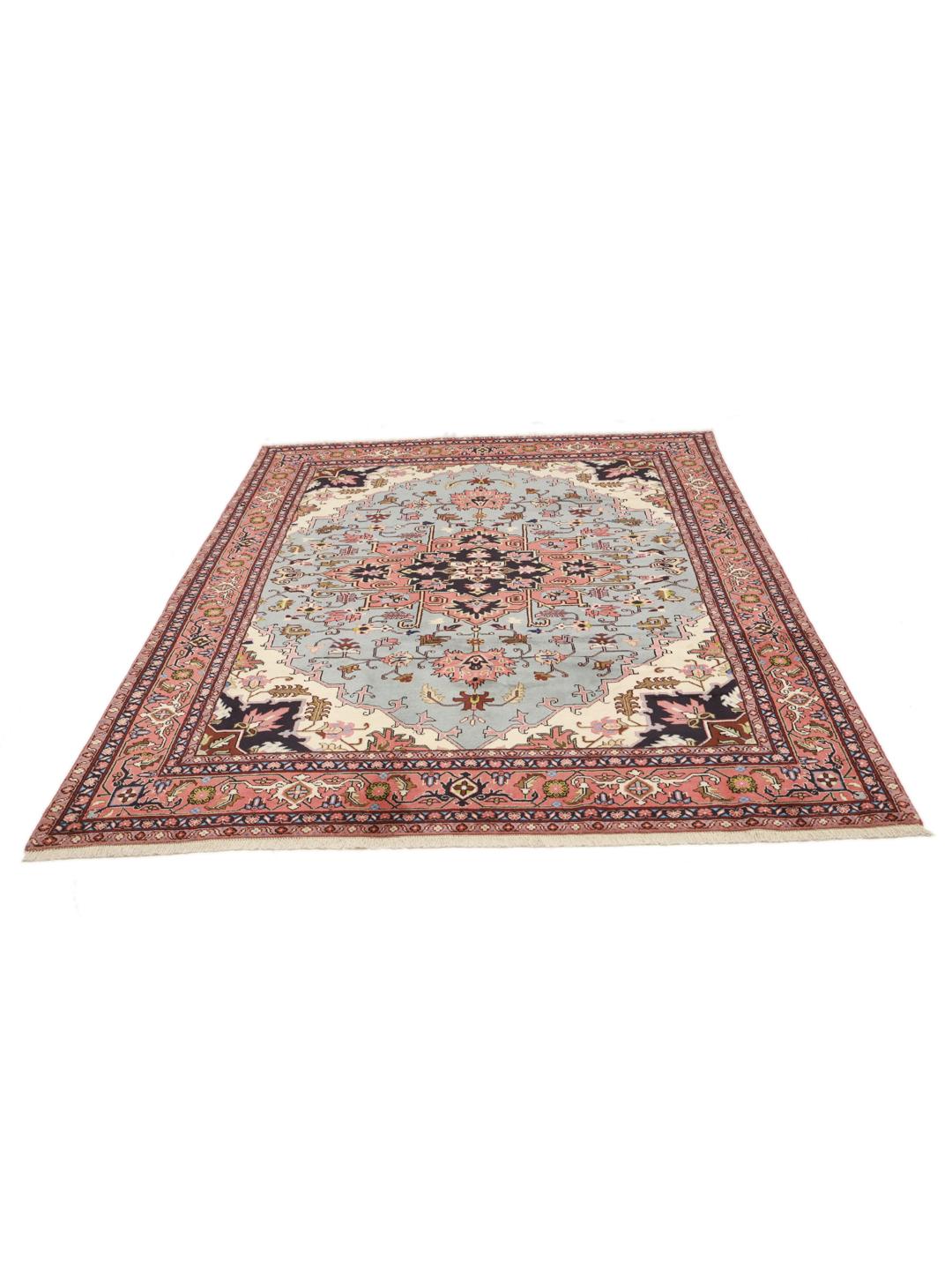
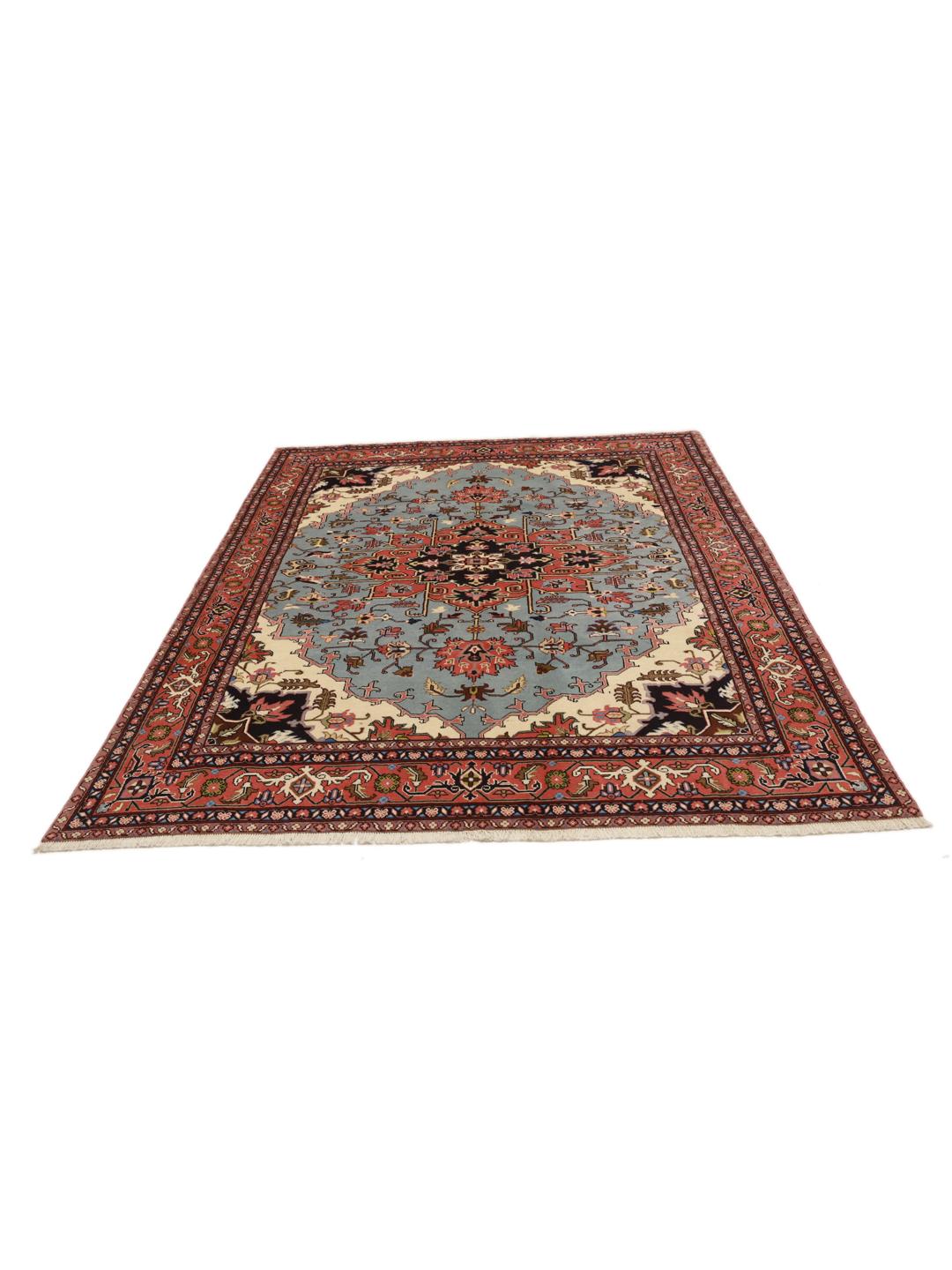
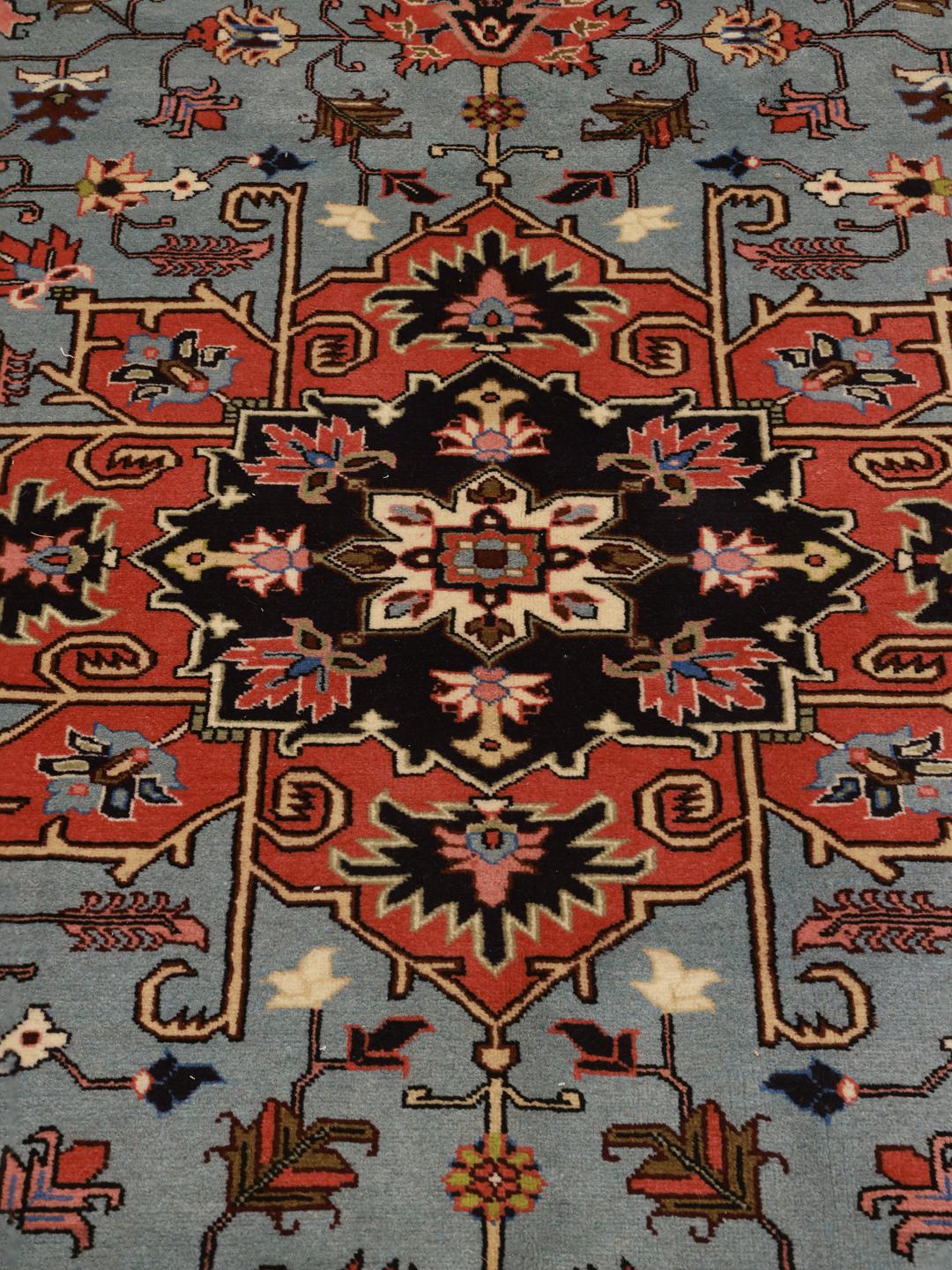
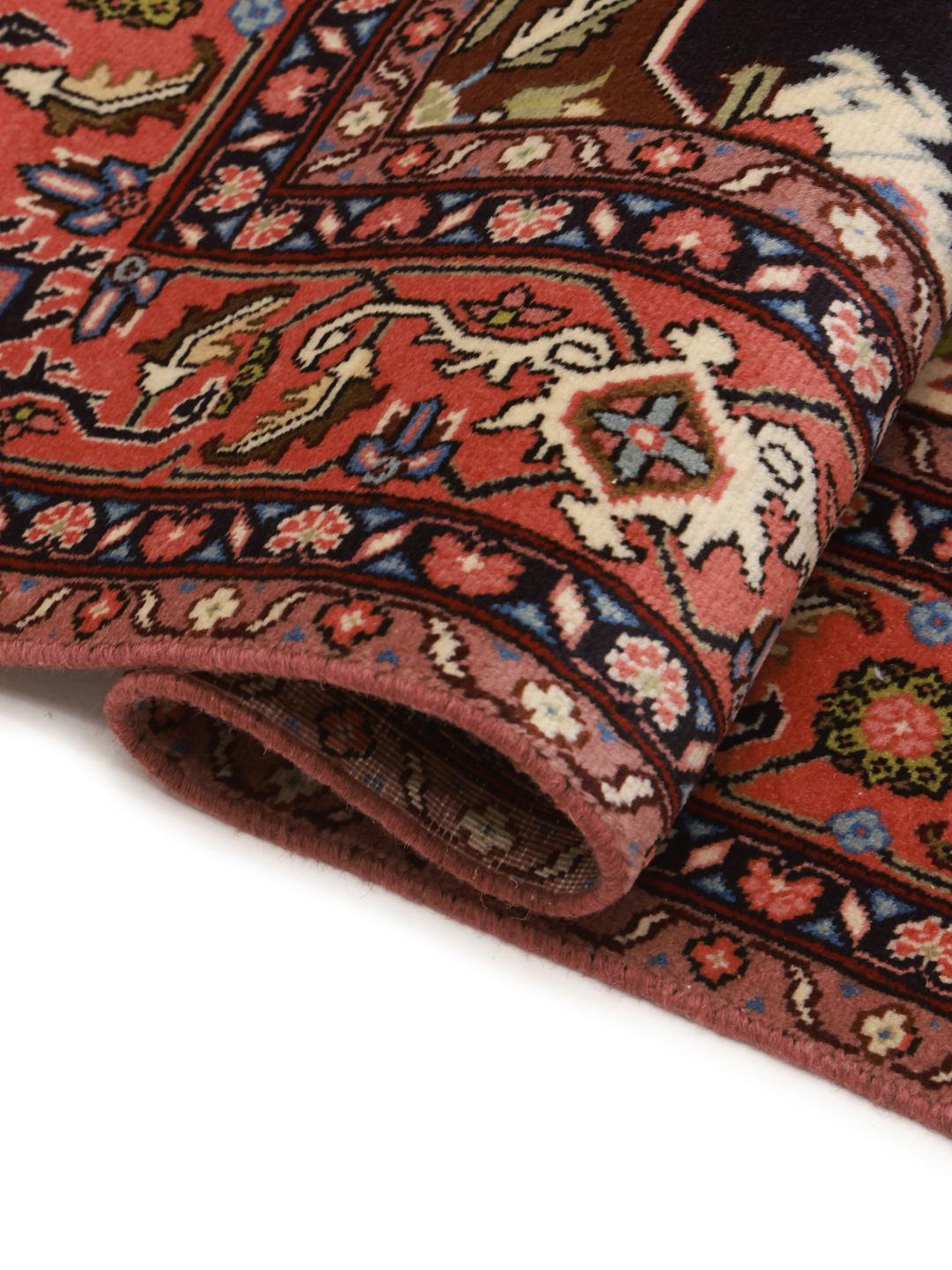
Visually, these rugs are synonymous with the large, angular central medallion, often surrounded by stylized floral motifs and intricate vine work. The borders are typically broad and formal, grounding the more expressive central field. While traditional Heriz rugs often feature deep, earthy tones, the unique balance of colours in this piece highlights the artistry and individual creative expression of the weaver.
These rugs are highly sought after by collectors and homeowners alike for their blend of artistic integrity and functional longevity. Owning a Heriz is more than just purchasing a floor covering; it is an acquisition of cultural heritage. It represents a tradition of craftsmanship that has remained largely unchanged for centuries, offering a tangible connection to the history of the Middle East.