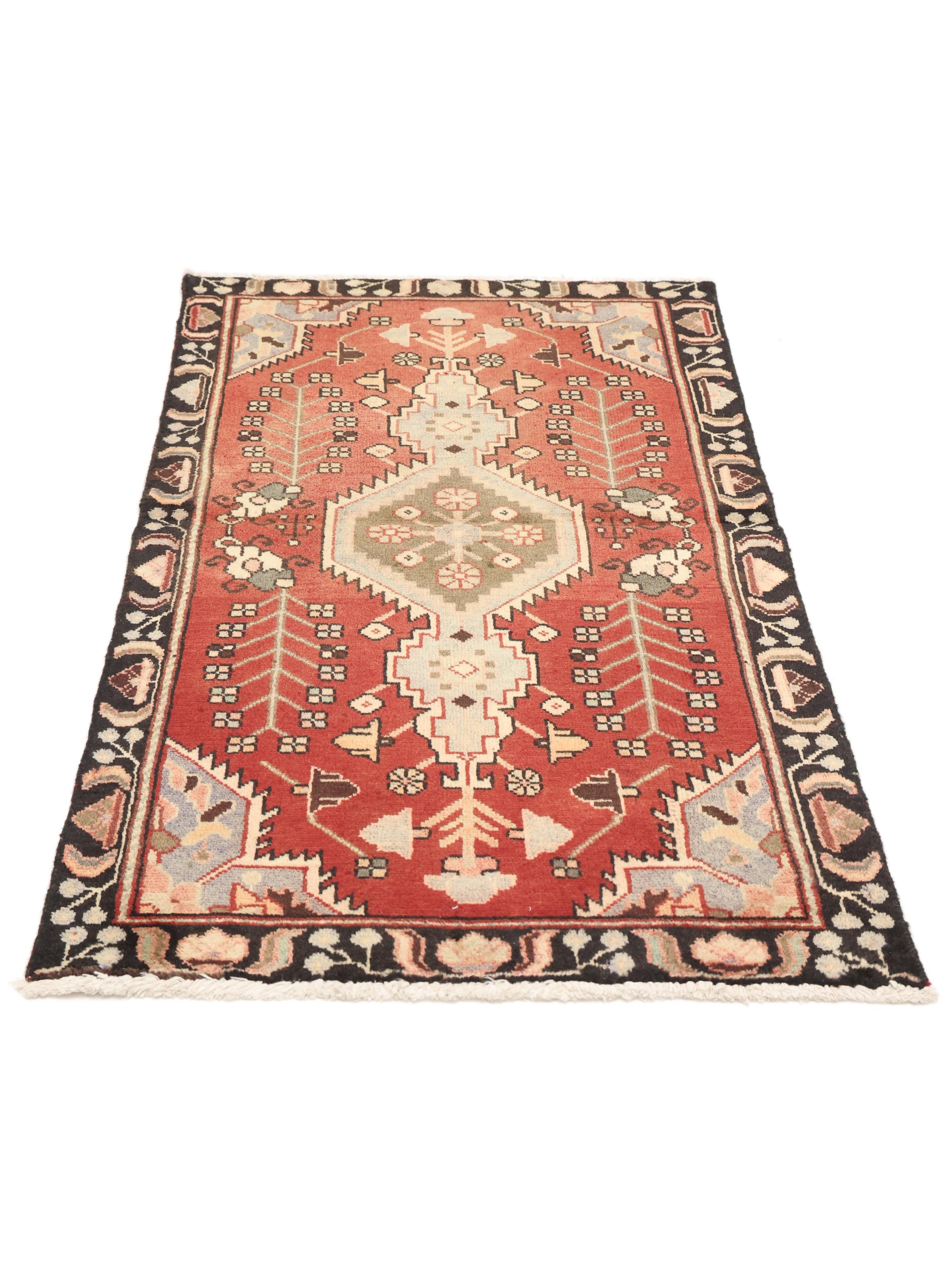
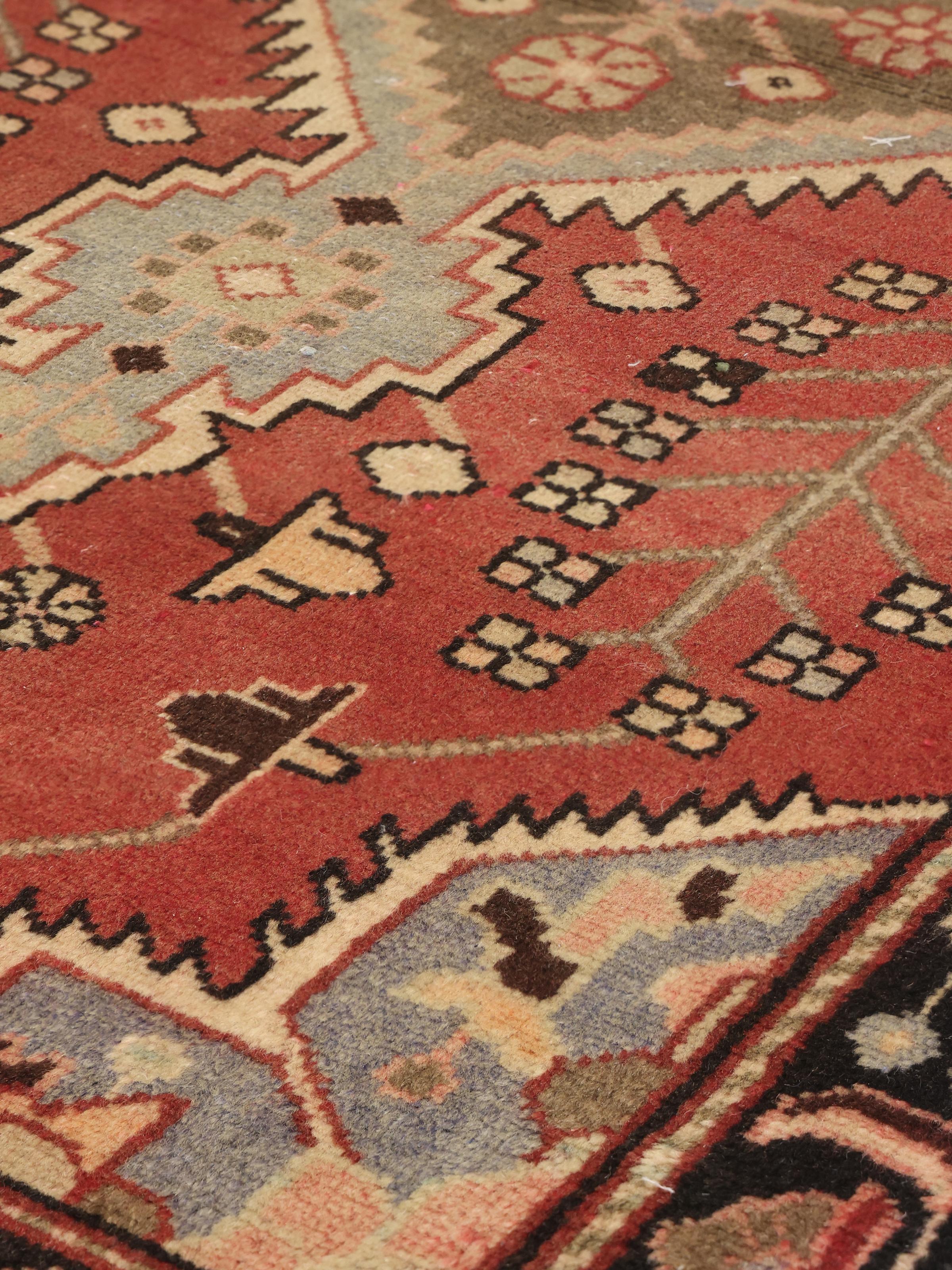
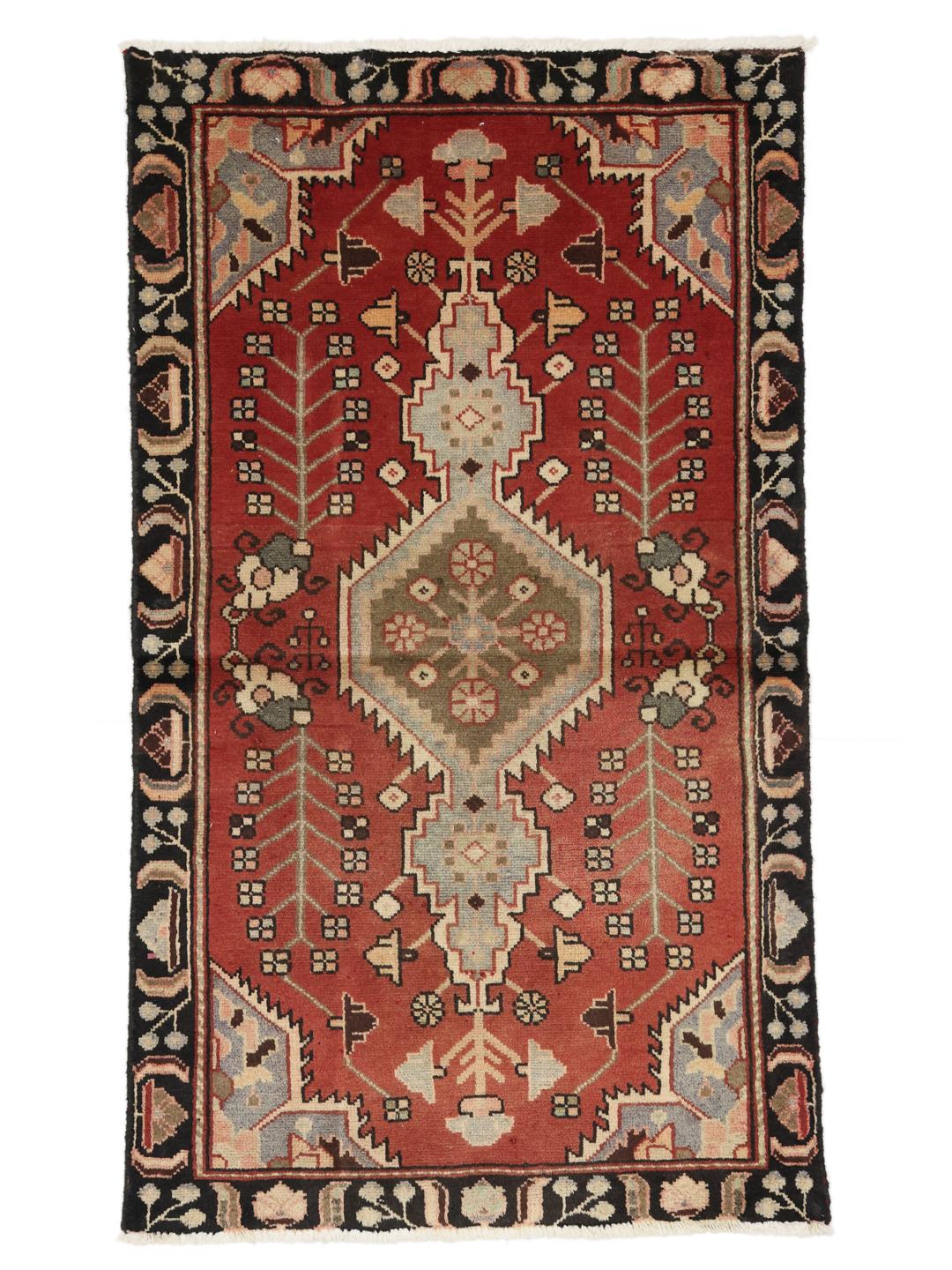
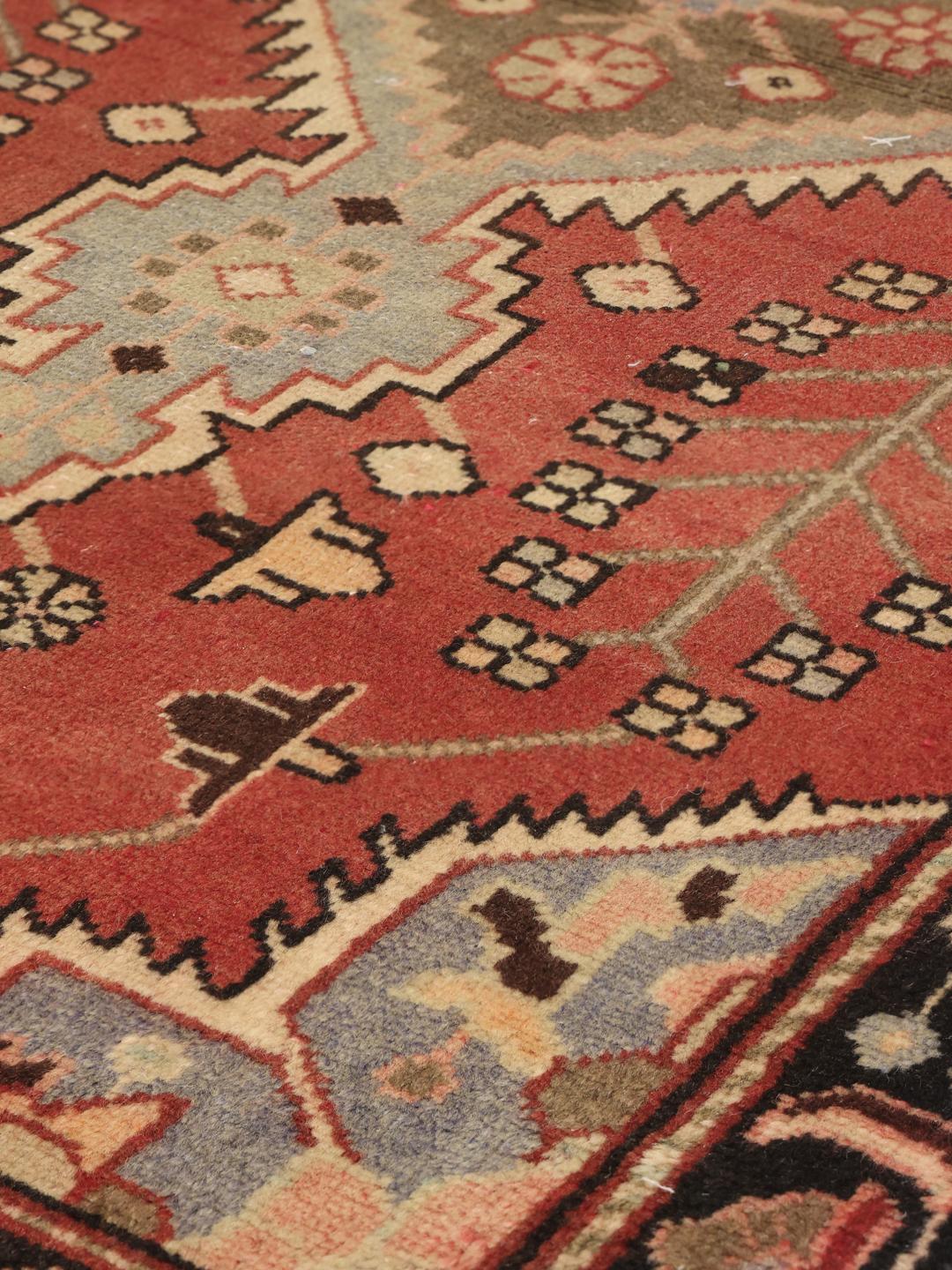
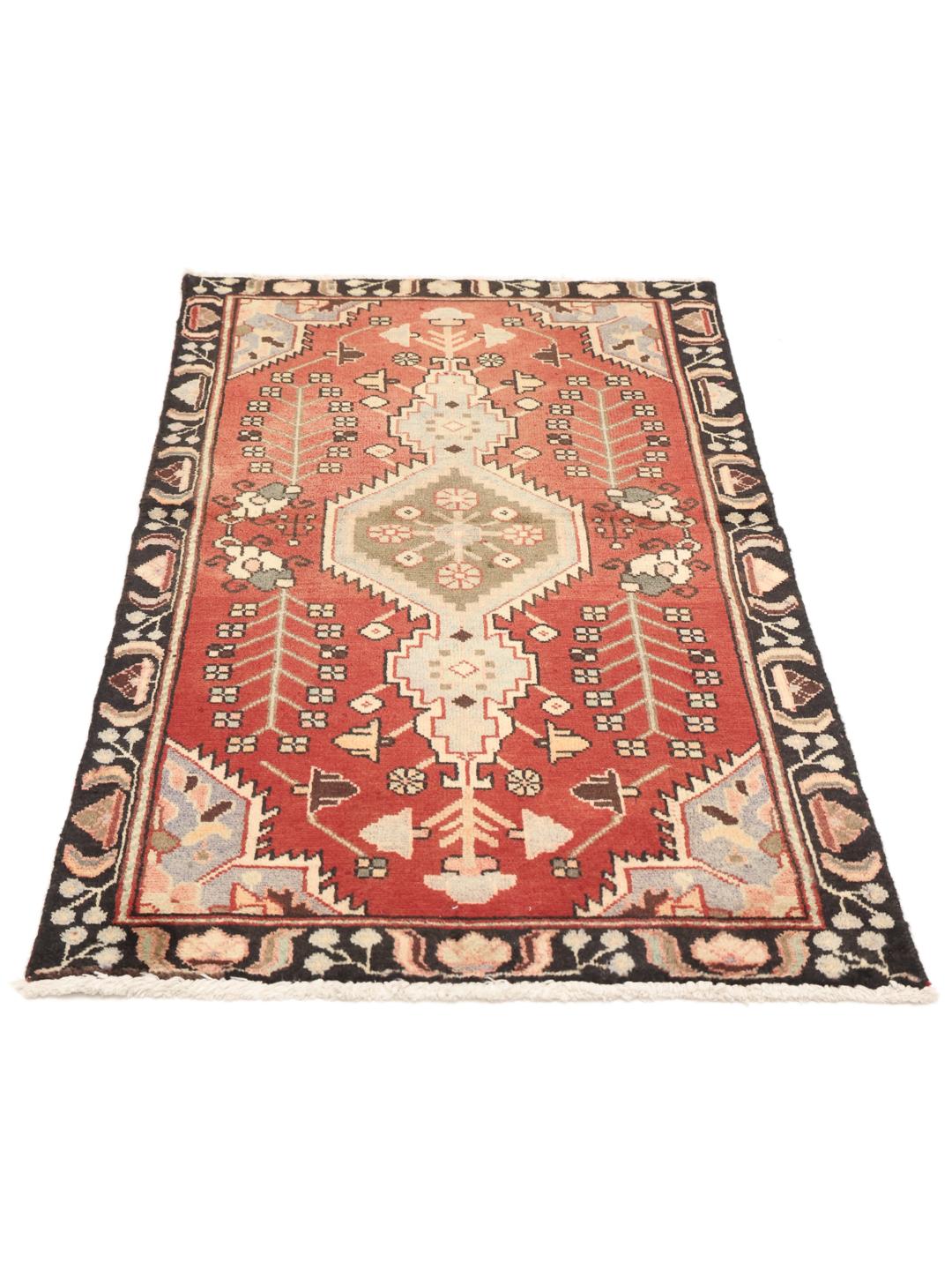
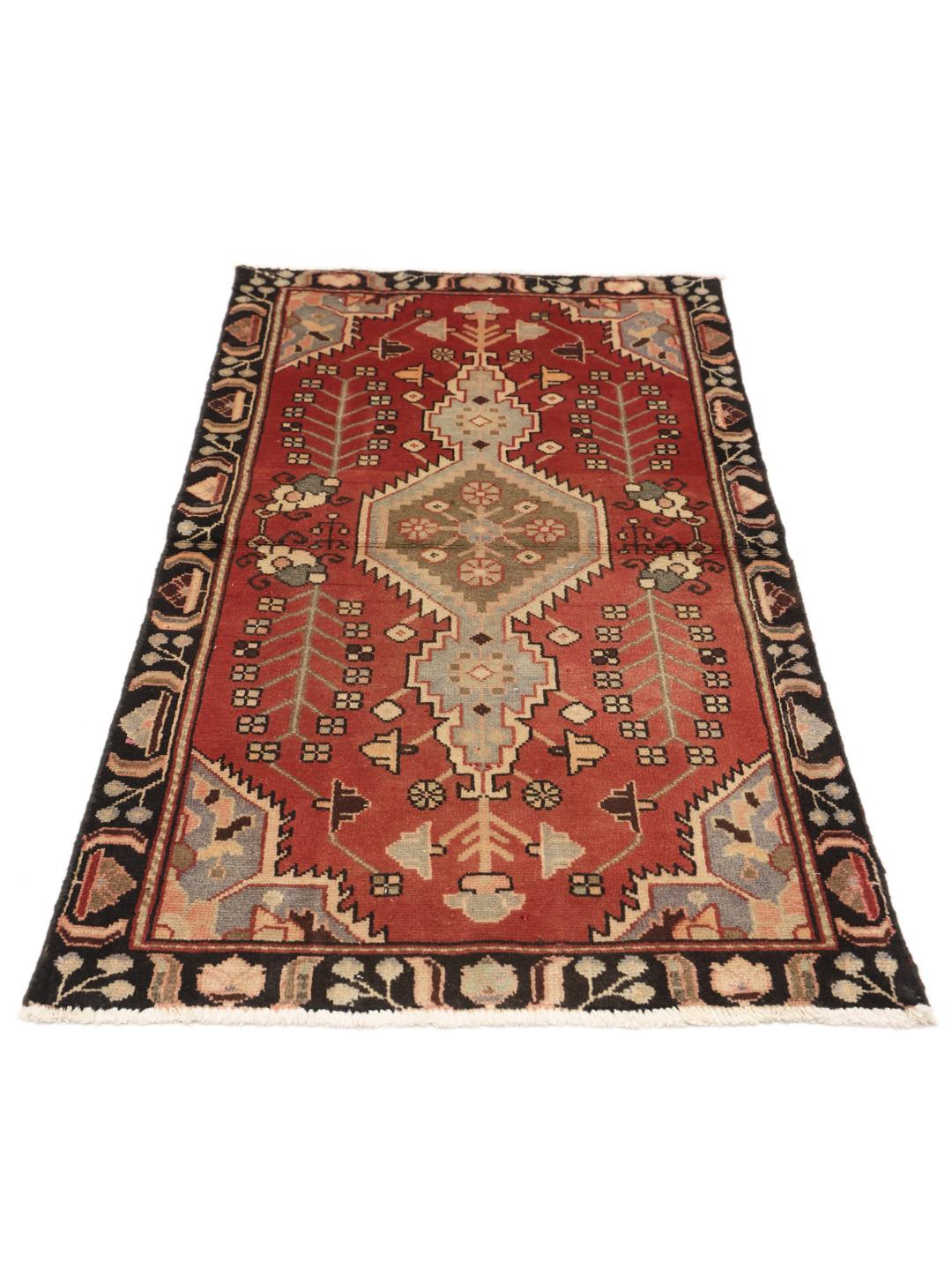
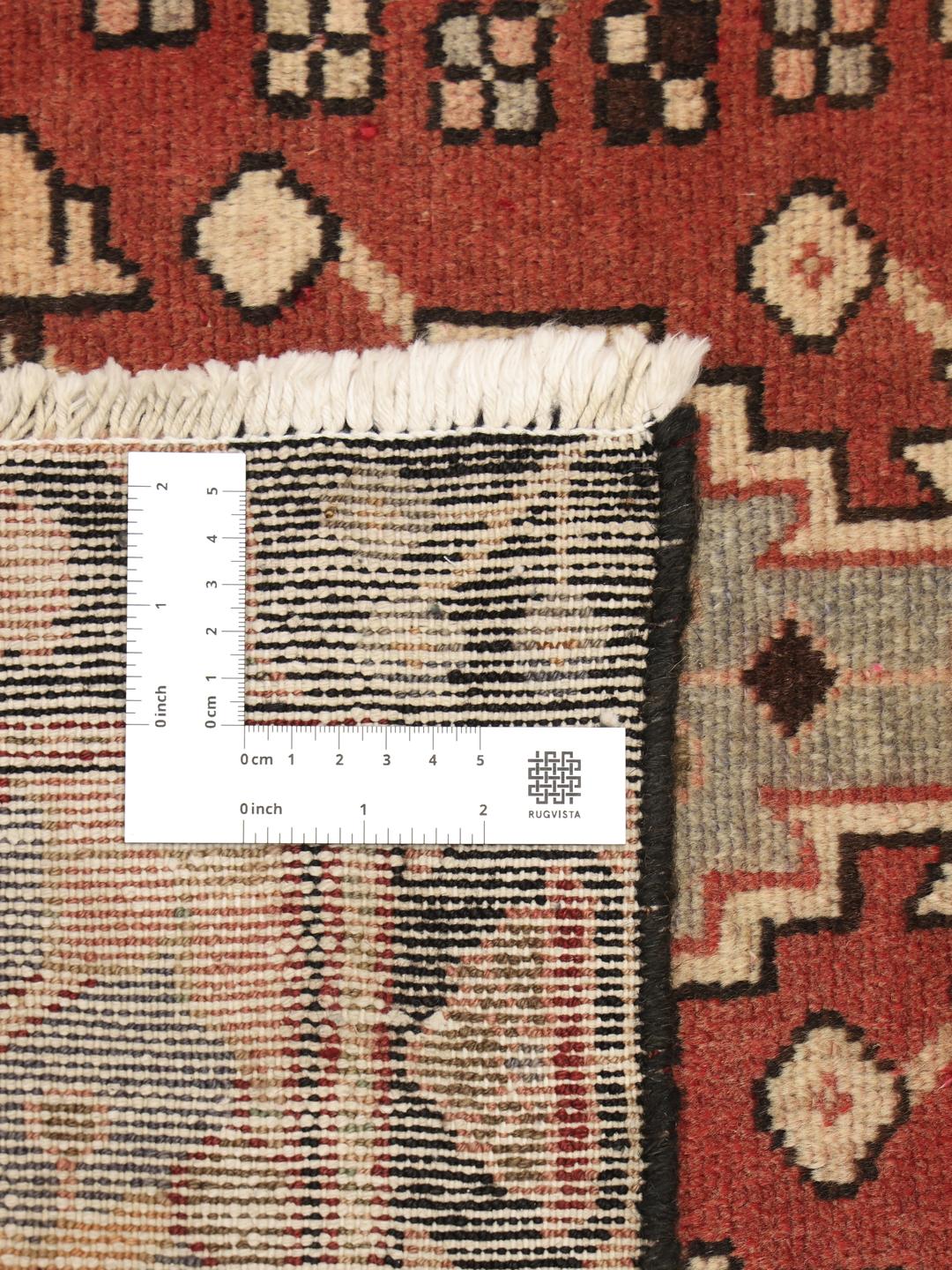
Hamadan rugs take their name from one of the oldest cities in the Middle East, a historic hub located on the ancient trade routes. The region has long been celebrated for its diverse output of village-style rugs, characterised by a vast array of designs and techniques that reflect the unique identity of individual weaving communities. This rug embodies that heritage, representing a tradition where weaving is deeply embedded in the cultural fabric of daily life.
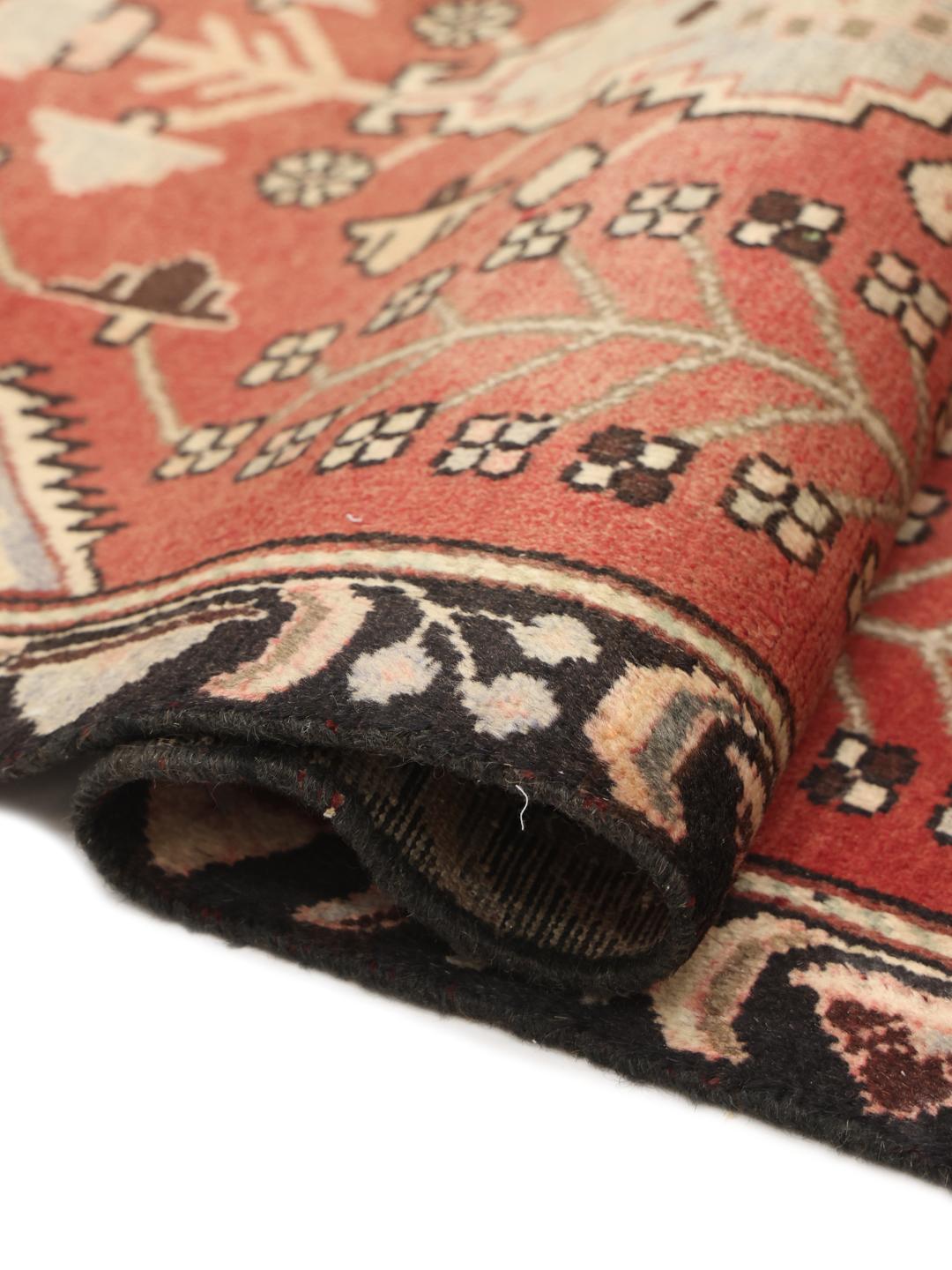
The term Hamadan often refers to a broad collection of styles, but the consistency of the region's output lies in the use of sturdy, high-quality materials. These rugs are known for their resilience, often featuring a foundation that provides a firm structure for the pile. This approach to construction ensures that the finished rug is not only visually captivating but also capable of enduring the demands of a busy household.
Visually, Hamadan rugs are famous for their bold, geometric language. While they often feature a central medallion, the surrounding field is frequently filled with repeating floral motifs, stylised vines, or geometric shapes that demonstrate a high level of creative freedom. The deep red and black palette seen here is a classic choice, grounding the complex patterns and creating a sophisticated, balanced appearance that has remained popular for centuries.
Collecting a Hamadan piece is an investment in human skill and regional history. These rugs are valued not just for their aesthetic beauty, but for the story they tell about the evolution of traditional craft in the Middle East. By bringing this rug into your home, you are continuing a legacy of appreciation for slow, considered work and preserving a tradition that prioritises longevity and individual artistry over uniformity.