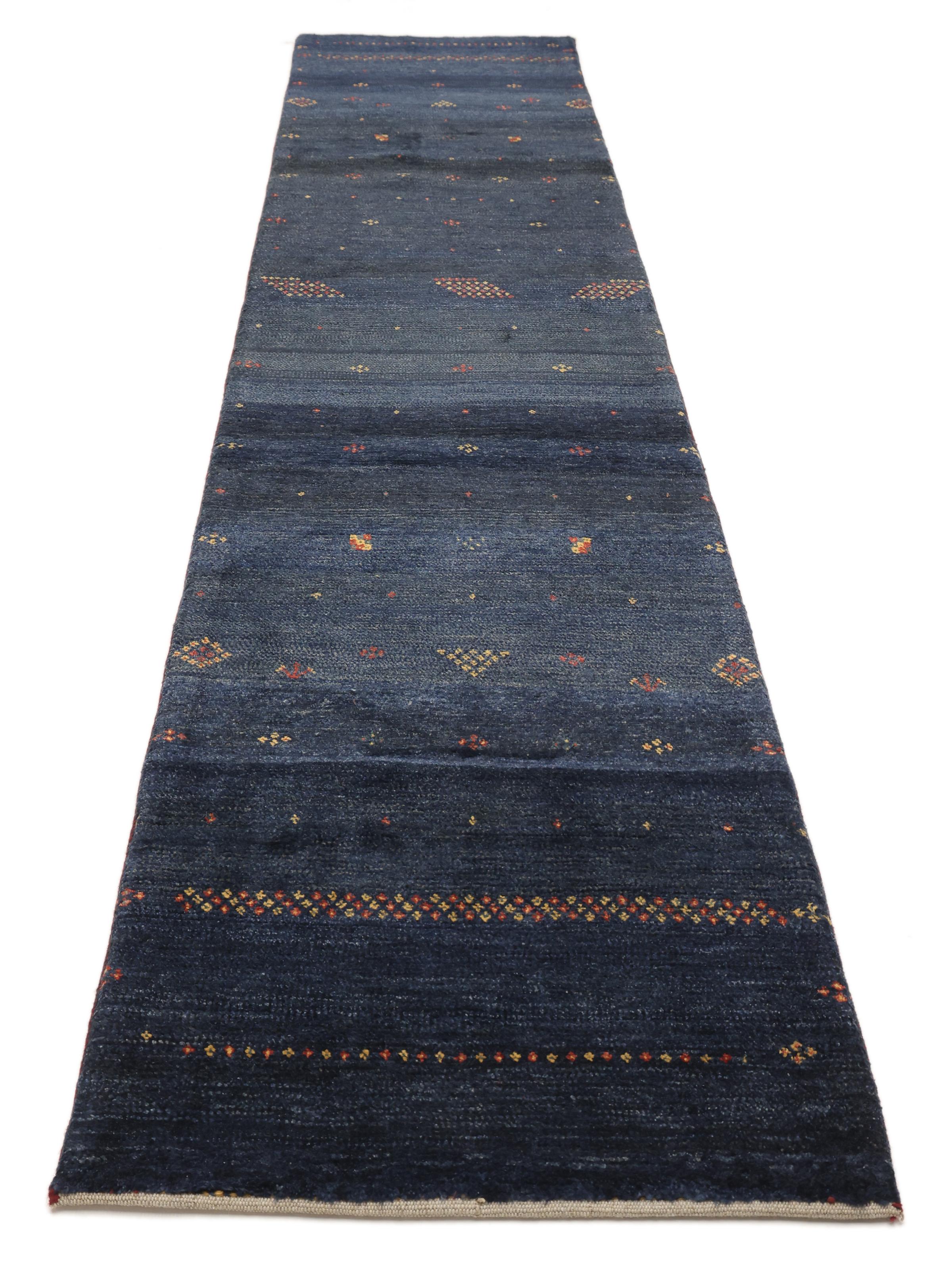
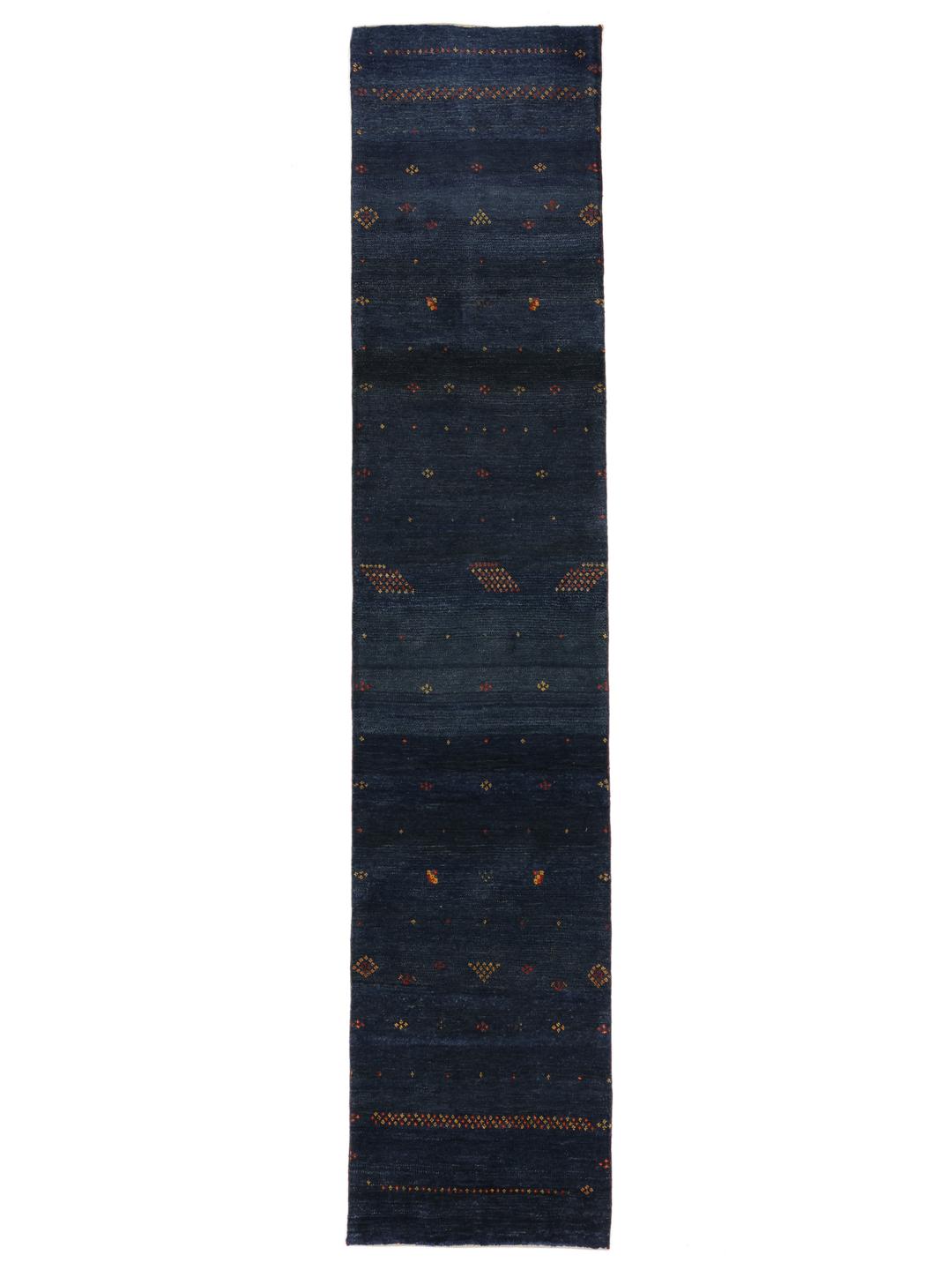
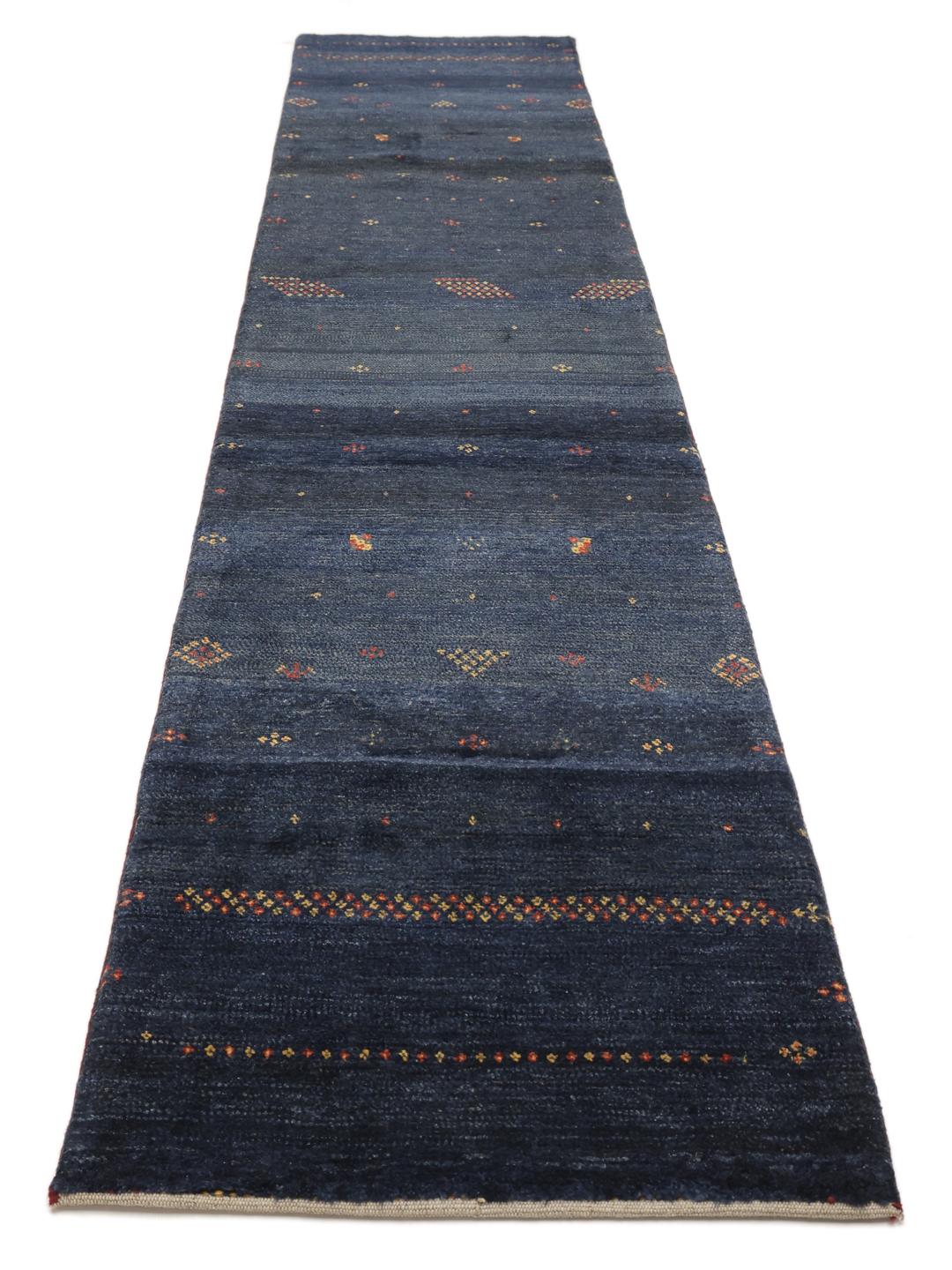
The Shabargan style is rooted in the long-standing traditions of the Middle Eastern weaving regions, known for their ability to balance minimalist design with profound, saturated colour. These runners are part of a lineage that values the simplicity of the wool itself, often allowing the natural variations in the dye to create subtle, organic movements across the field. This tradition of weaving has been passed down through generations, maintaining a connection to the cultural heritage of the region while evolving to suit modern homes.
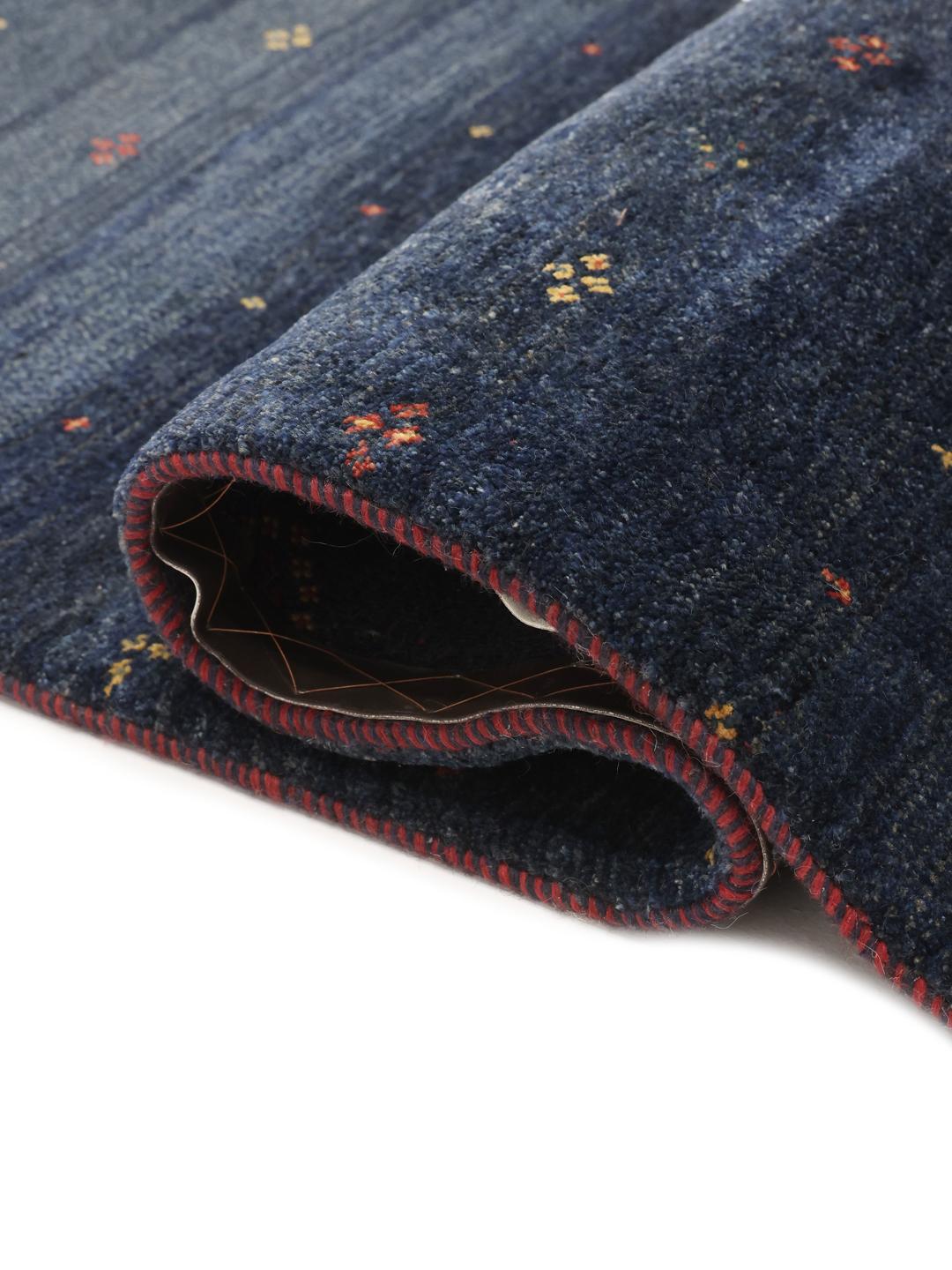
Gabbeh rugs, from which this piece draws its inspiration, were originally created by nomadic tribes for their own personal use. The term itself refers to a rug that is 'natural' or 'raw,' often characterised by a thicker pile and a more spontaneous, artistic approach to design. Unlike formal, court-style carpets that follow rigid, symmetrical patterns, Gabbeh rugs celebrate the hand of the weaver, resulting in a more tactile and soulful object that feels inherently human and lived-in.
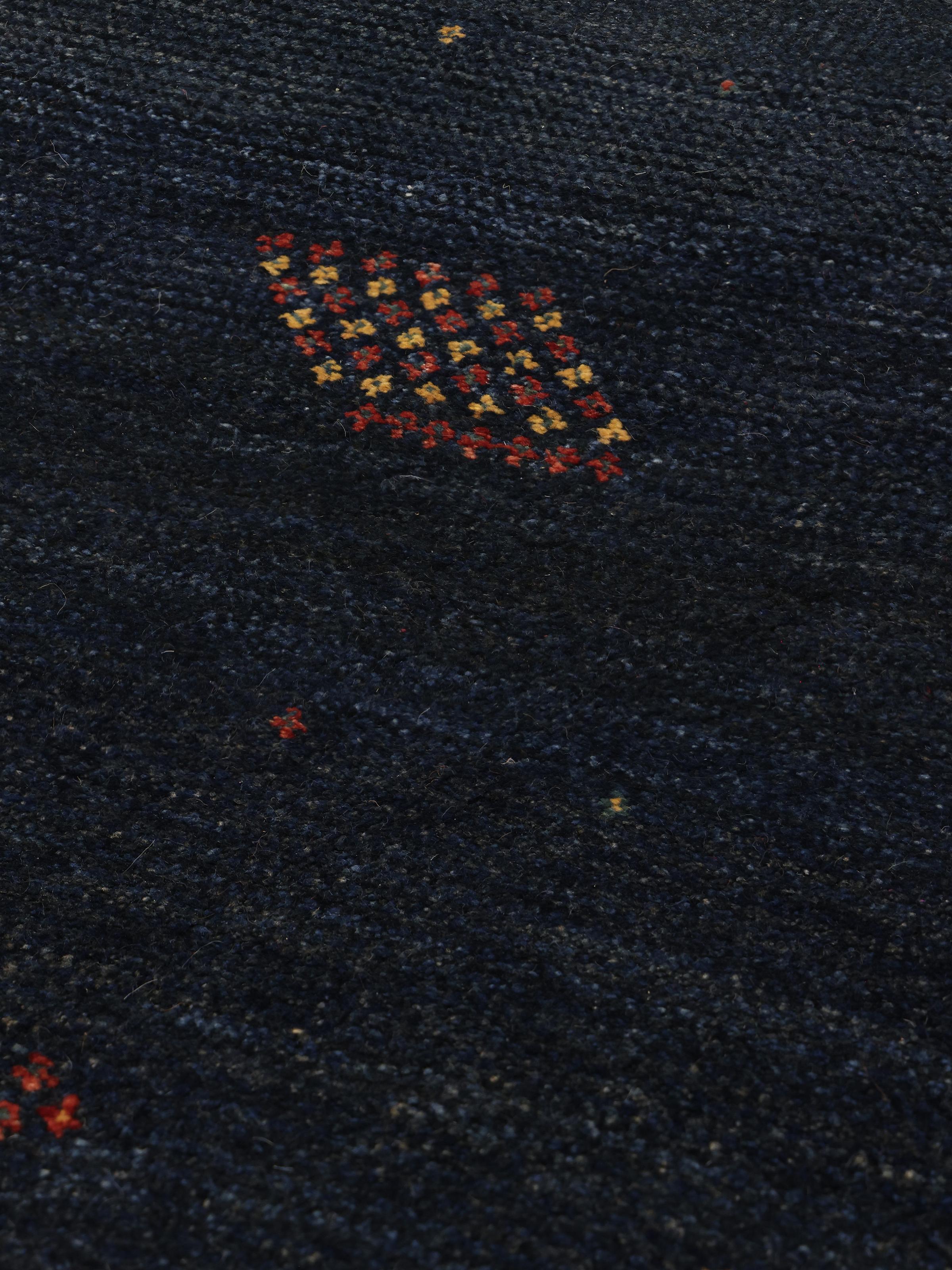
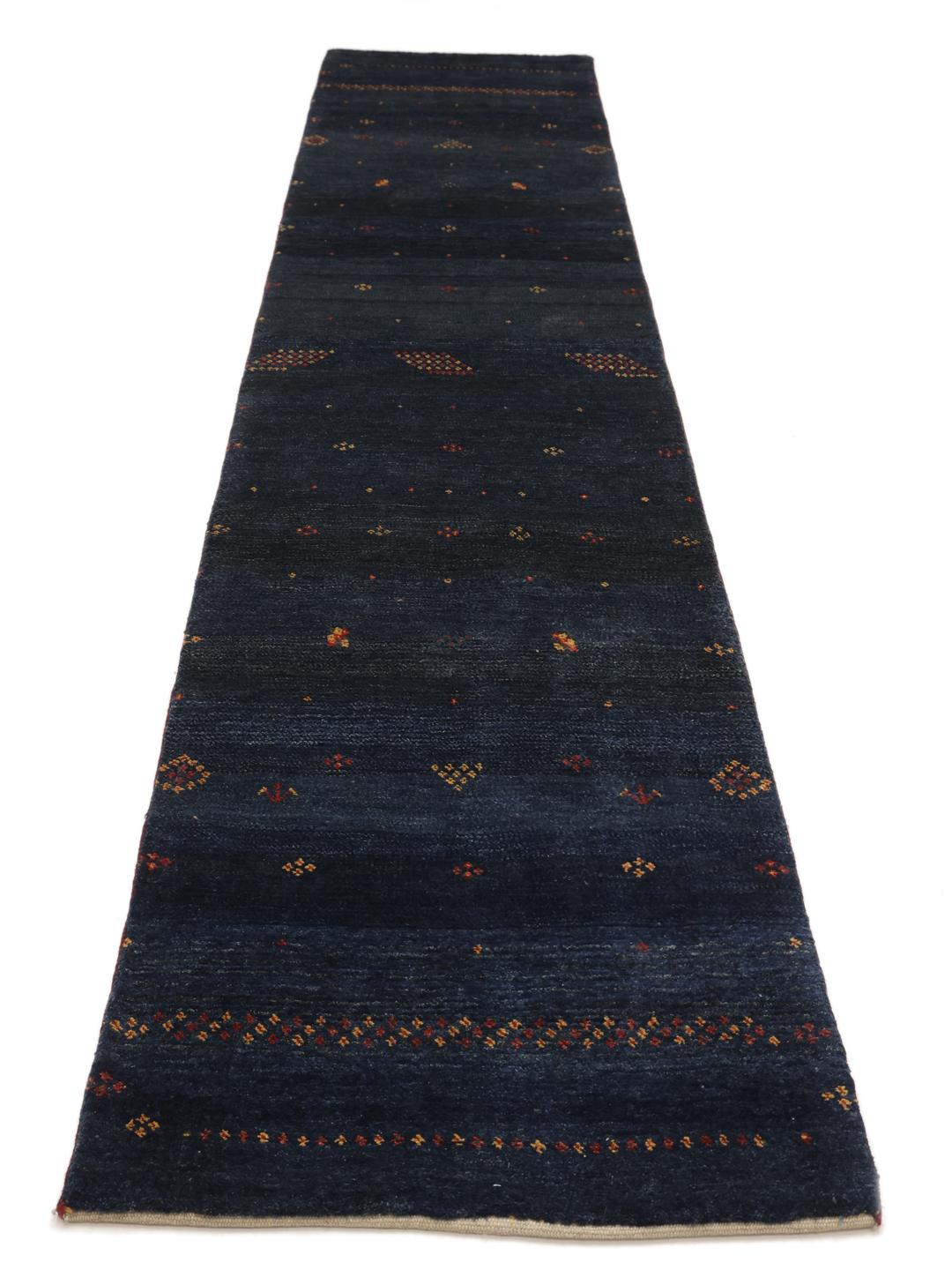
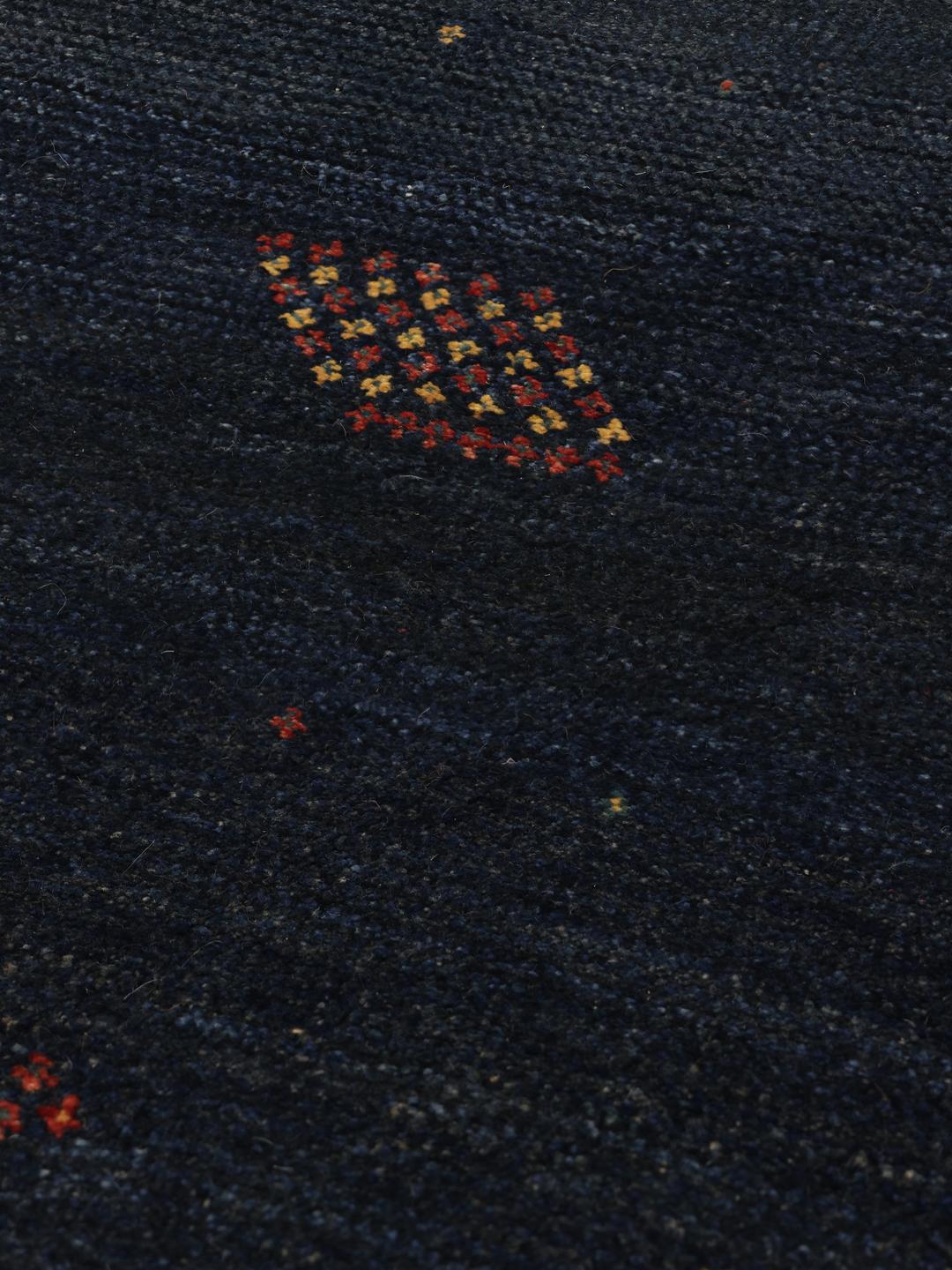
The visual language of this runner is defined by its deep, monochromatic field and the deliberate, sparse placement of geometric motifs. These tiny, scattered elements often represent symbols of nature, protection, or the weaver's own surroundings, providing a quiet narrative that invites closer inspection. The use of dark, moody tones is a signature of this tradition, designed to create a sense of depth and mystery that anchors the room, turning a simple floor space into a focal point of artisanal beauty.
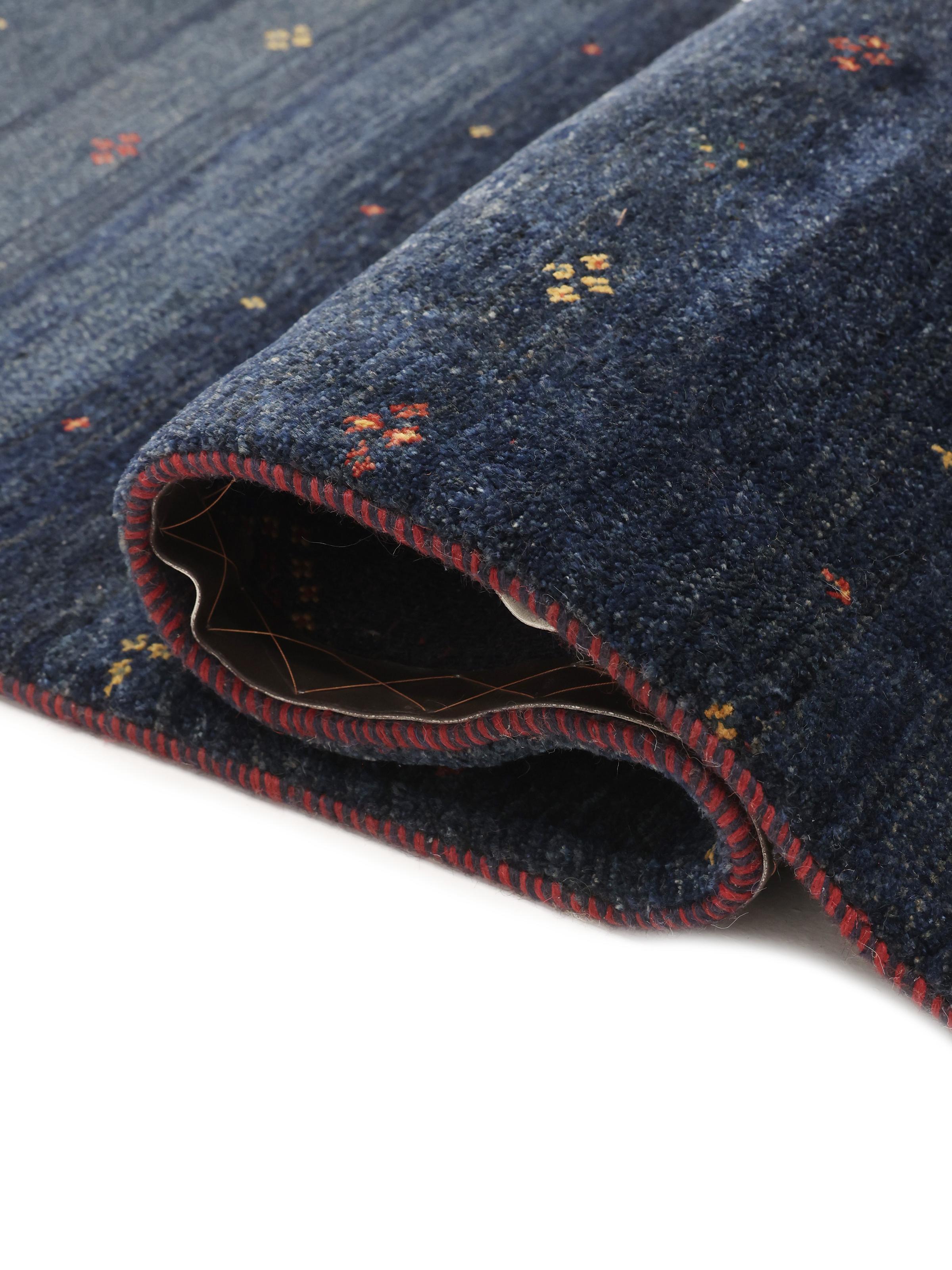
Owning a hand-knotted piece from this tradition is an act of preserving a dying art form. These rugs are highly valued by collectors not just for their aesthetic appeal, but for the immense skill and cultural history they represent. When you place this runner in your home, you are not merely covering a floor; you are honouring the craftsmanship of the past and investing in a piece that carries the warmth, stories, and dedication of the people who created it.