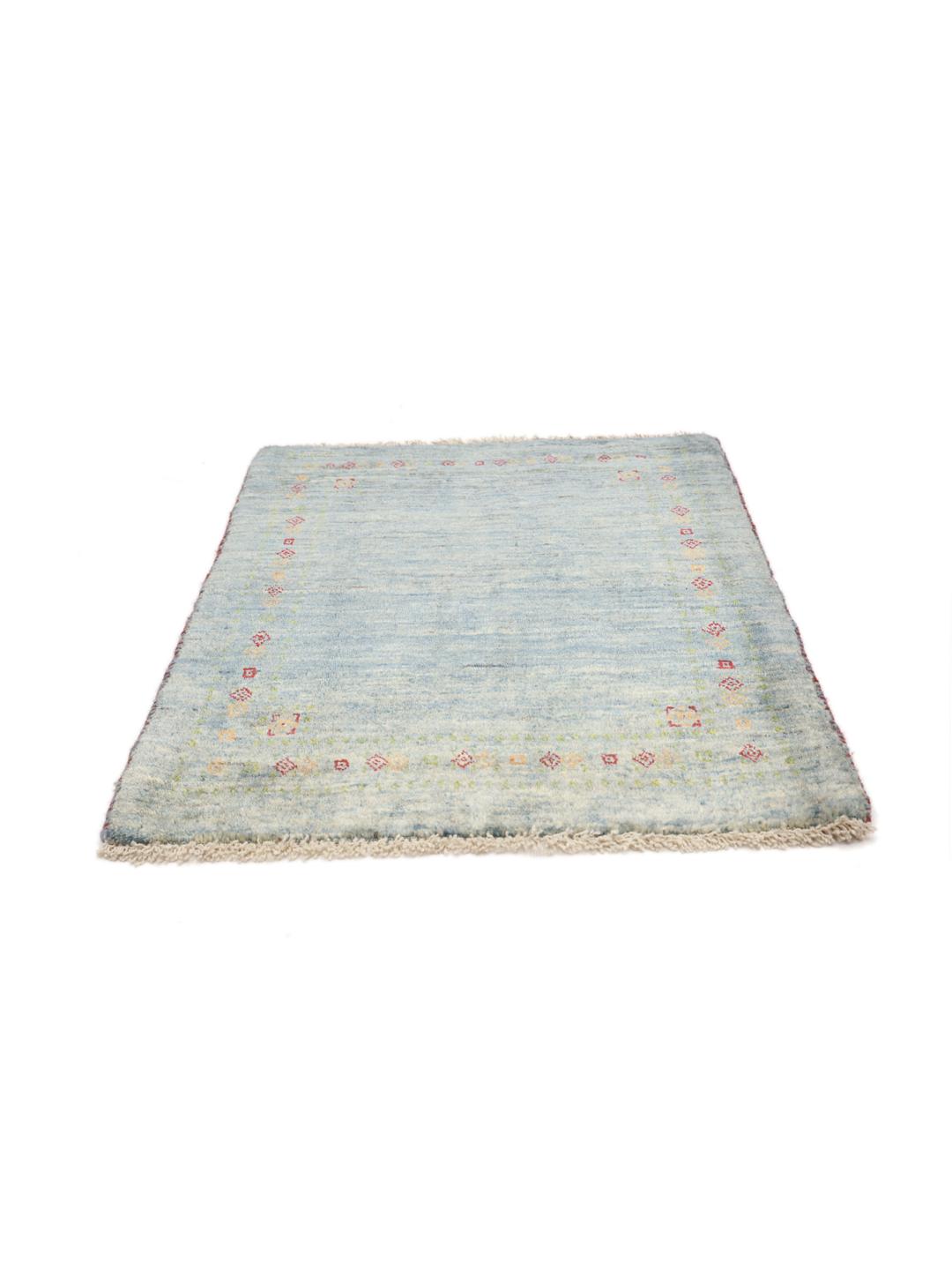
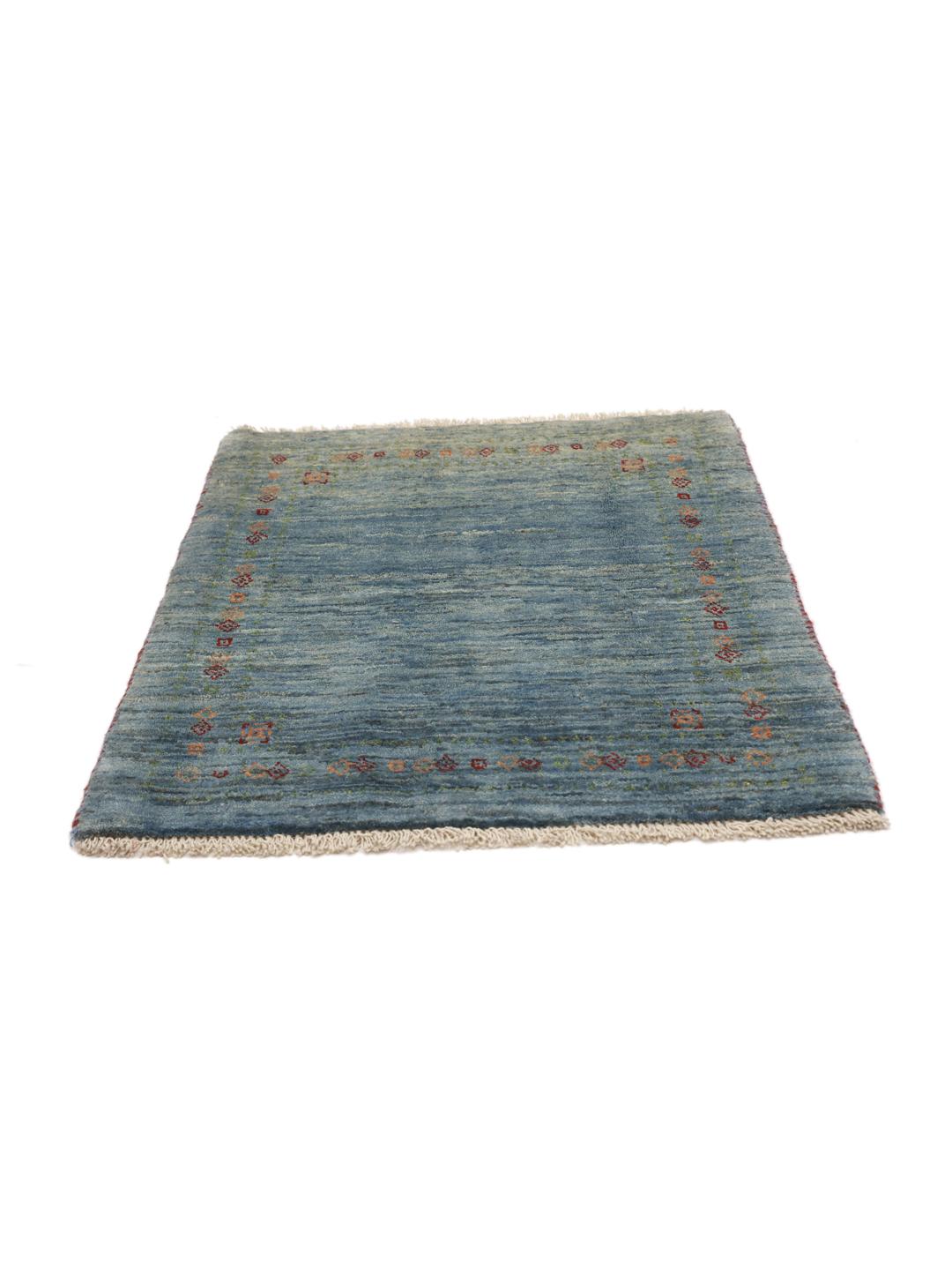
Gabbeh rugs originate from the nomadic tribes of the Middle East, specifically the Gashgai people. Traditionally, these rugs were woven for personal use within the home, intended to provide warmth and comfort during the cold mountain winters. Unlike more formal, city-made carpets, the Gabbeh was defined by its simplicity and the creative freedom of the weaver, who would often incorporate stories or observations from their surroundings into the patterns.
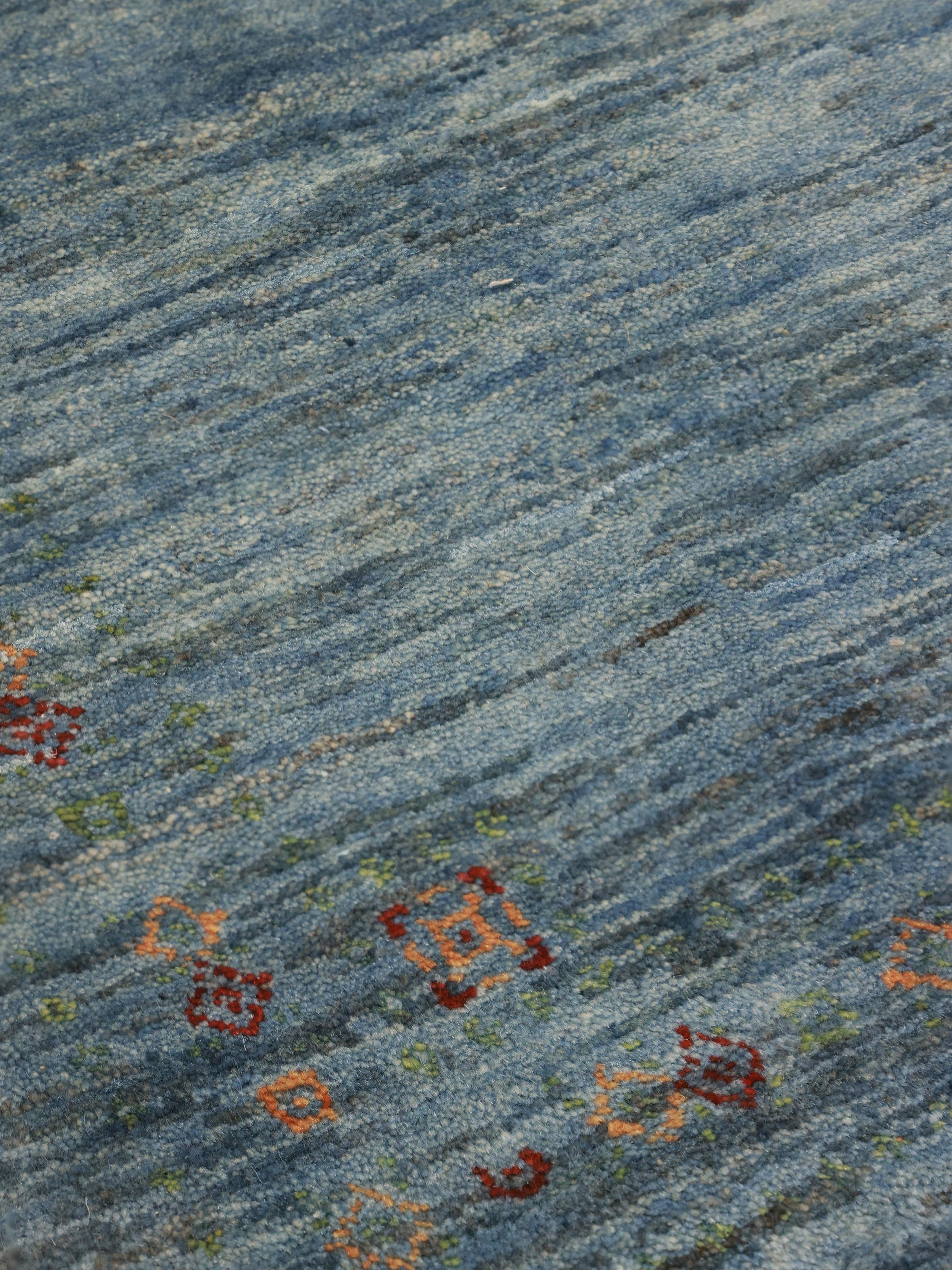
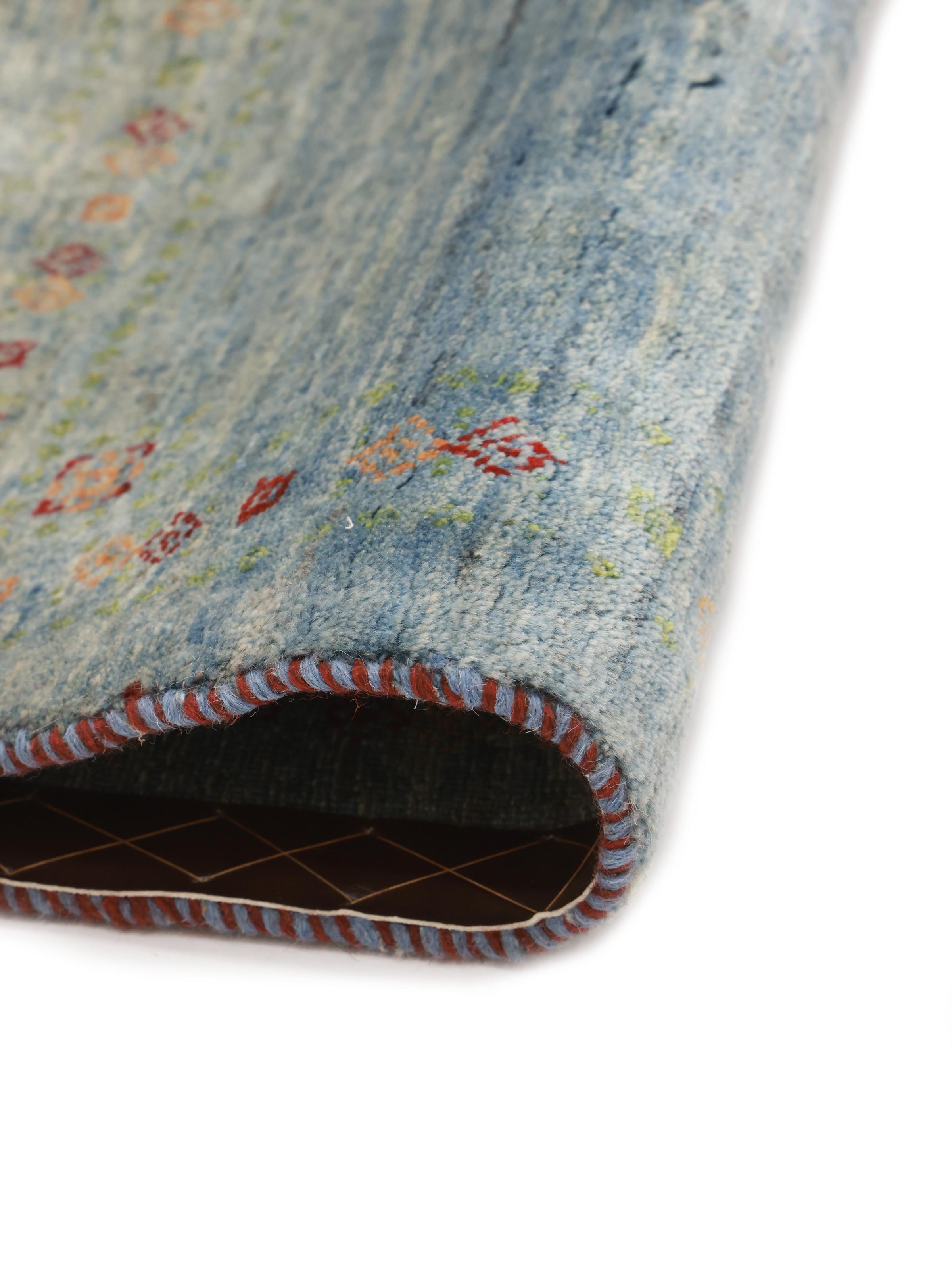
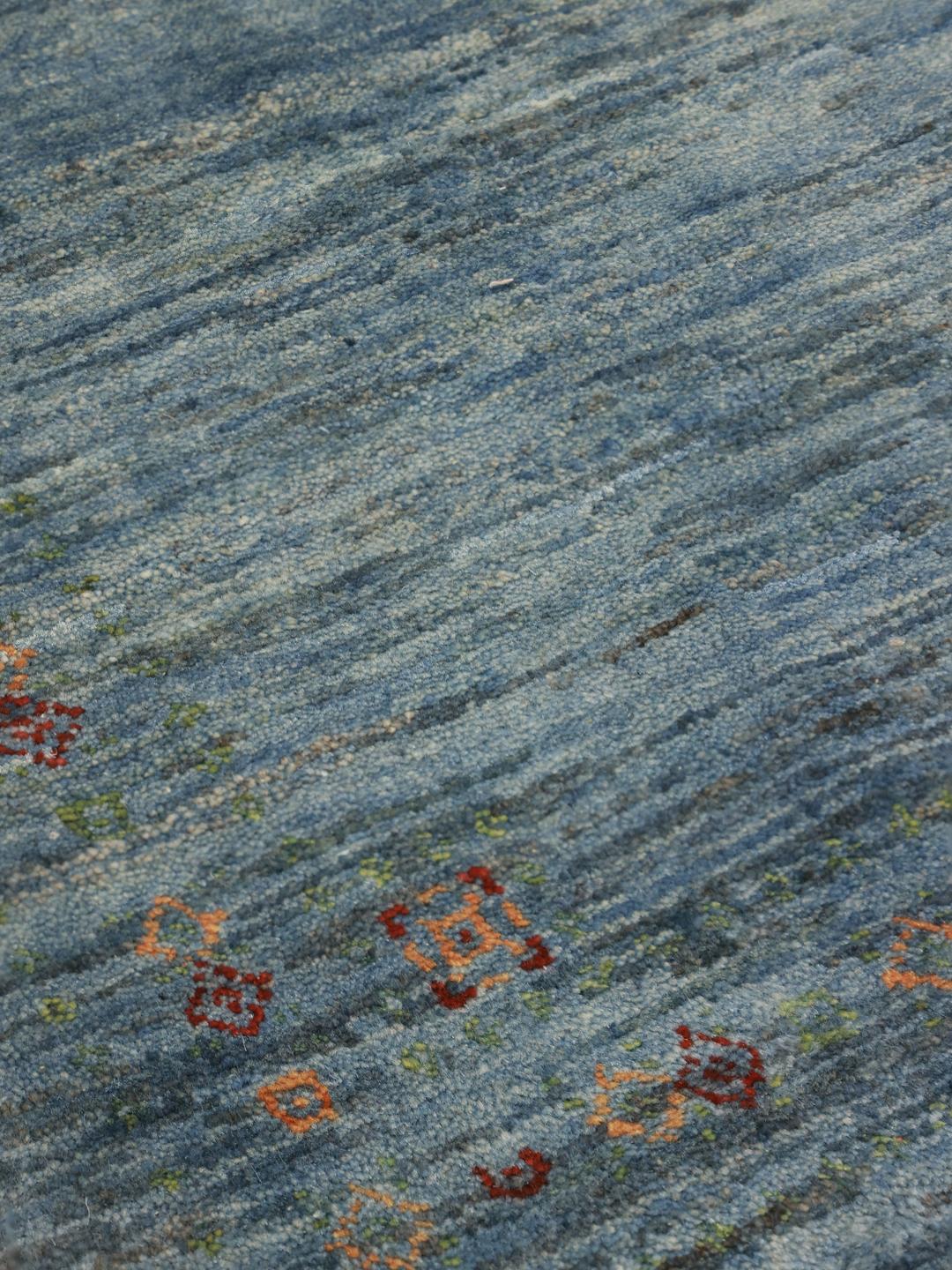
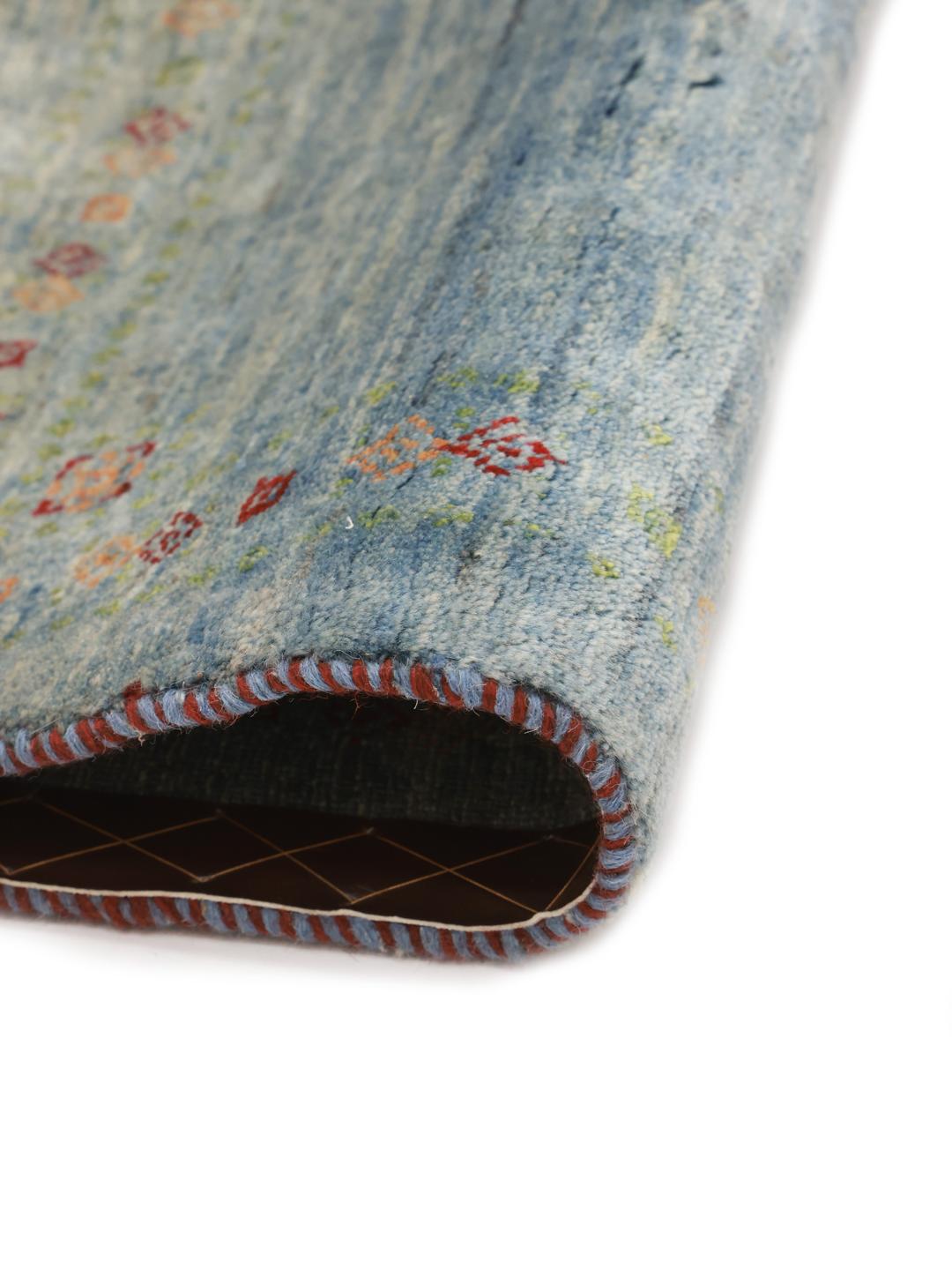
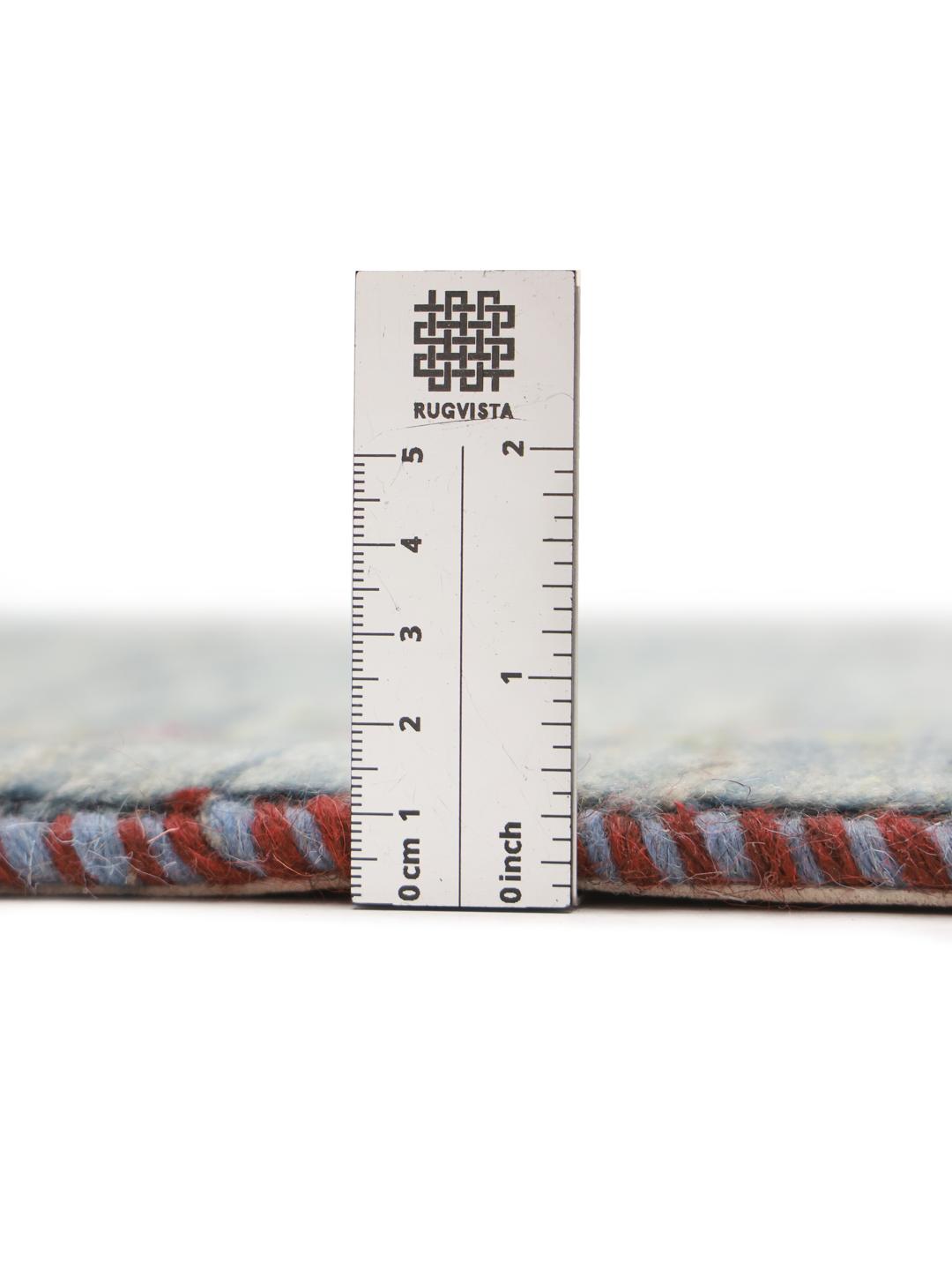
The term Gabbeh itself means raw, natural, or unclipped, which speaks to the rug's character. Historically, these pieces were made with thick, hand-spun wool, resulting in a deep, plush pile. This construction was essential for the nomadic lifestyle, as it provided a resilient, insulated surface that could withstand the rigours of travel while remaining soft and welcoming.
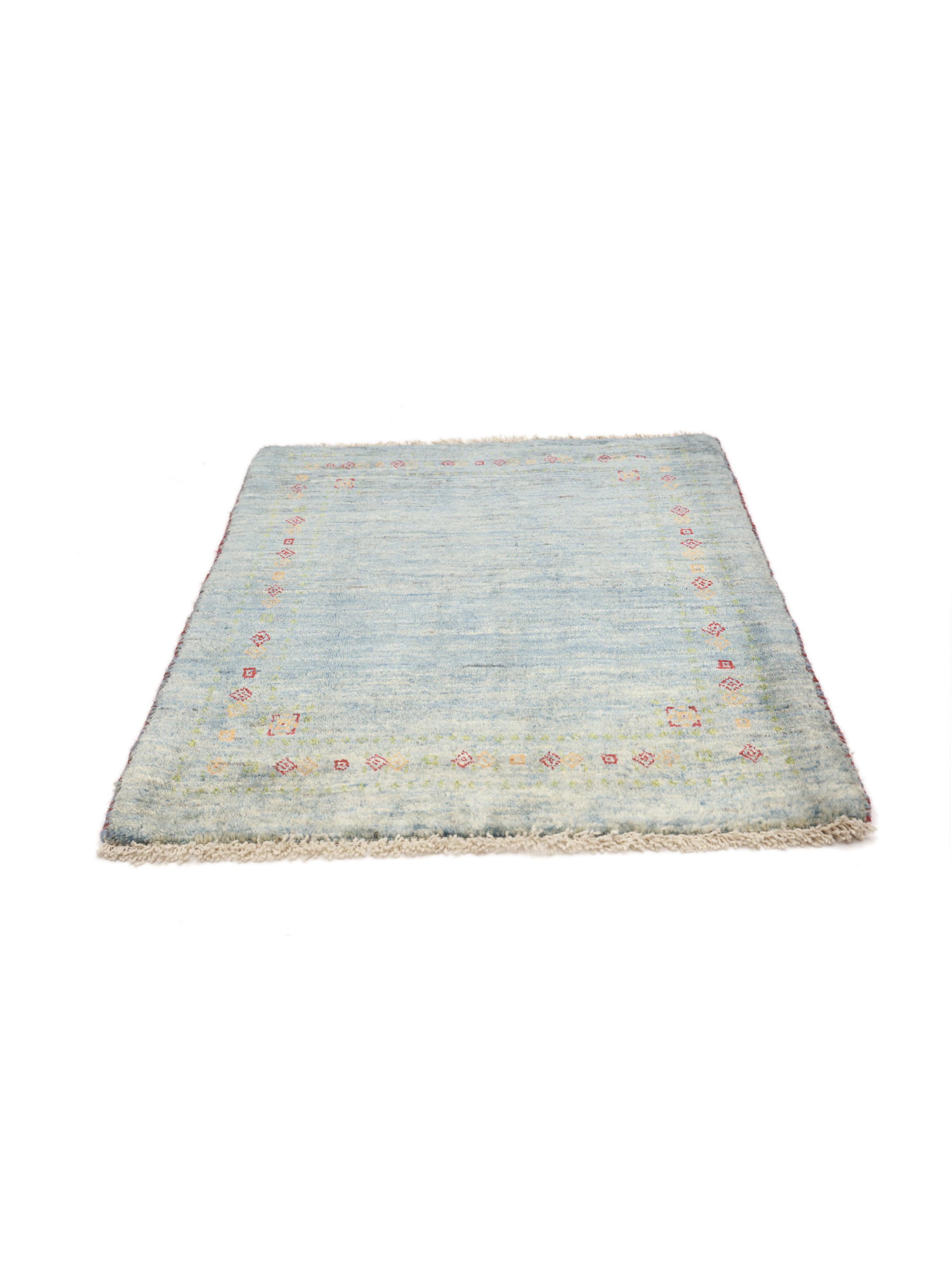
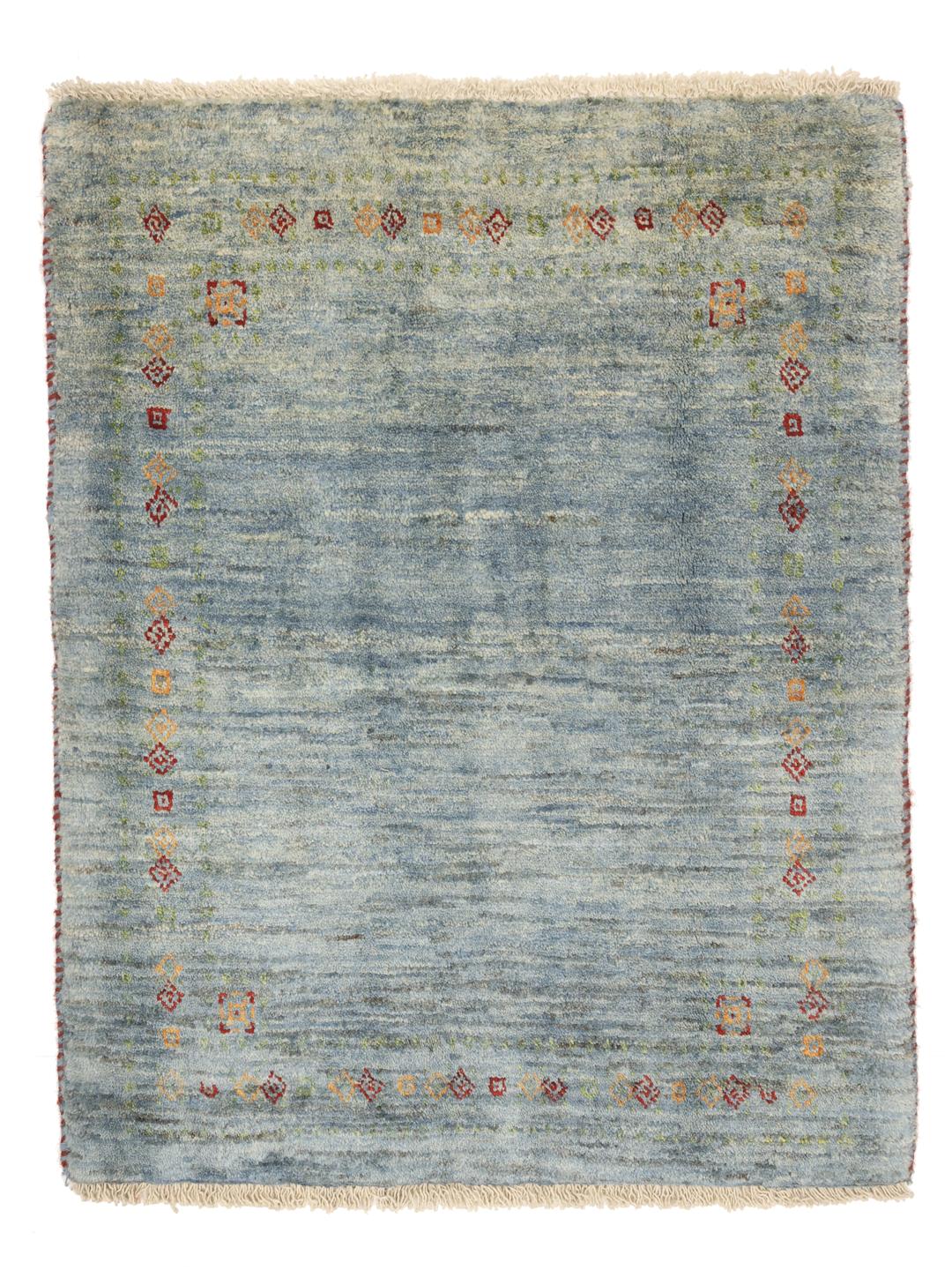
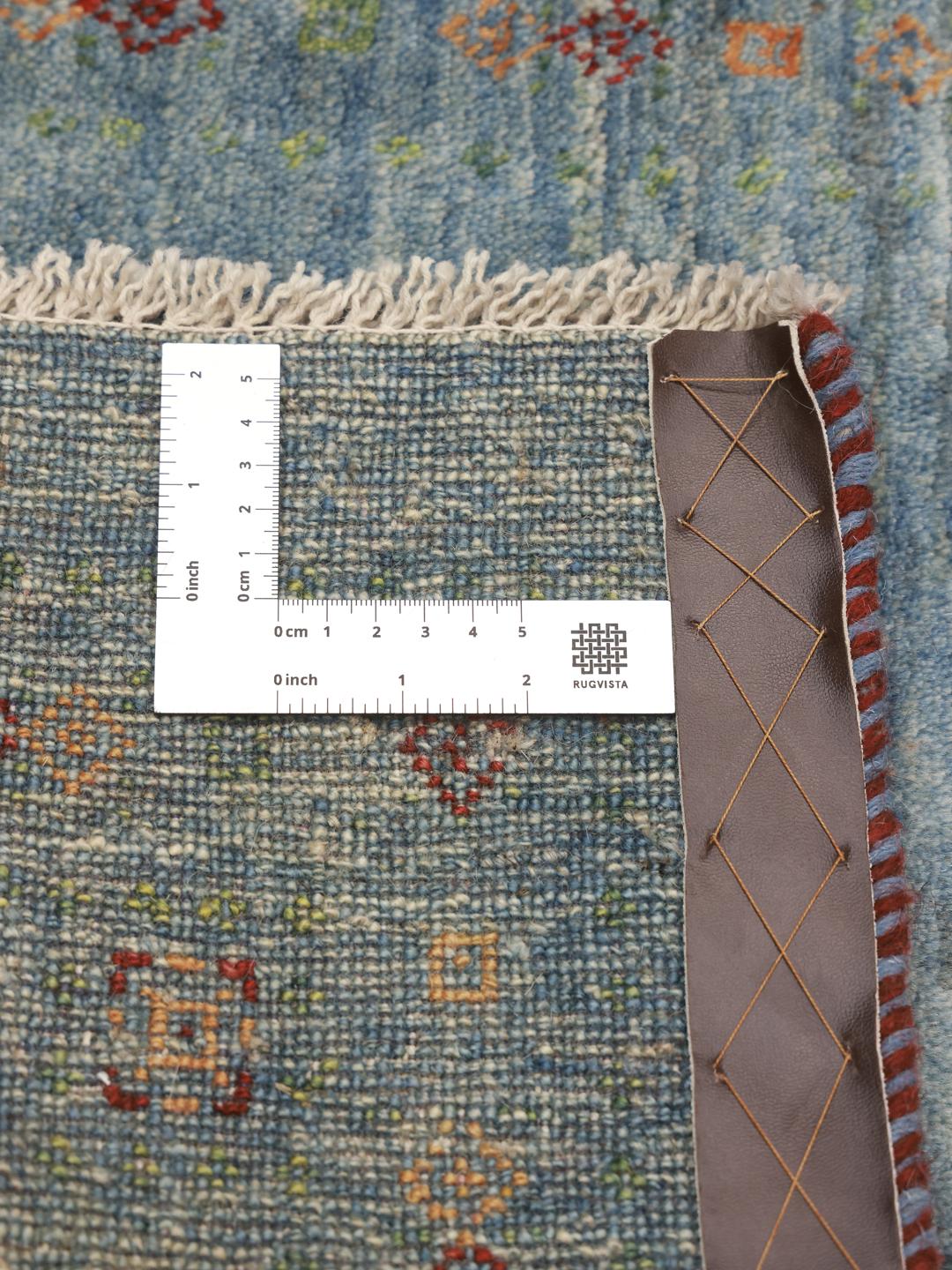
Visually, these rugs are known for their minimalist yet evocative designs. While they often feature open fields of solid or abrash colour, they are frequently decorated with small, stylized geometric or symbolic motifs that represent the weaver’s life, such as animals, trees, or mountains. This specific piece continues that tradition, utilising a serene blue field that acts as a canvas for its subtle, decorative border elements.
Today, these rugs are highly sought after by collectors who value the authenticity and the human story behind every knot. Owning a piece from this tradition is an opportunity to connect with a centuries-old craft that prioritises the spirit of the maker. It is a genuine piece of cultural heritage that brings a sense of history and lived-in warmth to any modern interior.