The Gabbeh rug tradition originates from the nomadic tribes of the Middle East, particularly the Qashqai people. These rugs were traditionally woven for personal use within the family, intended as durable, warm bedding and floor coverings for life on the move. Unlike more formal urban carpets, Gabbeh rugs are celebrated for their raw, spontaneous, and deeply personal designs that reflect the weaver's own surroundings and emotions.
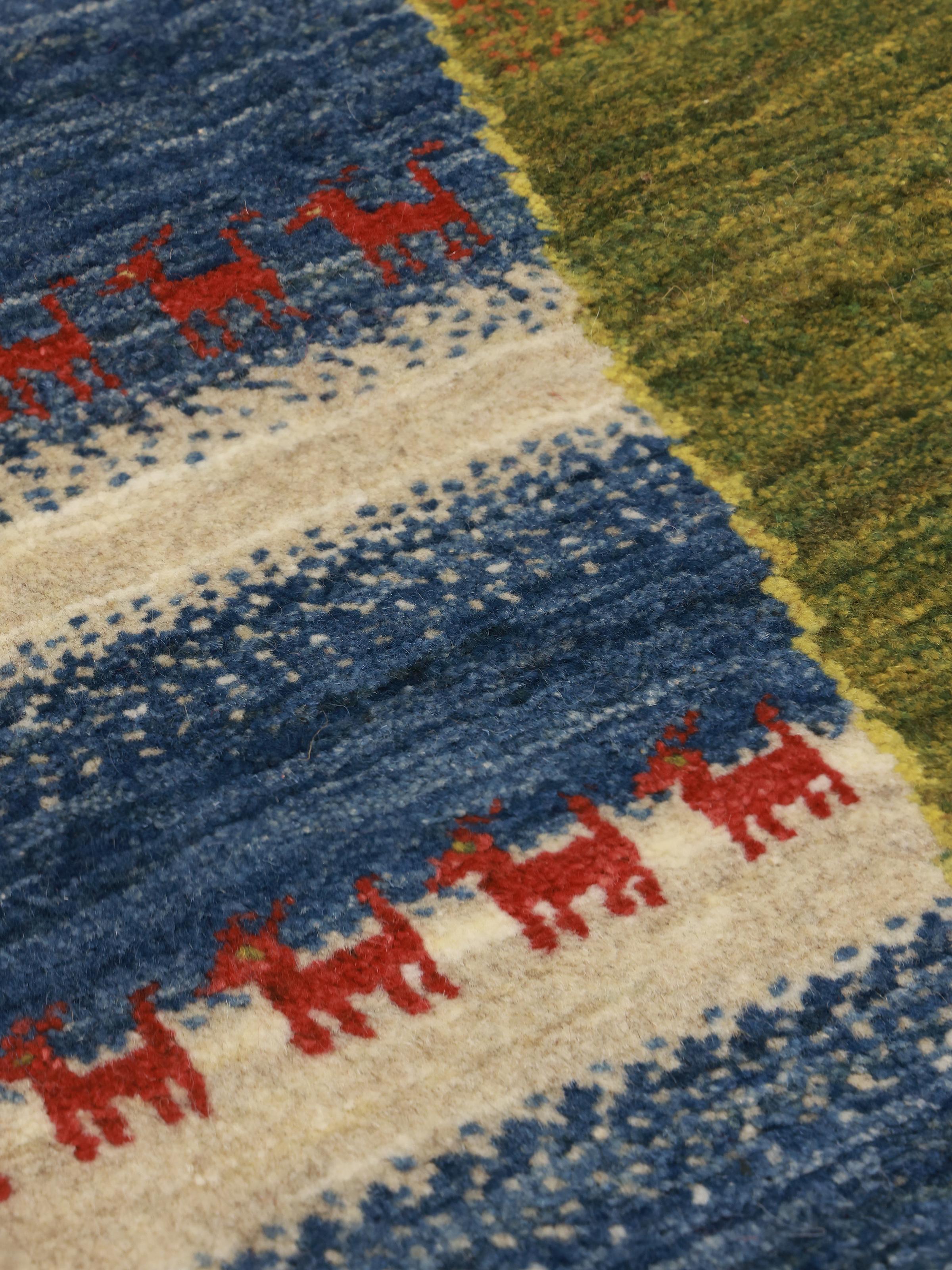
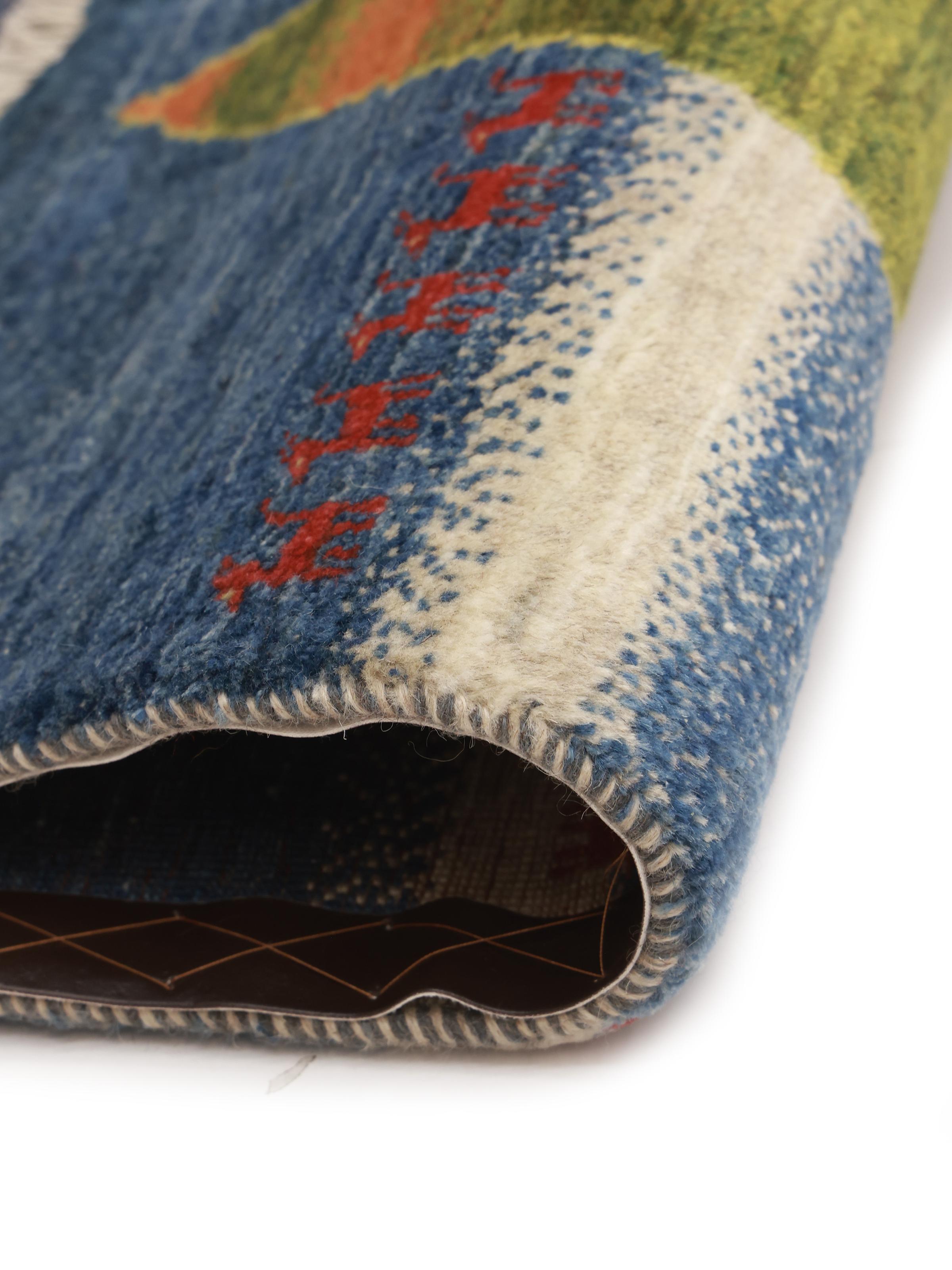
The term 'Shabargan' refers to a specific design lineage within this tribal tradition, often characterised by a playful and imaginative approach to storytelling. These rugs frequently feature simplified, stylised motifs of animals, trees, and geometric shapes that hold symbolic meaning within the weaving community. The use of vibrant, natural dyes often results in a rich, variegated appearance that changes subtly across the surface of the rug.
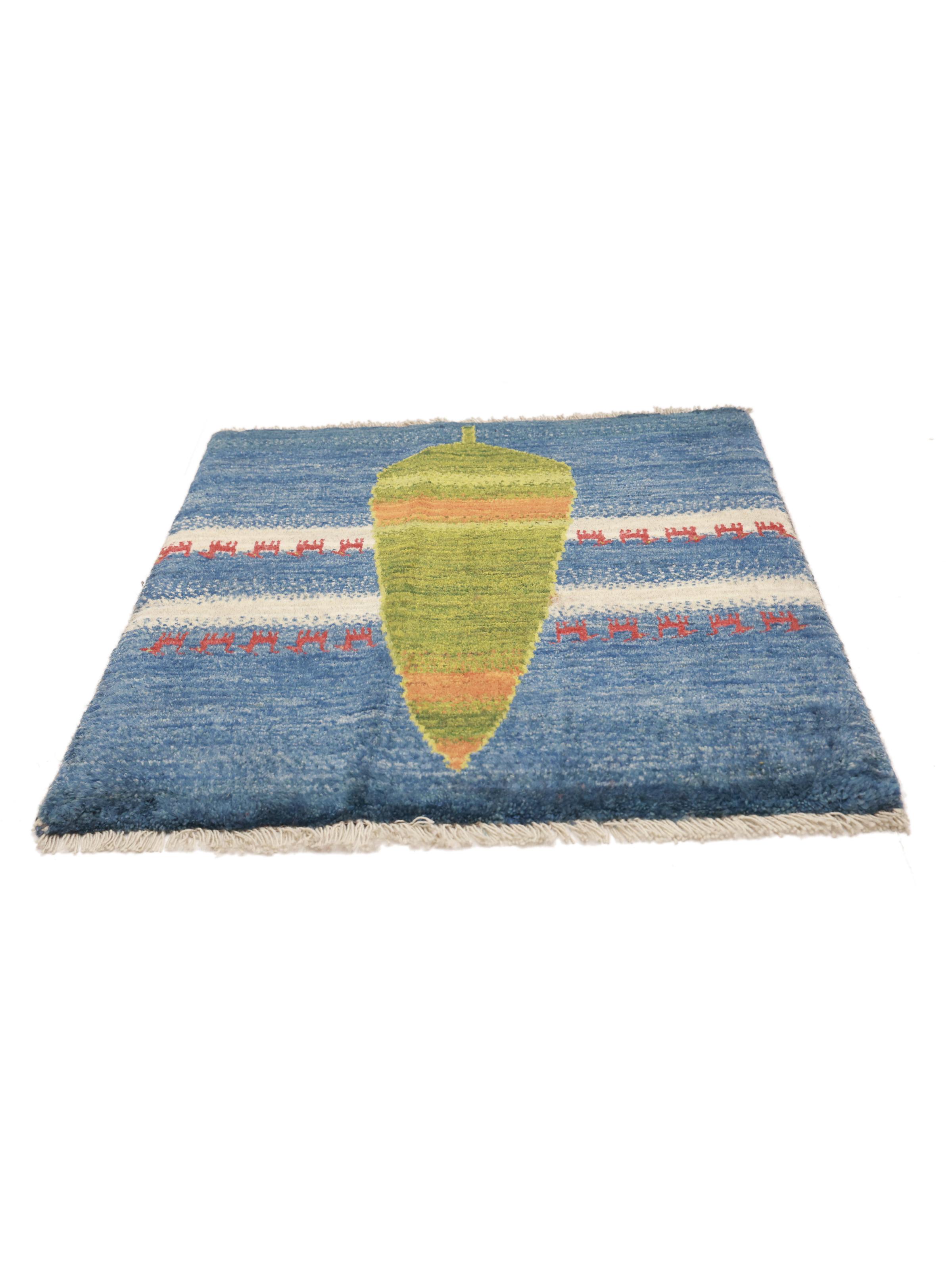
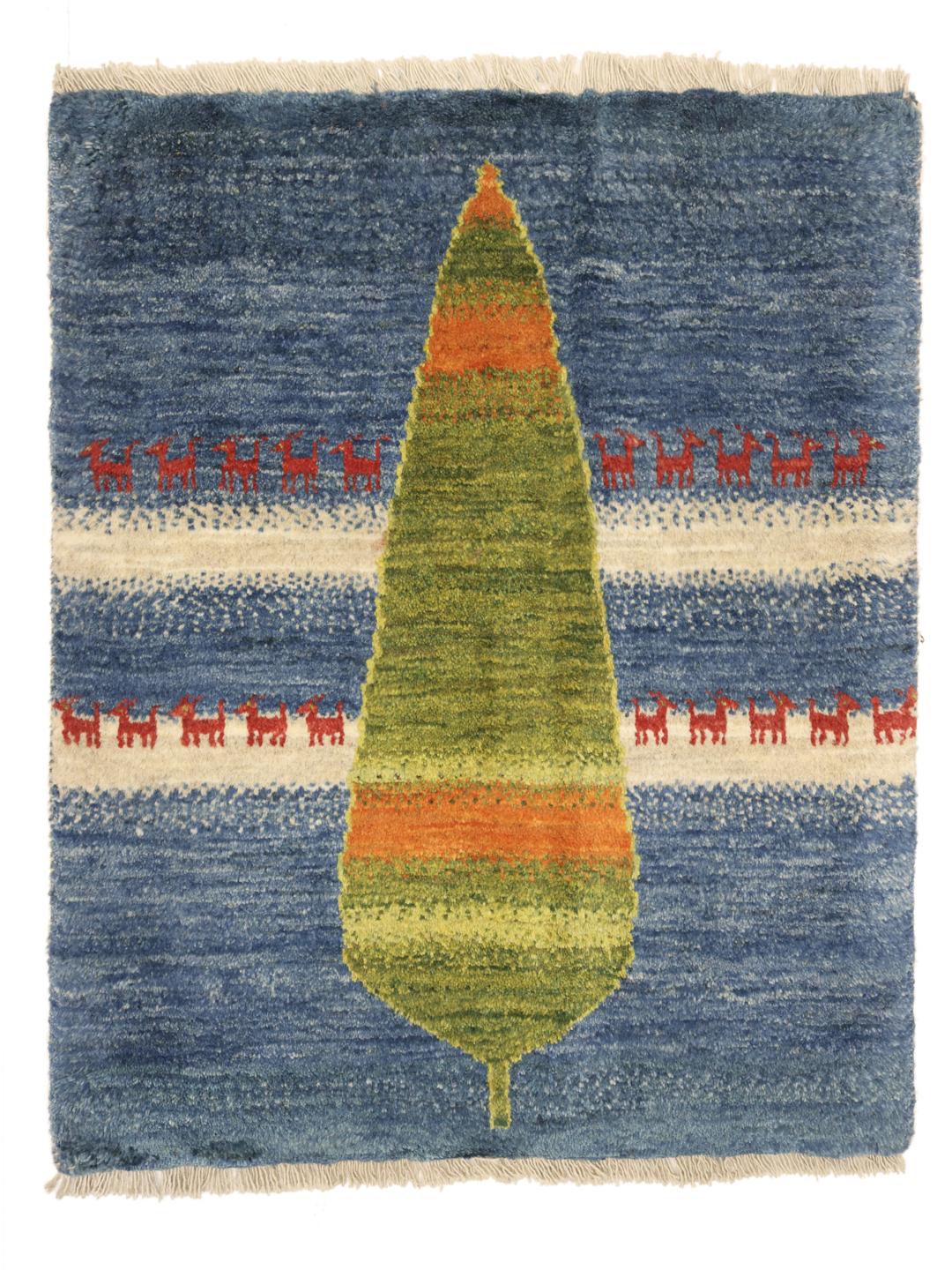
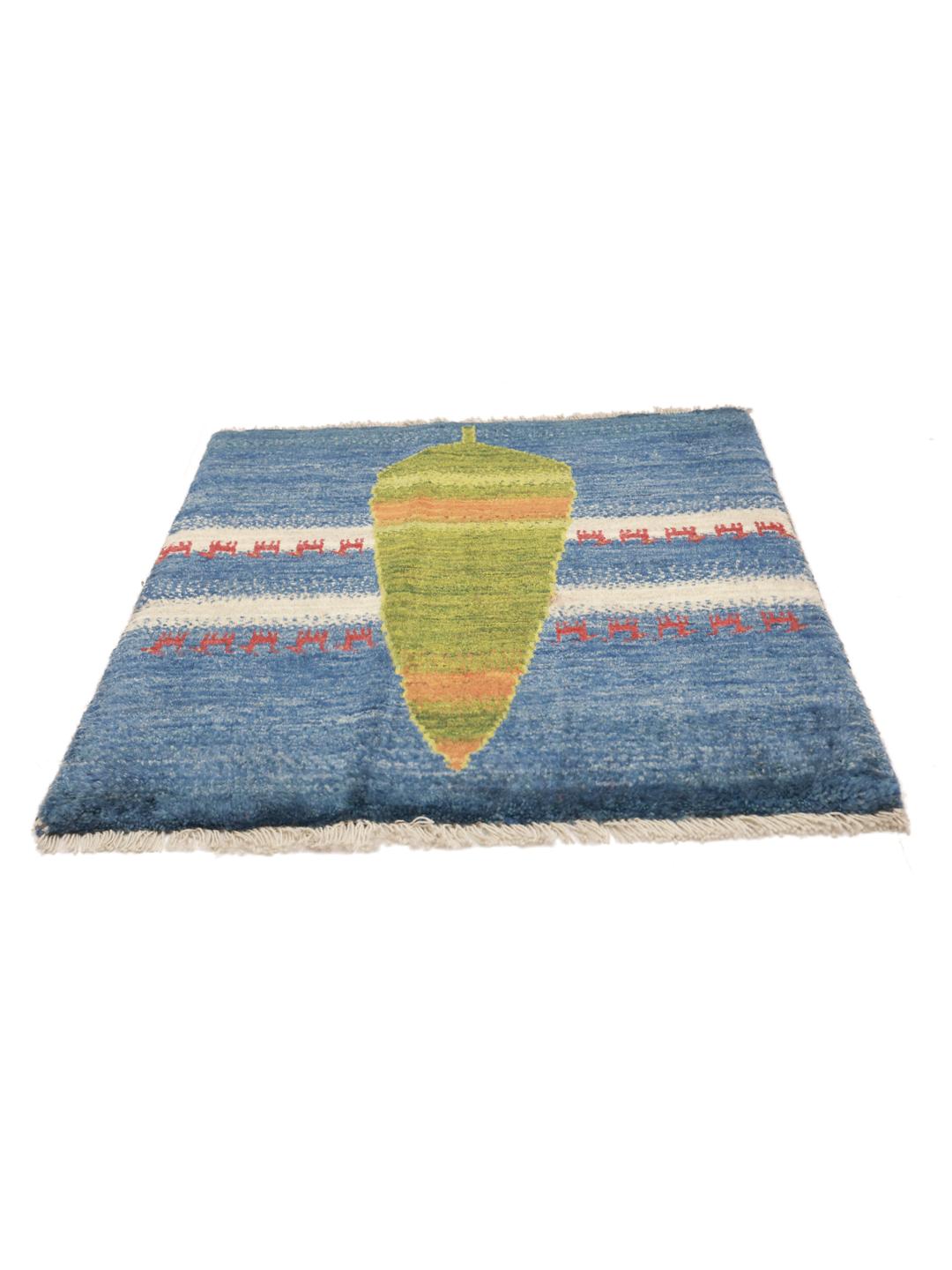
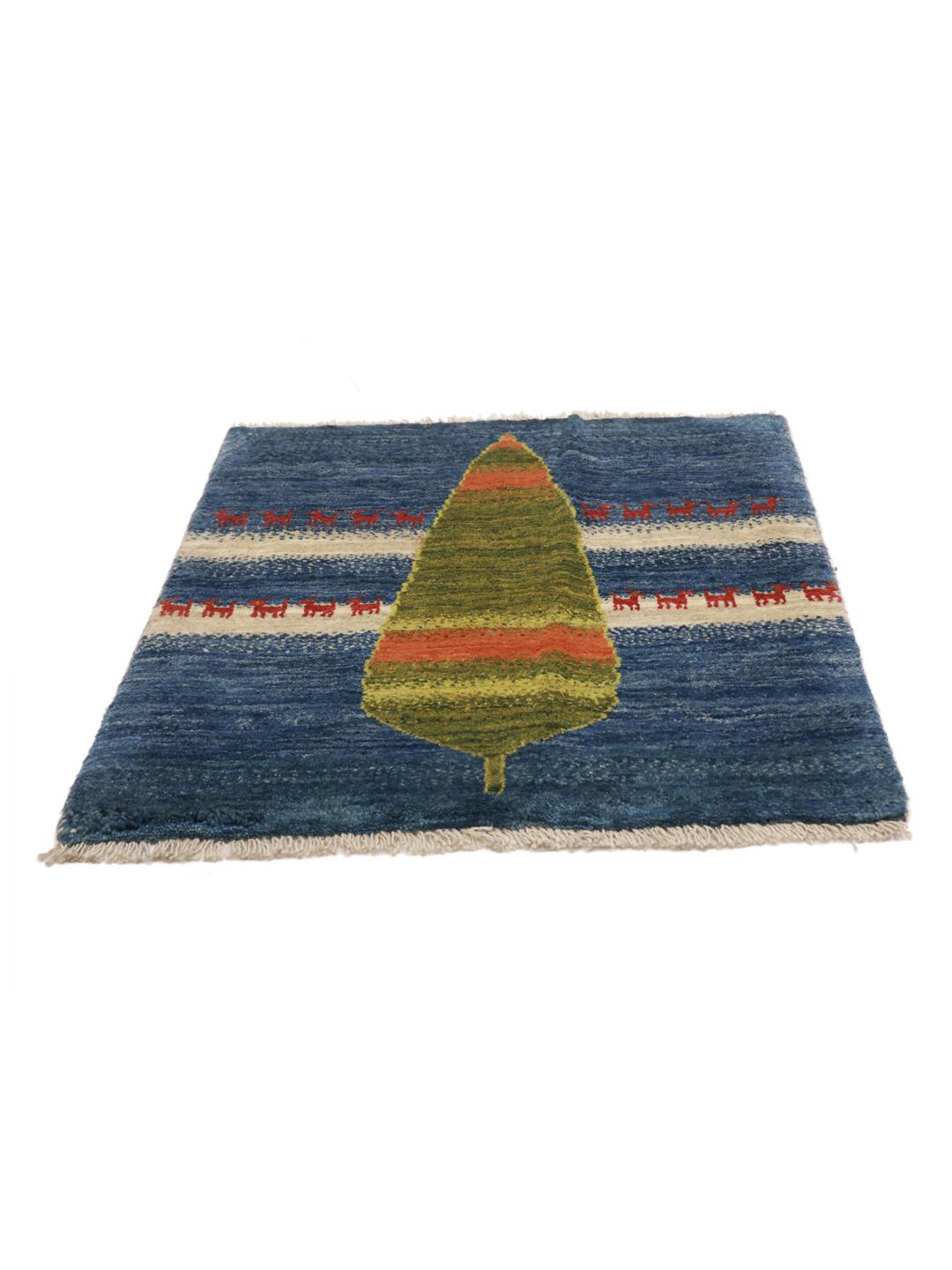
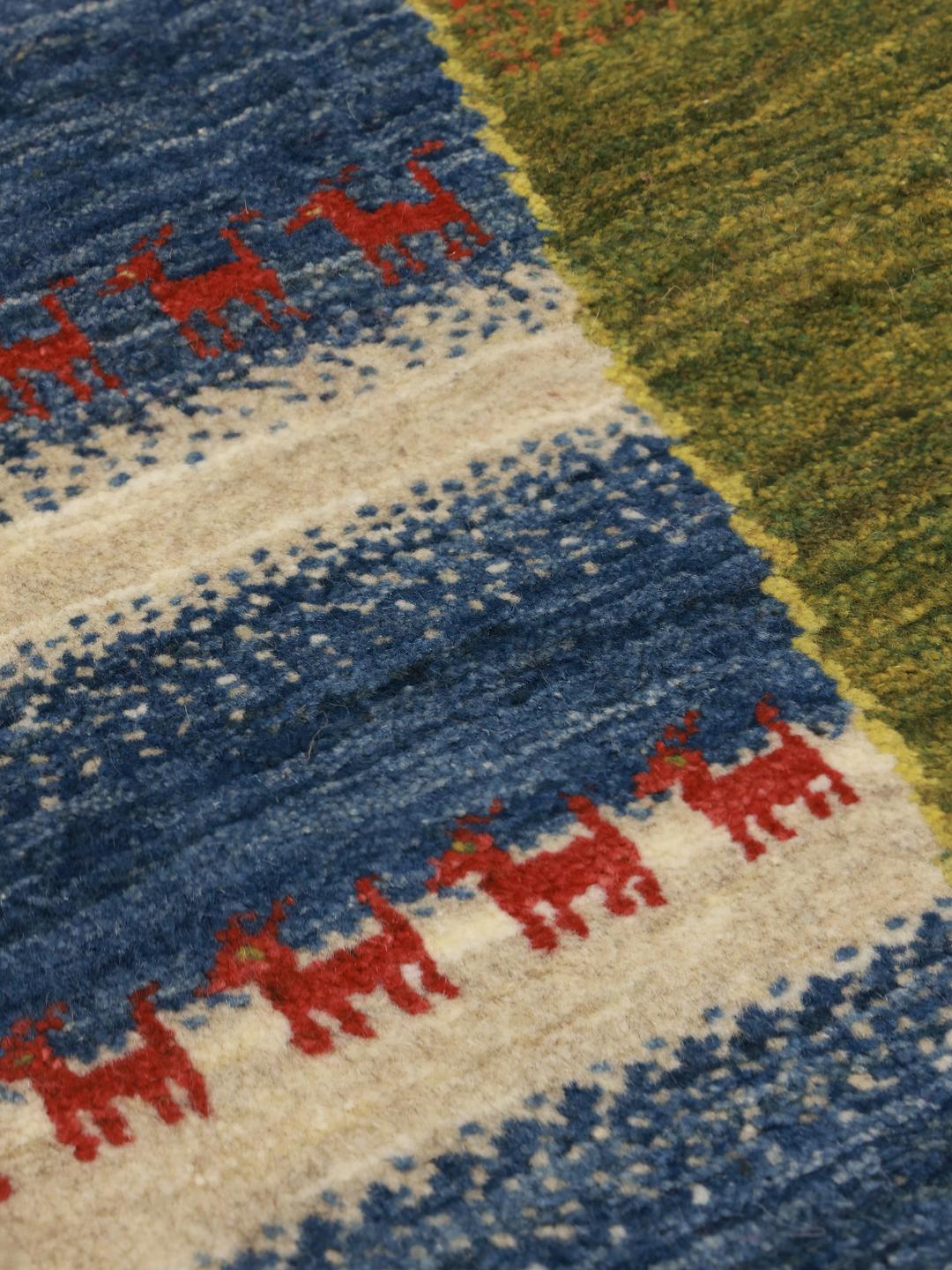
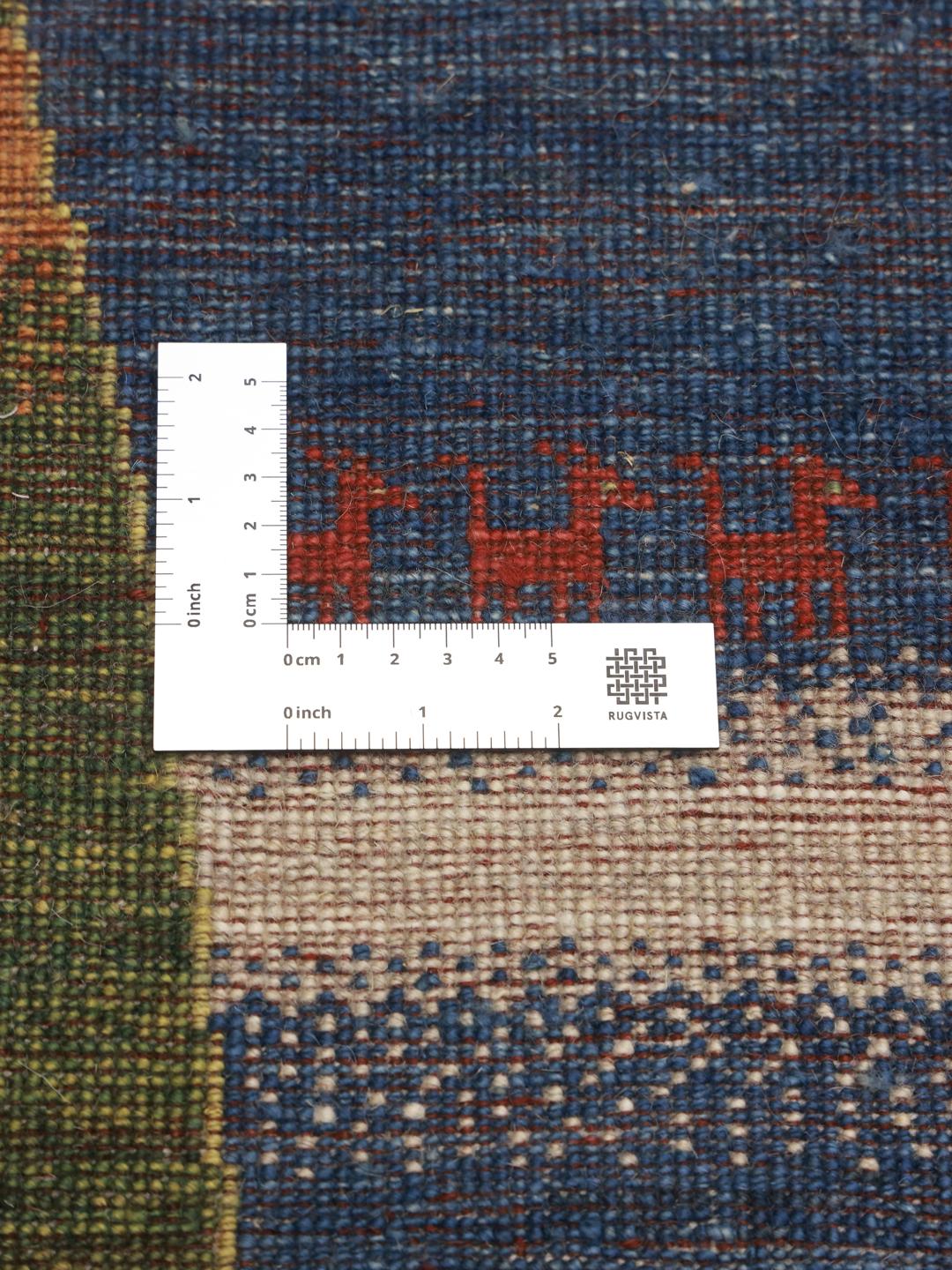
Signature design elements in these pieces include the use of negative space, bold colour blocks, and whimsical, folk-art-inspired figures. In this particular piece, the prominent tree motif serves as a central anchor, flanked by rows of animals, a classic arrangement that balances simplicity with visual interest. This style rejects the rigid symmetry of commercial rugs in favour of a more organic, free-flowing aesthetic that feels fresh and modern.
Collectors value these rugs for their authenticity and the sheer skill required to create such vivid, complex imagery without the aid of a pre-drawn pattern. Owning a piece from this tradition is a way to preserve a fading art form that emphasises creativity and individual expression. Each rug acts as a visual diary, capturing a moment in time and the spirit of the people who created it, making it a culturally significant addition to any collection.