Gabbeh rugs have a storied history as the functional, artistic creations of nomadic tribes in the Middle East. Traditionally, these rugs were woven for personal use within the family, serving as warm bedding or floor coverings inside tents. Unlike more formal urban carpets, Gabbeh rugs were defined by their freedom of expression, allowing weavers to incorporate spontaneous stories, symbols, and colours that reflected their immediate environment and personal experiences.
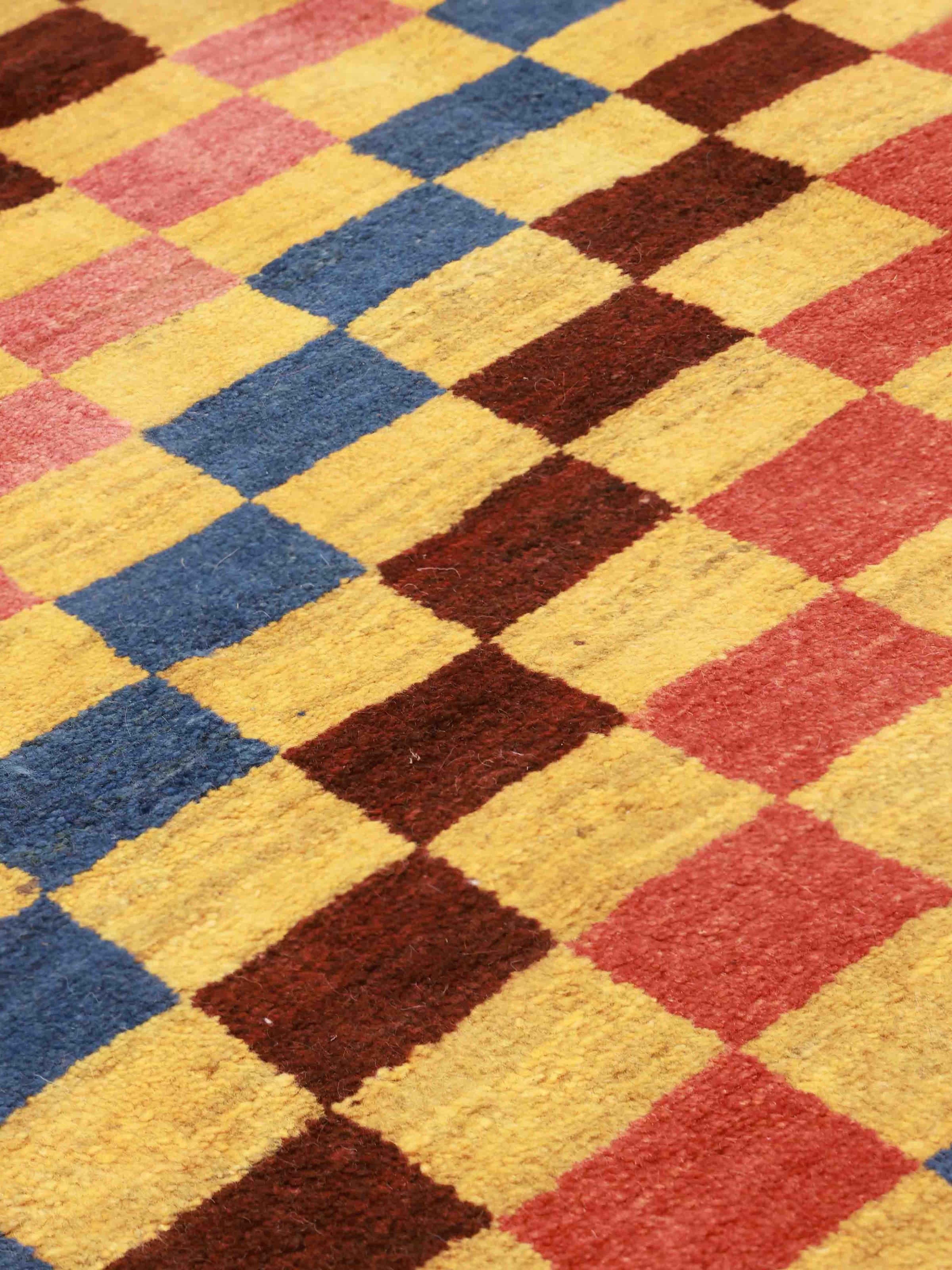
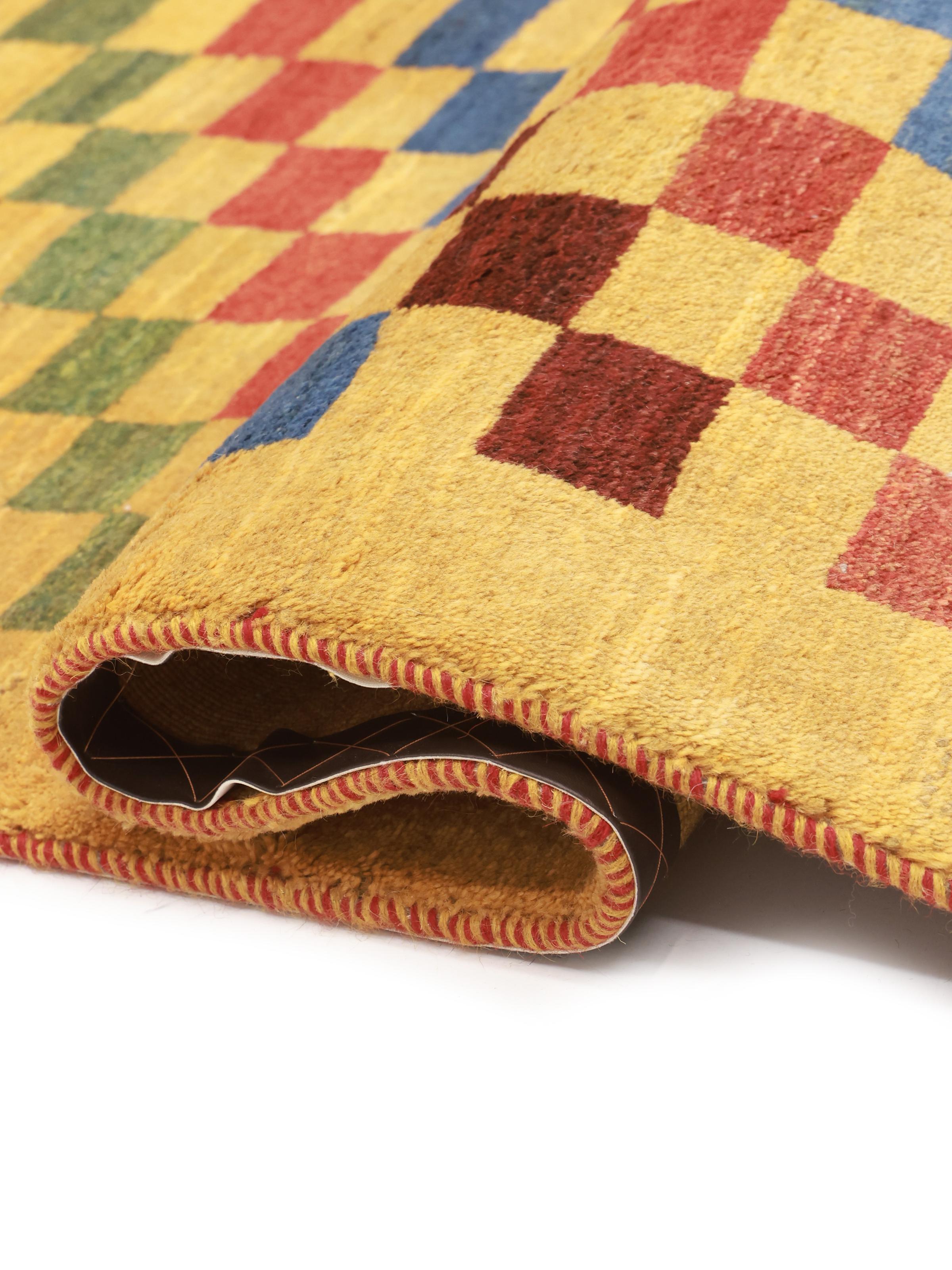
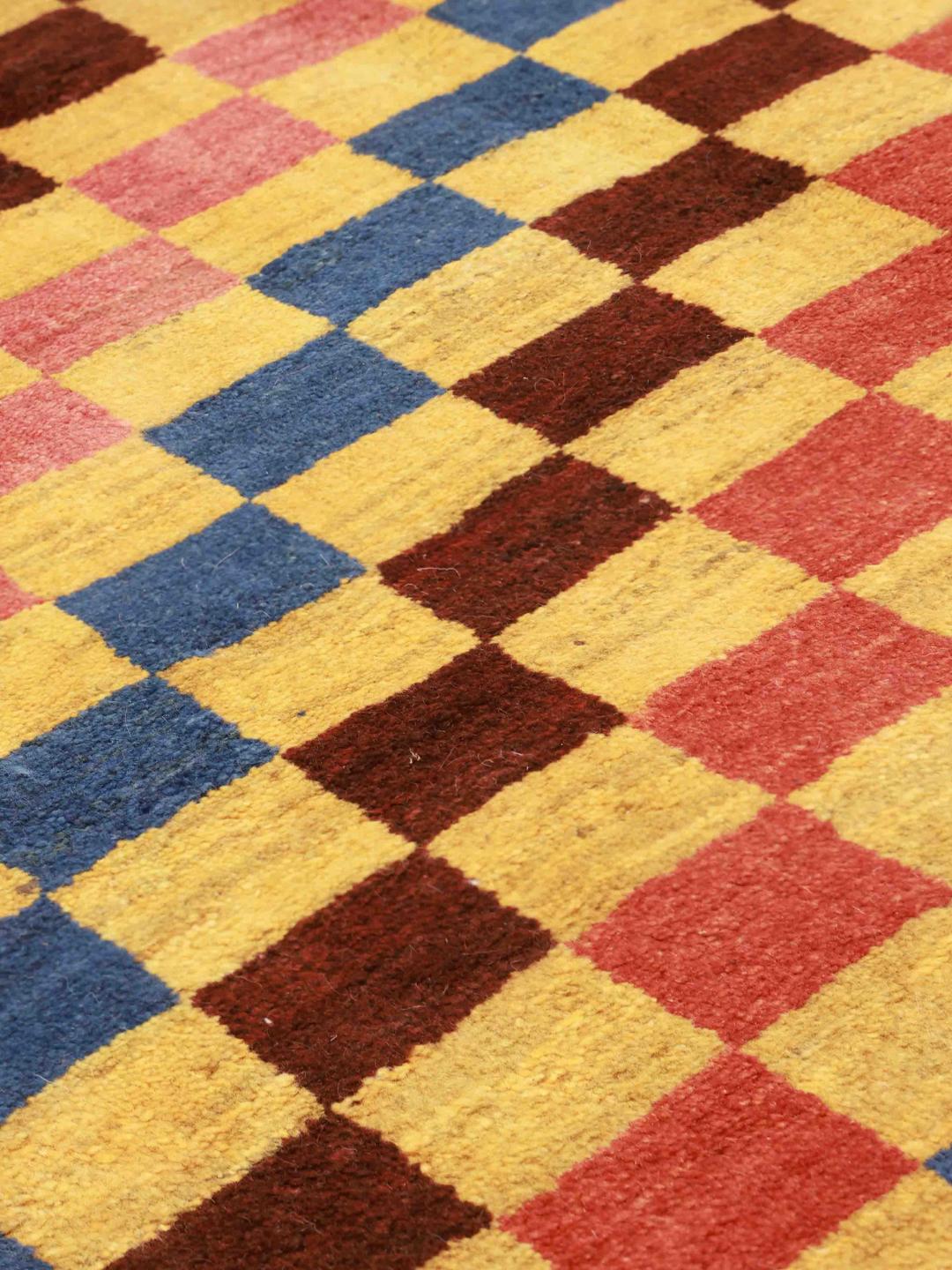
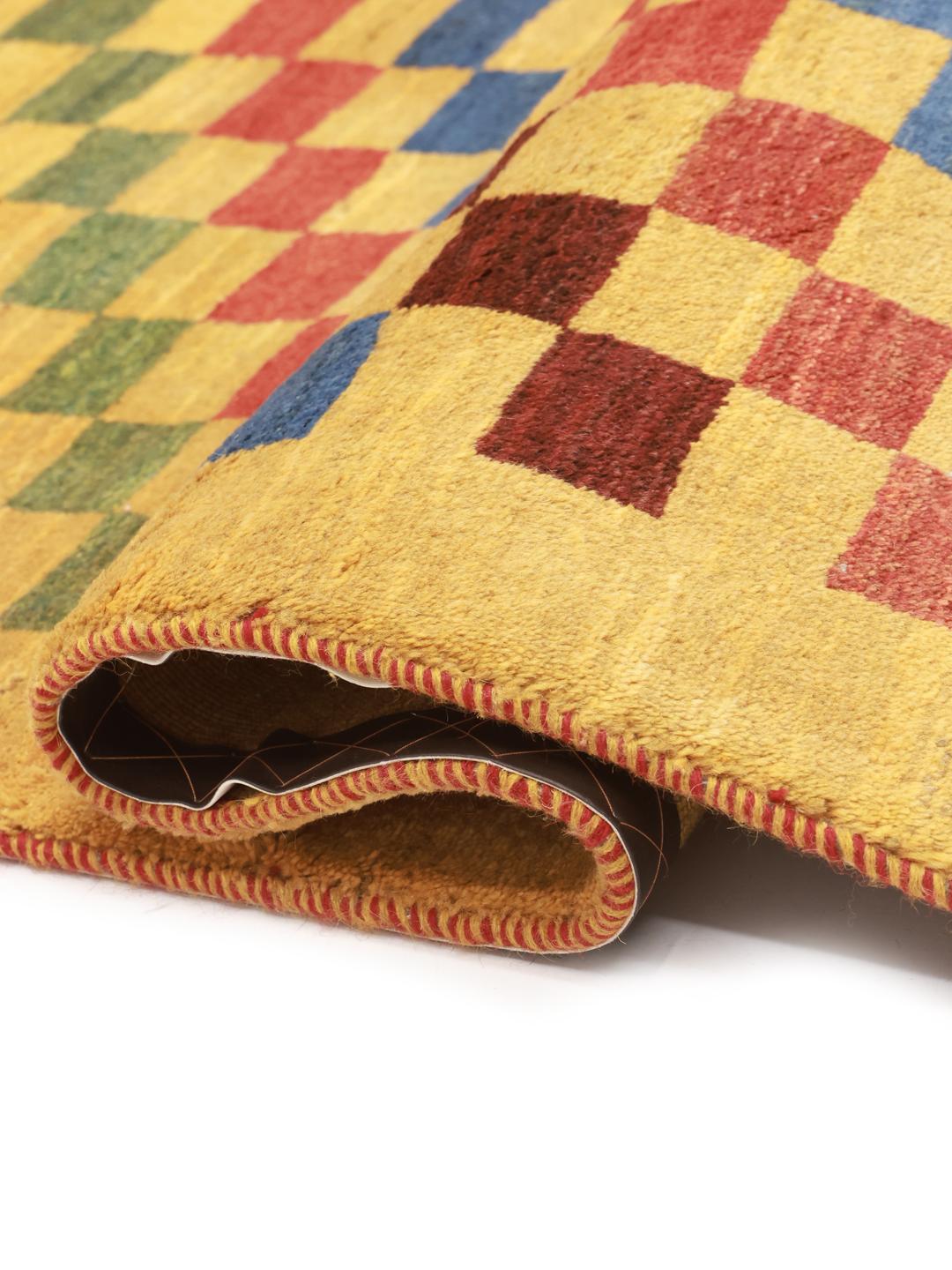
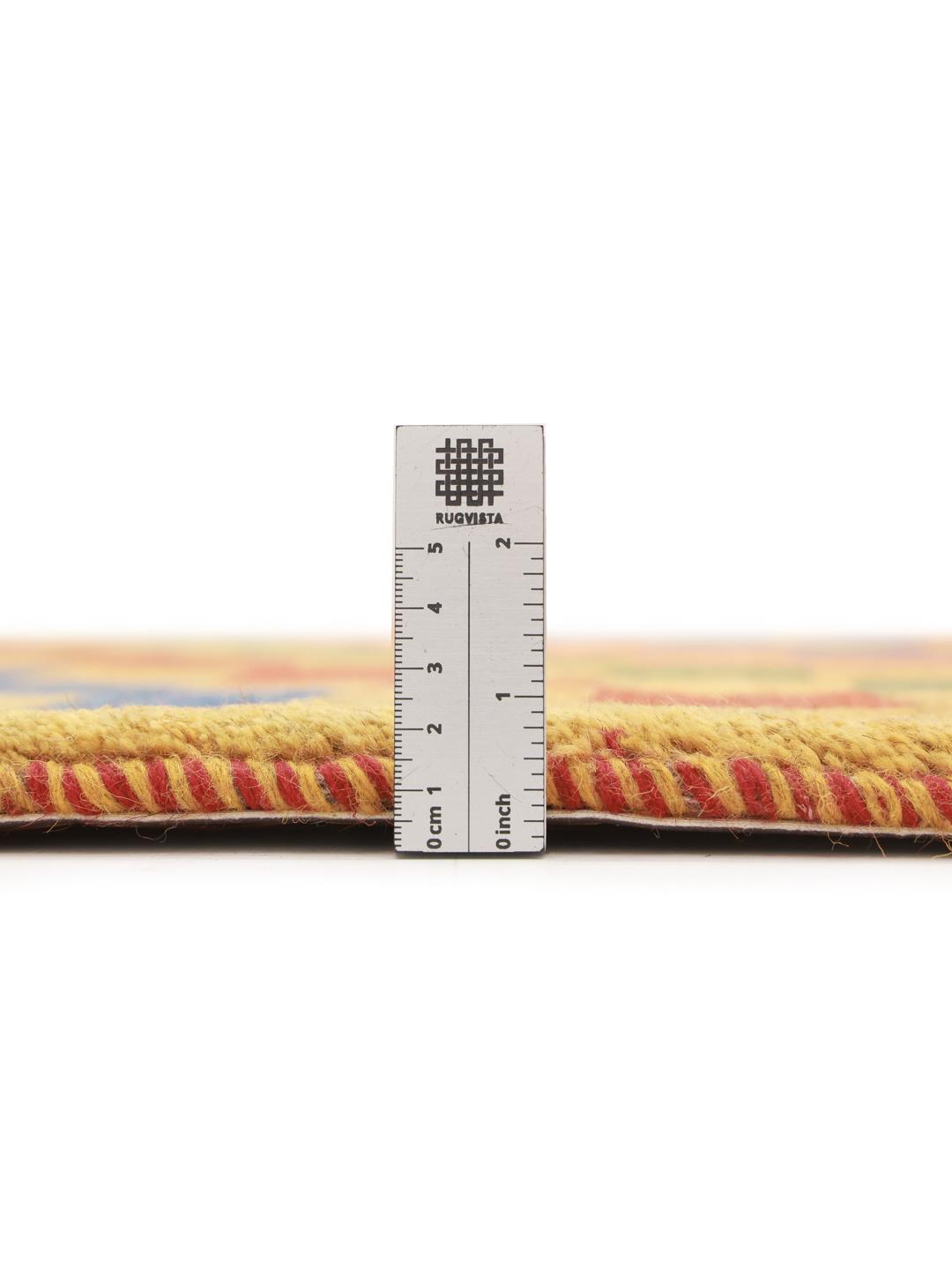
The term Gabbeh essentially refers to a rug that is left in its most natural, raw state. These pieces are celebrated for their thicker, longer pile and a more simplistic, often abstract approach to design. The technique involves using hand-spun wool, which often retains a natural variation in thickness and colour, giving the finished piece a beautiful, organic texture that feels alive and authentic compared to mass-produced alternatives.
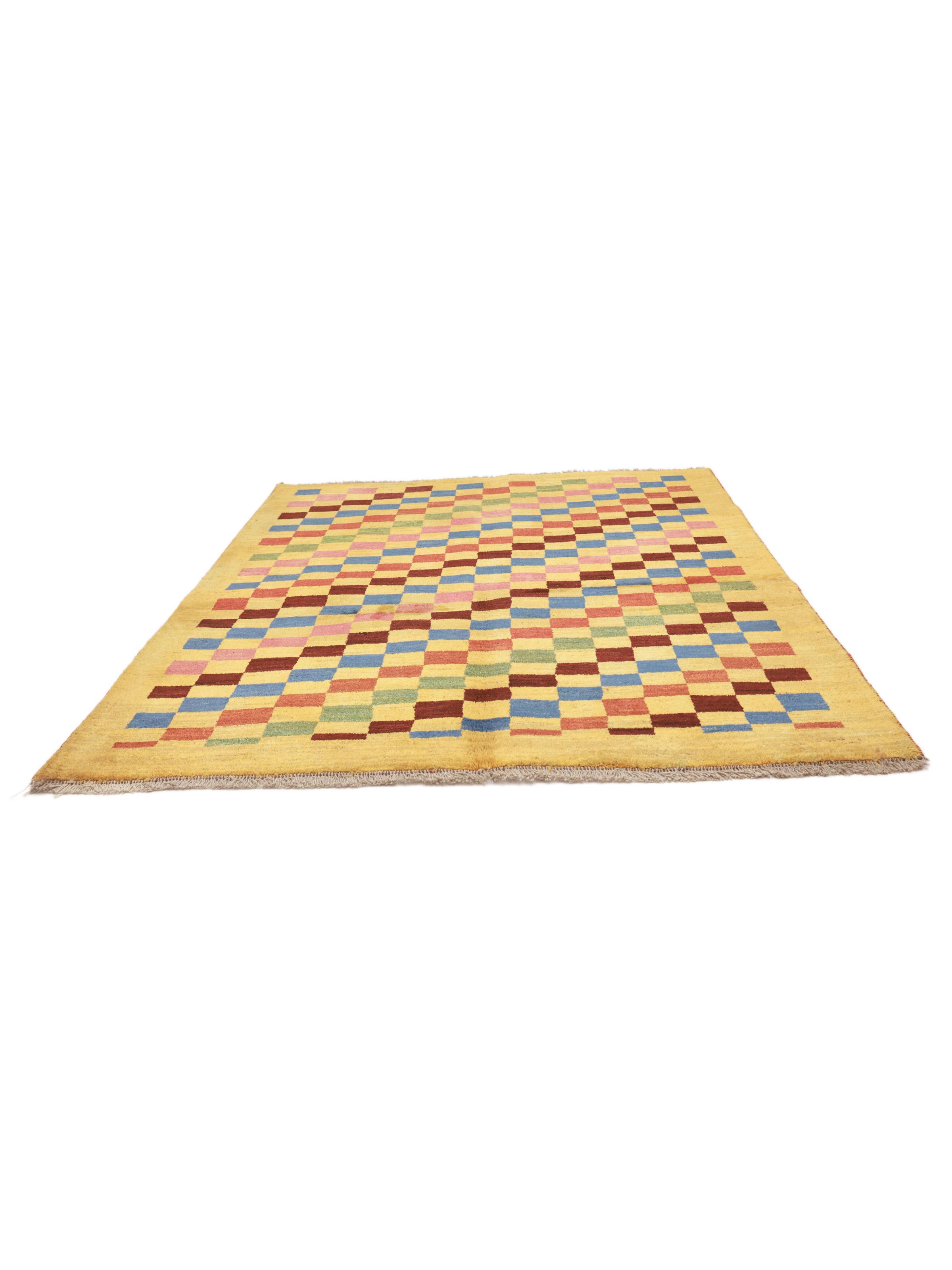
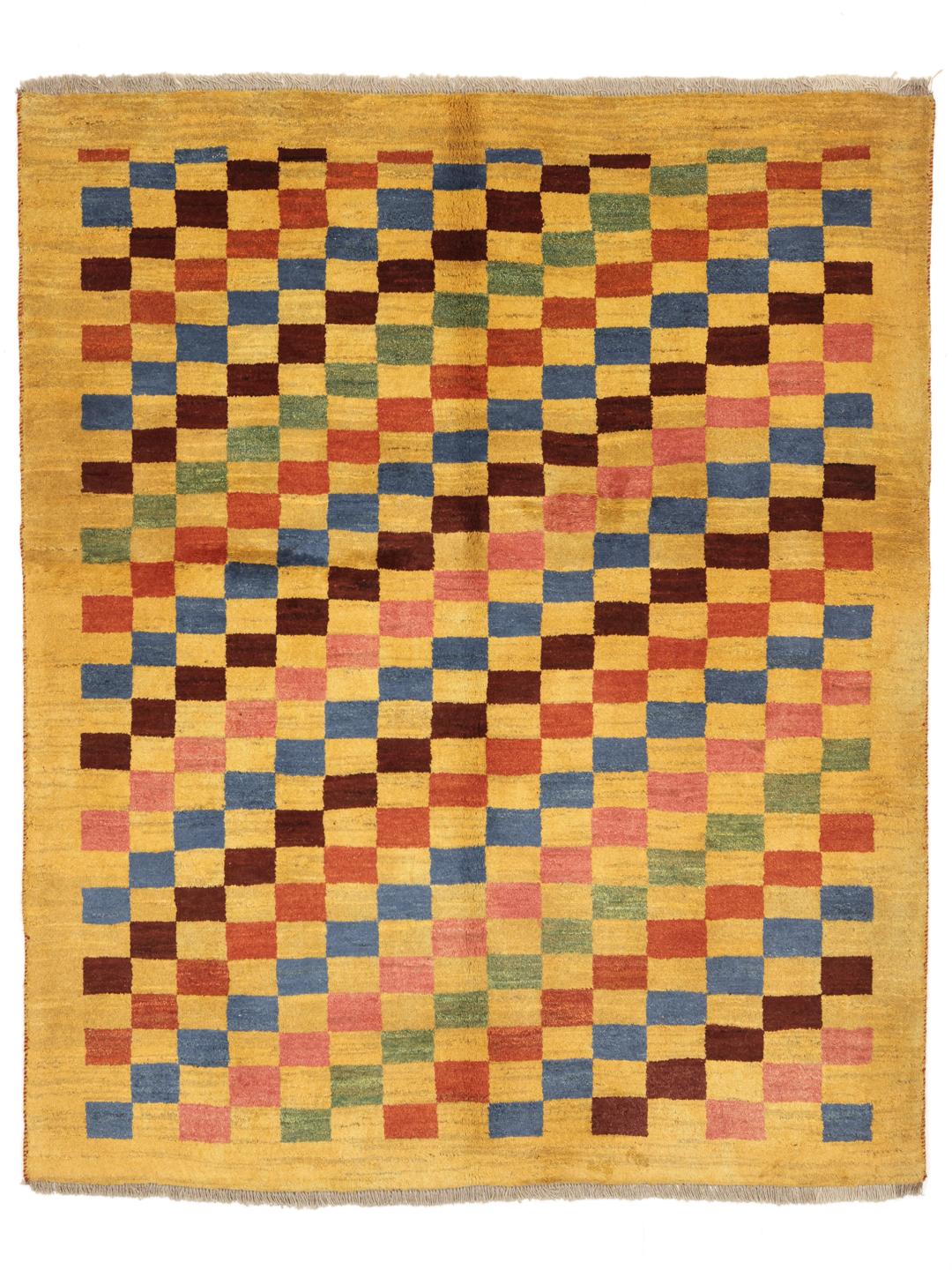
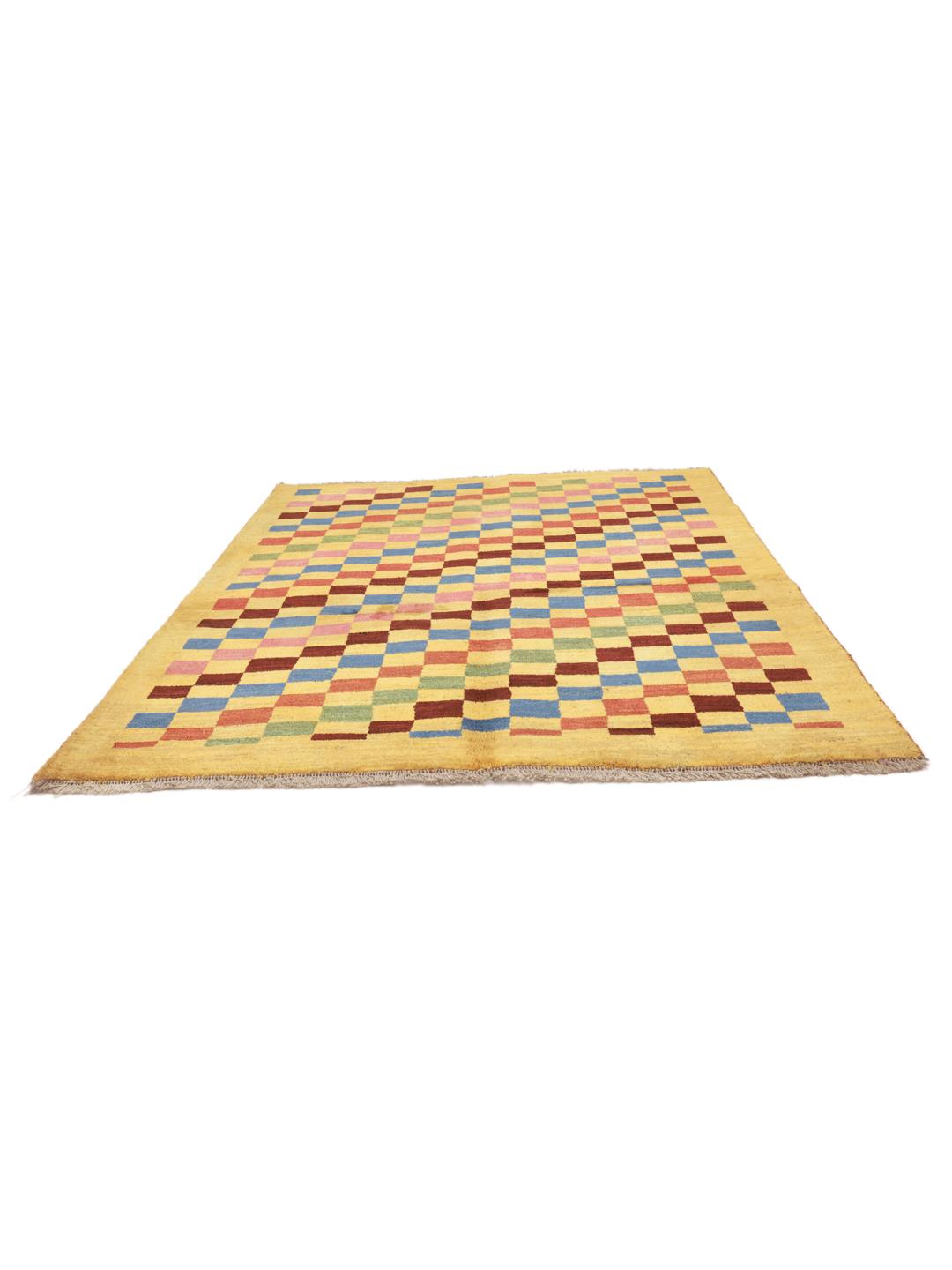
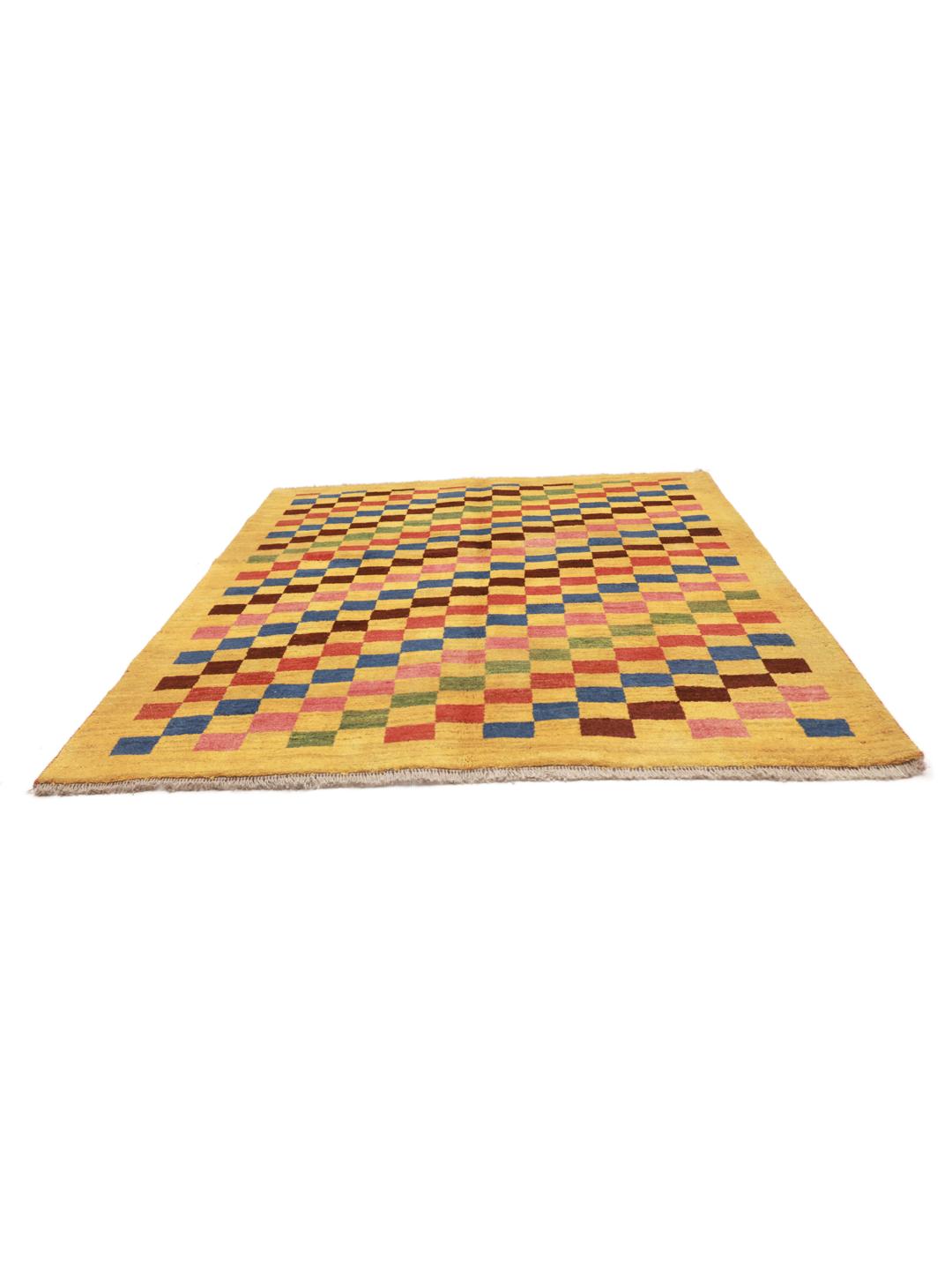
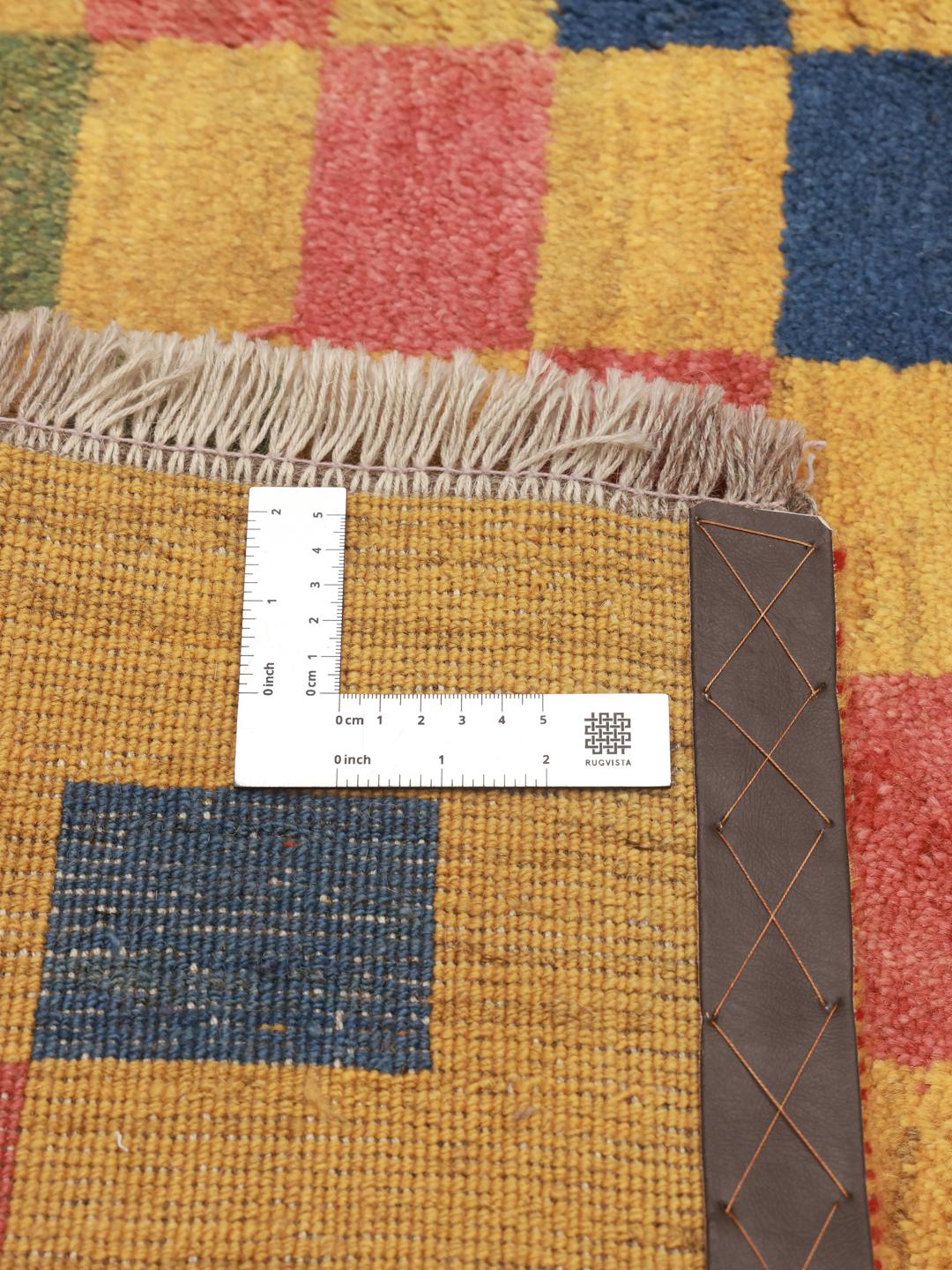
Visually, these rugs are known for their bold use of colour and geometric simplicity. While traditional versions often used local, plant-based dyes to create earthy reds, yellows, and blues, modern Gabbeh rugs like this one often explore a more vibrant palette of blocks and shapes. The pattern on this piece, with its repeating, offset blocks, draws on the classic tribal love for rhythm and repetition, updated with a playful, artistic sensibility that feels perfectly at home in contemporary spaces.
Collectors value Gabbeh rugs for their unpretentious beauty and the genuine sense of heritage they bring into a home. Because they were historically made by women for their own households, each rug is an intimate expression of skill and creativity. Acquiring a Gabbeh means connecting with a long lineage of nomadic artistry, where the goal was always to create something that provided both practical comfort and a source of joy for the family.