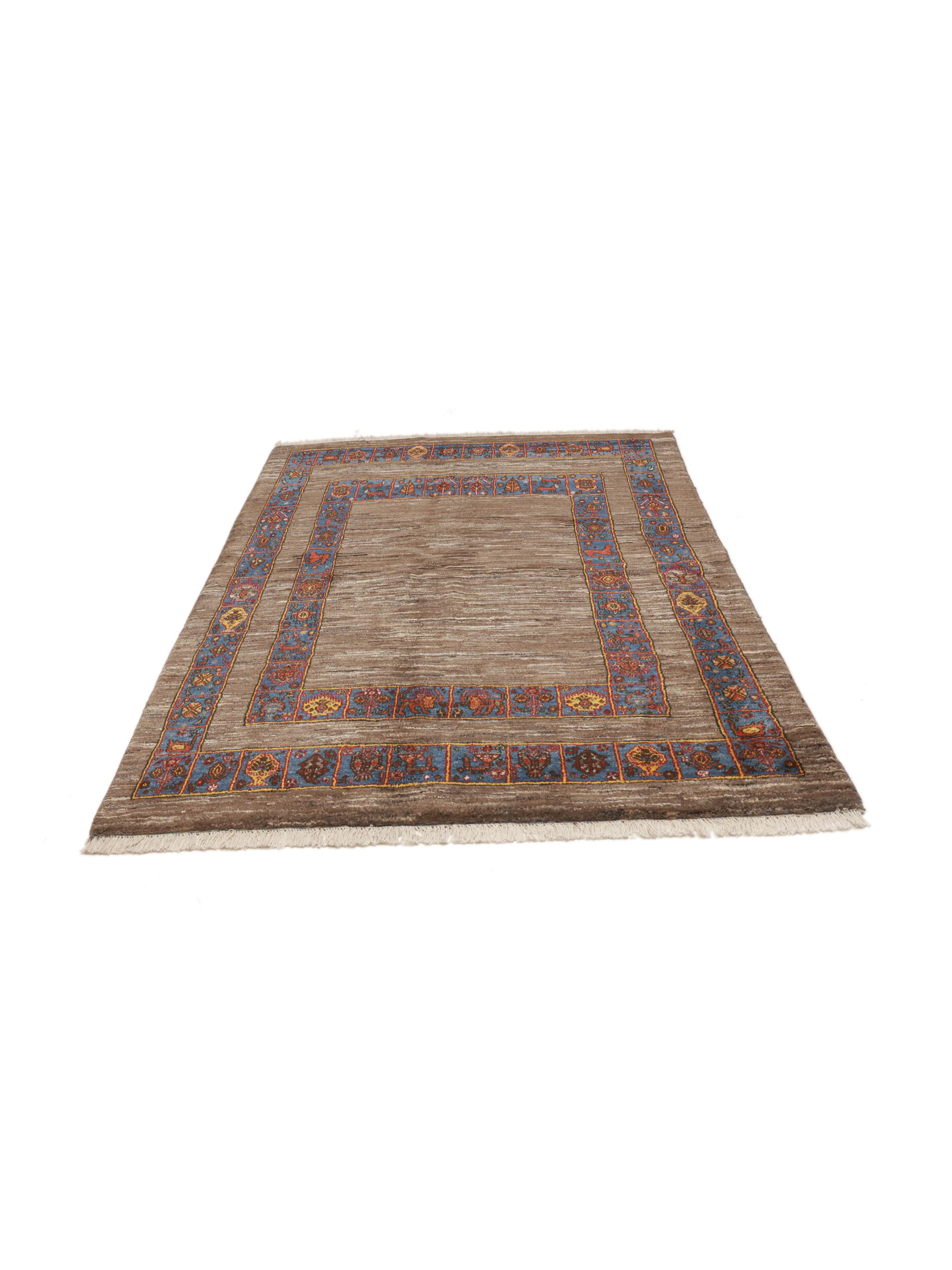
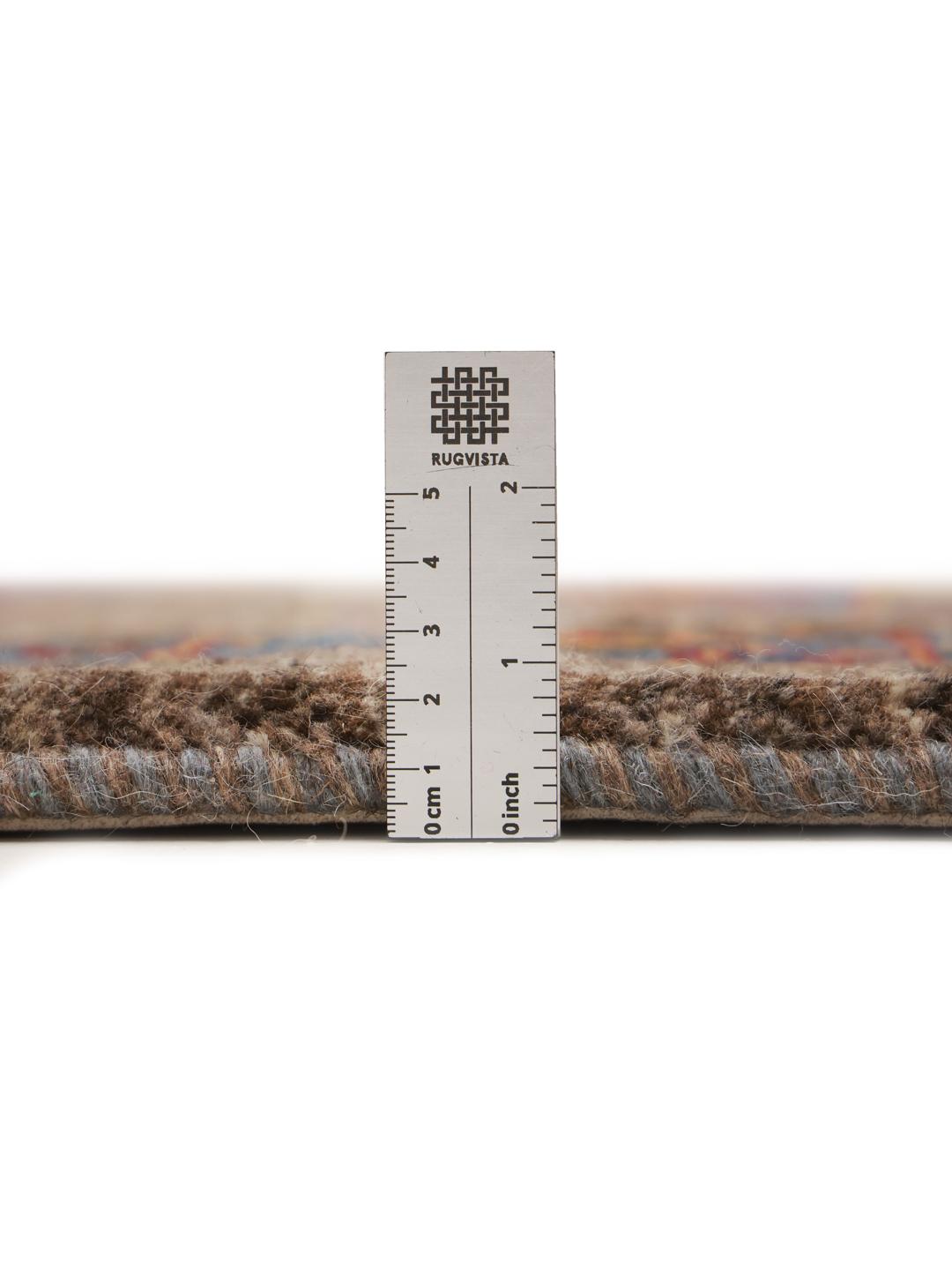
The Gabbeh tradition finds its roots in the nomadic cultures of the Middle East. Historically, these rugs were woven by tribal women primarily for their own personal use, such as providing warmth in tents or serving as sleeping mats, which explains their characteristic thick pile and focus on comfort over complex, formal geometry.
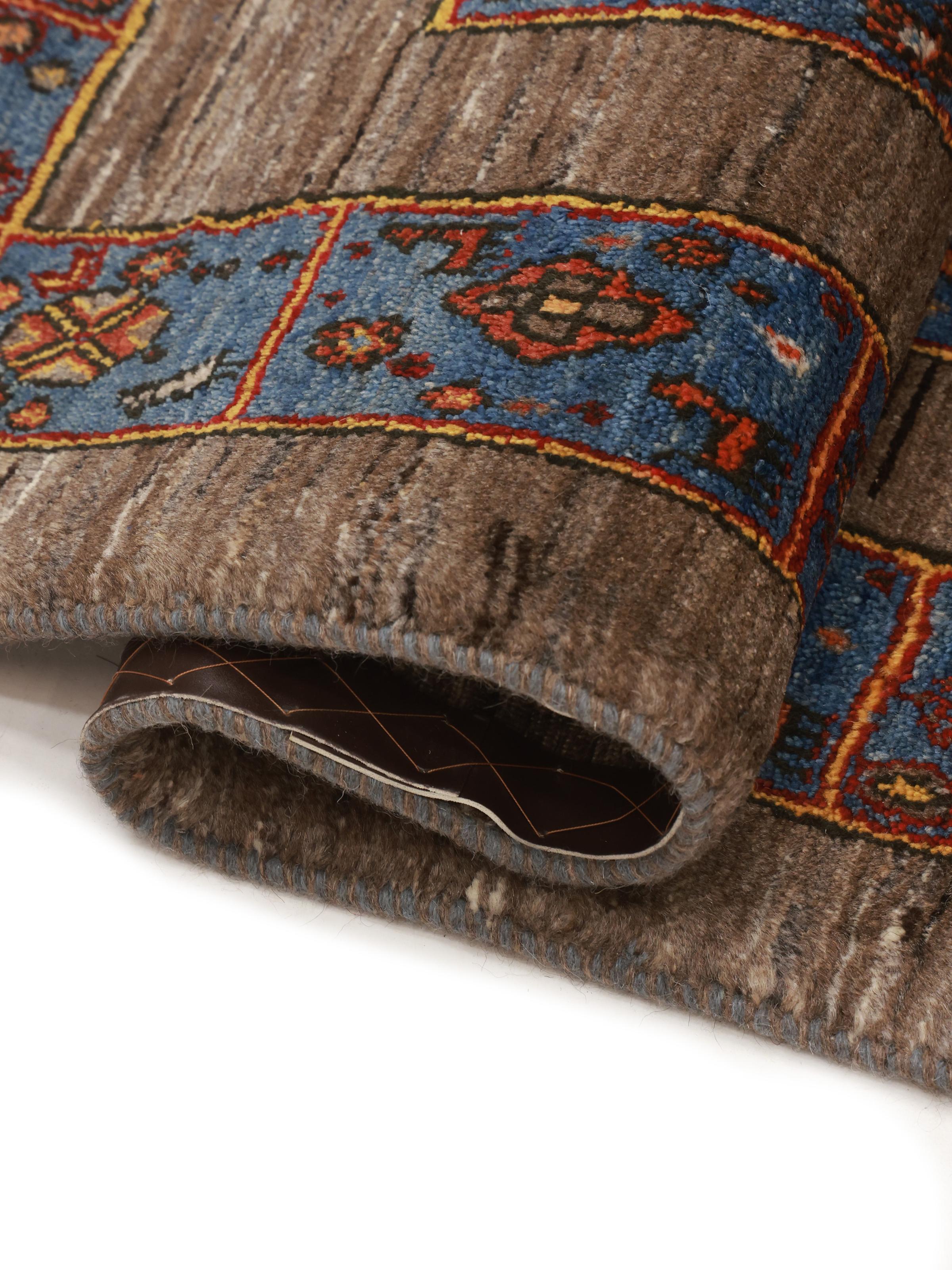
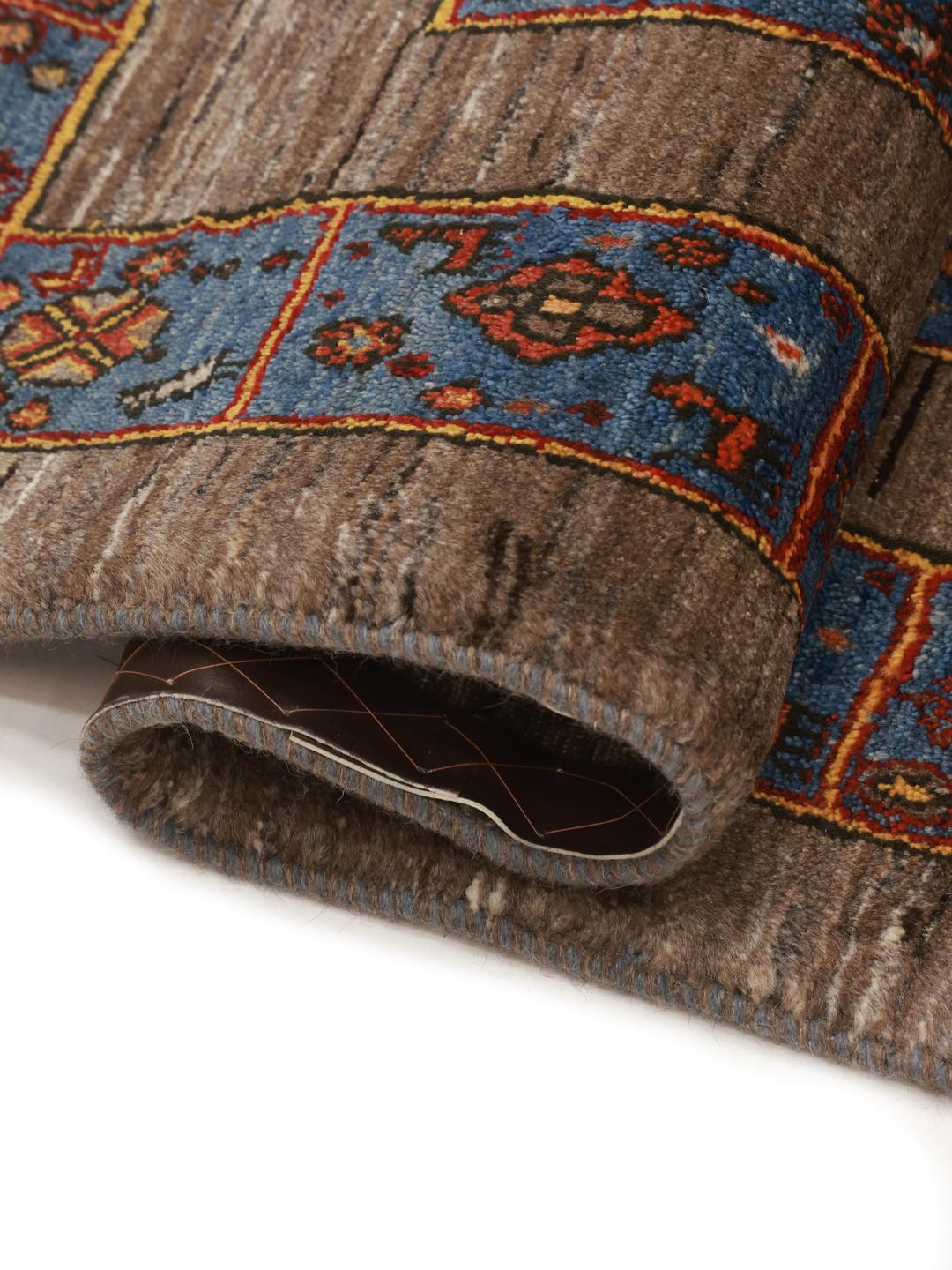
The term Gabbeh itself refers to a rug that is 'natural' or 'unclipped', often featuring a simpler, more abstract aesthetic compared to traditional city-made carpets. This style celebrates the raw beauty of the materials, with the weavers often using hand-spun wool that retains subtle variations in texture and colour, adding to the organic, soulful character of each piece.
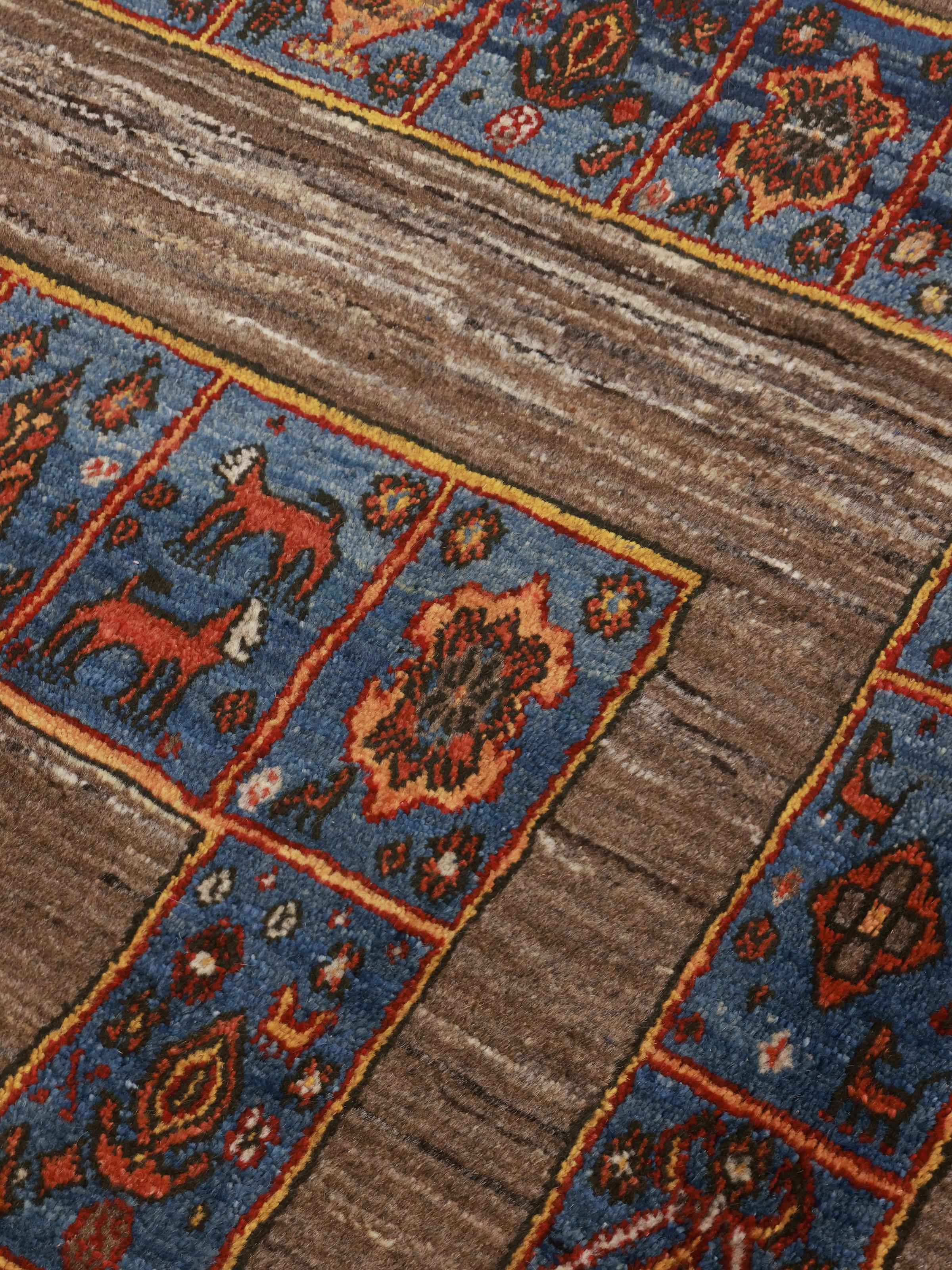
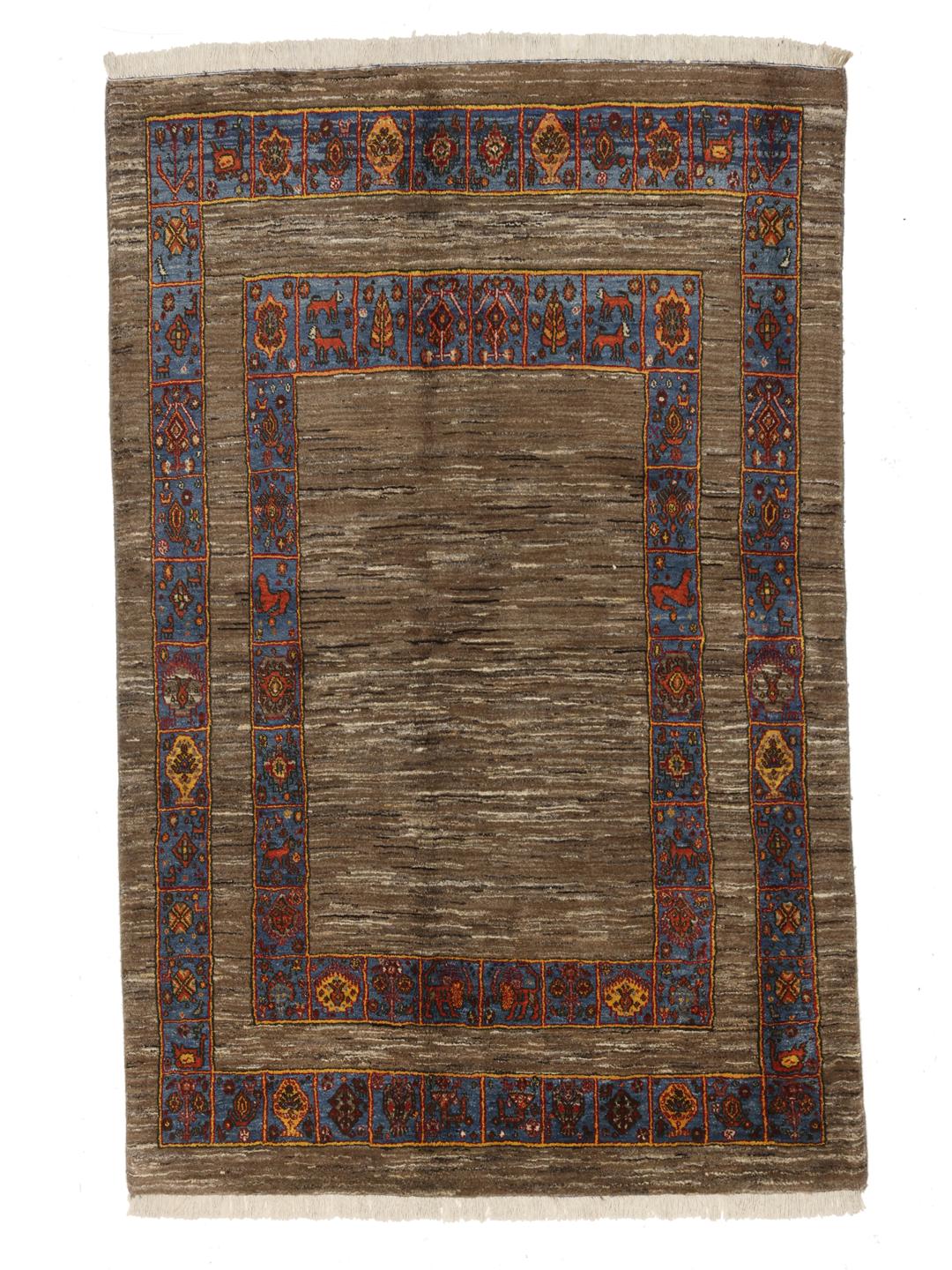
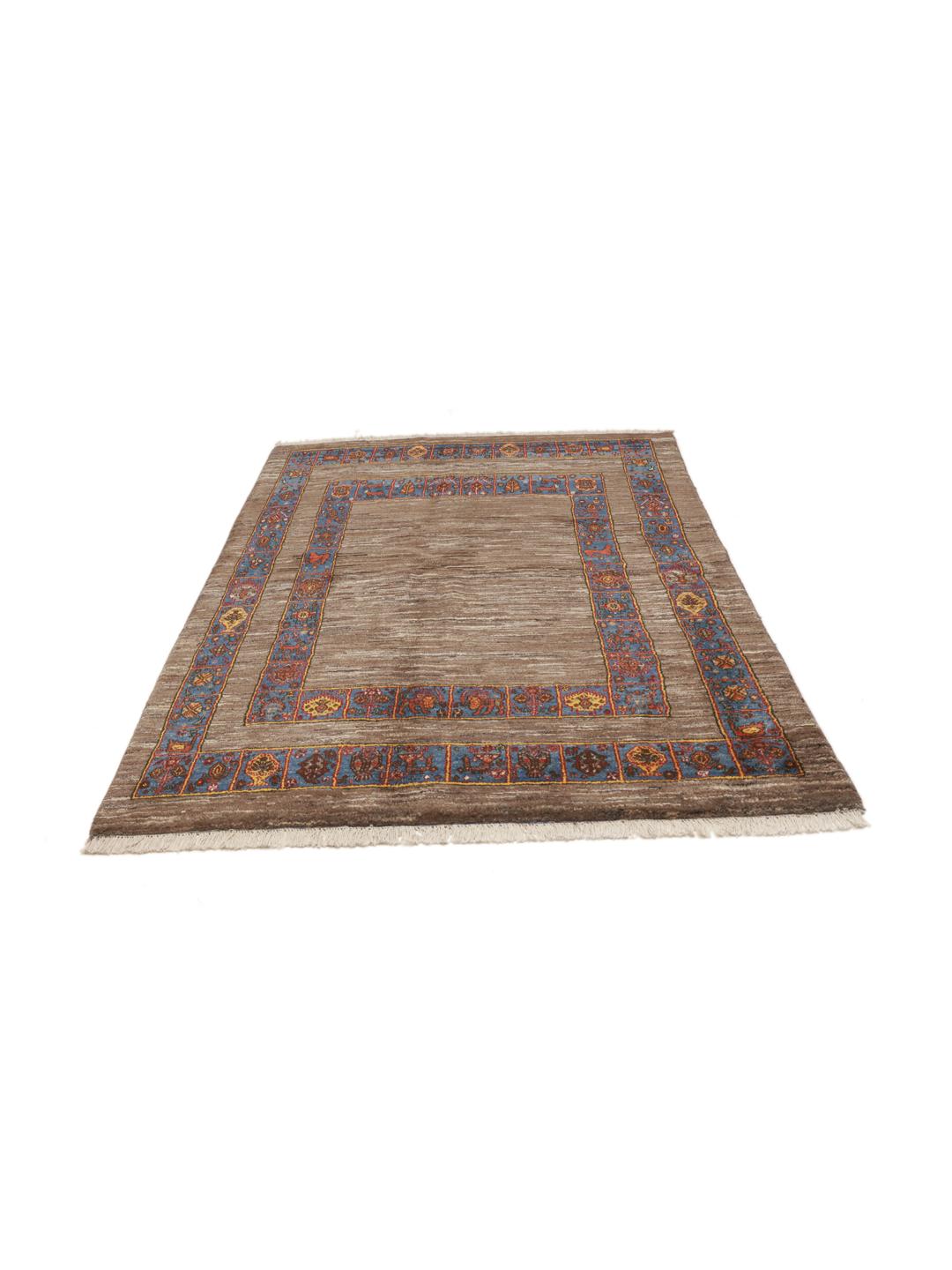
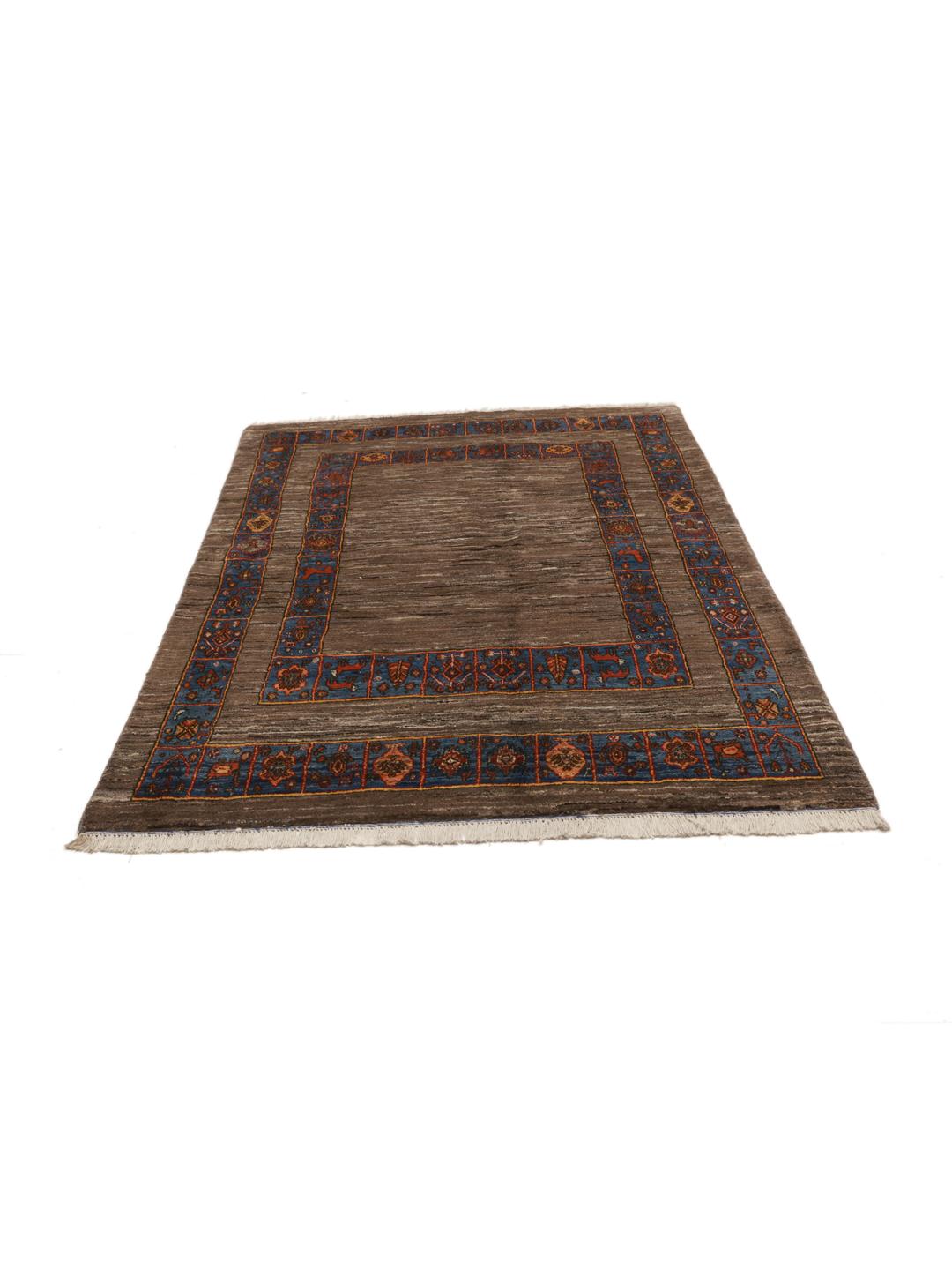
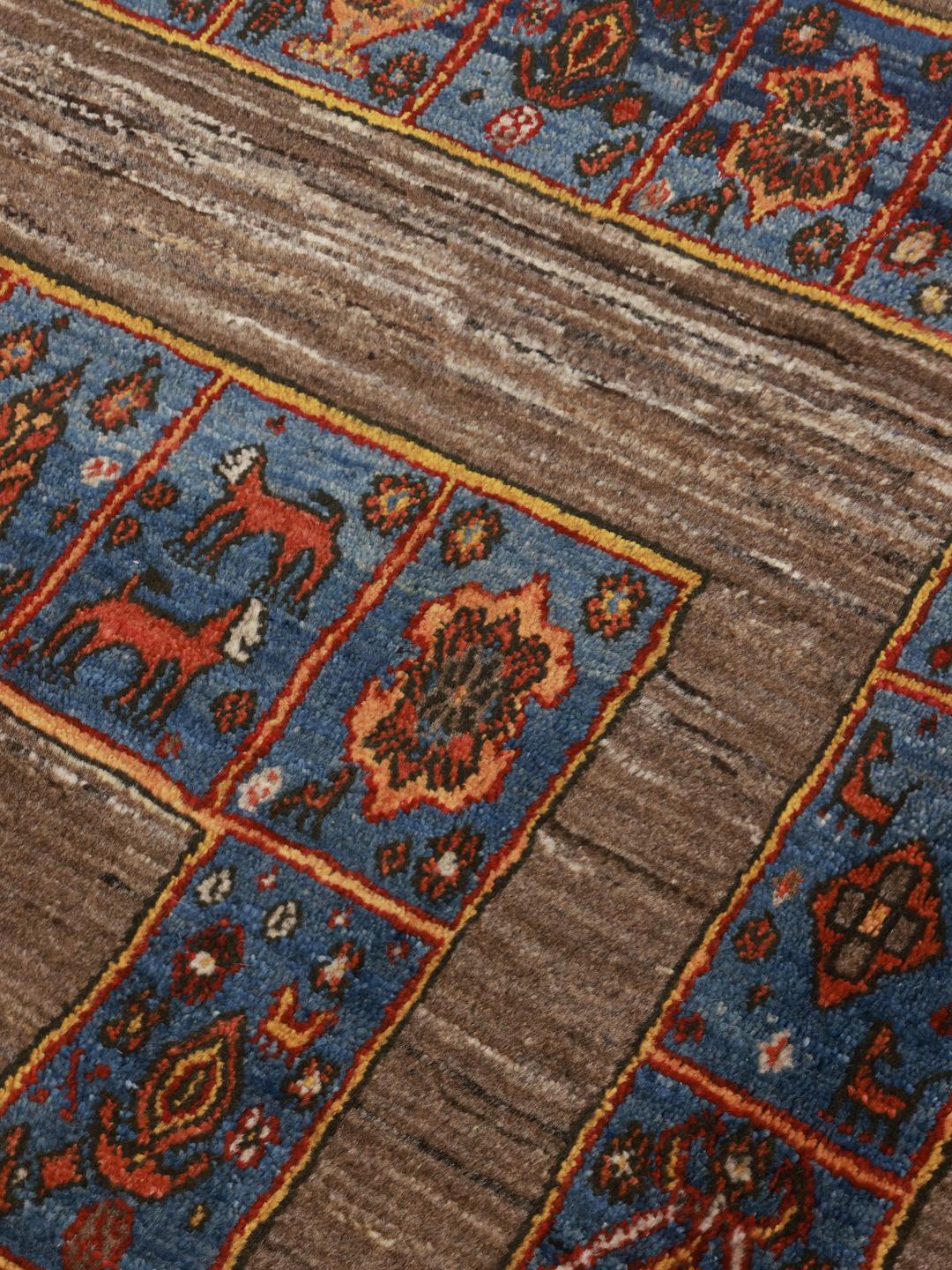
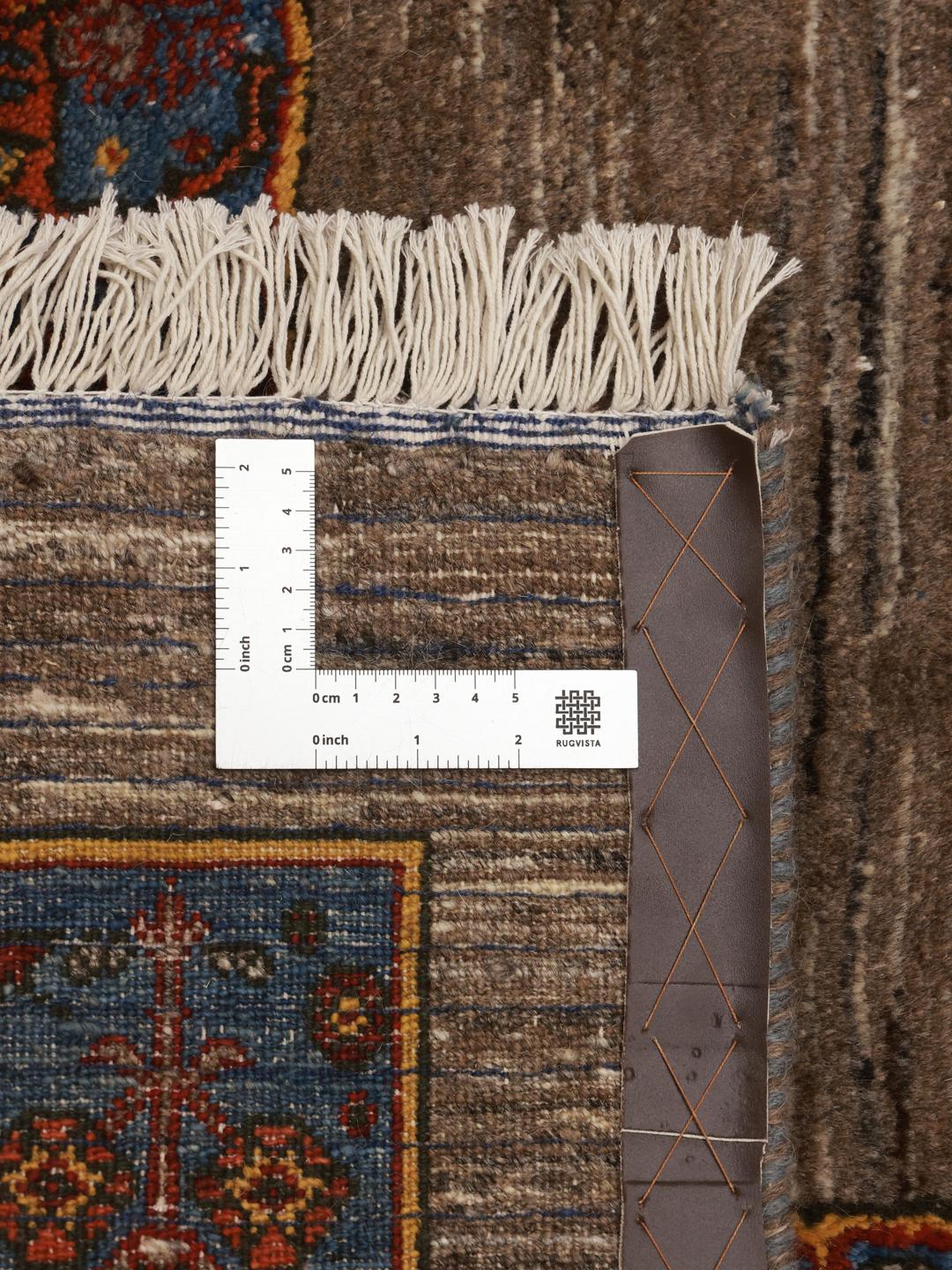
Design-wise, these rugs are known for their open fields and playful, often symbolic, motifs. While many Gabbehs are defined by their minimalist, single-coloured fields, this specific piece incorporates a striking blue border filled with pictorial-motif elements, showcasing the creative freedom that defines this tradition. The use of vibrant, natural dyes against the earthy brown base is a classic hallmark of the style.
Owning a Gabbeh is a way to connect with a long-standing heritage of tribal craftsmanship. These rugs are highly valued by collectors for their authenticity and the way they bridge the gap between traditional craft and contemporary design. They represent a rare opportunity to acquire a piece of history that remains as functional and relevant today as it was for the nomadic weavers who created the original style.