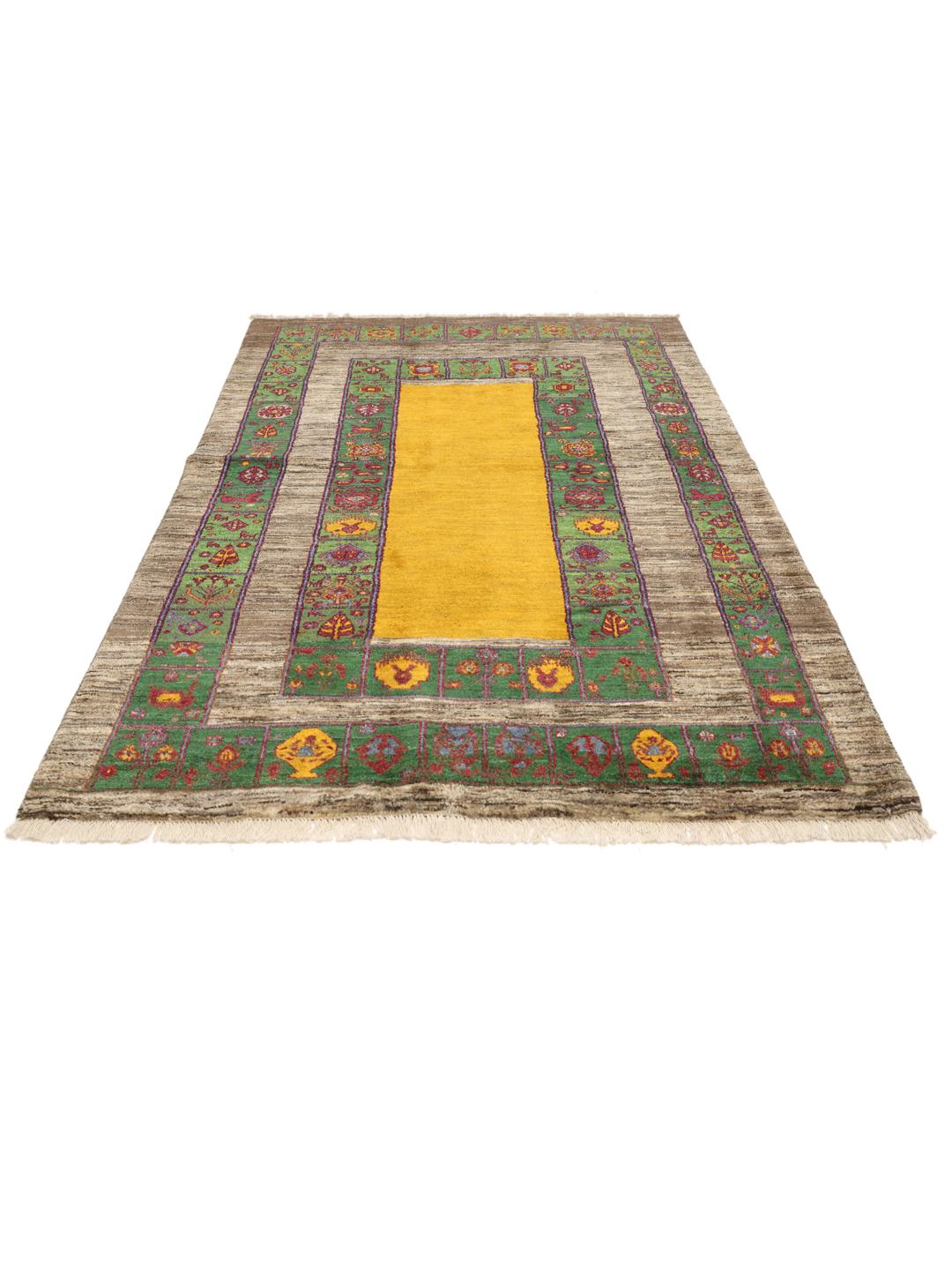
Gabbeh rugs trace their origins to the nomadic tribes of the Middle East, where they were originally woven for personal use rather than for trade. These rugs were designed to be functional, durable, and deeply personal, often reflecting the weaver's surroundings, memories, and emotions through simplified, abstract motifs. Over generations, they have evolved from humble household necessities into highly sought-after collector pieces known for their raw, artistic honesty.
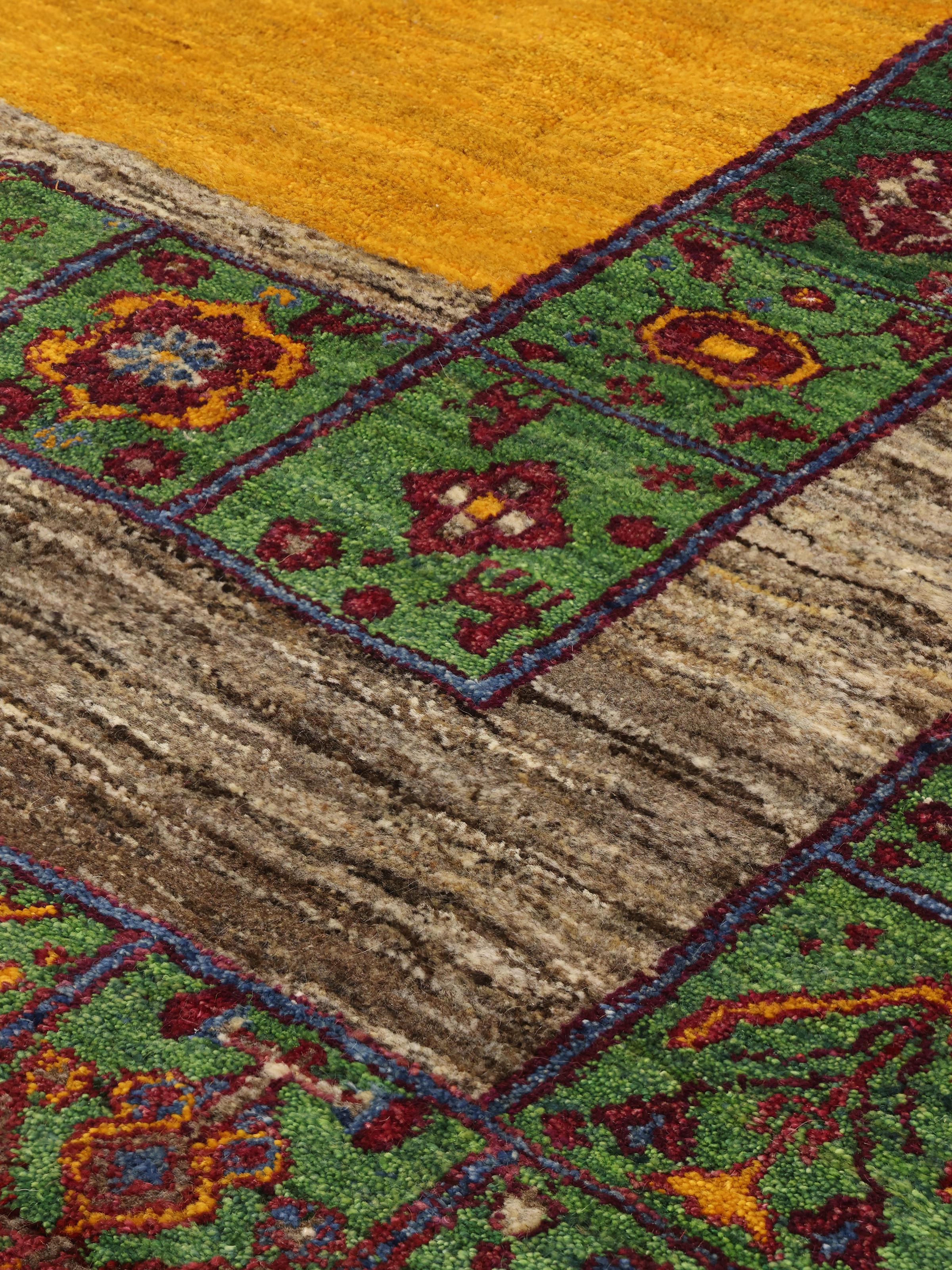
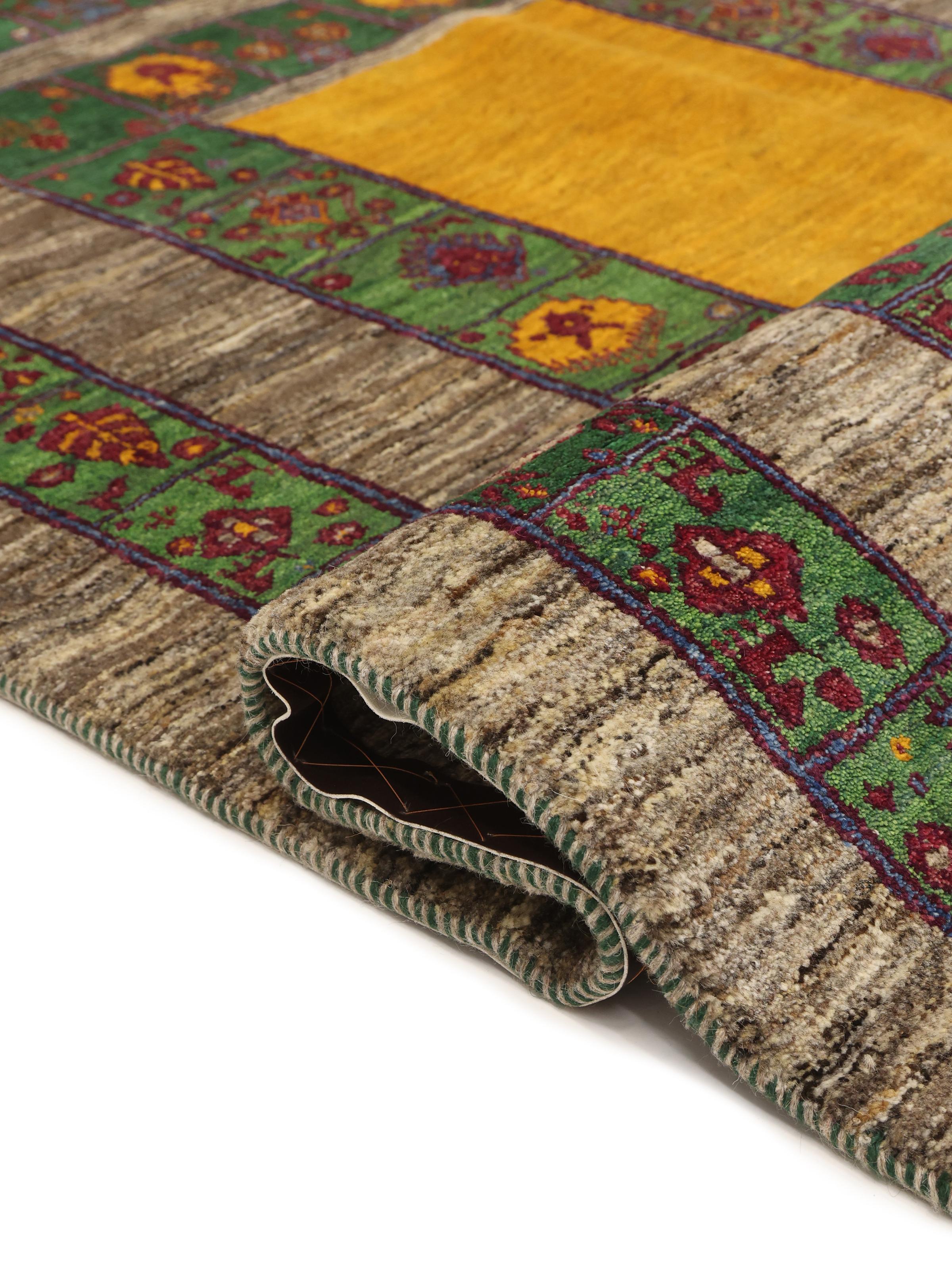
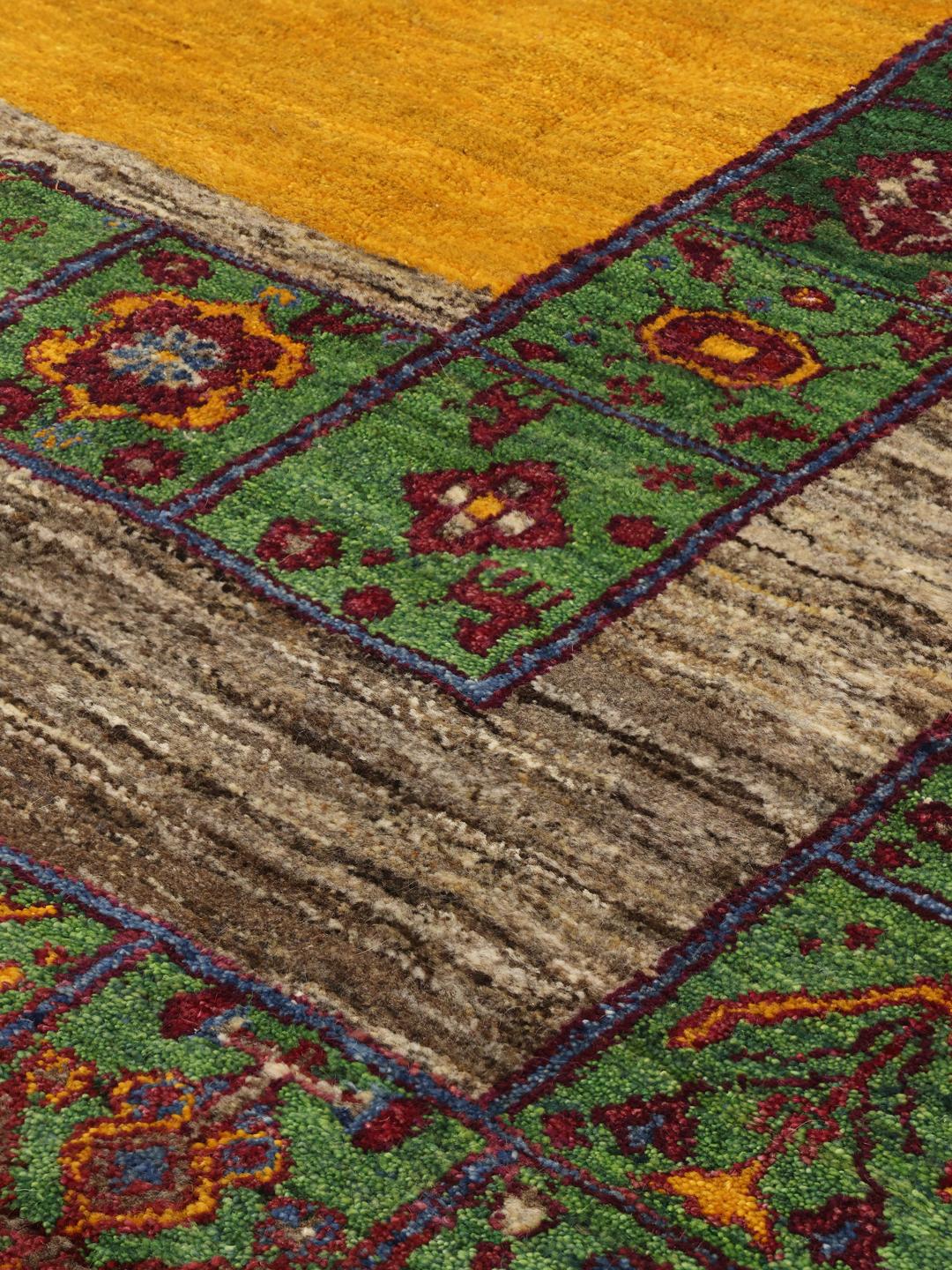
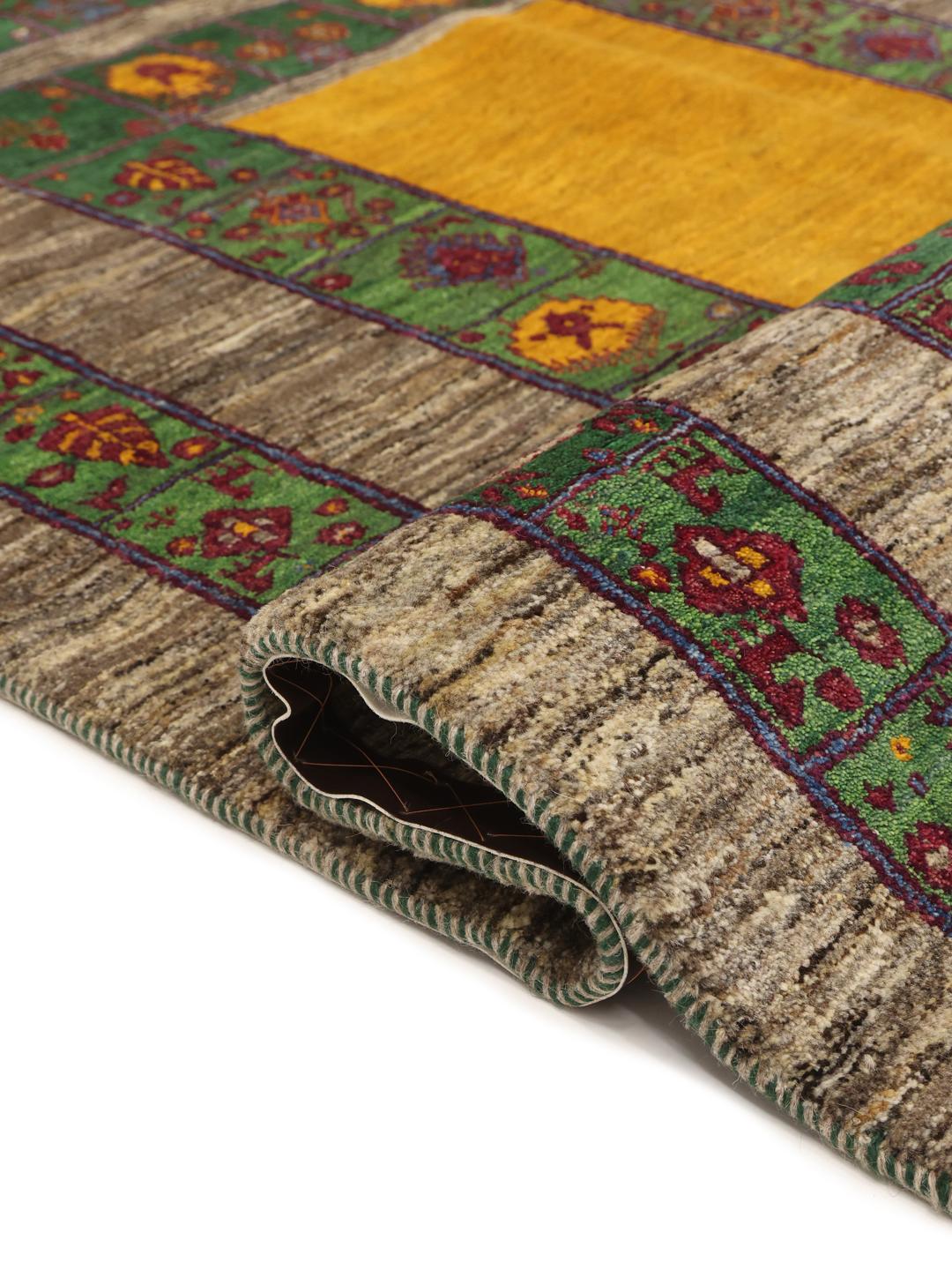
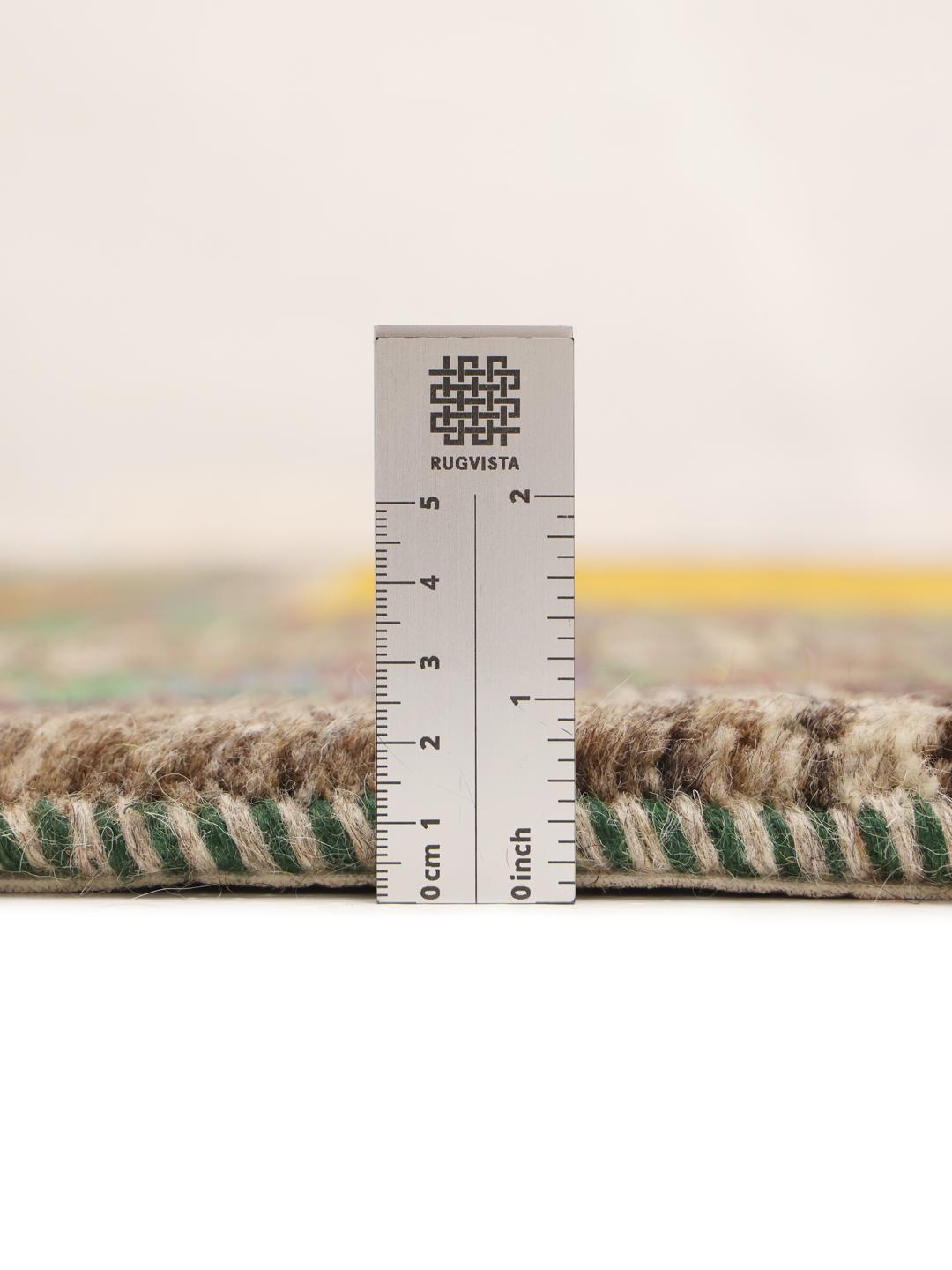
The term Gabbeh refers to the specific style of these rugs, which are traditionally characterised by a thicker, longer pile and a more primitive, expressive design language compared to more formal city rugs. The construction typically involves using hand-spun, often undyed or naturally dyed wool, which creates a rich, varied texture. This technical approach is what gives the rugs their legendary softness and durability, making them a practical choice for high-traffic areas.
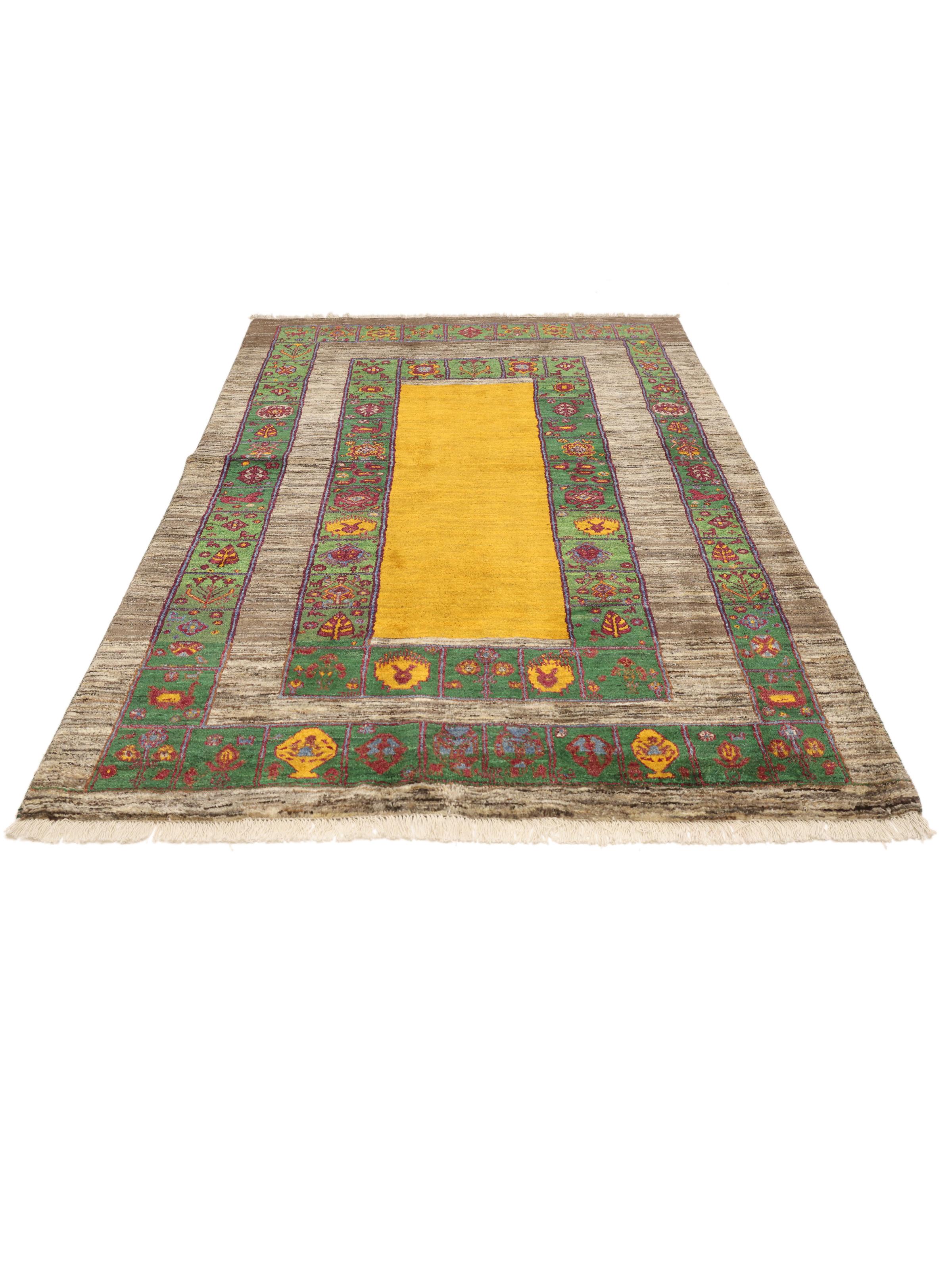
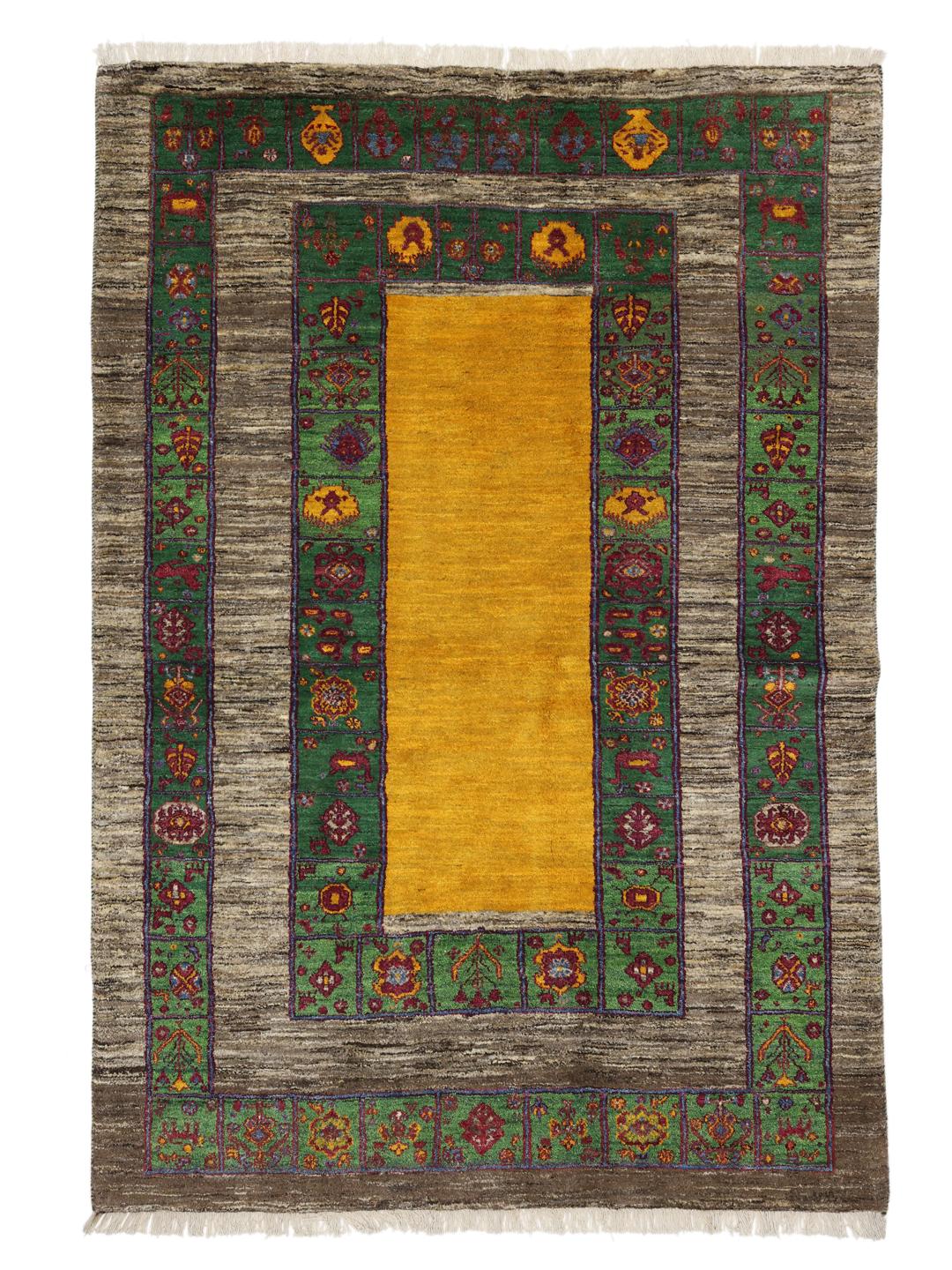
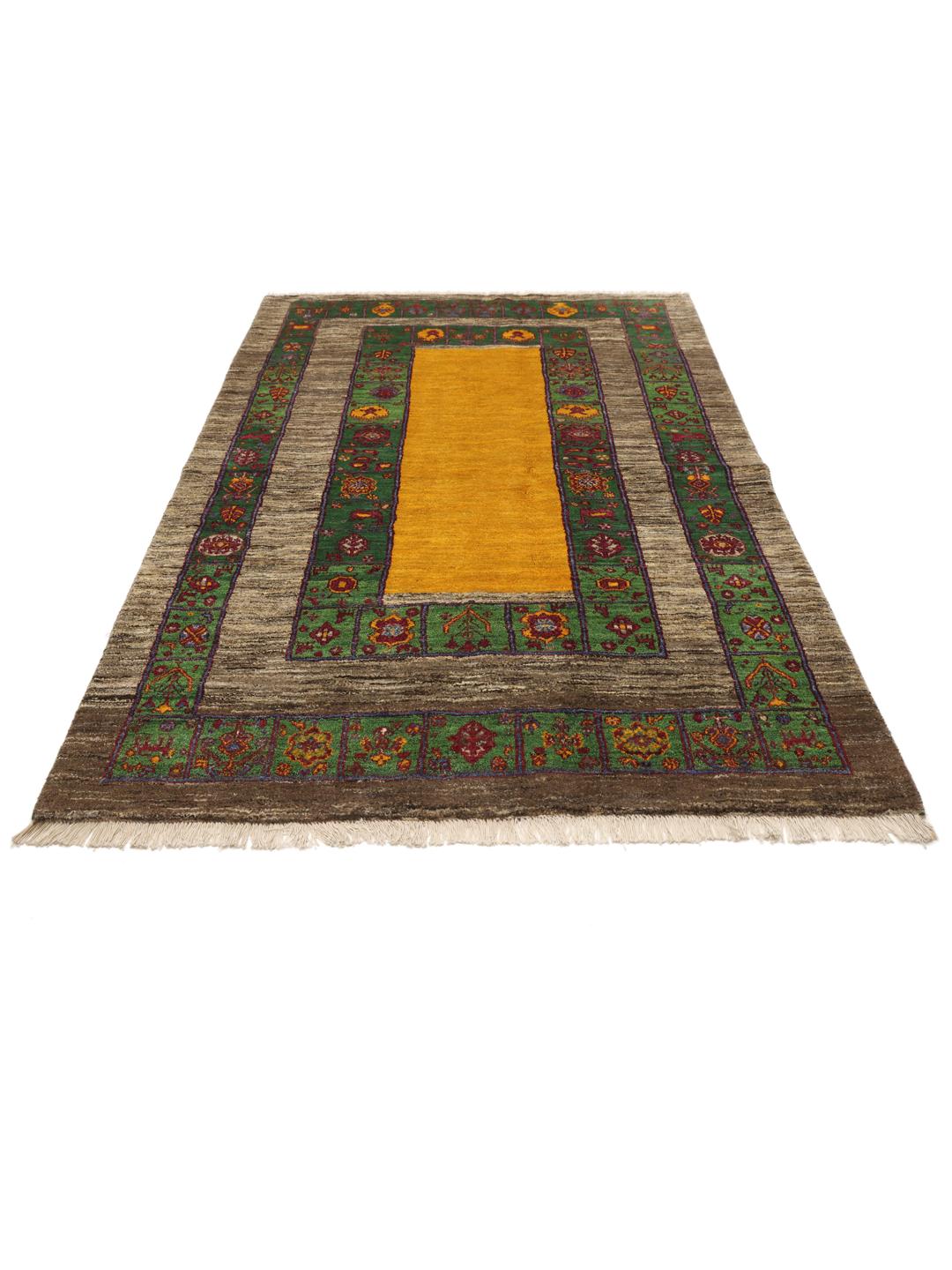
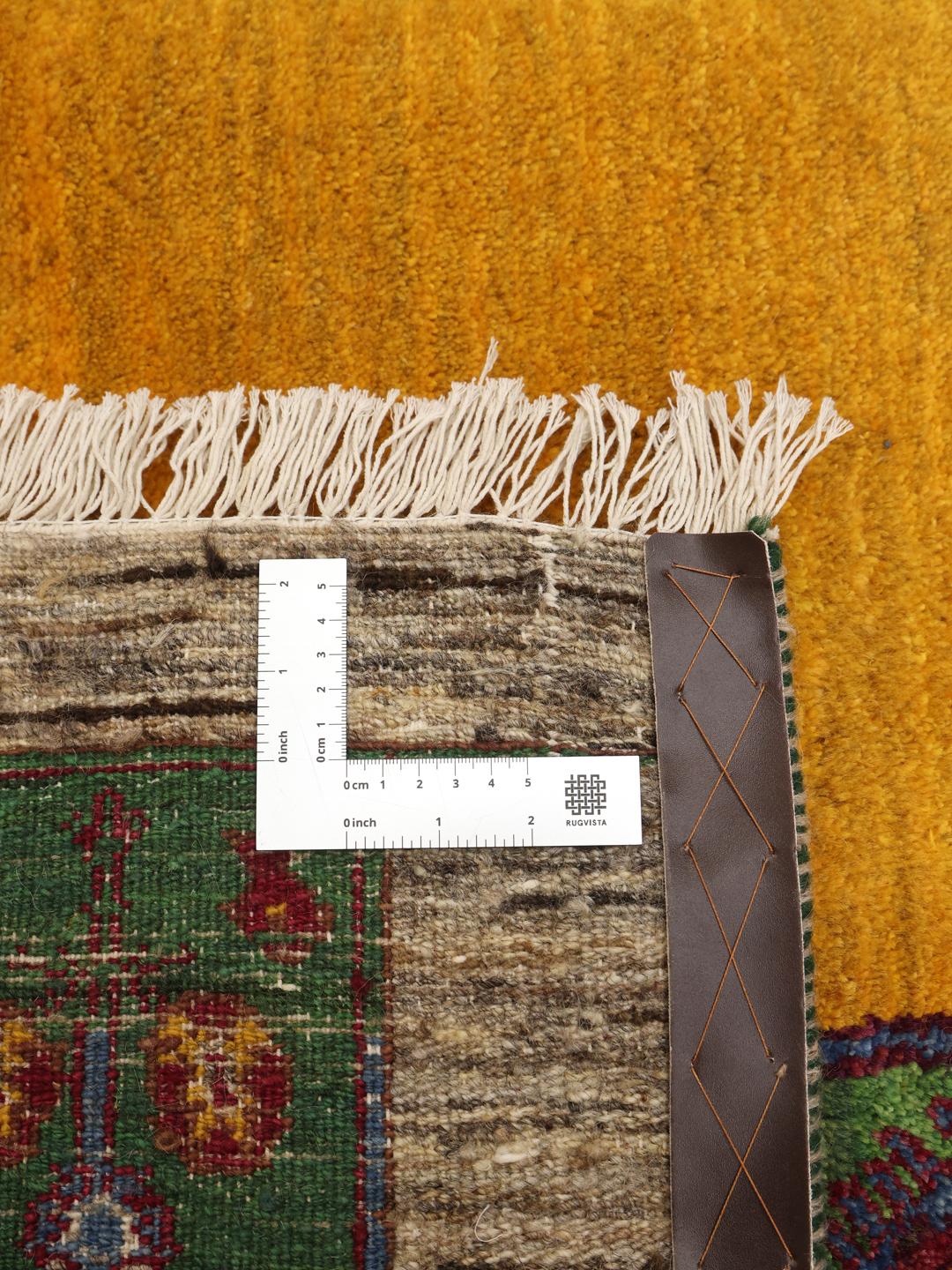
Visual language in these rugs often leans toward bold, geometric or pictorial motifs, such as stylized animals, trees, or simple shapes like diamonds and squares. While the field might be left open or filled with scattered, playful symbols, the borders are often meticulously detailed. This specific rug features a Shabargan-inspired design, which emphasises a strong, structured frame around a vibrant, open centre, creating a balanced yet energetic composition.
Today, these rugs are valued for their cultural weight and the singular skill required to produce them. Owning a traditional Gabbeh is an act of preserving a dying art form, as it represents a connection to nomadic heritage and a rejection of modern, uniform manufacturing. They are collected not just for their aesthetic impact, but for the story of the artisan whose hands guided every knot.