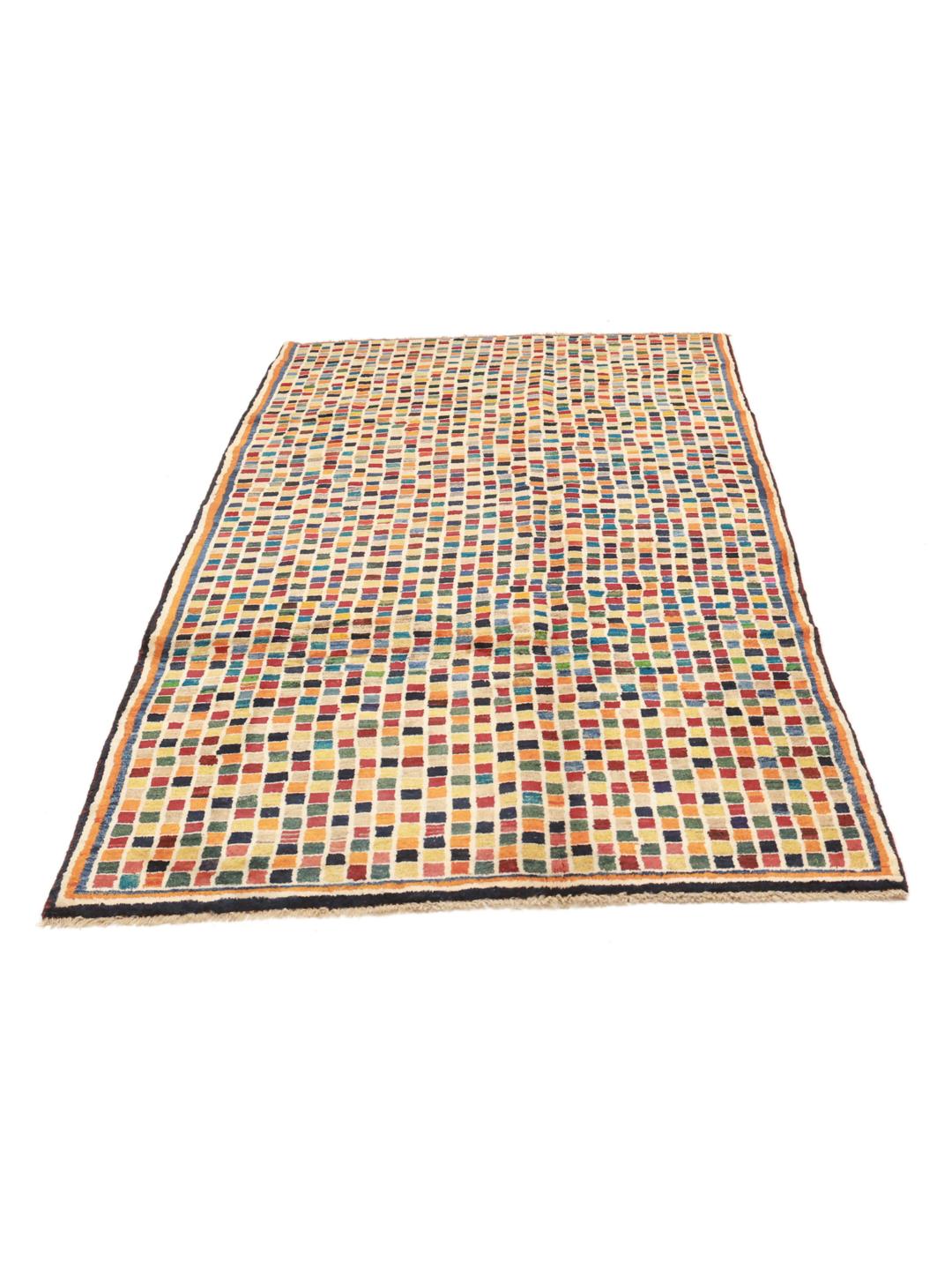
Gabbeh rugs have a long and storied history, originating from the nomadic tribes of the Middle East. Historically, these rugs were woven by women for domestic use, intended to provide warmth and insulation in the harsh, cold climates of the region. Unlike more formal urban rugs, Gabbeh rugs were designed with a focus on simplicity, utility, and the creative expression of the weaver, often reflecting the landscapes and daily life of the nomadic communities.
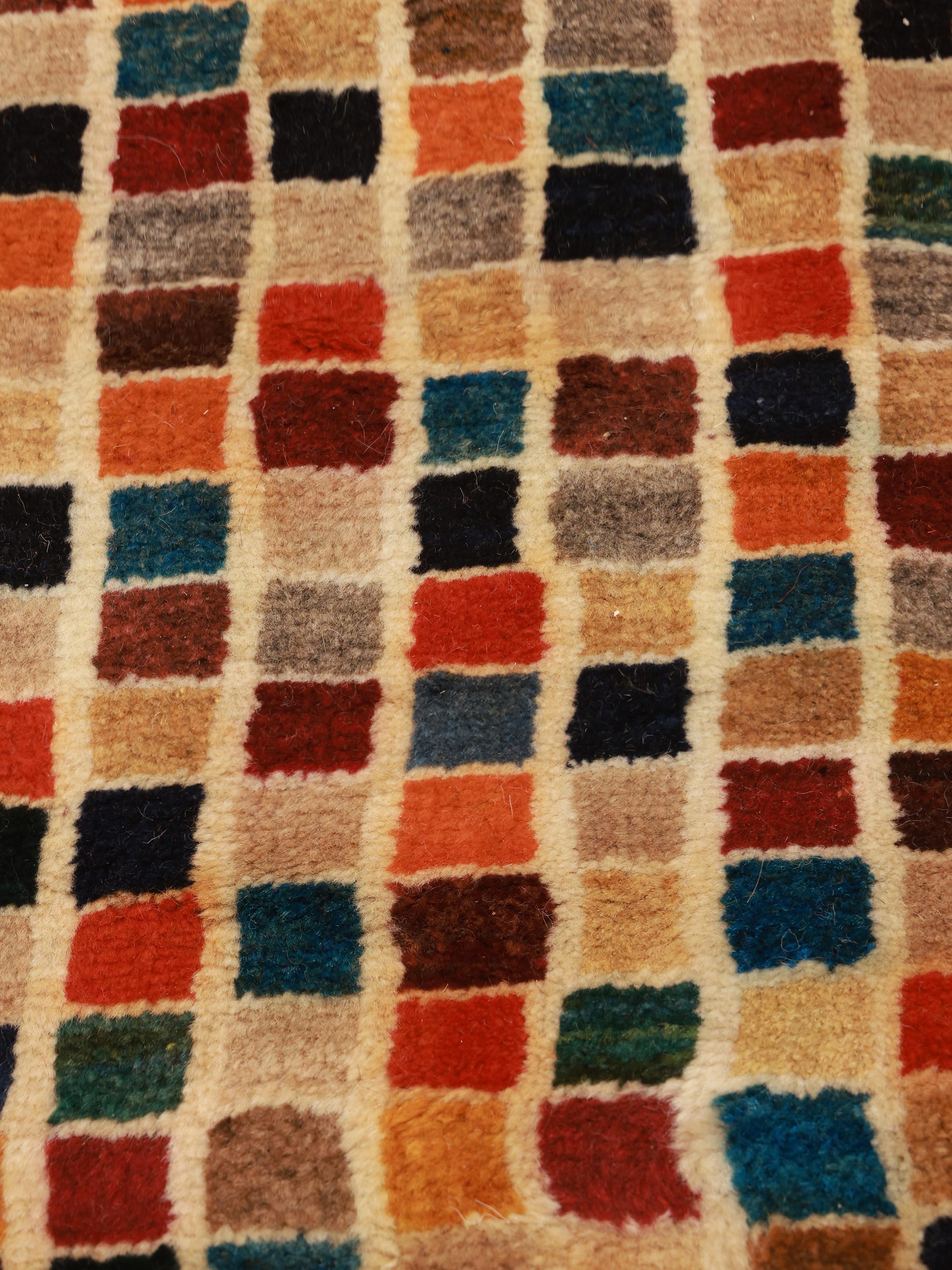
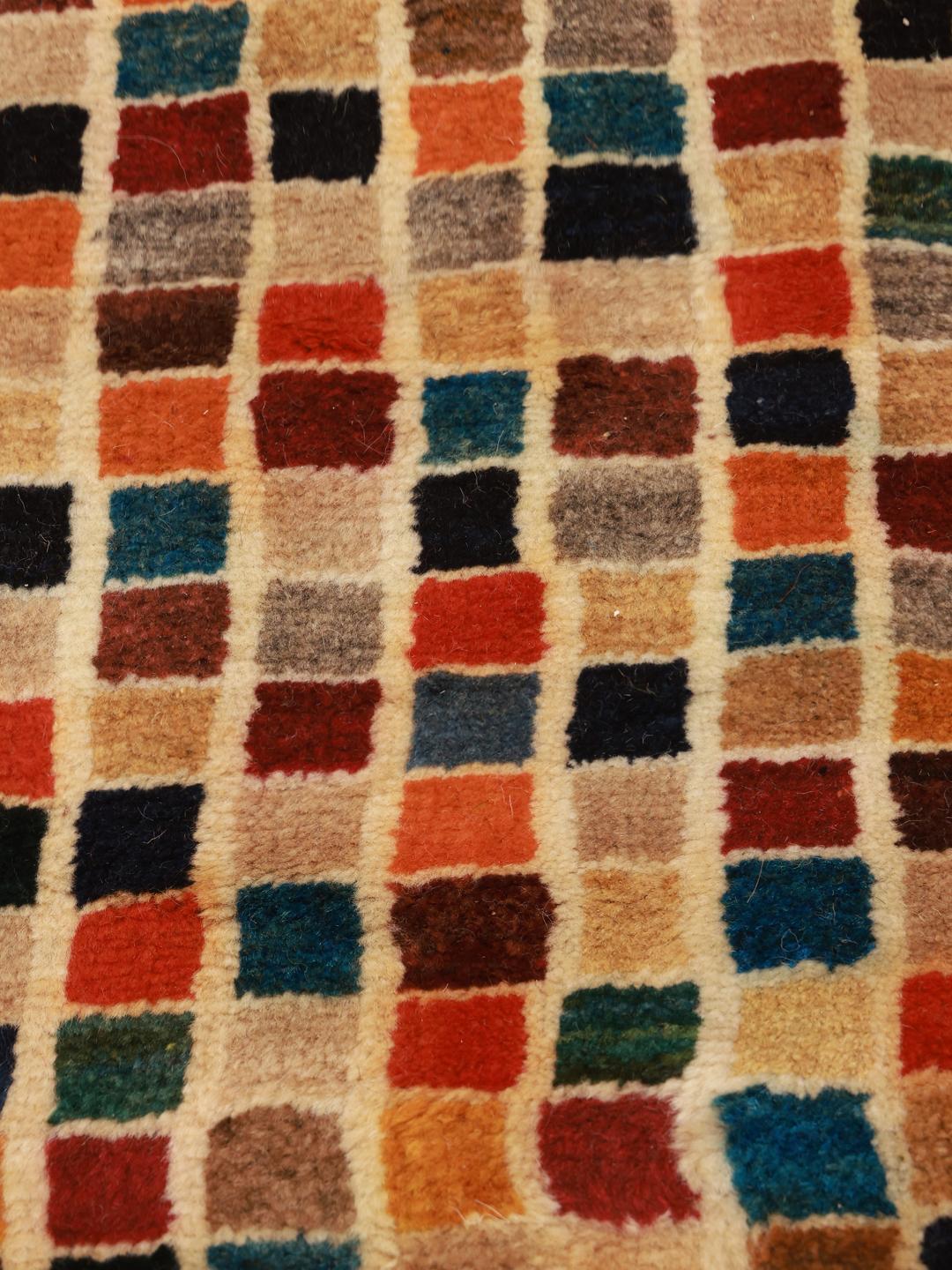
The term 'Gabbeh' itself means 'raw', 'natural', or 'unfinished', which perfectly captures the unpretentious and honest nature of these pieces. They are traditionally known for their thicker, longer piles and more simplified designs compared to highly detailed city rugs. The use of hand-spun wool, often dyed with natural pigments, gives these rugs a unique depth of colour and a tactile quality that feels both authentic and rooted in ancient craft.
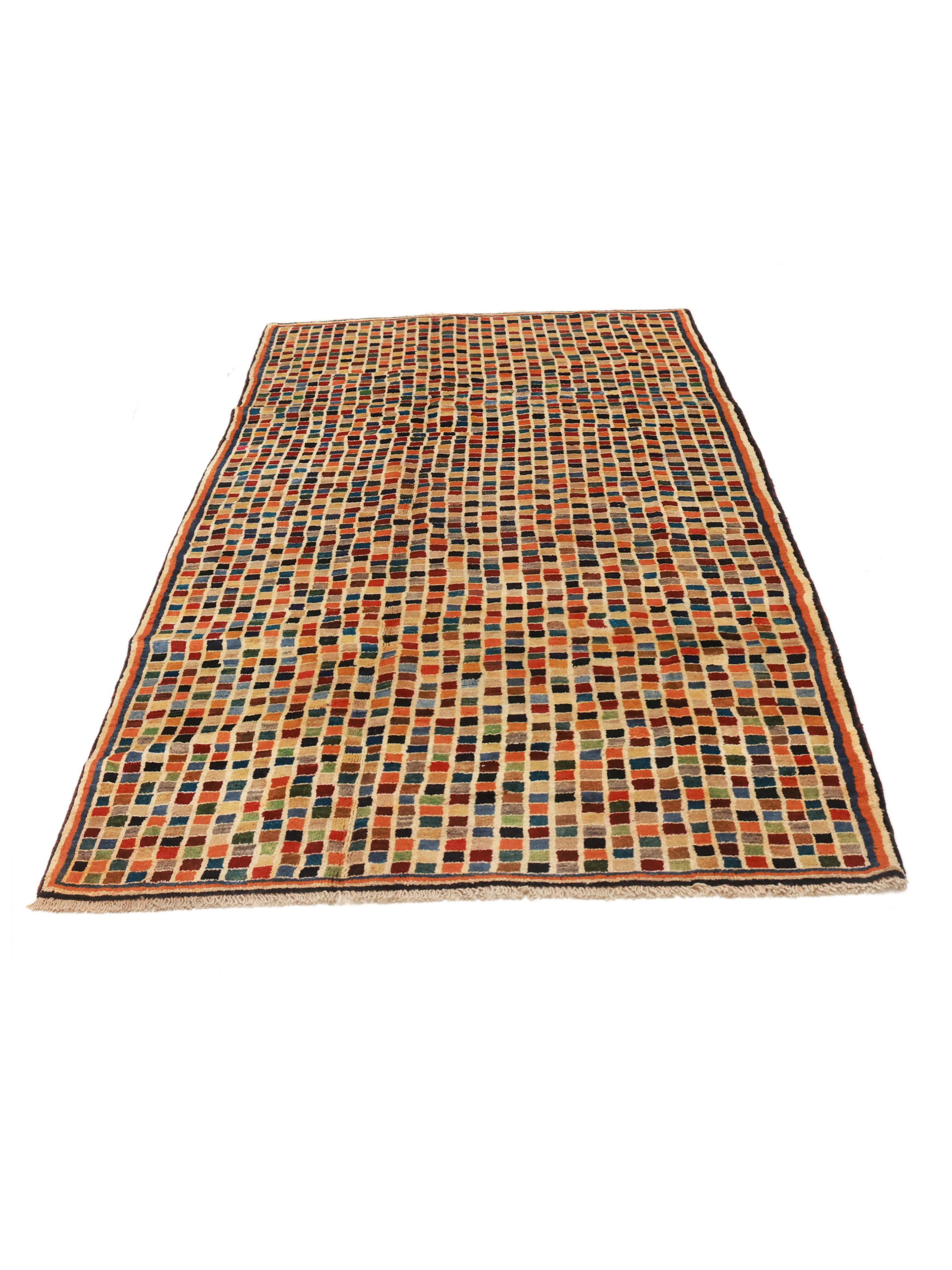
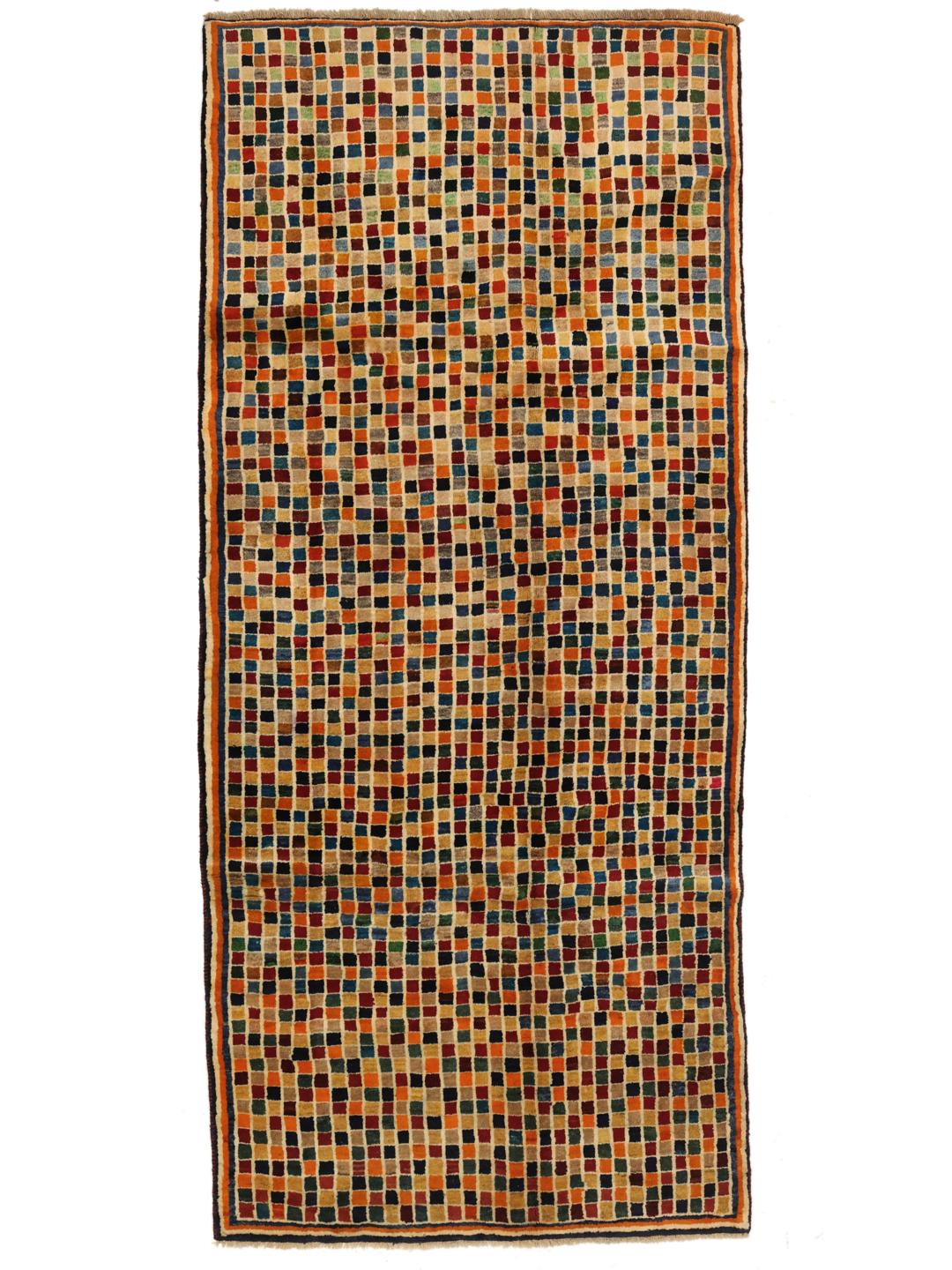
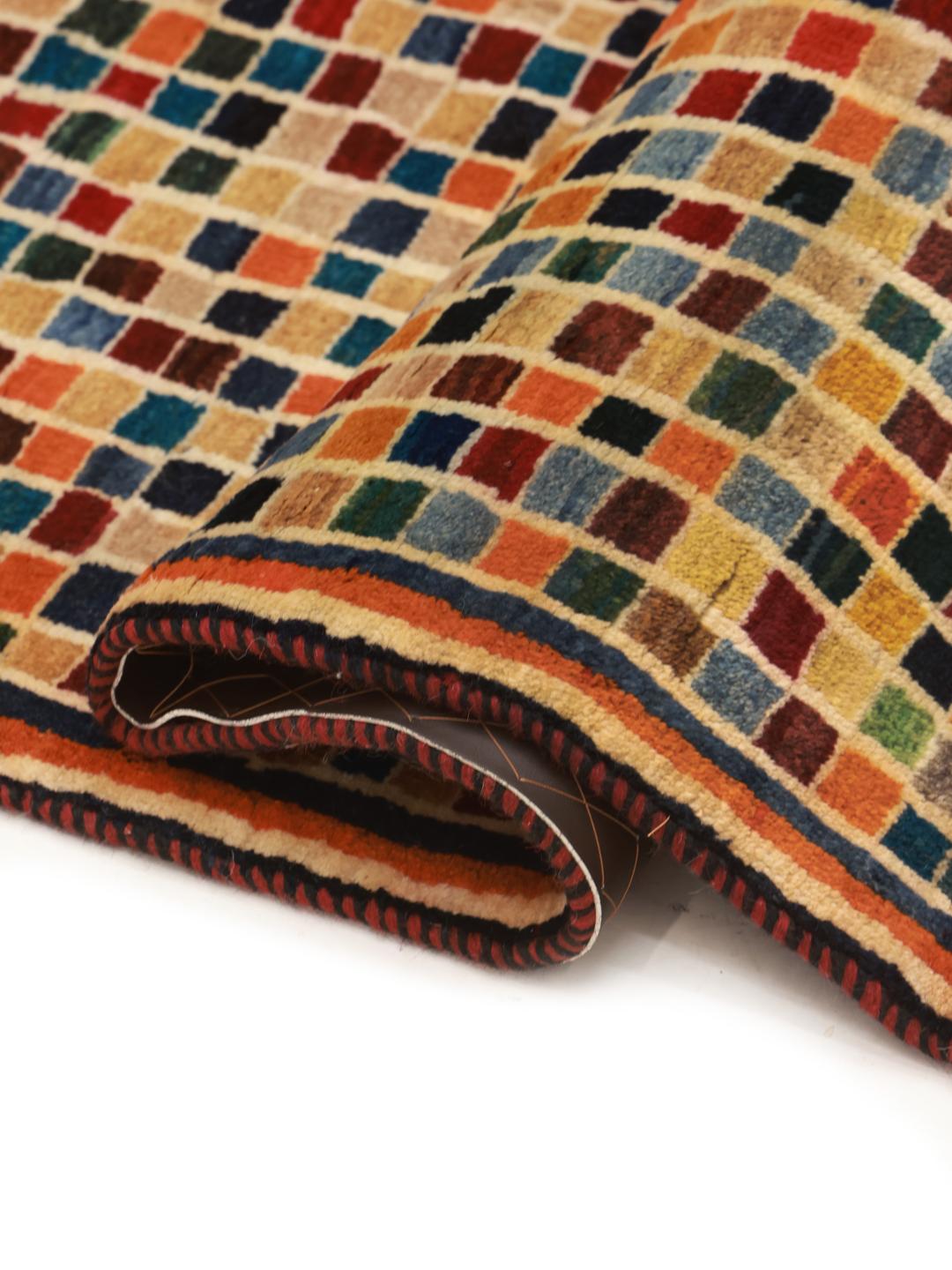
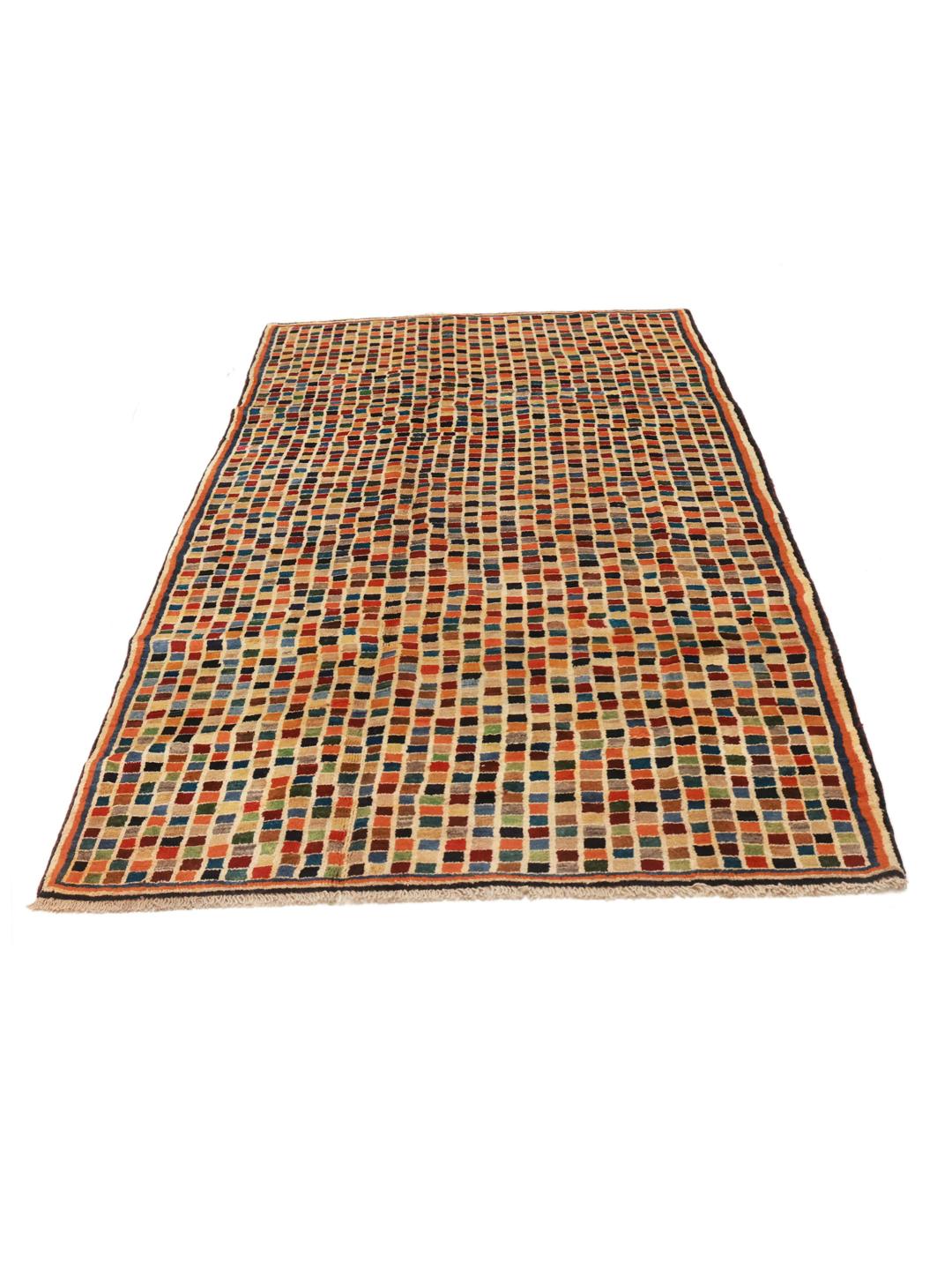
The design of this particular rug, with its grid of small, vibrant squares, is a modern evolution of the classic nomadic style. While traditional Gabbeh rugs often featured more abstract, sparse imagery, contemporary versions like this one embrace a more orderly yet still expressive geometric approach. This combination of traditional techniques and a more structured pattern makes them highly adaptable to various home settings, bridging the gap between historical craft and modern design.
Owning a Gabbeh rug is an invitation into a tradition that values the individual artisan. These rugs are highly sought after by collectors not just for their beauty, but for what they represent—a connection to a heritage of craftsmanship that has remained largely unchanged for centuries. By adding this rug to your home, you are preserving a piece of cultural history and celebrating the skill of the weavers who keep these traditional art forms alive.