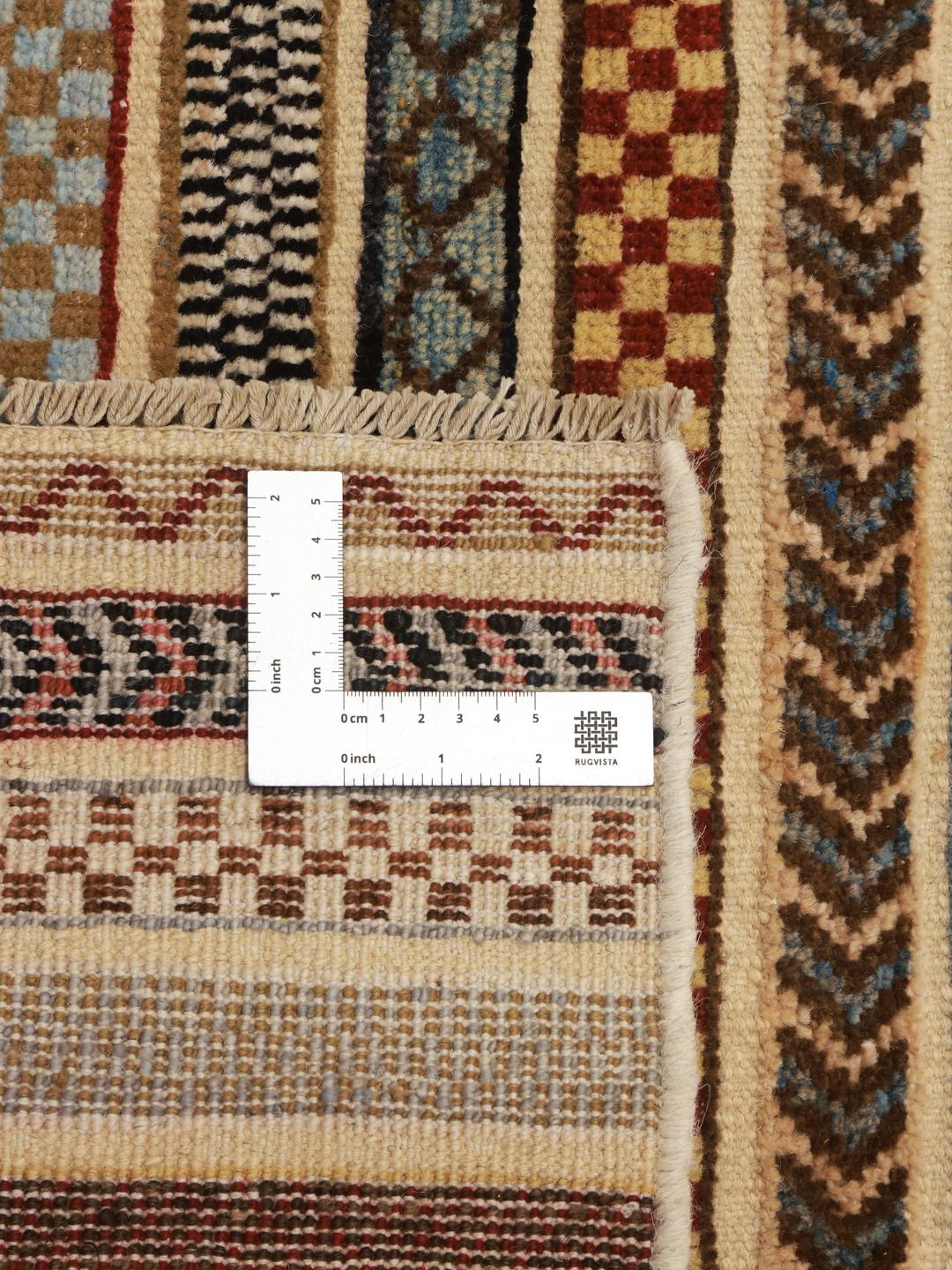
Gabbeh rugs have a fascinating history, originating from the nomadic tribes of the Middle East. Traditionally, these rugs were woven by tribal women for personal use, serving as protective bedding or floor coverings within tents. Unlike more formal urban carpets, the Gabbeh was a medium for personal expression, with designs often inspired by the weaver's immediate surroundings, dreams, and local folklore.
The term 'Gabbeh' itself translates to 'raw', 'natural', or 'unclipped', reflecting the rug's historical roots as a thicker, heavier, and more rustic style of weaving. While these rugs were once kept within the tribe, their bold aesthetic and plush, comfortable pile eventually gained international recognition. Today, they are prized for their transition from utilitarian nomadic items to refined decorative pieces that maintain their authentic spirit.
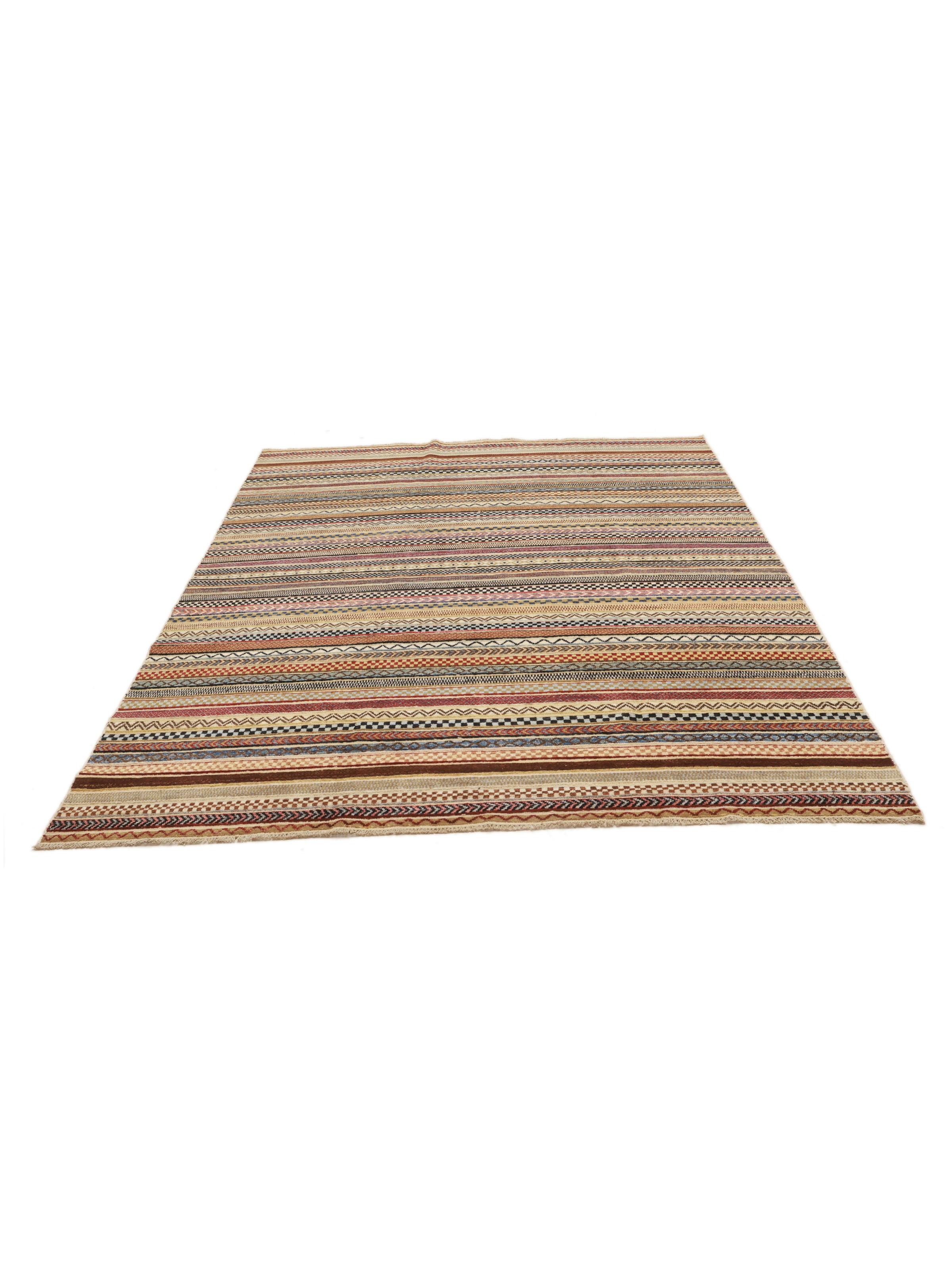
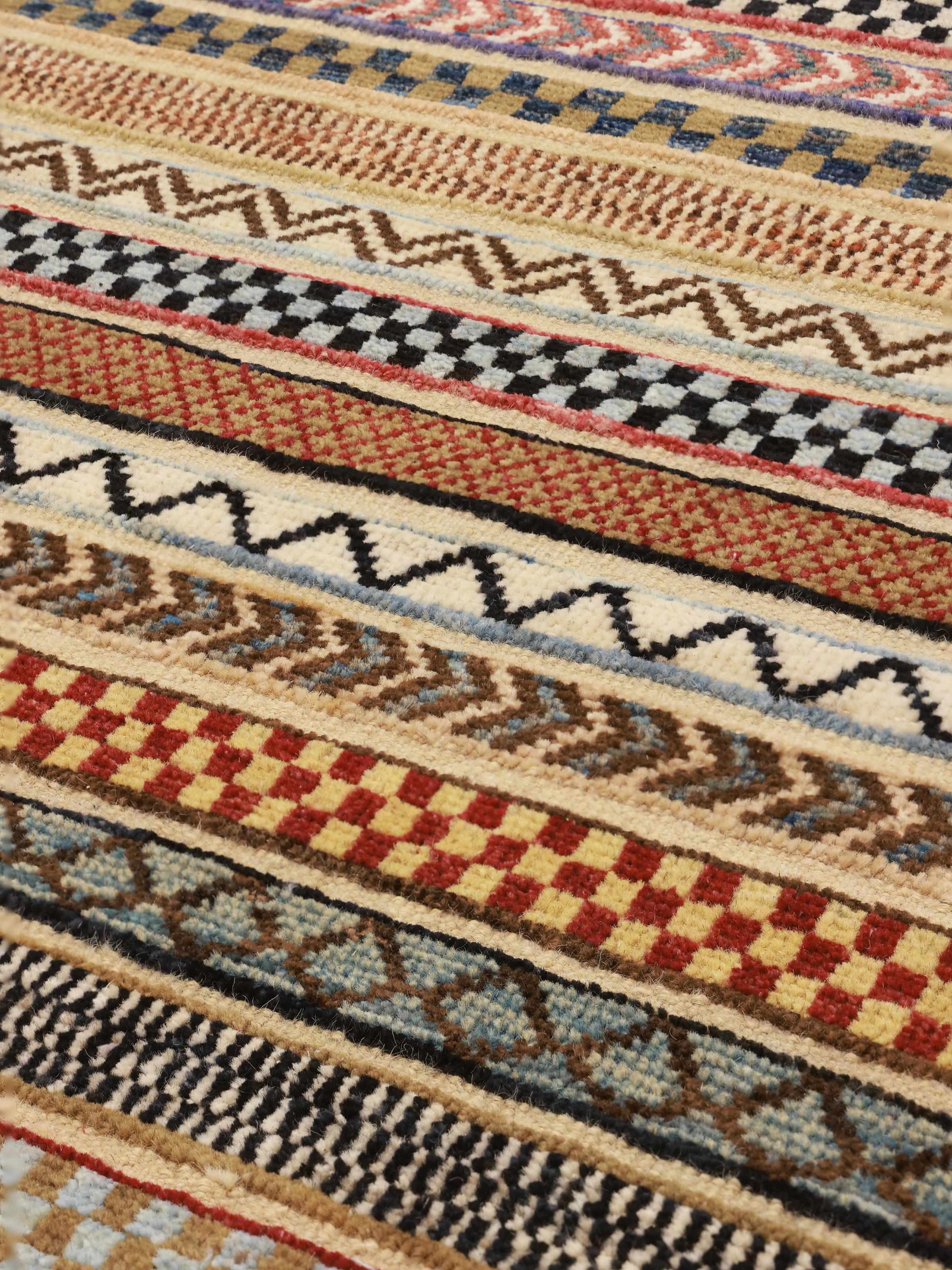
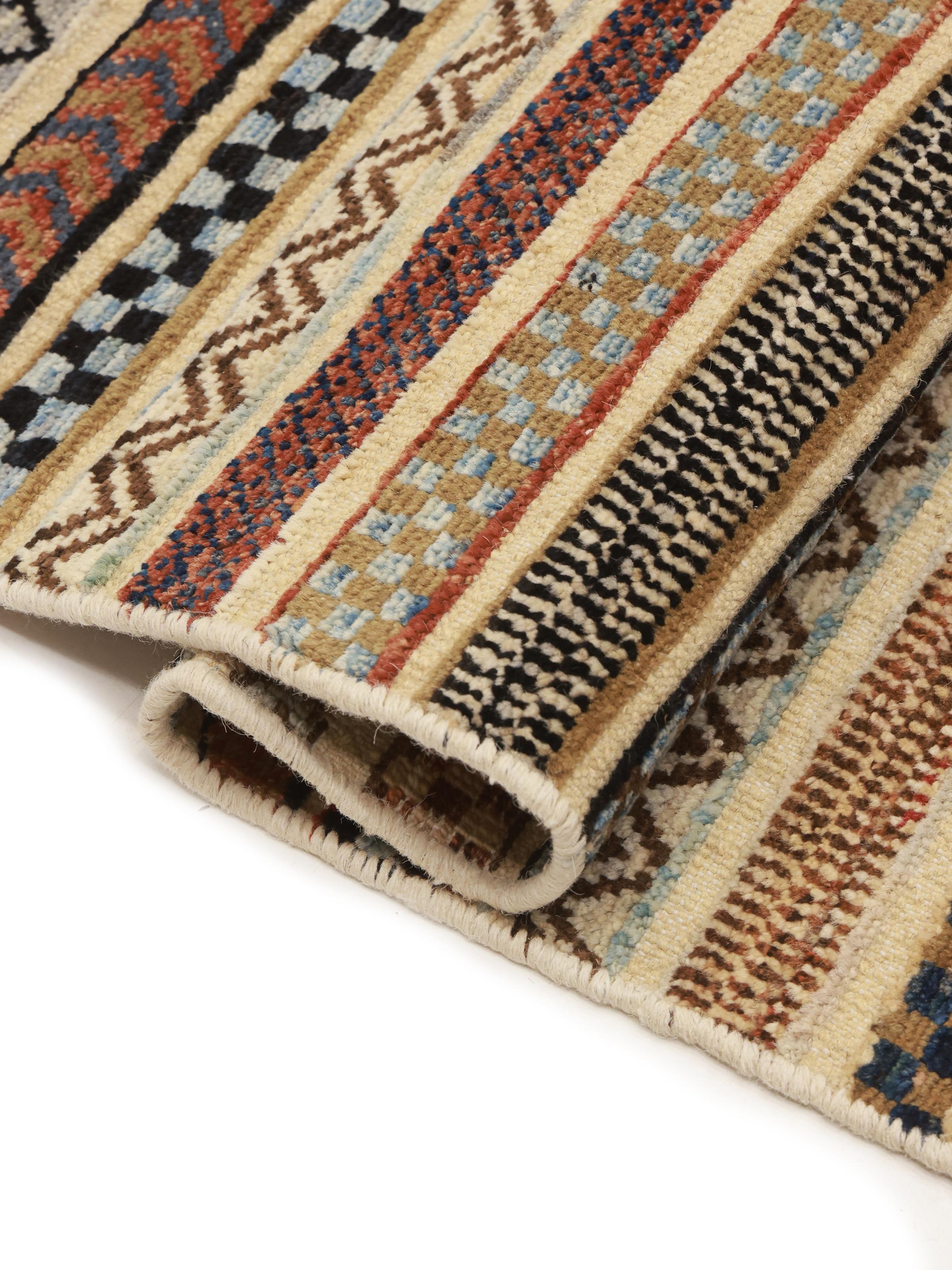
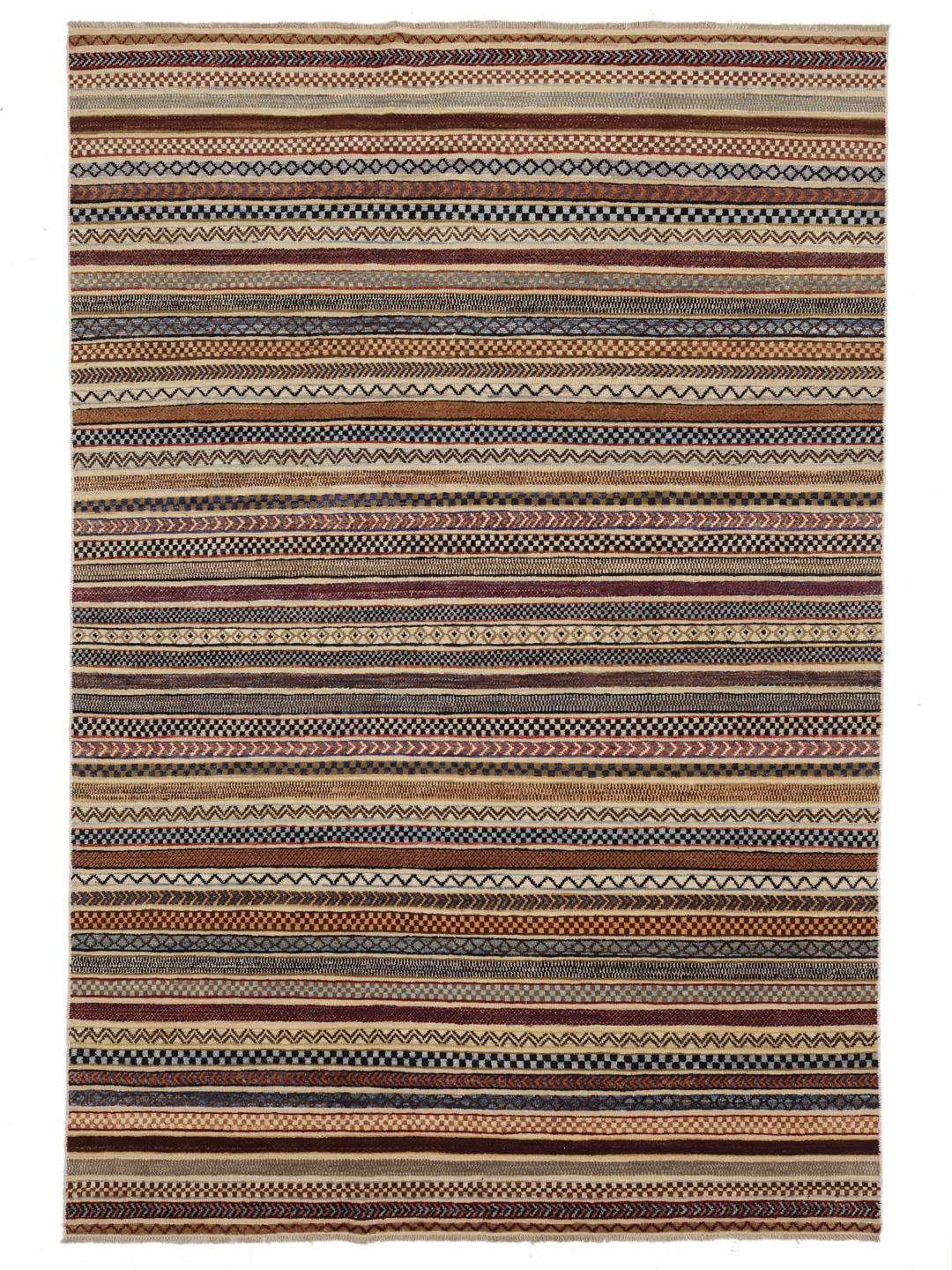
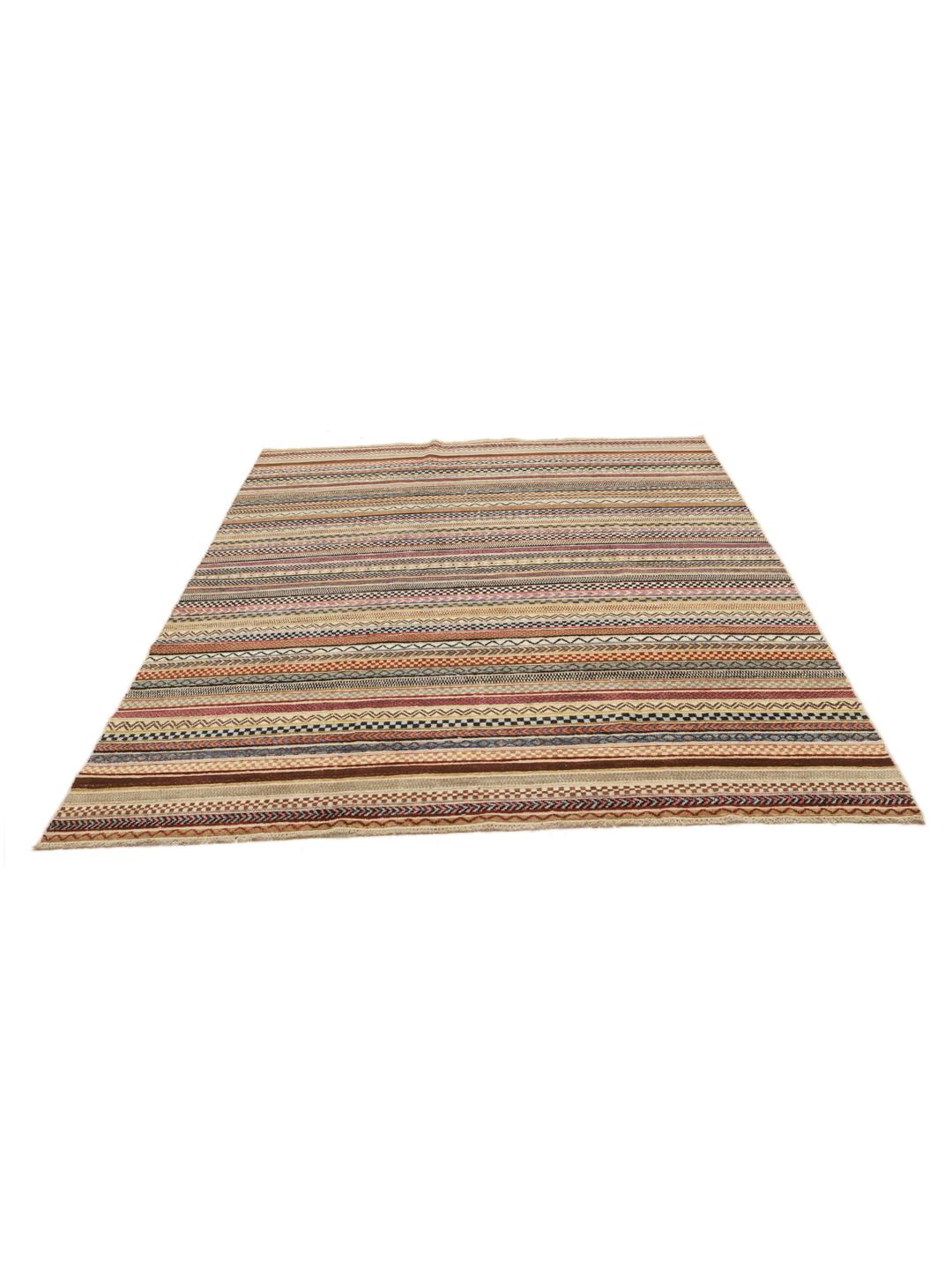
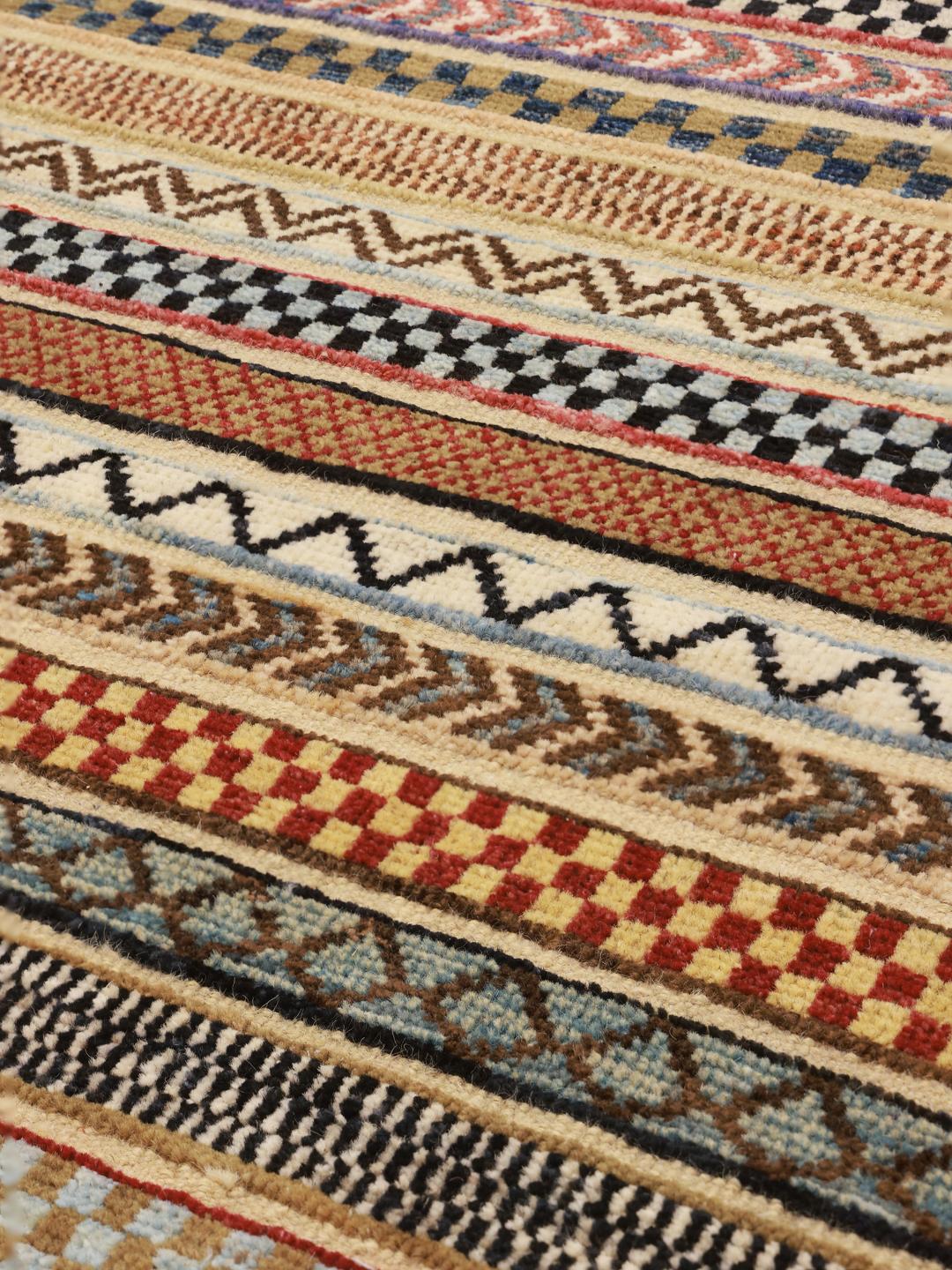
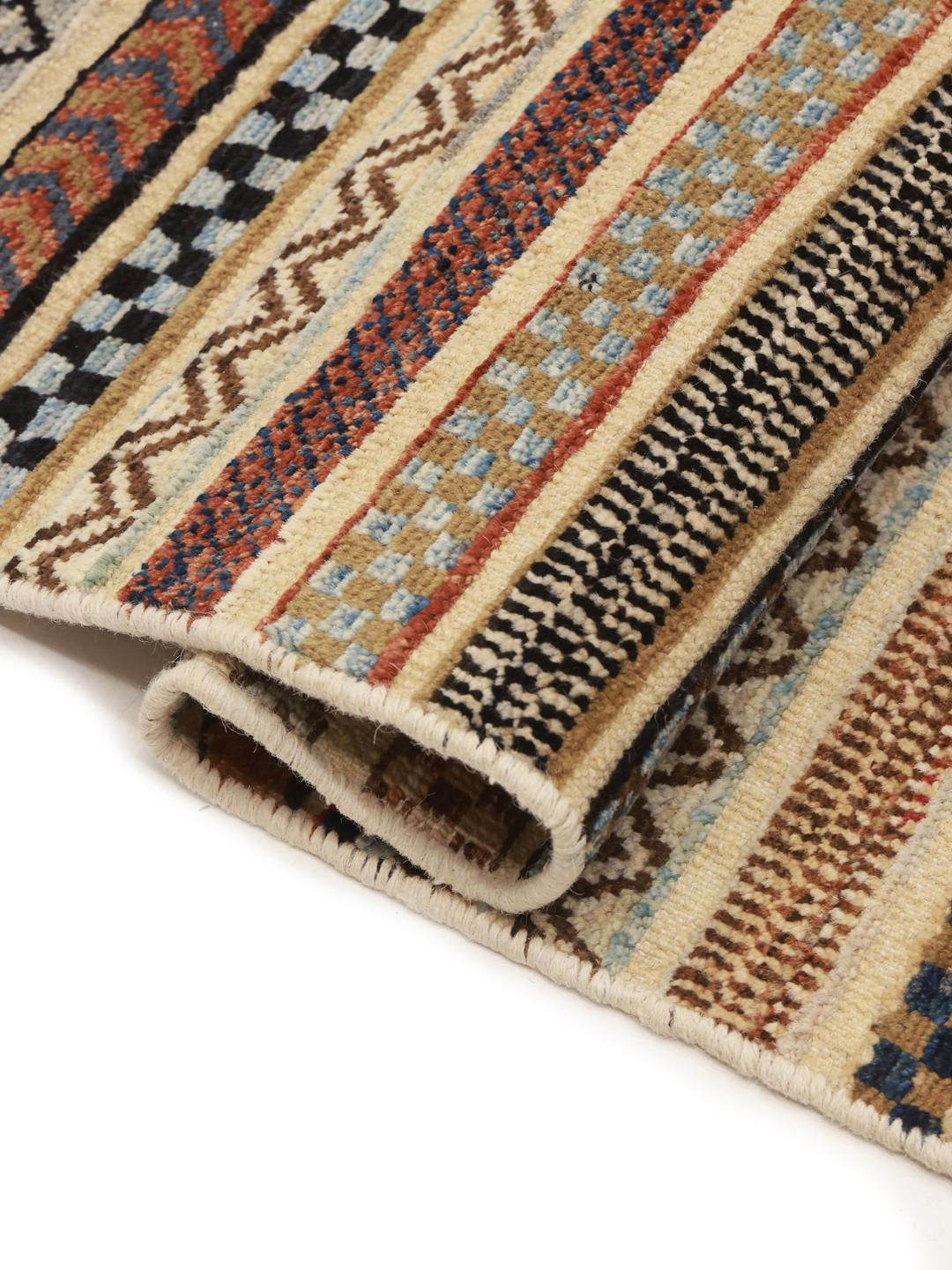
The signature design language of the Gabbeh style is defined by simplicity and the use of bold colour palettes. While traditional versions often feature wide, open fields of solid colour, the modern iteration seen here incorporates elaborate horizontal bands and geometric motifs. These patterns are not merely decorative but are deeply symbolic, often representing elements of nature, such as mountains, rivers, or trees, distilled into their most essential, graphic forms.
Collecting a Gabbeh rug is an investment in cultural heritage and the preservation of ancient craft traditions. These pieces are valued for their ability to bridge the gap between historical weaving techniques and contemporary interior needs. By owning this rug, you are preserving a legacy of skill that has been passed down through generations, ensuring that this unique form of artistic expression continues to flourish.