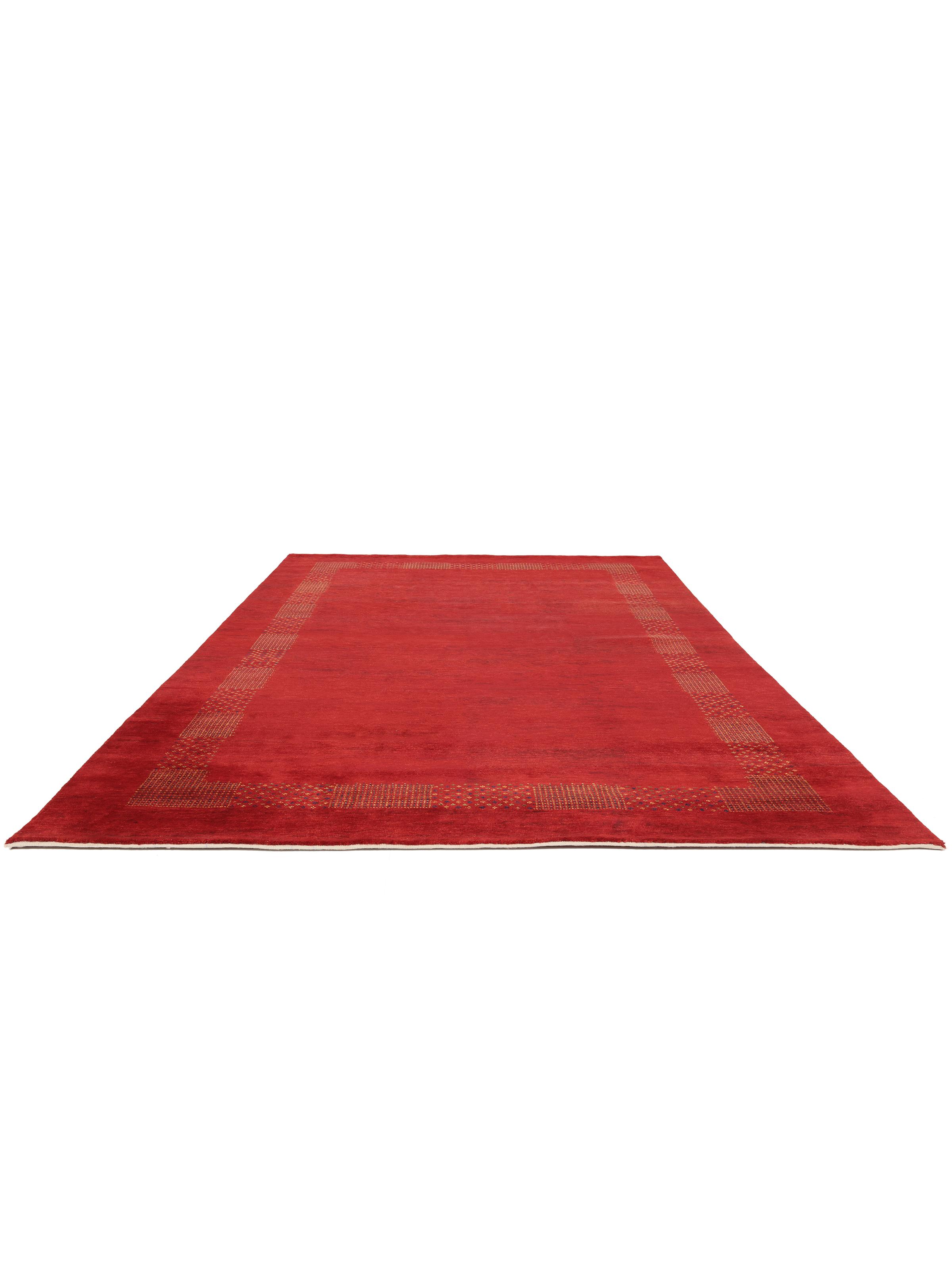
The Gabbeh Loribaft tradition traces its roots to the nomadic tribes of the Middle East, who developed these rugs as functional, heavy-duty floor coverings for tent life. Over time, the style migrated and evolved, with modern interpretations now masterfully produced in India. These rugs are celebrated for their simplicity and the way they prioritise the beauty of the material over complex, overwhelming patterns.
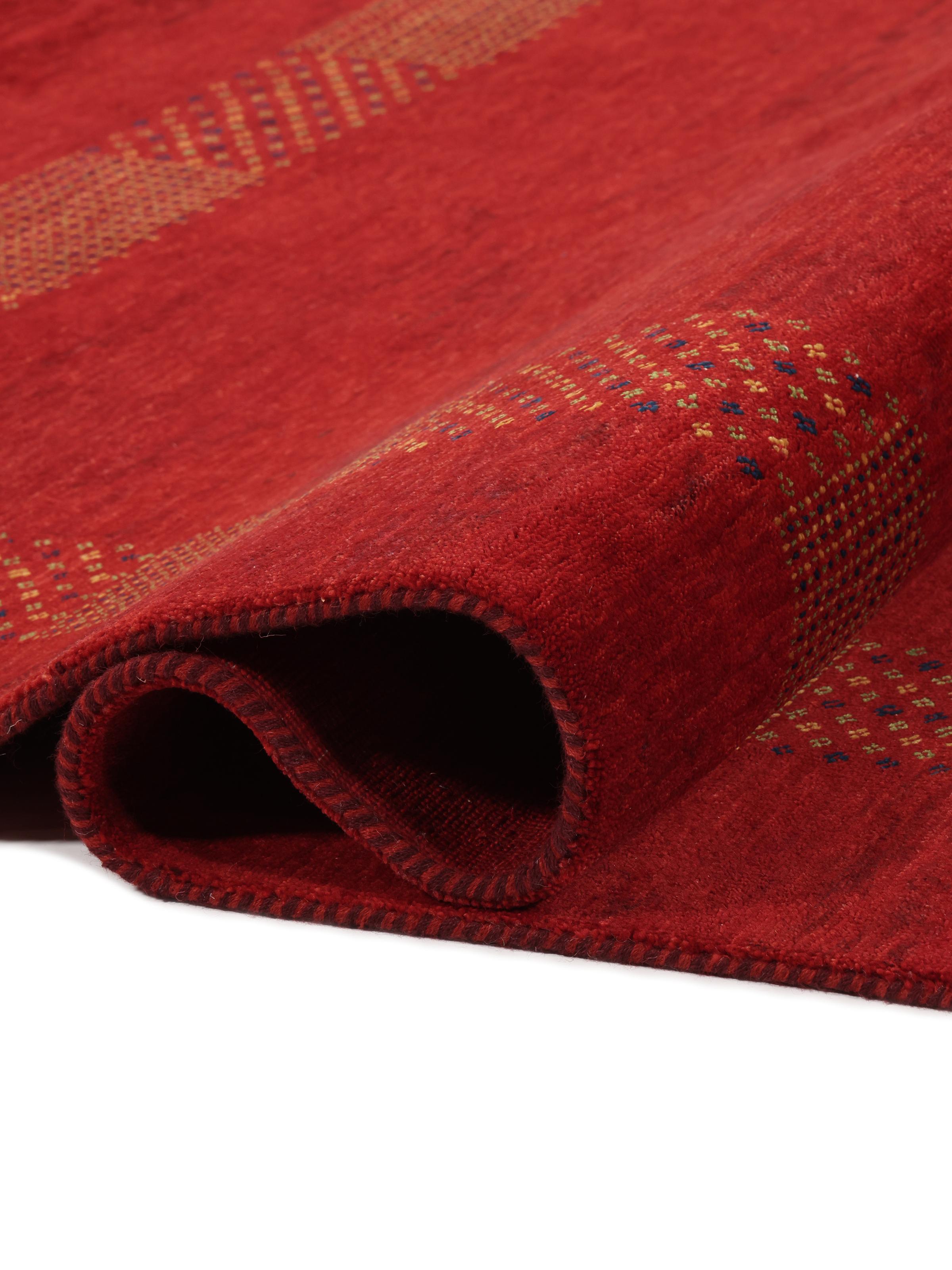
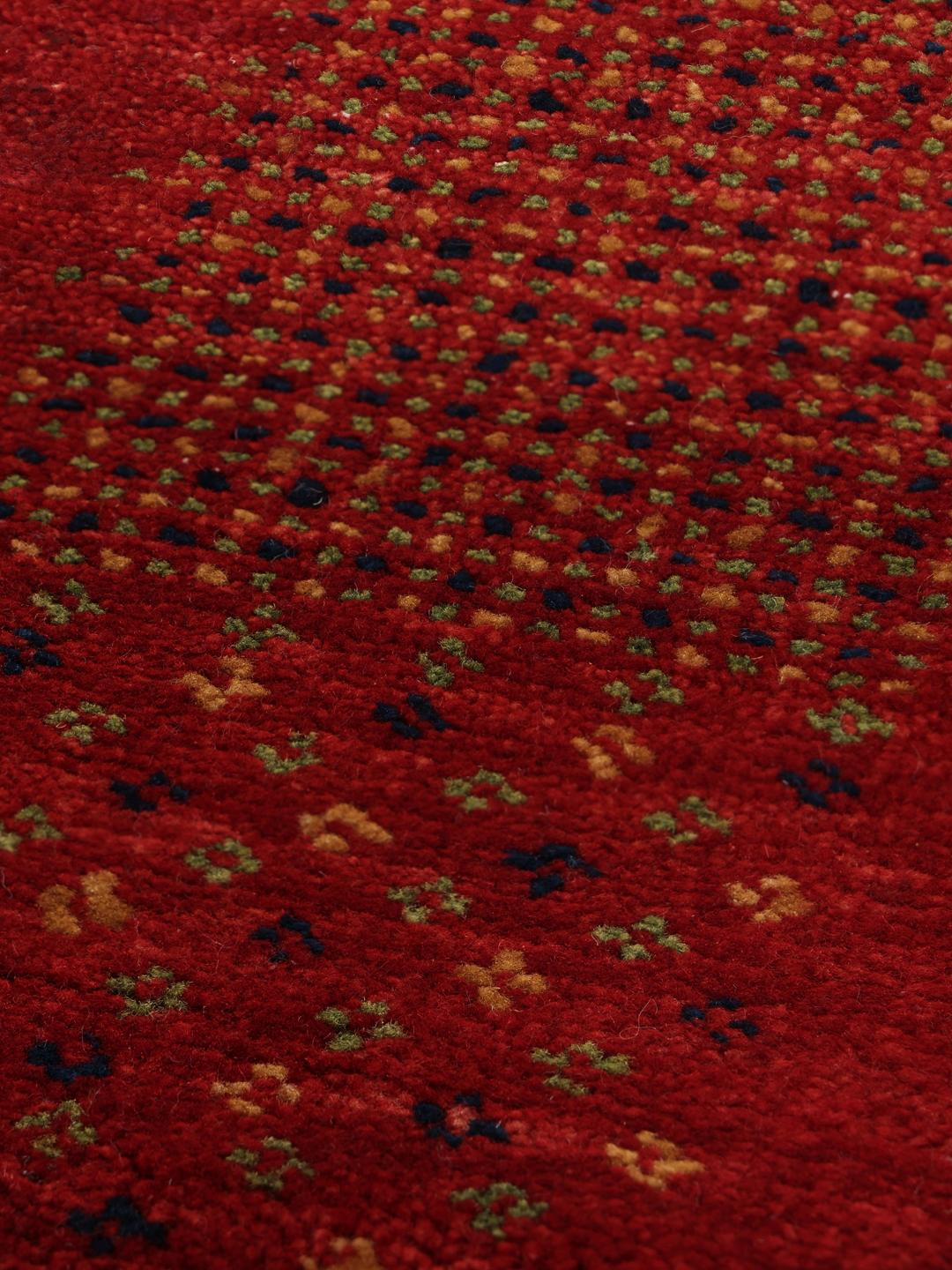
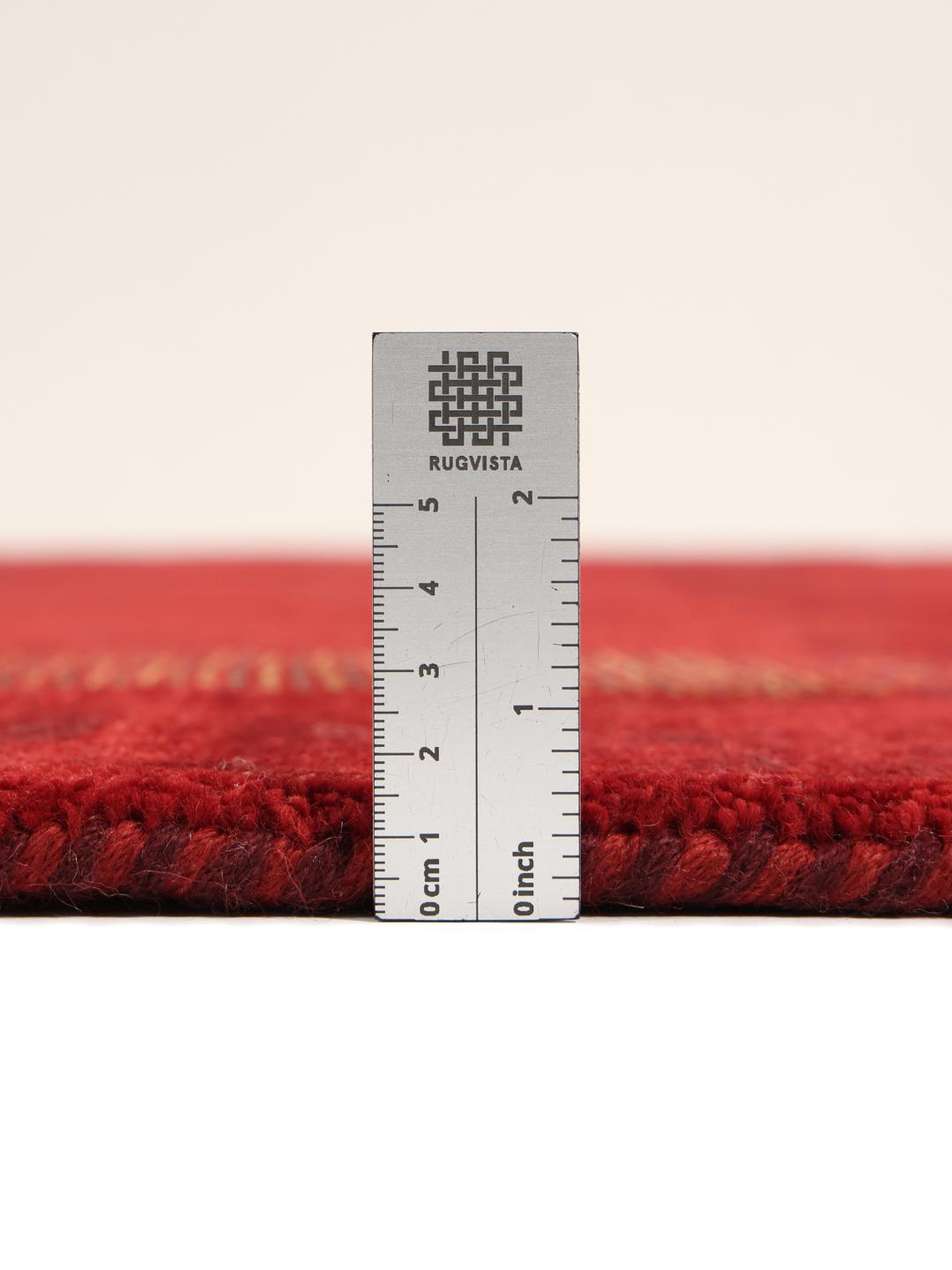
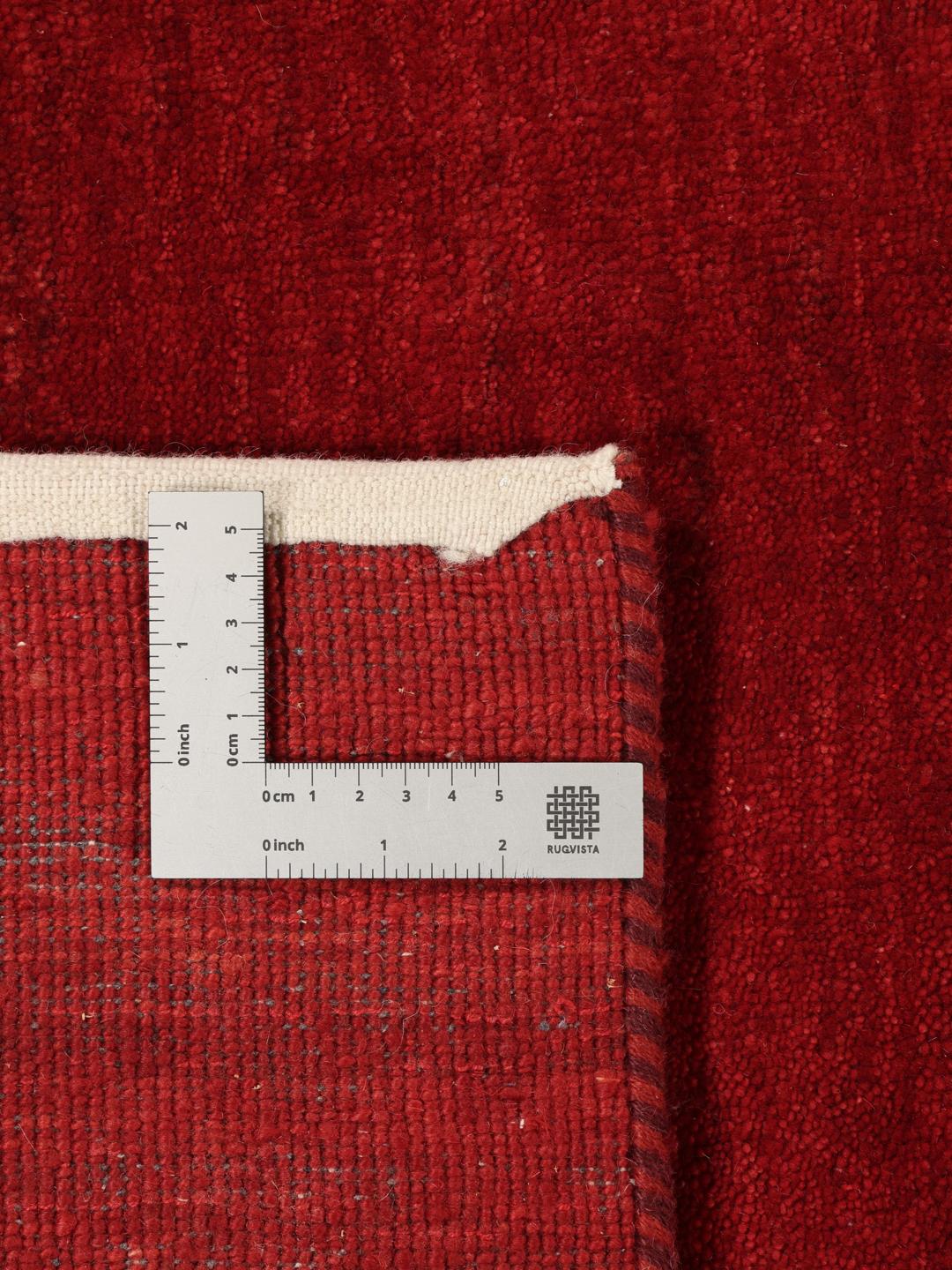
The term 'Loribaft' refers to a specific, refined style of weaving that results in a denser and more polished finish than traditional nomadic Gabbehs. By using a tighter knotting technique, the artisans create a surface that is smoother and more resilient, allowing for sharper geometric motifs and a more luxurious feel underfoot. This technical evolution elevates the rug from a simple utility item to a sophisticated piece of decor.
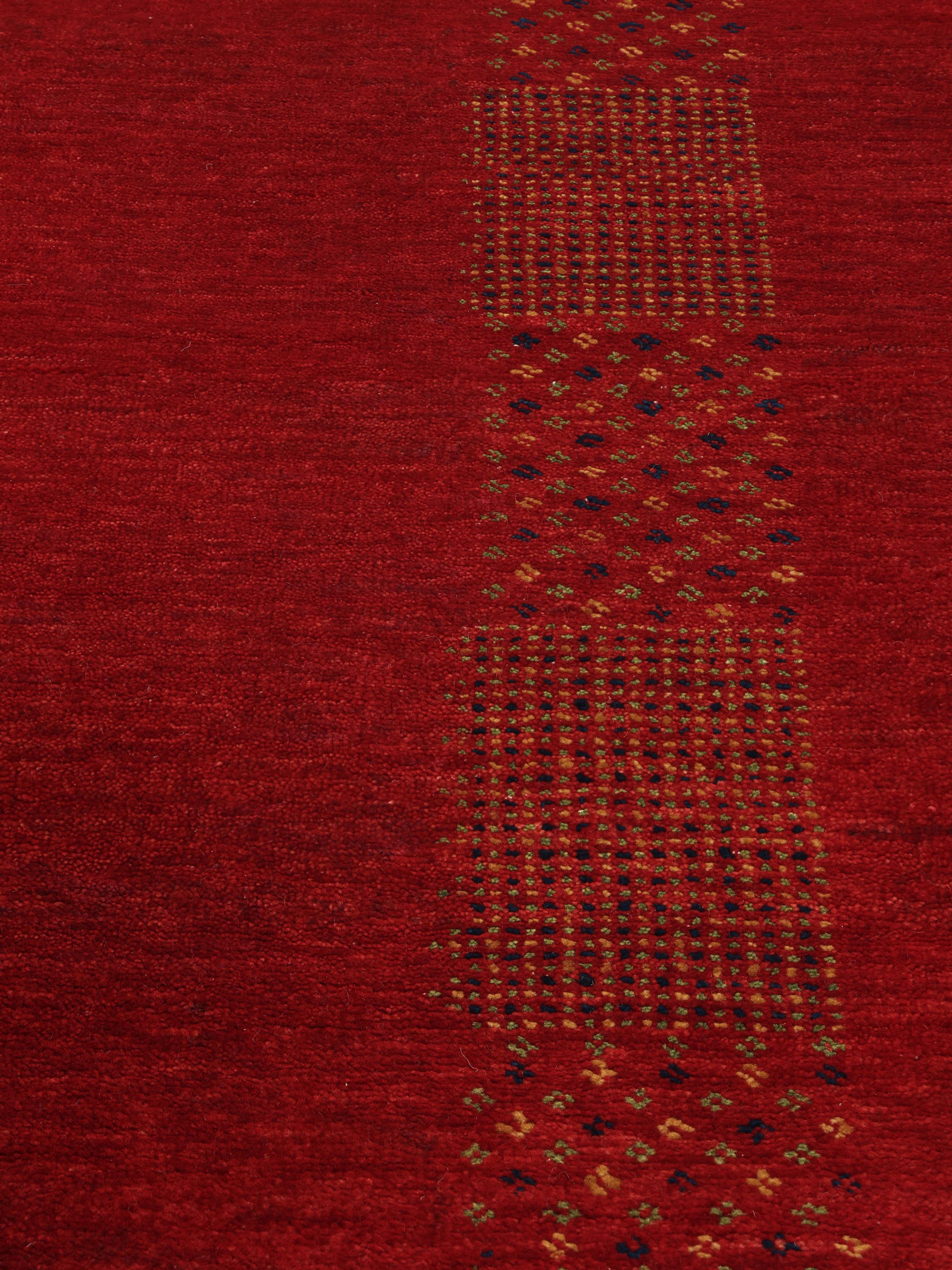
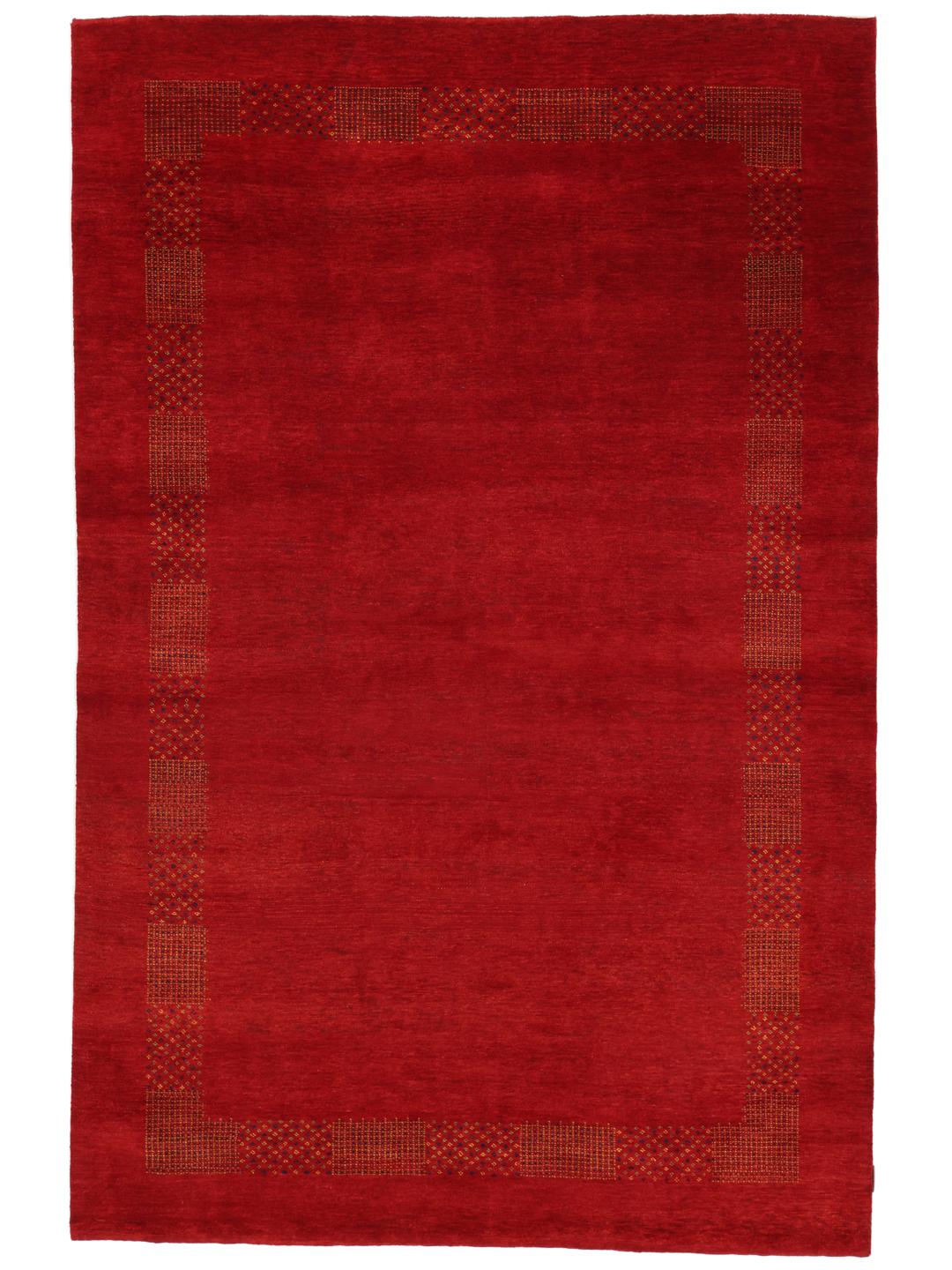
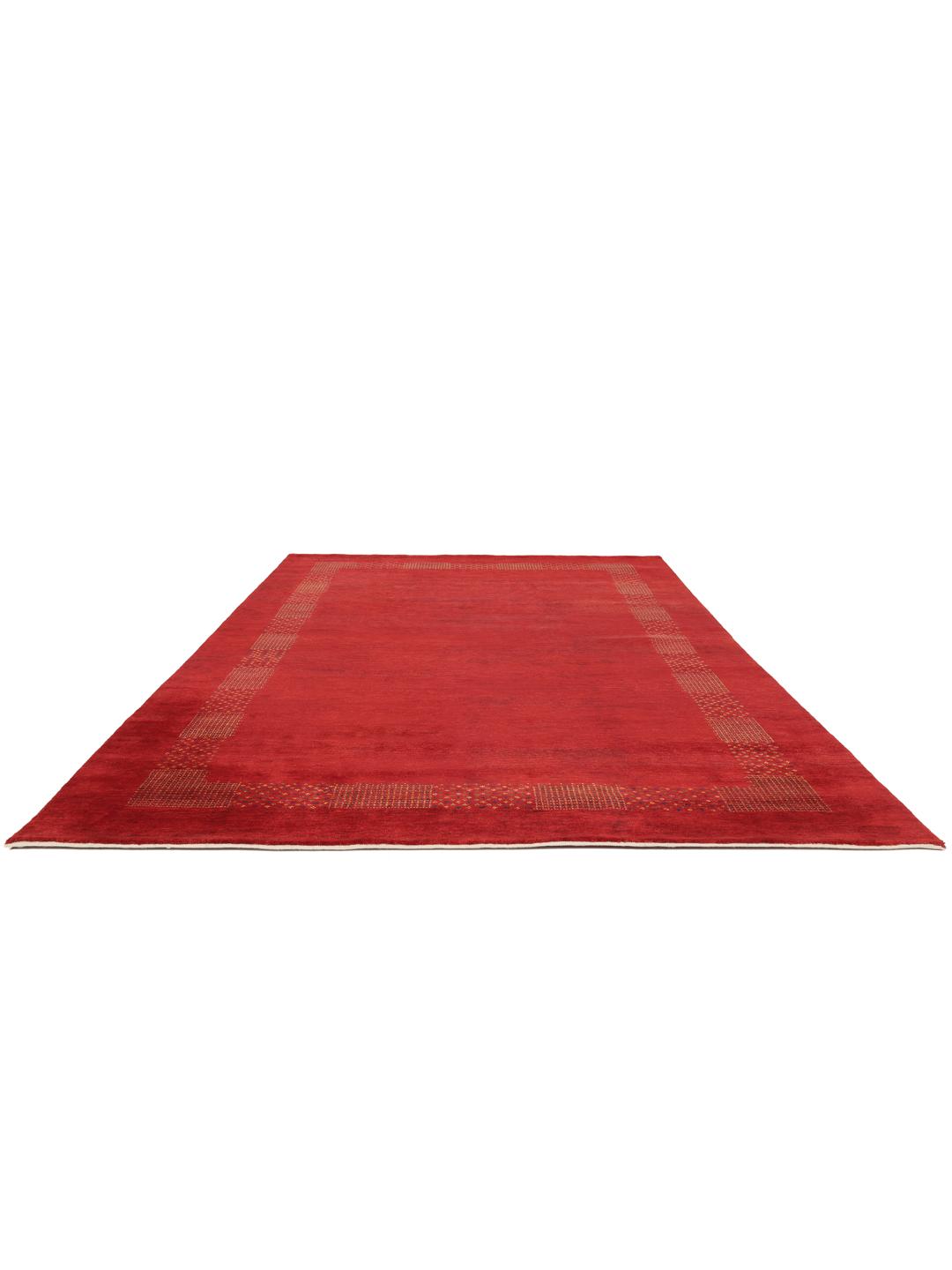
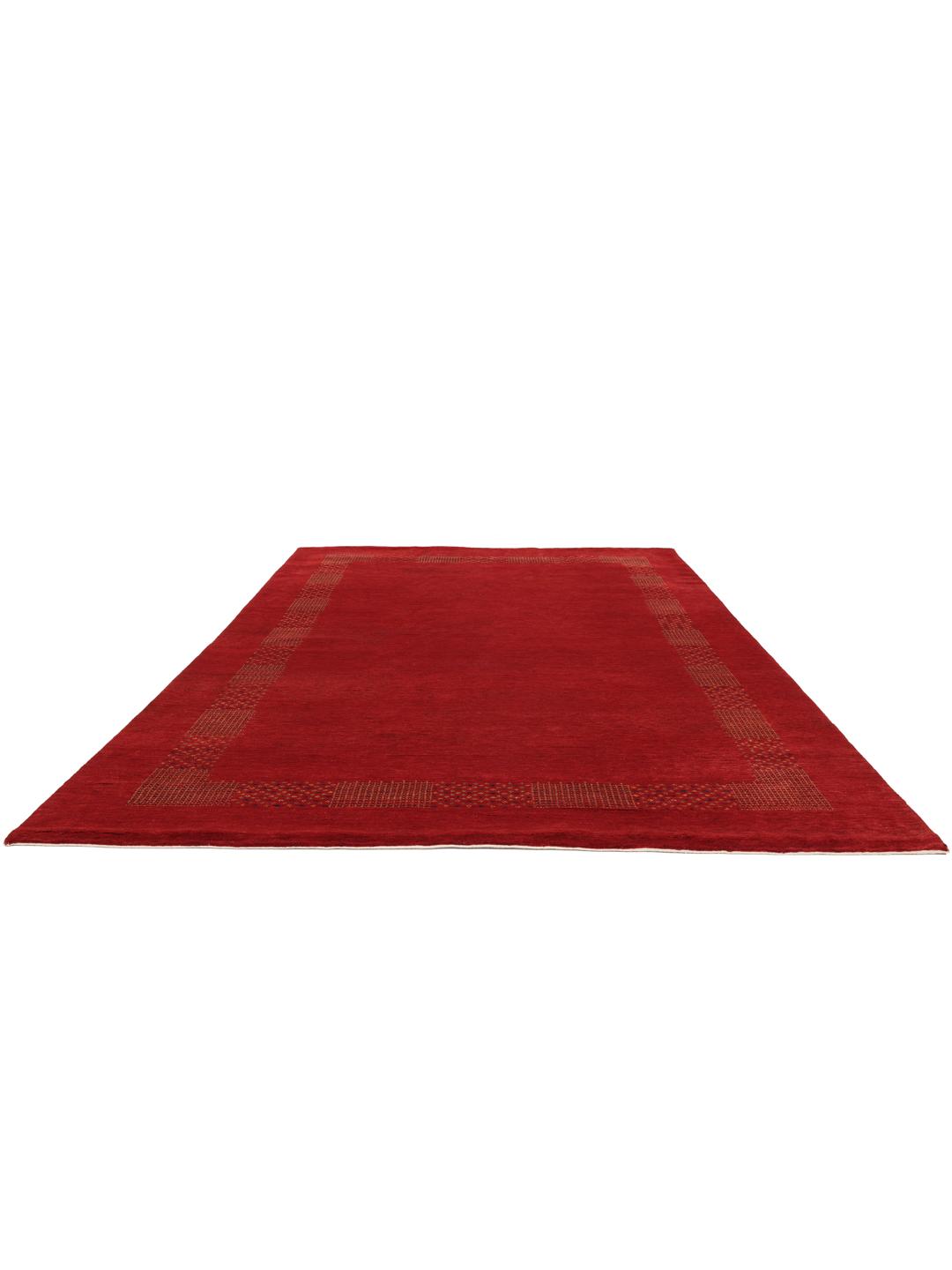
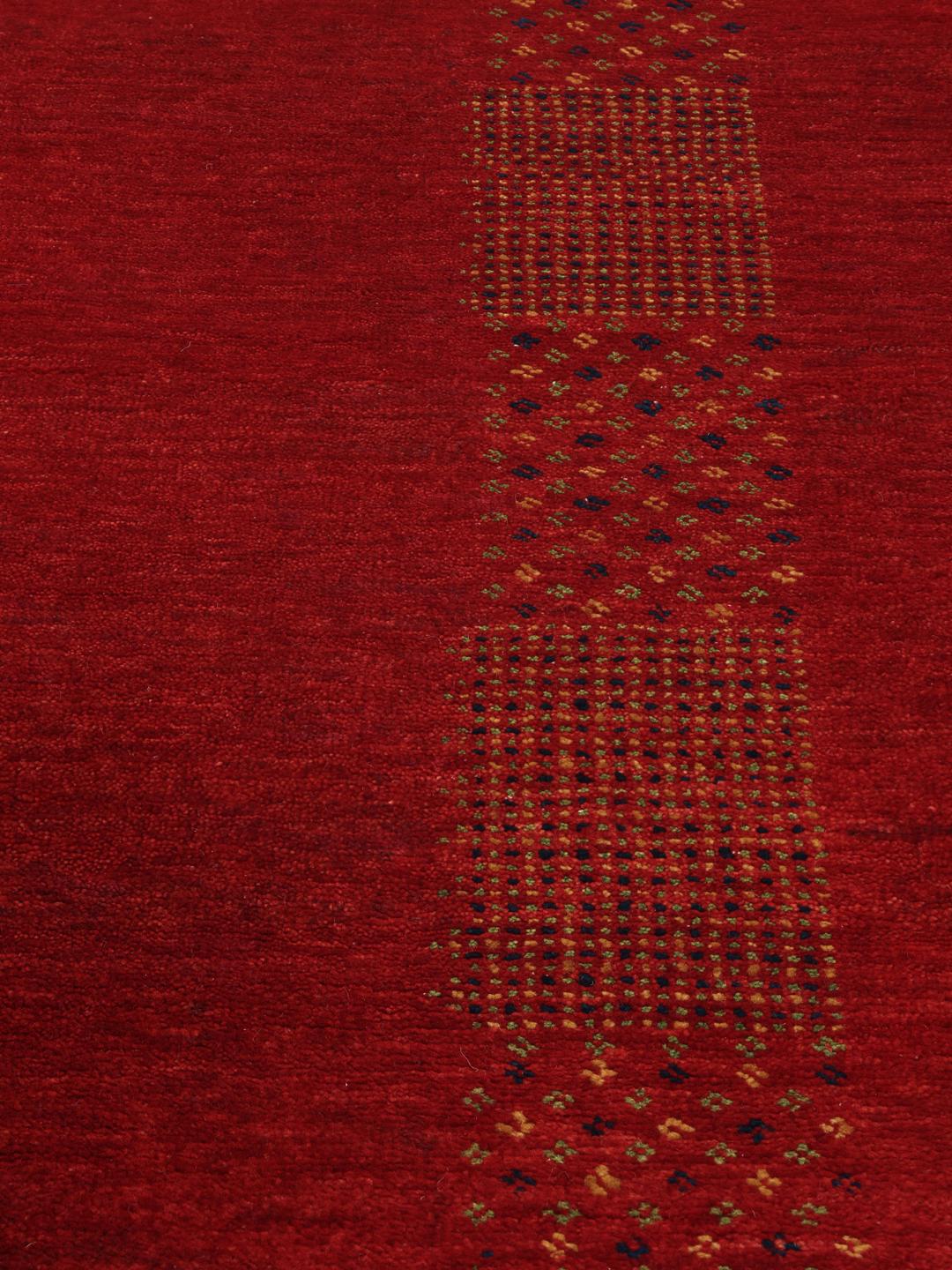
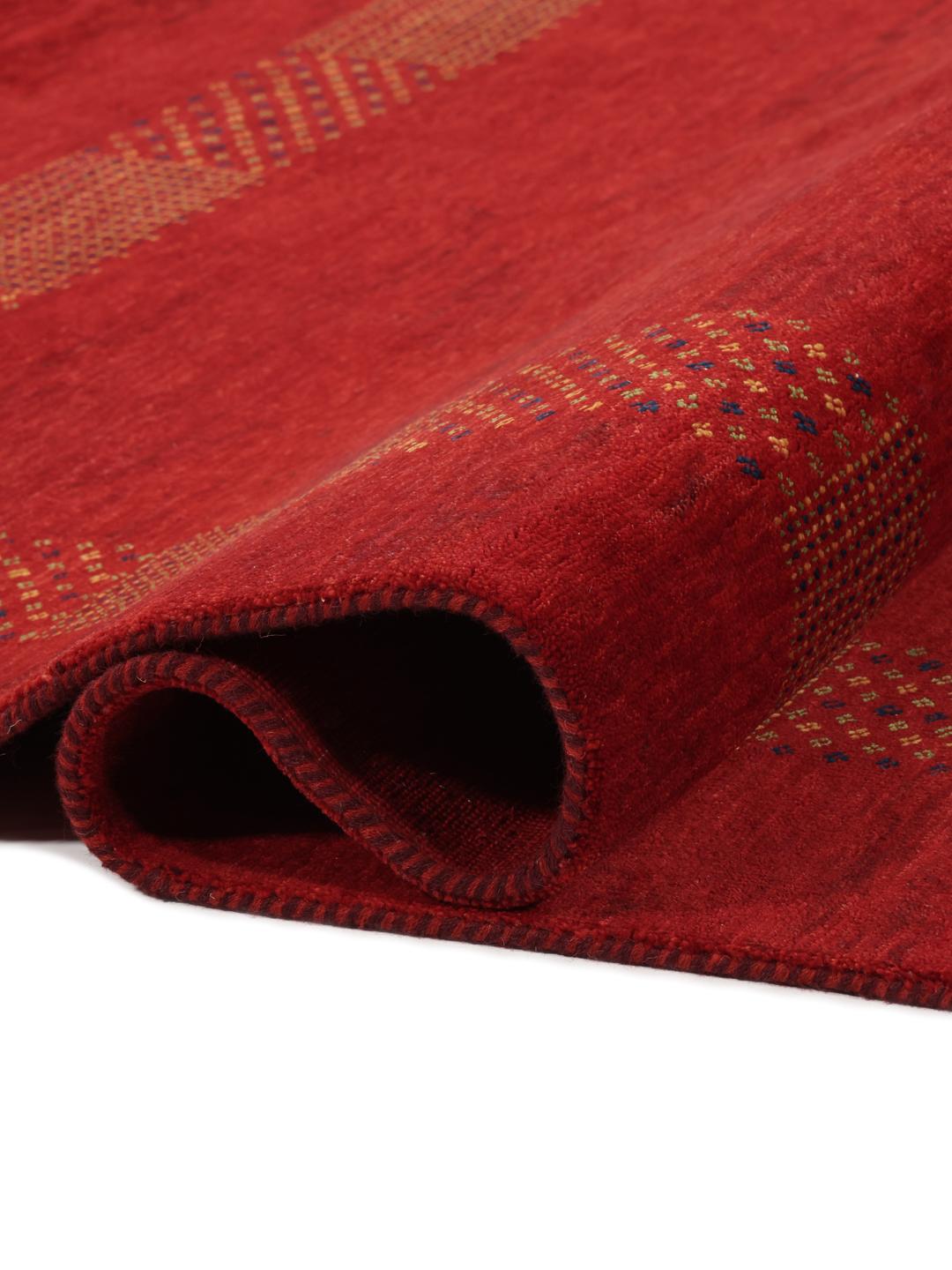
Visually, these rugs are known for their minimalist approach, often featuring expansive, open fields of colour that highlight the vibrant, natural dyes used in the process. The geometric borders serve as a frame, often inspired by tribal symbolism and regional artistic motifs. In this specific piece, the deep red field is a classic choice that emphasises the warmth and depth of the wool, creating a focal point that is both striking and harmonious.
Collecting a Gabbeh Loribaft is an investment in a storied craft tradition. These rugs are valued not just for their visual appeal, but for the human connection they represent. By choosing a hand-knotted piece, you are supporting a legacy of skill that has been passed down through generations, ensuring that these artistic traditions continue to thrive in the modern home.