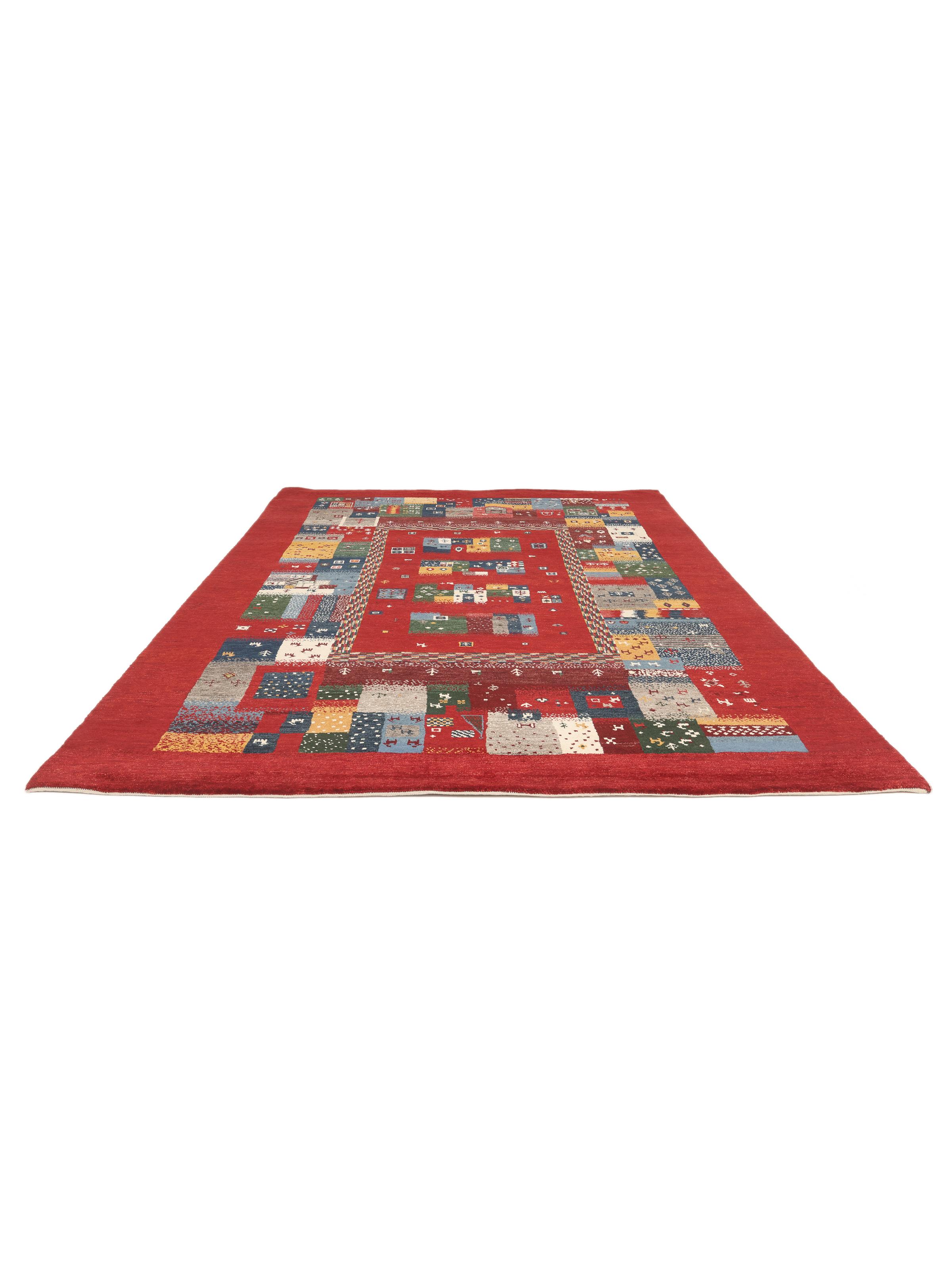
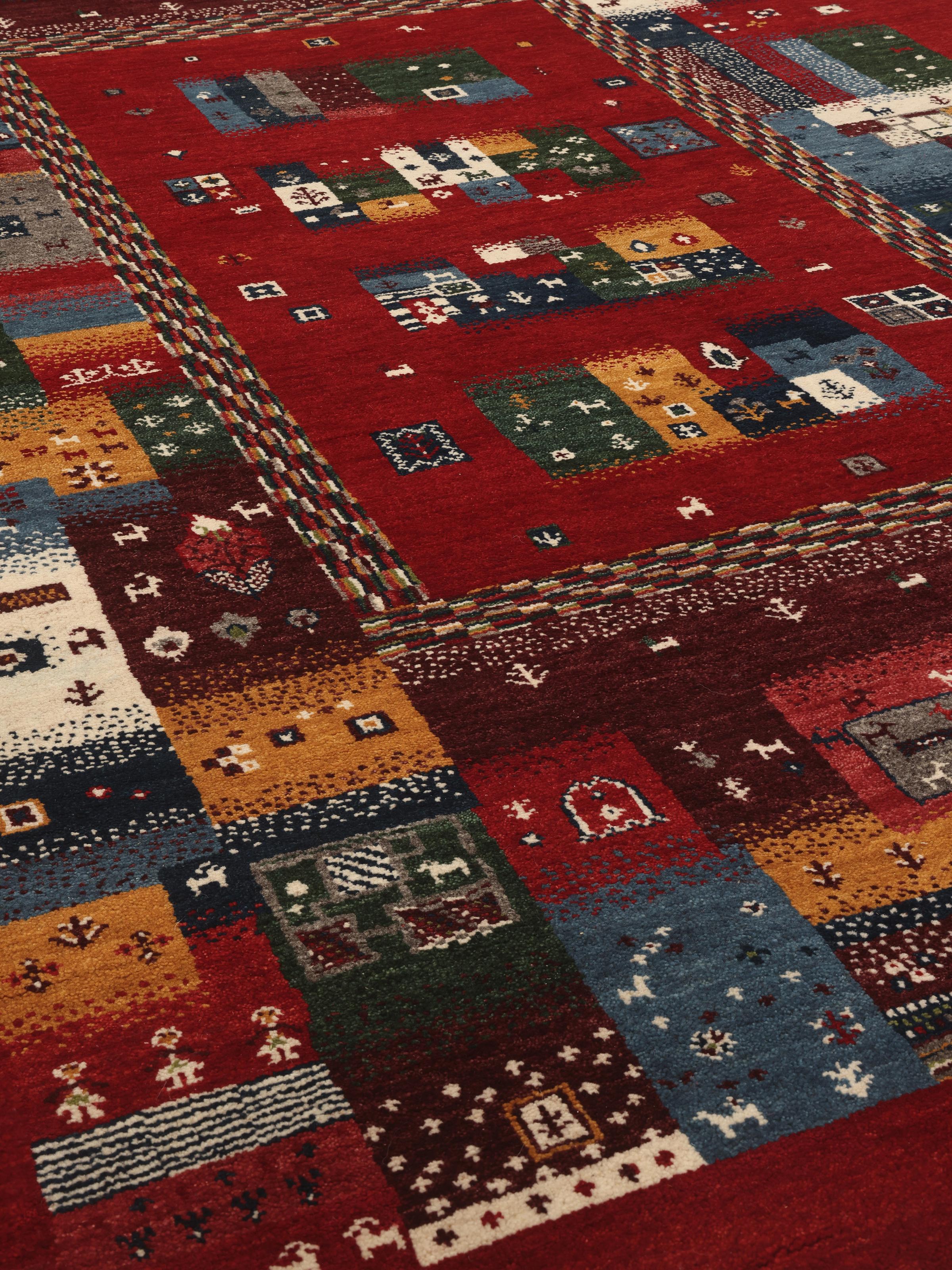
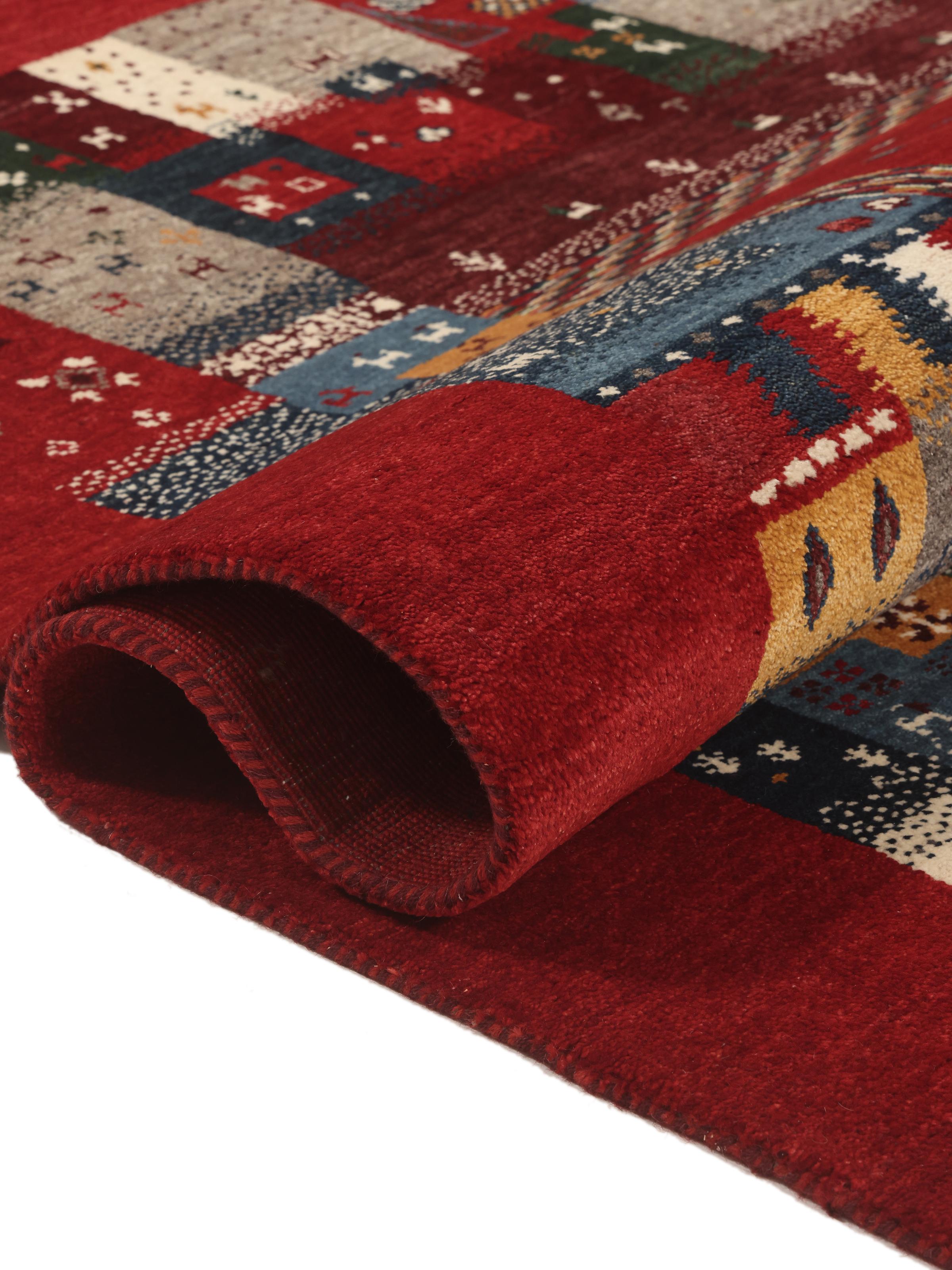
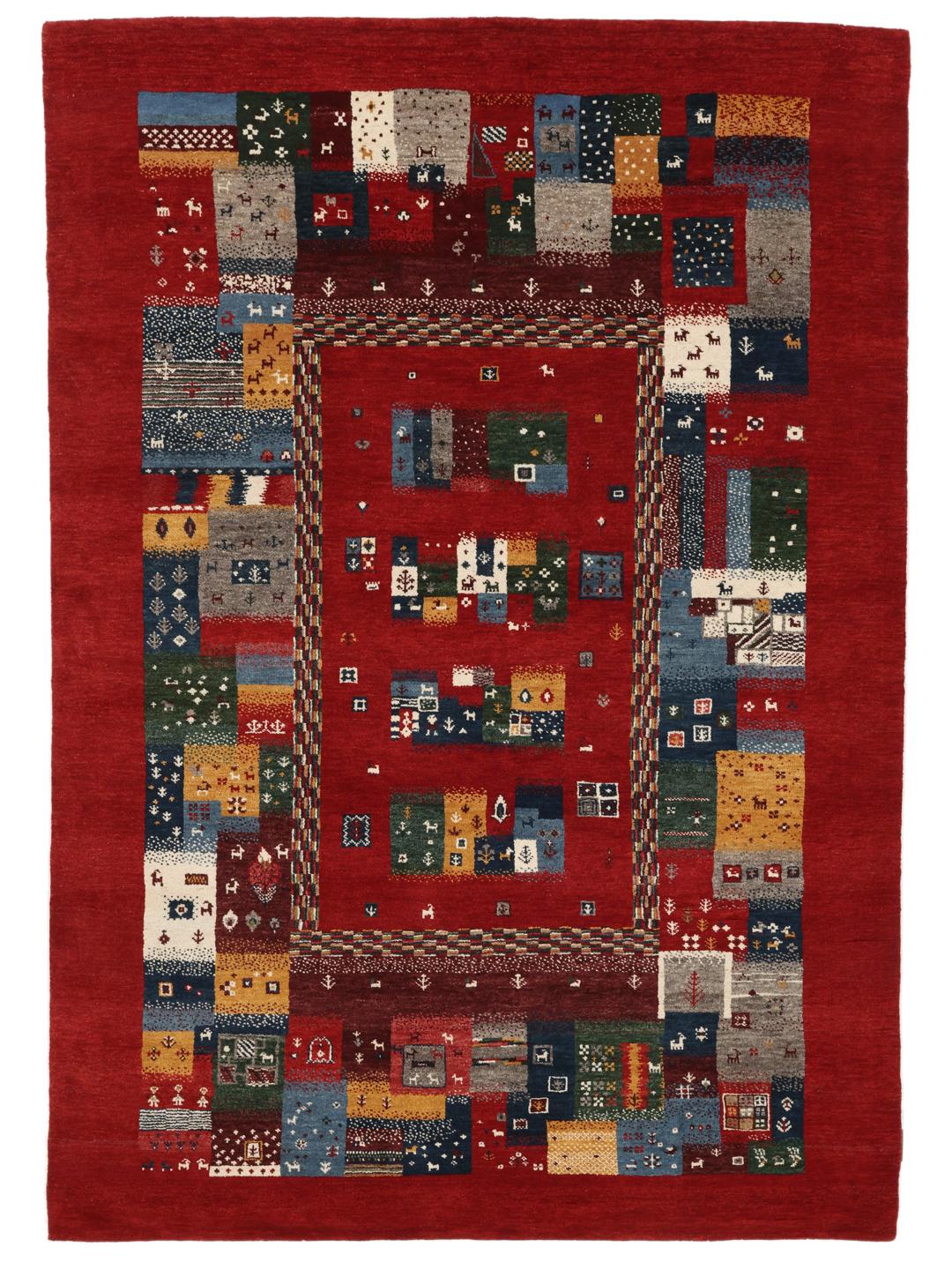
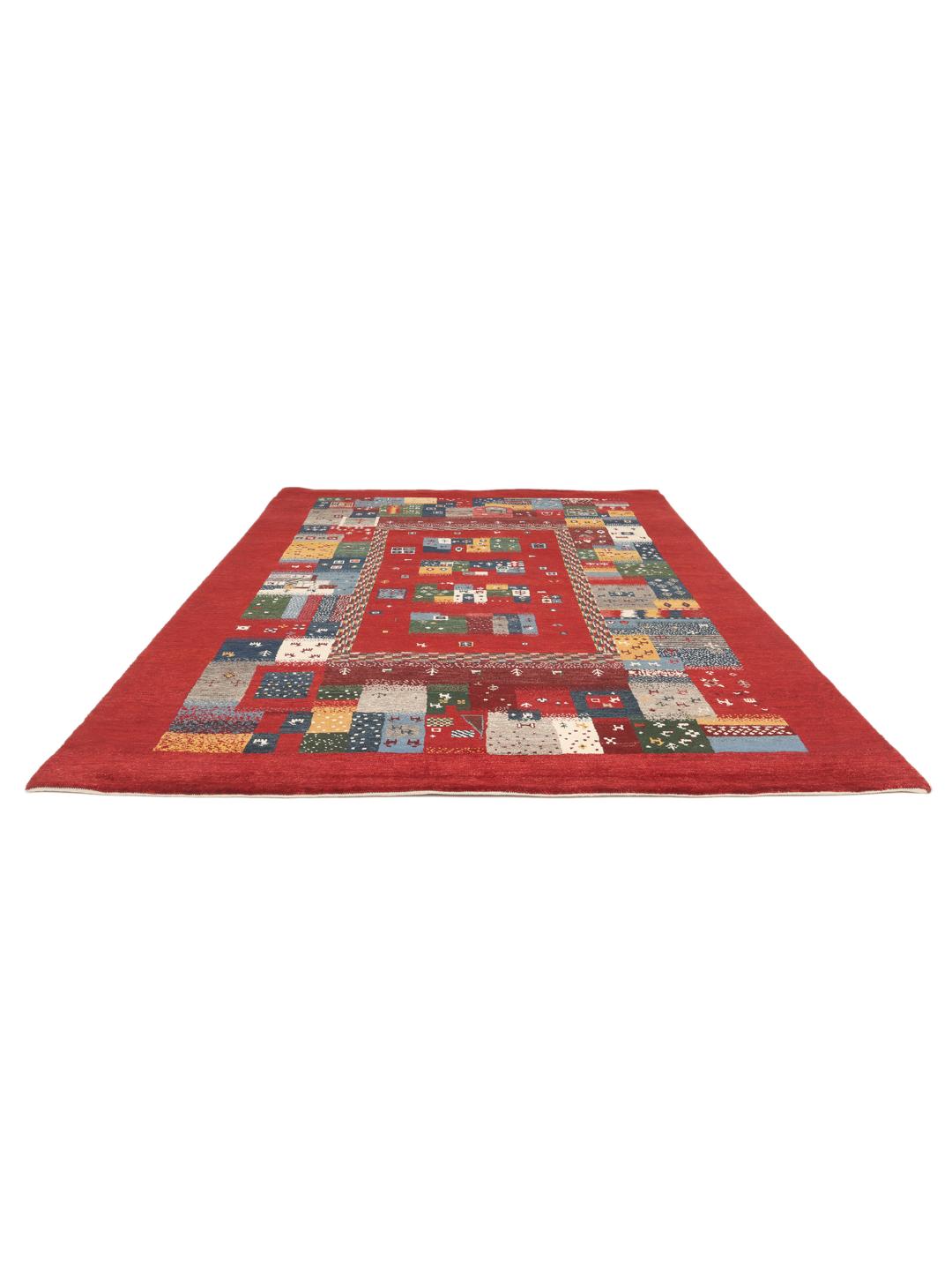
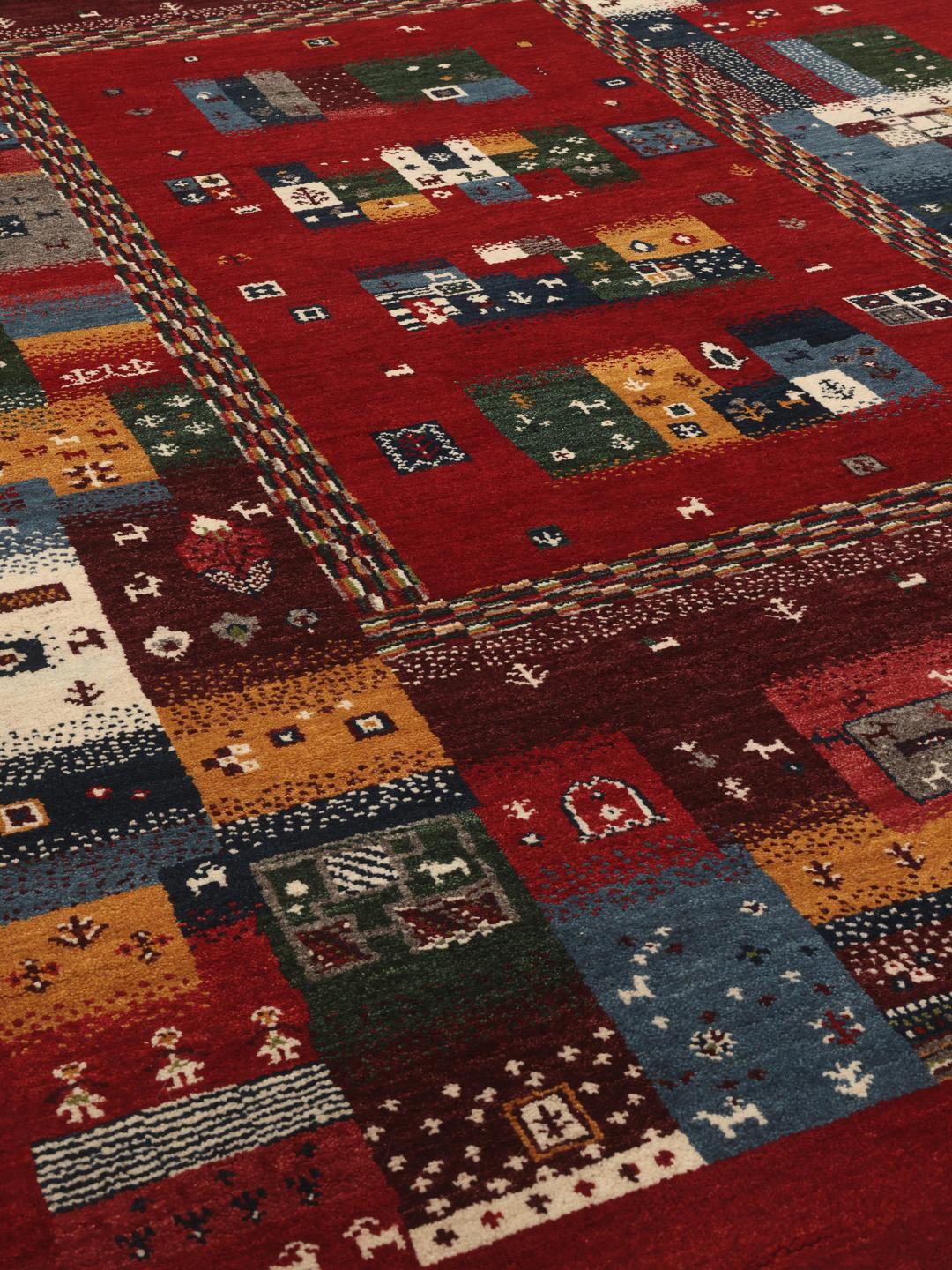
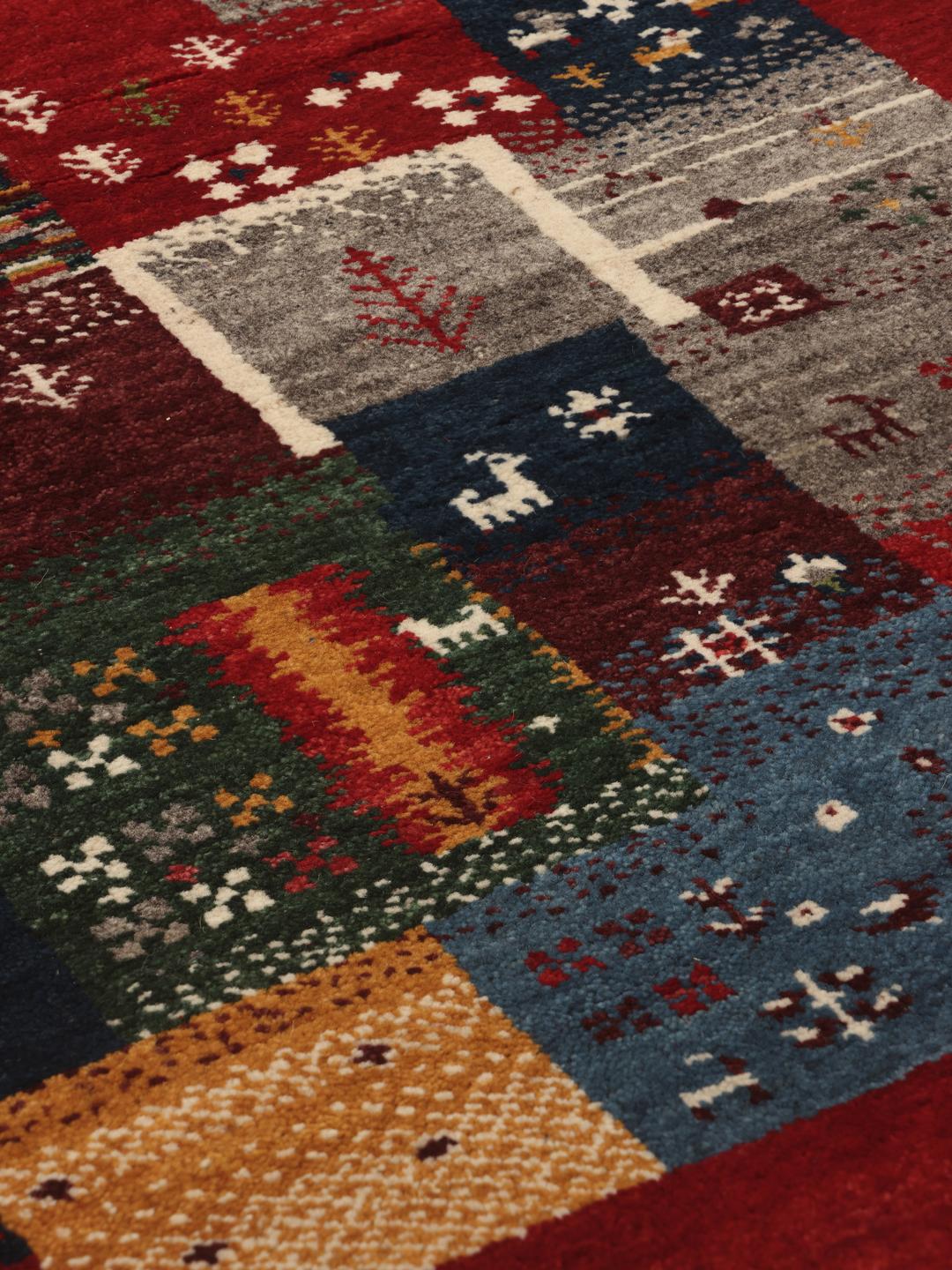
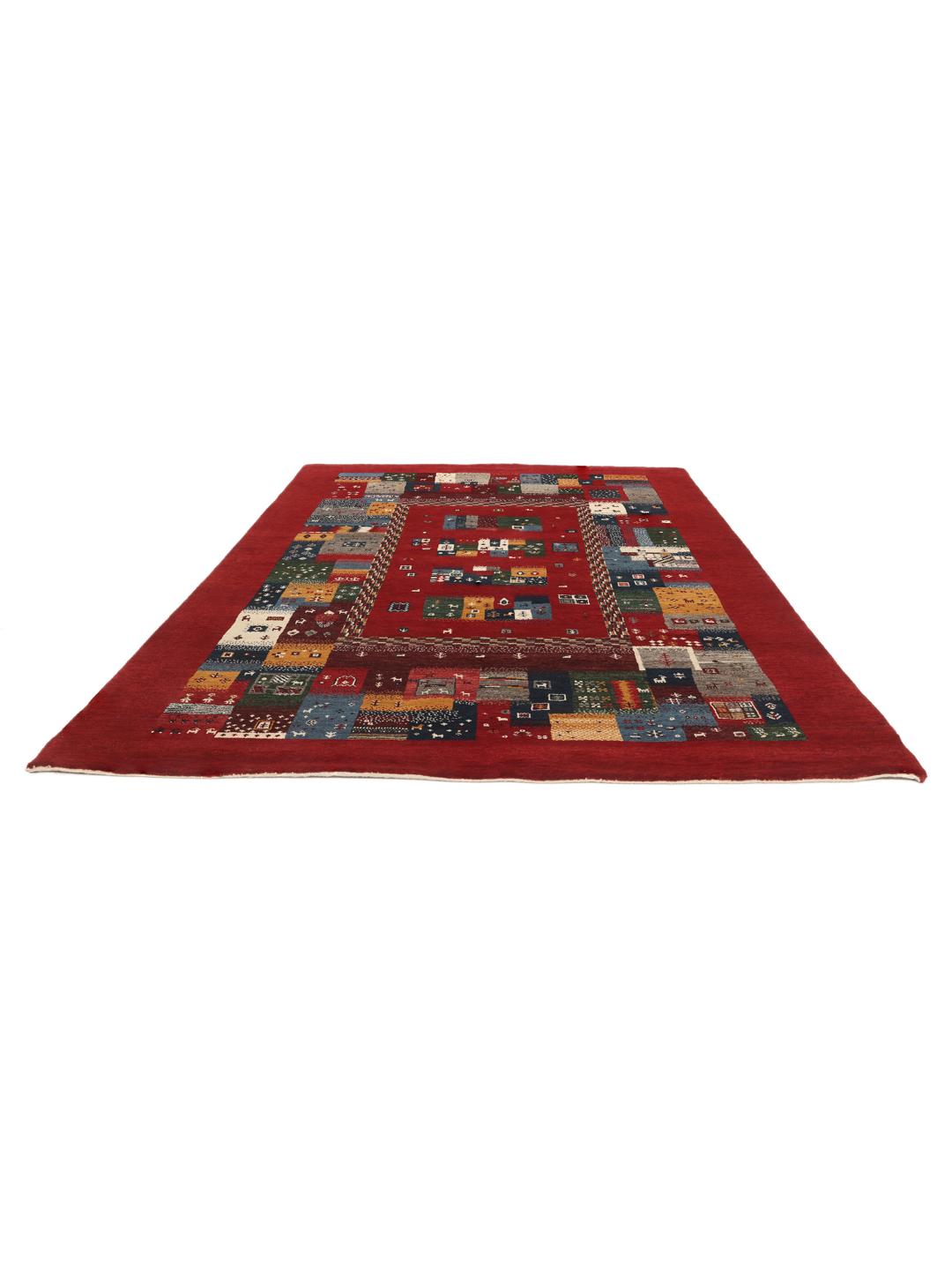
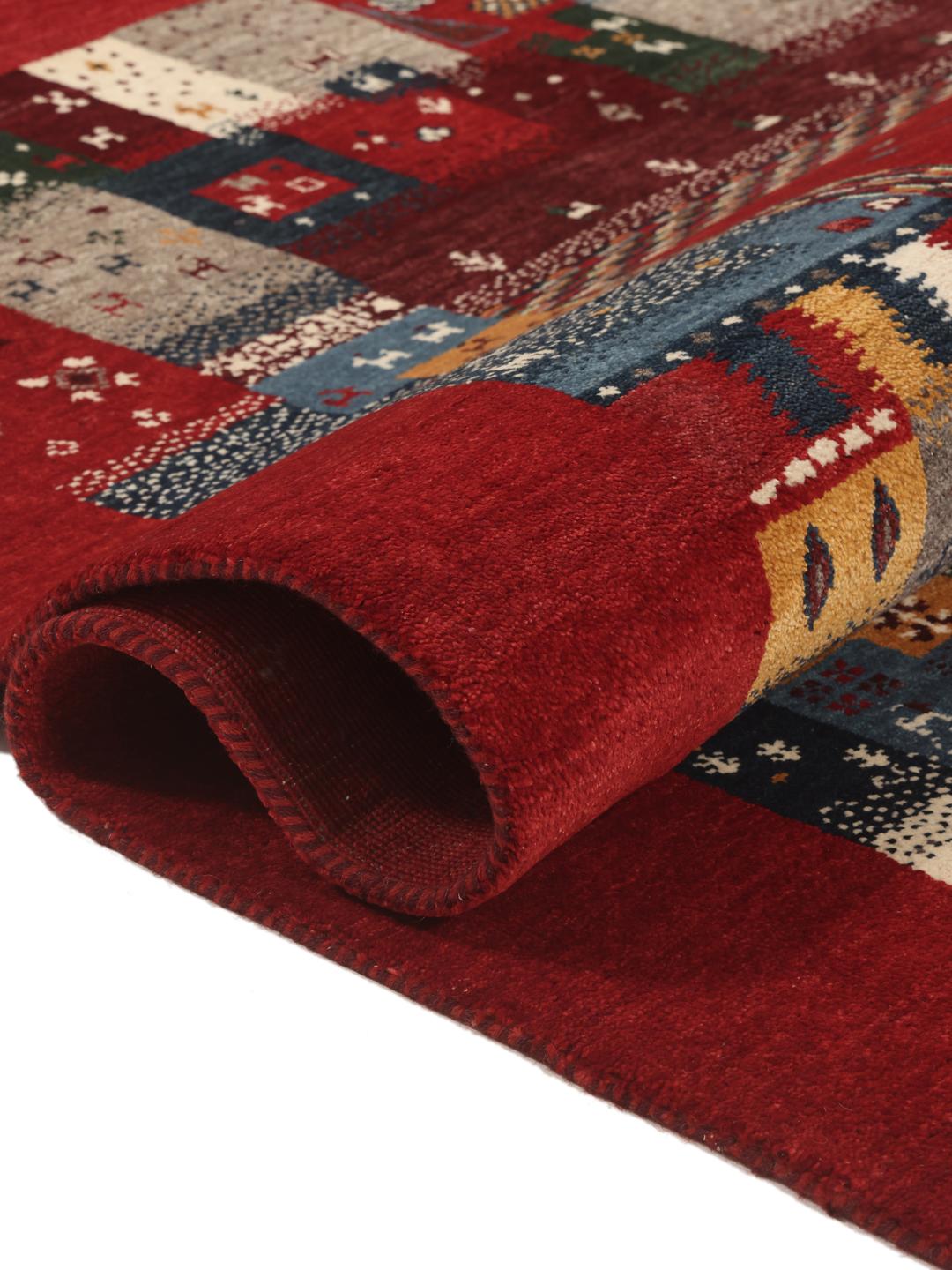
The Gabbeh style originates from the nomadic tribes of the Middle East, who traditionally created these rugs for their own daily use. These pieces were designed to be functional, soft, and durable, often serving as bedding or floor coverings in tents. Over time, the tradition migrated and evolved, with India becoming a prominent centre for producing high-quality pieces that maintain this authentic, rugged spirit.
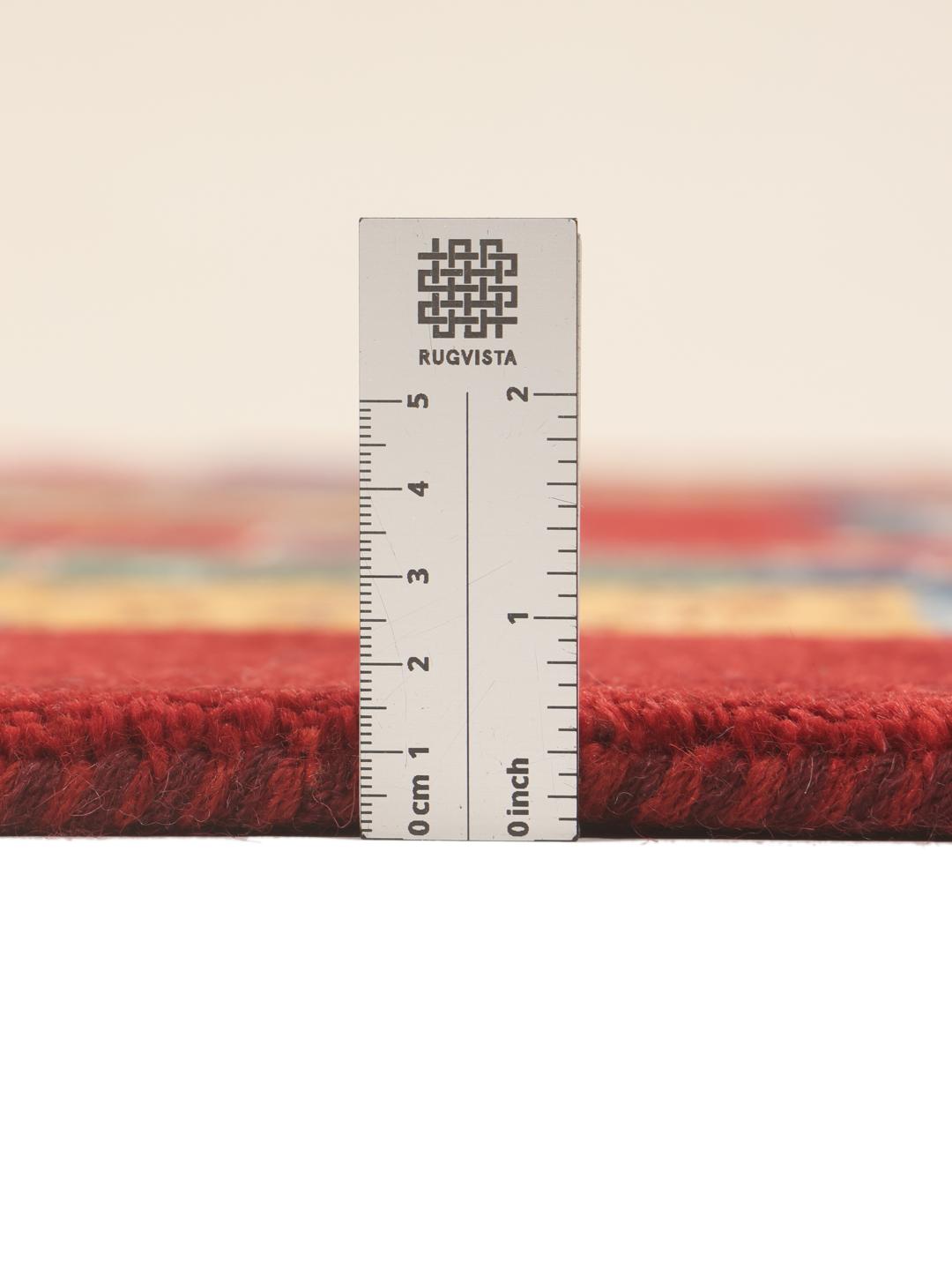
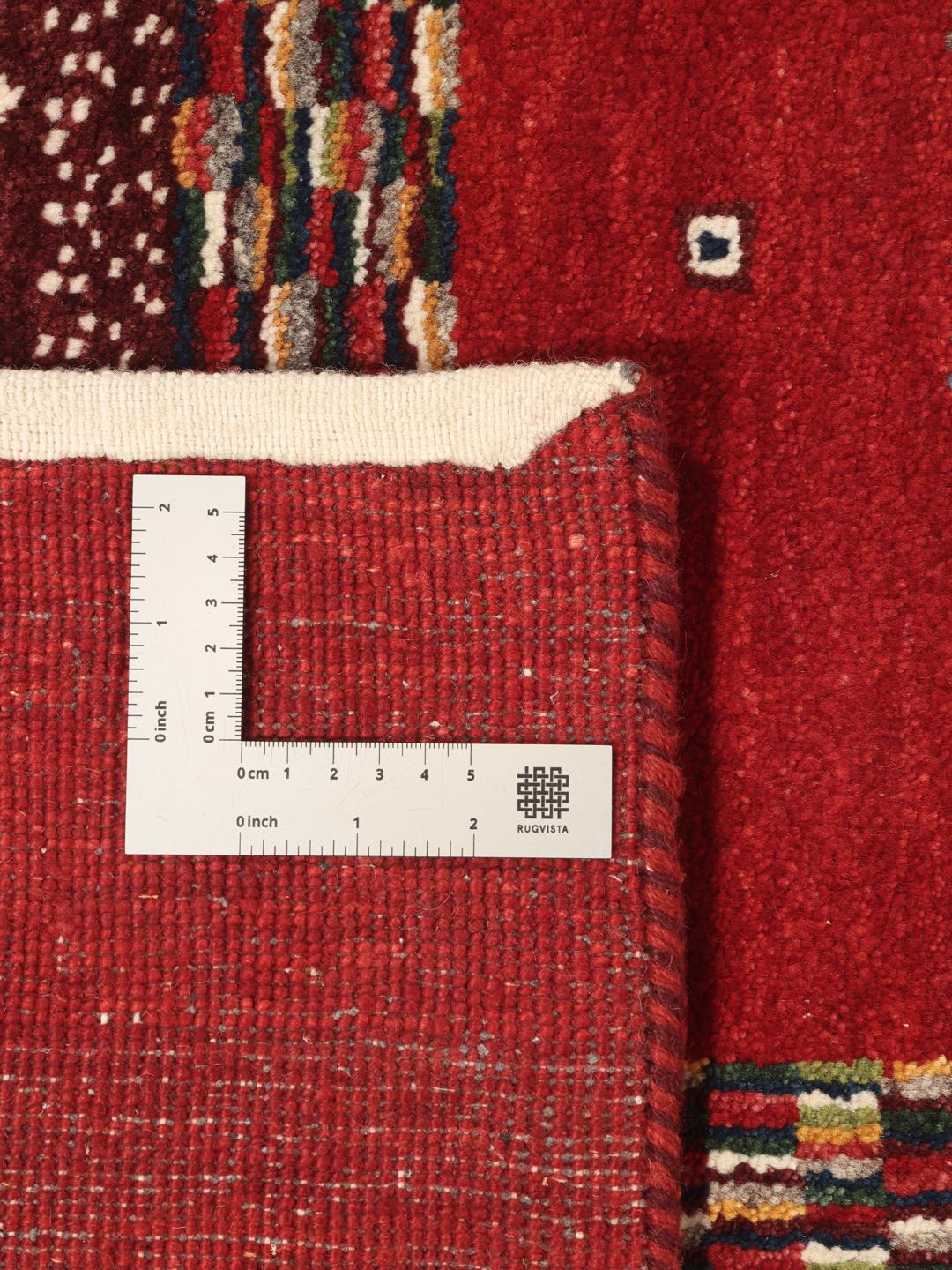
The term 'Loribaft' refers to a specific, refined quality of Gabbeh that is known for its higher density and softer, more lustrous wool. This technique involves using high-quality materials that are carefully processed to ensure a smooth, dense pile. The result is a rug that feels far more luxurious than the coarser, more primitive Gabbehs of the past, bridging the gap between utilitarian origins and sophisticated interior design.
Visually, these rugs are celebrated for their artistic freedom. Unlike more formal, structured carpets, the Loribaft style often features a more open field filled with symbolic motifs. These designs are not pre-planned on paper but are instead drawn from the weaver's imagination, memory, and surroundings, often including stylized representations of animals, plants, and tribal heritage.
Owning a piece from this tradition is about more than just floor decor; it is about preserving a connection to a rich cultural history. These rugs are highly valued by collectors for their individuality and the undeniable skill required to produce them. By bringing a Gabbeh Loribaft into your home, you are supporting a craft that values human expression and heritage over mass production.