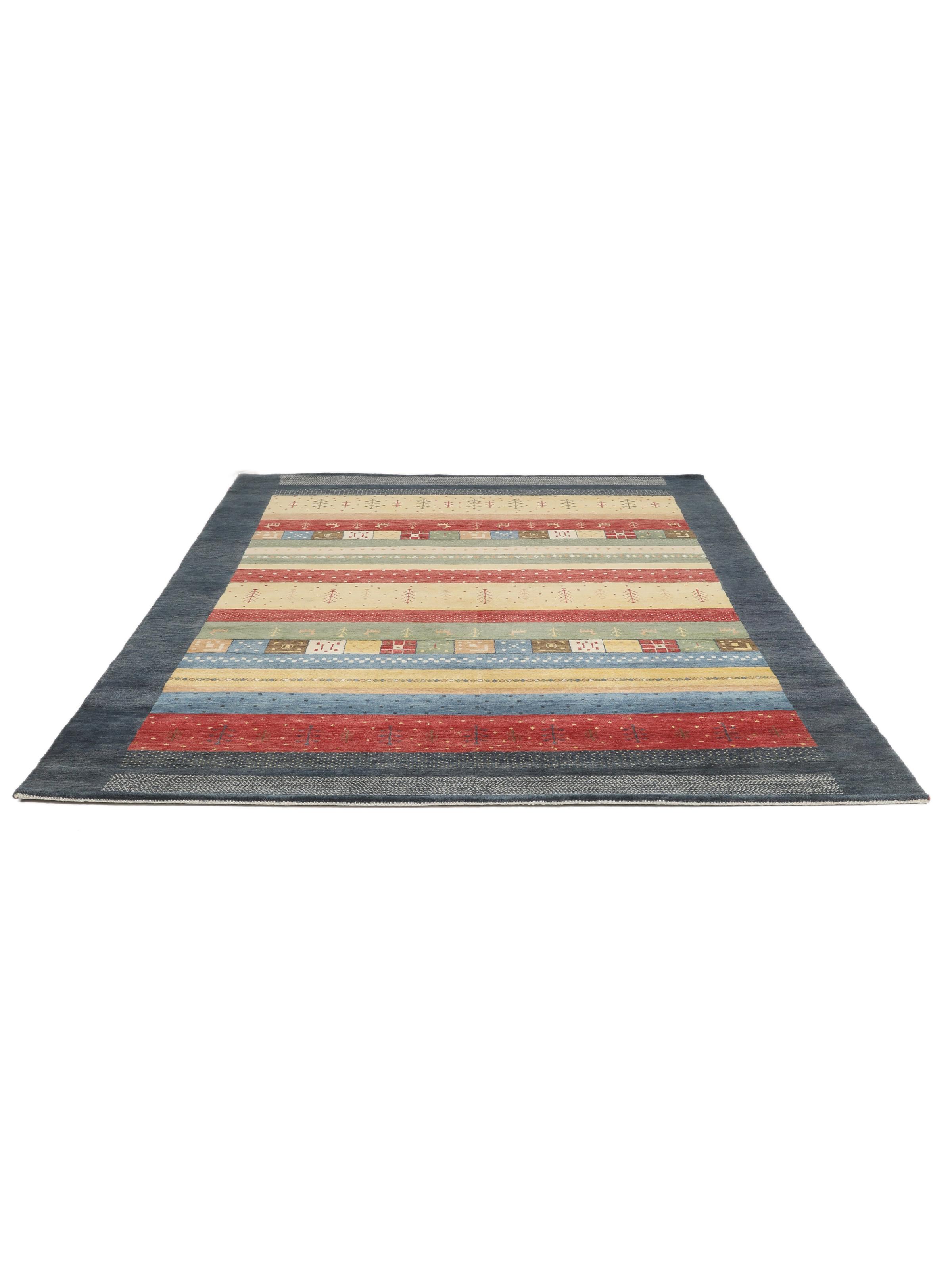
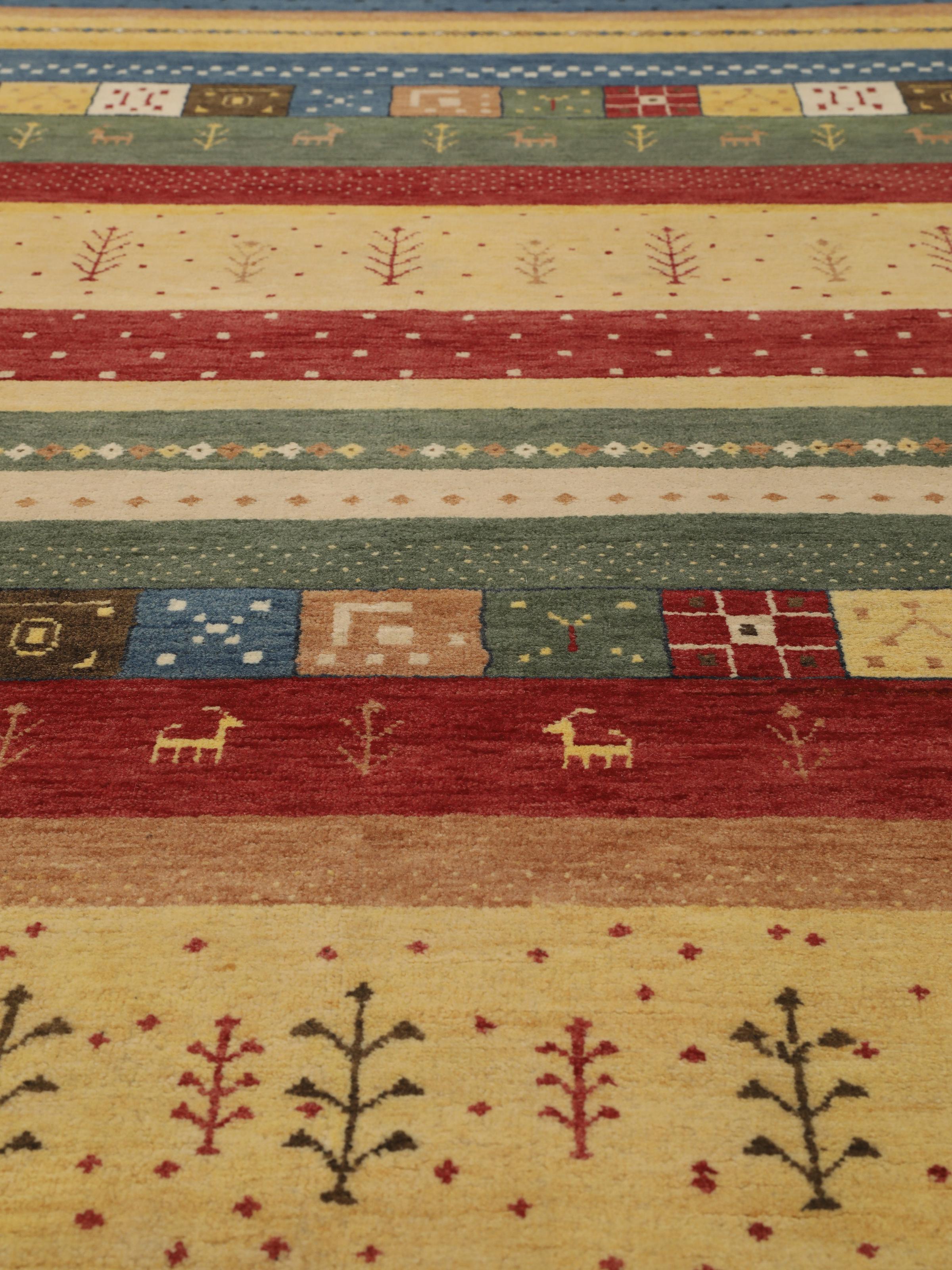
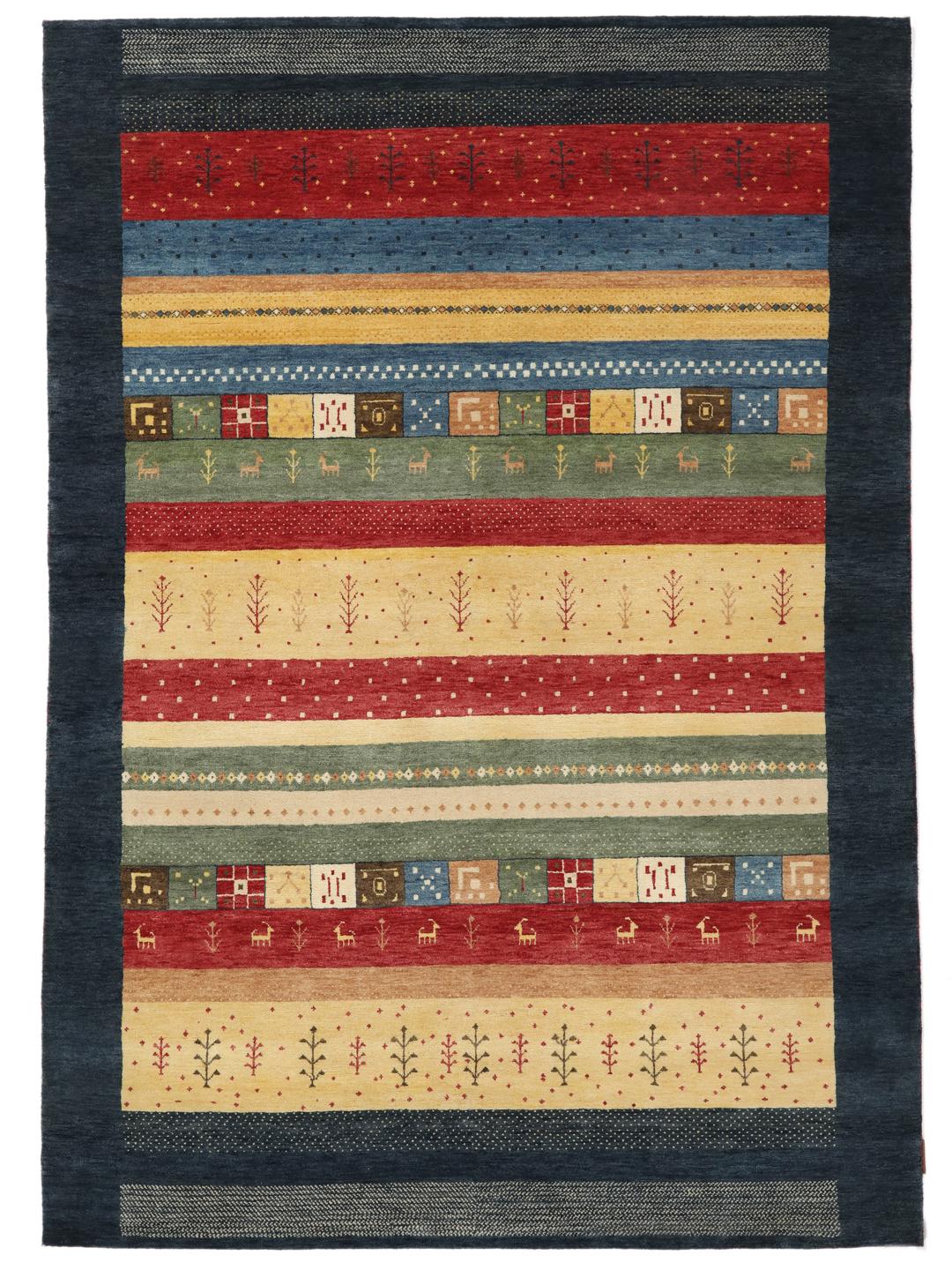
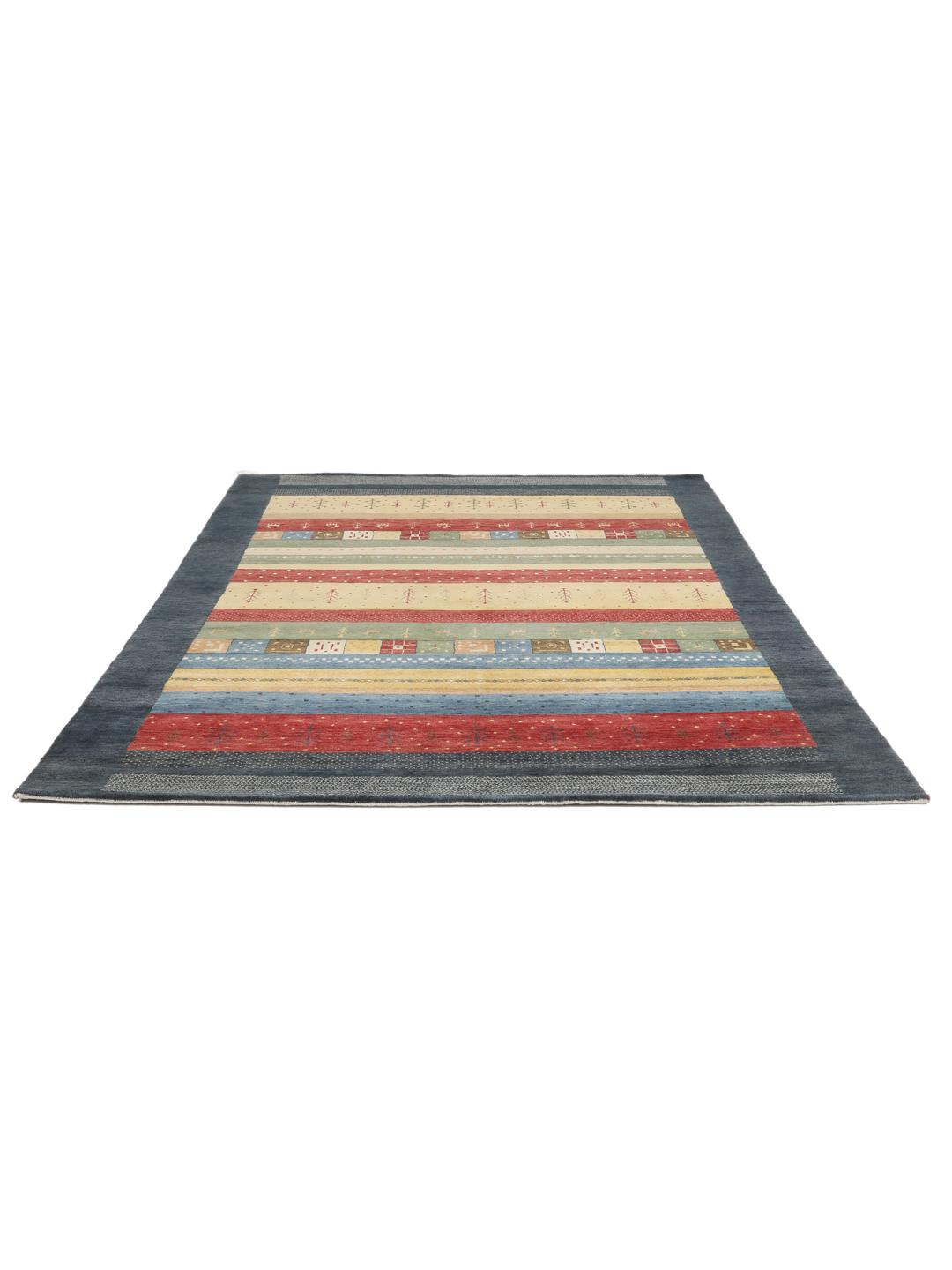
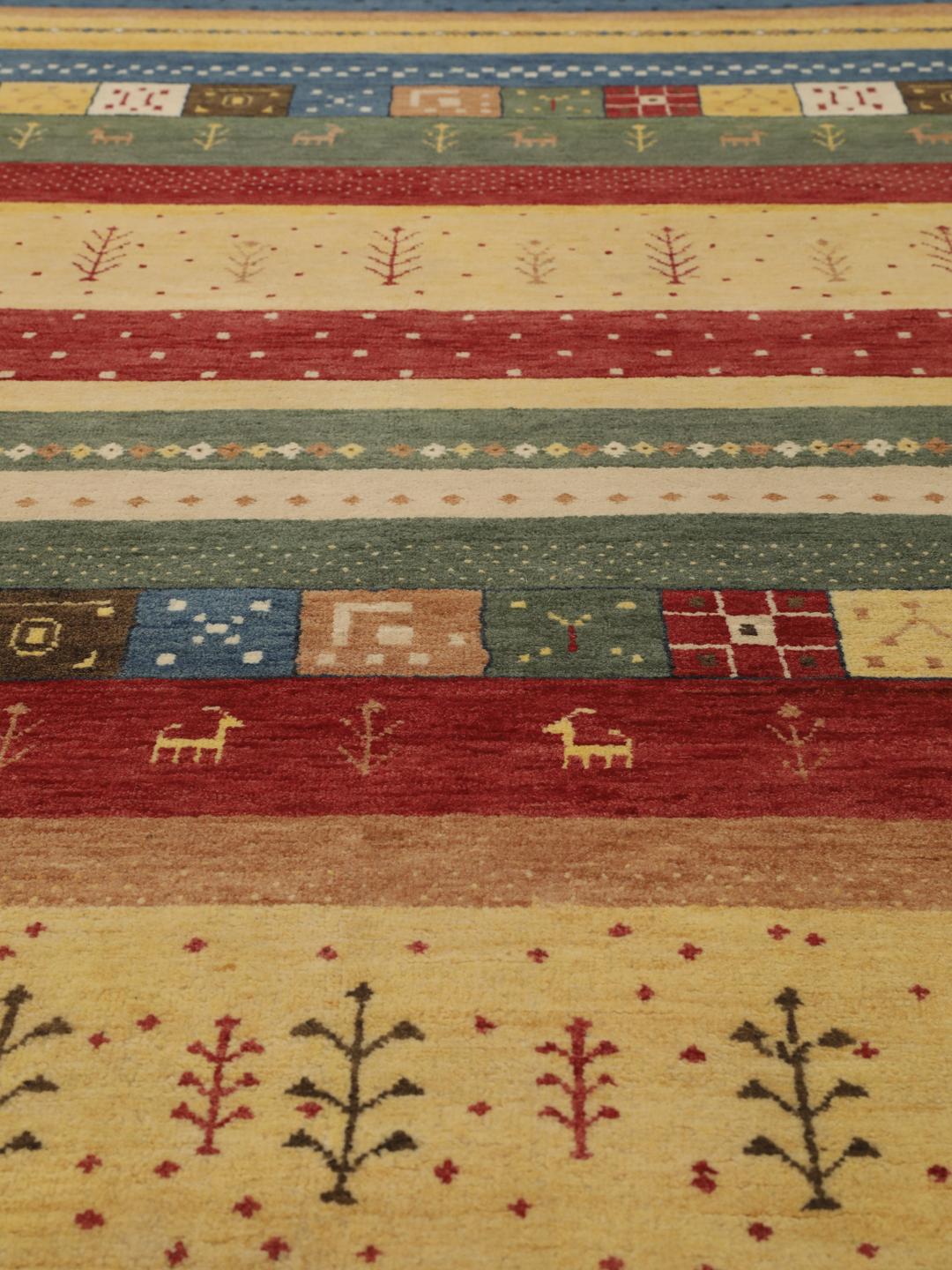
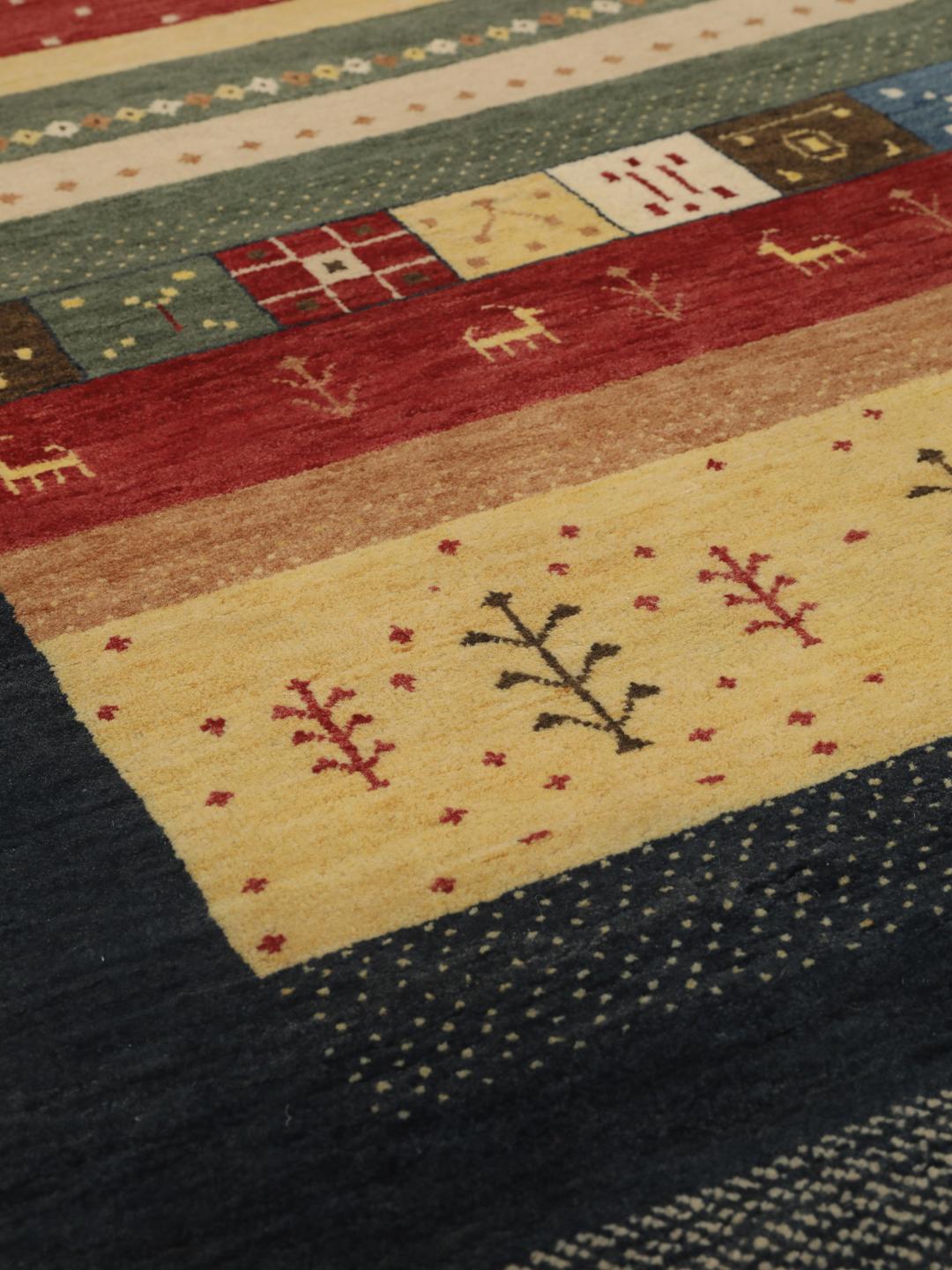
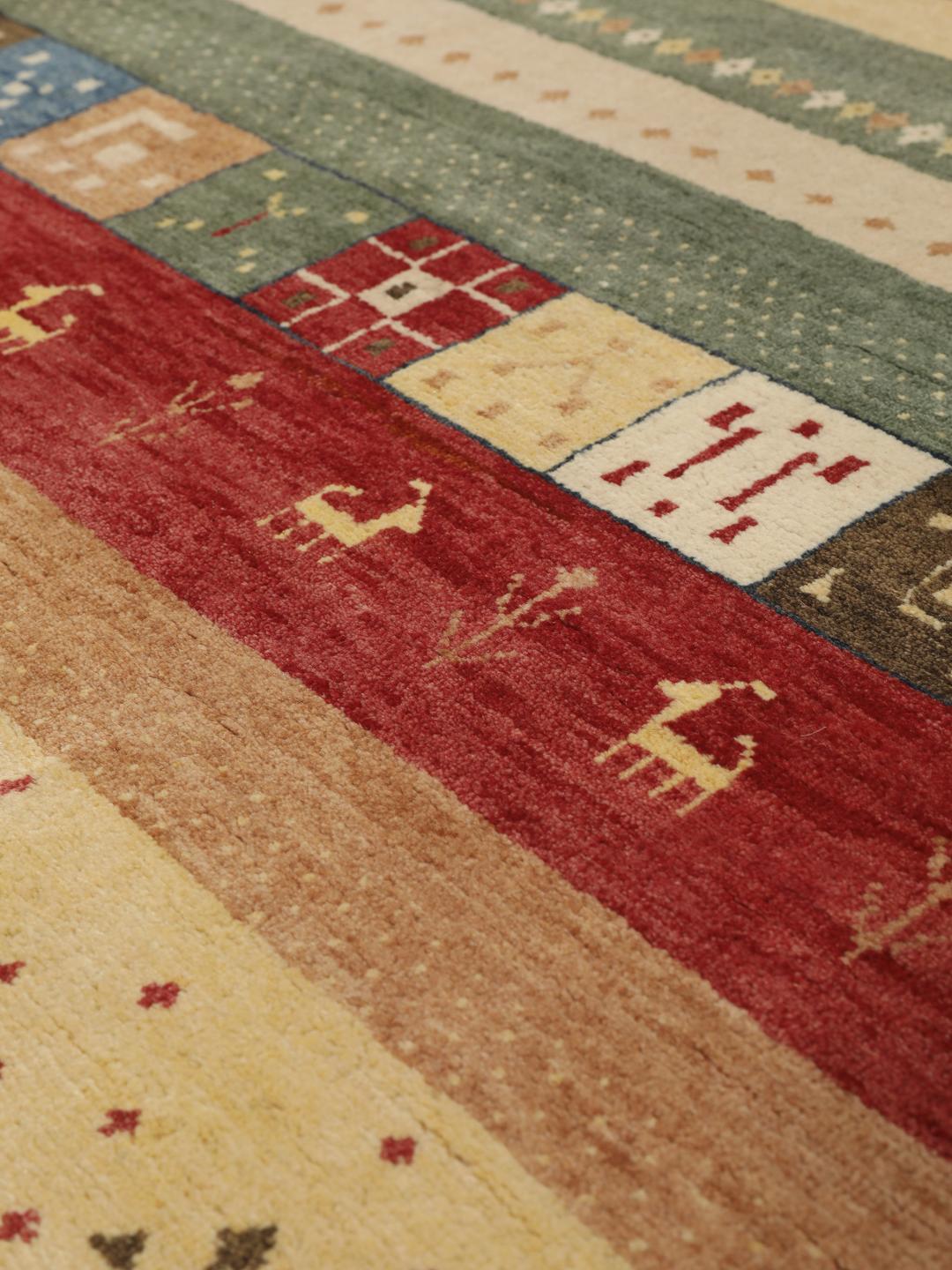
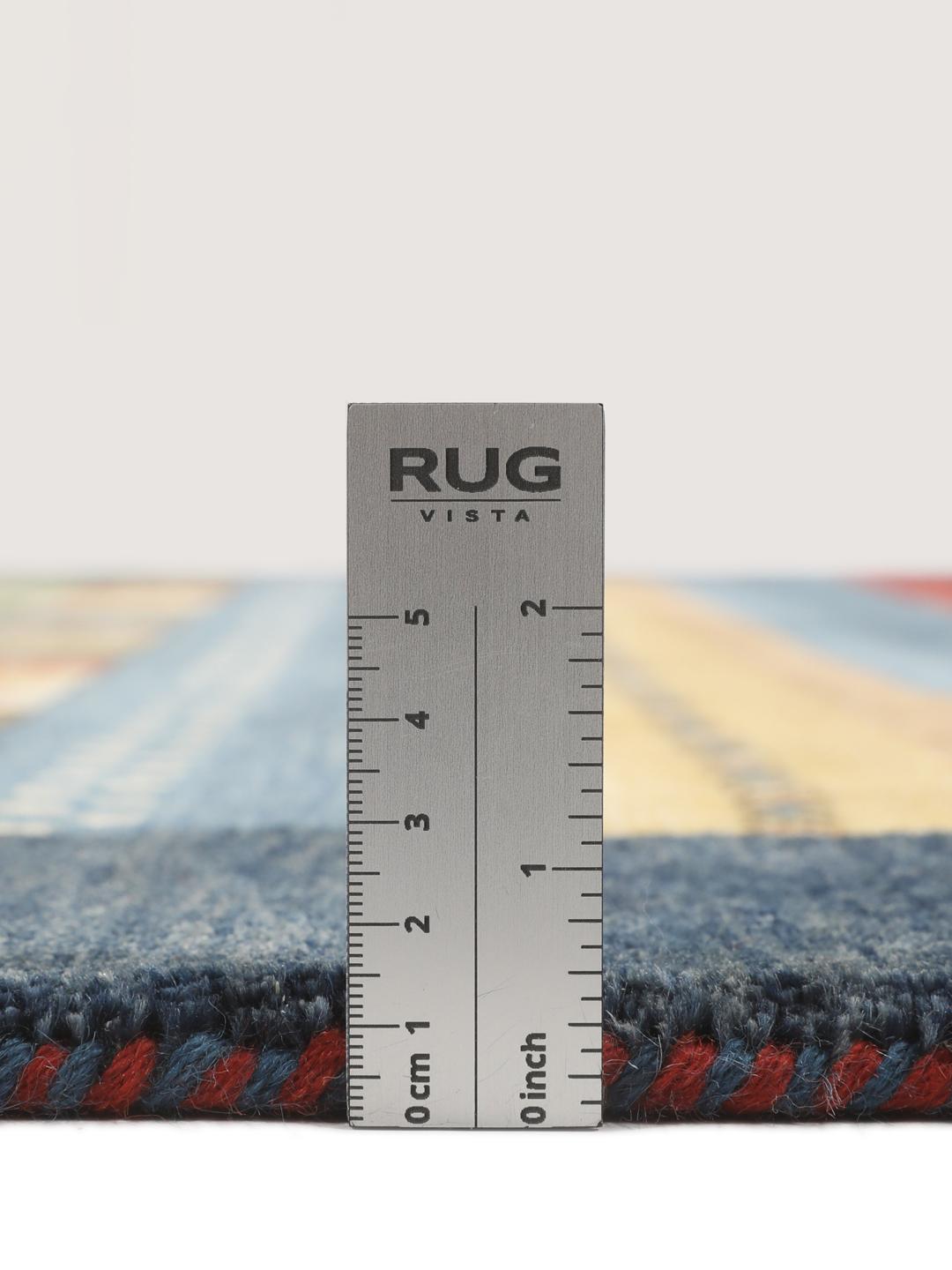
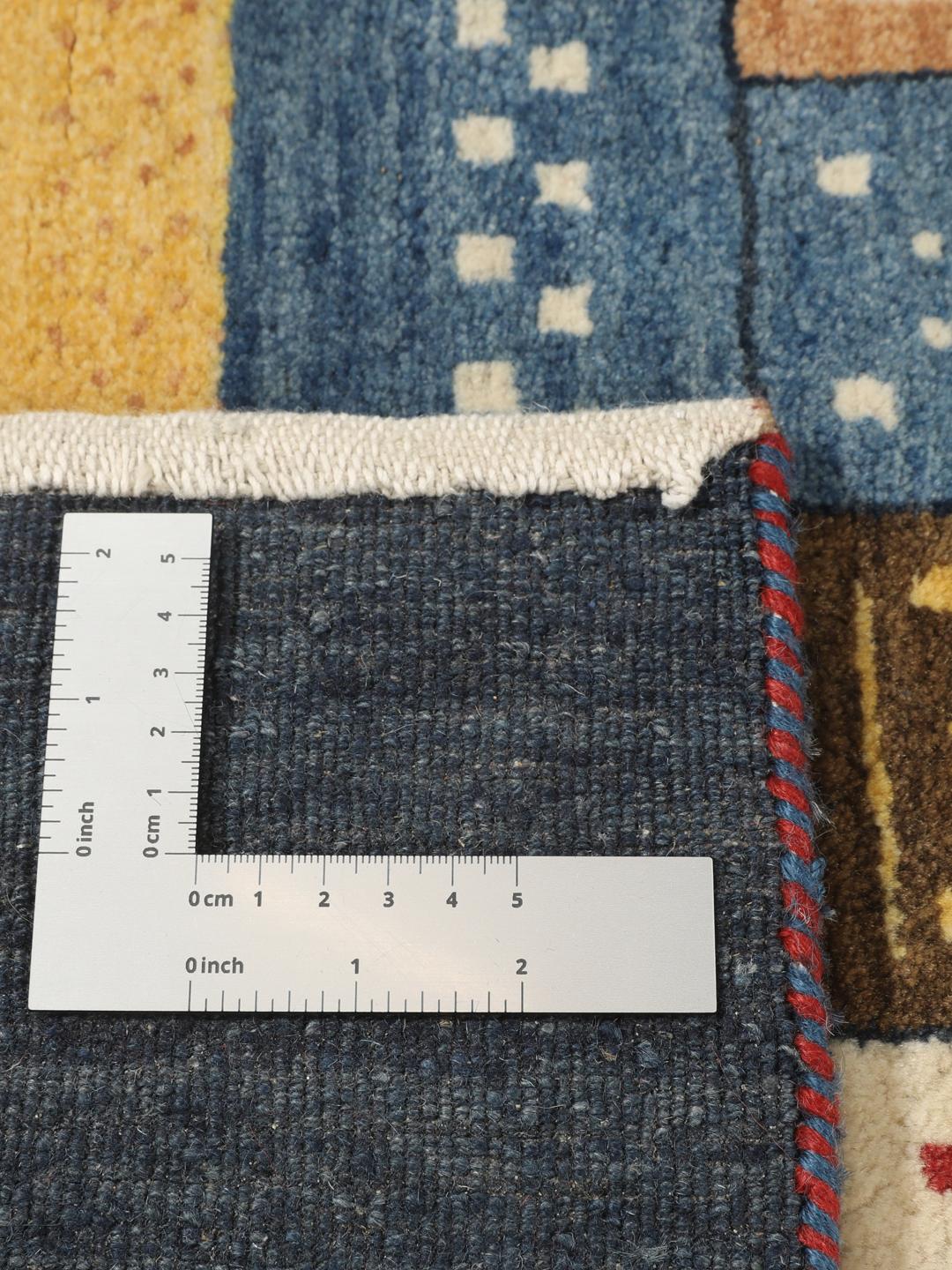
The Gabbeh tradition traces its roots to the nomadic tribes of the Middle East, where weavers created these rugs primarily for their own domestic use rather than for trade. Unlike formal court rugs, these pieces were expressions of personal storytelling, often featuring simplified, abstract representations of the natural world, such as trees, animals, and the landscape, crafted from memory and imagination.
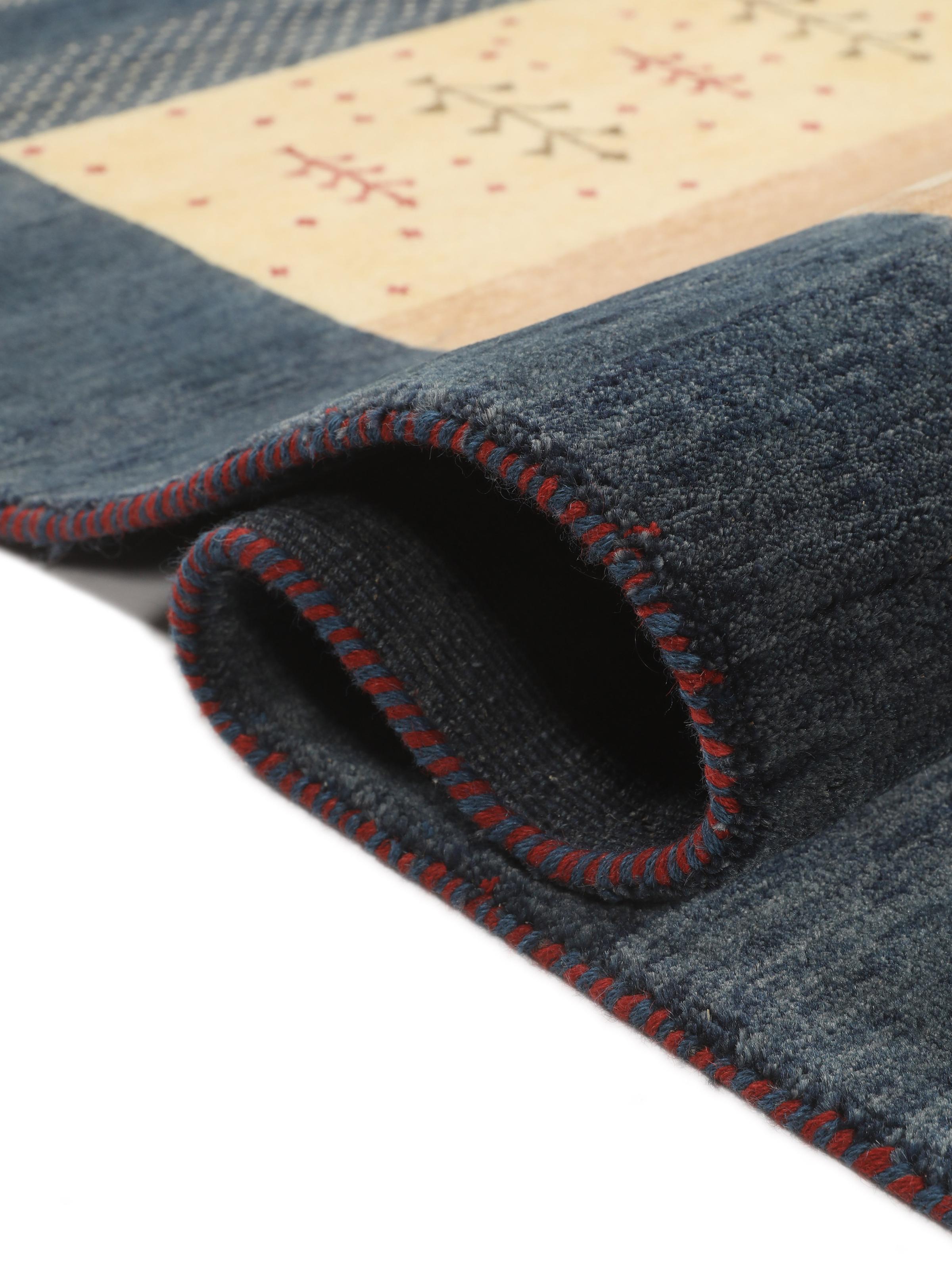
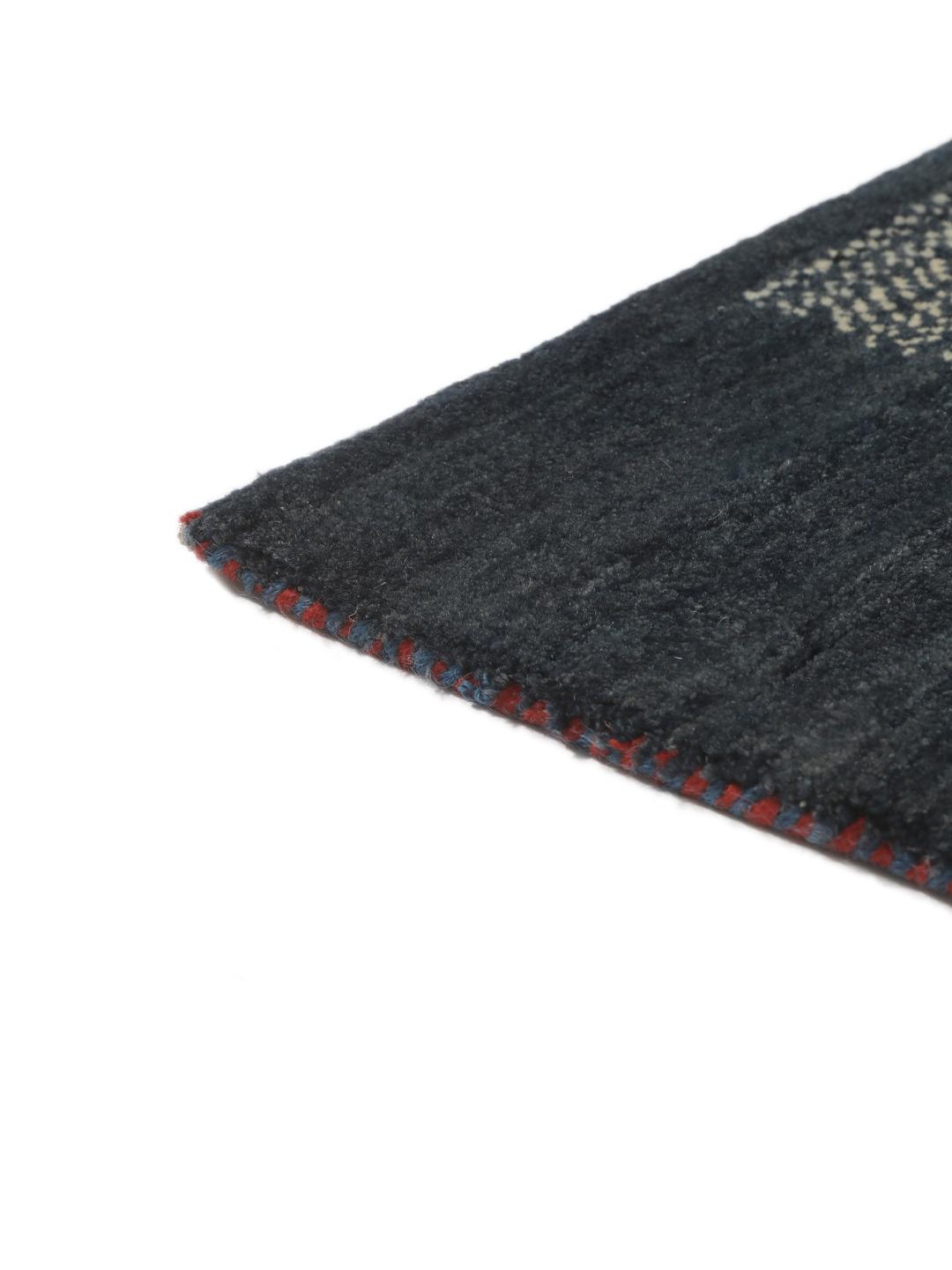
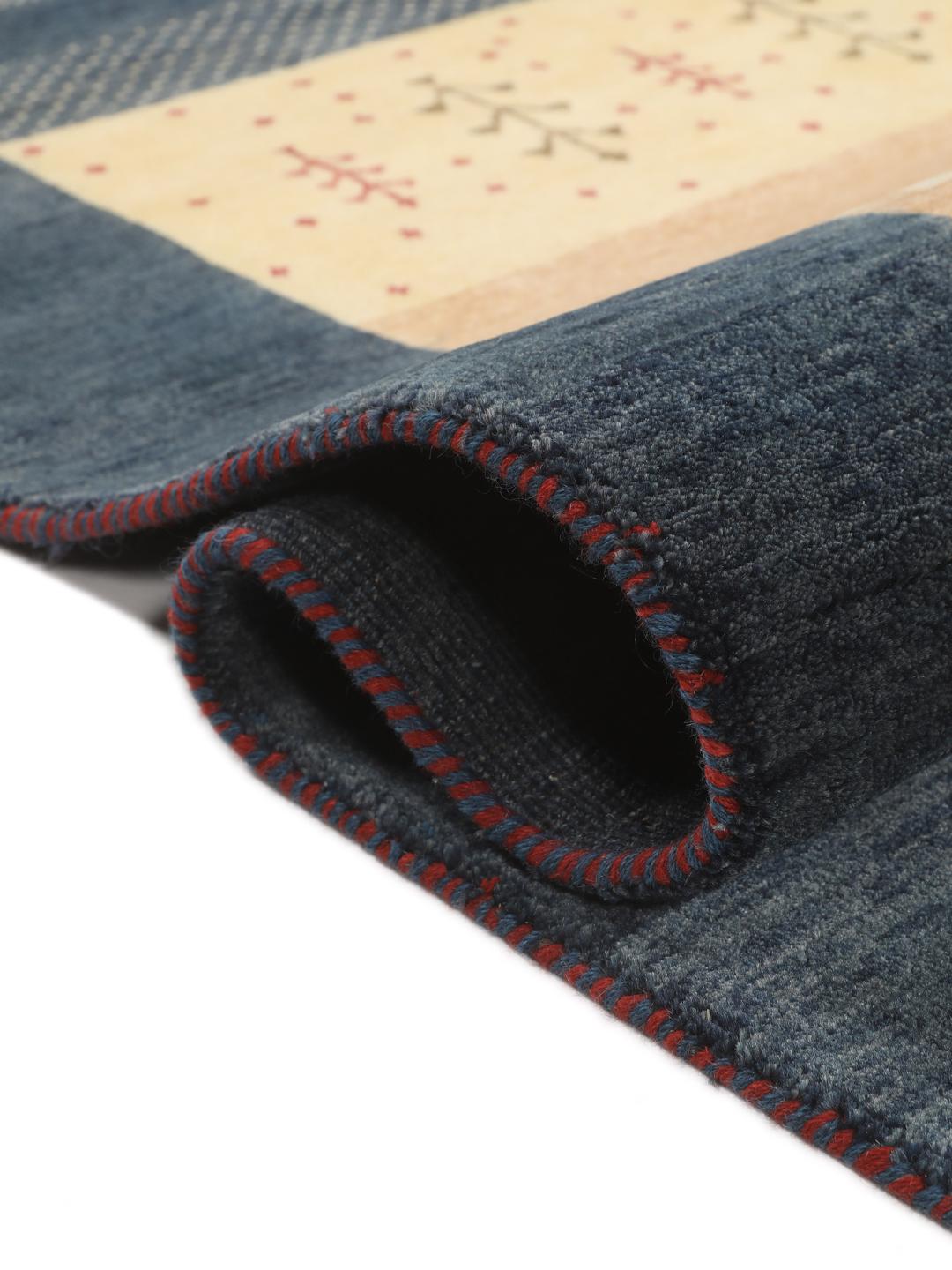
The term 'Loribaft' refers to a specific, refined evolution of the traditional Gabbeh. While classic Gabbeh rugs are known for their thick, chunky pile and primitive designs, the Loribaft style introduced a much finer knotting technique. This creates a more polished, dense, and durable texture that allows for greater clarity in the design motifs while still maintaining the authentic, folk-art spirit of the original nomadic tradition.
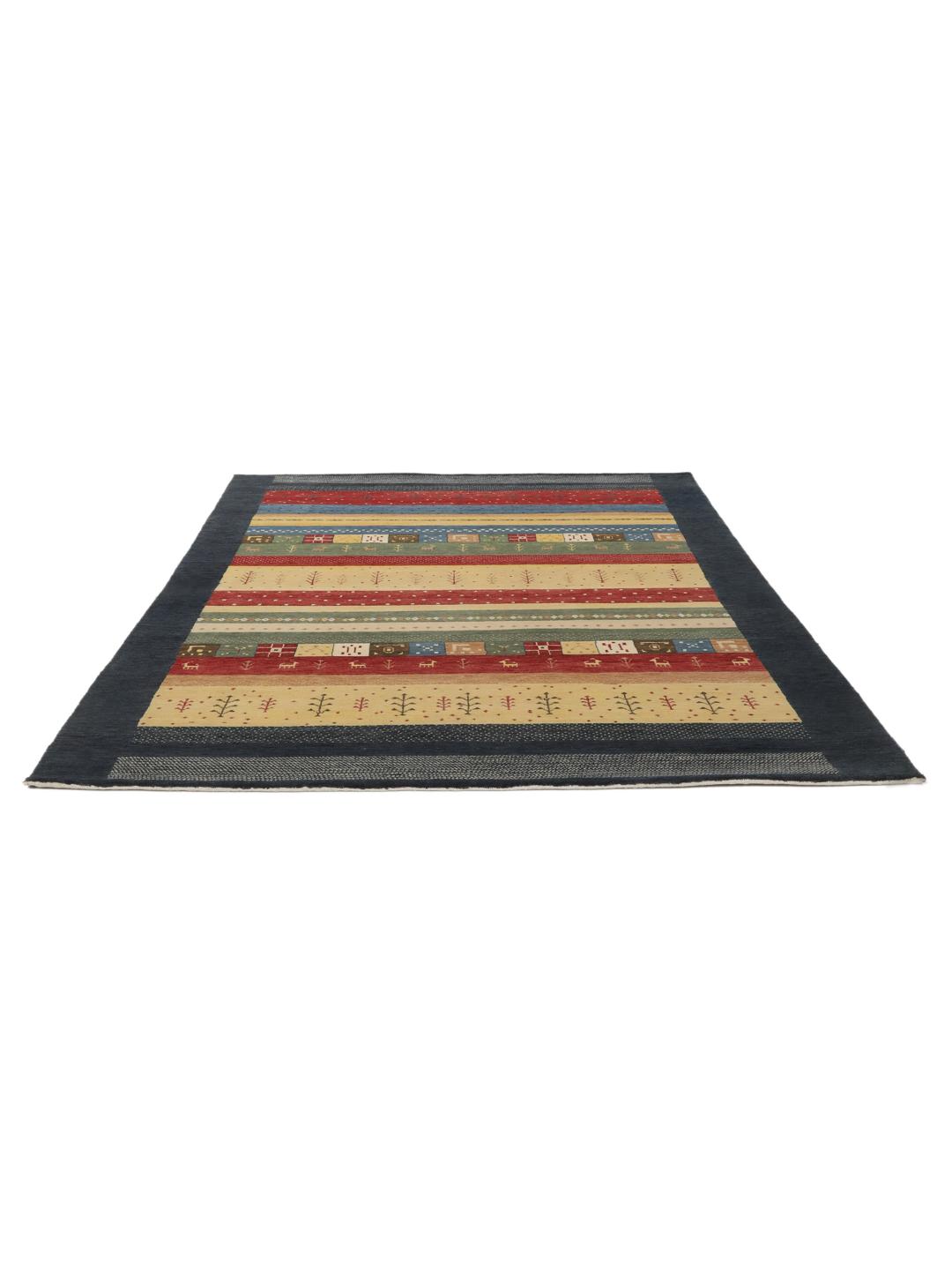
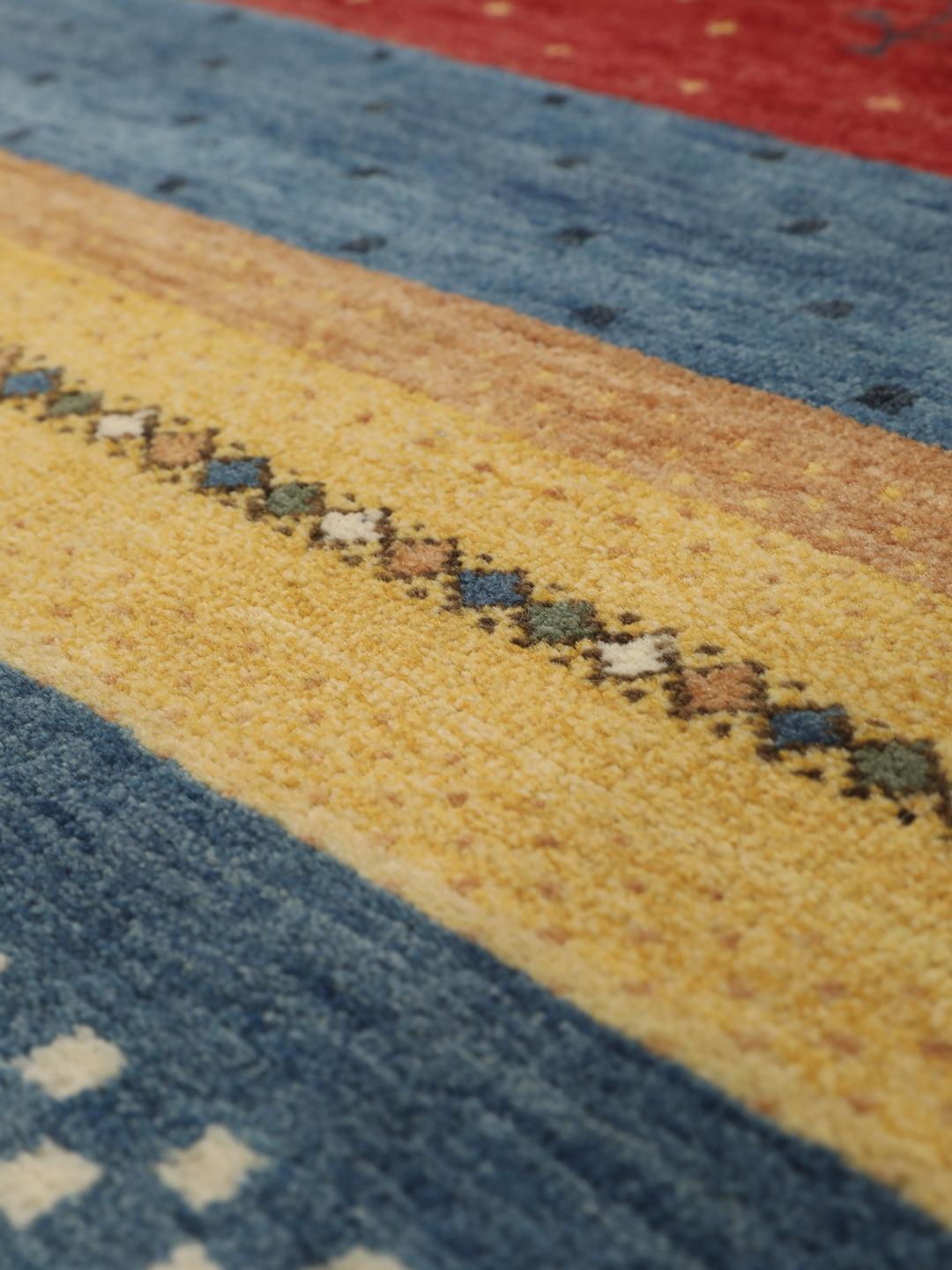
Visually, these rugs are celebrated for their bold use of undyed or naturally dyed wool, which produces a rich, varied colour palette. The signature style often includes large, open fields or, as seen in this piece, orderly horizontal bands filled with symbolic motifs. These patterns act as a visual diary of the weaver's life, with recurring symbols that have been passed down through generations of tribal families.
Today, these rugs are highly prized by collectors for their blend of ancient heritage and artistic freedom. Owning a Loribaft means preserving a craft that prioritises human expression and natural materials over mass production. It is a testament to the enduring appeal of handmade objects that connect us to the traditions of the past while offering a soulful, grounded aesthetic for the modern home.