The Gabbeh Kashkooli tradition originates from the nomadic tribes of the Middle East, where rug weaving has served as a central cultural practice for centuries. Unlike more formal urban rugs, these pieces were originally crafted for personal use, serving as warm bedding and floor coverings within tents. The term Kashkooli specifically refers to a finer, more sophisticated style of Gabbeh, known for its greater density and more detailed, intentional designs.
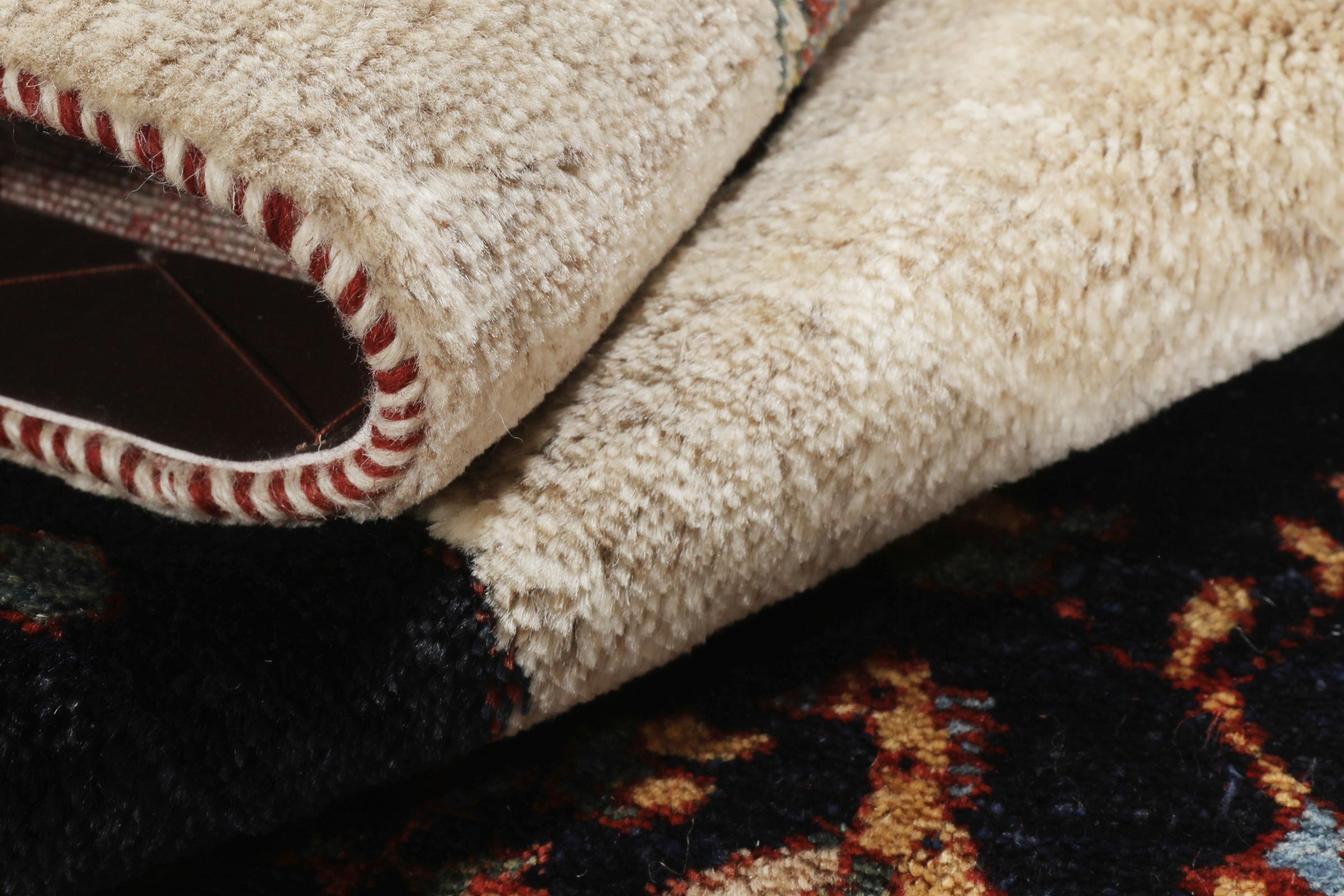
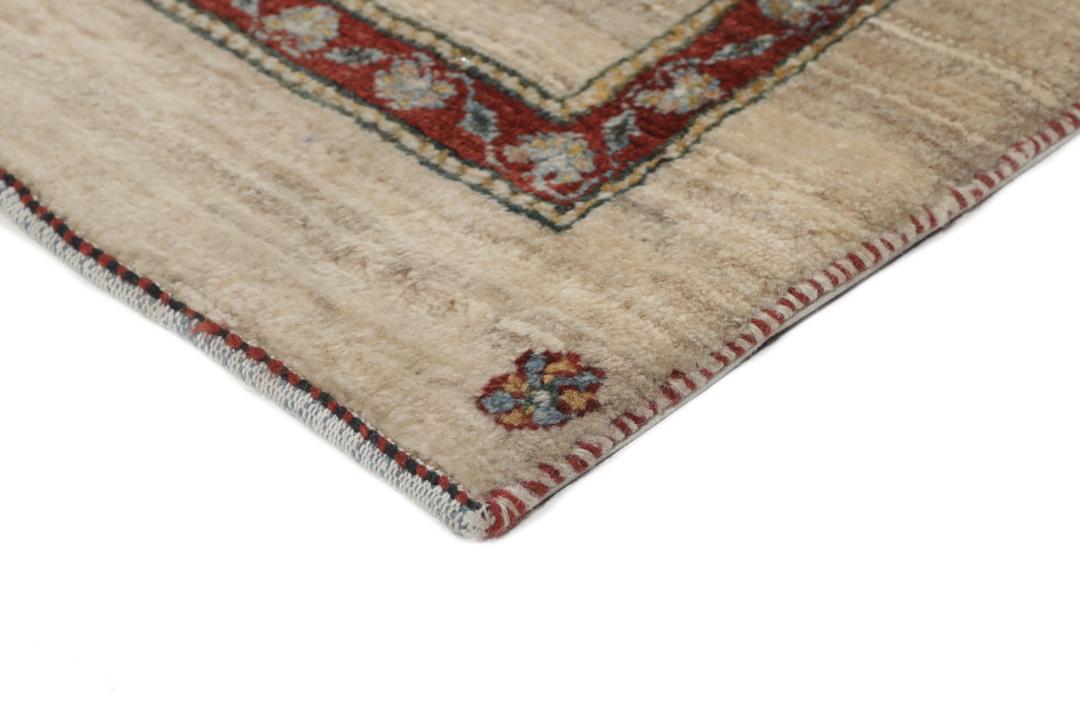
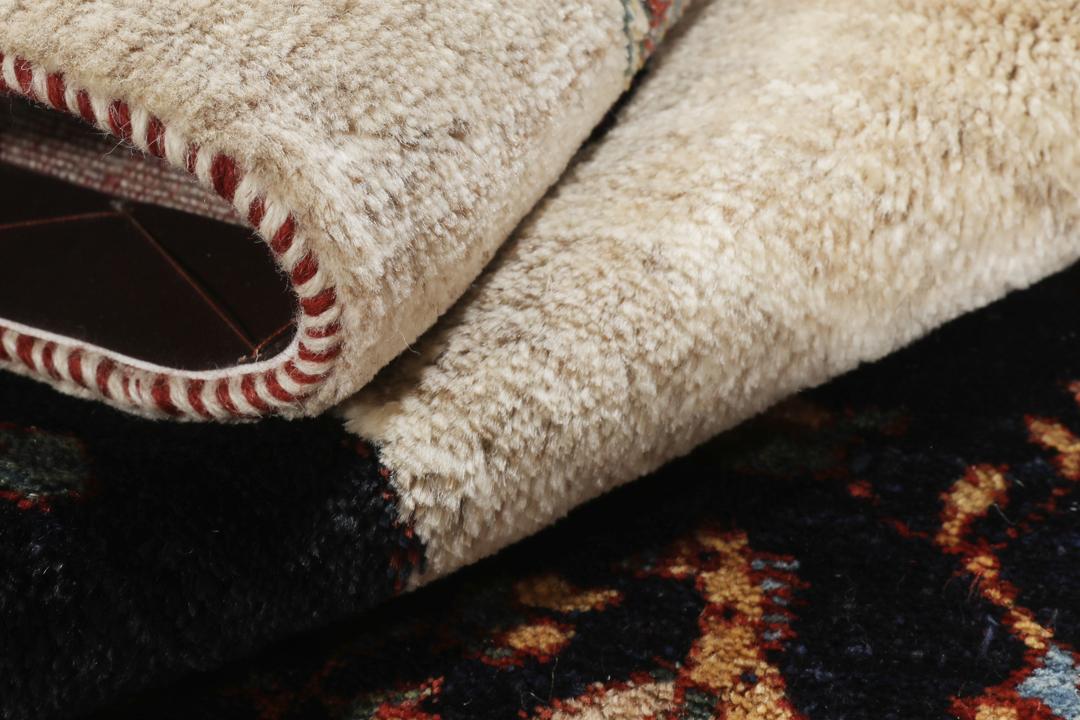
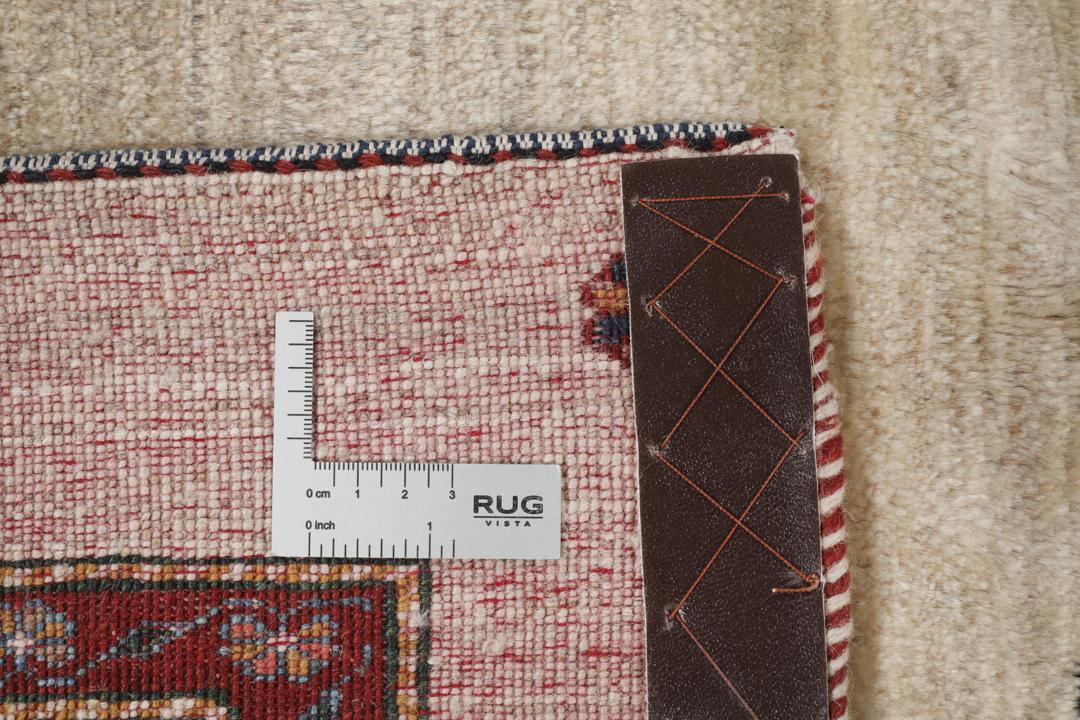
Technically, the quality of a Kashkooli rug is distinguished by its refined knotting and the use of high-quality, hand-spun wool. This preparation of the wool is essential, as it retains the natural lanolin, giving the finished rug a soft, lustrous sheen and an inherent resistance to wear. The result is a pile that feels exceptionally plush, providing a tactile experience that is both luxurious and comforting.
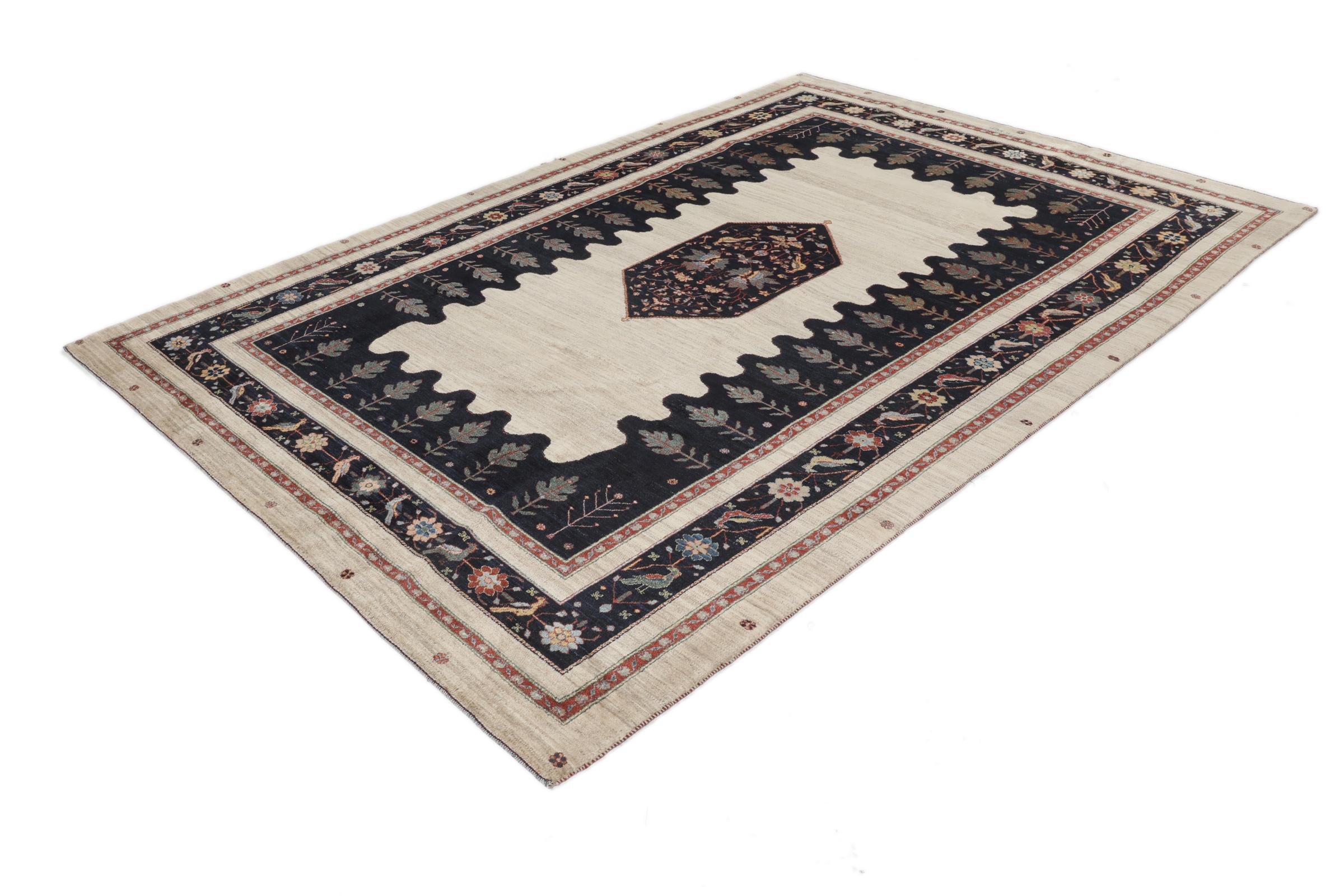
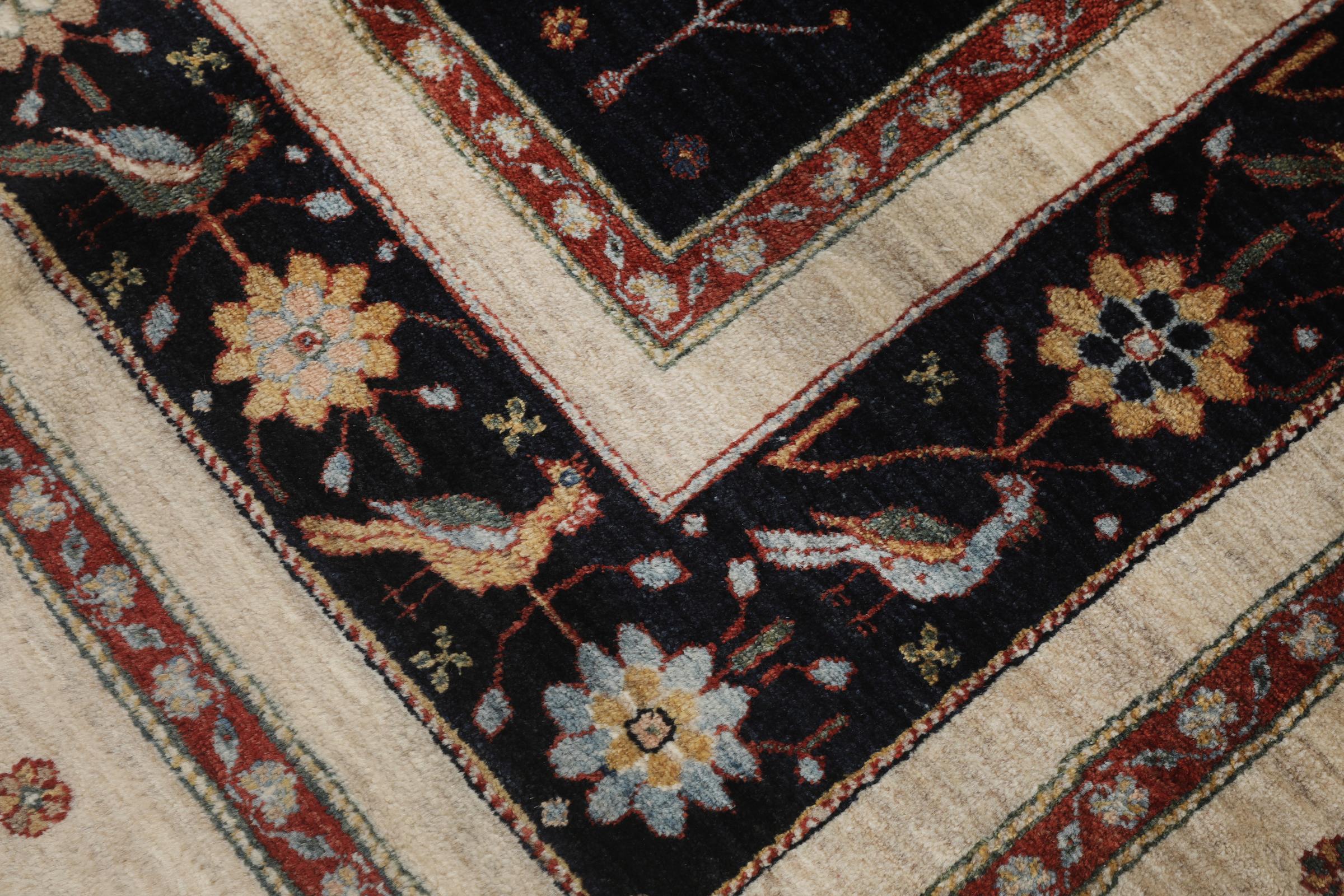
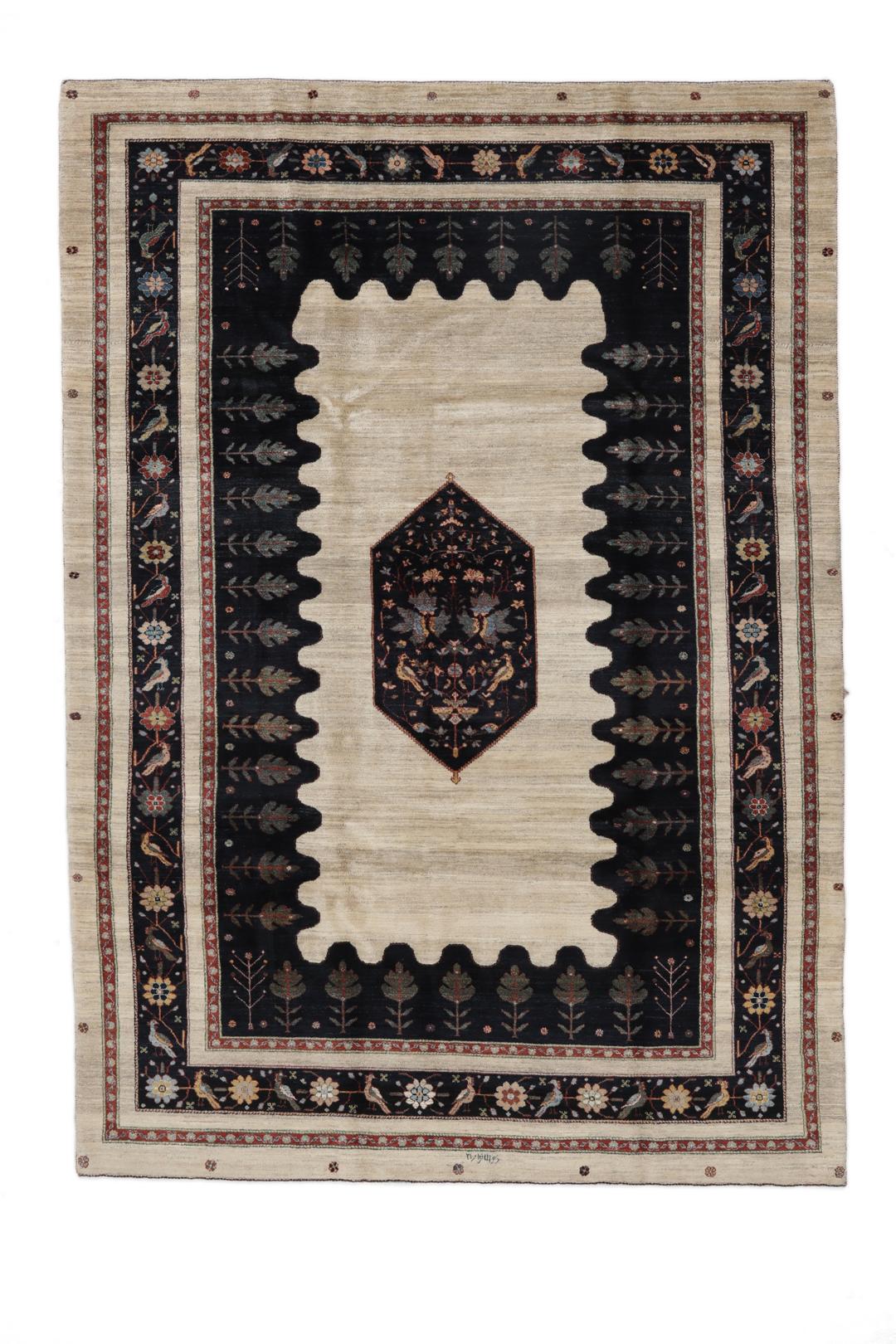
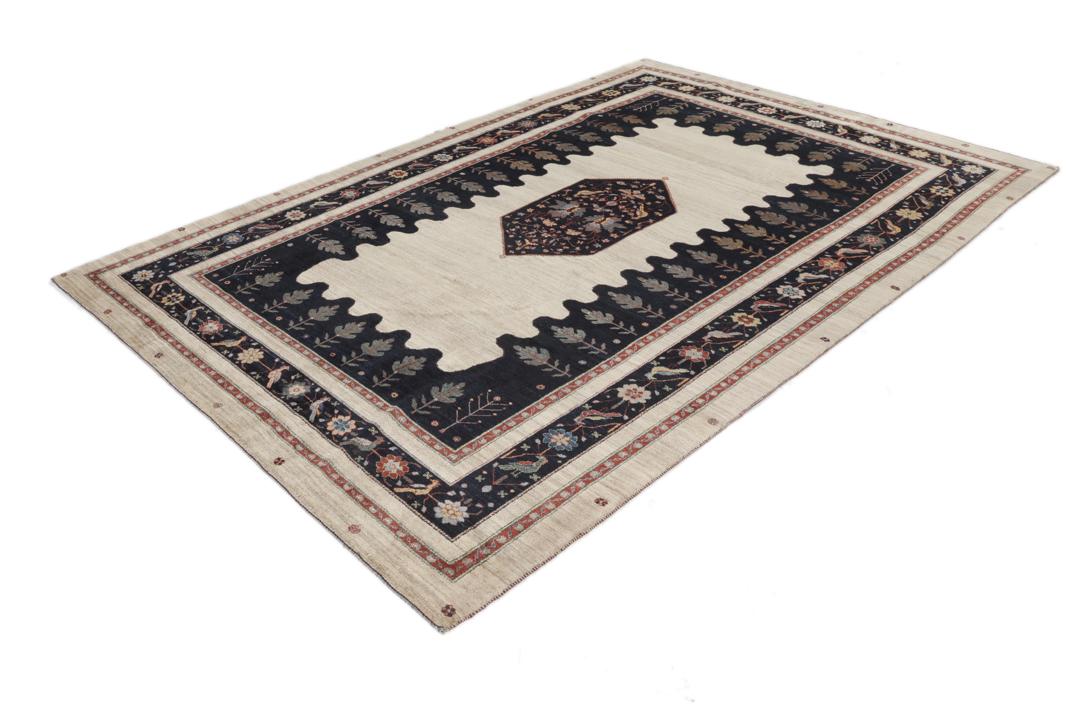
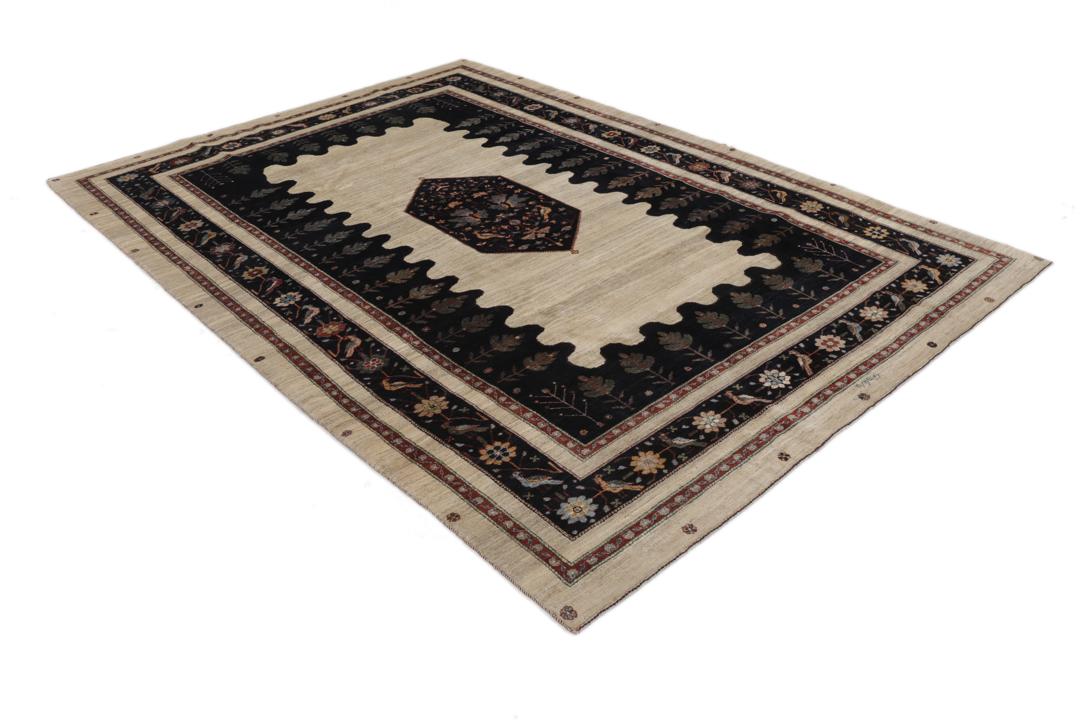
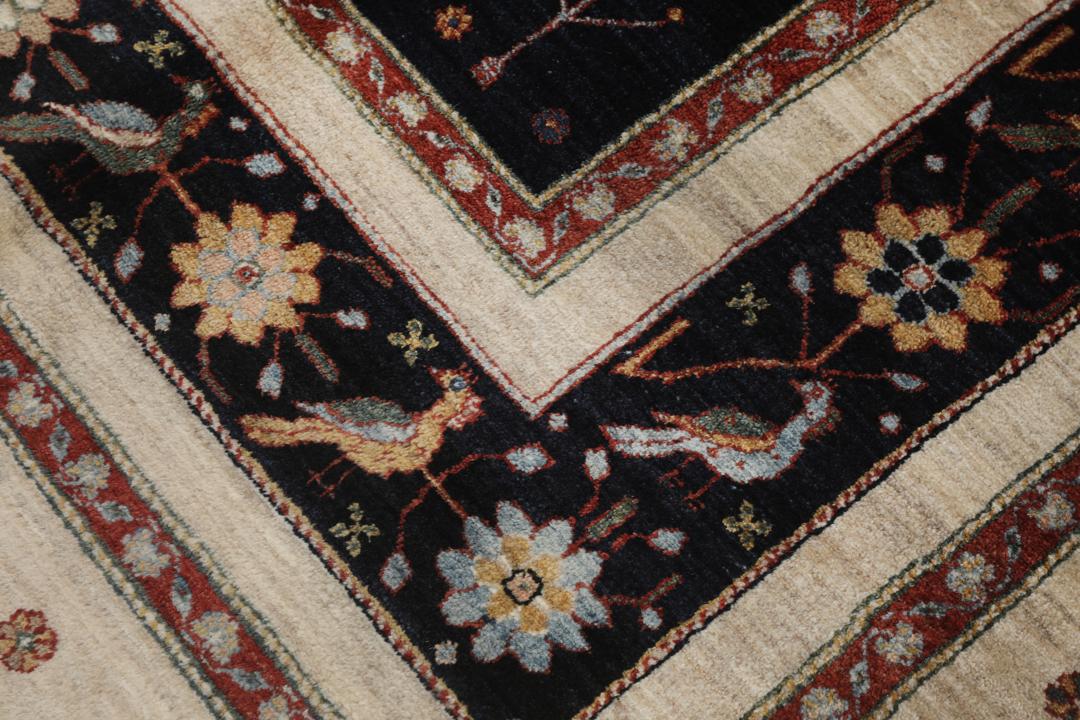
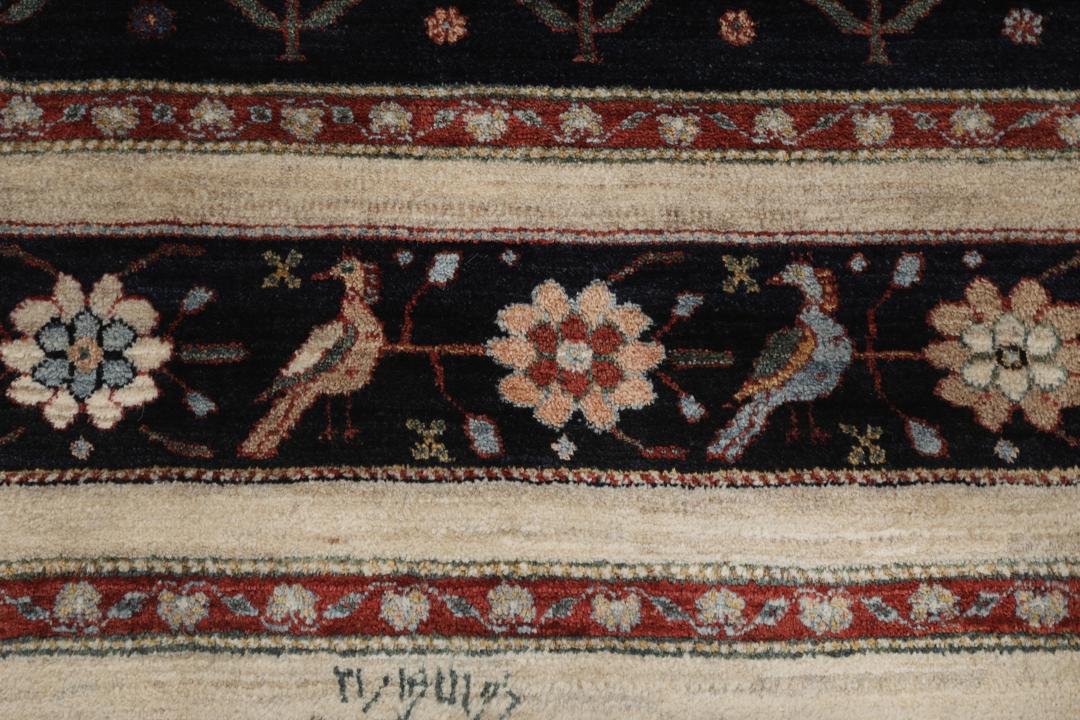
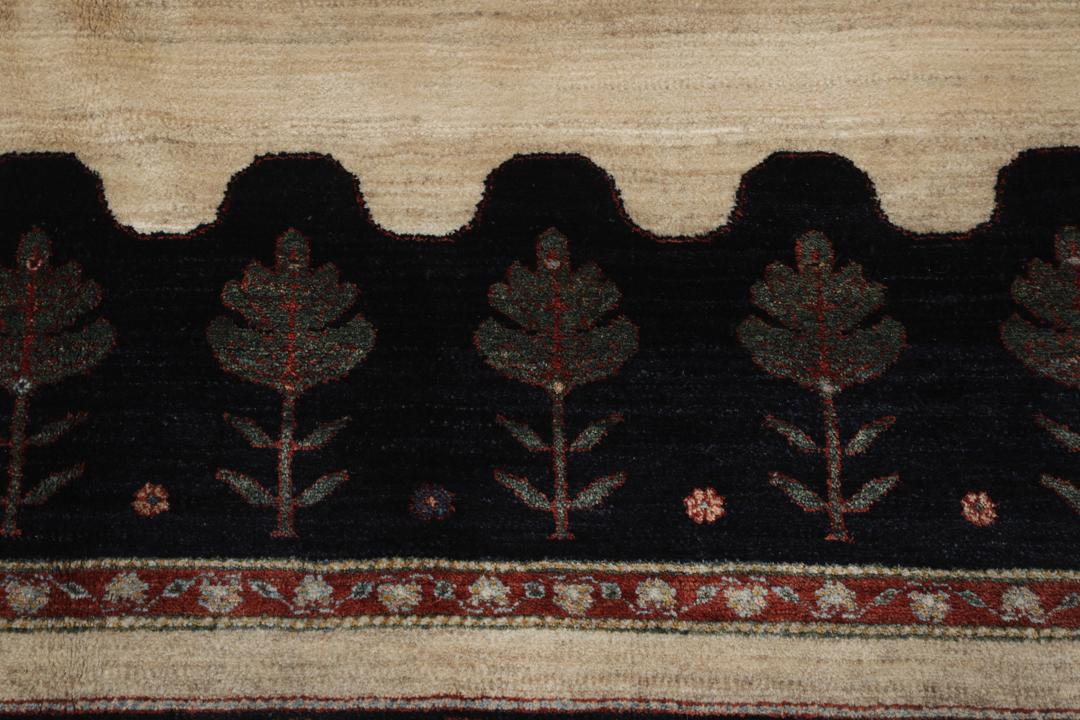
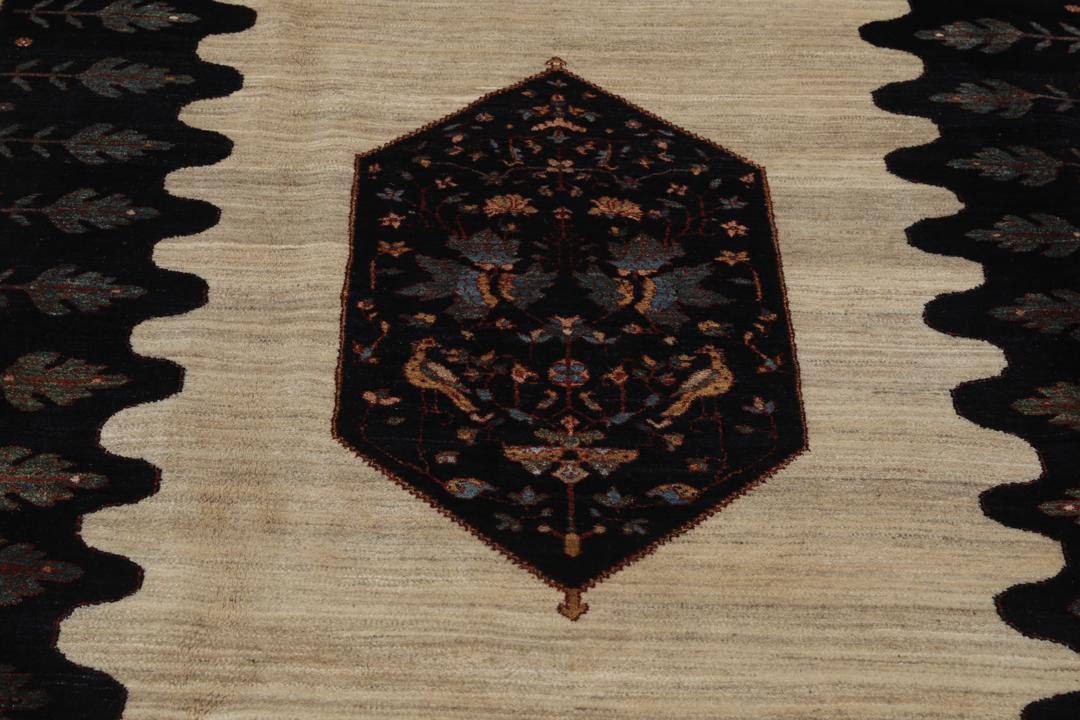
Visually, these rugs are celebrated for their artistic freedom, often featuring simplified, symbolic motifs that reflect the weaver's environment and imagination. While traditional Gabbehs are often characterised by bold, abstract patterns, the Kashkooli variety often introduces more delicate floral and pictorial elements, as seen in the intricate birds and botanical details of this particular piece. The use of a dark, deep-toned field provides a dramatic contrast, highlighting the artistry of the lighter motifs.
Owning a Gabbeh Kashkooli is an invitation to connect with a long-standing tradition of nomadic artistry. These rugs are highly valued by collectors for their blend of rustic charm and refined skill. By bringing such a piece into your home, you are not just acquiring a floor covering but preserving a legacy of craft, skill, and cultural expression that remains as relevant today as it was in the past.