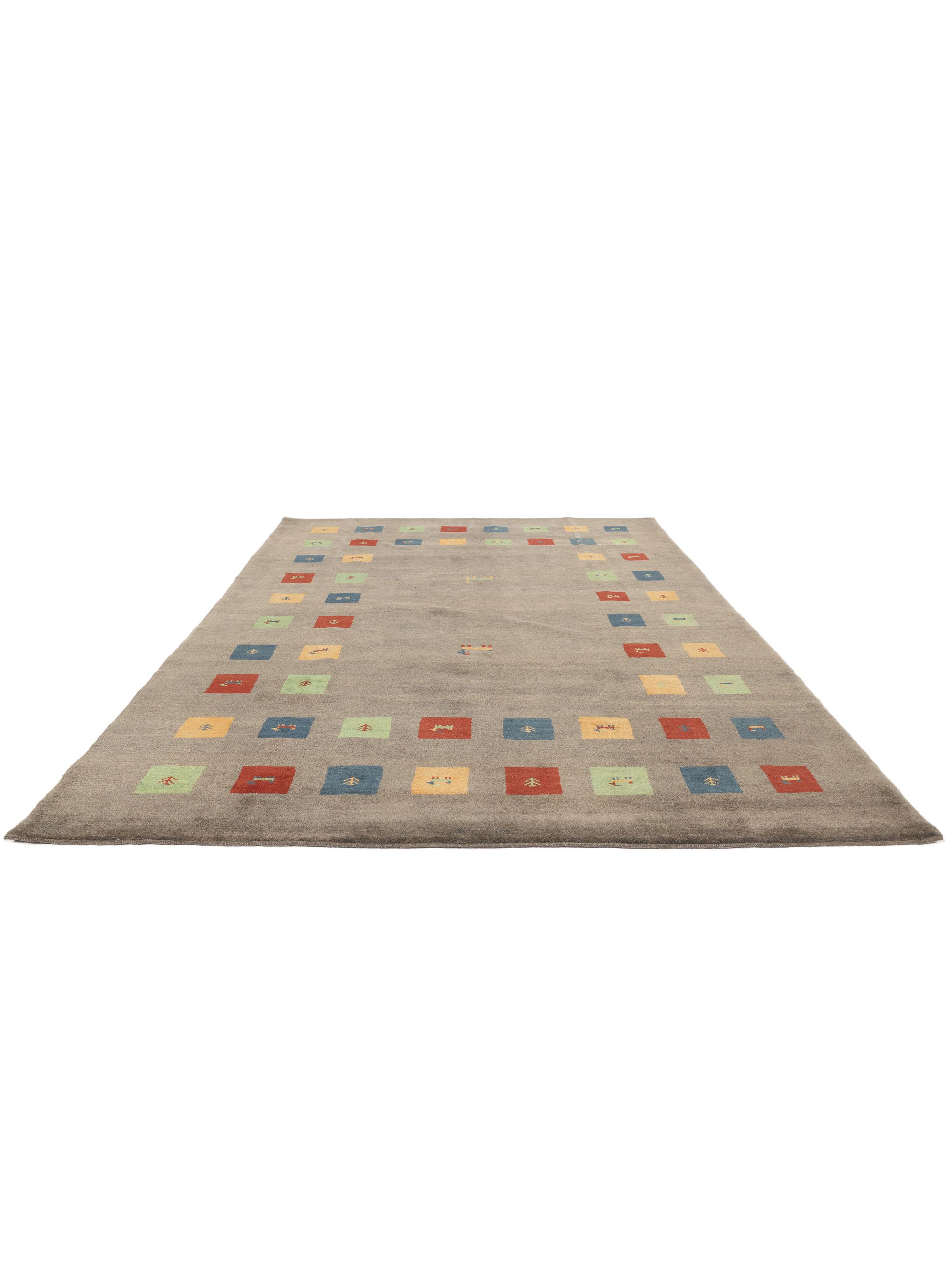
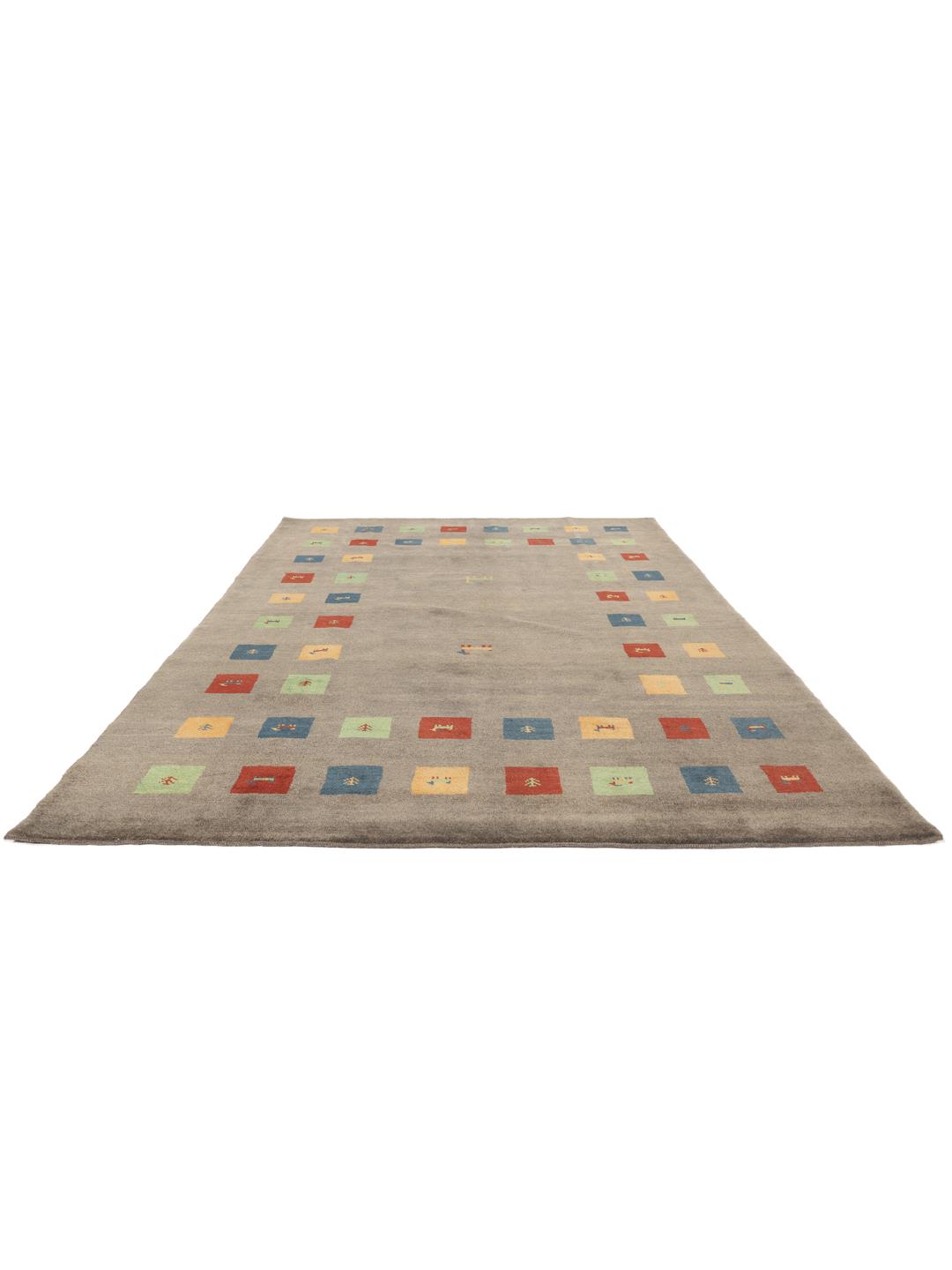
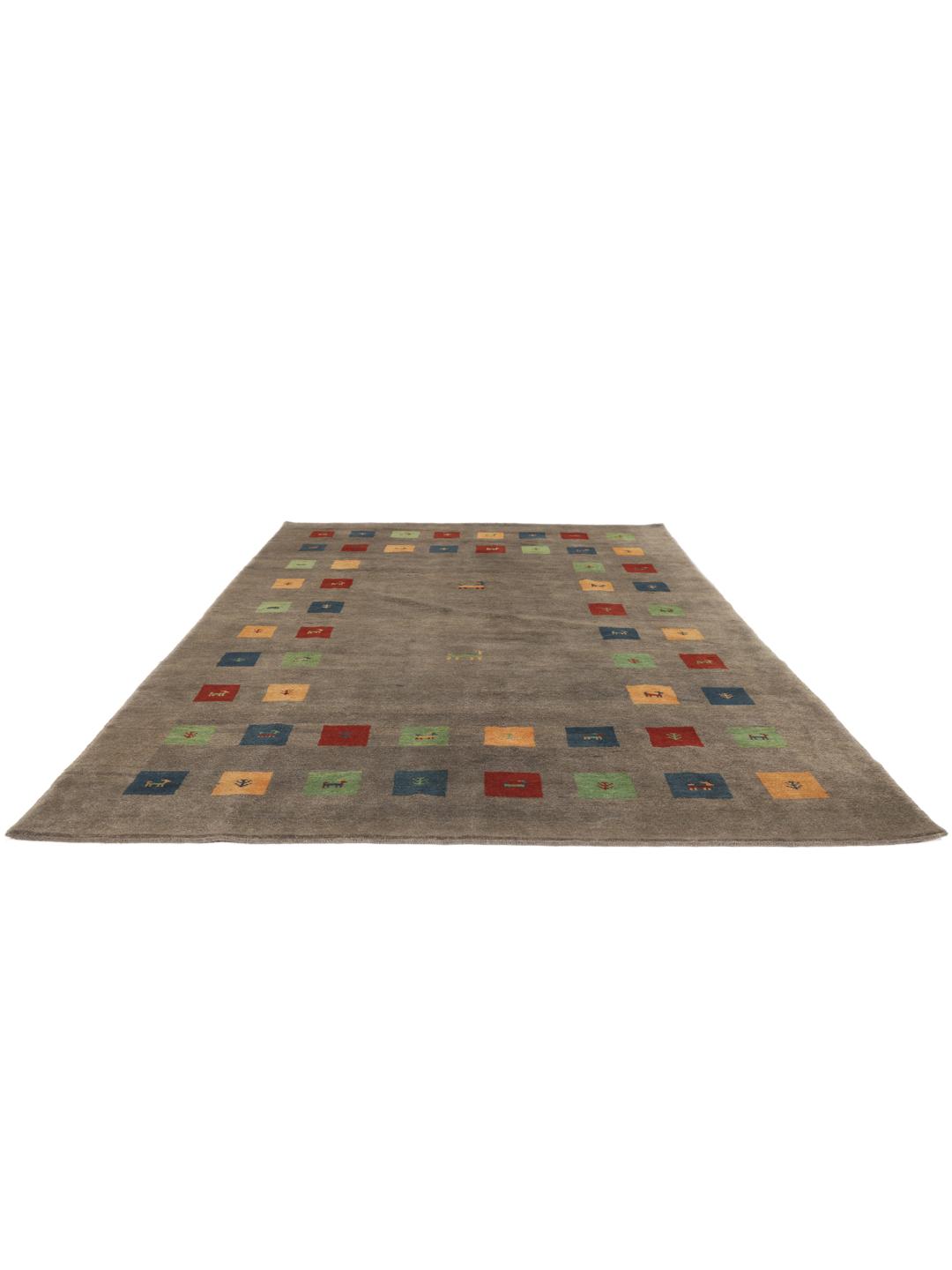
Gabbeh rugs originate from the nomadic tribes of the Middle East, where they were traditionally crafted for personal use rather than for trade. These rugs were woven with a focus on simplicity and the weaver's own interpretation of the world around them, often incorporating symbols and stories from their daily lives. Over time, these rugs have evolved from functional floor coverings into highly sought-after collector pieces, prized for their expressive and uninhibited designs.
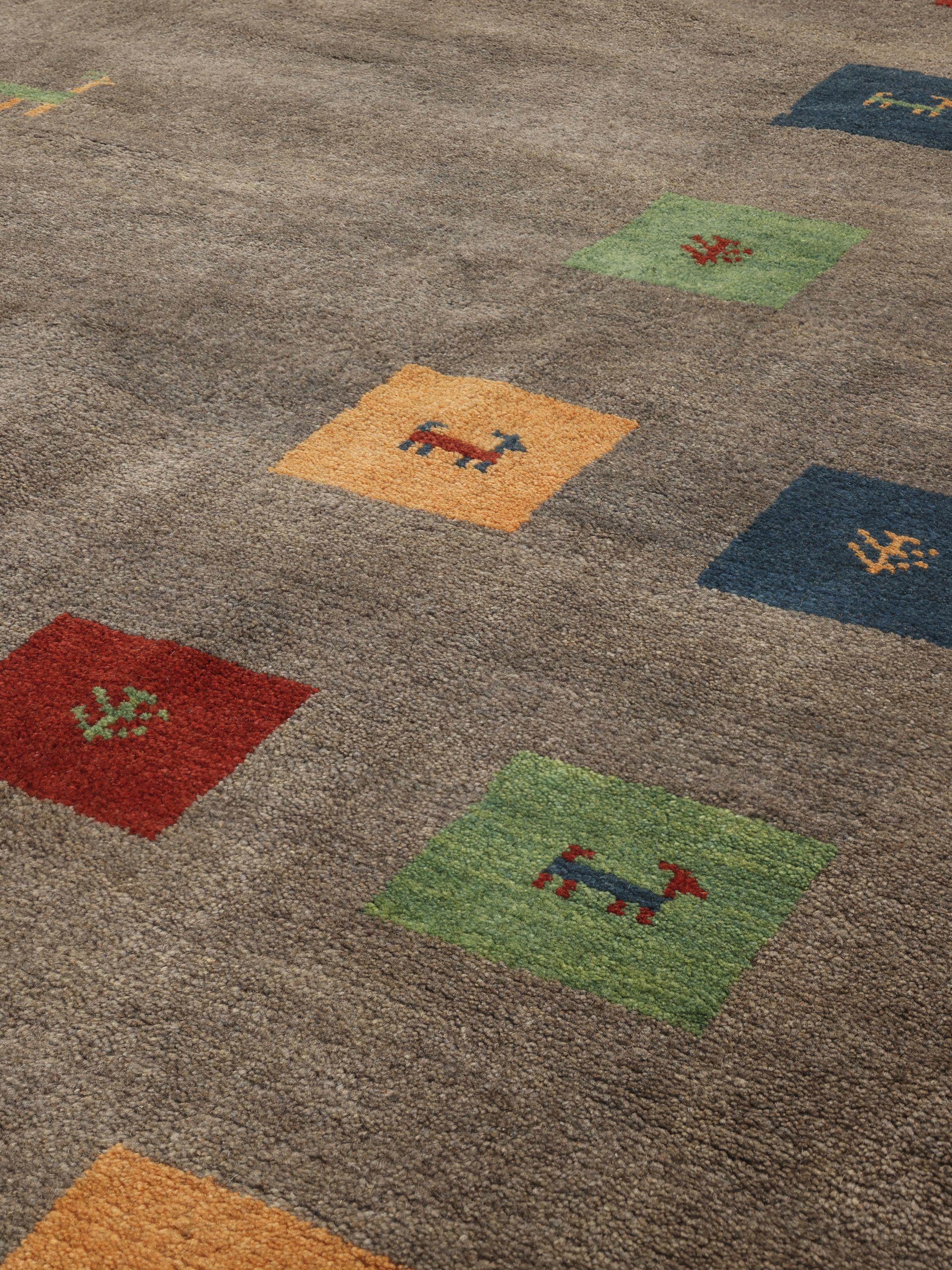
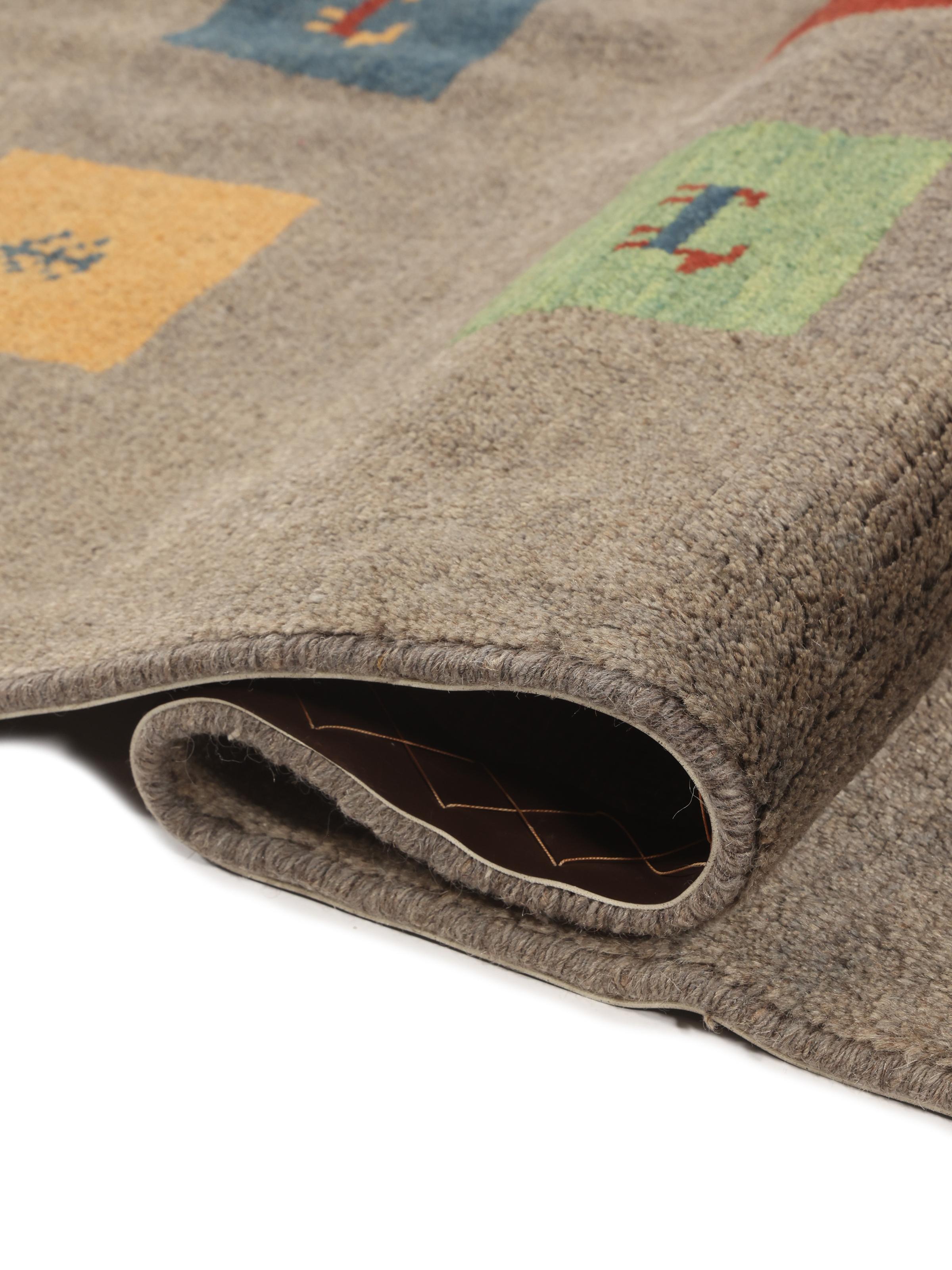
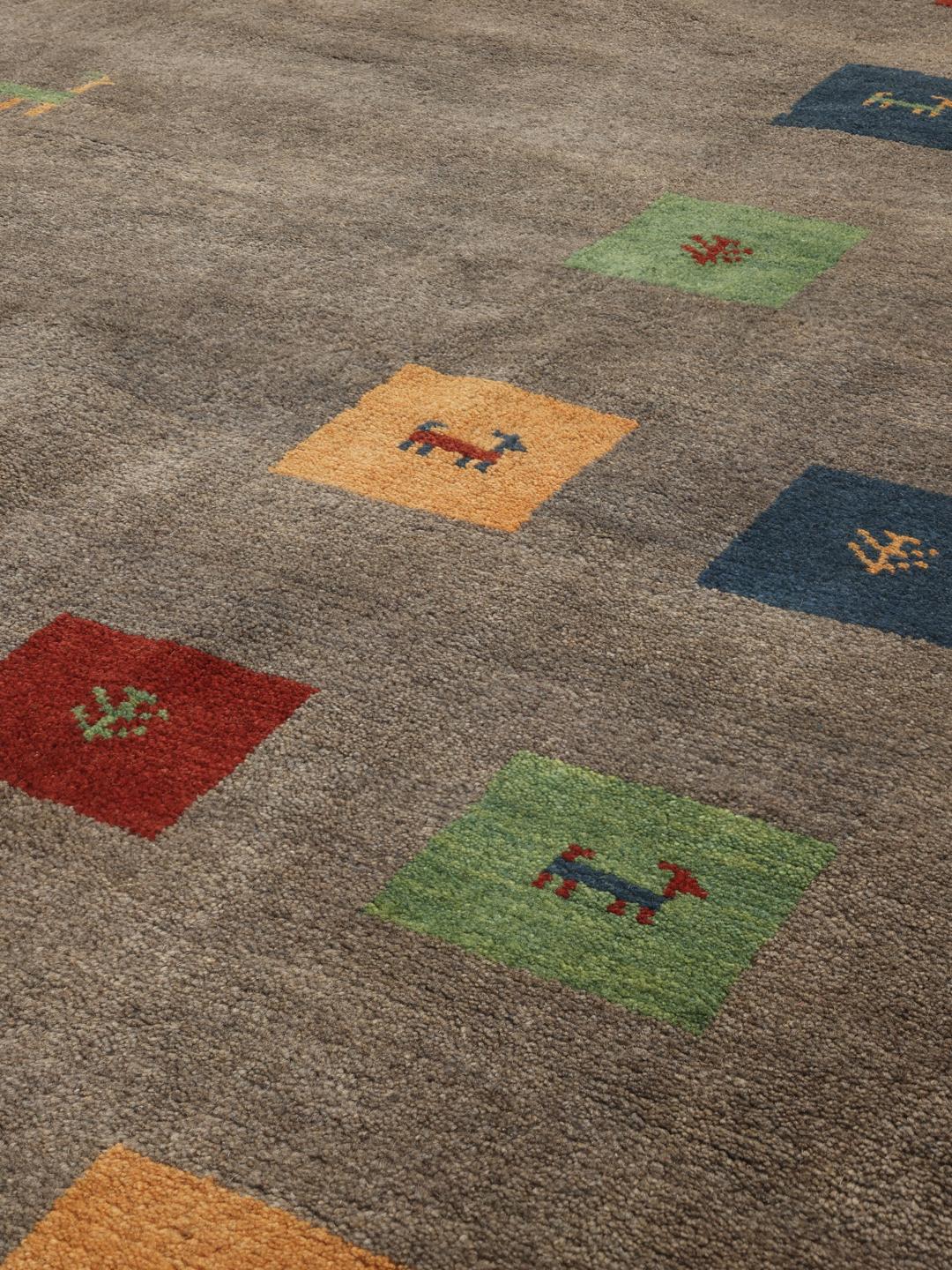
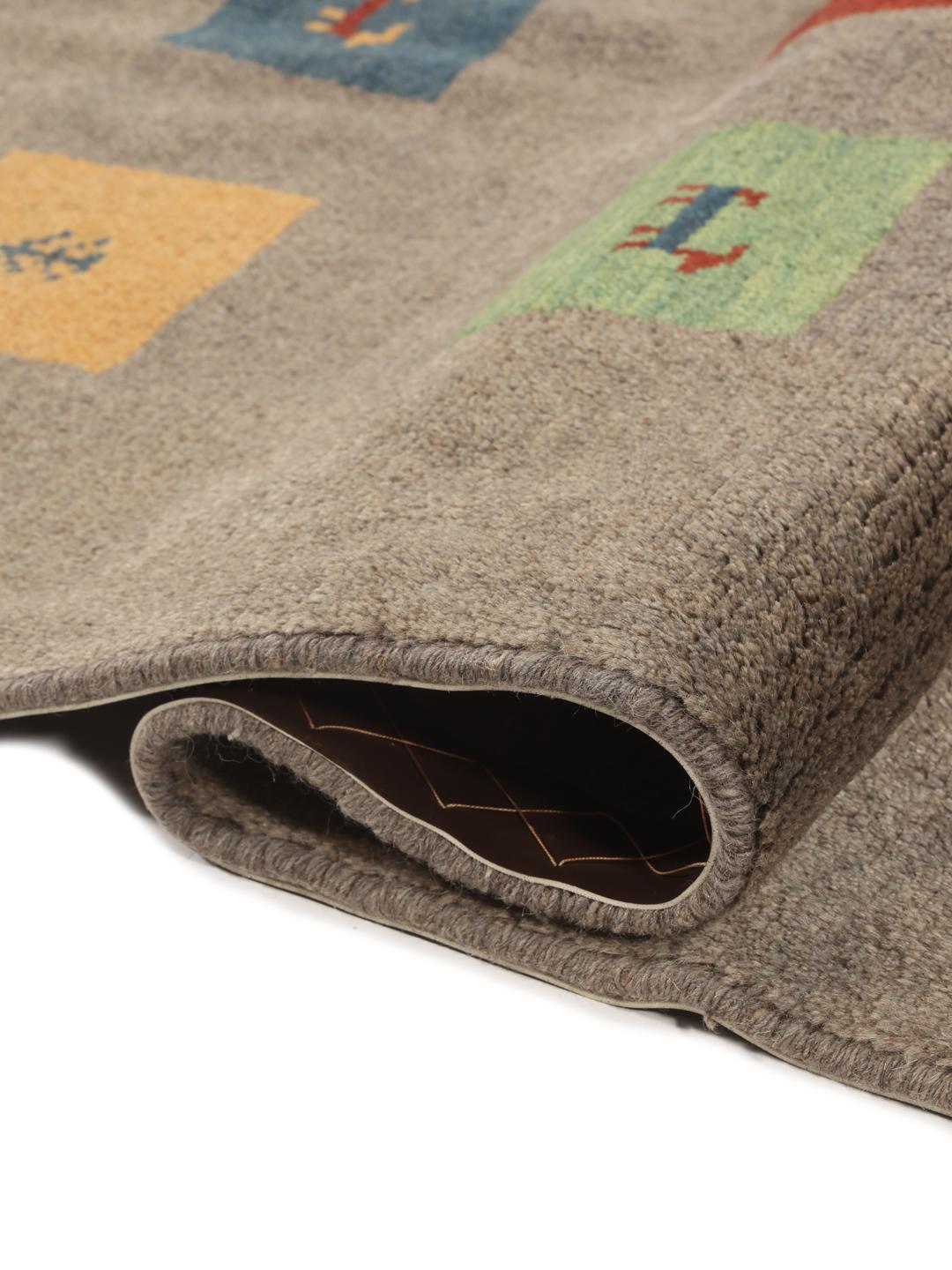
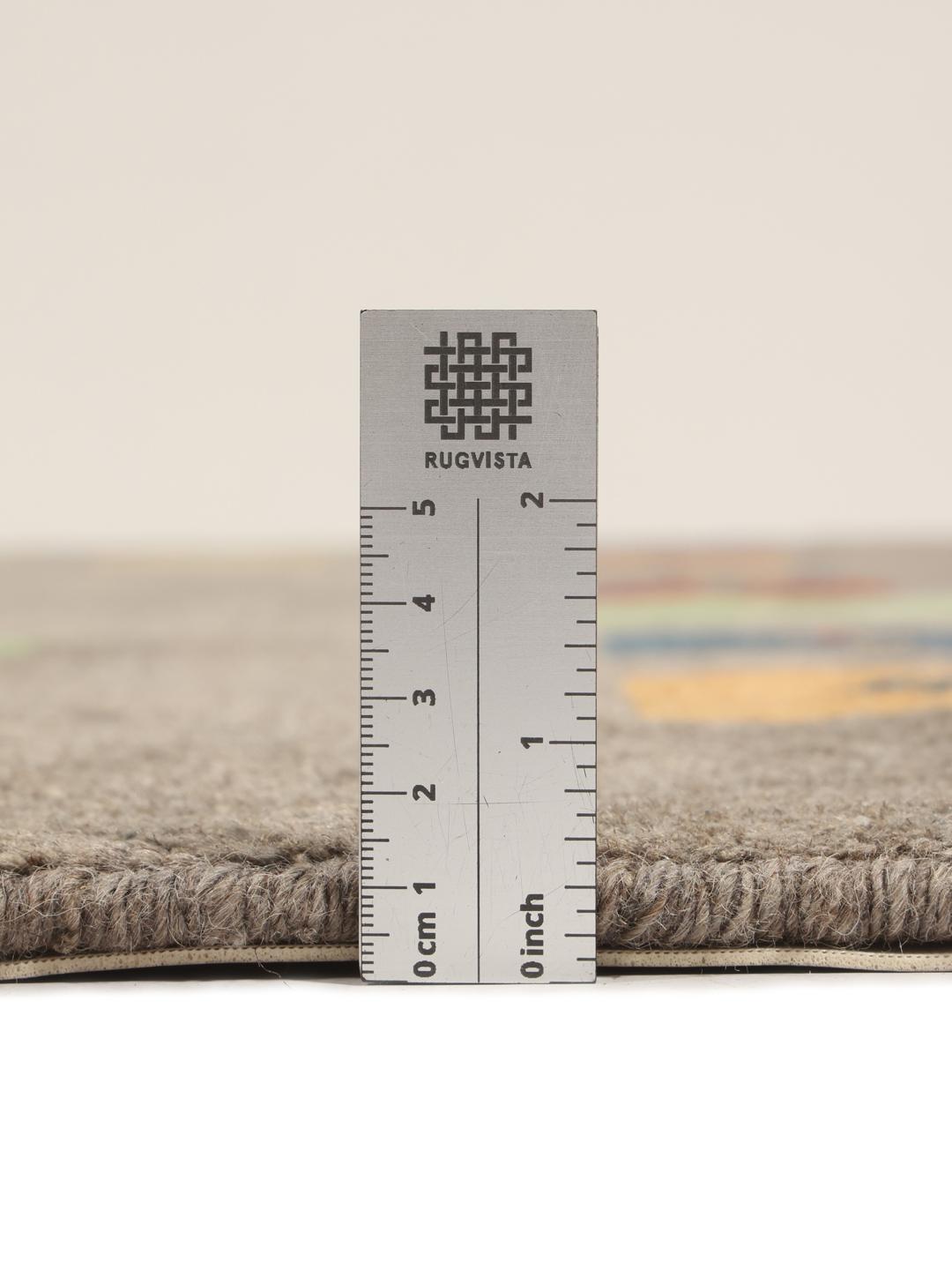
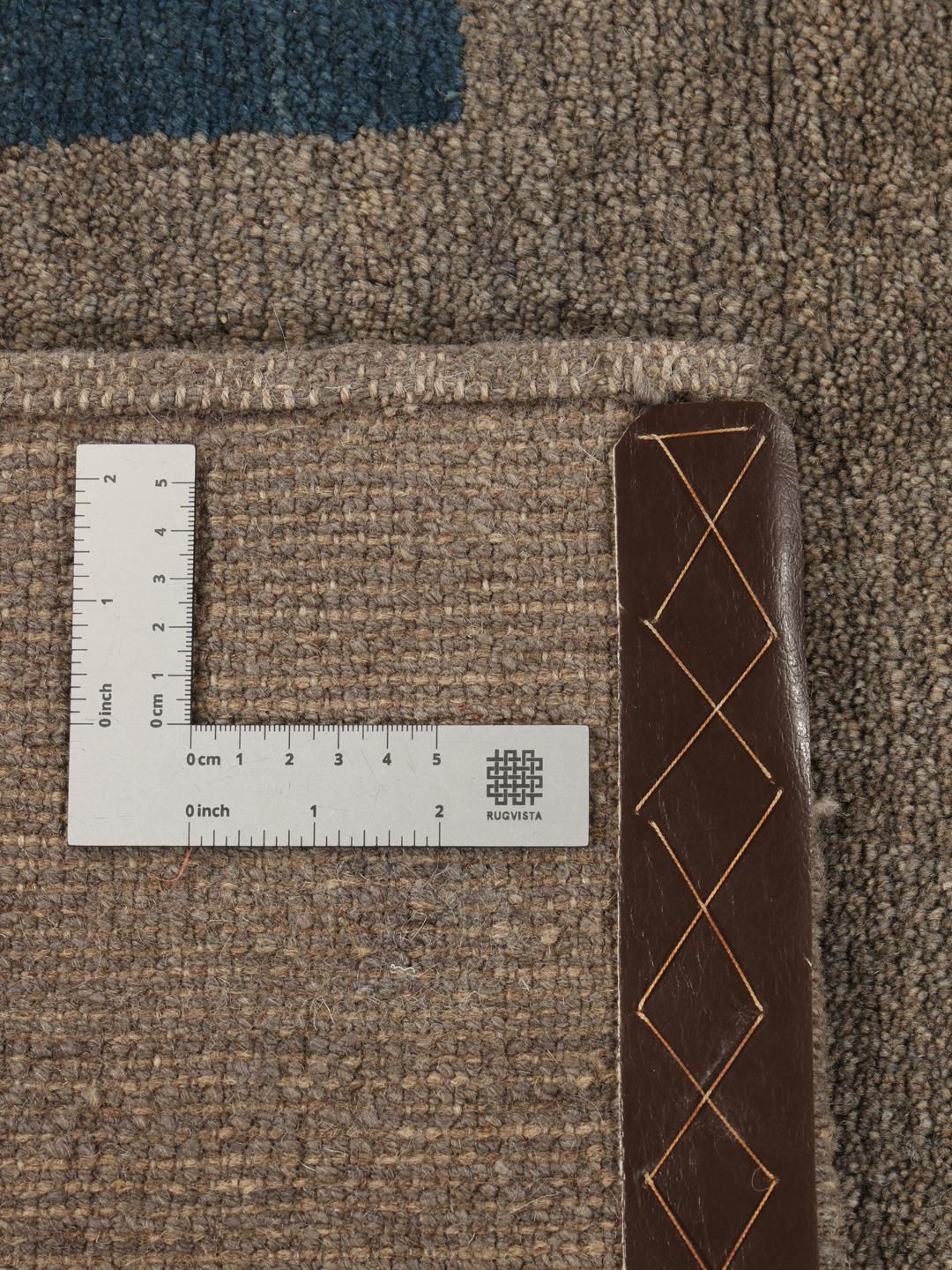
The term Gabbeh refers to a specific style of weaving that is characterised by a thicker, longer pile compared to other types of rugs from the region. This construction style allows for a plush, soft feel that is exceptionally comfortable. The use of hand-spun wool, often dyed with natural pigments, contributes to the slight variations in colour that give these rugs their organic, authentic appearance, making every single one a distinct creation.
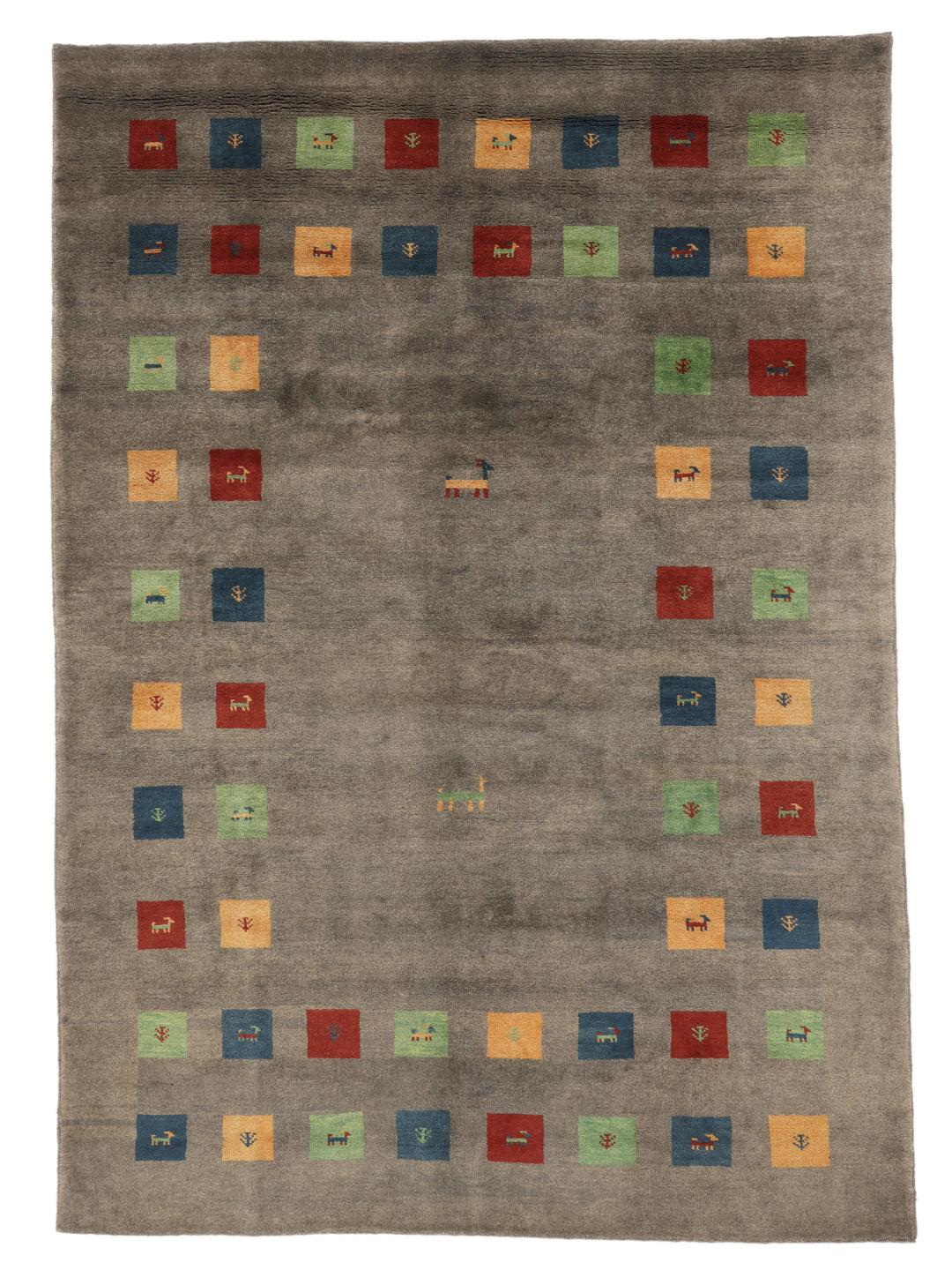
Visually, these rugs are defined by their use of open fields and simplified, often geometric, motifs. While traditional styles might feature bold colour blocks or animal and plant symbols, they always maintain a sense of balance. This specific piece draws on those classic traditions, using motifs that feel both ancient and modern, ensuring the rug remains a timeless addition to any interior.
Today, Gabbeh rugs are celebrated for their ability to bridge the gap between traditional craft and contemporary design. Collectors value them not just for the skill required to make them, but for the cultural narrative they represent. By owning a Gabbeh, you are participating in a long-standing tradition of weaving that honours the connection between the artisan, their environment, and the final object created for the home.