The tradition of hand-knotted rugs in India traces its origins back to the 16th century, when the craft was introduced by Middle Eastern artisans who brought their weaving expertise to the region. Over centuries, these techniques were refined and blended with local artistic sensibilities, resulting in a distinct Indian style that celebrates intricate detail and vibrant colour palettes.
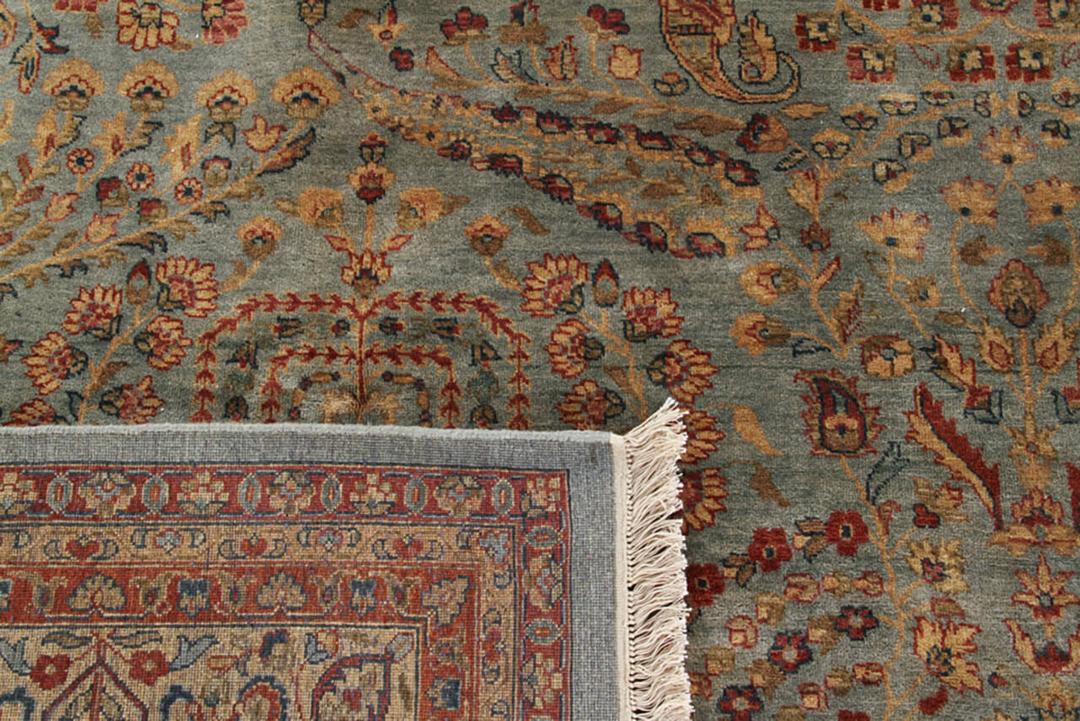
The quality of a hand-knotted rug is defined by the technical mastery of the weaver, who follows a traditional pattern while securing each knot onto the foundation. This method creates a durable, high-density pile that is naturally resistant to wear. The term hand-knotted signifies that the rug is built to last, with each strand of material contributing to a cohesive and long-lasting whole.
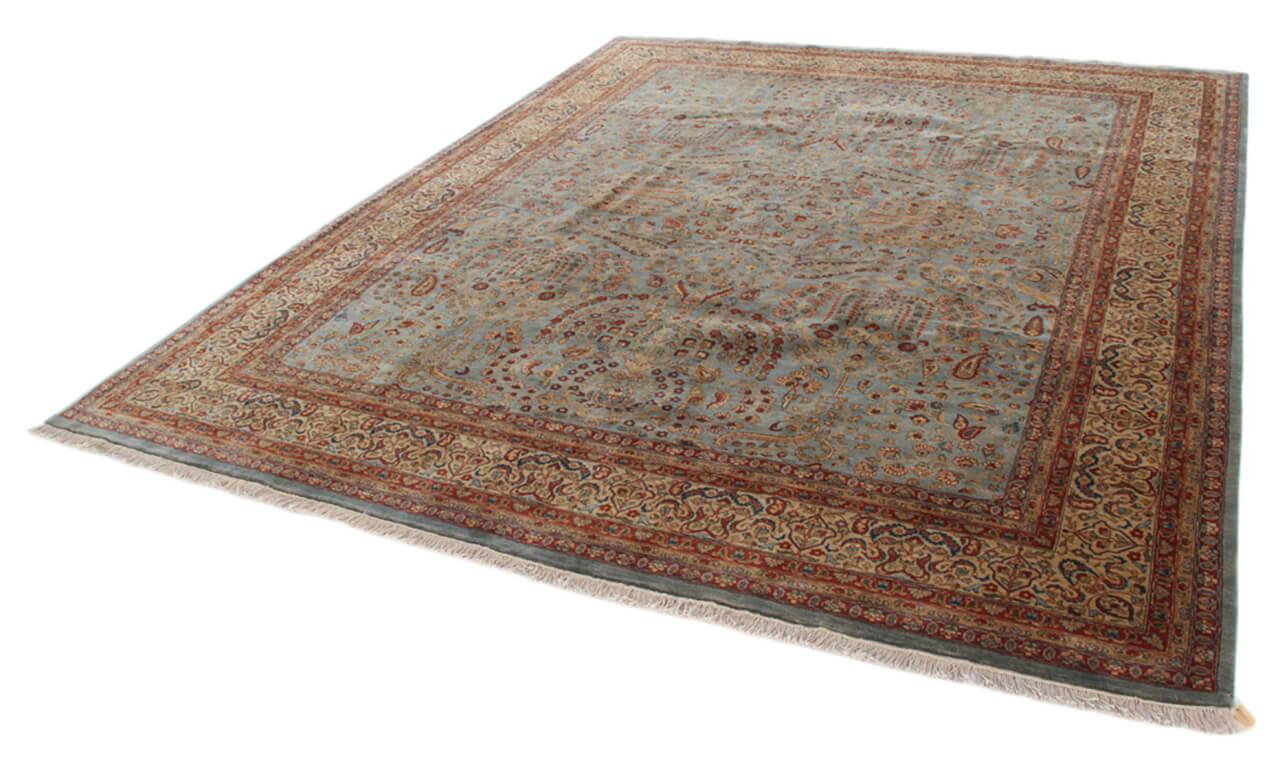
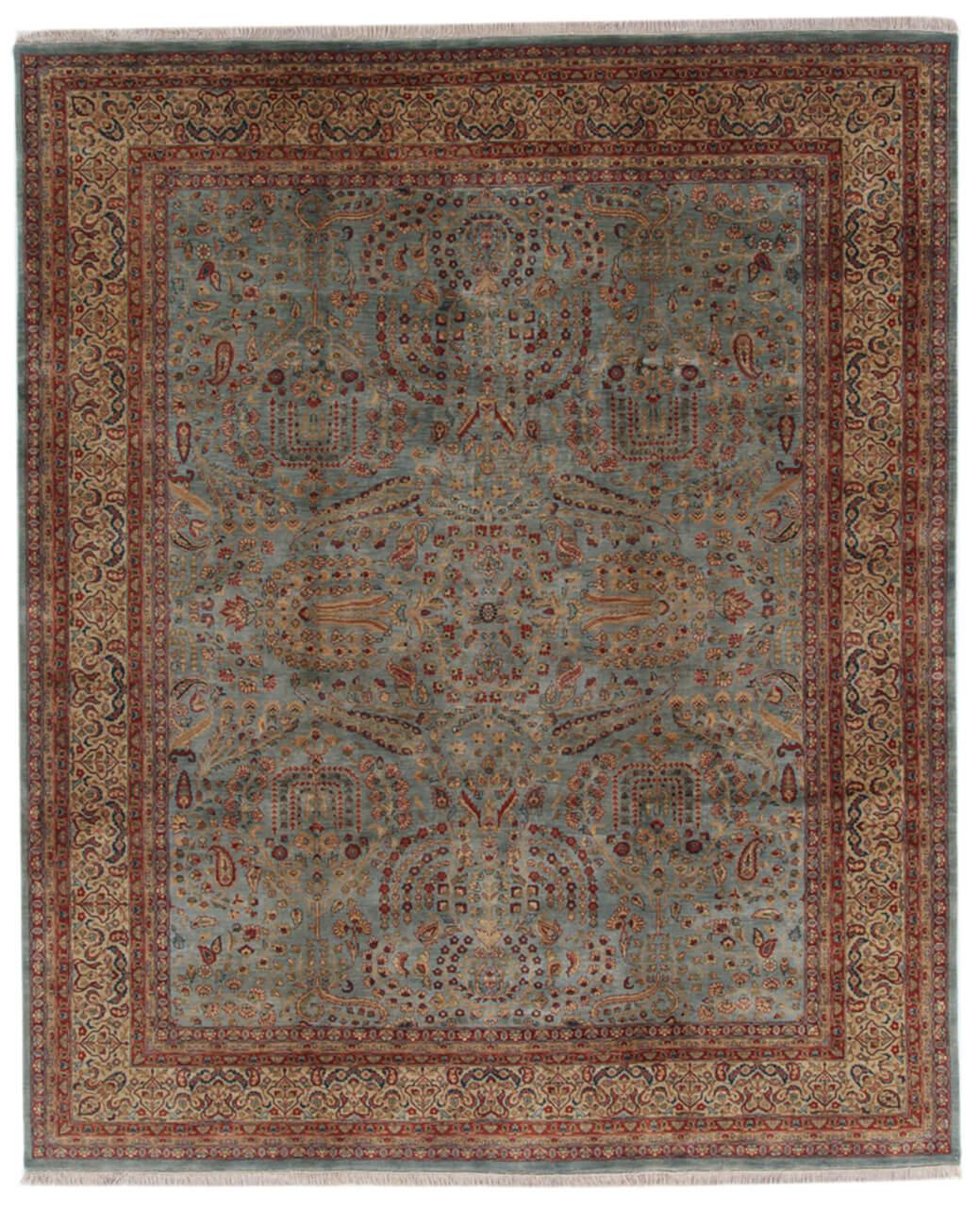
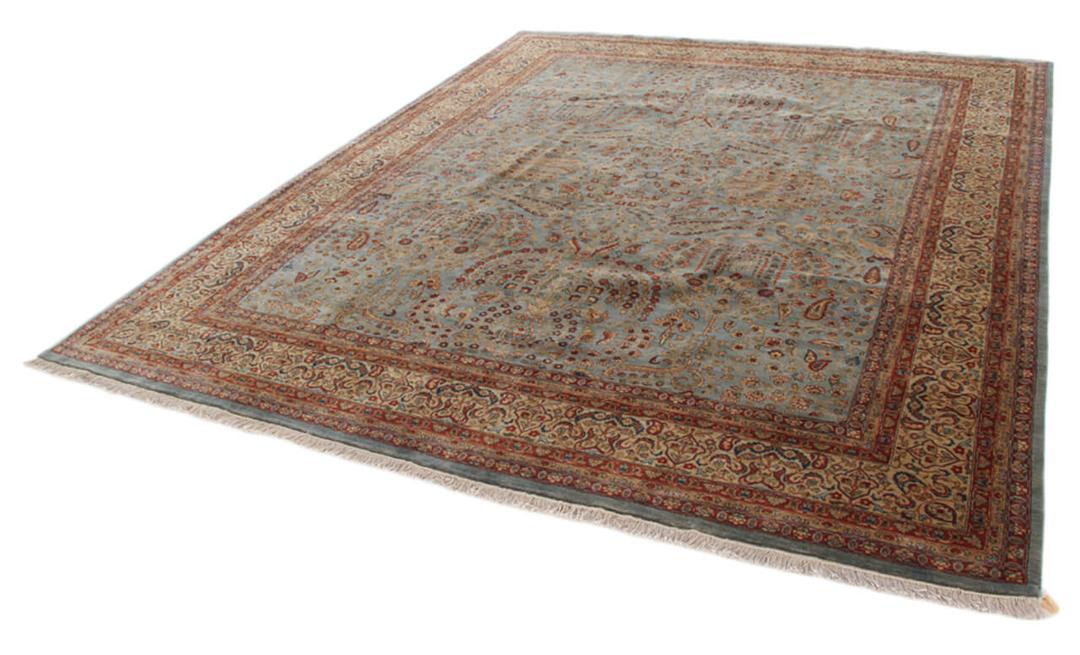
The design of this piece draws on classic Middle Eastern motifs, featuring a central medallion surrounded by ornate floral scrolls and decorative borders. These patterns are not merely aesthetic; they are part of a visual language that has evolved over generations to represent prosperity, harmony, and the beauty of the natural world, often rendered in deep, saturated hues.
Owning a hand-knotted rug from this lineage is an investment in cultural history. Collectors value these pieces for the human story behind the craft, as each rug carries the signature of the person who spent months bringing the design to life. It is more than just a floor covering; it is a piece of living heritage that connects your home to a long and celebrated tradition of craftsmanship.