The tradition of rug weaving in India has deep historical roots, heavily influenced by the artistic exchange along the ancient trade routes that connected the region to the broader Middle East. Over centuries, these techniques were refined by local artisans who blended indigenous motifs with the intricate, curvilinear designs favoured by royal courts, resulting in a unique regional style that is both sophisticated and culturally rich.
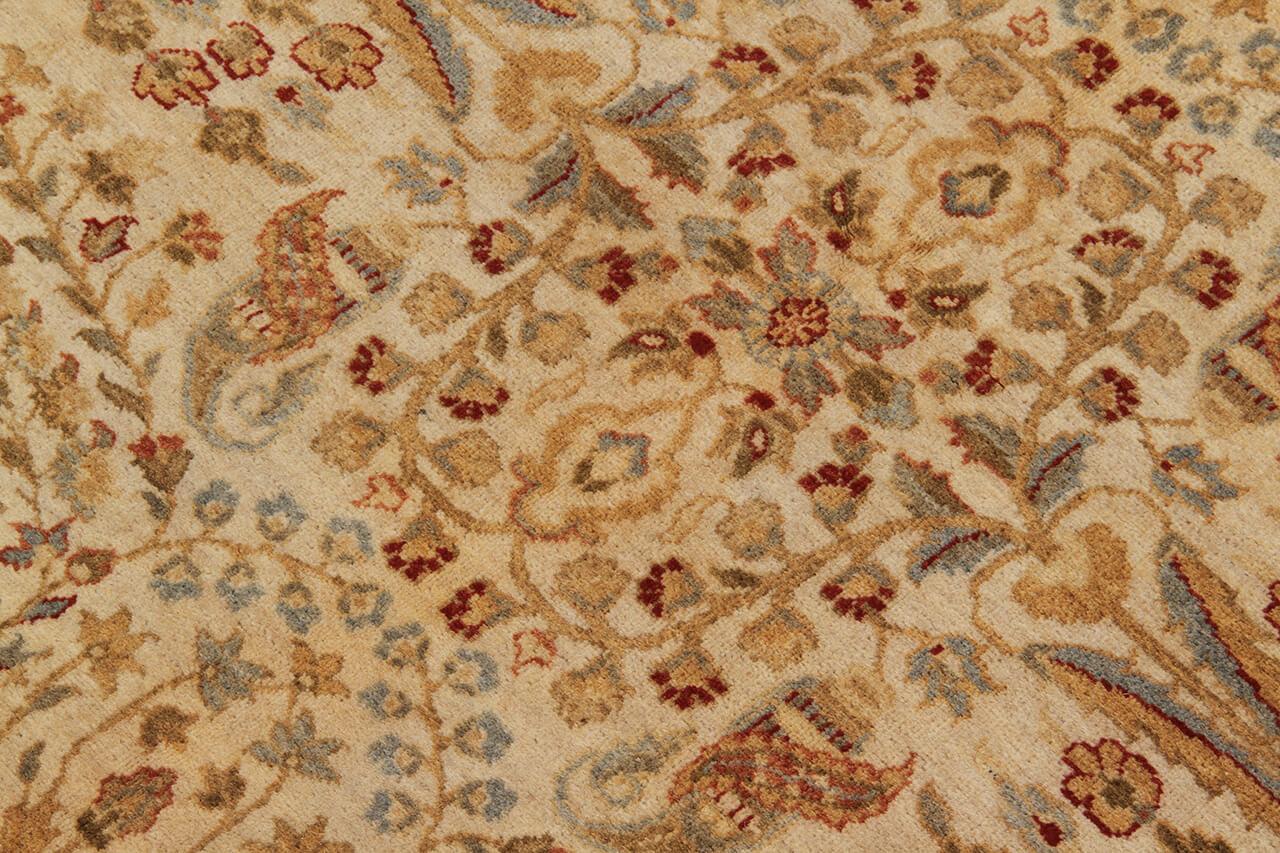
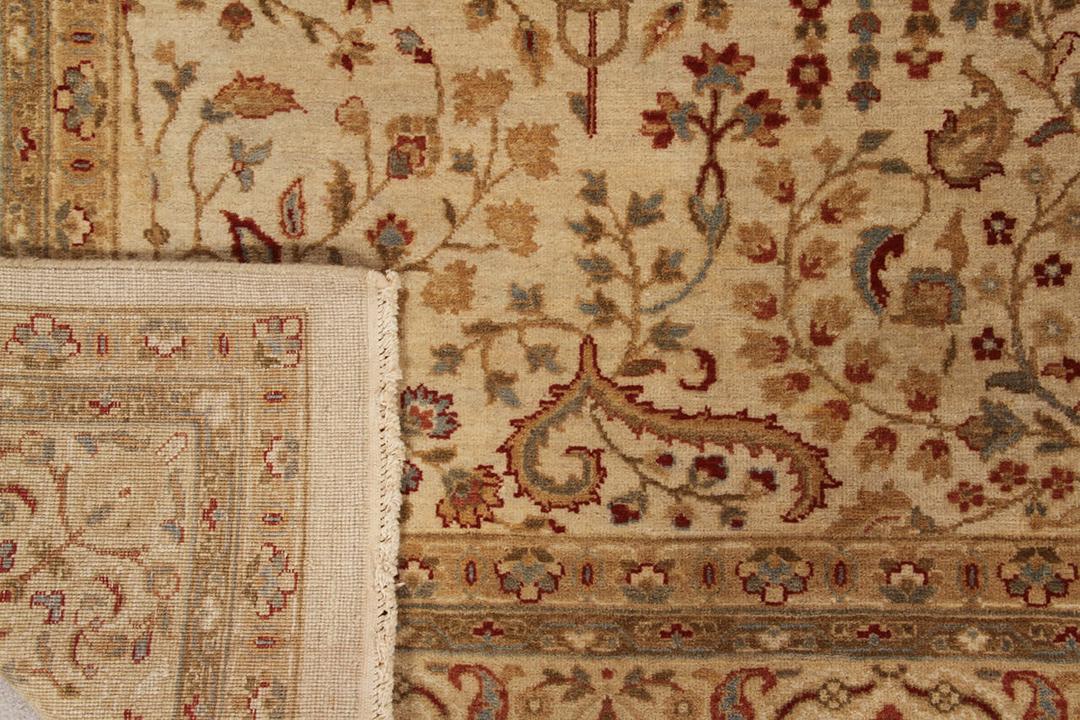
The term hand-knotted refers to the specific technique of tying individual strands of yarn around the foundation threads, a process that is far more durable than machine-made alternatives. This method allows for a much higher degree of detail and a thicker, more resilient pile that can withstand generations of use. For the collector, this signifies a piece that is built to last, valuing the structural integrity provided by the hand-tied knots.
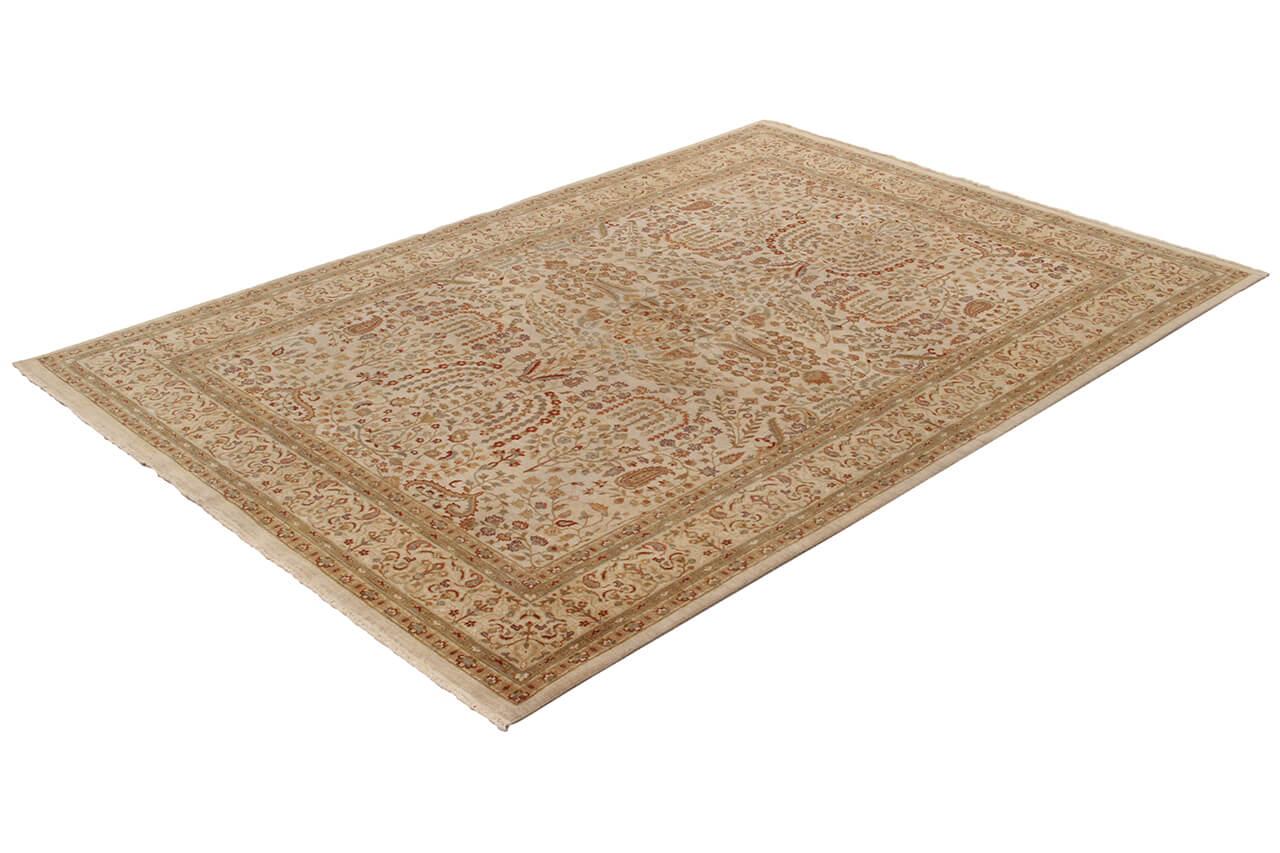
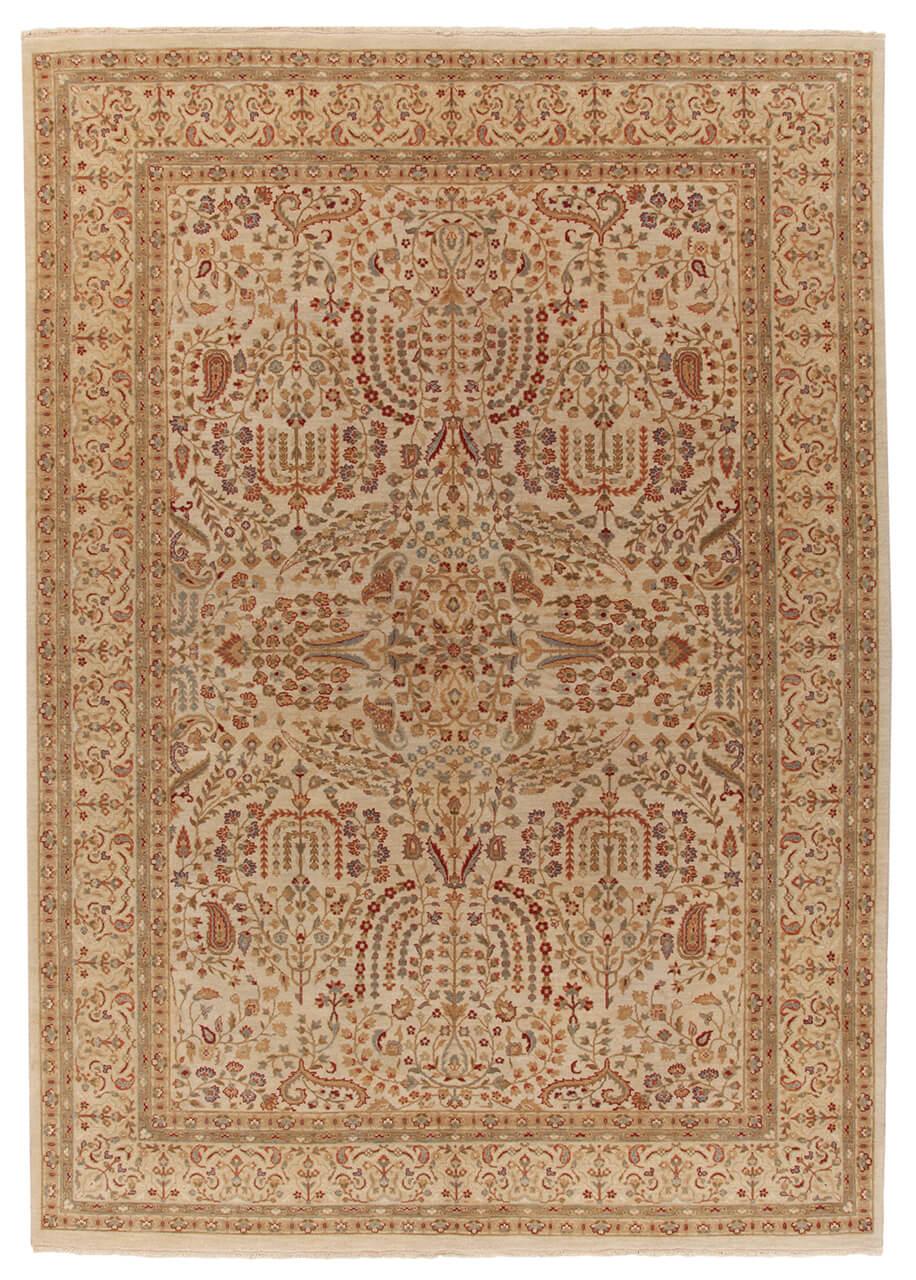
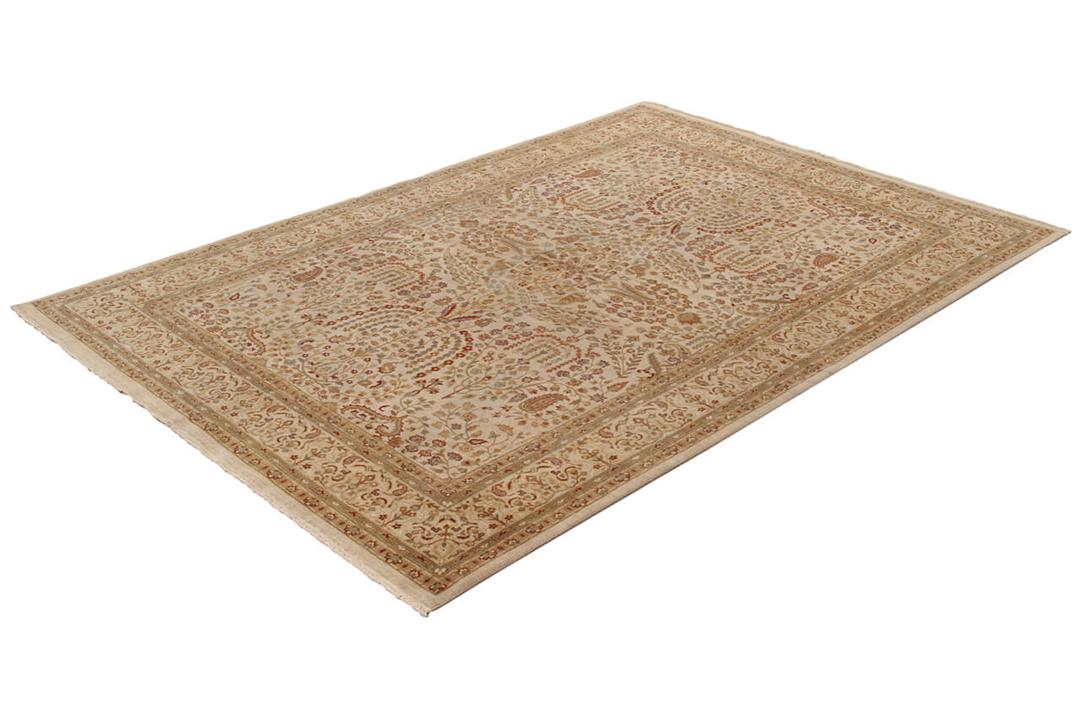
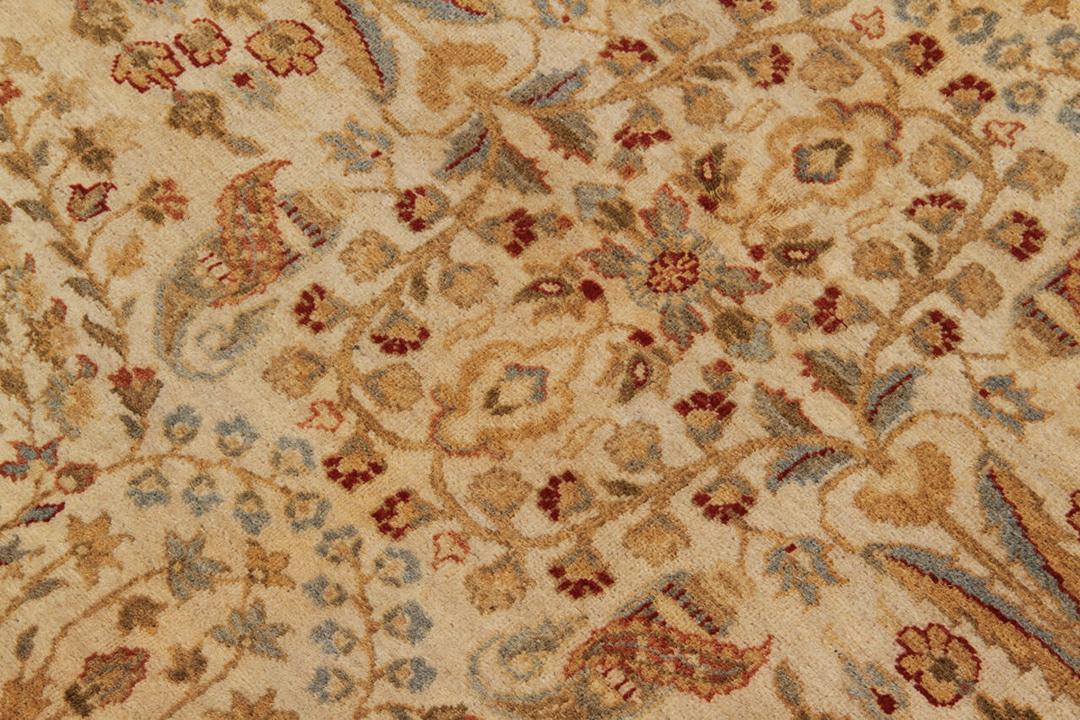
This rug features a classic floral composition, characterised by flowing vines, delicate blossoms, and traditional paisley elements that create a sense of movement across the field. The use of a formal border helps to frame the central design, a hallmark of high-end traditional weaving that provides a sense of balance and order. Such patterns are designed to draw the eye, turning the floor into a canvas of botanical beauty.
Owning a rug from this tradition is an act of preserving a heritage of skill and patience. These pieces are highly valued by collectors because they represent a marriage of function and cultural history, where every design choice is steeped in meaning. By incorporating this into your home, you are not just acquiring a floor covering, but a piece of history that embodies the dedication of generations of weavers.