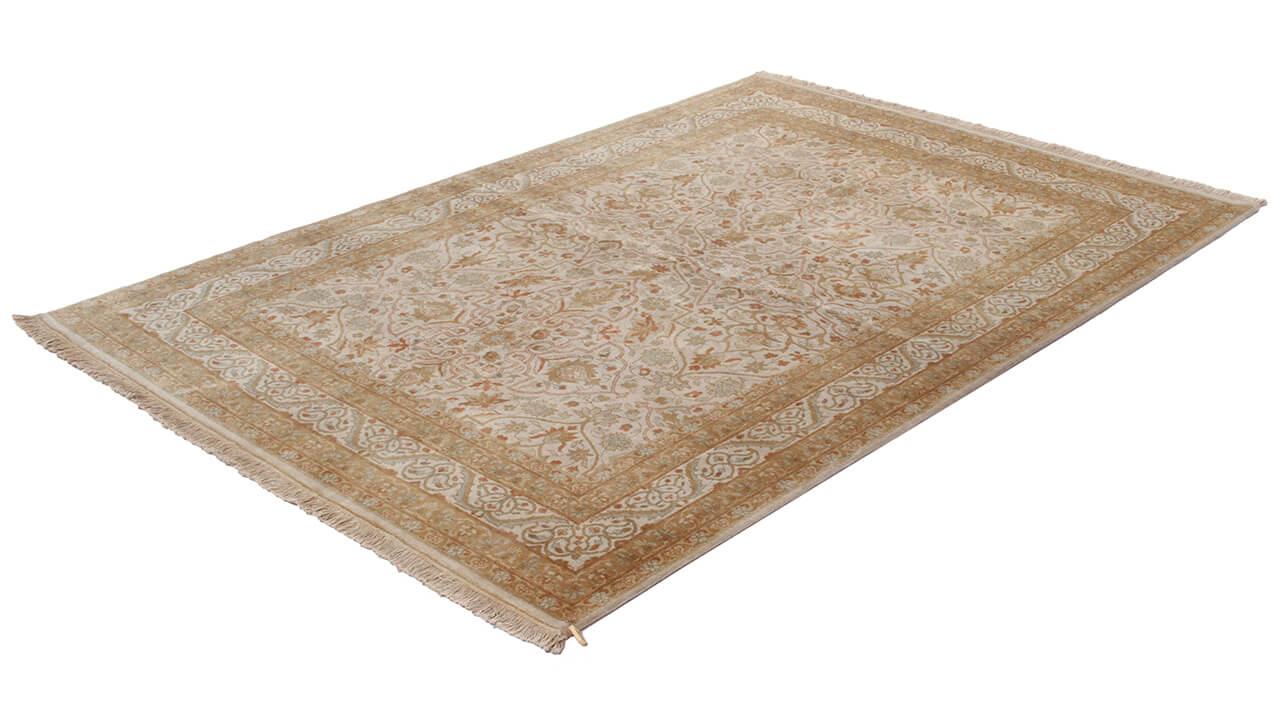
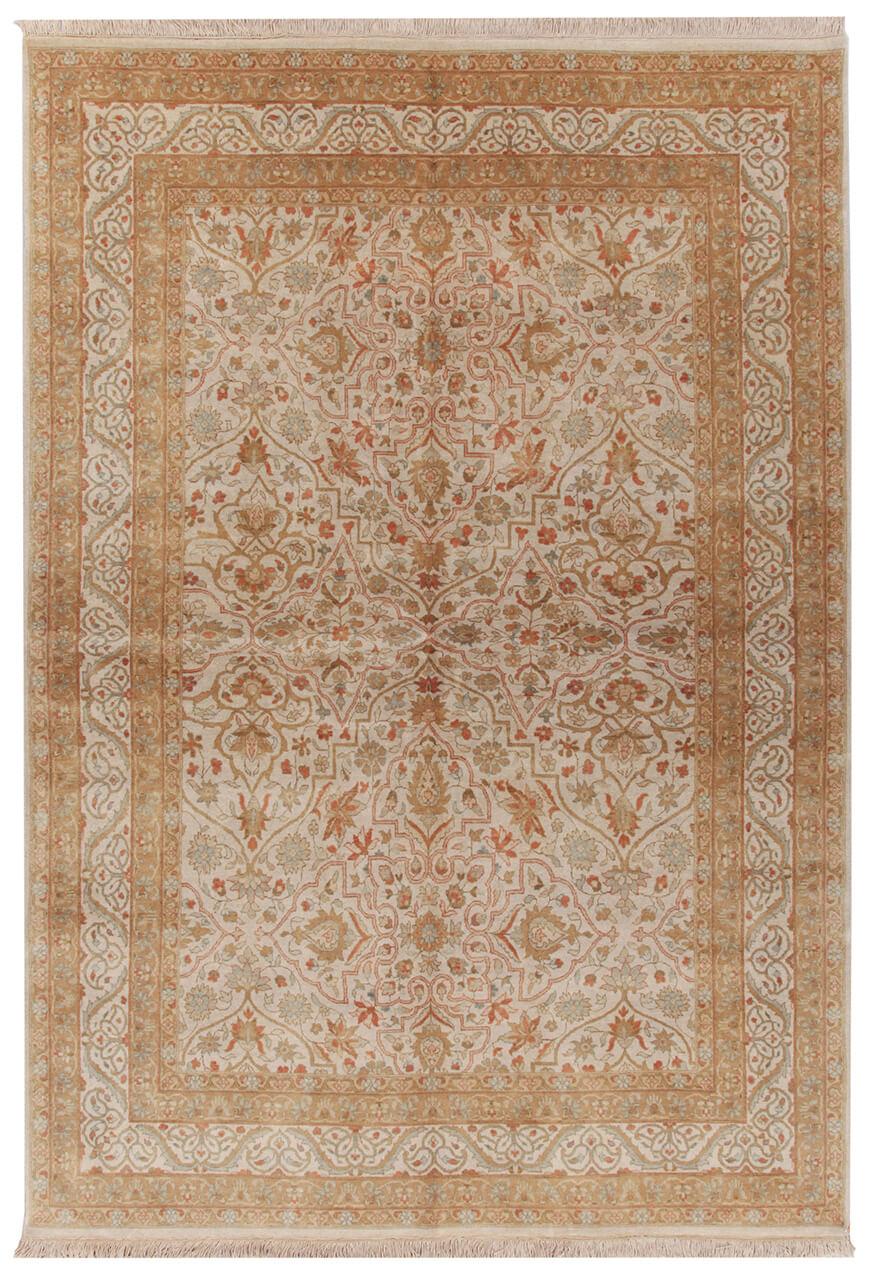
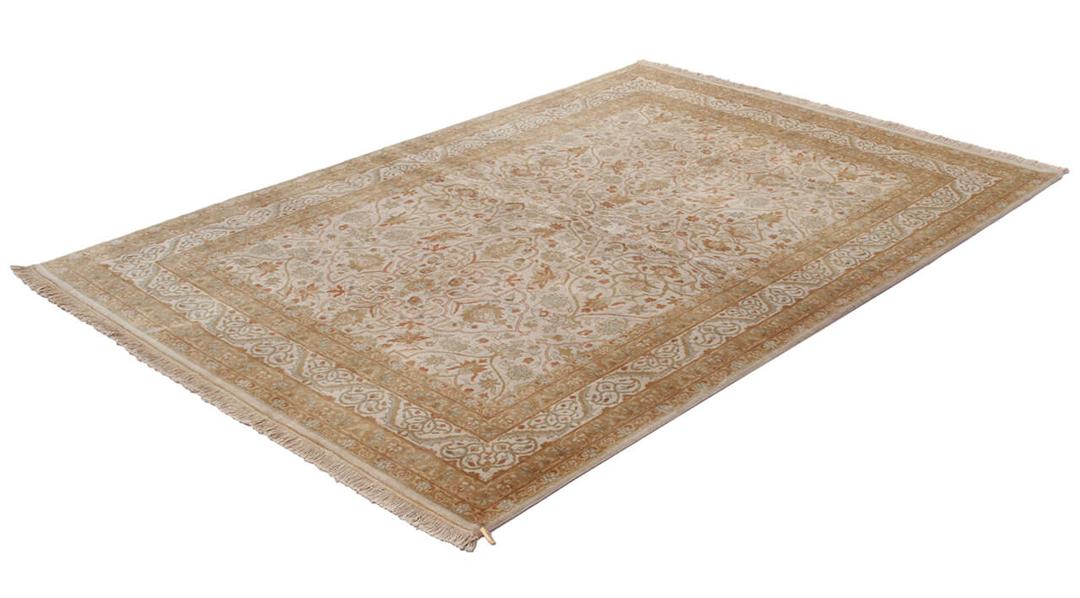
The history of oriental rug weaving in India is a fascinating journey that began in the 16th century, heavily influenced by the arrival of weaving masters from the Middle East. Under the patronage of the Mughal emperors, these artisans blended local Indian aesthetics with traditional geometric and floral motifs. Over centuries, this fusion evolved into a distinct style that is celebrated today for its delicate patterns and balanced compositions.
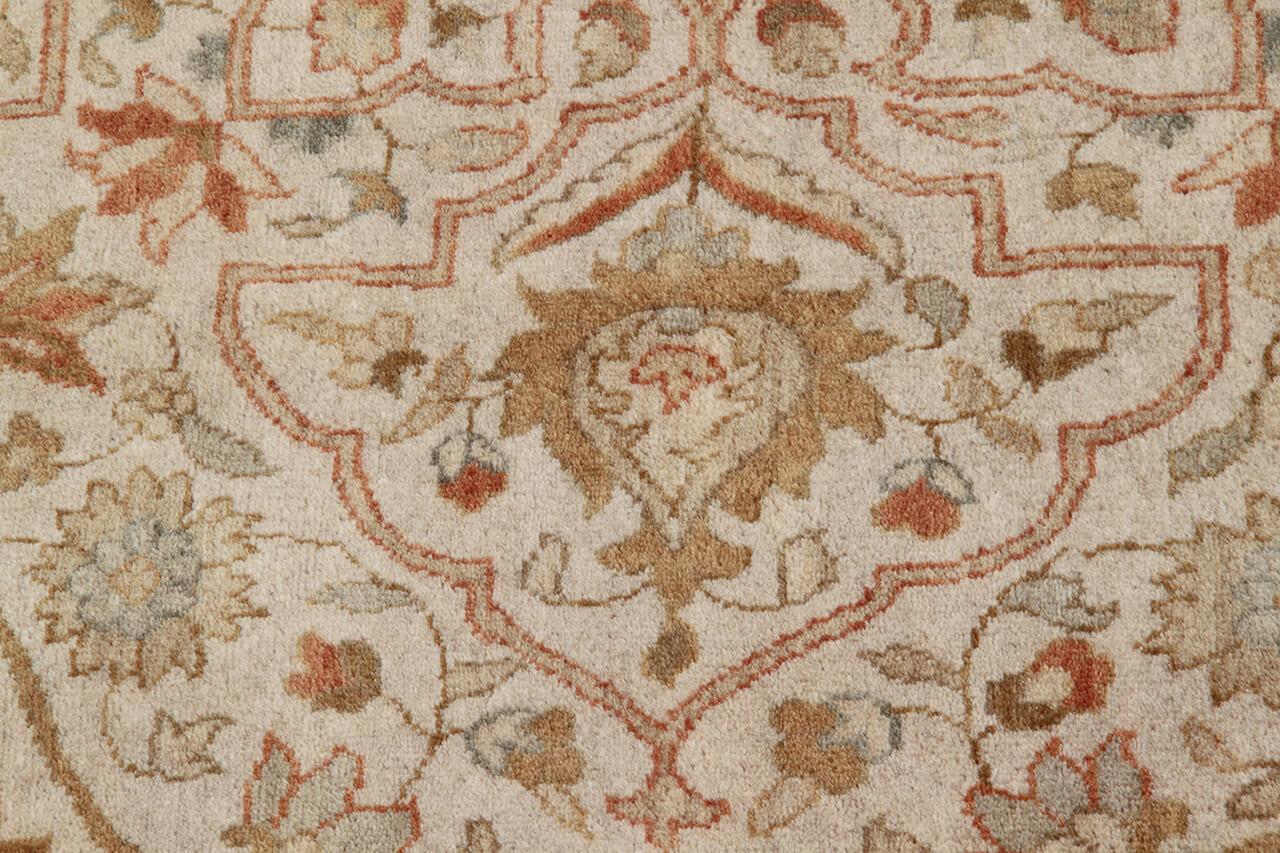
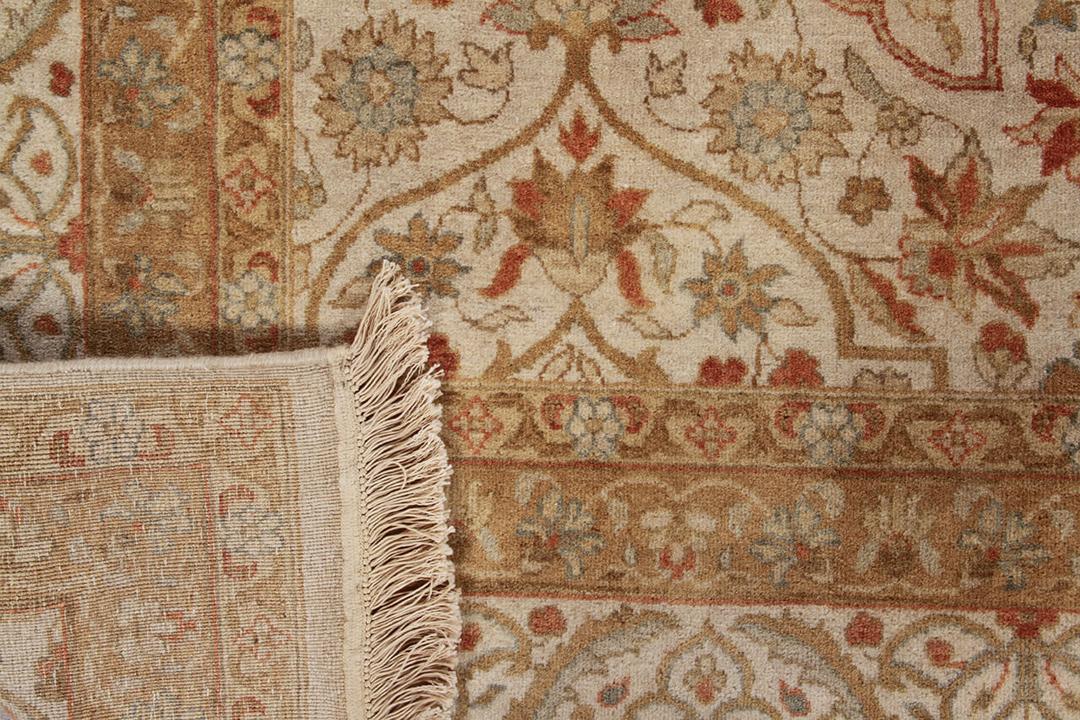
The term hand-knotted refers to the traditional method of creating a rug by tying individual strands of fibre onto a foundation. This labour-intensive technique is the hallmark of quality in the rug world. By knotting each strand by hand, the artisan is able to achieve a level of detail and colour gradation that is impossible to replicate with machinery. This creates a luxurious, dense pile that is not only beautiful to look at but also remarkably durable.
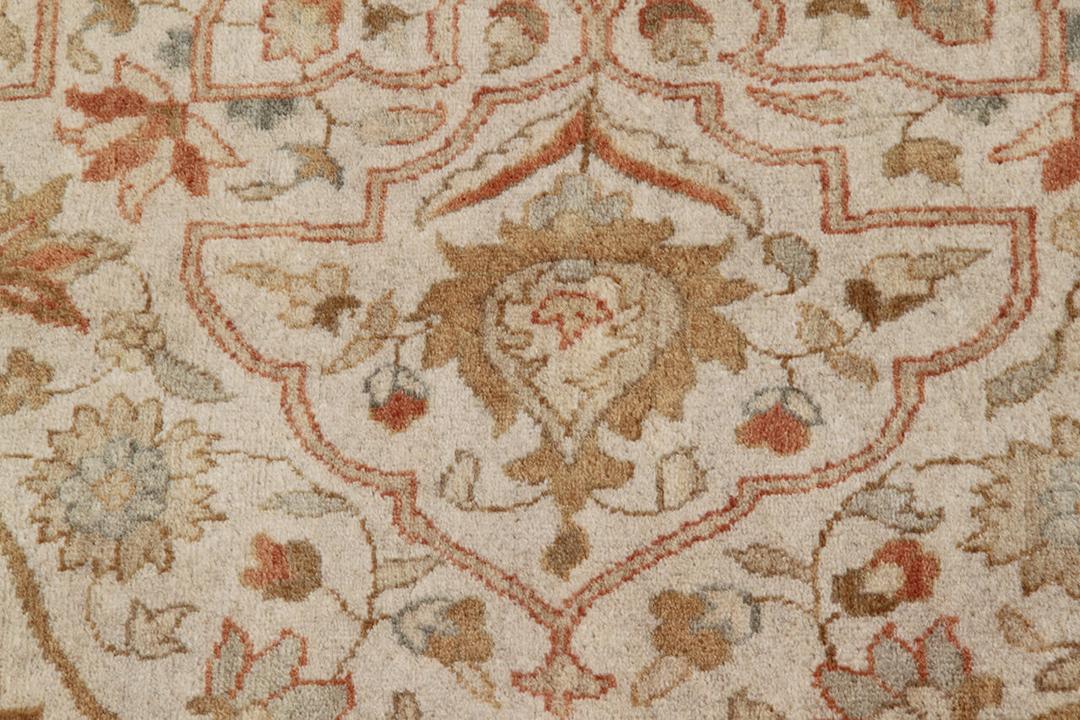
Signature elements of this style often include intricate floral motifs, swirling vines, and elaborate borders. These designs are frequently arranged in a balanced, symmetrical fashion, reflecting a desire for order and beauty. The use of warm, earthy tones like those found in this piece is a classic choice, intended to create a sense of comfort and serenity. Any variation in colour or motif is a sign of the artisan's hand and adds to the rug's authentic, storied character.
Owning an authentic hand-knotted rug from this tradition is about more than just decor; it is about preserving a legacy of skill. These pieces are highly valued by collectors because they represent a marriage of patience, precision, and cultural heritage. To bring such a rug into your home is to connect with a long lineage of craftspeople, ensuring that this tradition of artistic excellence continues to be appreciated for generations.