Chinese rug weaving is a tradition that spans centuries, evolving from functional floor coverings into highly sophisticated artistic expressions. Historically, these rugs were often commissioned for imperial palaces or temples, featuring symbolism rooted in nature and philosophy. Today, the craft continues to thrive by blending these ancient techniques with modern aesthetic sensibilities.
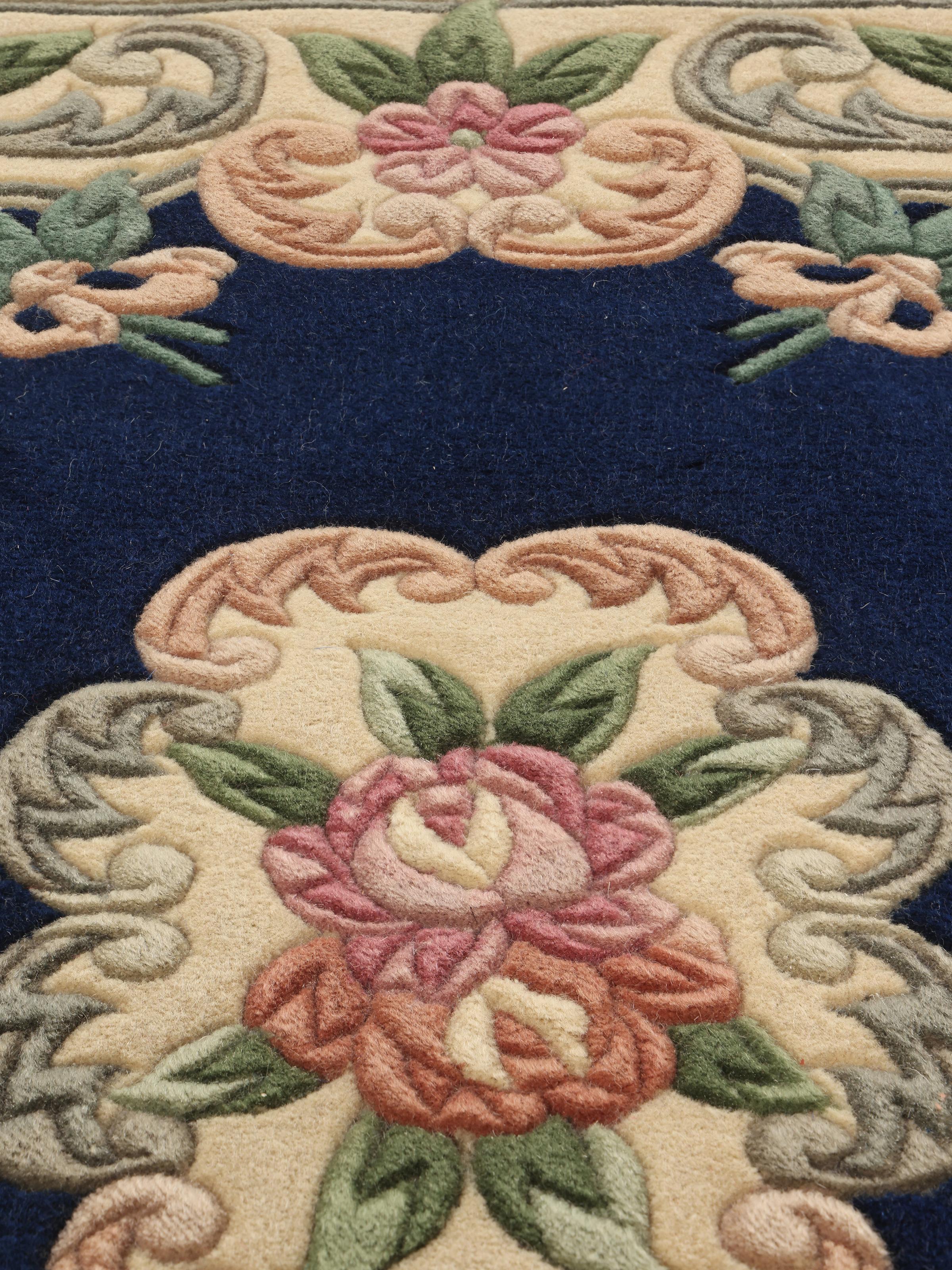
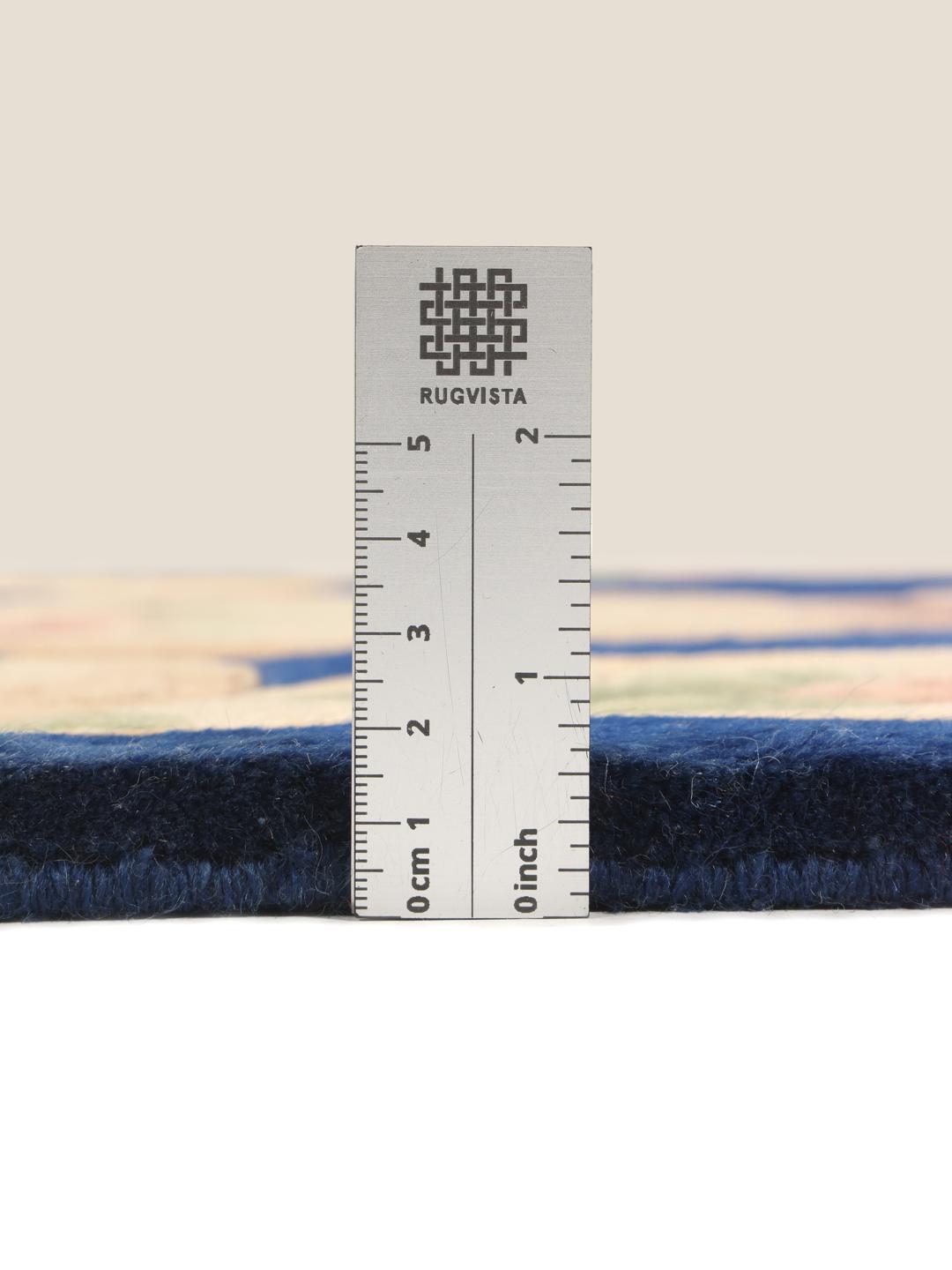
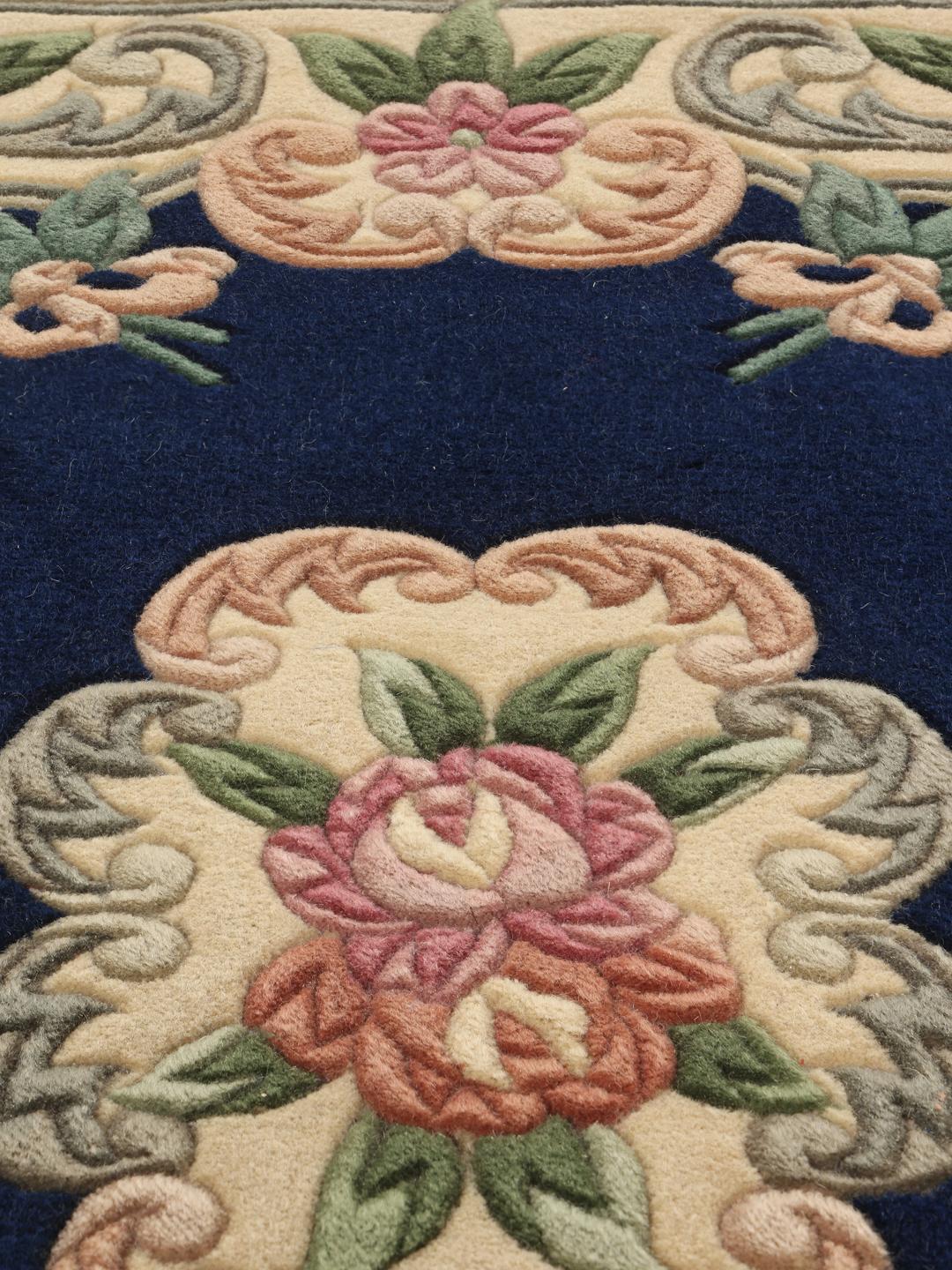
The 90 Line classification refers to a specific traditional density standard in Chinese rug making. This technical measurement relates to the number of knots across a specific width, which directly impacts the definition of the patterns and the overall durability of the pile. Understanding this standard helps you appreciate the balance between the intricate, soft floral motifs and the robust, long-lasting construction of the rug.
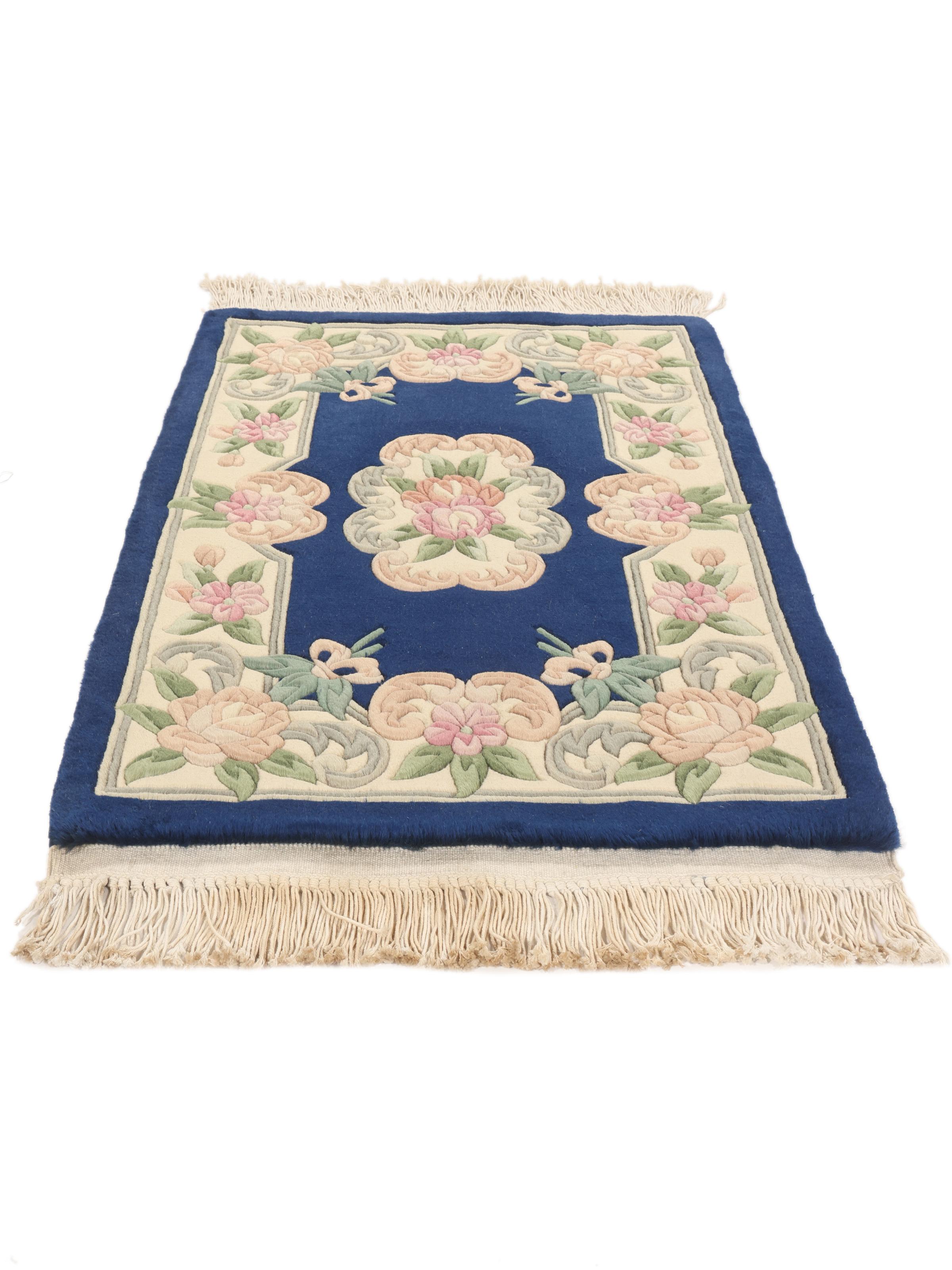
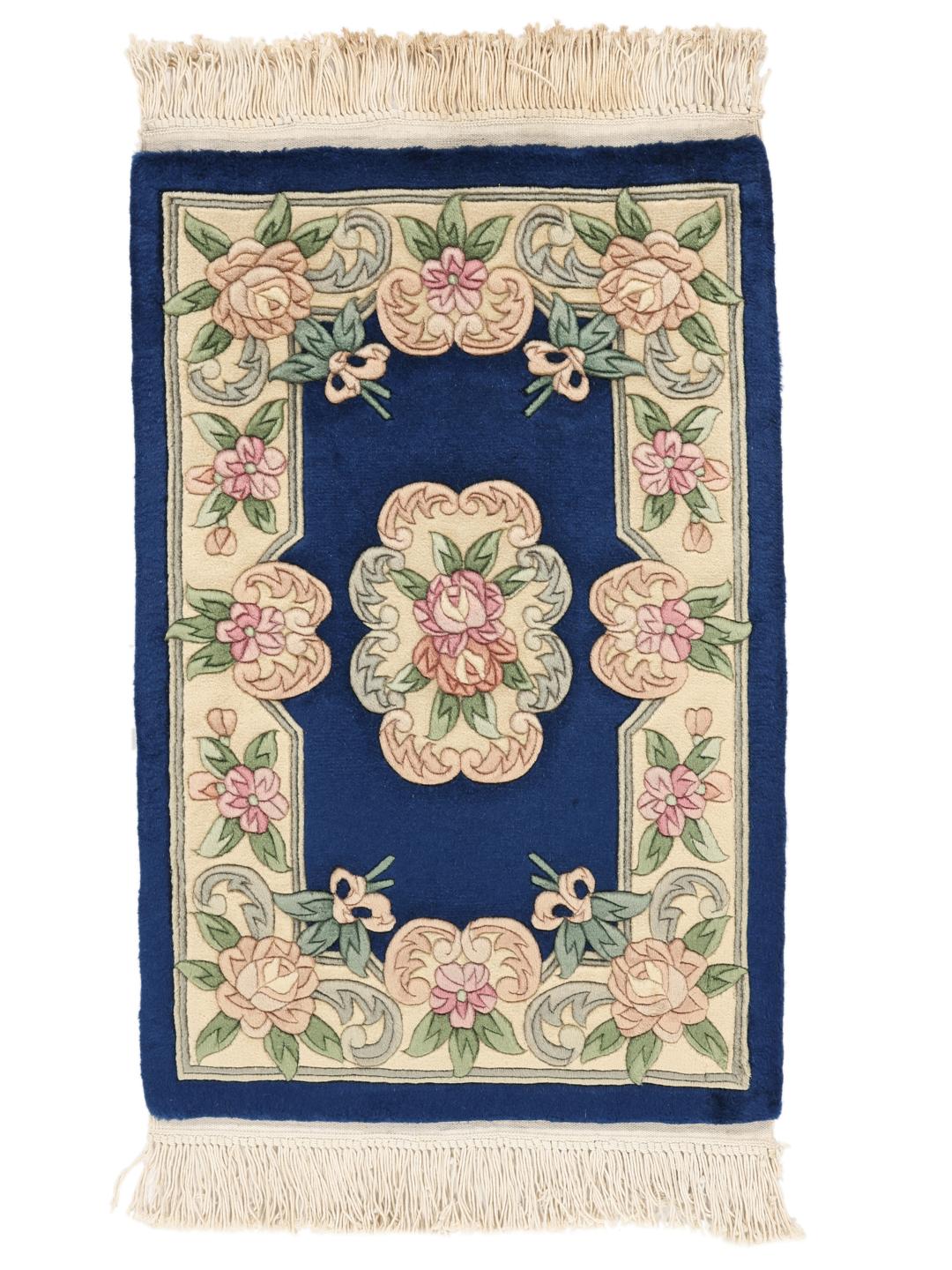
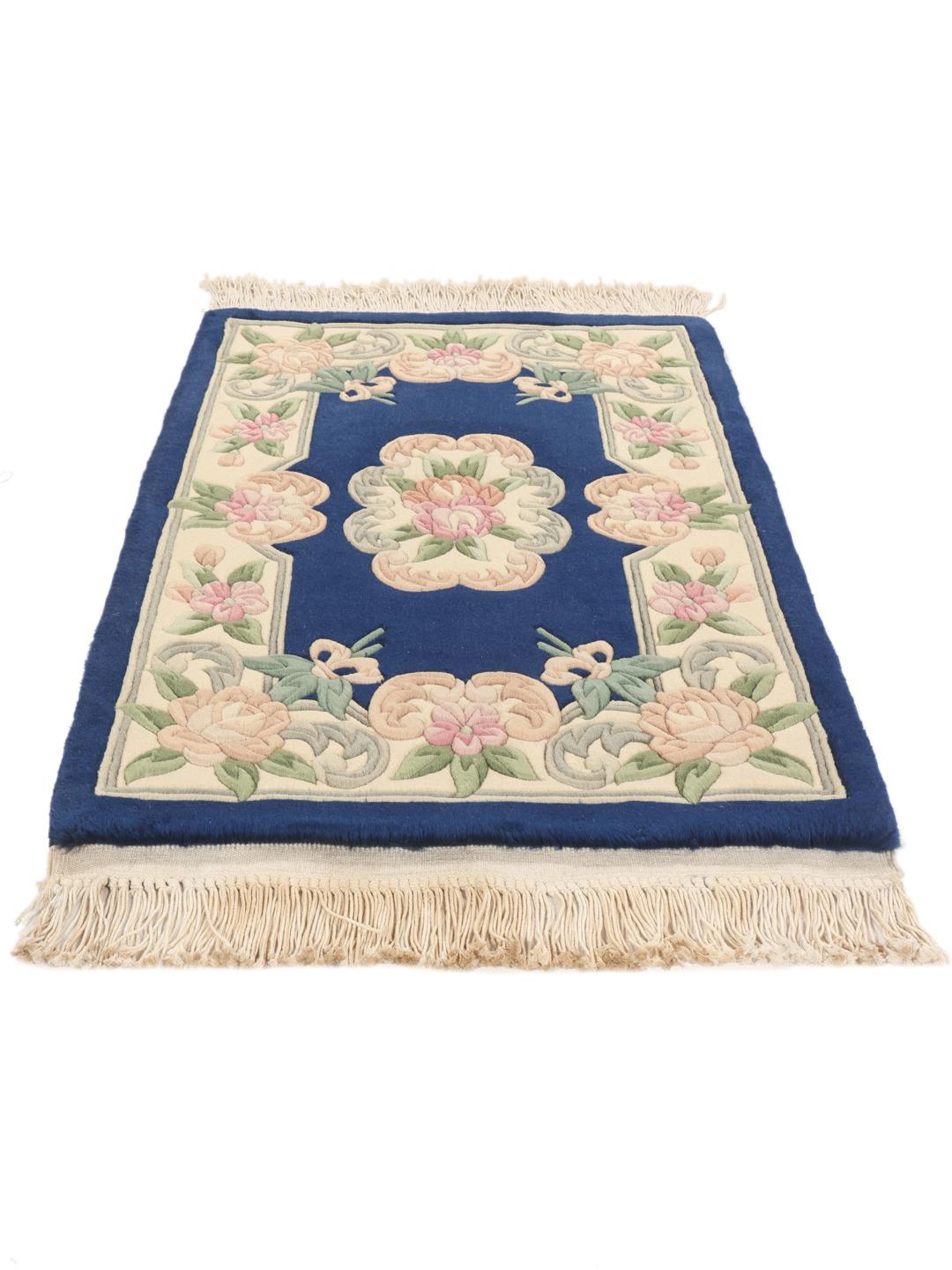
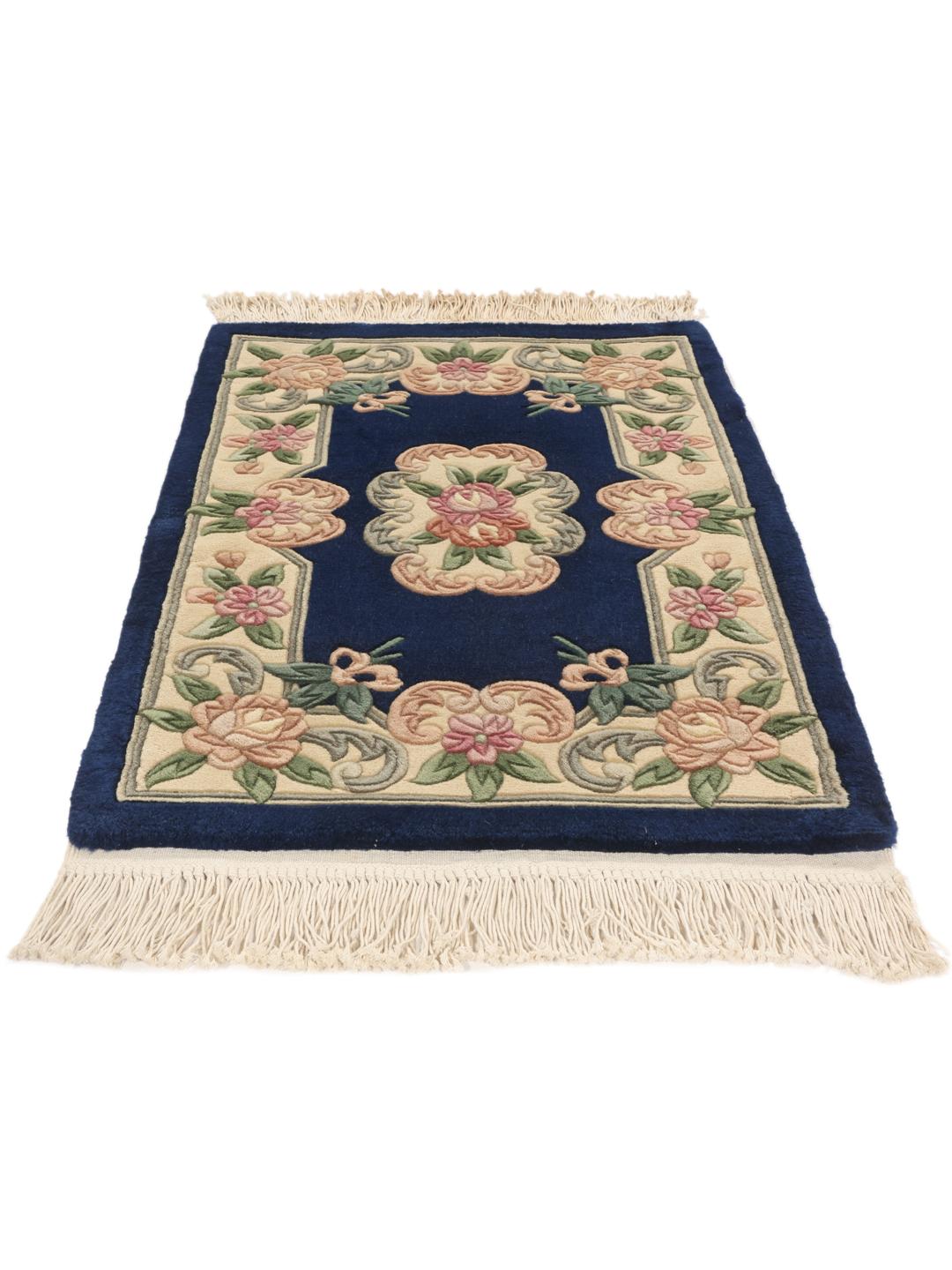
The design language of this piece is defined by its elegant floral motifs, which are a hallmark of Chinese weaving. Often featuring stylised roses or peonies, these designs are framed by balanced borders that draw the eye toward the centre of the rug. The use of a deep blue field is a classic choice, chosen to enhance the contrast of the softer tones found in the floral elements, making the colours appear more vibrant and alive.
Owning a hand-knotted rug from this region is a way to connect with a legacy of craftsmanship that values both utility and beauty. These pieces are highly sought after by collectors for their unique character and the high level of human skill required to produce them. By bringing this rug into your home, you are acquiring a piece of cultural heritage that celebrates careful, intentional design.