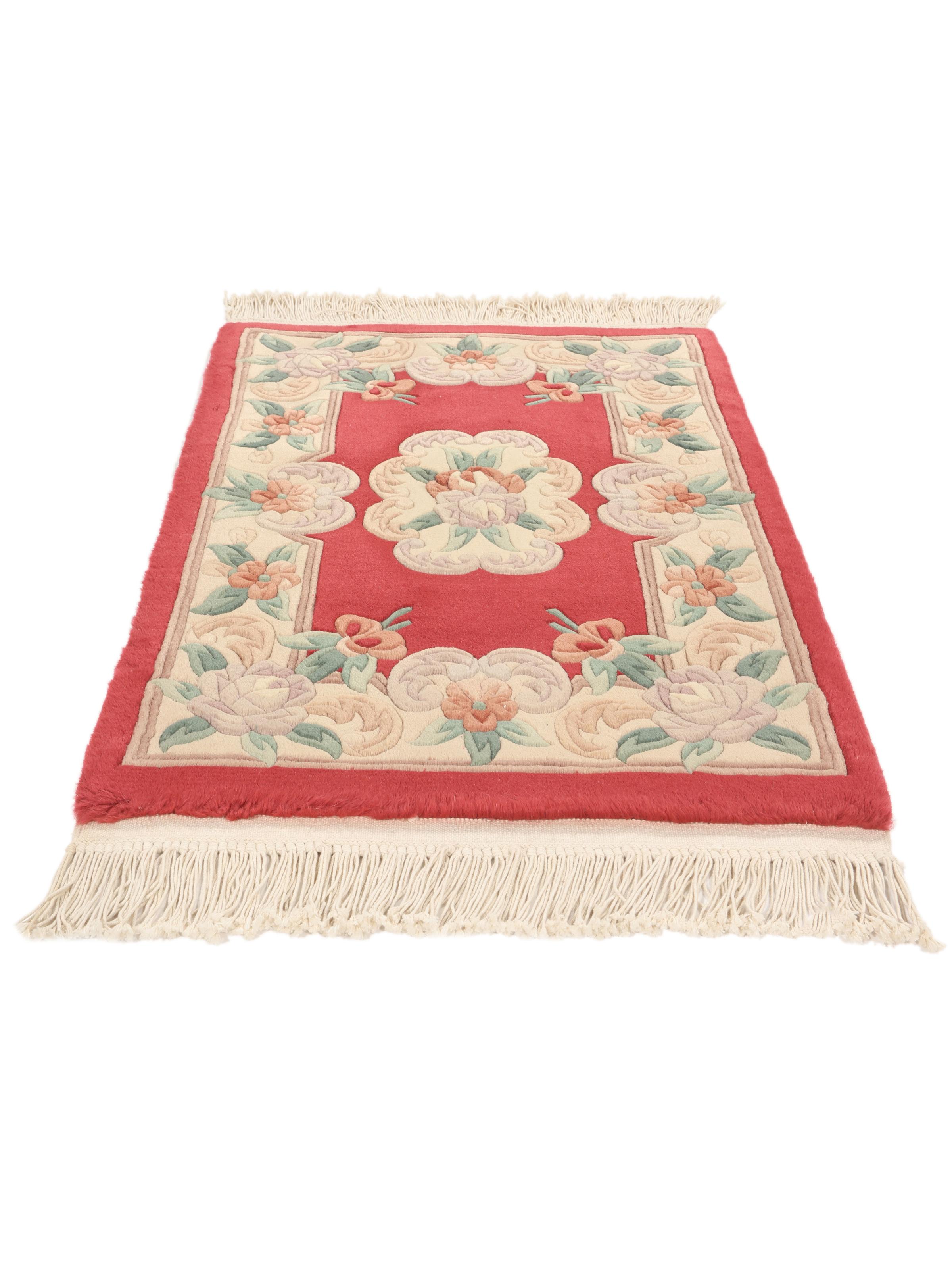
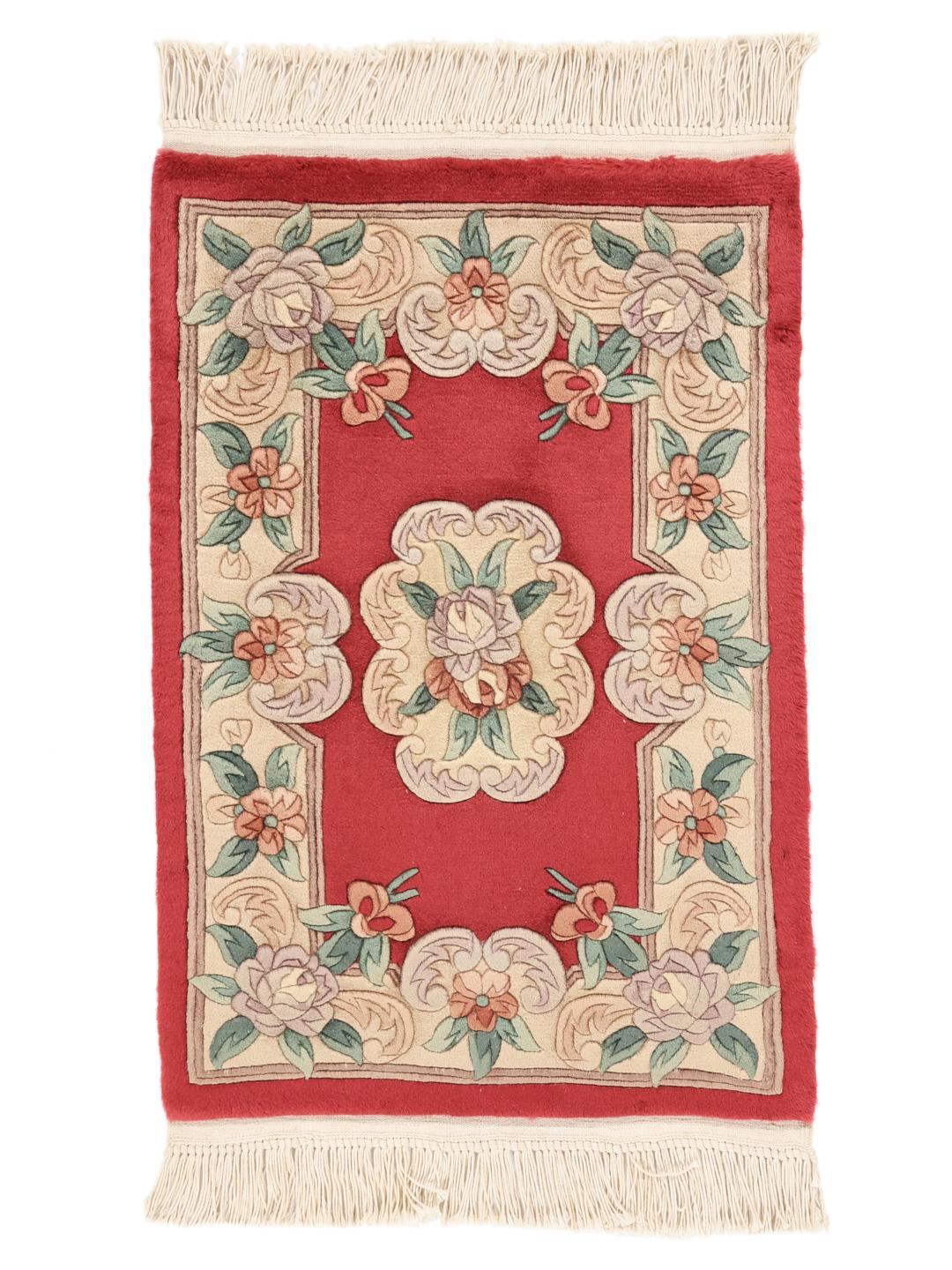
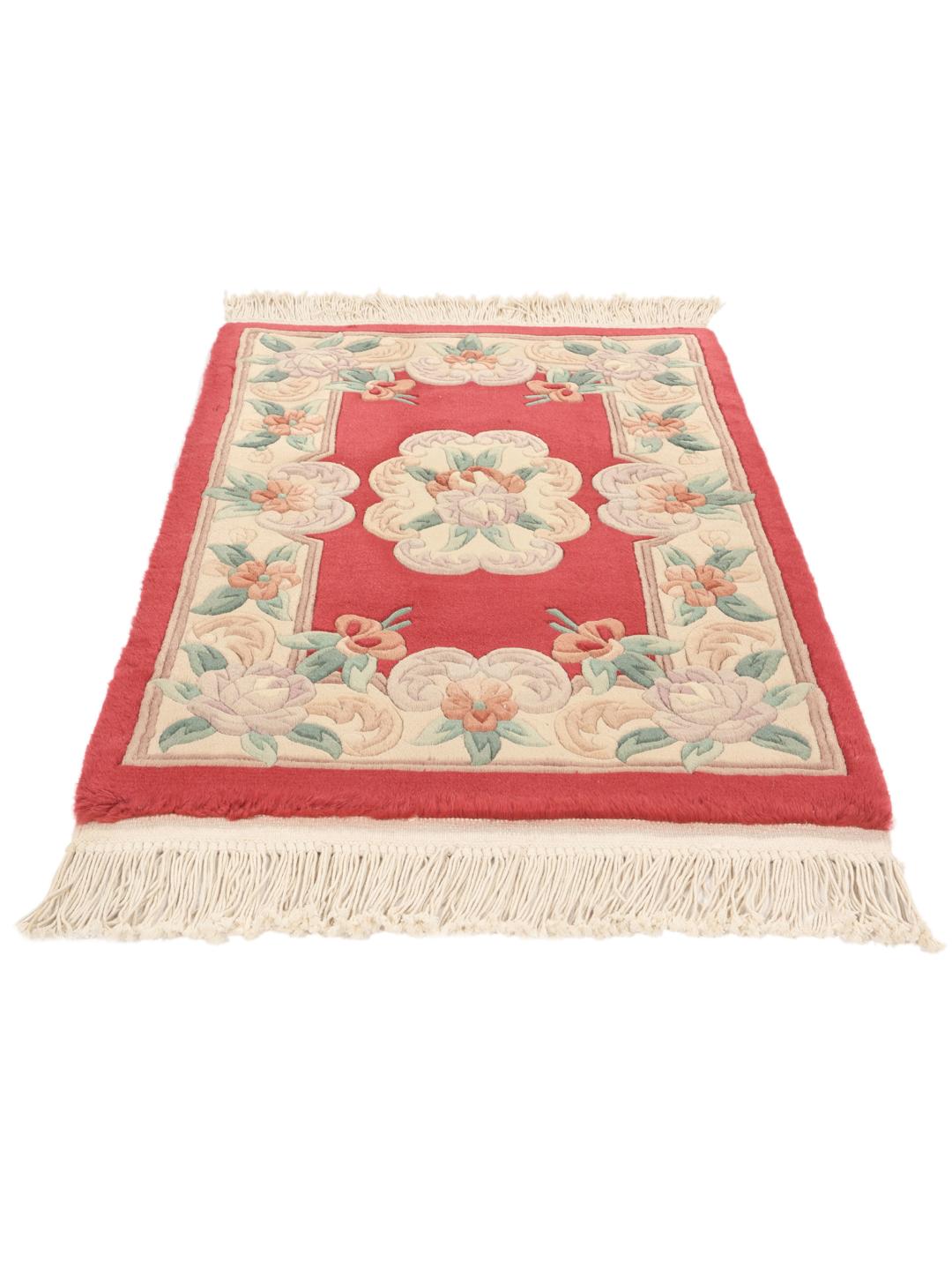
The tradition of rug weaving in China is a centuries-old craft that has evolved to become synonymous with elegance and technical precision. Historically, these rugs were often commissioned for imperial palaces and high-ranking officials, featuring symbolic motifs that drew heavily from nature, mythology, and Buddhist philosophy. Today, Chinese weaving centres continue to honour these roots while adapting classic patterns for modern living.
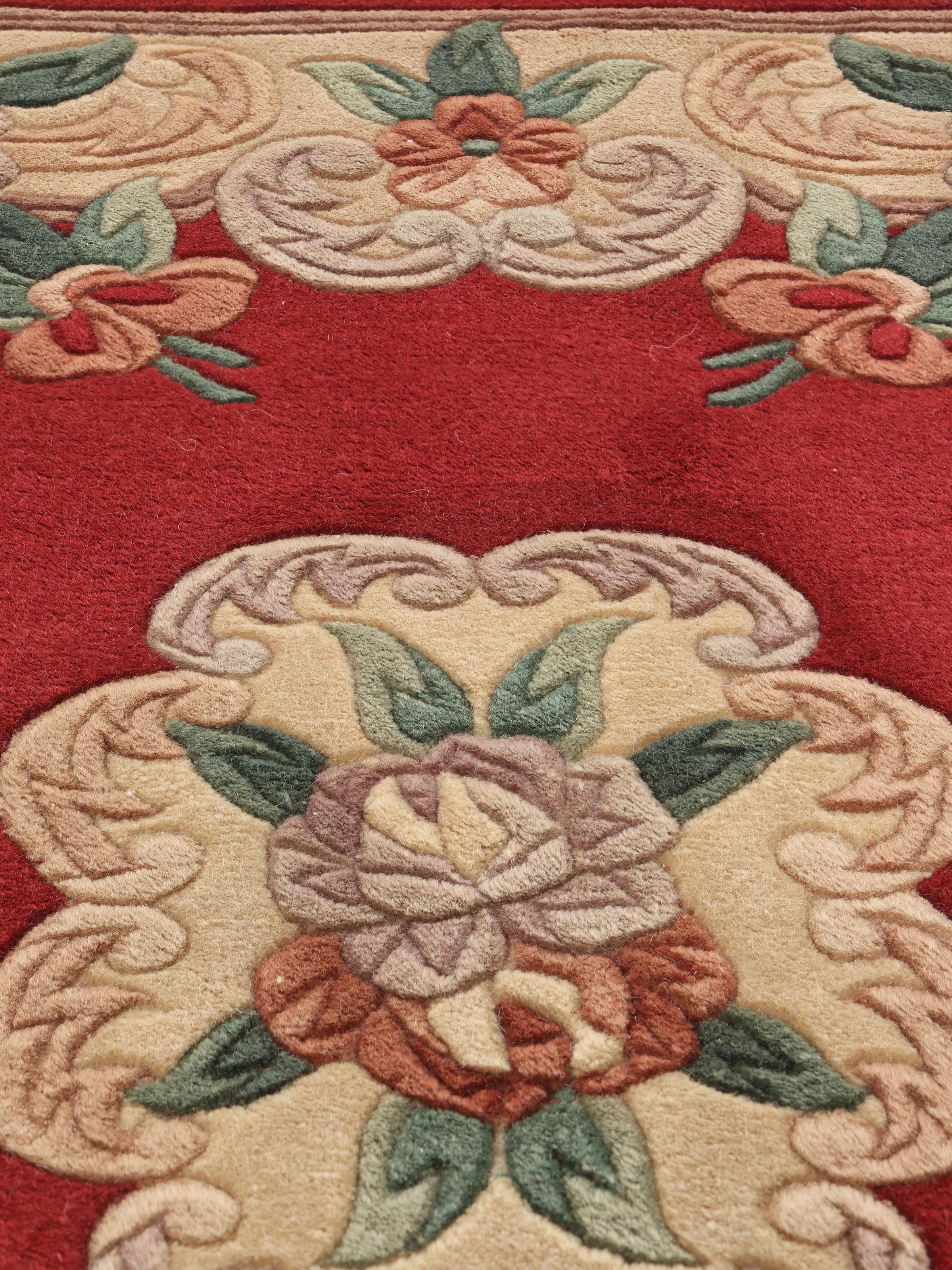
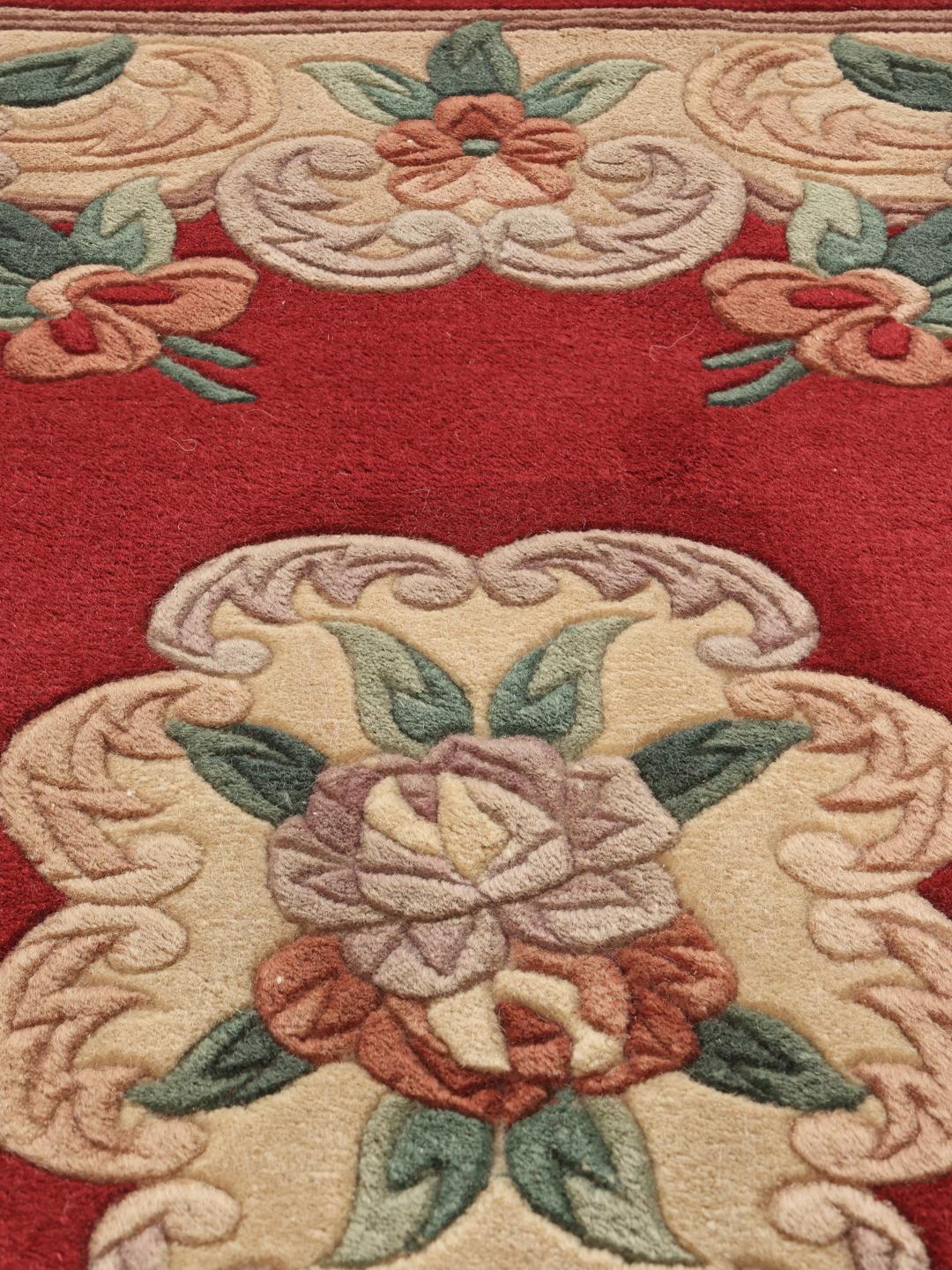
The term '90 line' refers to a traditional system of measuring the quality and fineness of Chinese hand-knotted rugs. It indicates the number of knots found across a specific width, which directly correlates to the detail and density of the design. A 90-line construction provides a balance between a lush, deep pile and the ability to render intricate floral curves with clarity, ensuring the pattern remains sharp and visually engaging.
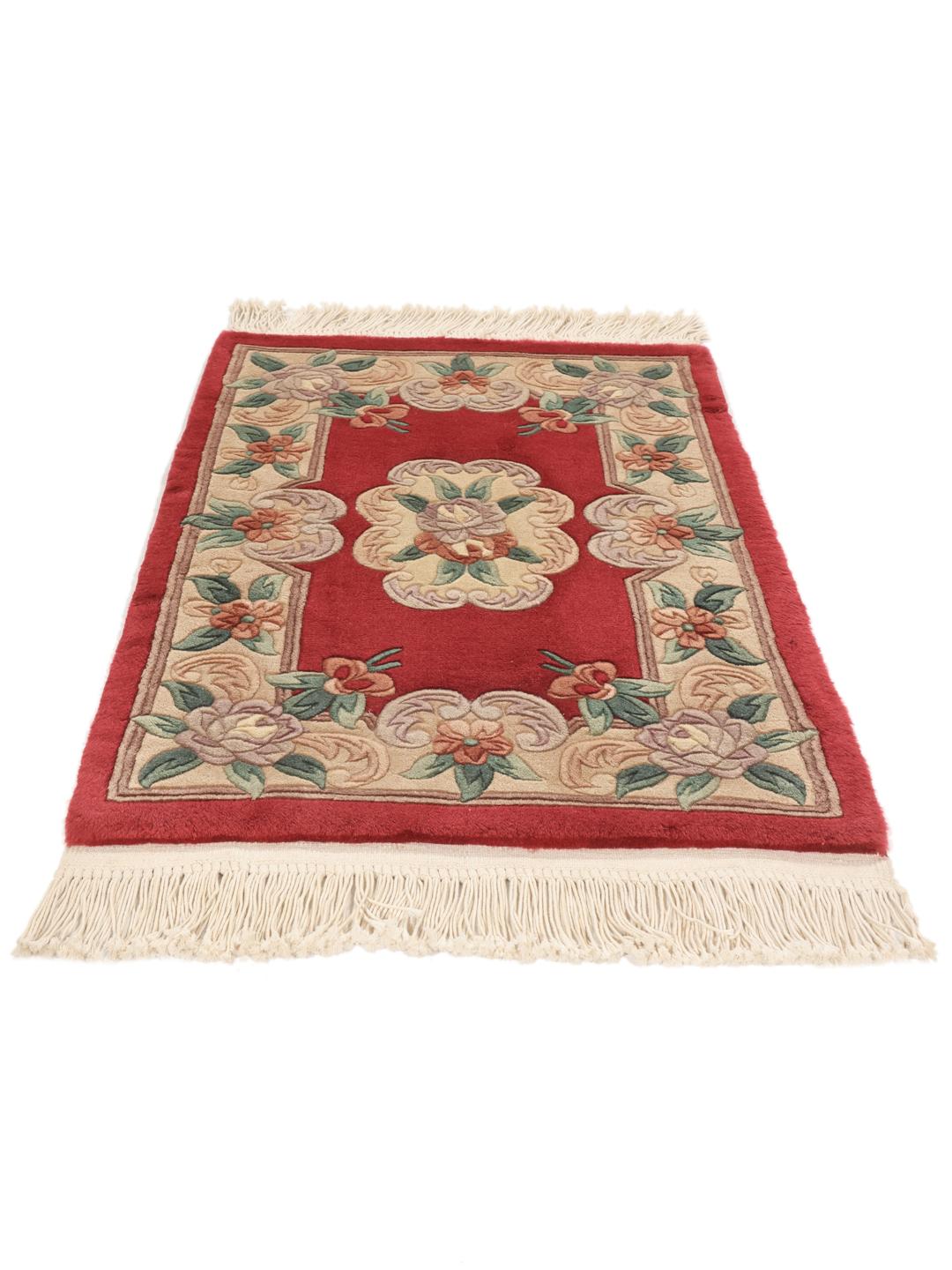
Floral motifs are a cornerstone of this weaving tradition, often incorporating stylised peonies, lotus flowers, or scrolling vines. These designs are frequently arranged in a medallion format, surrounded by decorative borders that frame the field. The use of vibrant colours, such as the deep red found here, is a classic technique used to create depth and contrast, making the floral elements appear as if they are floating atop the surface of the rug.
Collecting a hand-knotted rug from this region is an investment in human skill and cultural heritage. These rugs are valued not only for their aesthetic beauty but for the immense effort poured into every square centimetre. By choosing a piece from this tradition, you are bringing a sense of history into your home, supported by a craft that has been passed down through generations of dedicated artisans.