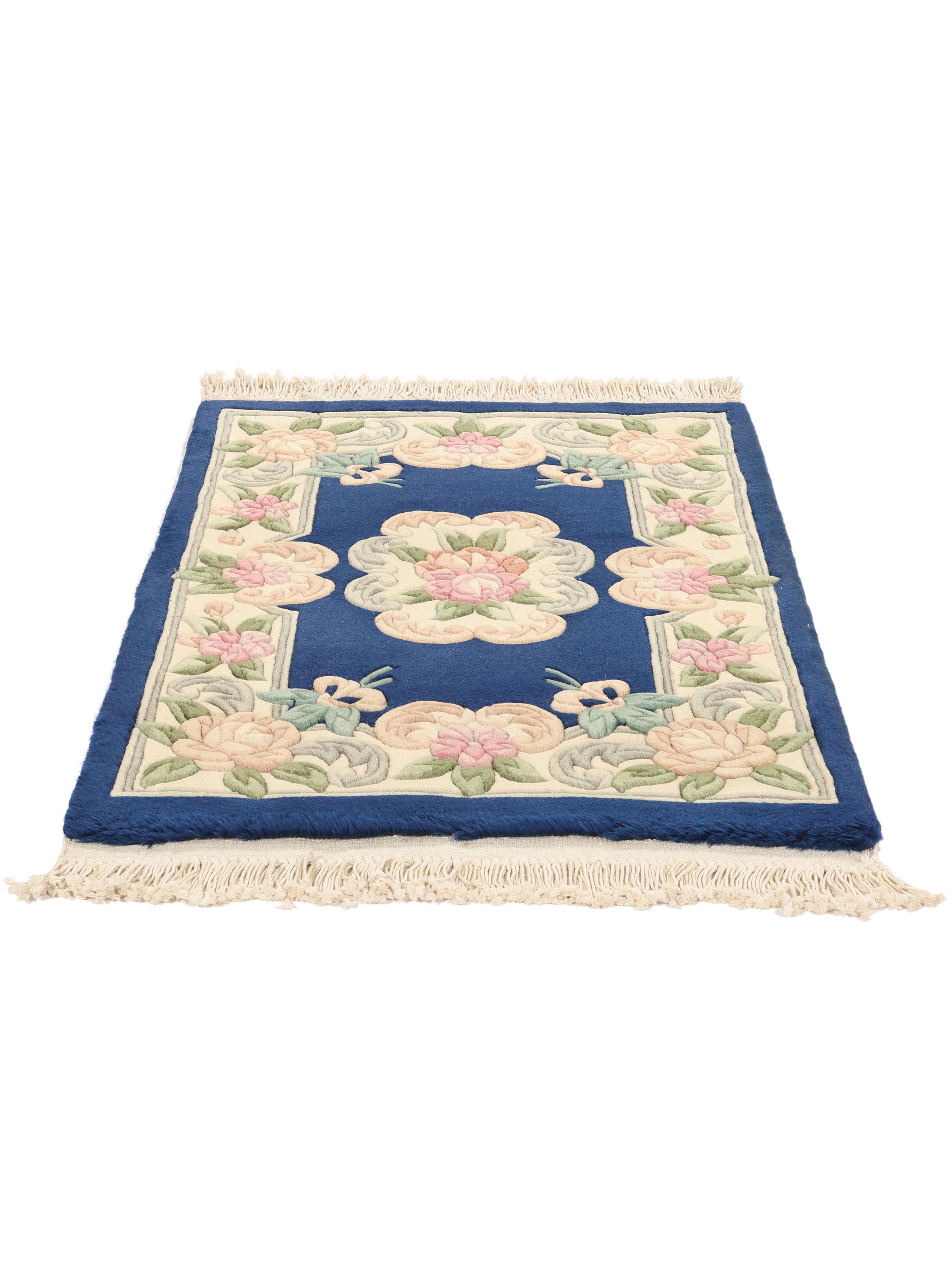
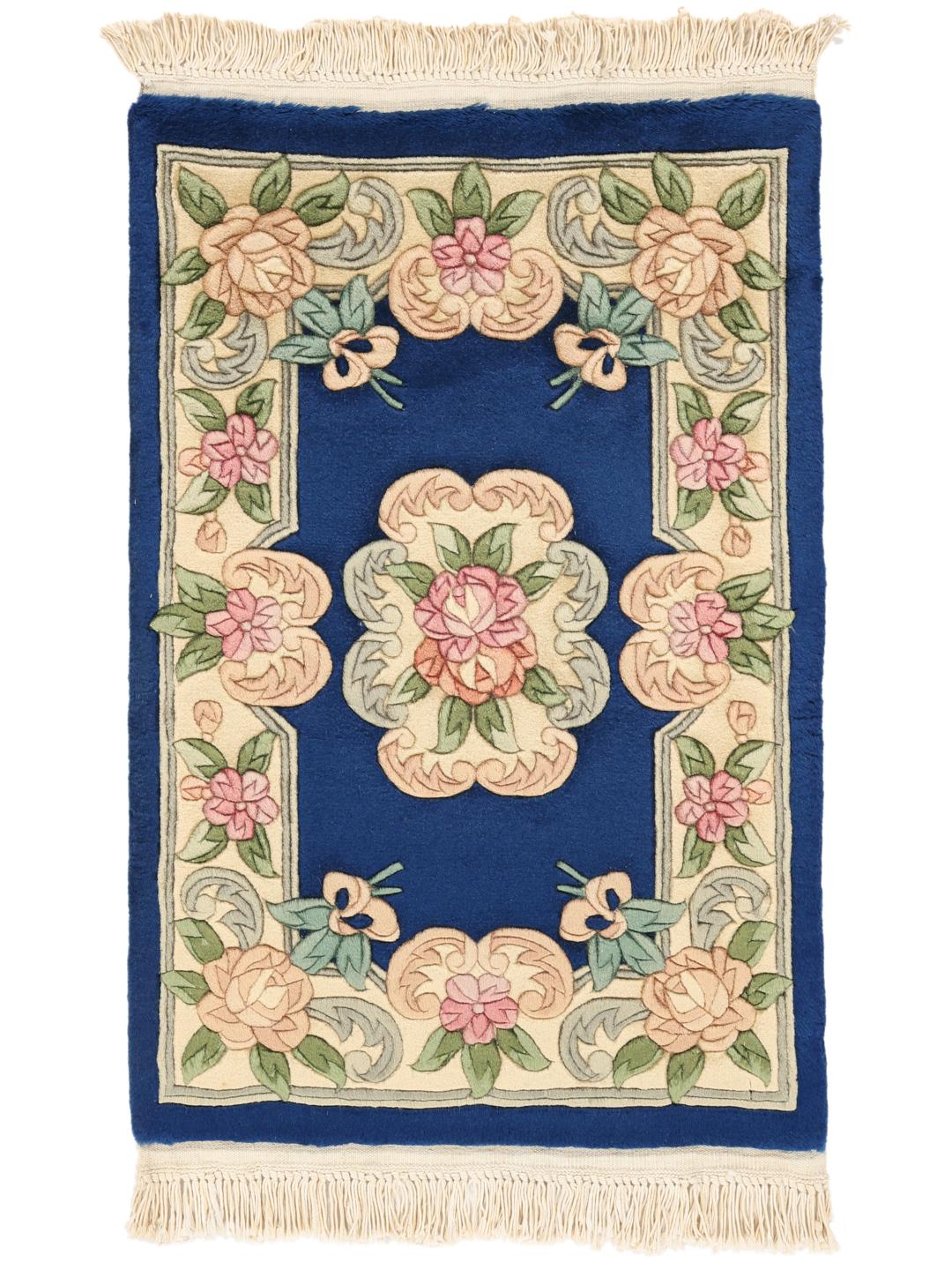
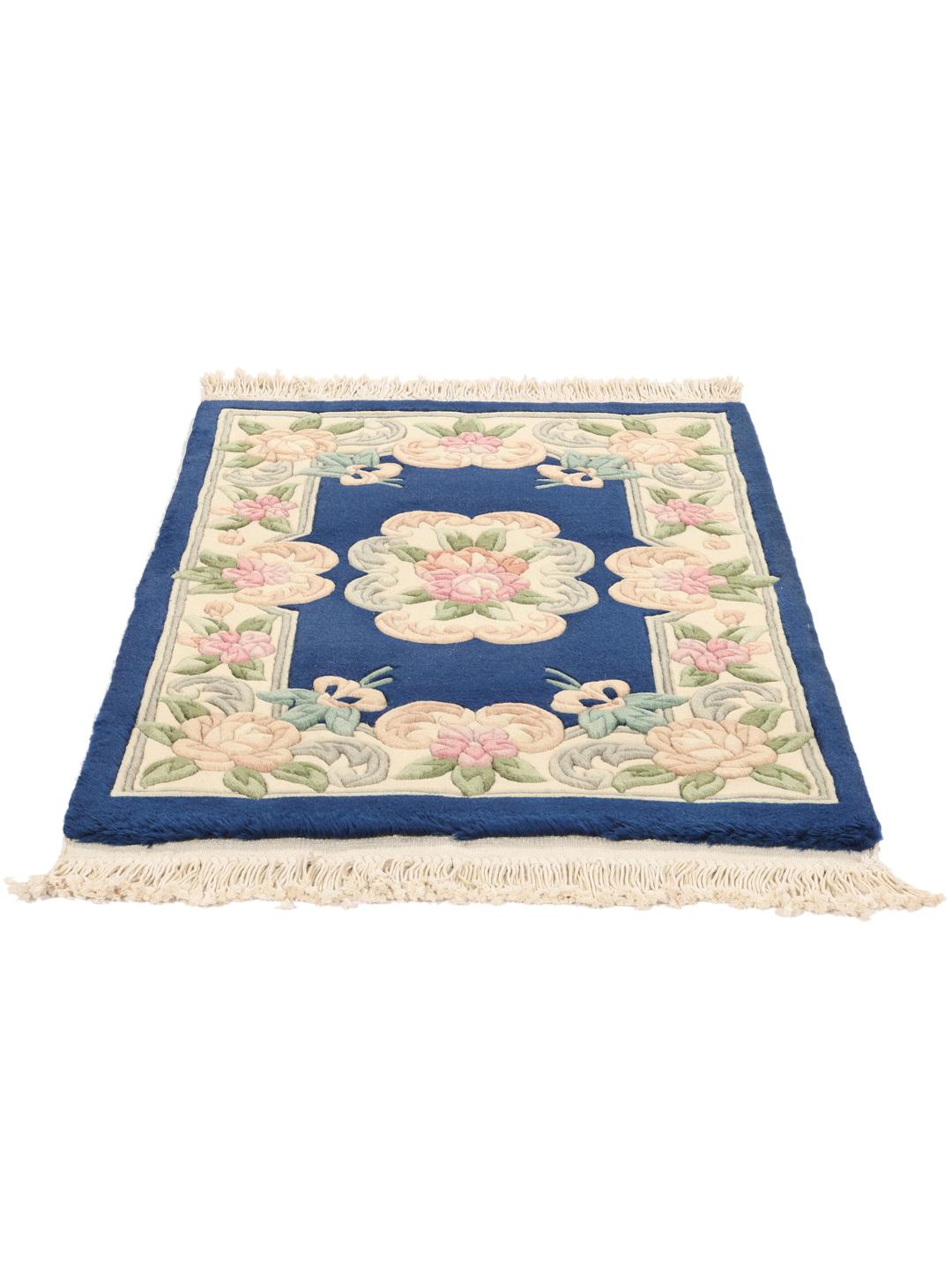
Chinese rugs have a rich history that dates back centuries, evolving from functional floor coverings into celebrated works of textile art. While ancient examples were often used in imperial courts, the tradition has adapted over time to integrate broader design influences while maintaining its characteristic focus on harmony, nature, and symbolism.
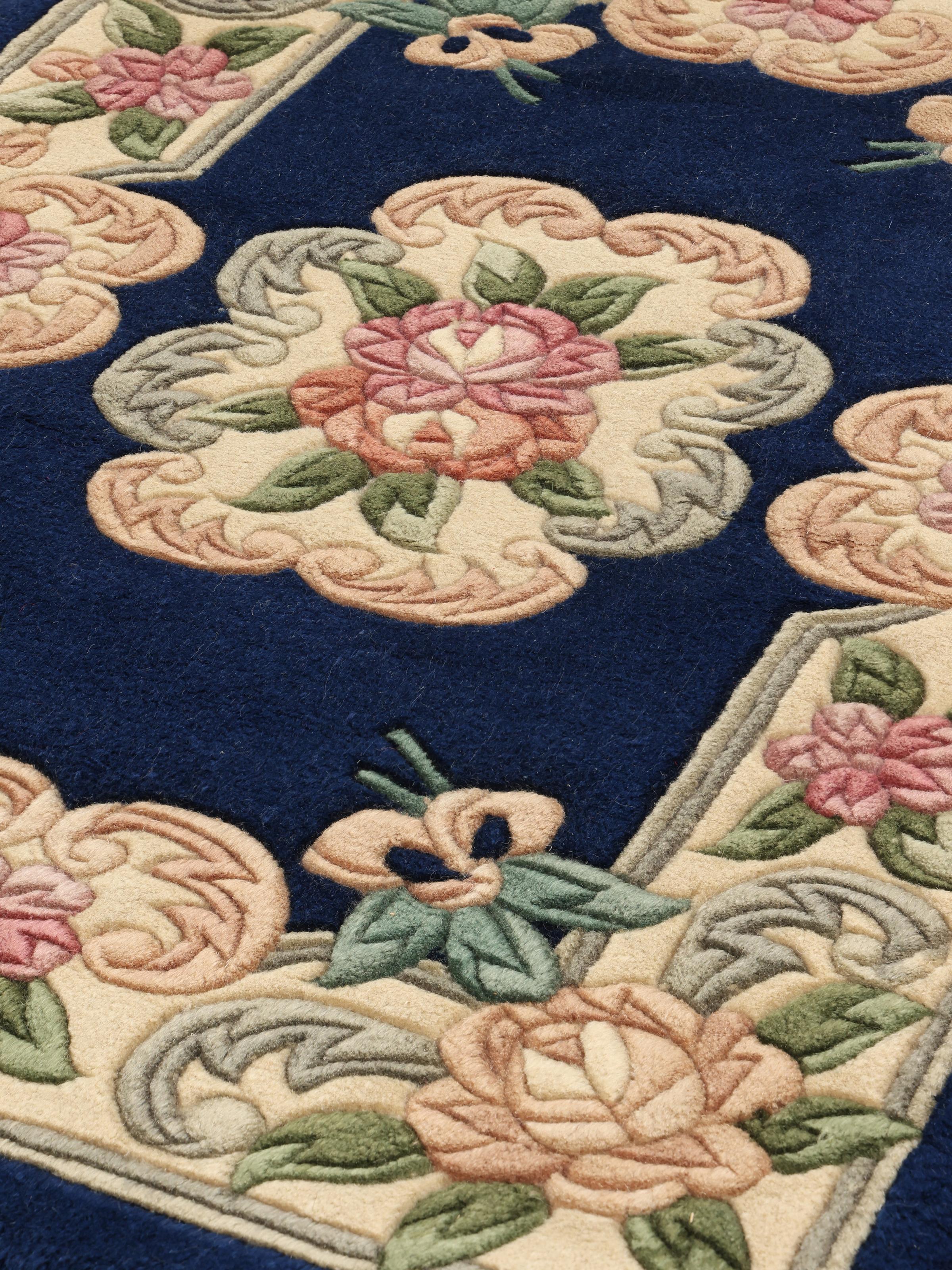
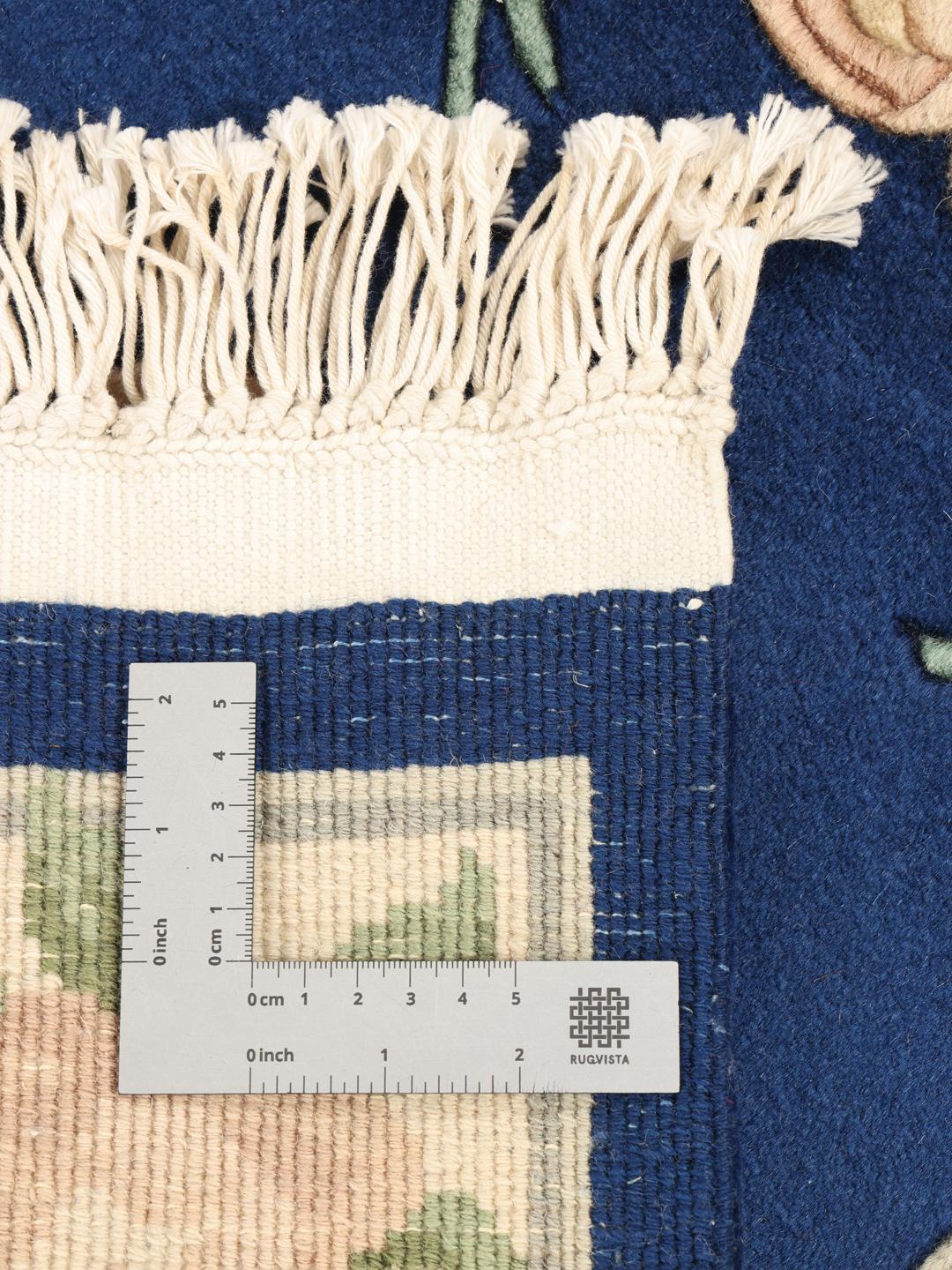
The term '90 Line' refers to a traditional technical standard used to measure the density of the knots. This measurement system is a reliable indicator of the rug's quality, as it dictates how many knots fit within a specific length of the foundation. A higher line count generally corresponds to finer detail in the motifs and a more durable, lush pile, which is why rugs crafted to these standards are so highly regarded for their longevity.
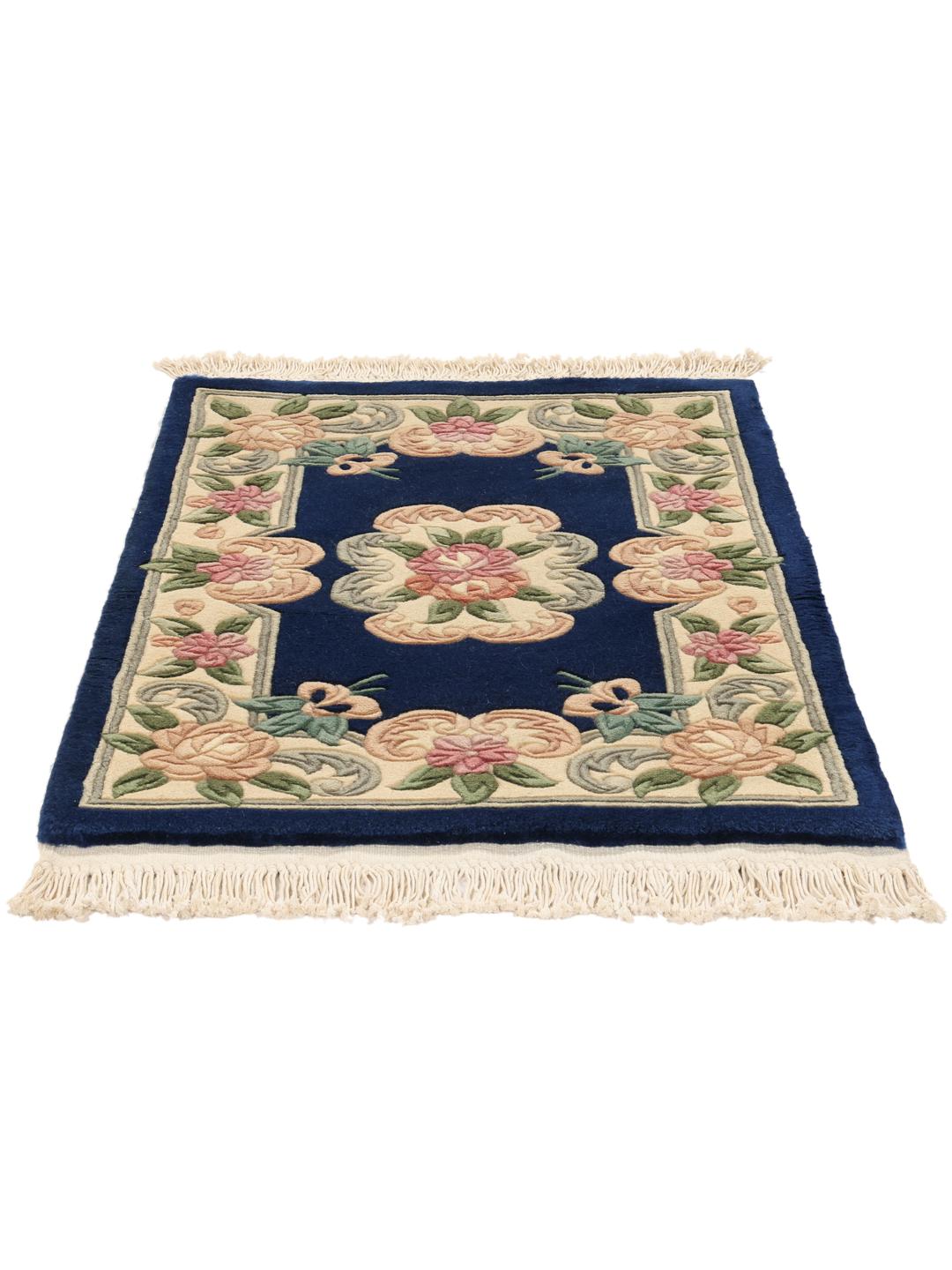
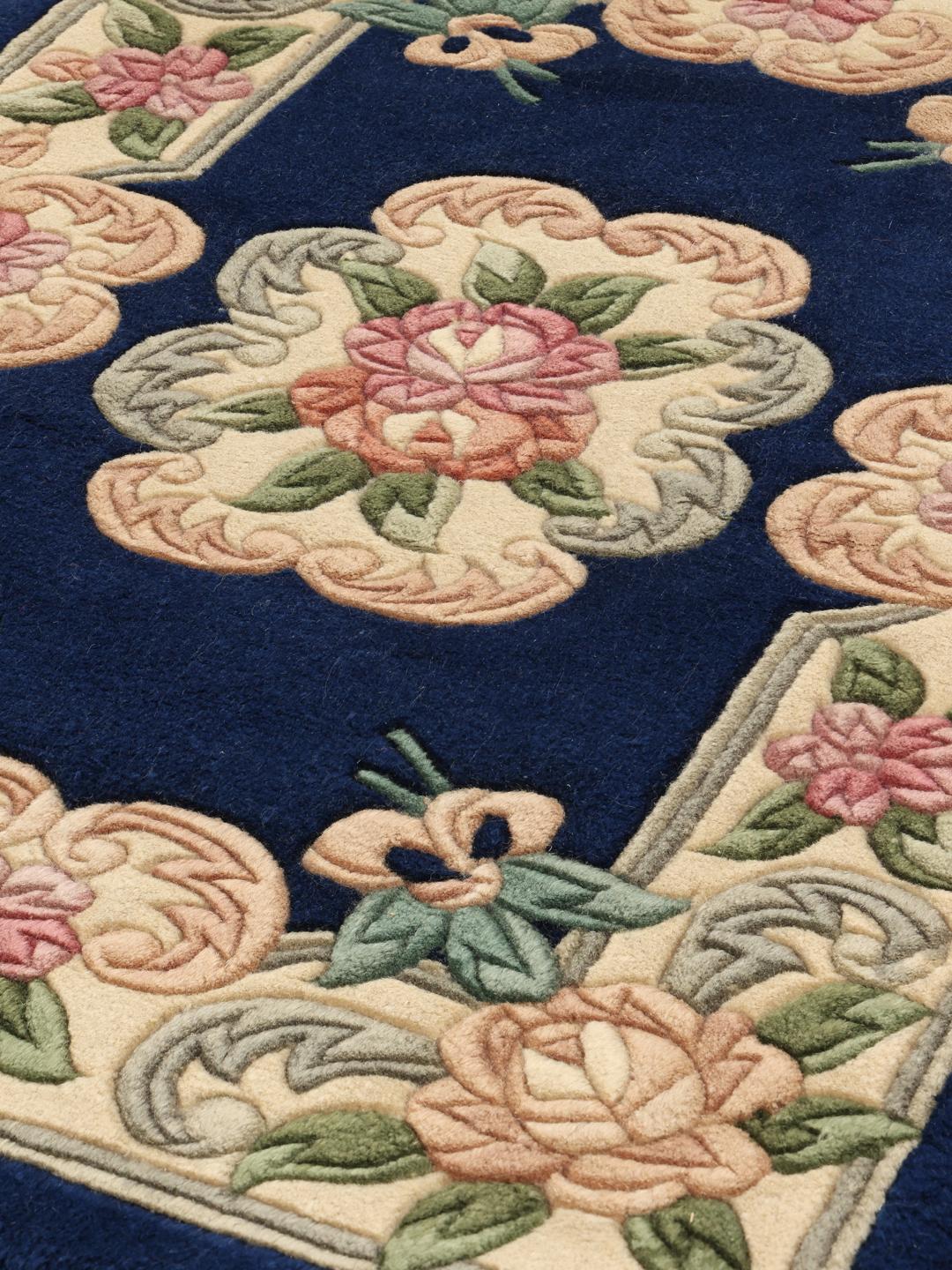
Floral motifs are a hallmark of this tradition, often representing prosperity, elegance, and the changing seasons. In this specific piece, the central medallion and surrounding floral elements follow a balanced, decorative arrangement that is deeply rooted in classical design principles. The use of a blue field provides a sophisticated backdrop that allows the soft, natural colours of the flowers to stand out with clarity.
Collectors value these rugs for their combination of technical skill and cultural heritage. Owning a hand-knotted rug from China is an investment in a craft that relies on human touch and traditional methods passed down through generations. It represents a commitment to quality and a way of bringing a storied artistic tradition into the modern home.