The history of Chinese rug making is deeply intertwined with the country's broader artistic traditions, often drawing inspiration from silk weaving, porcelain design, and palace architecture. While these rugs have evolved over centuries, the tradition of hand-knotting in China is renowned for its focus on balanced, harmonious motifs that reflect a deep appreciation for nature and symbolism.
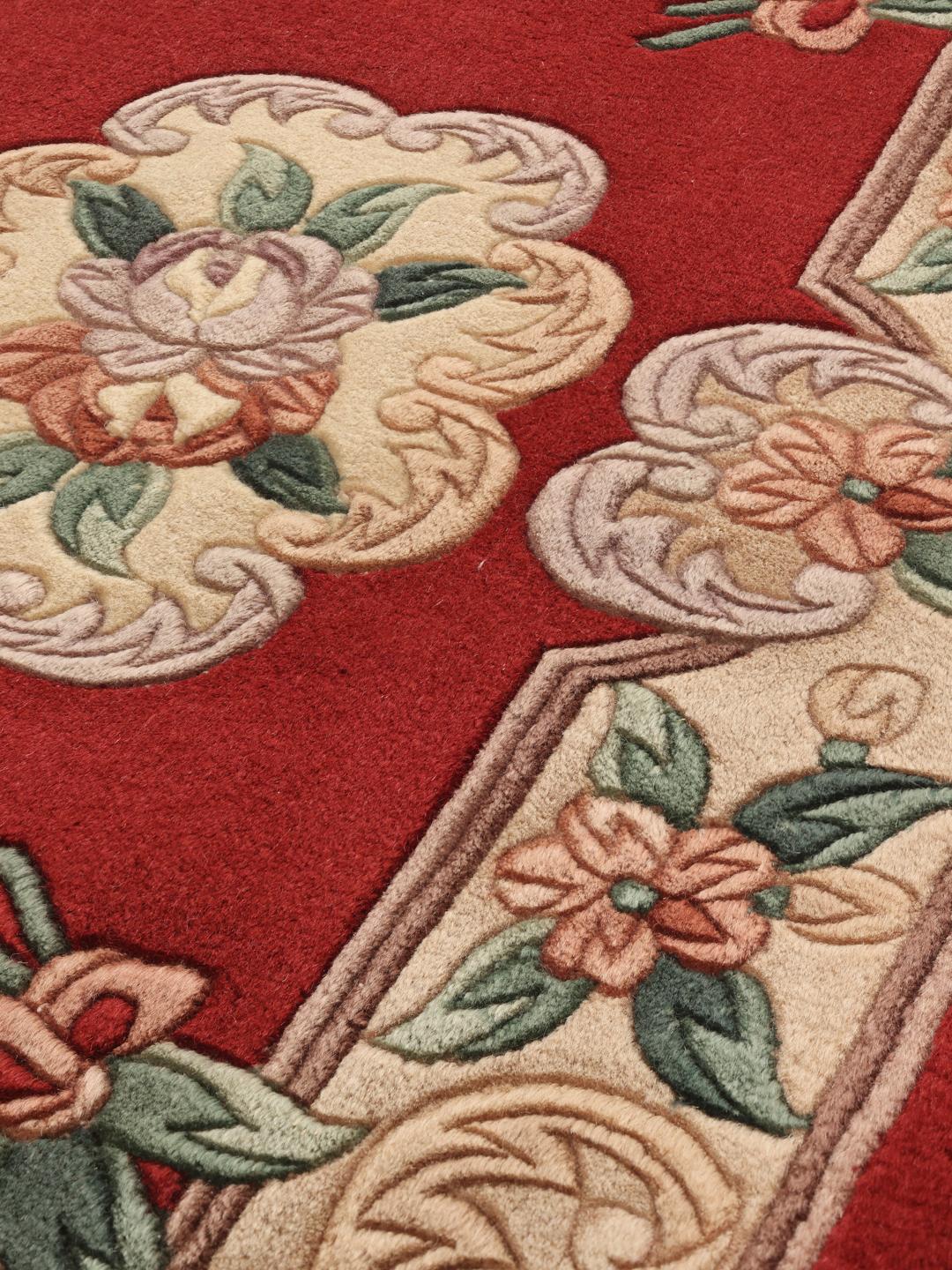
The term '90 line' refers to the traditional measurement of the rug's density, which has long been a benchmark for quality in Chinese weaving. This specific construction technique involves a precise count of knots across the width of the rug, which directly impacts the clarity of the patterns and the overall longevity of the pile. This technical standard has been preserved by generations of skilled weavers to ensure consistent, reliable results.
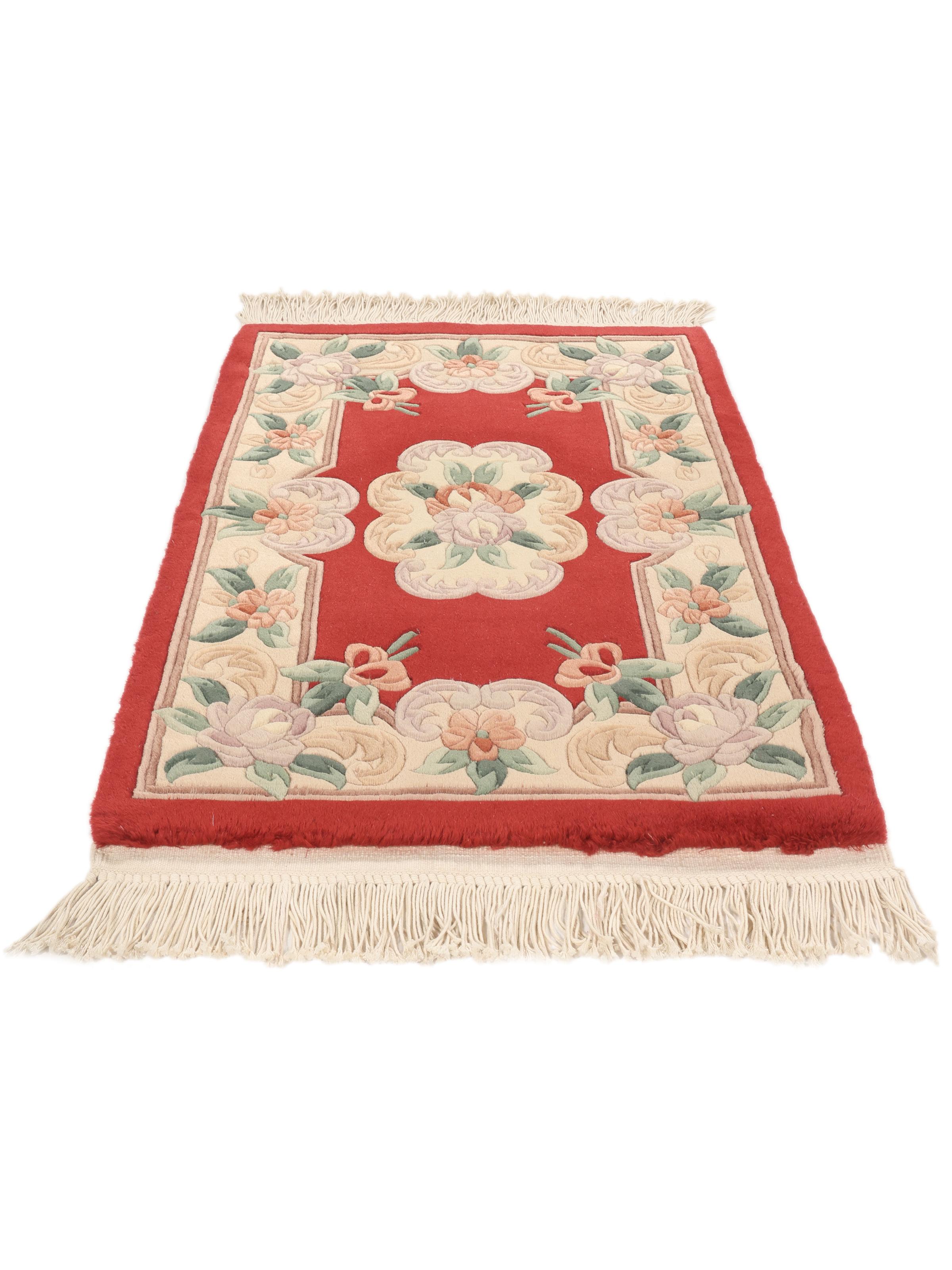
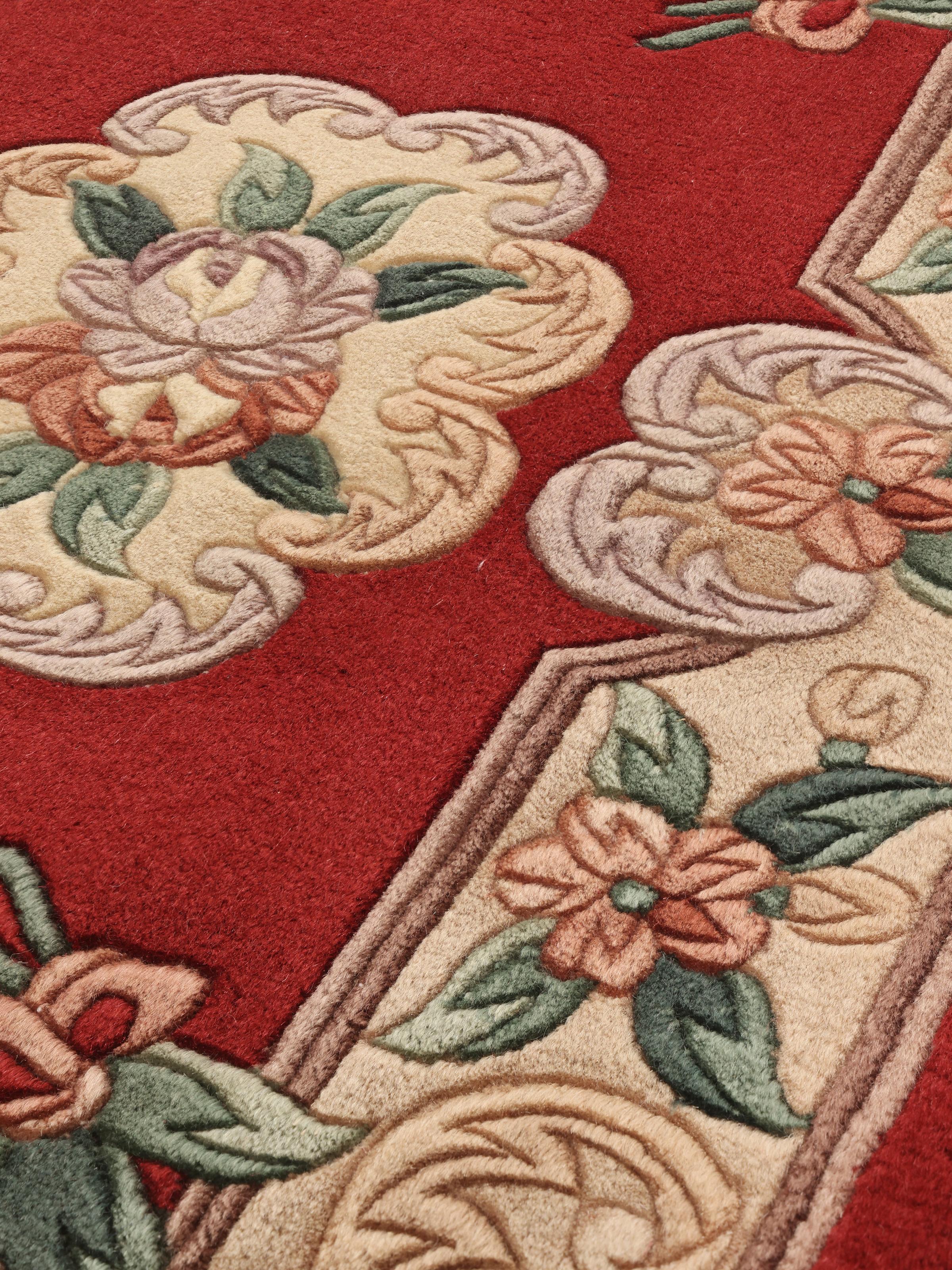
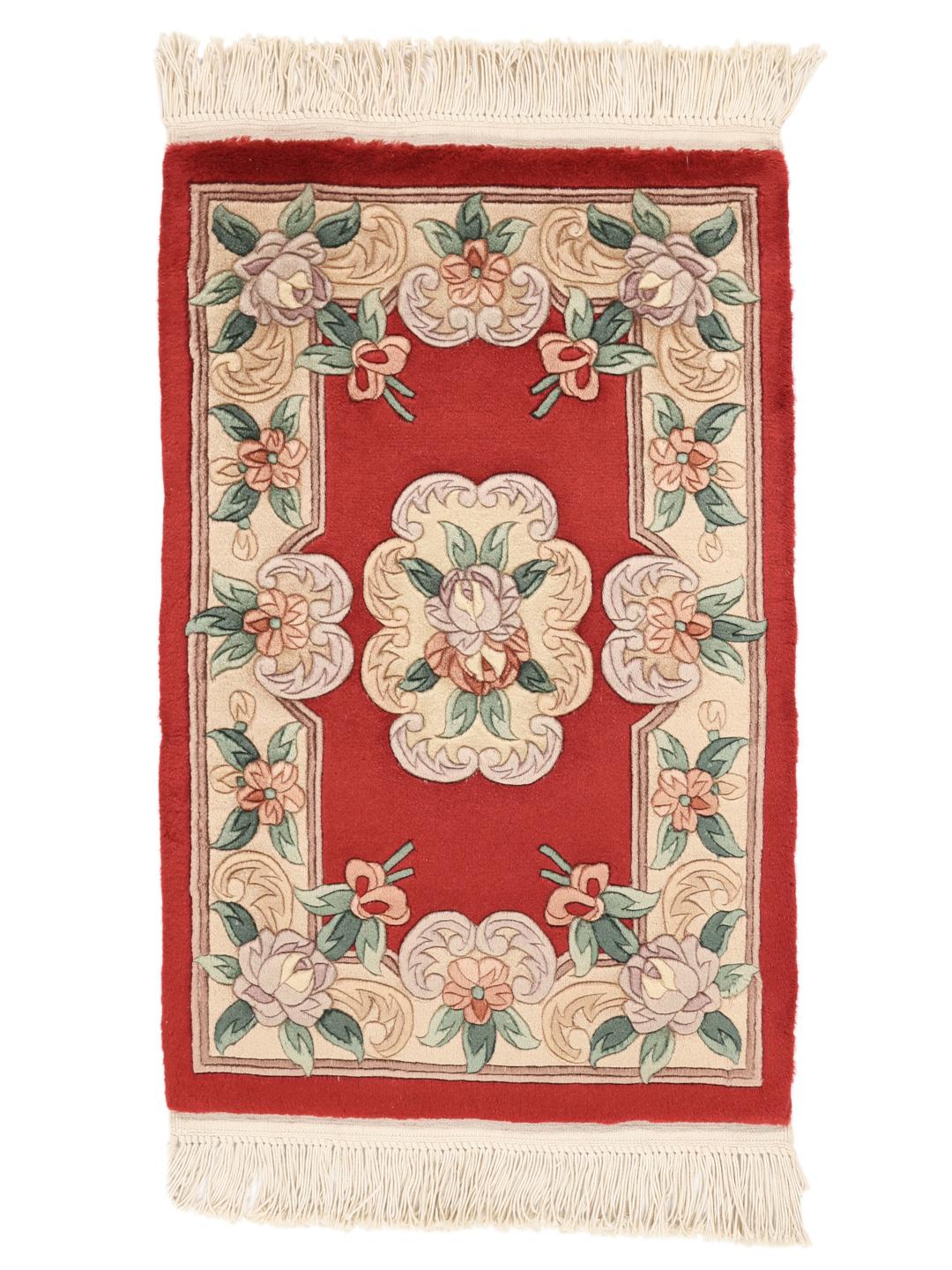
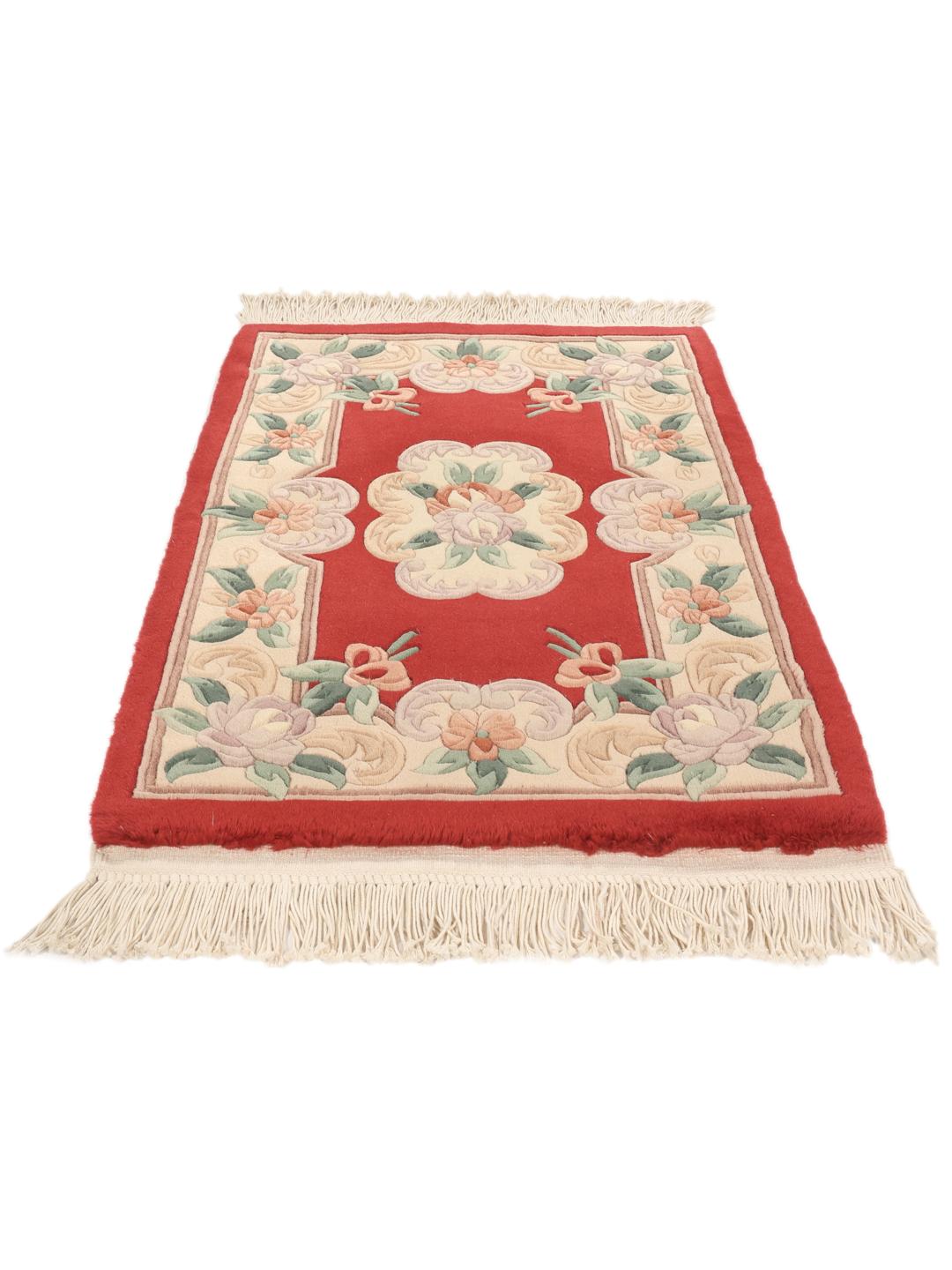
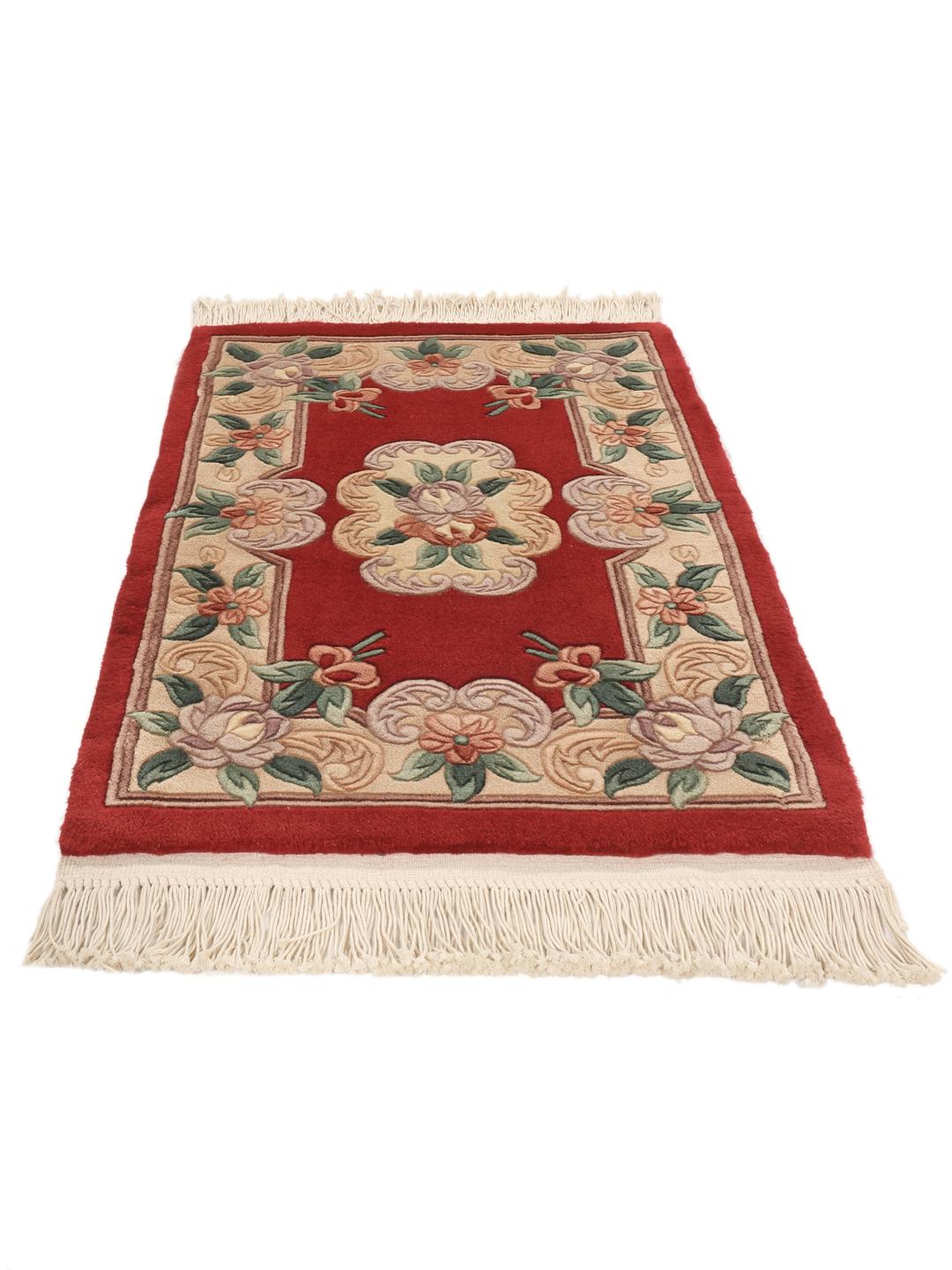
Floral motifs are a cornerstone of the Chinese aesthetic, often representing seasonal beauty and prosperity. In this piece, the central floral medallion is framed by intricate borders, a common layout that guides the eye and provides a sense of order and calm. The use of red as a primary field colour is a traditional choice, symbolising good fortune and energy, which makes these rugs highly sought after for their vibrant presence.
Collectors value these rugs not only for their visual appeal but for the heritage they represent. Owning a piece from this tradition is a way to connect with a long lineage of artisans who have dedicated their lives to the craft. It is a testament to the enduring nature of hand-knotted textiles, serving as a reminder that true quality is defined by the human hands that shaped it.