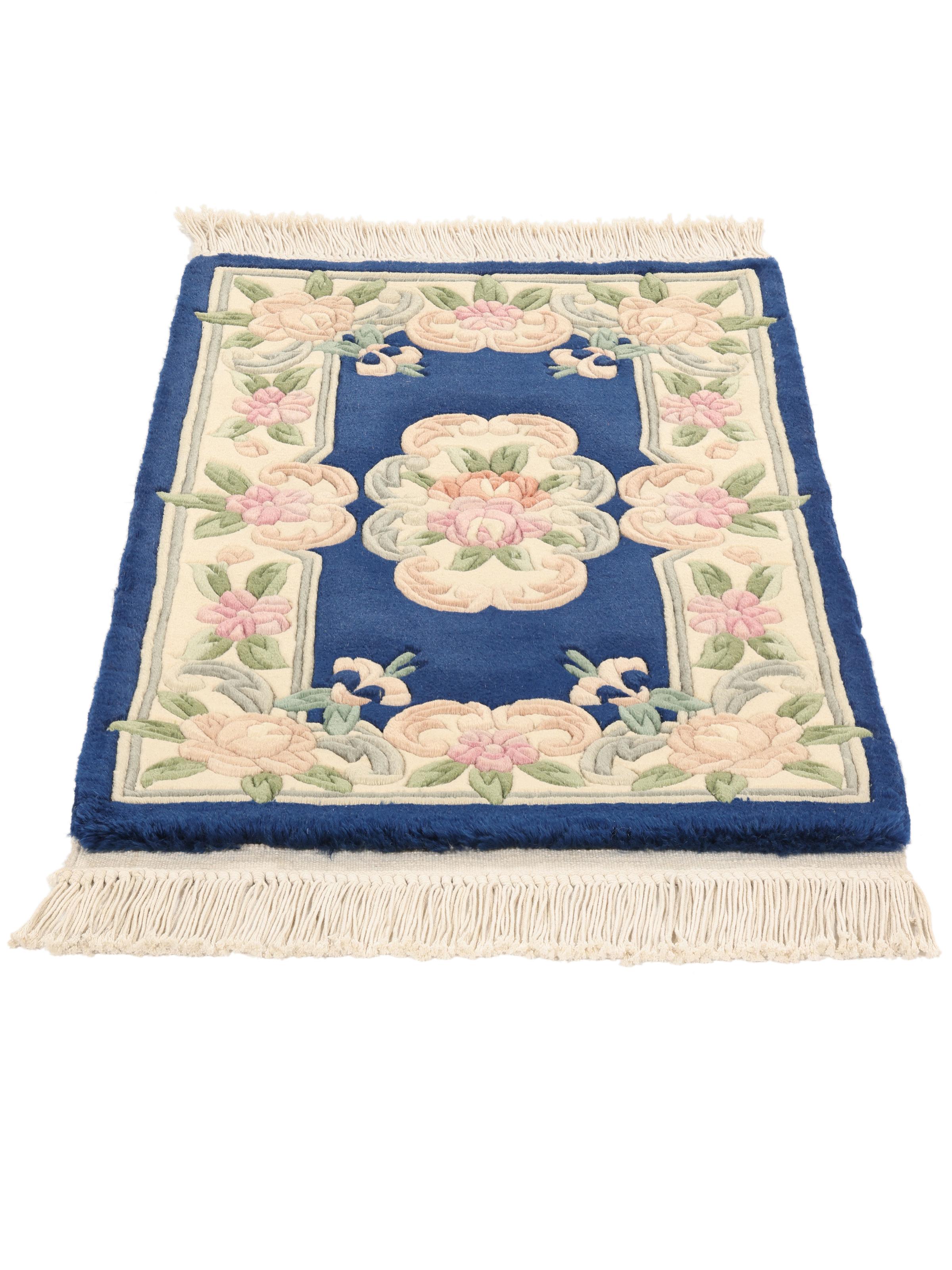
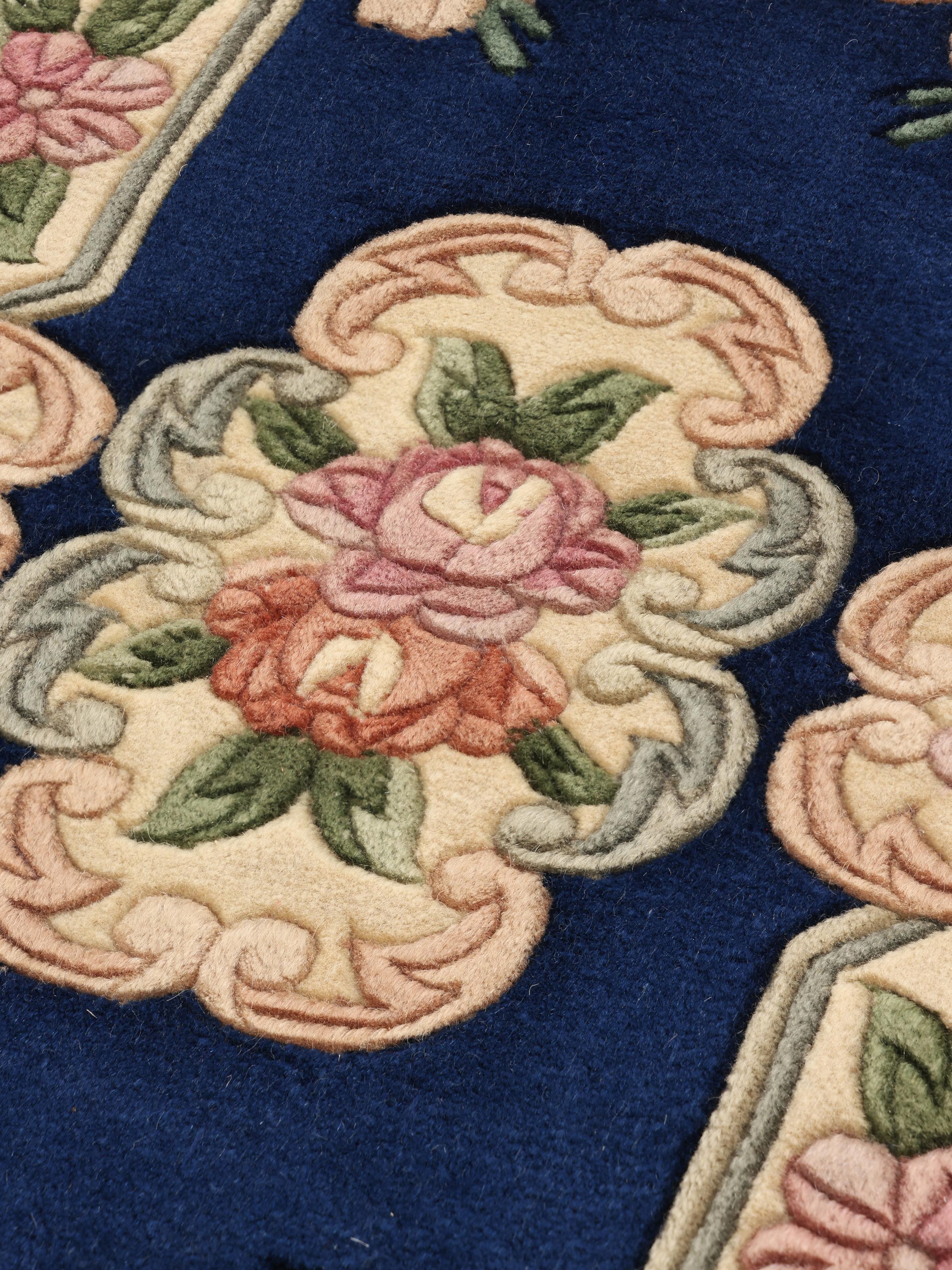
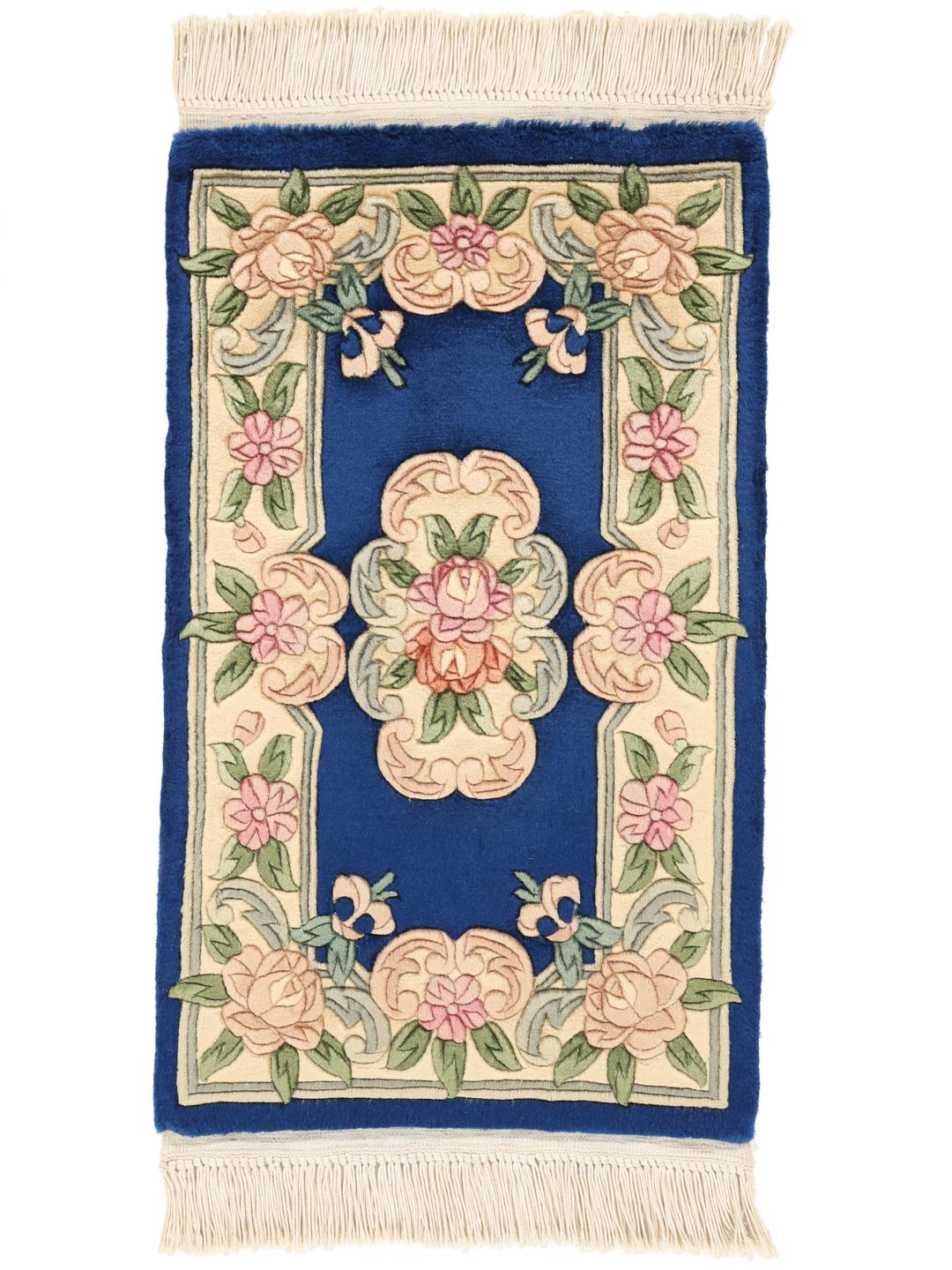
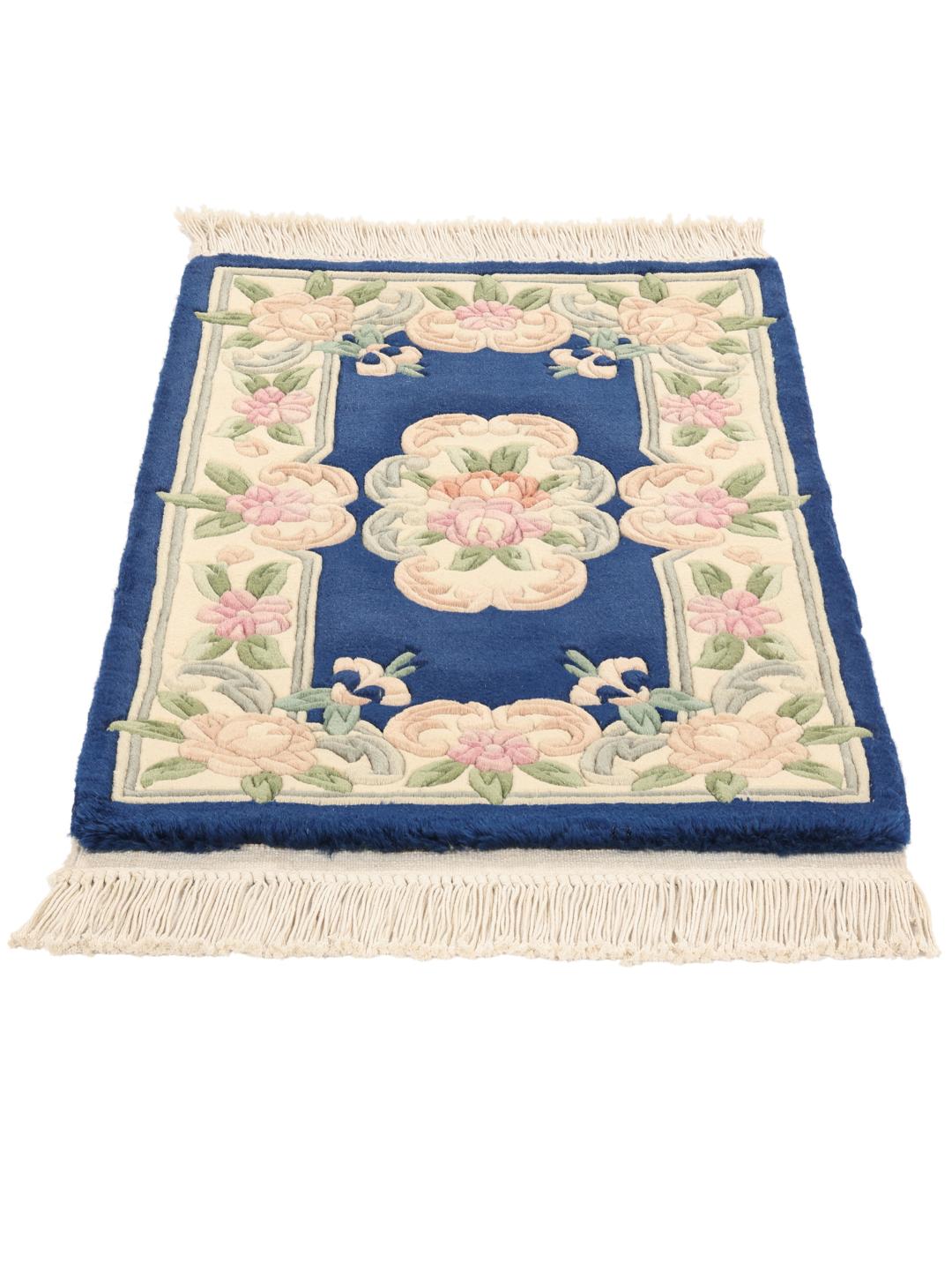
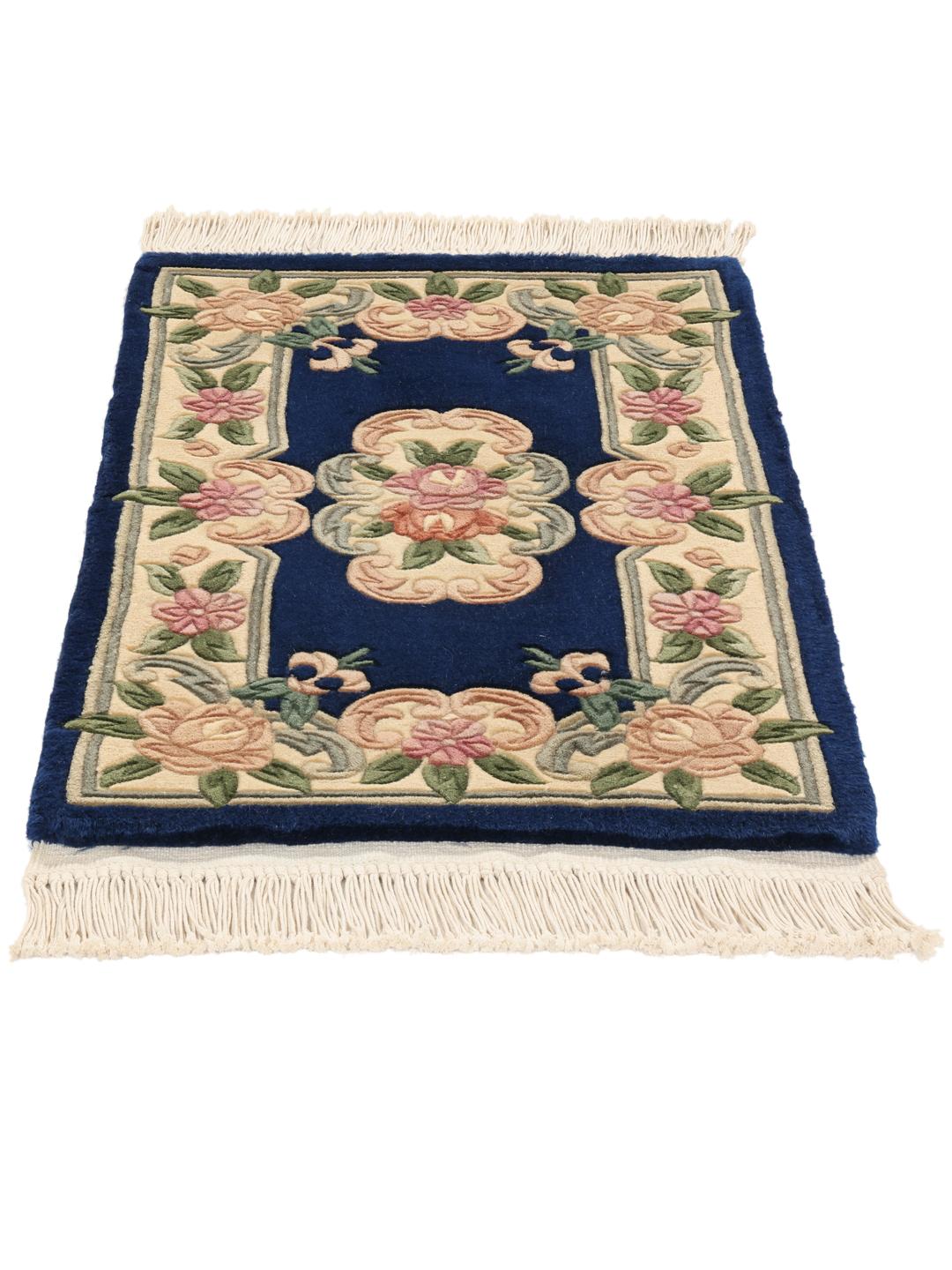
The tradition of Chinese rug weaving is an ancient craft, deeply rooted in the cultural and artistic history of the region. Originally, these rugs were often commissioned for imperial palaces or temples, featuring symbols and motifs that held significant meaning, such as peonies for prosperity or lotus flowers for purity. Over centuries, these designs have evolved, blending traditional aesthetics with more accessible, elegant floral patterns that remain popular today.
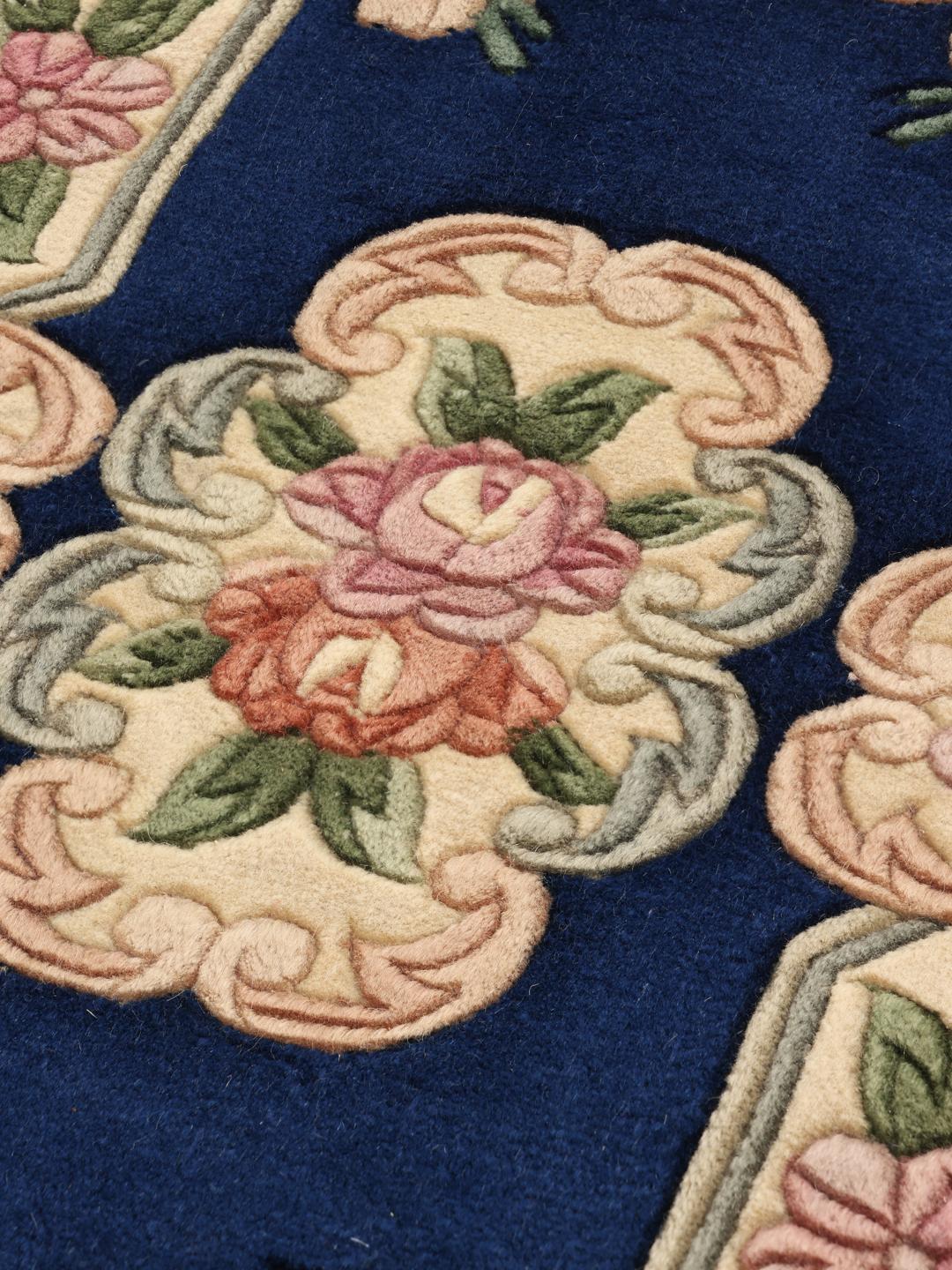
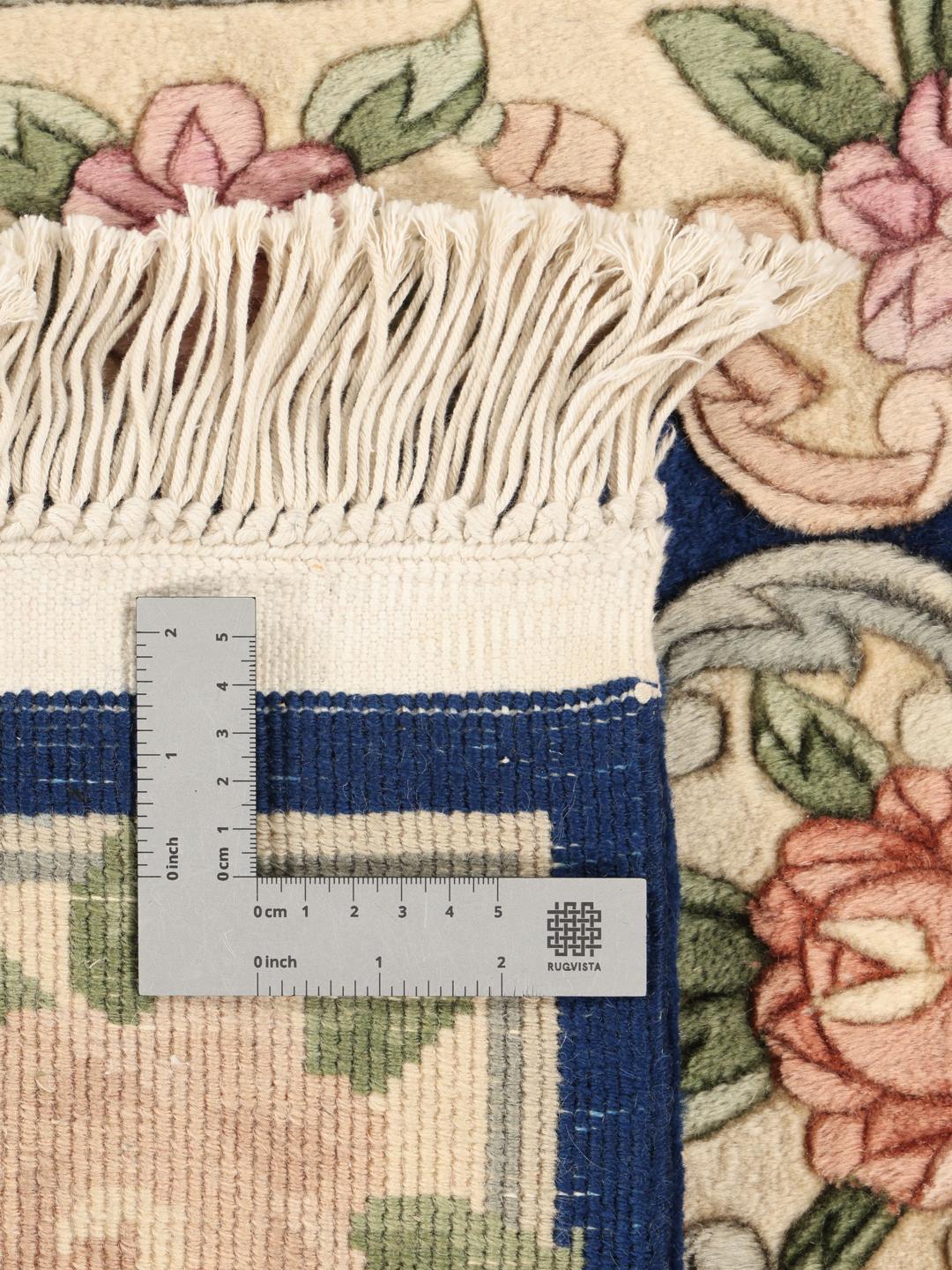
The term '90 line' refers to a traditional measurement system used in China to indicate the density of the knots. This technical standard has long been used by weavers to maintain consistent quality and pattern definition. A 90-line rug signifies that there are 90 knots per linear foot, providing a level of detail that allows for the graceful curves and soft transitions seen in the floral motifs of this specific piece.
The visual language of Chinese rugs is often characterised by open fields and asymmetrical, naturalistic compositions. Unlike the dense, all-over patterns found in some other traditions, these rugs frequently use the negative space of the background to allow the central floral medallions to breathe. This design philosophy creates a sense of balance and harmony, making them highly versatile in a variety of home settings.
Collecting a hand-knotted rug from China is an investment in human skill and historical continuity. These rugs are valued not just for their aesthetic appeal, but for the dedication required to bring a complex design to life through manual labour. Owning such a piece connects you to a lineage of artisans whose techniques have been passed down through generations, ensuring that this tradition of beauty continues to thrive in modern homes.