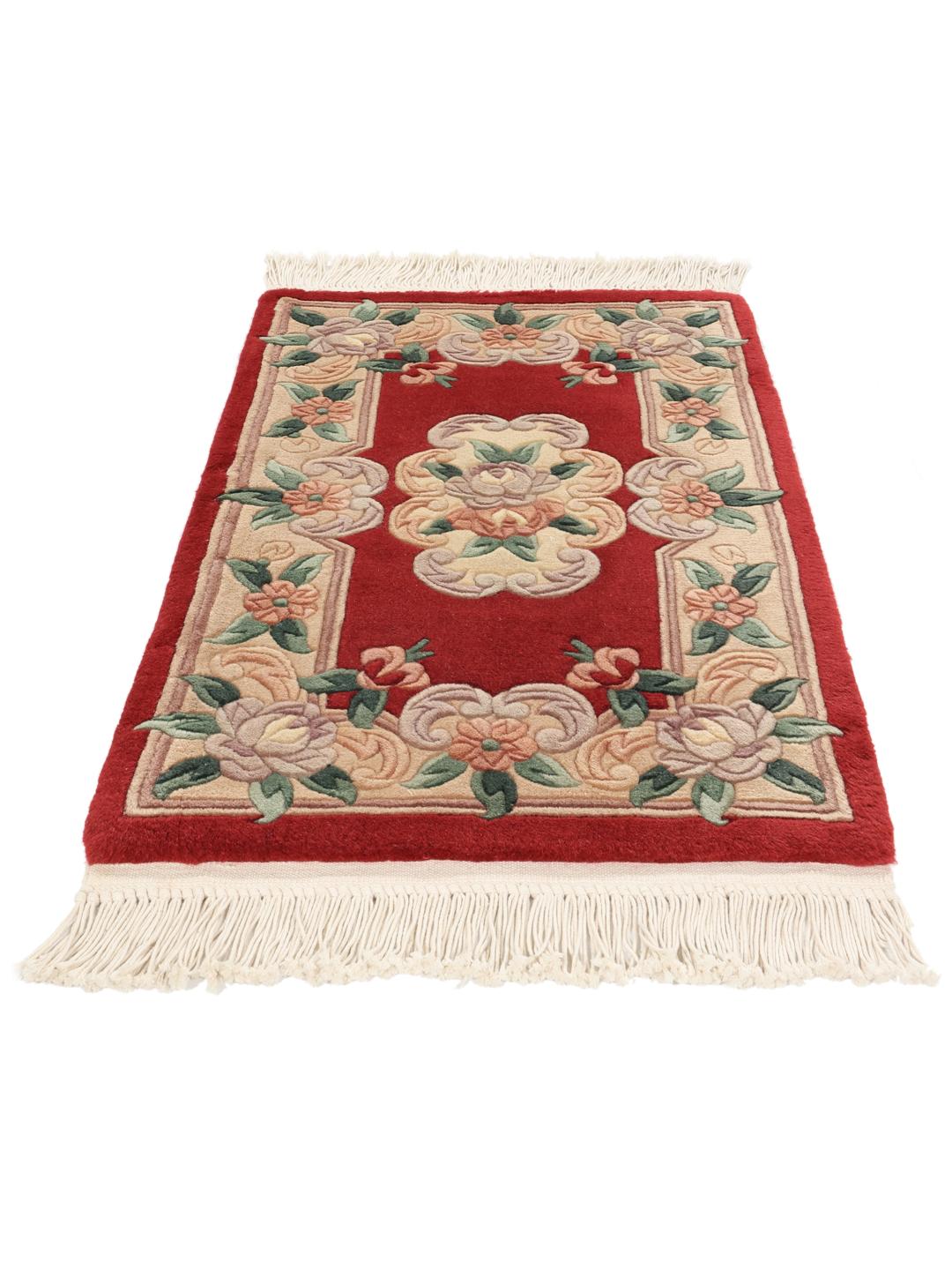
The tradition of Chinese rug weaving is an ancient craft that has evolved over centuries, drawing inspiration from imperial textiles, porcelain designs, and the natural world. Historically, these rugs were highly prized for their unique aesthetic, which often integrated symbolic floral motifs and balanced, symmetrical compositions that reflected the philosophical harmony found in Eastern art.
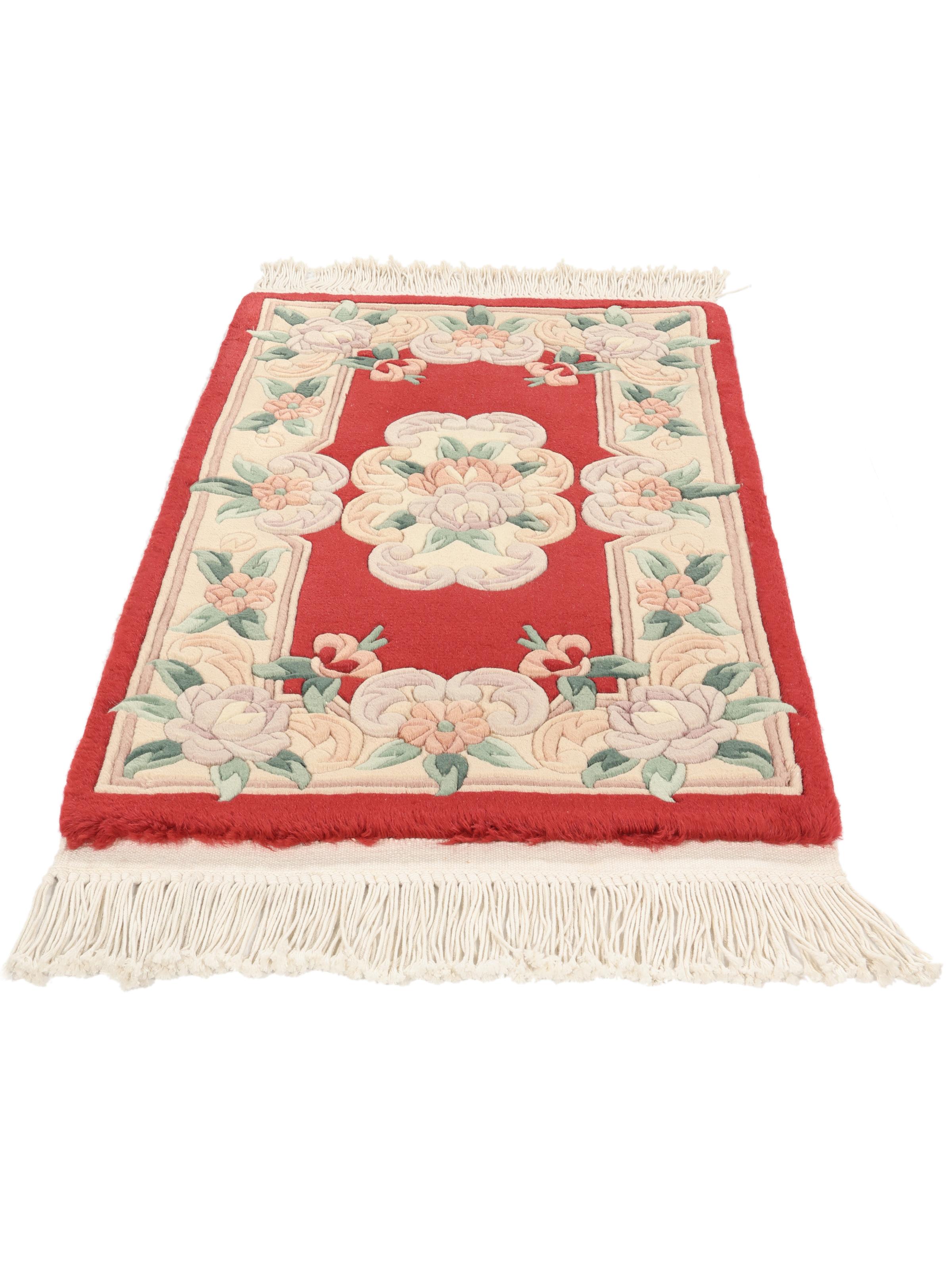
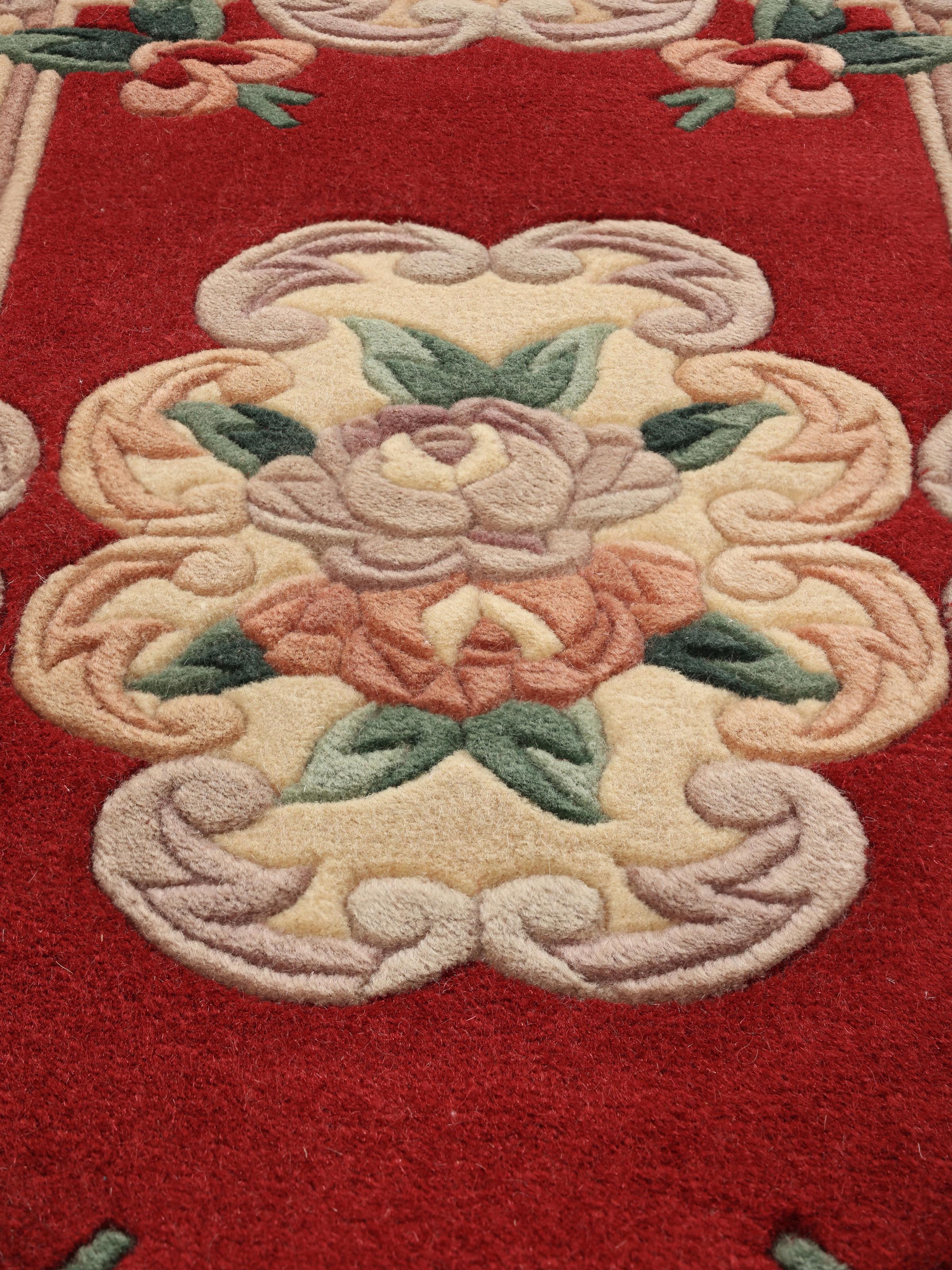
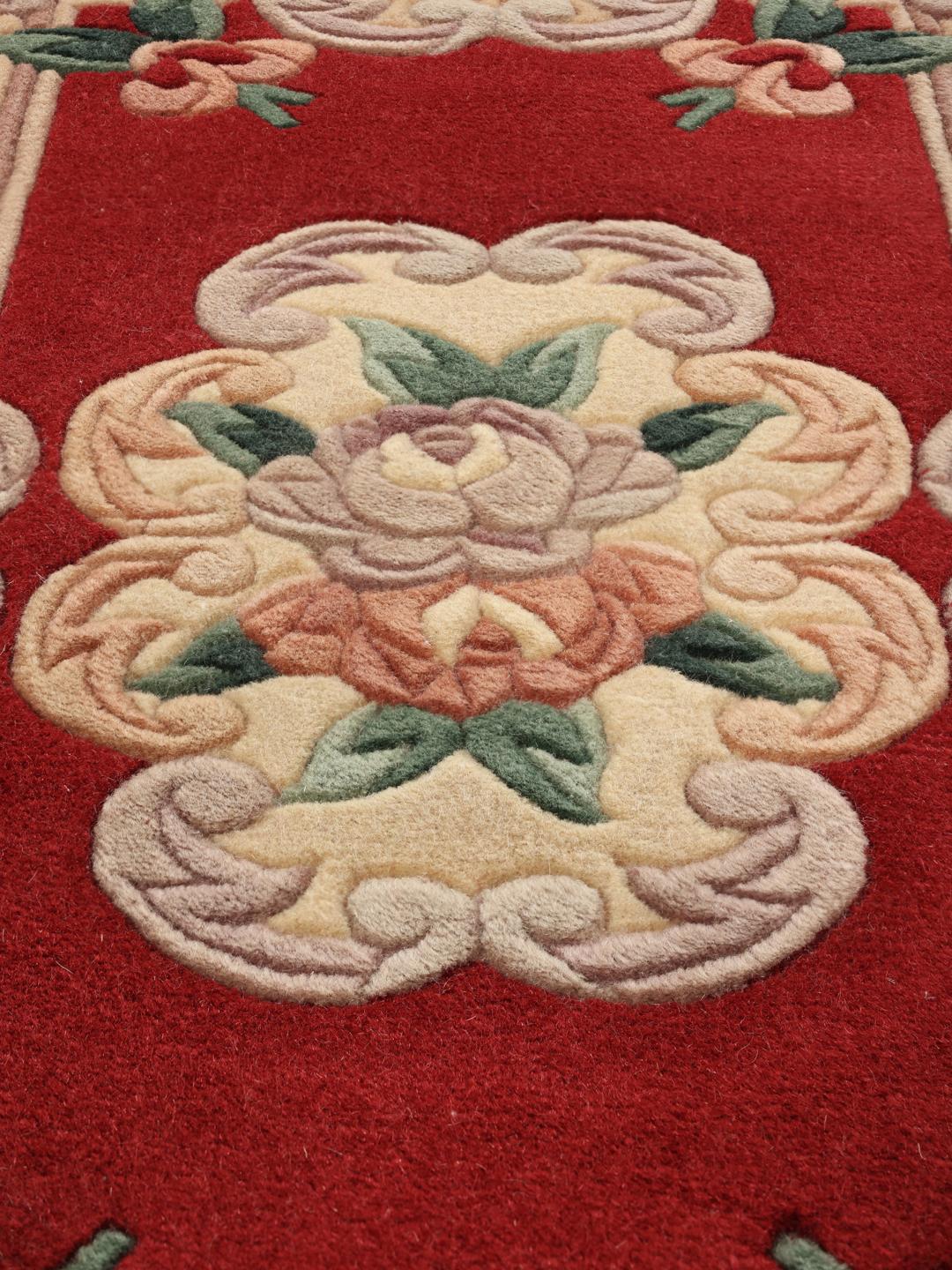
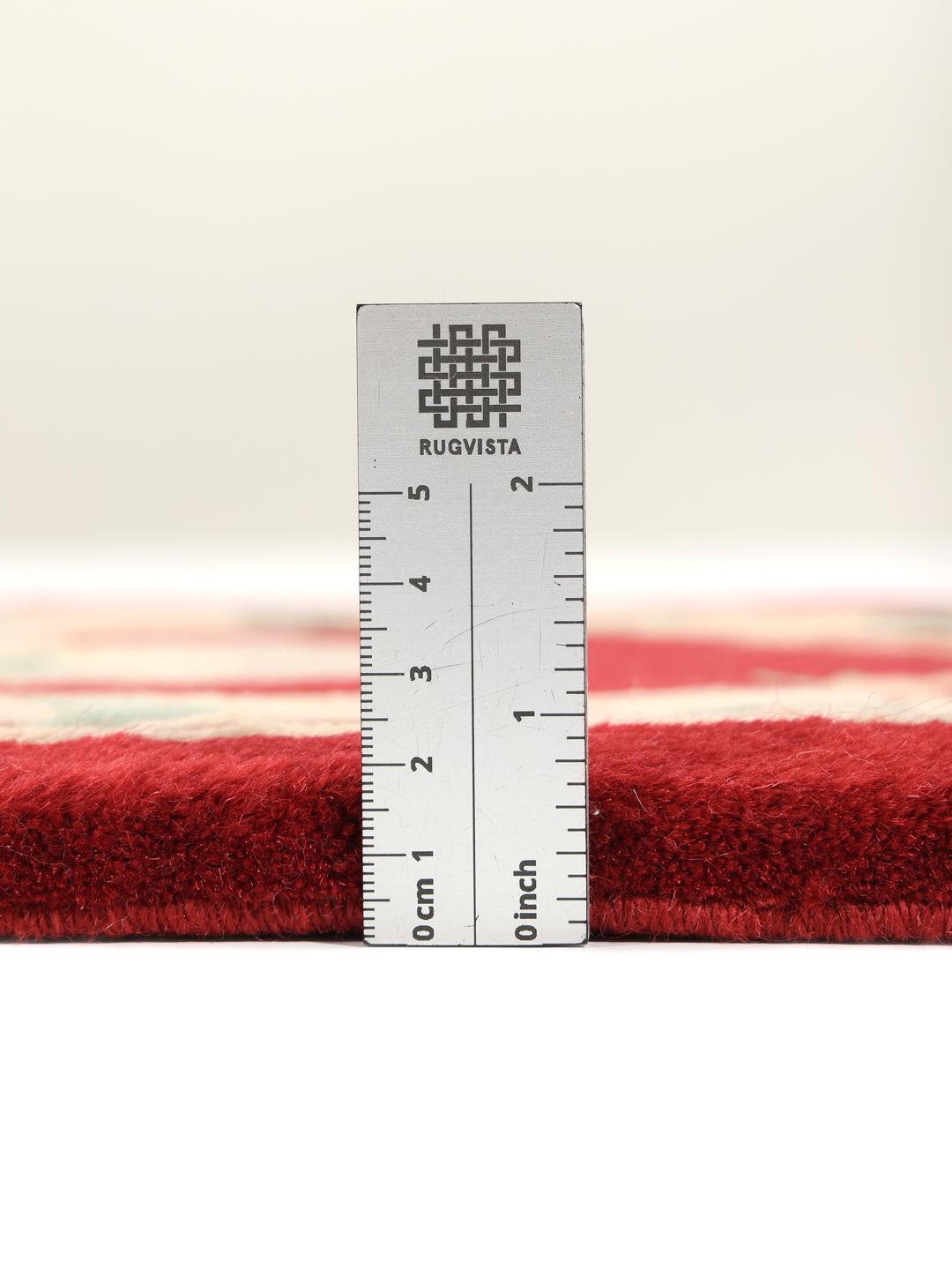
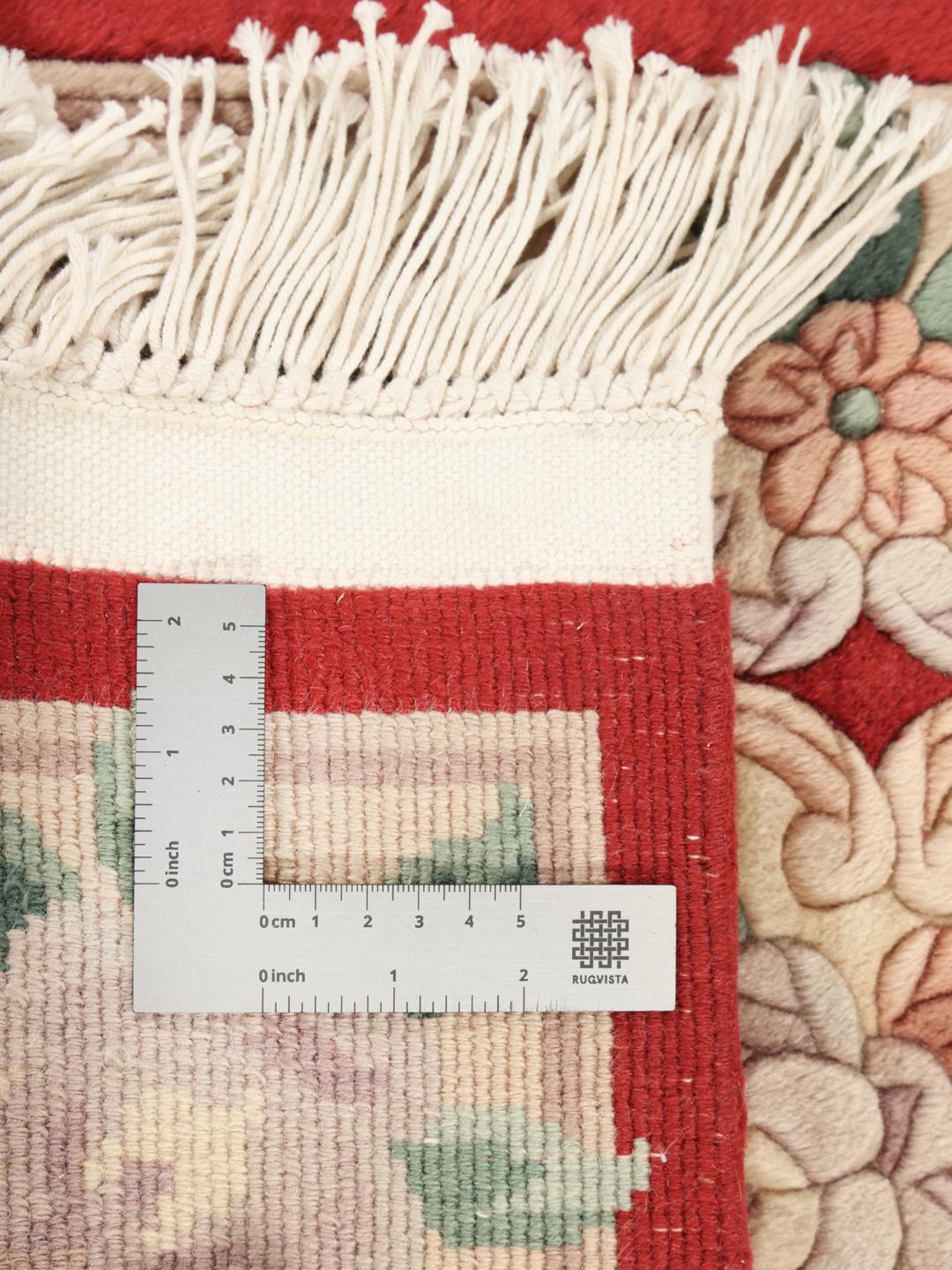
When we talk about the '90 line' terminology, we are referring to a classic measurement of knot density in Chinese rug making. This specific classification indicates a traditional level of skill where the number of knots along a set width determines the fineness and clarity of the pattern. This technical standard allows for the characteristic 'carving' or embossing of the pile, a signature feature that gives the floral designs their striking three-dimensional appearance.
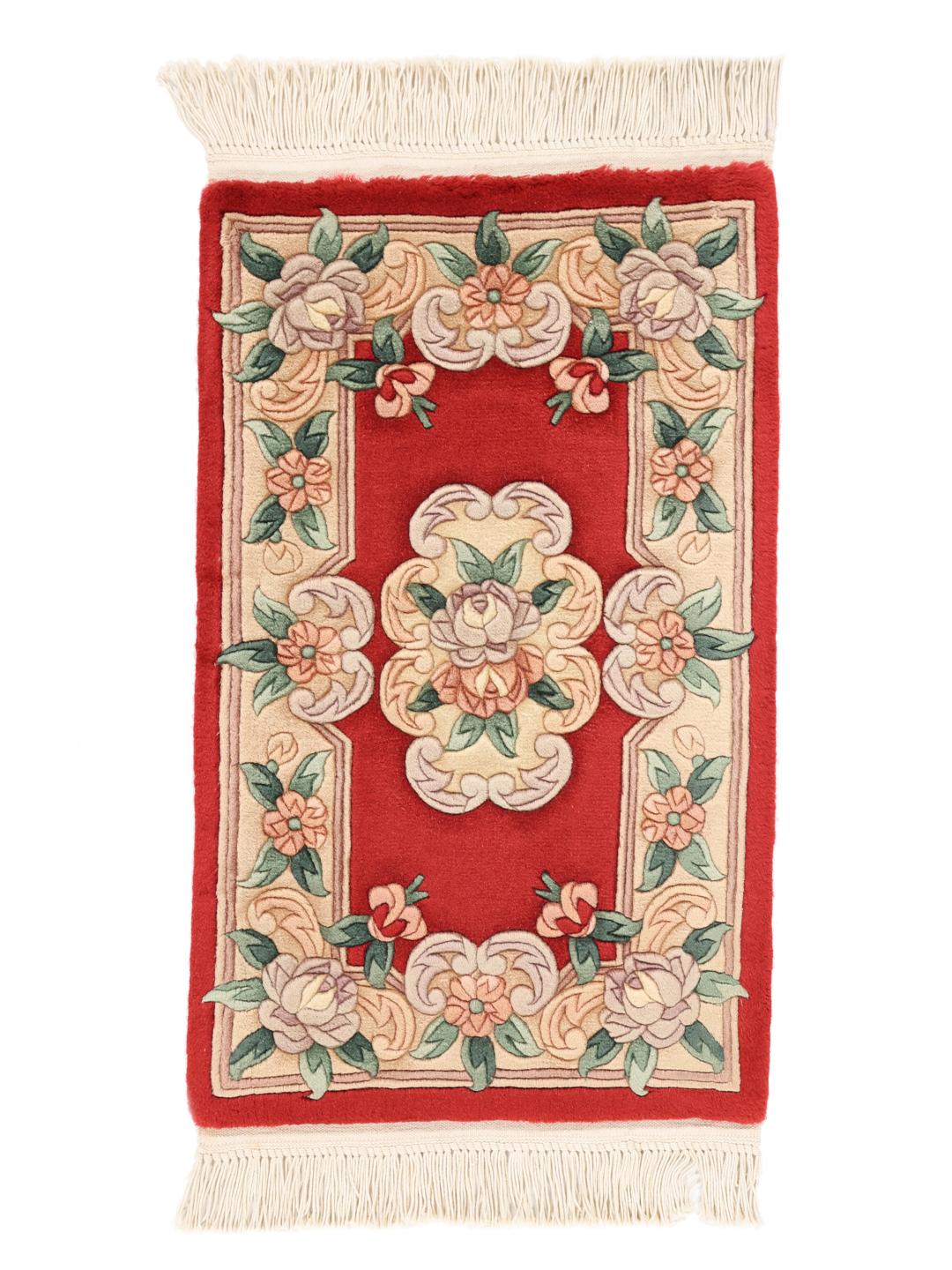
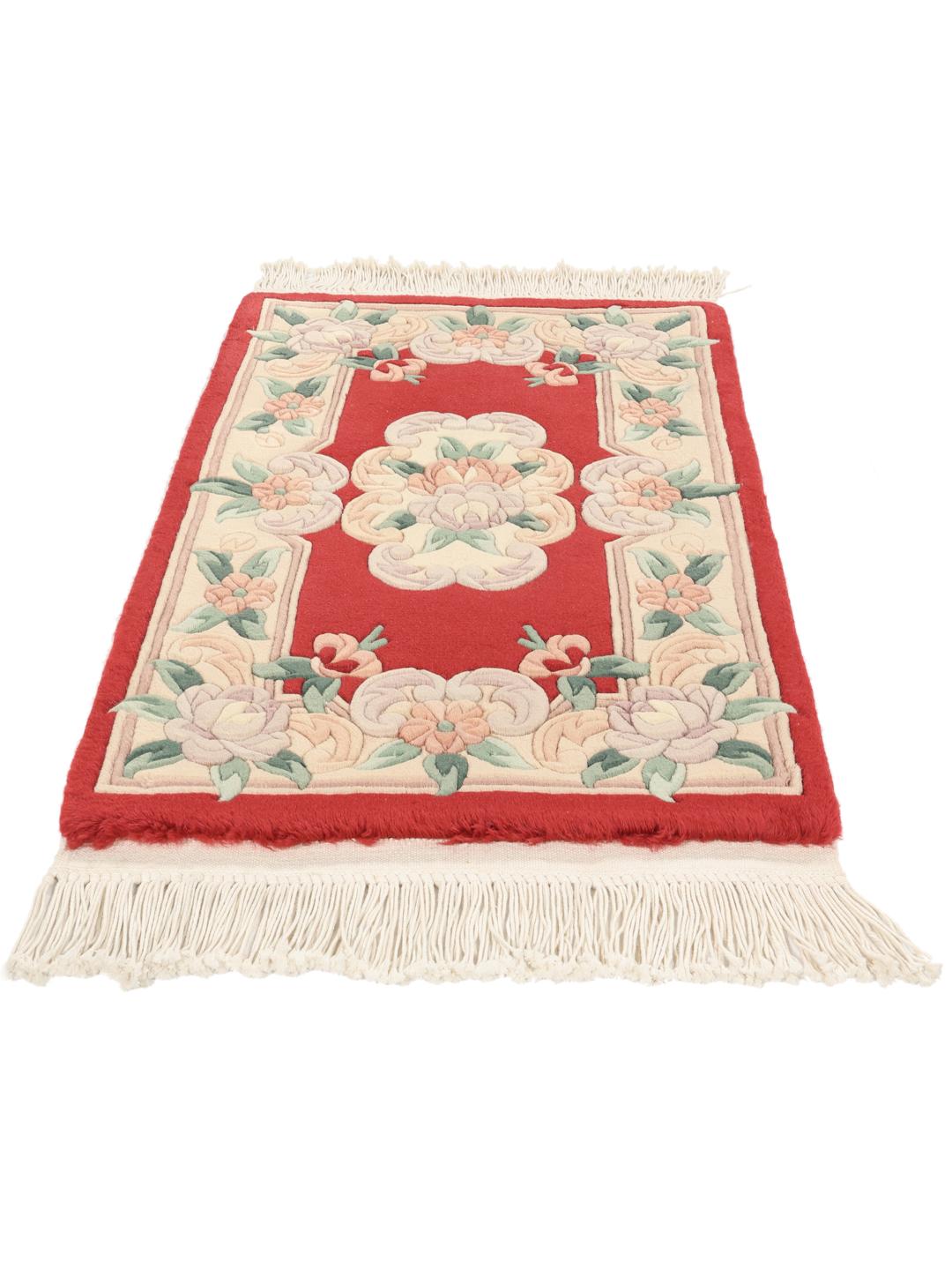
The design language of this rug is deeply rooted in the artistic heritage of the region, featuring a central medallion surrounded by lush, flowing floral borders. These patterns are not merely decorative but are steeped in cultural meaning, often representing prosperity and good fortune. The use of a rich red field is particularly iconic, historically reserved for pieces meant to bring warmth and vitality into a living space.
Collectors value these rugs for their distinct combination of softness and structural integrity. By choosing a hand-knotted piece from this tradition, you are connecting with a long lineage of artisans who have perfected the art of Wool manipulation to create floor coverings that are as enduring as they are elegant. It is a testament to human skill and a celebration of heritage that remains relevant in modern homes.