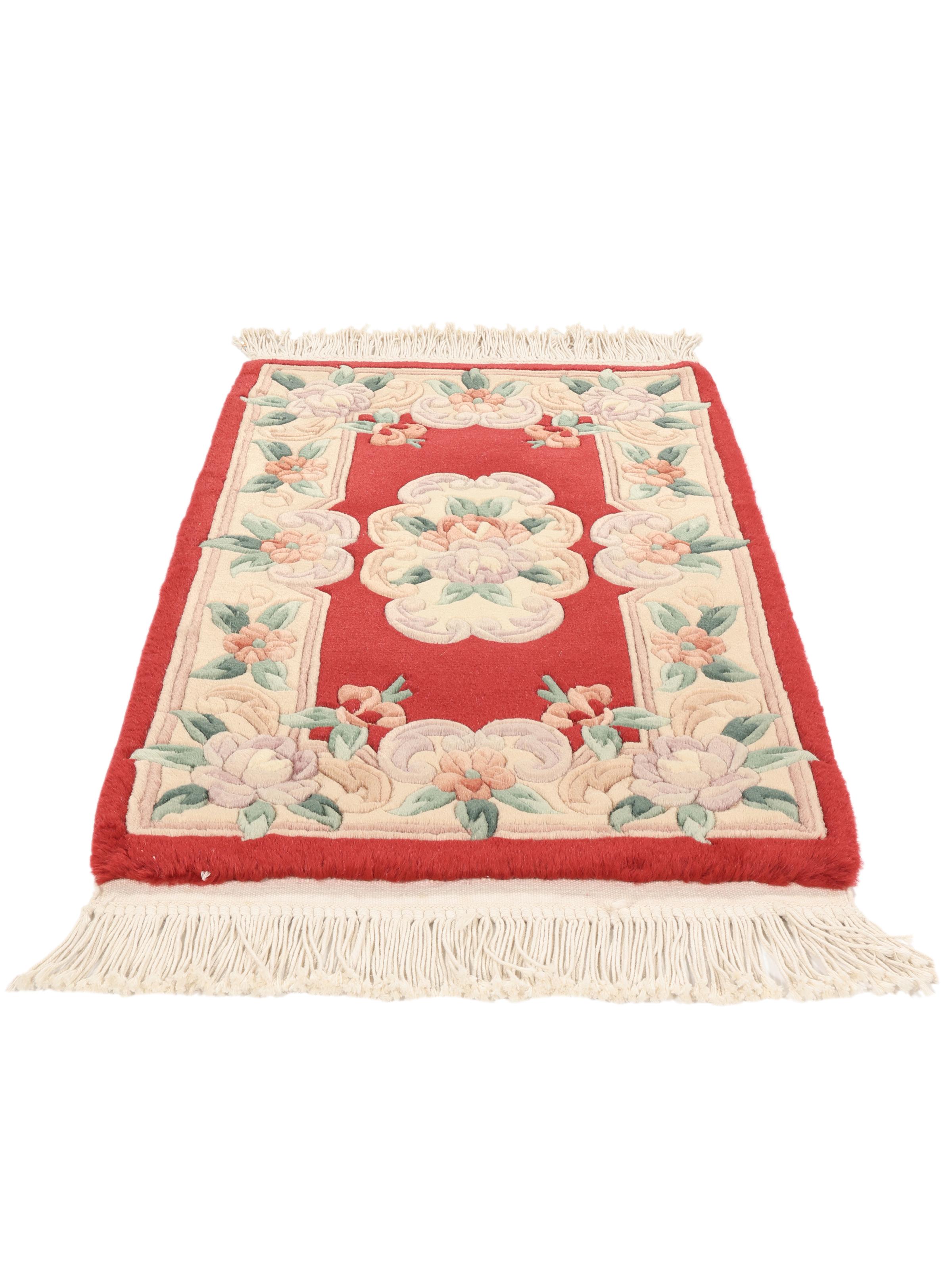
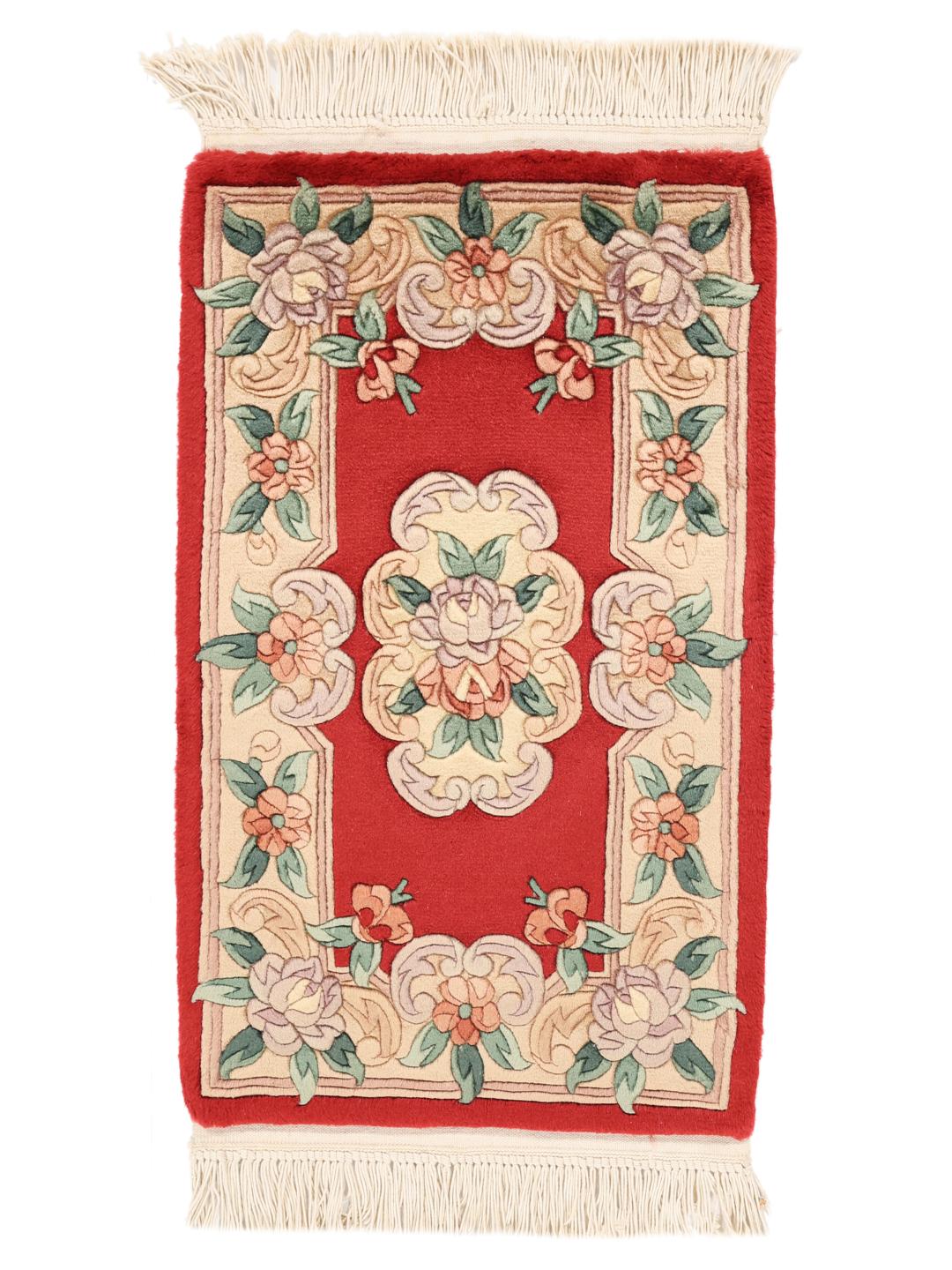
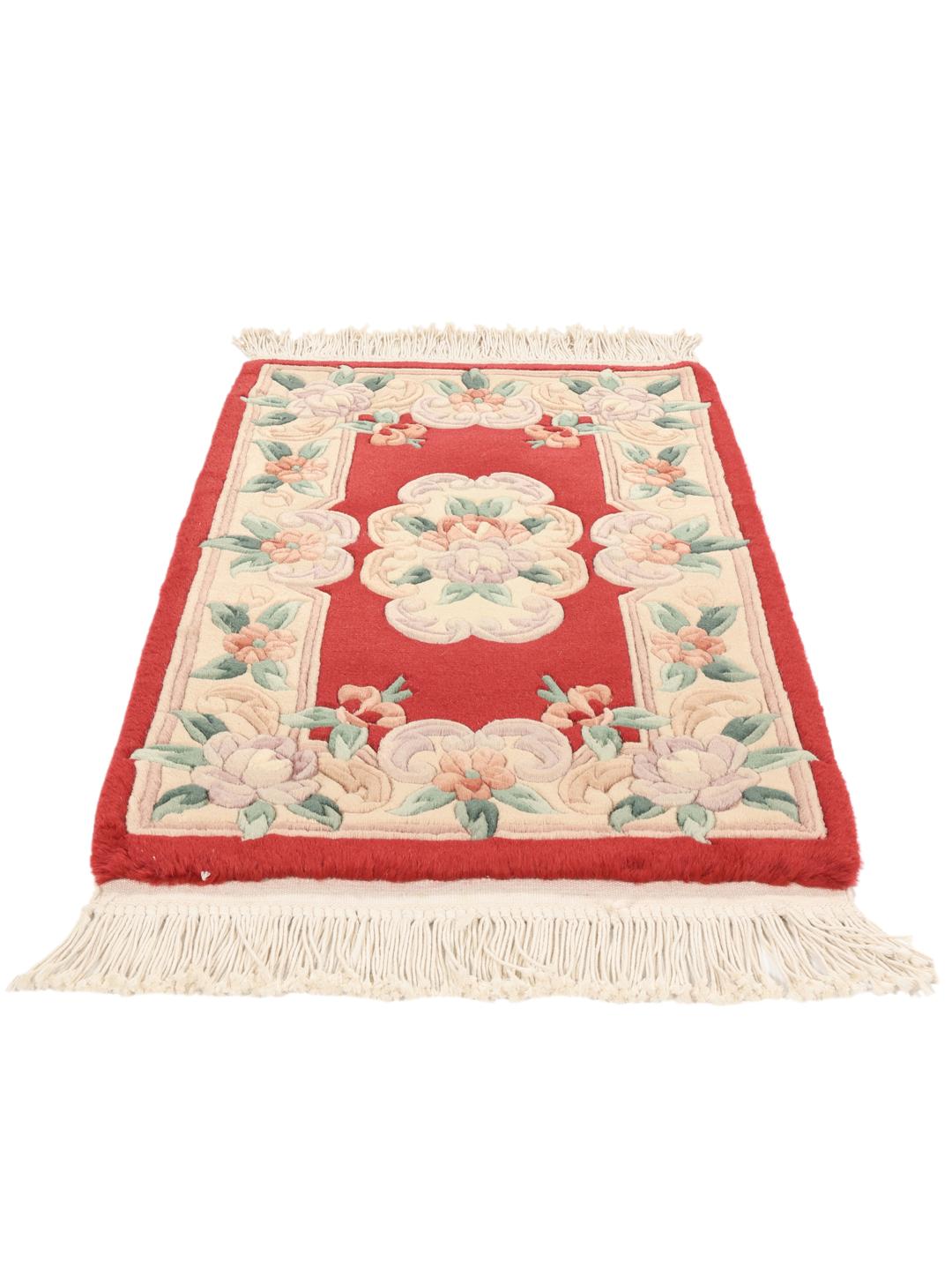
Chinese rug making has a storied history that stretches back centuries, deeply rooted in the artistic traditions of the region. Traditionally, these rugs were influenced by imperial aesthetics, often featuring symbolic motifs derived from nature, such as flowers, birds, and landscapes. Over time, the craft evolved to incorporate influences from other design traditions, resulting in the sophisticated and highly recognisable style seen in this piece.
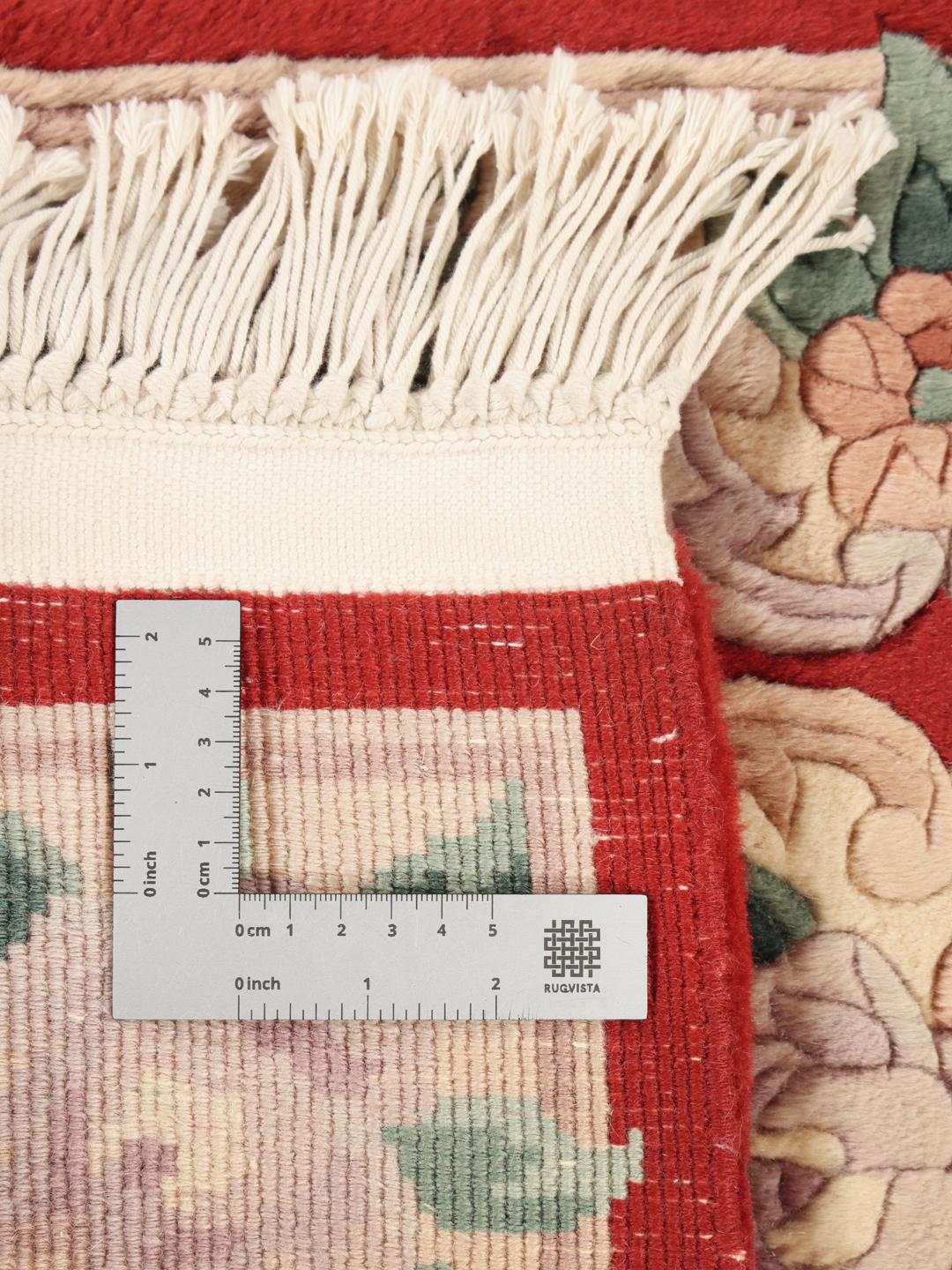
The term '90 line' refers to the traditional method of measuring the density of a rug by the number of knots along a specific width, which historically helped ensure consistent quality. This system is a hallmark of Chinese rug production, reflecting a disciplined approach to weaving that prioritises both clarity of design and the longevity of the pile. Understanding this technical background helps to appreciate the skill required to maintain such precision across the entire surface.
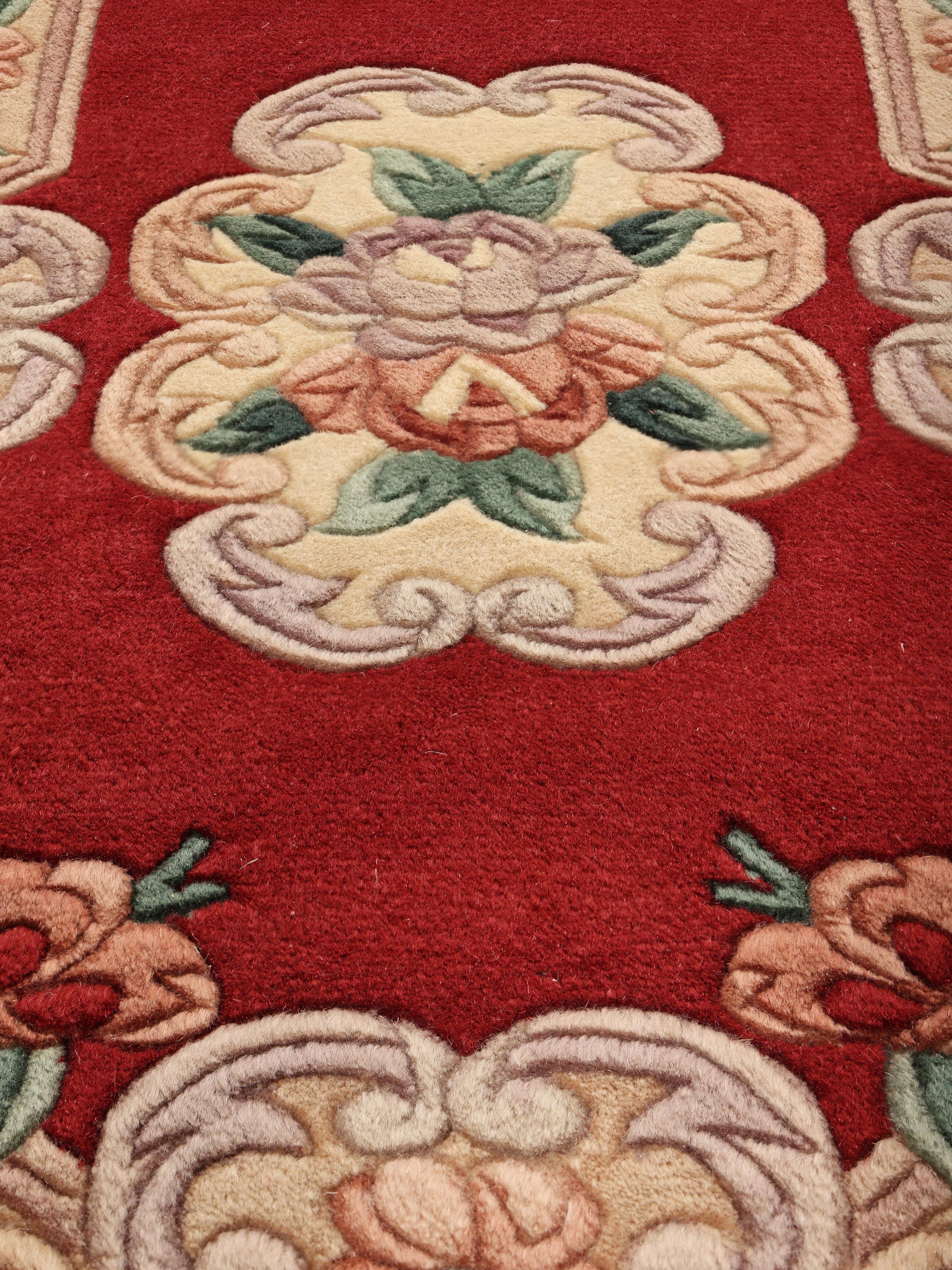
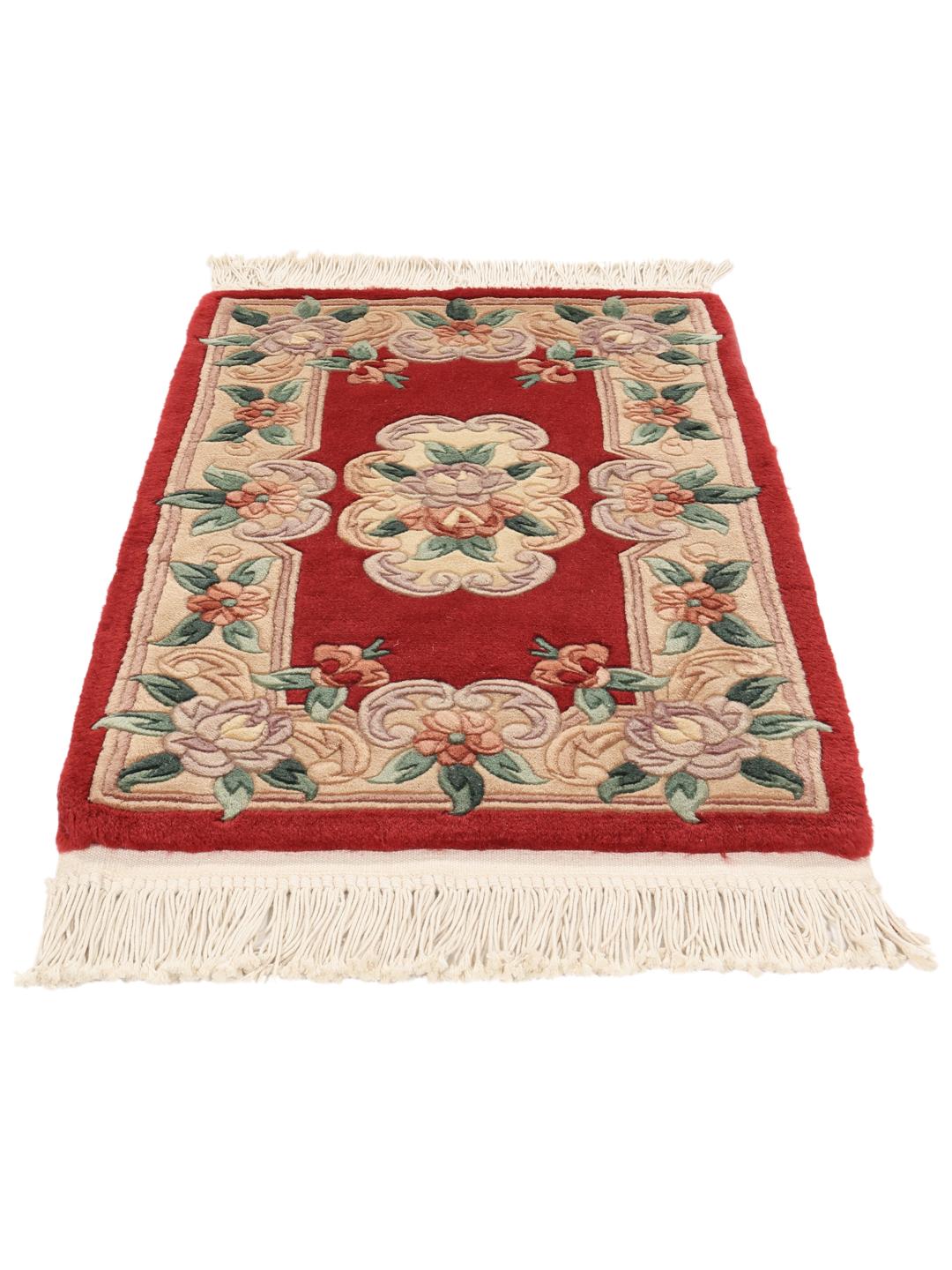
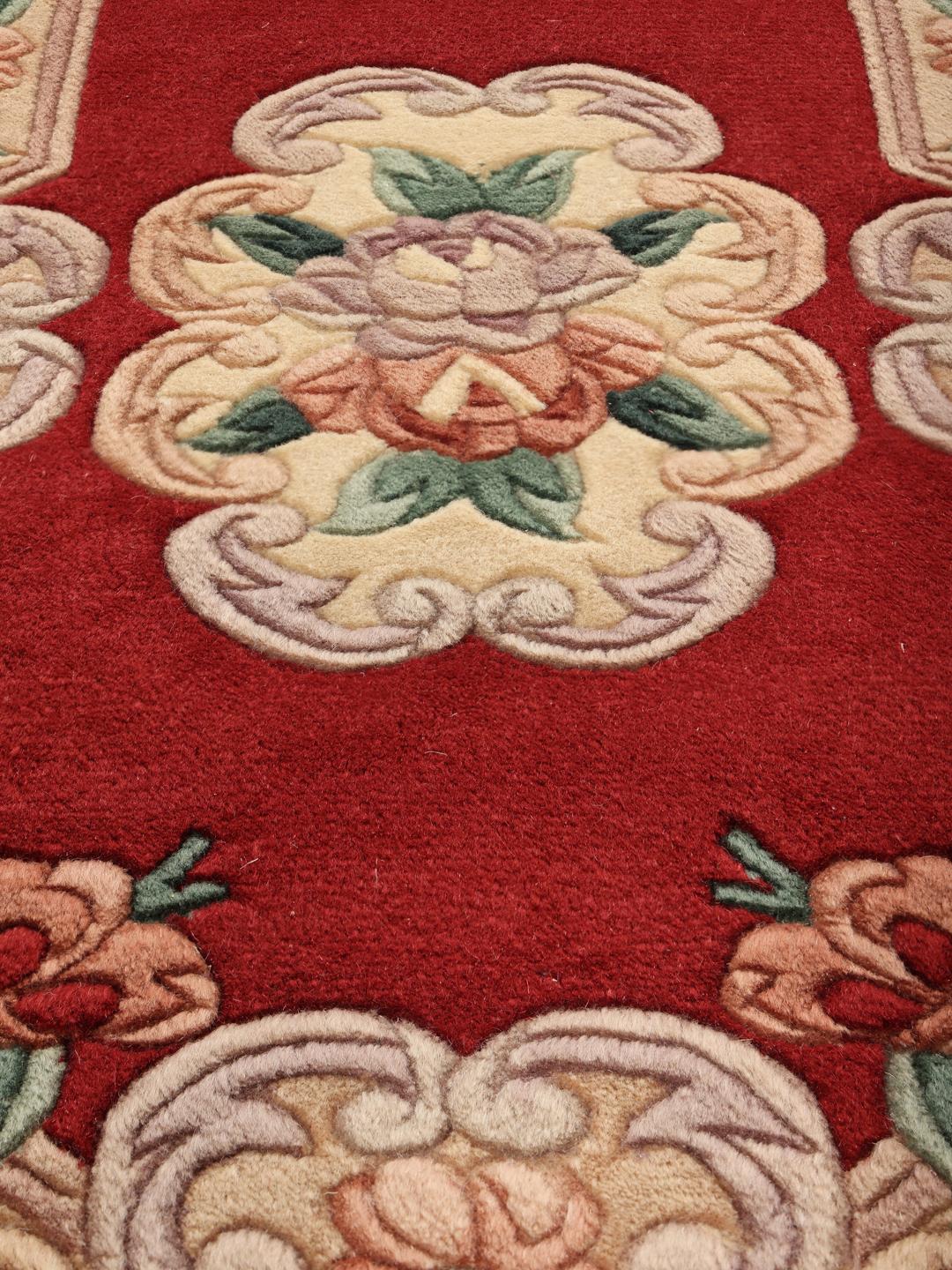
Visually, this rug draws on classic floral patterns that are central to the Chinese aesthetic. The use of a bold red field provides a dramatic backdrop for the intricate, soft-toned blossoms, creating a look that is both timeless and expressive. These motifs are not merely decorative but are part of a long-standing language of design that seeks to bring beauty and balance into the home environment.
Collecting rugs from this tradition is a way to connect with a legacy of patience and creative skill. Each piece is a testament to the artisan's ability to translate complex patterns into a tactile format, making them highly valued by those who appreciate the intersection of culture and craft. Owning this rug means participating in a narrative of artistry that has been carefully preserved and passed down through generations.