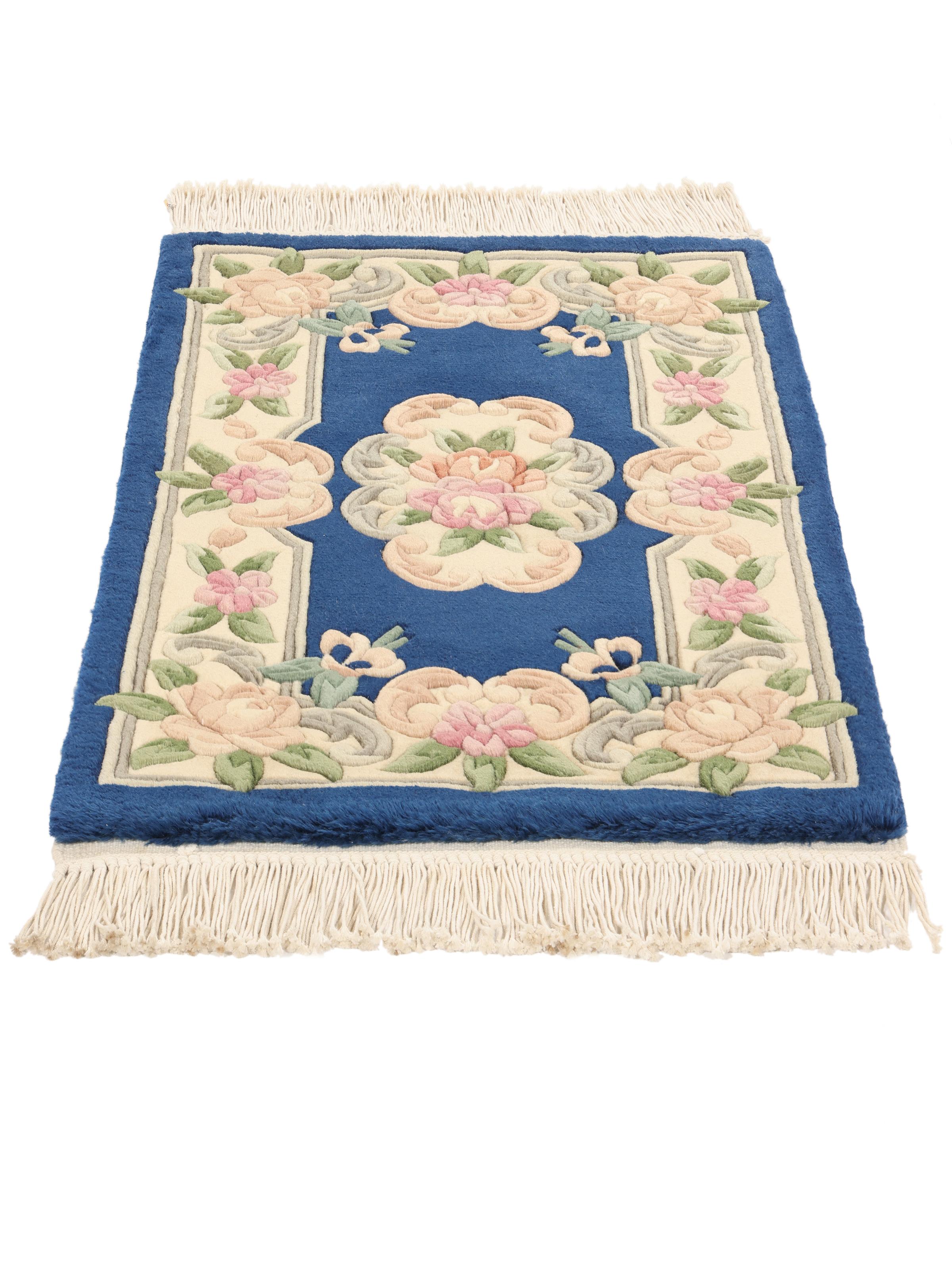
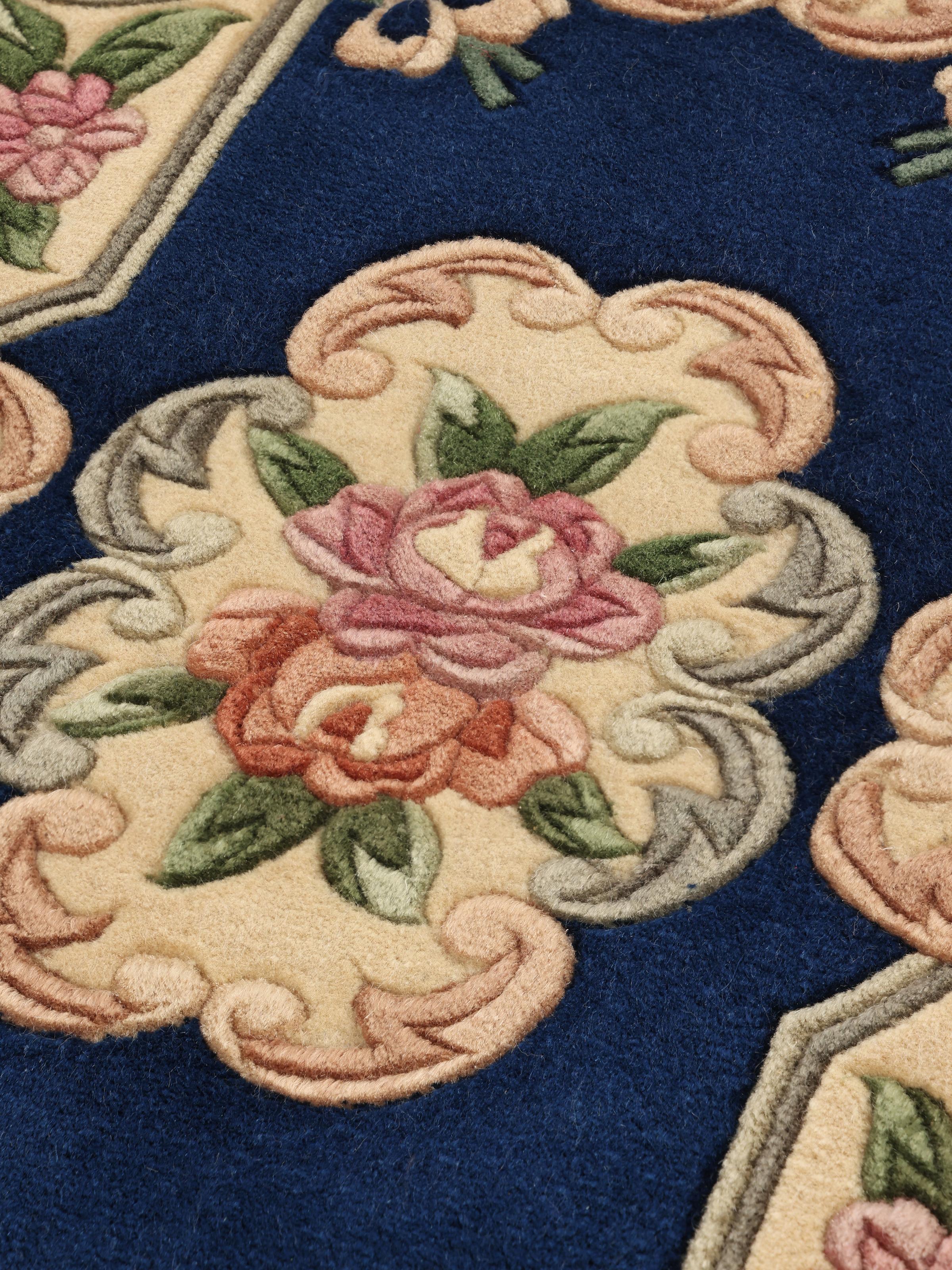
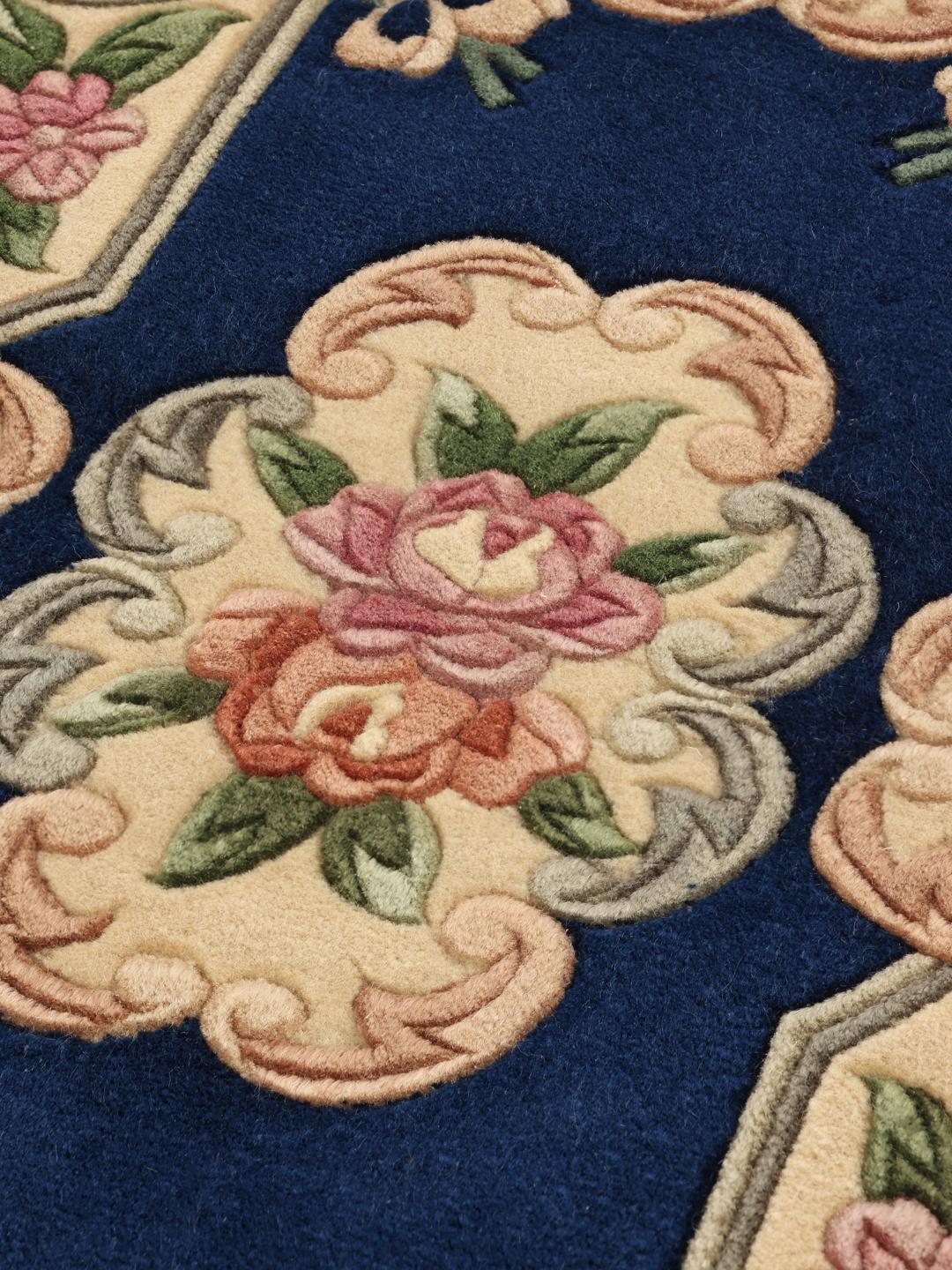
Chinese rug weaving has a storied past, evolving from ancient traditions that originally focused on silk for imperial use into a celebrated craft that utilises high-quality wool. The artistry associated with Chinese rugs is characterised by a unique approach to relief, where the pile is often carved to accentuate the curves of floral and botanical motifs. This tradition has been refined over centuries, blending local aesthetic preferences with techniques that have gained worldwide recognition.
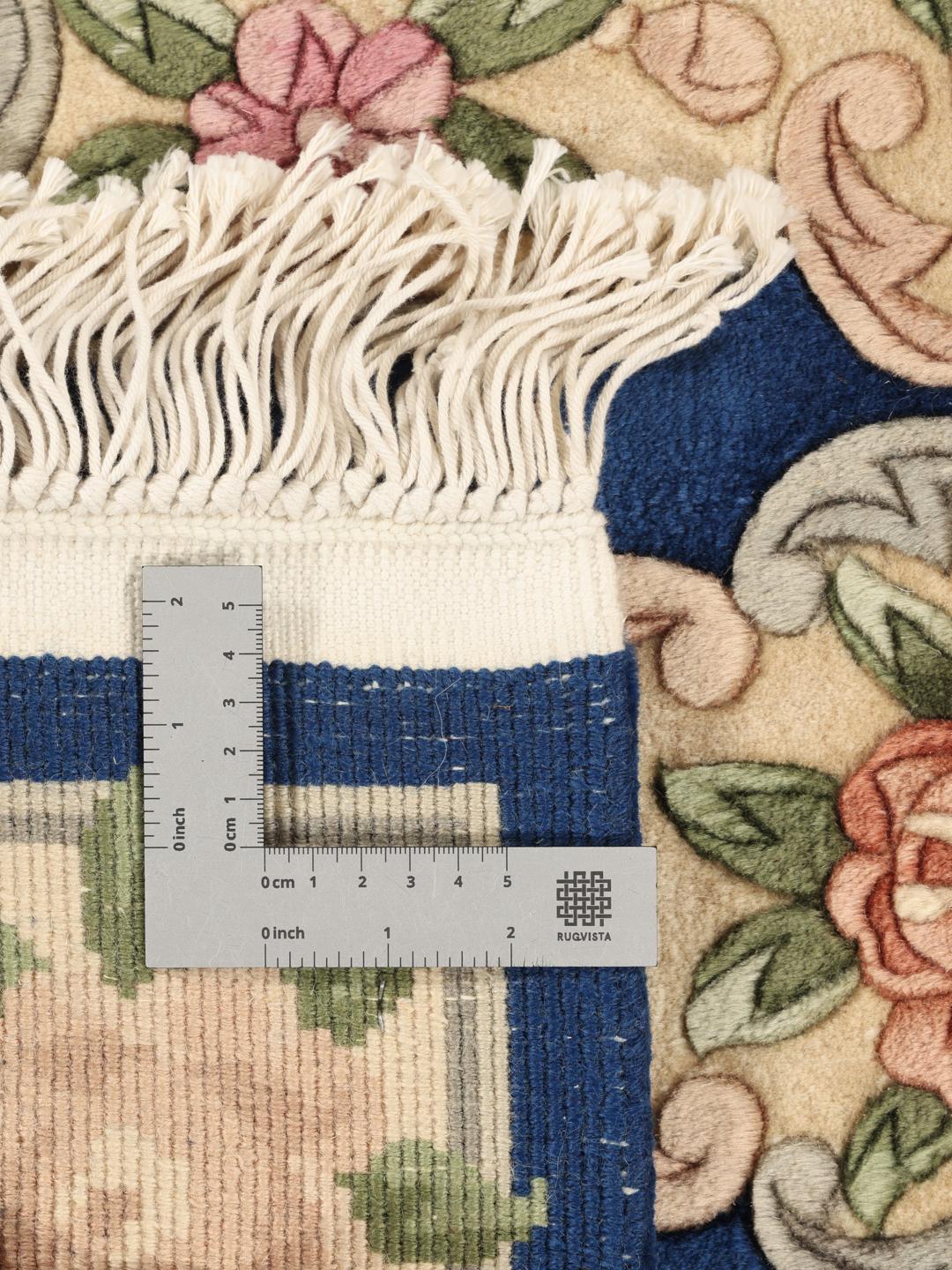
The term '90 Line' refers to the traditional measurement of knot density in Chinese rug making, which indicates the number of knots per linear foot. This specific density is a hallmark of quality, ensuring that the pile is thick and the patterns remain crisp and well-defined. By using these established standards, weavers are able to create rugs that are both aesthetically pleasing and structurally sound, offering a balance of artistic detail and practical durability.
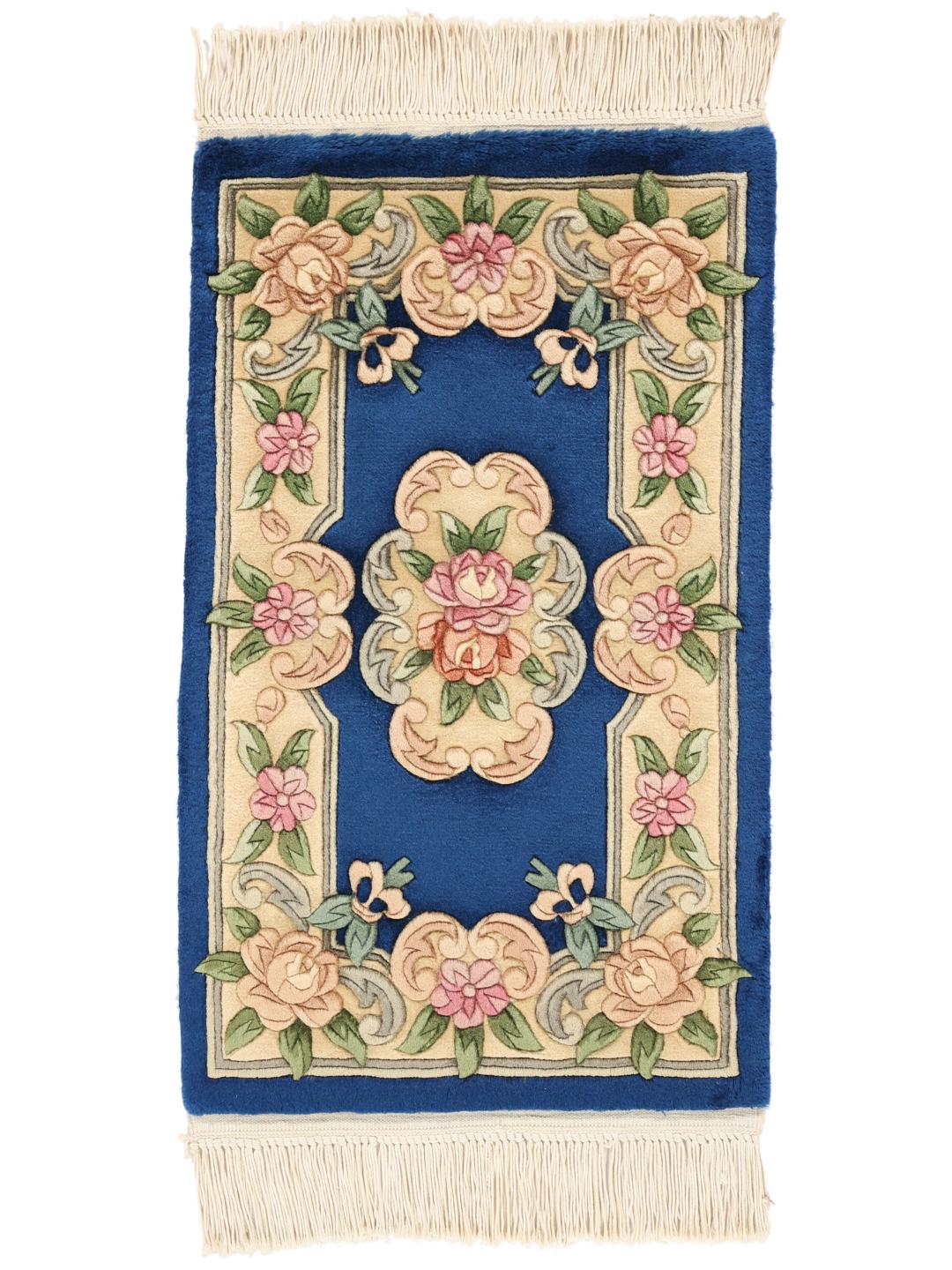
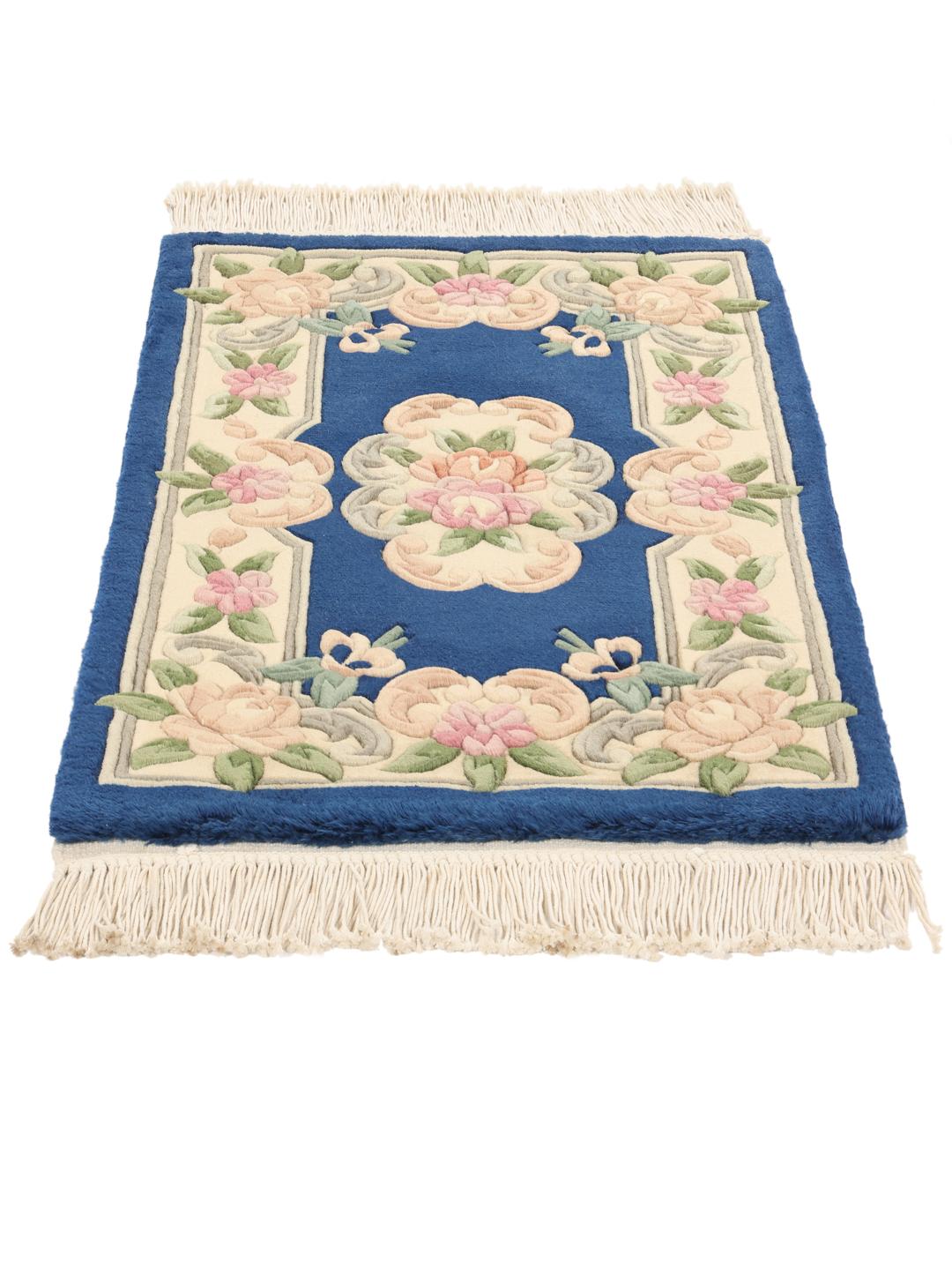
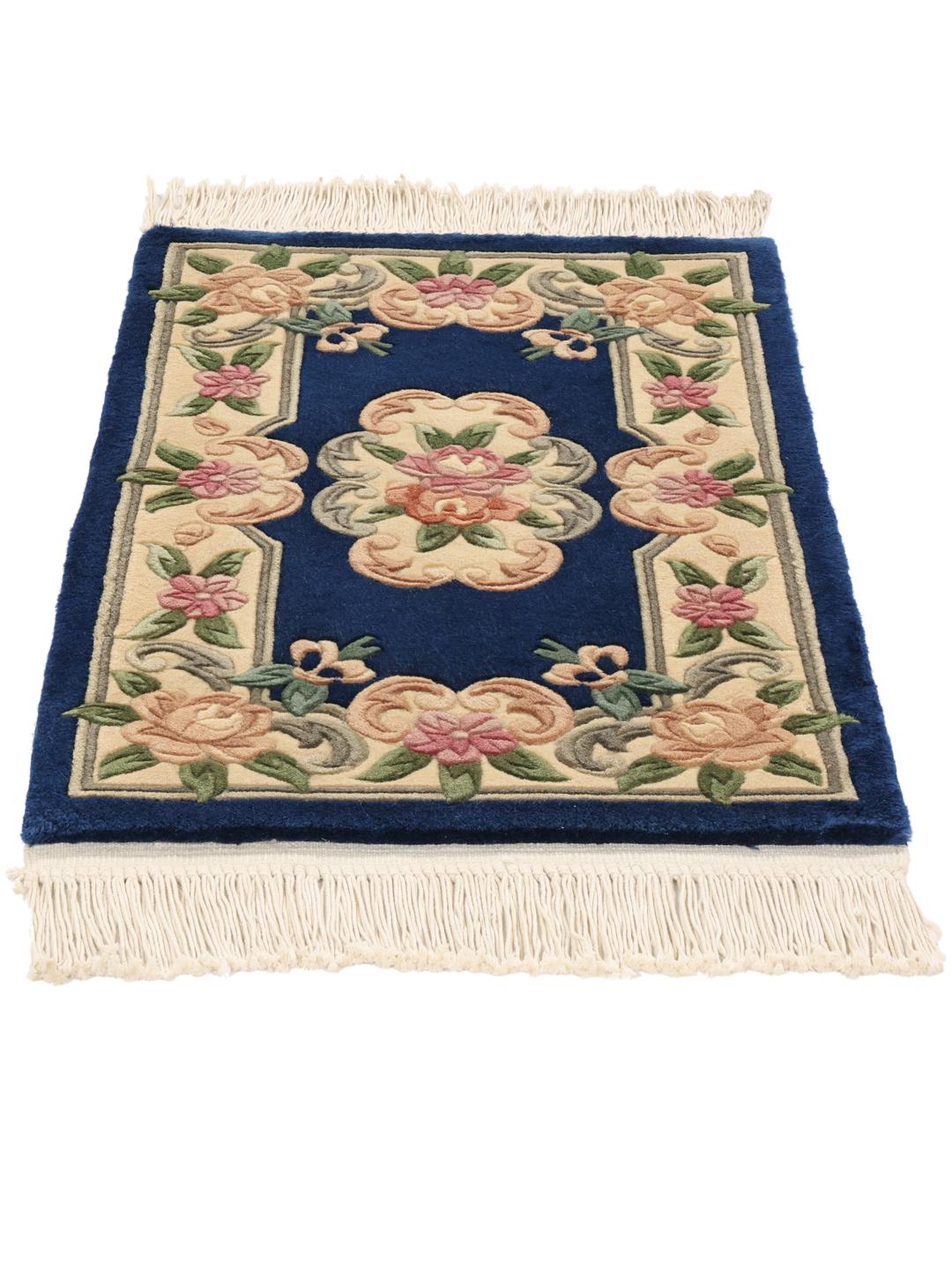
Signature design elements in these rugs often include stylised flowers, scrolling vines, and symbolic motifs that draw inspiration from nature. The use of a central medallion surrounded by ornate borders is a classic arrangement, designed to draw the eye and provide a sense of harmony. The colour palettes are often deliberate, utilising bold contrasts to make the intricate patterns pop, as seen in the vibrant blue and soft beige tones of this particular piece.
Collecting rugs from this tradition is an appreciation of the patience and skill required to preserve such heritage techniques. Each rug acts as a bridge between the past and the present, offering a glimpse into the regional styles that have shaped interior design for generations. Owning a piece from this tradition is not just about floor coverage, but about bringing a significant piece of textile history into your home that reflects both cultural weight and individual expression.