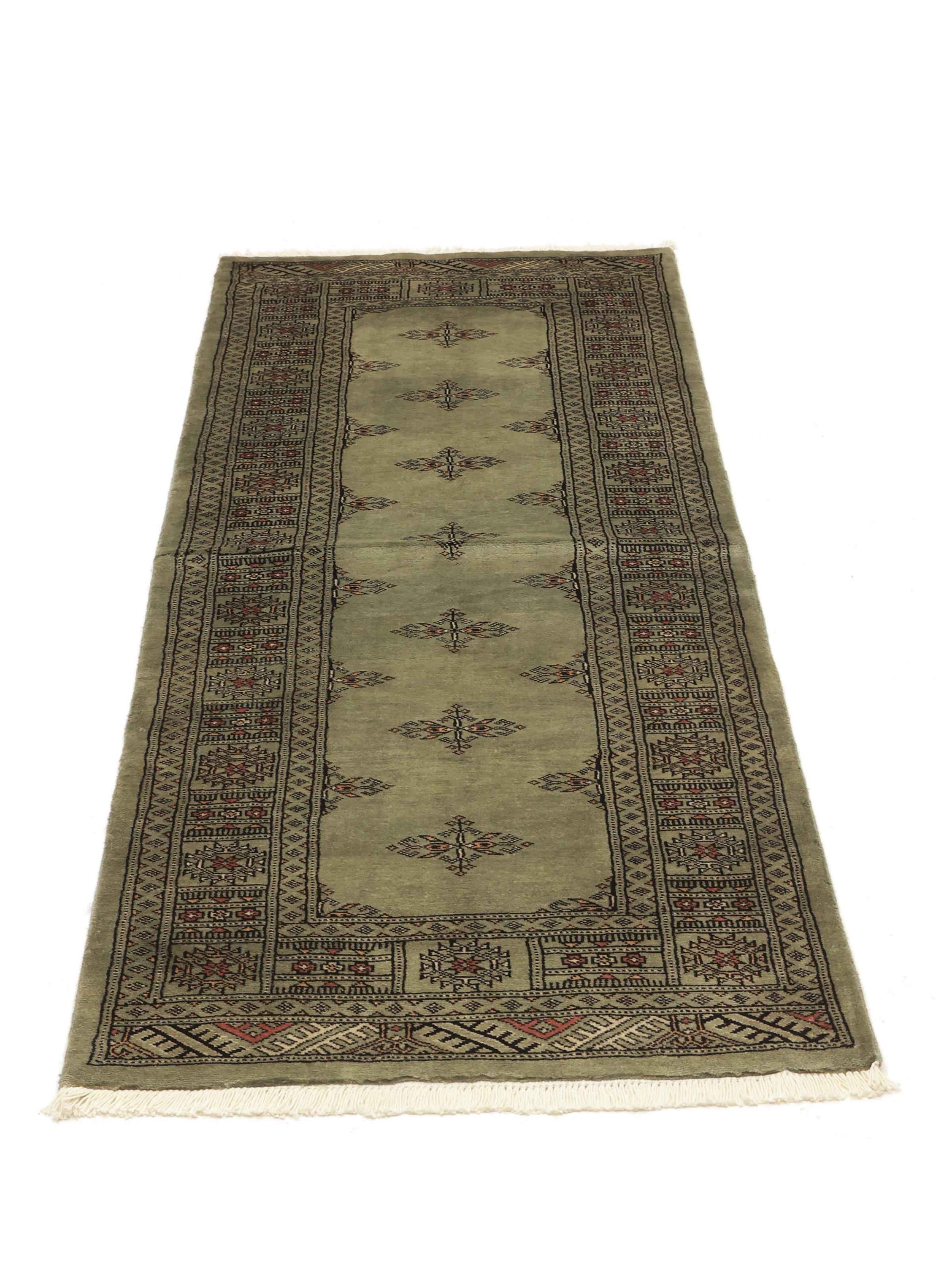
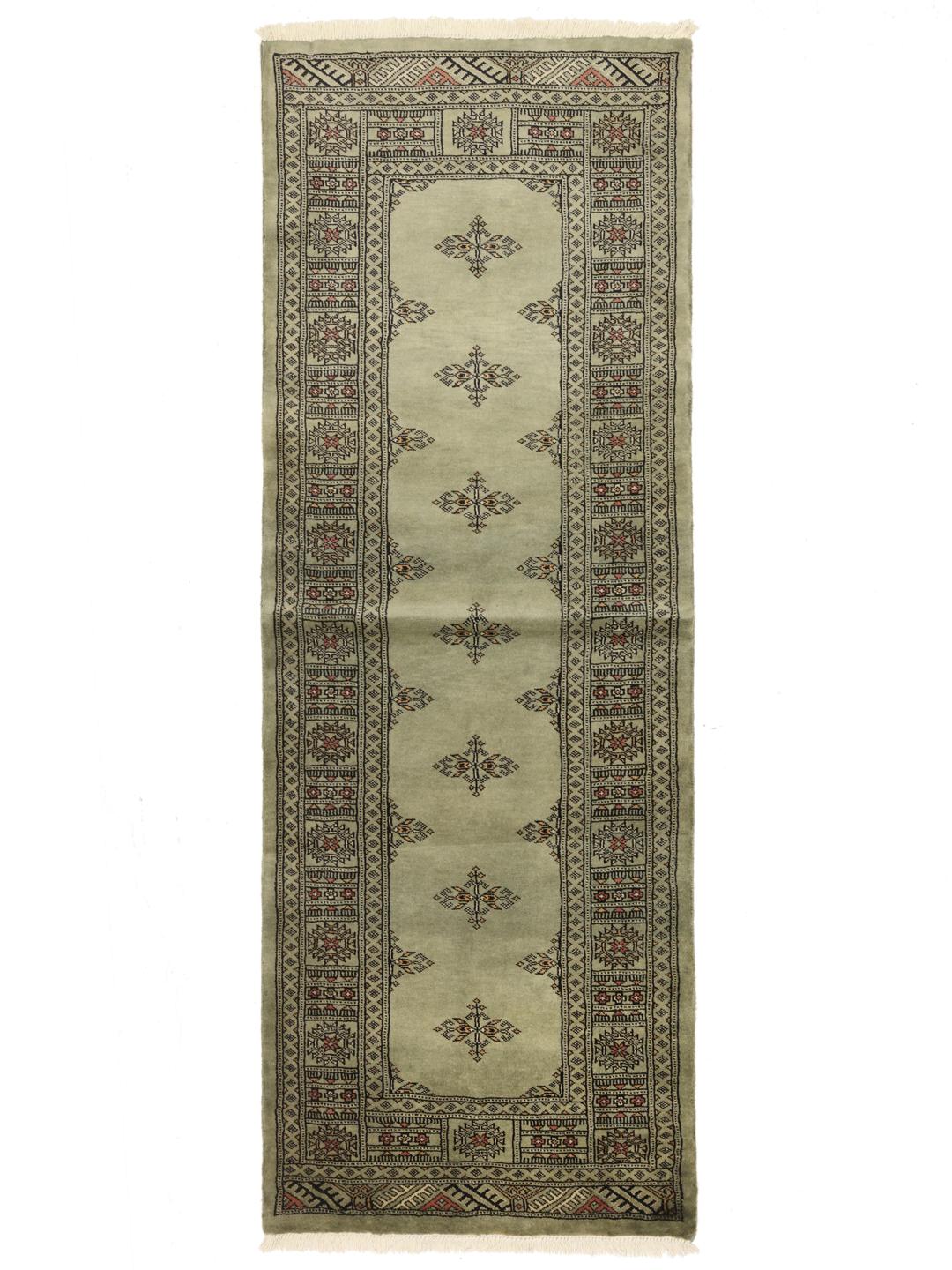
Bokhara rugs draw their evocative name from the ancient Silk Road trading hub of Bukhara in Central Asia, a legendary meeting point for cultures, merchants, and nomadic weavers. Over generations, the tradition of weaving these distinctive patterns migrated southward into Pakistan, where skilled craftspeople adopted and refined the techniques. Today, Pakistani weavers are celebrated for preserving these ancient design languages with exceptional care and precision.
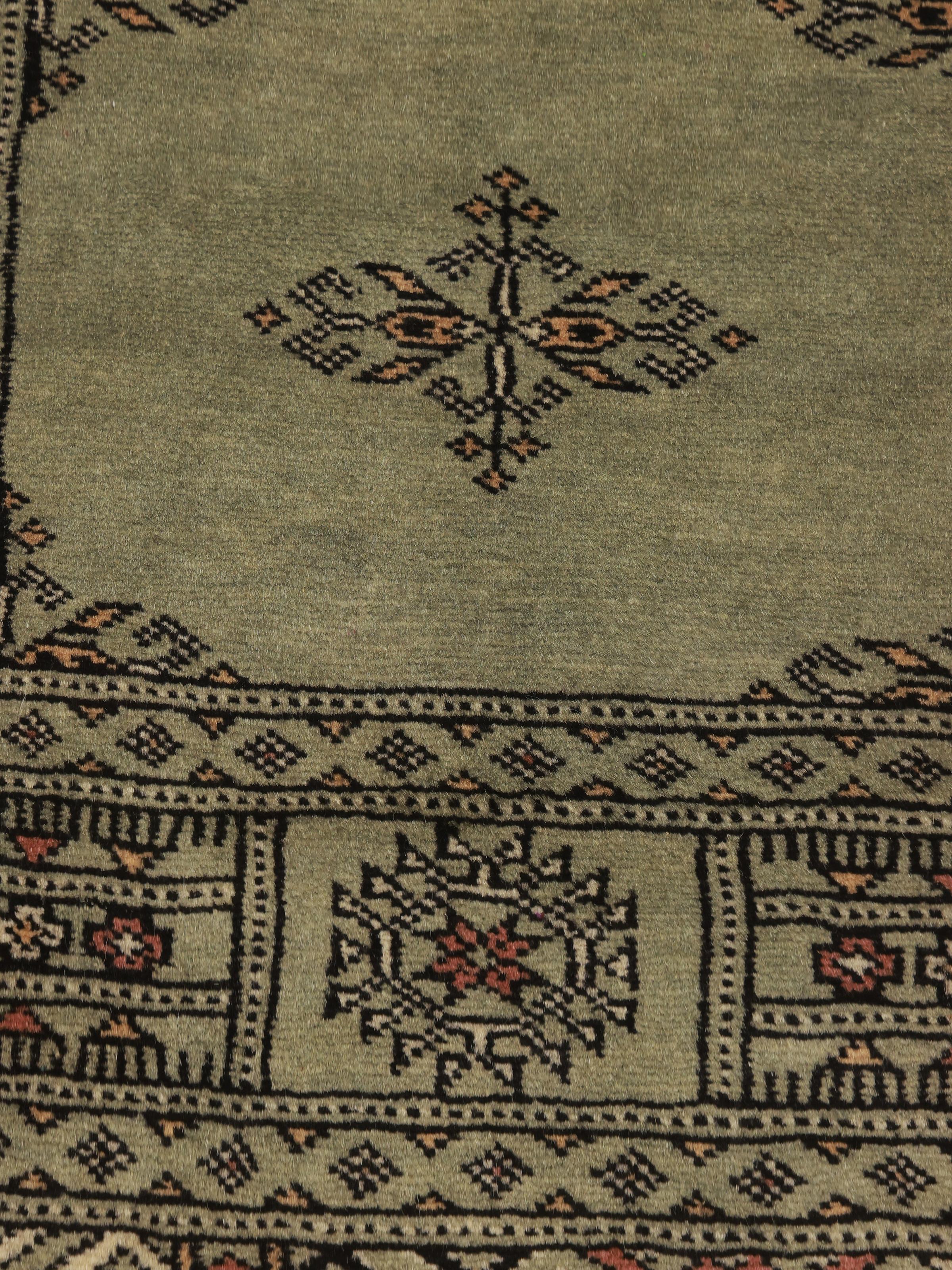
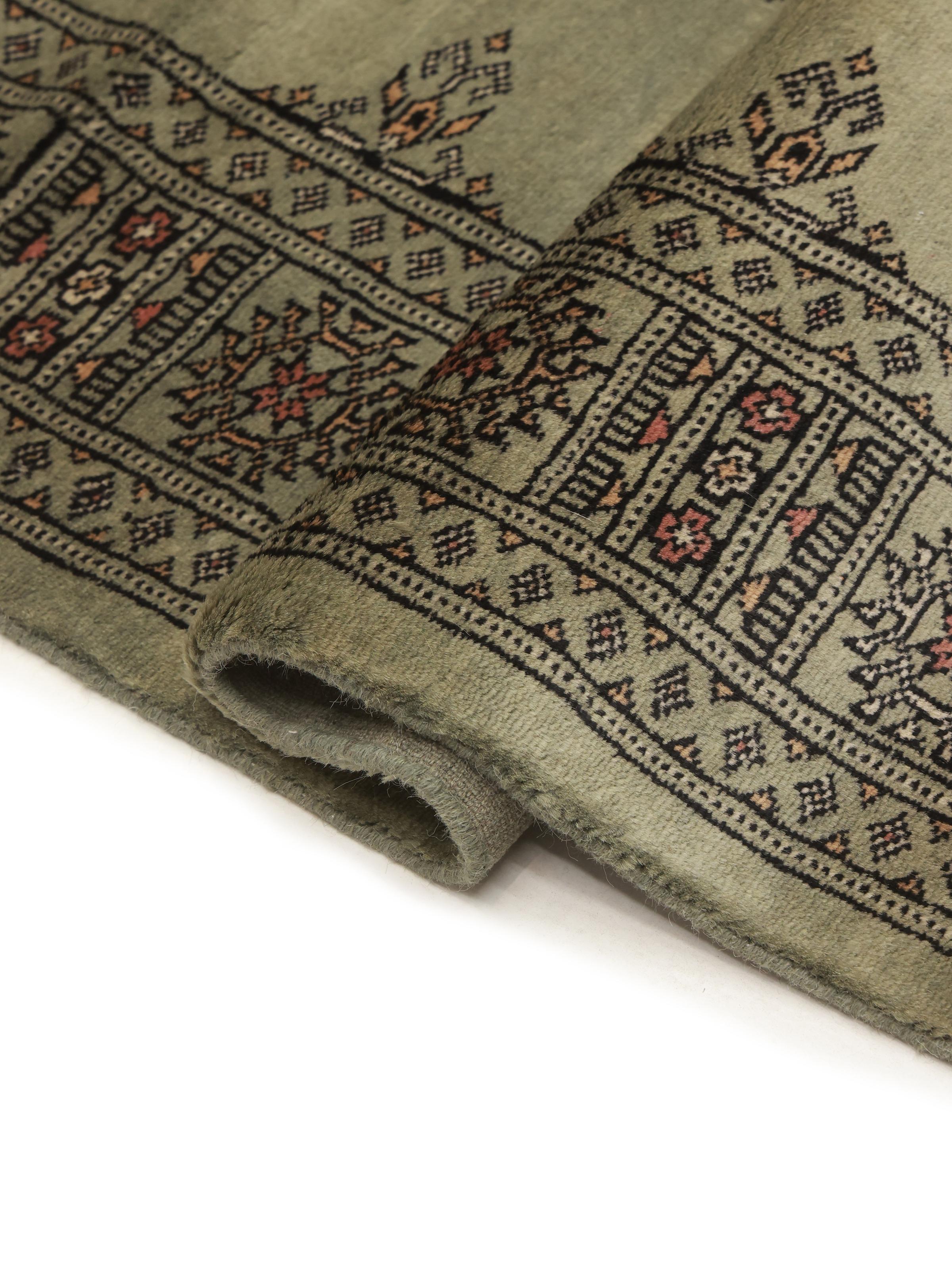
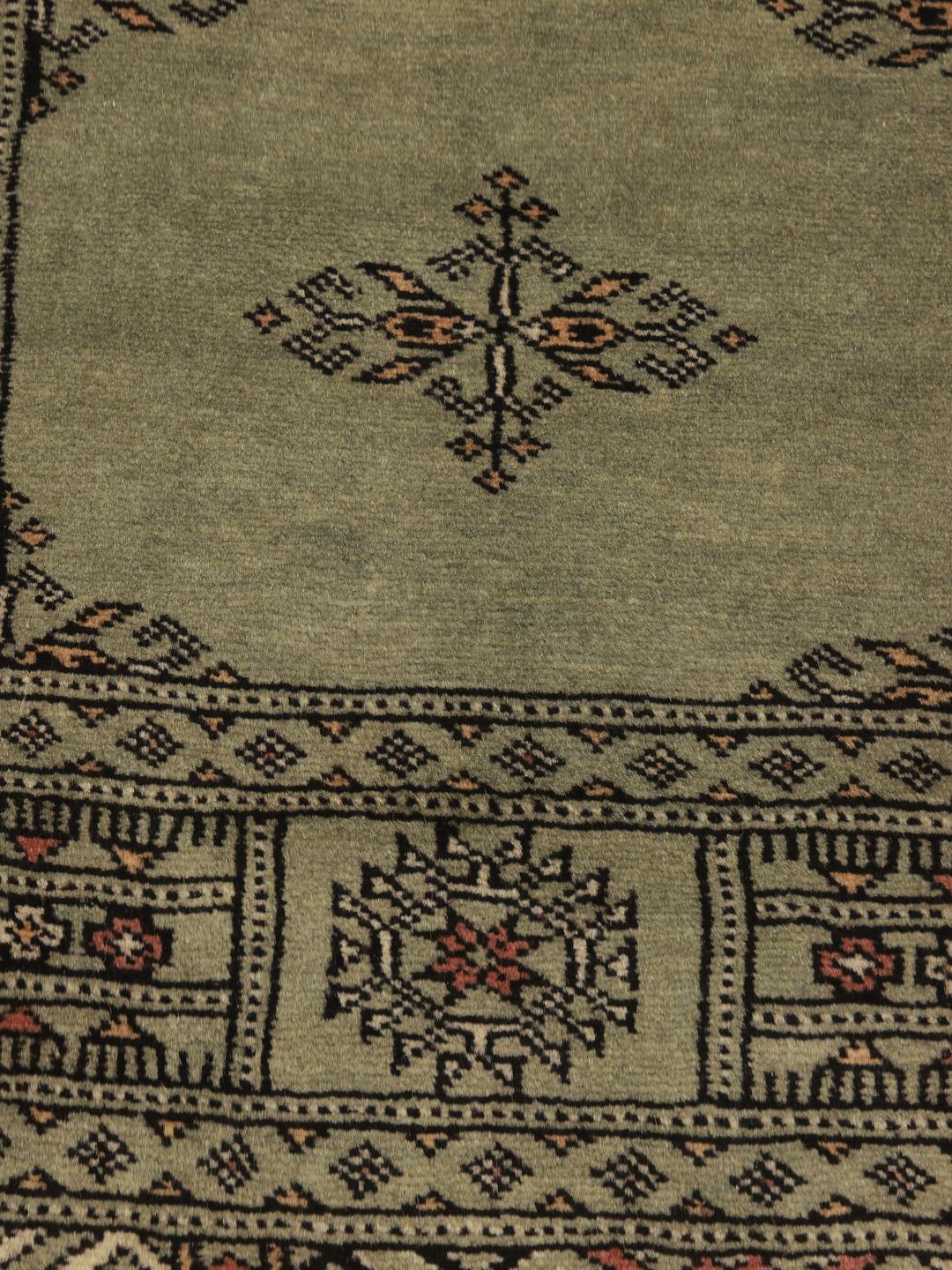
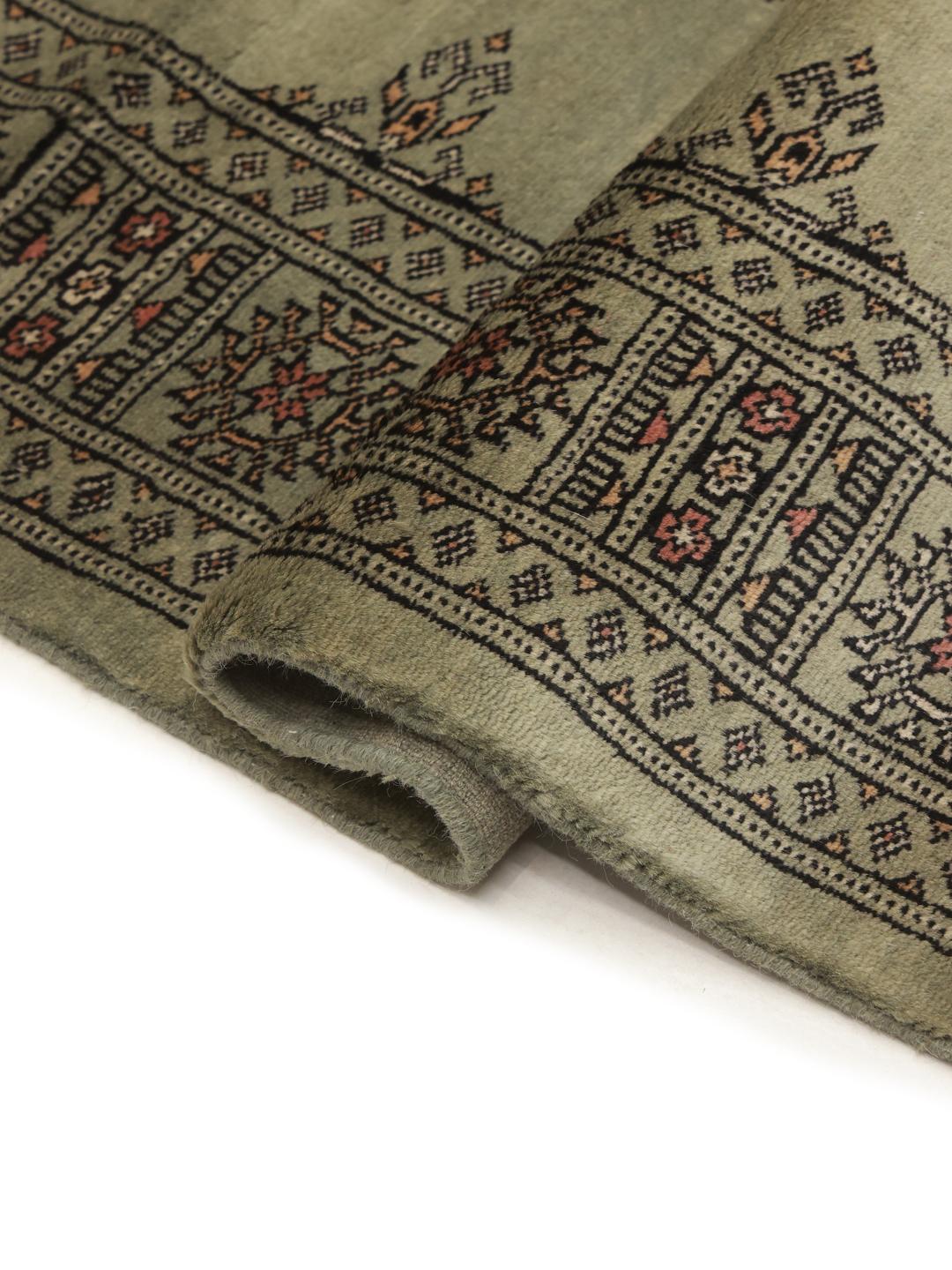
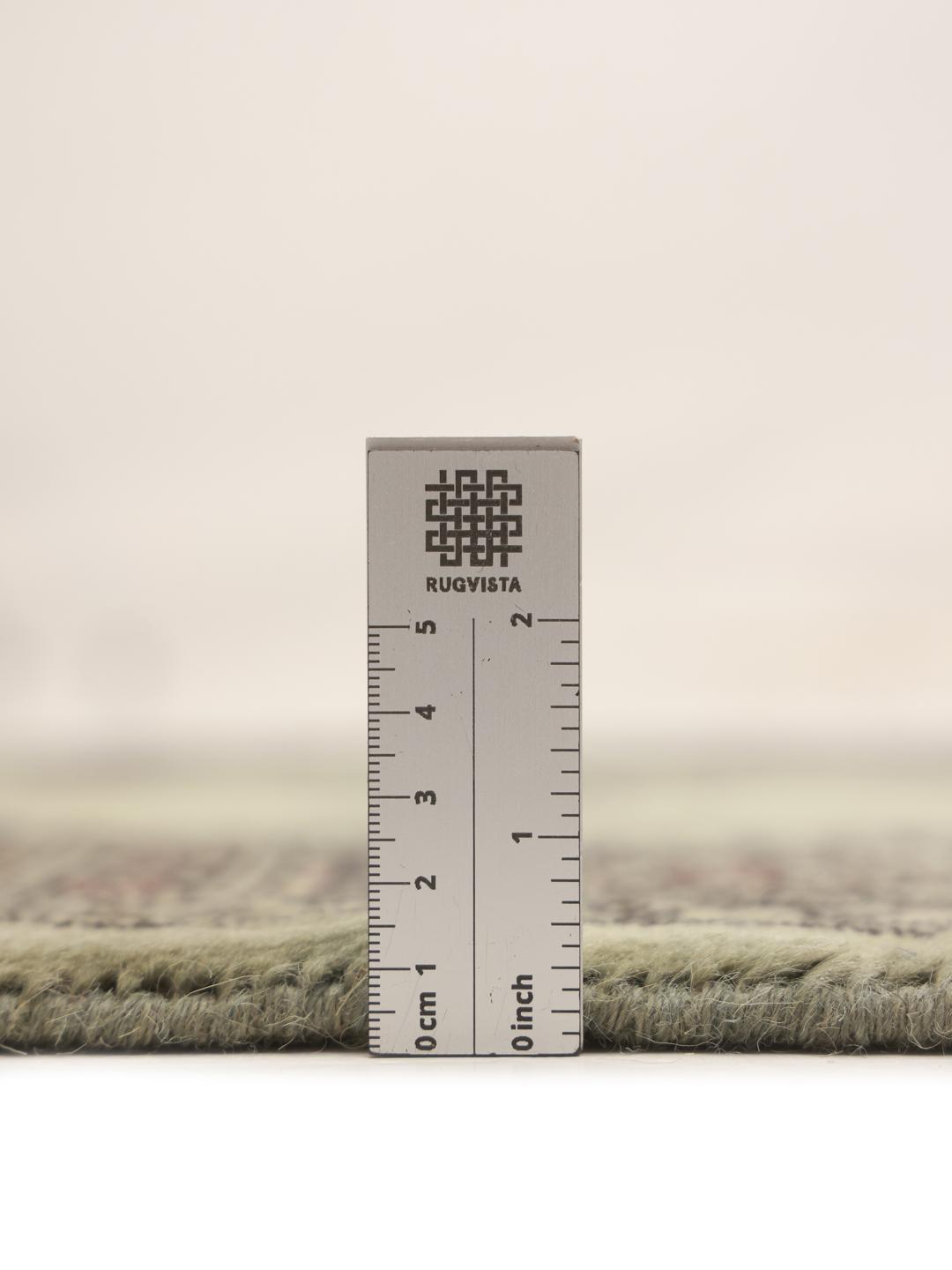
The 3ply designation refers to the construction of the pile, where three individual strands of wool are twisted together before being knotted. This multi-ply method produces a thicker, heavier, and more lustrous pile than standard single-ply yarns. For the owner, this translates to superior resilience against daily wear, ensuring the rug maintains its rich appearance and soft feel over many years.
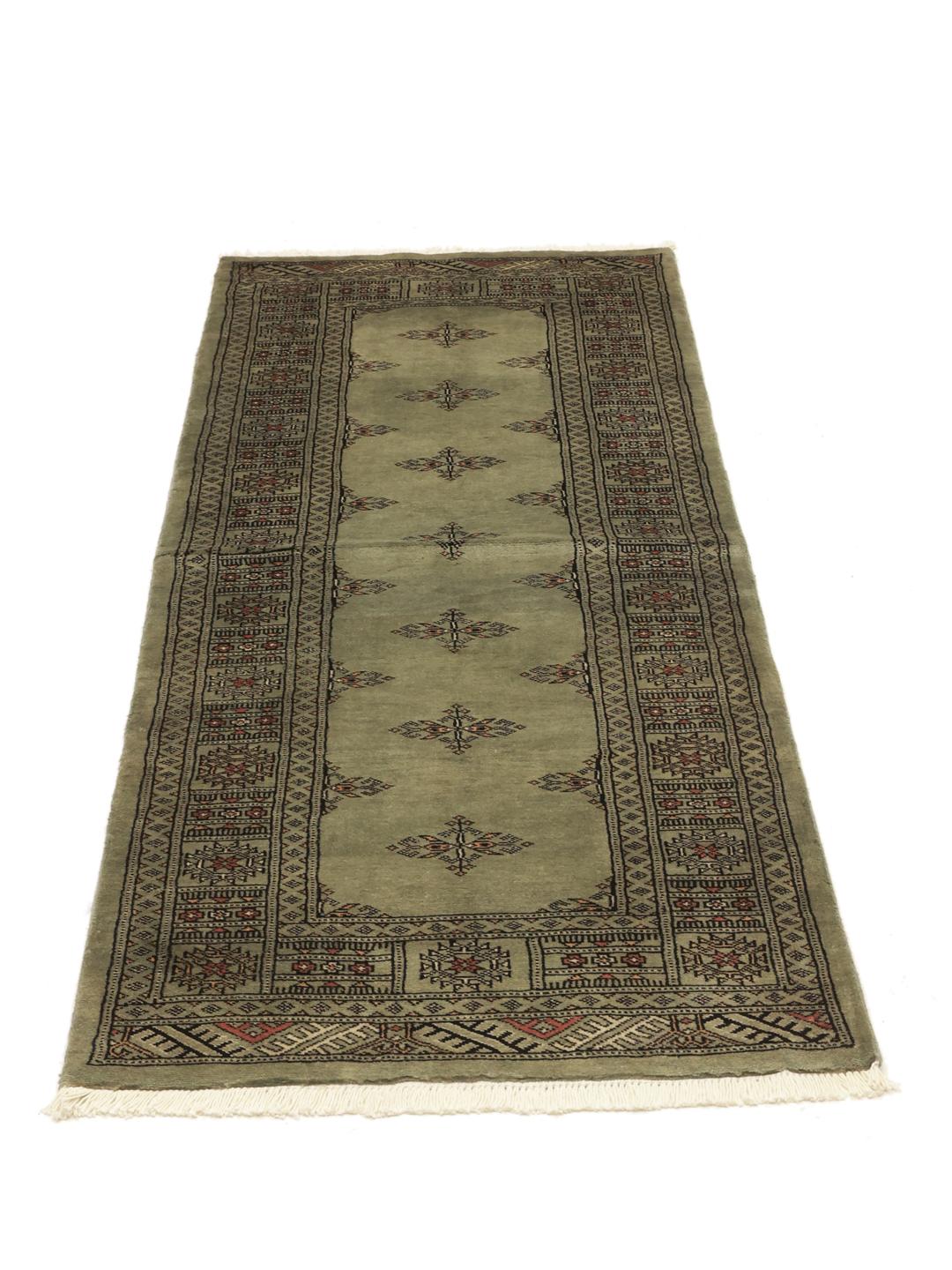
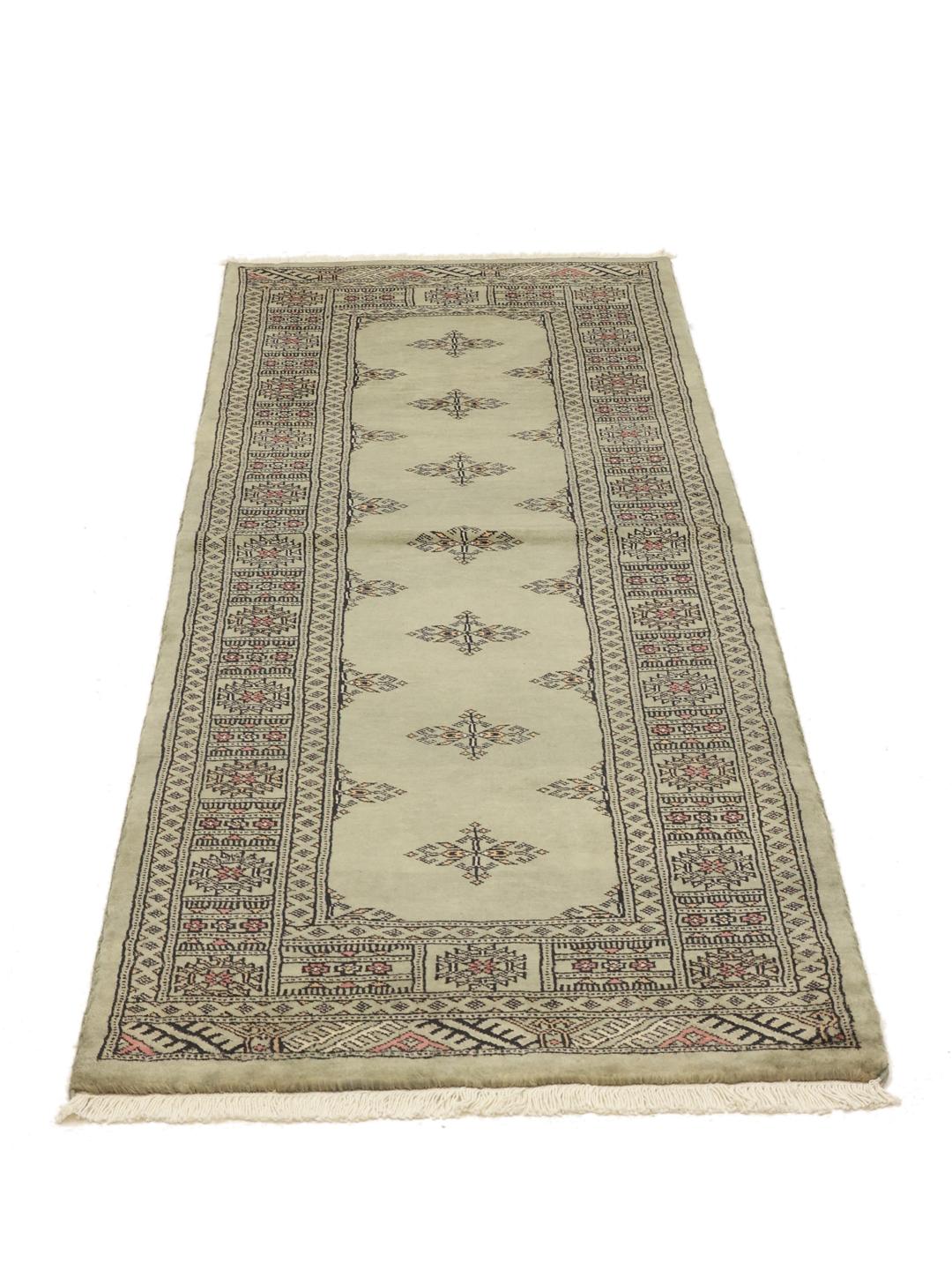
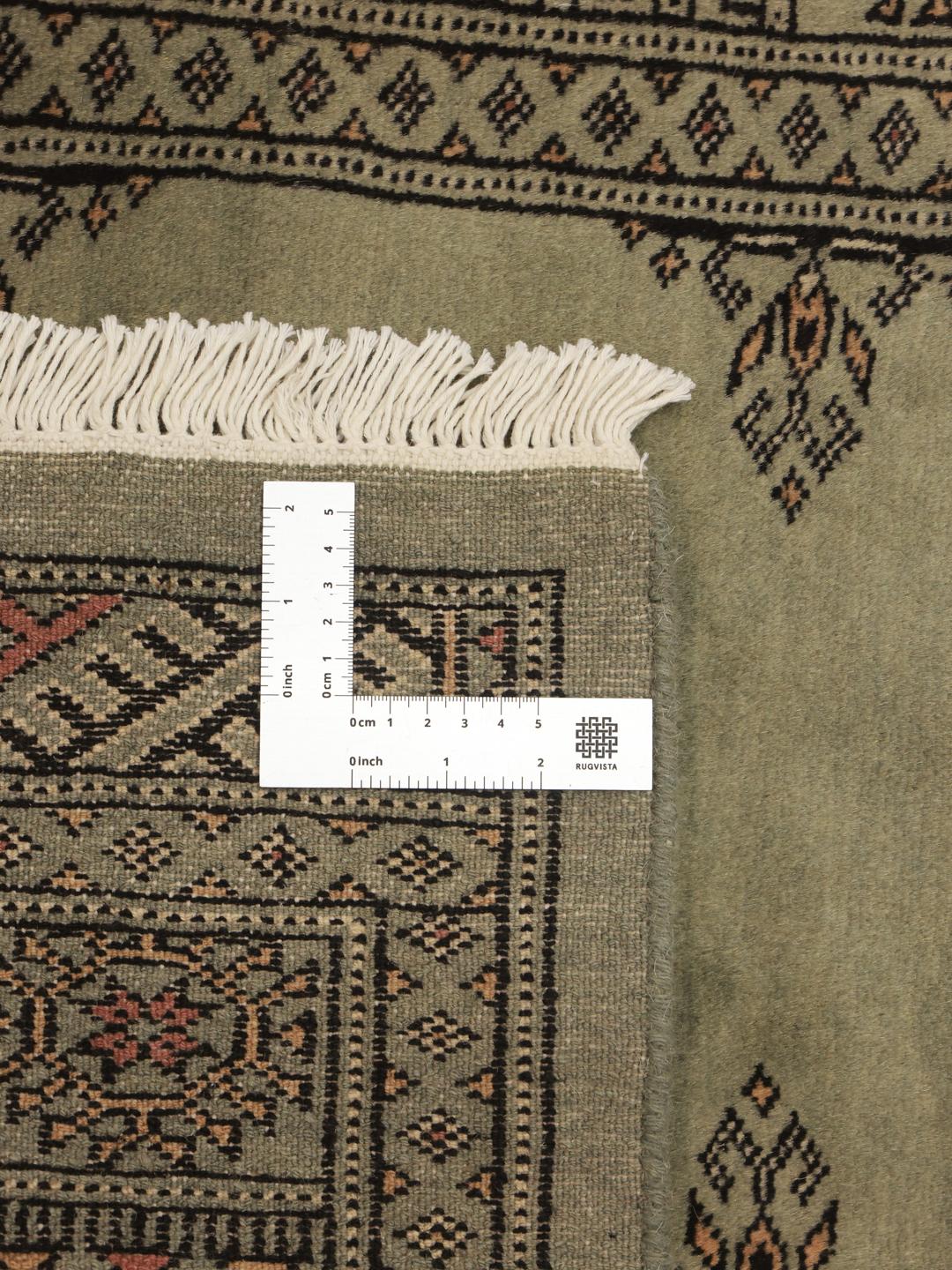
The visual hallmark of the Bokhara tradition is the repeating gul motif, an octagonal medallion arrangement historically inspired by tribal insignia and elephant footprints. These orderly rows of guls are typically enclosed by structured geometric borders that frame the field. In this particular piece, the traditional motifs are set against a calming green background, offering a fresh and personal variation within a deeply established design vocabulary.
Collecting a Pakistani Bokhara means welcoming a piece of living cultural history into your home. The knowledge required to tie these intricate patterns has been passed down through families for centuries, bridging nomadic artistry with modern interior living. Owning such a rug is an appreciation of human patience, heritage, and lasting material quality.