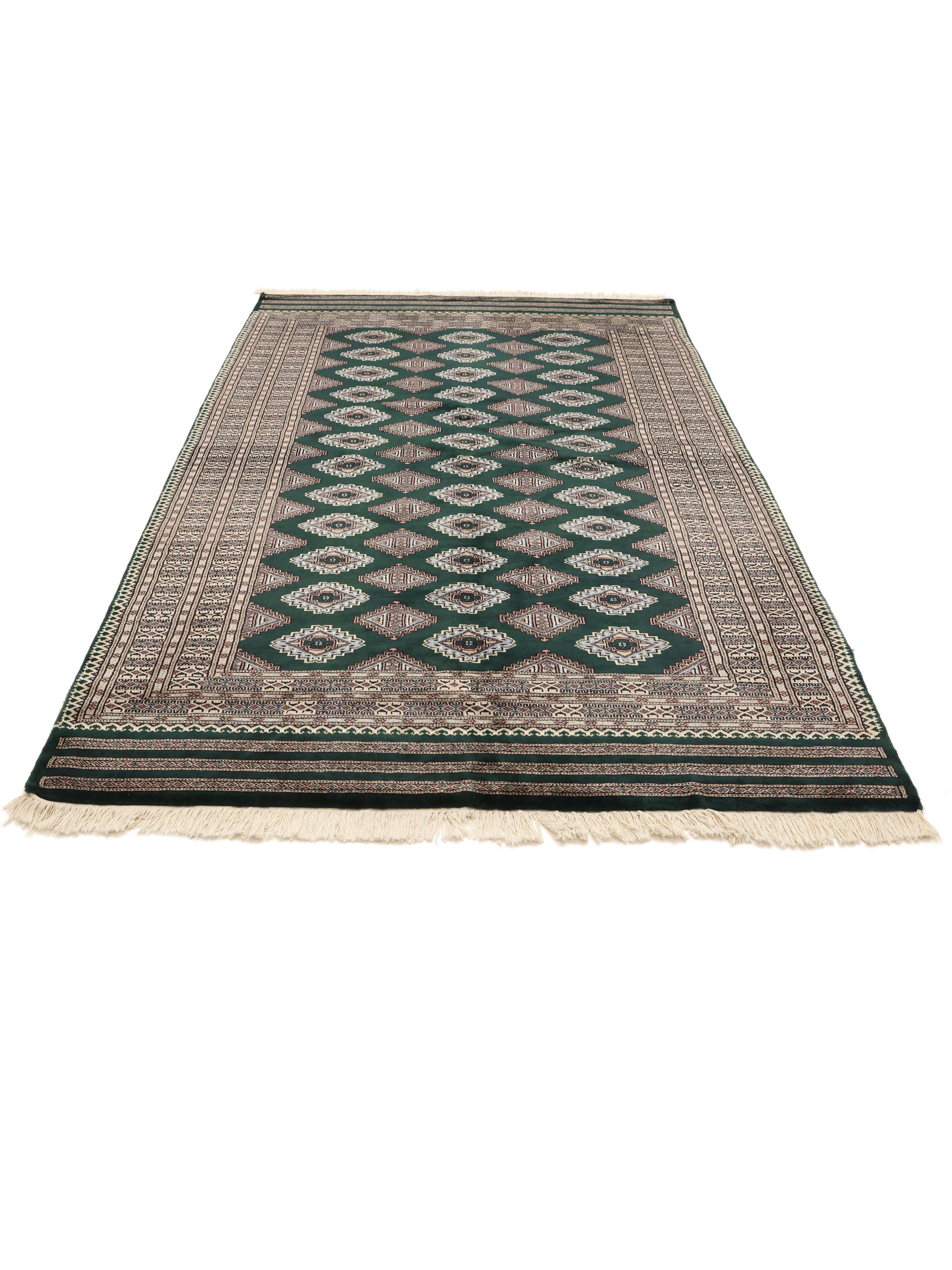
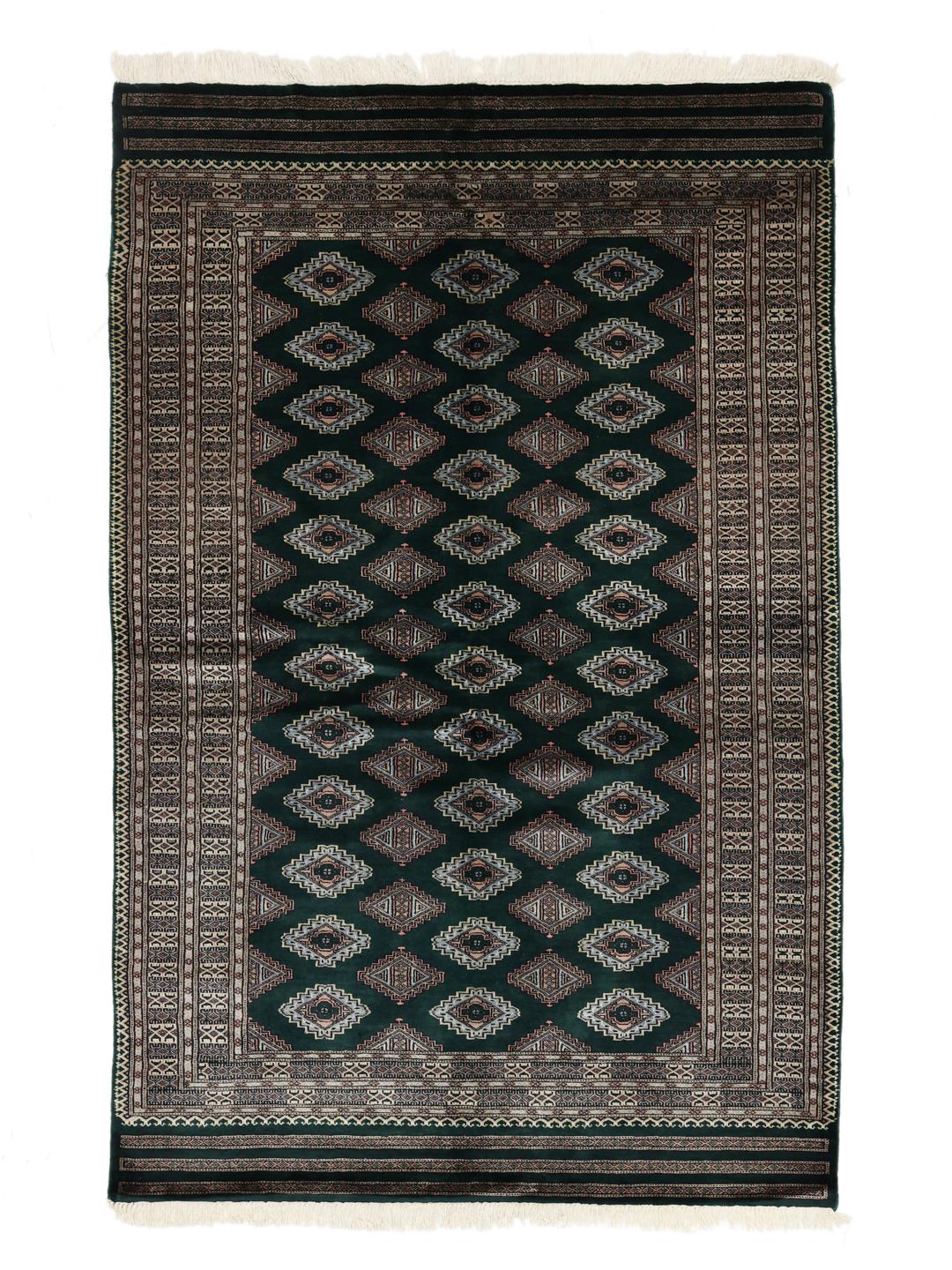
The Bokhara rug tradition is deeply rooted in the history of the Silk Road, taking its name from the ancient city of Bukhara in modern-day Uzbekistan. While these designs were historically associated with nomadic tribes of Central Asia, the finest contemporary examples are crafted in Pakistan. This evolution reflects the migration of weaving expertise across borders, where artisans have refined these classic patterns to achieve a level of uniformity and elegance that is globally celebrated today.
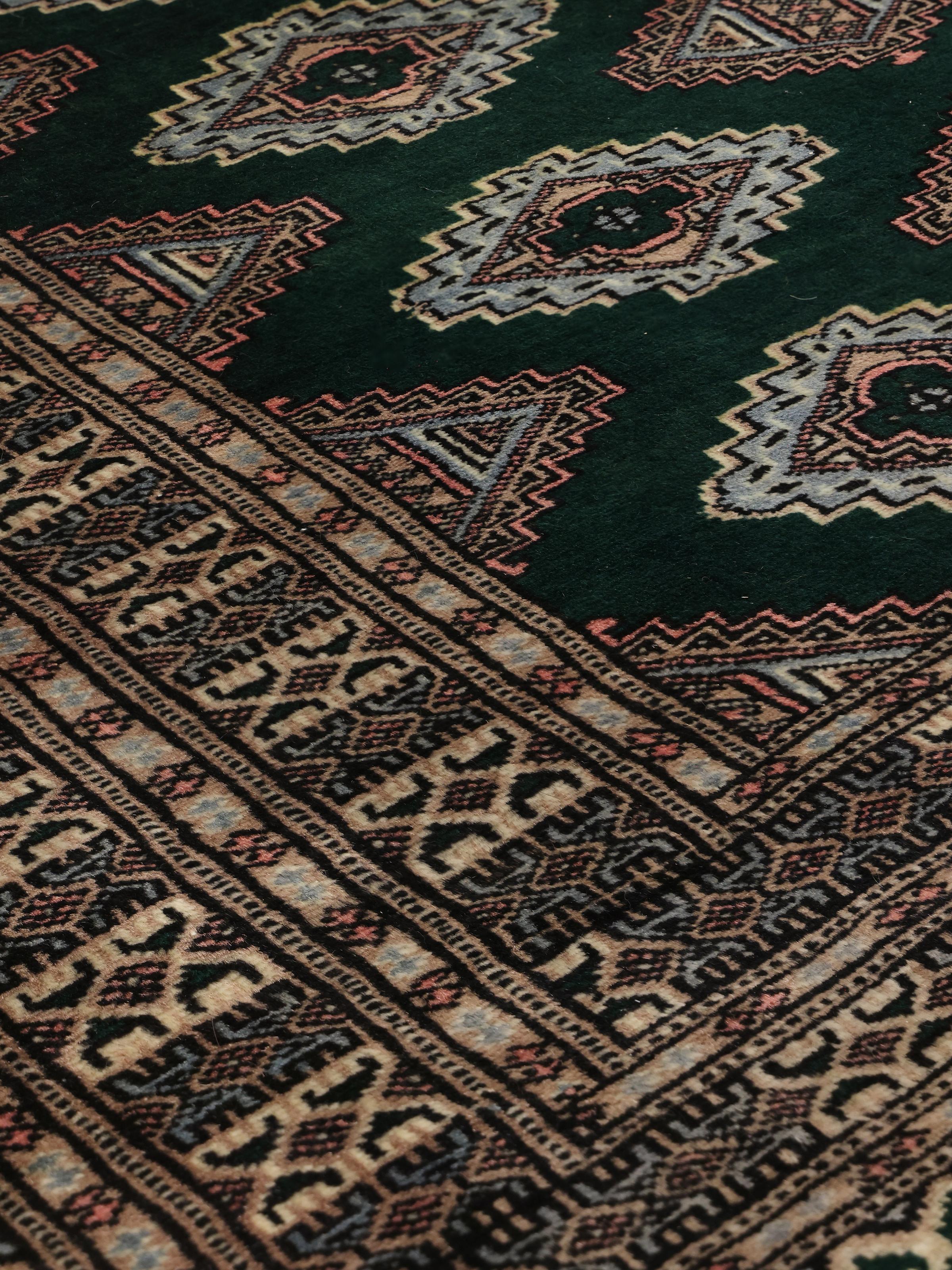
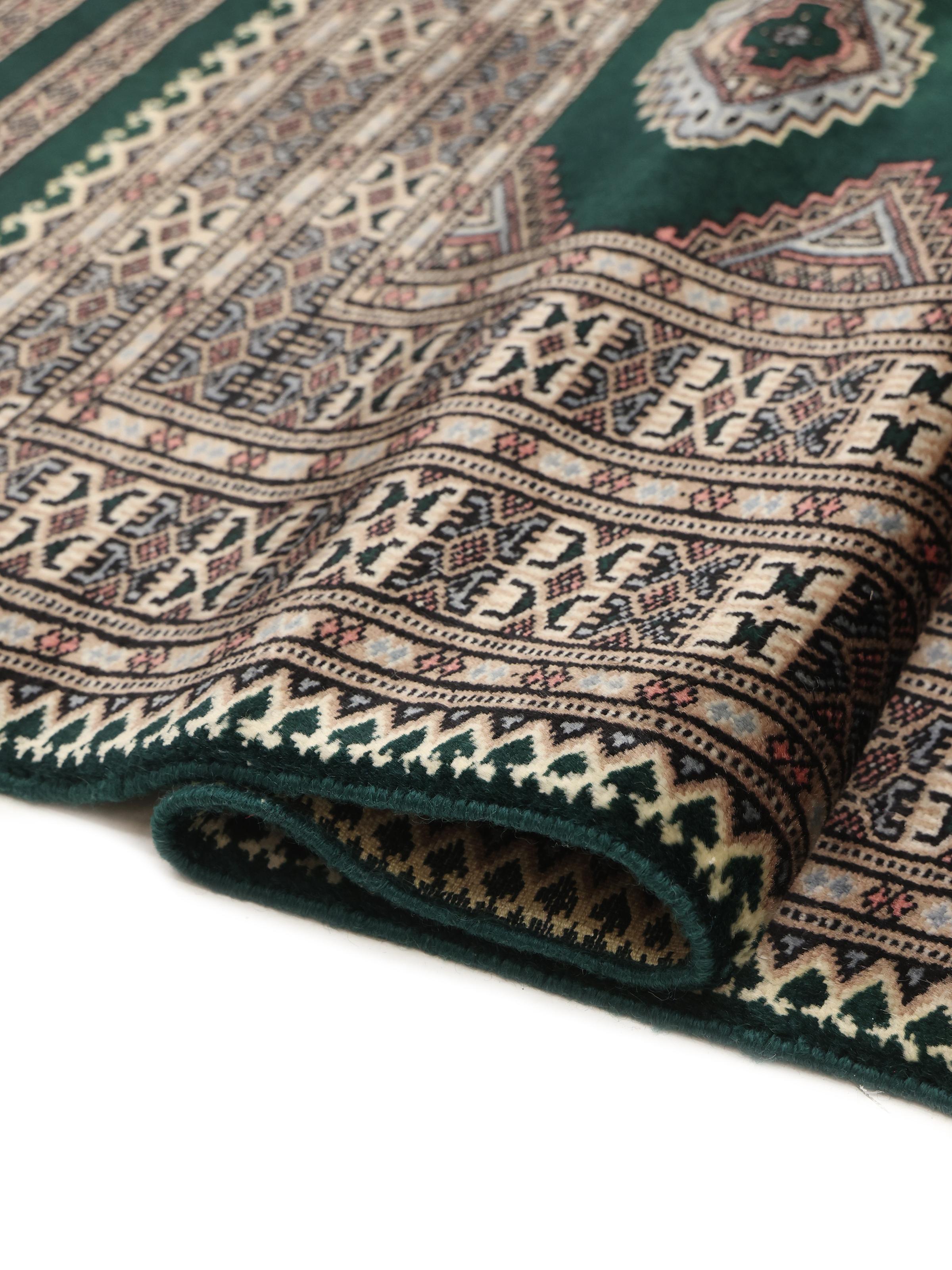
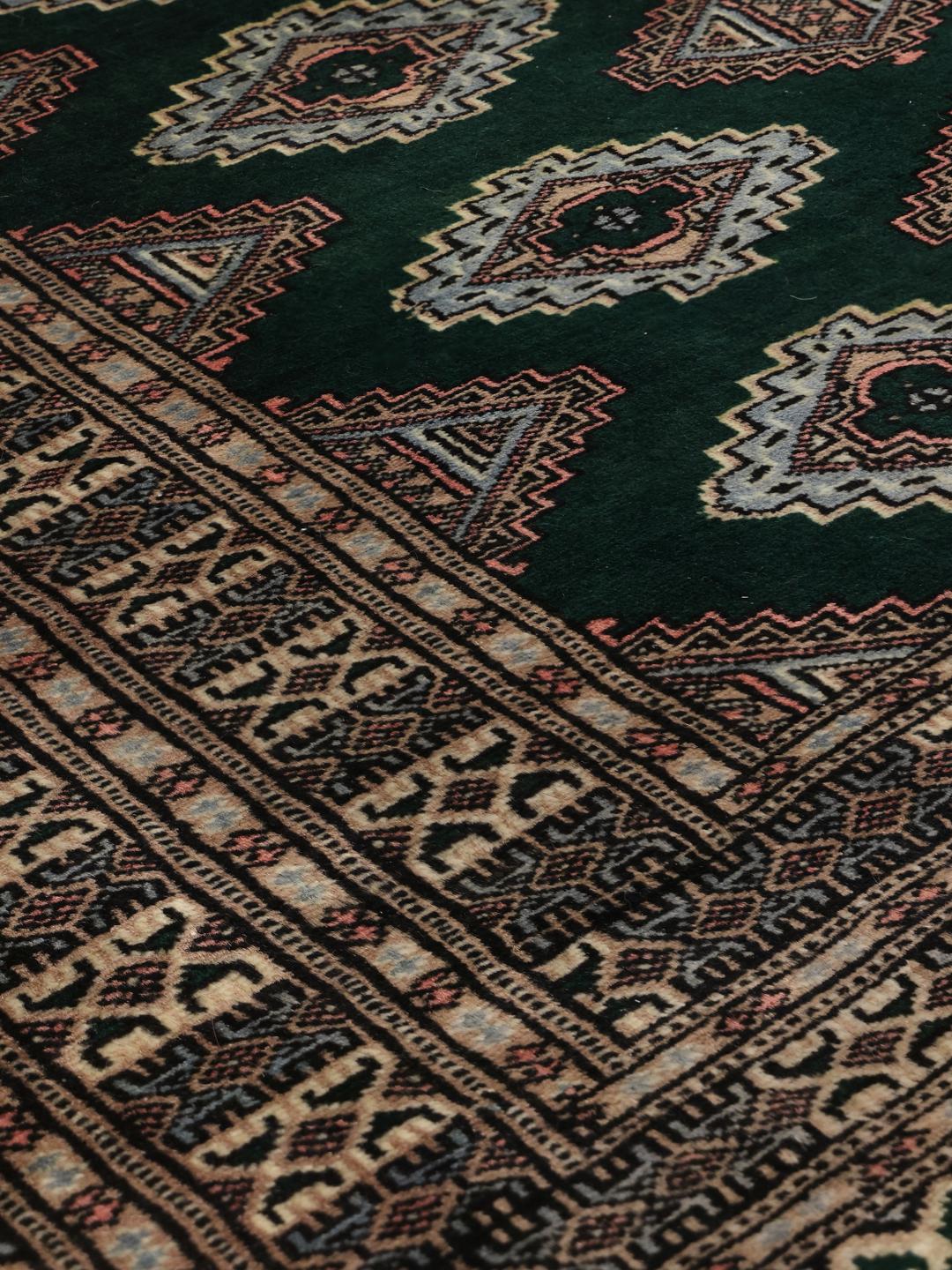
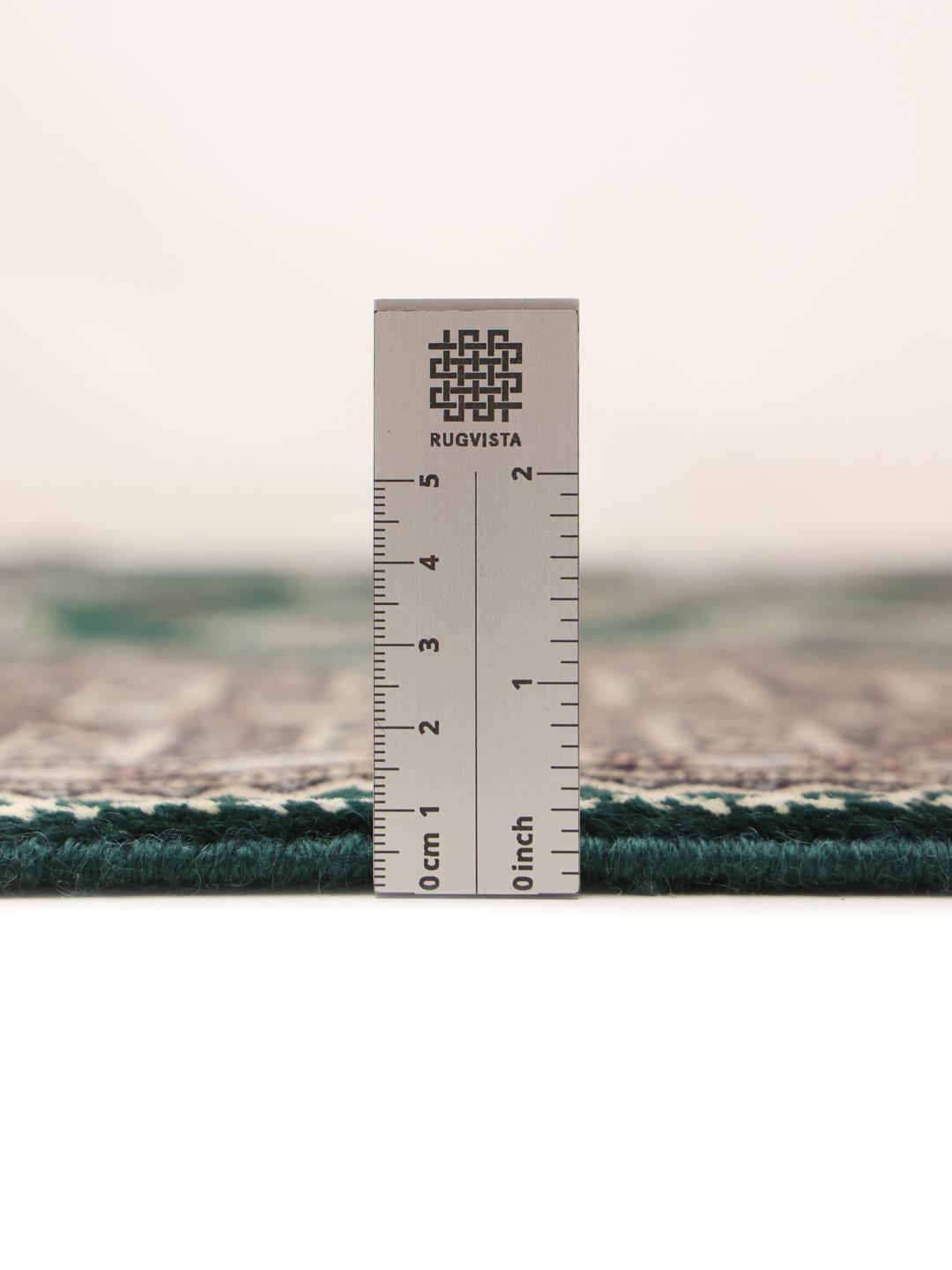
The term 3ply refers to the construction of the yarn itself, where three strands of wool are twisted together before being knotted. This is a critical factor in the rug's longevity and tactile quality. By using a 3ply yarn, the weavers create a pile that is thicker, more lustrous, and significantly more resistant to wear than standard single-ply alternatives. It is a technical choice that prioritises long-term performance without sacrificing the soft, luxurious feel of the wool.
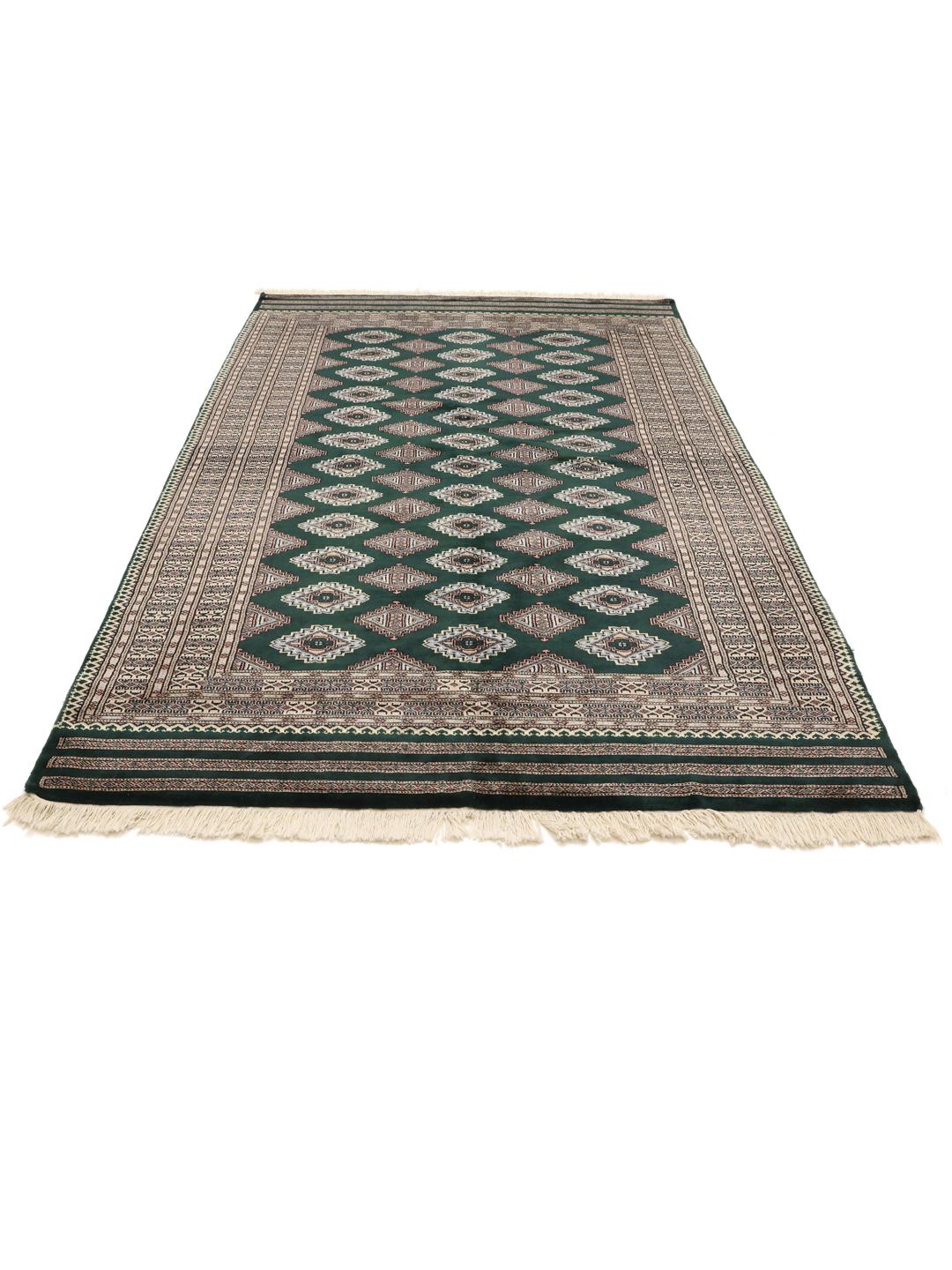
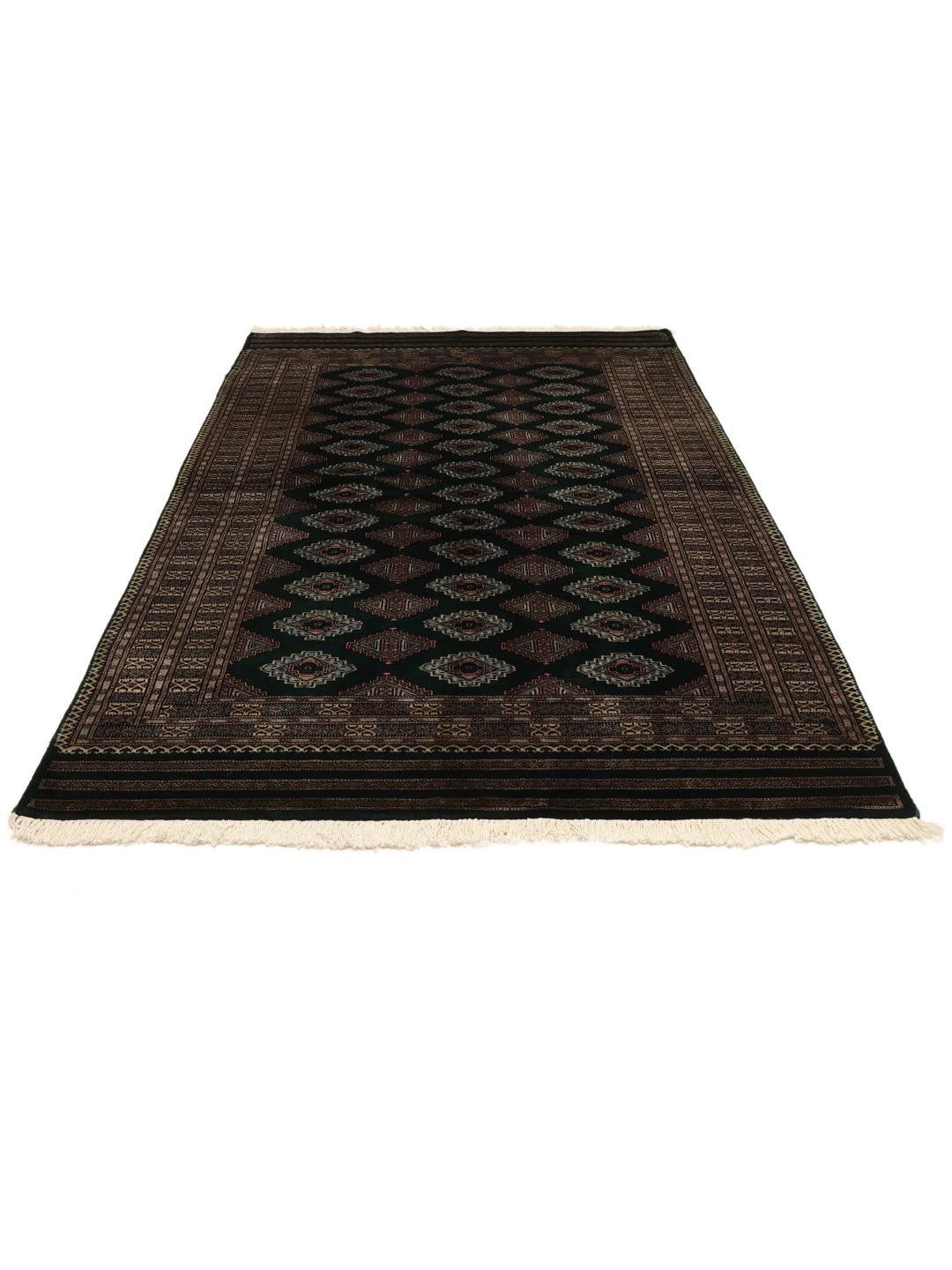
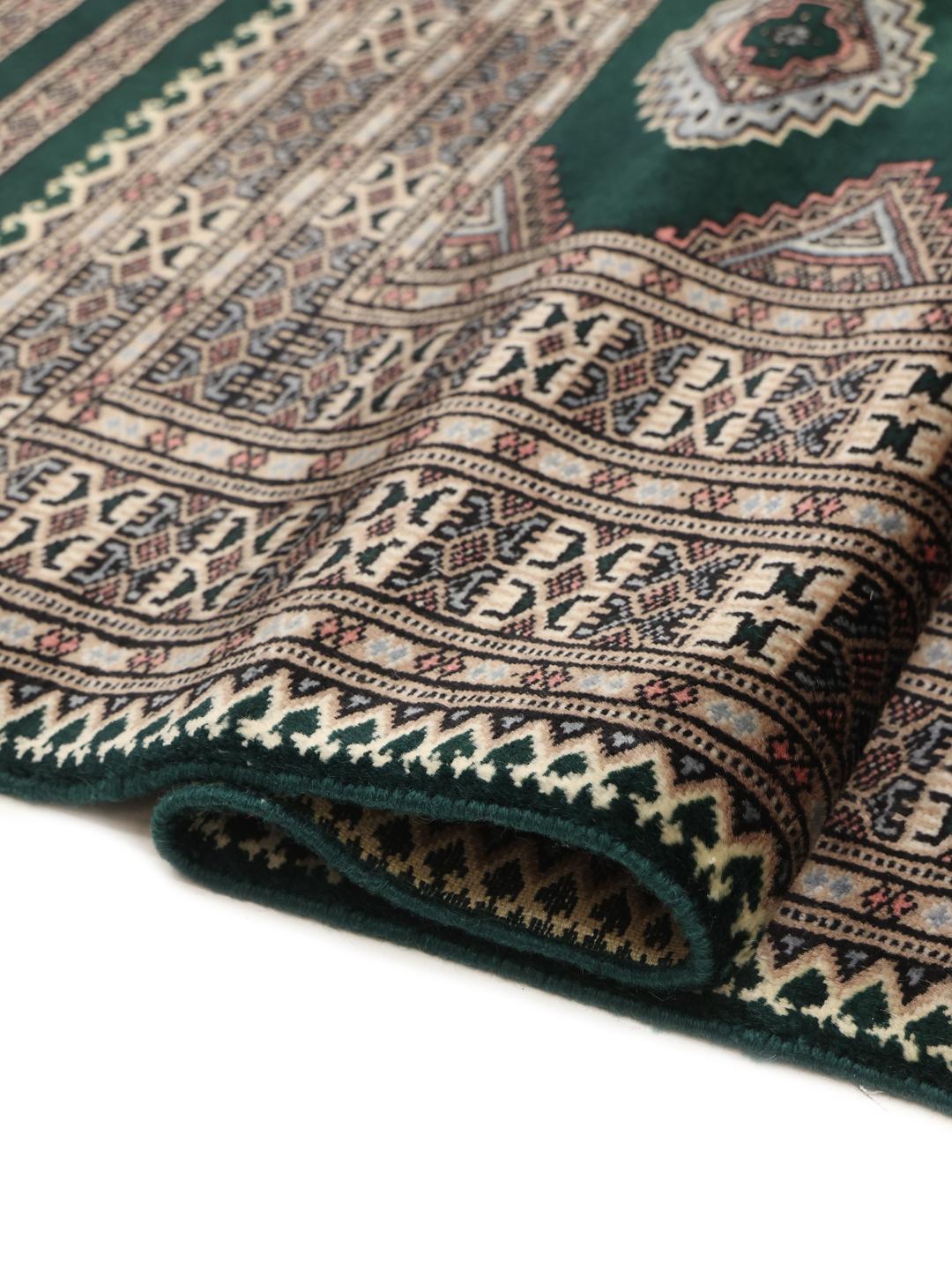
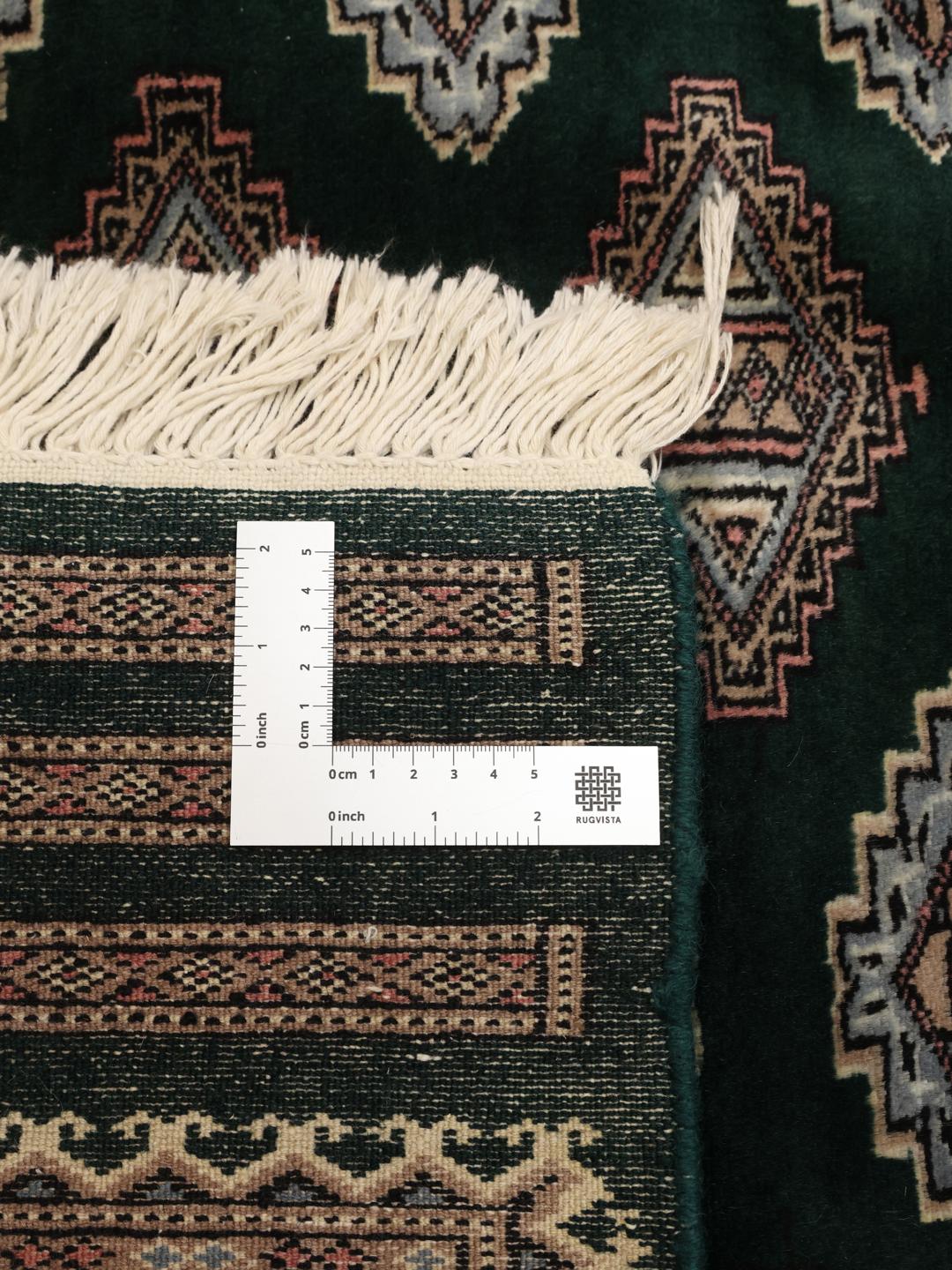
Visually, these rugs are defined by their repetitive gul motifs, which are stylized, octagonal-shaped medallions arranged in rows across the field. These patterns are typically framed by elaborate, geometric borders that provide a sense of order and balance. While red is the most traditional colourway for these rugs, this specific piece features a striking dark-green field, offering a fresh, modern interpretation of a classic design that makes it a standout for collectors and enthusiasts alike.
Owning a hand-knotted rug from this tradition is about more than just decor; it is about preserving a legacy of craftsmanship. These pieces are valued for their durability, the complexity of their designs, and the sheer skill required to produce them. To possess such a rug is to hold a connection to an ancient heritage of textile art, where every knot serves as a testament to the patience and expertise of the person who created it.