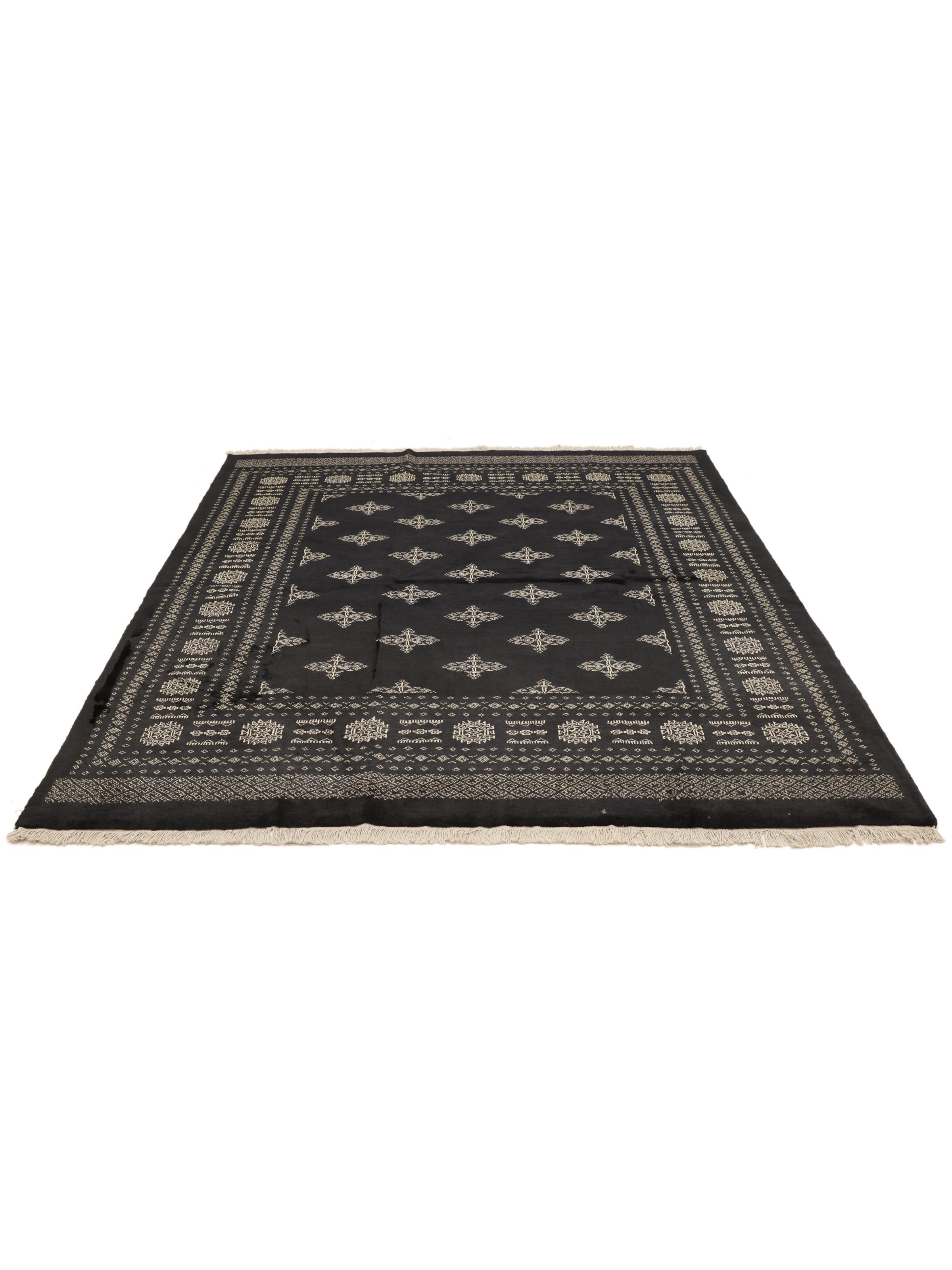
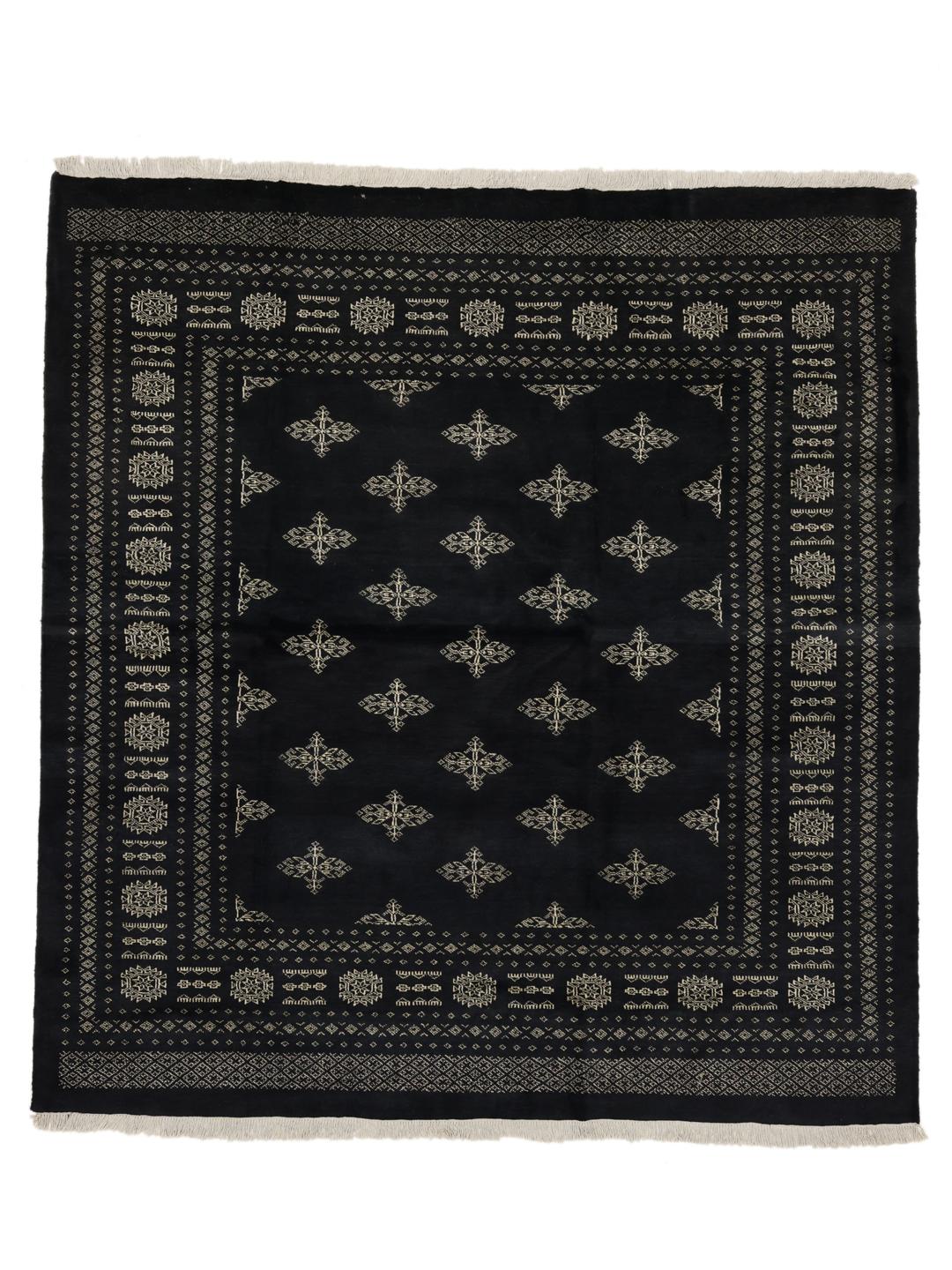
The Bokhara tradition is deeply rooted in the history of the Silk Road, taking its name from the ancient city of Bukhara, which served as a vital trading hub for textiles and goods in Central Asia. While the style originated in this nomadic culture, the finest modern examples are now primarily crafted in Pakistan, where artisans have refined the techniques over generations to achieve a level of consistency and quality that is globally recognised.
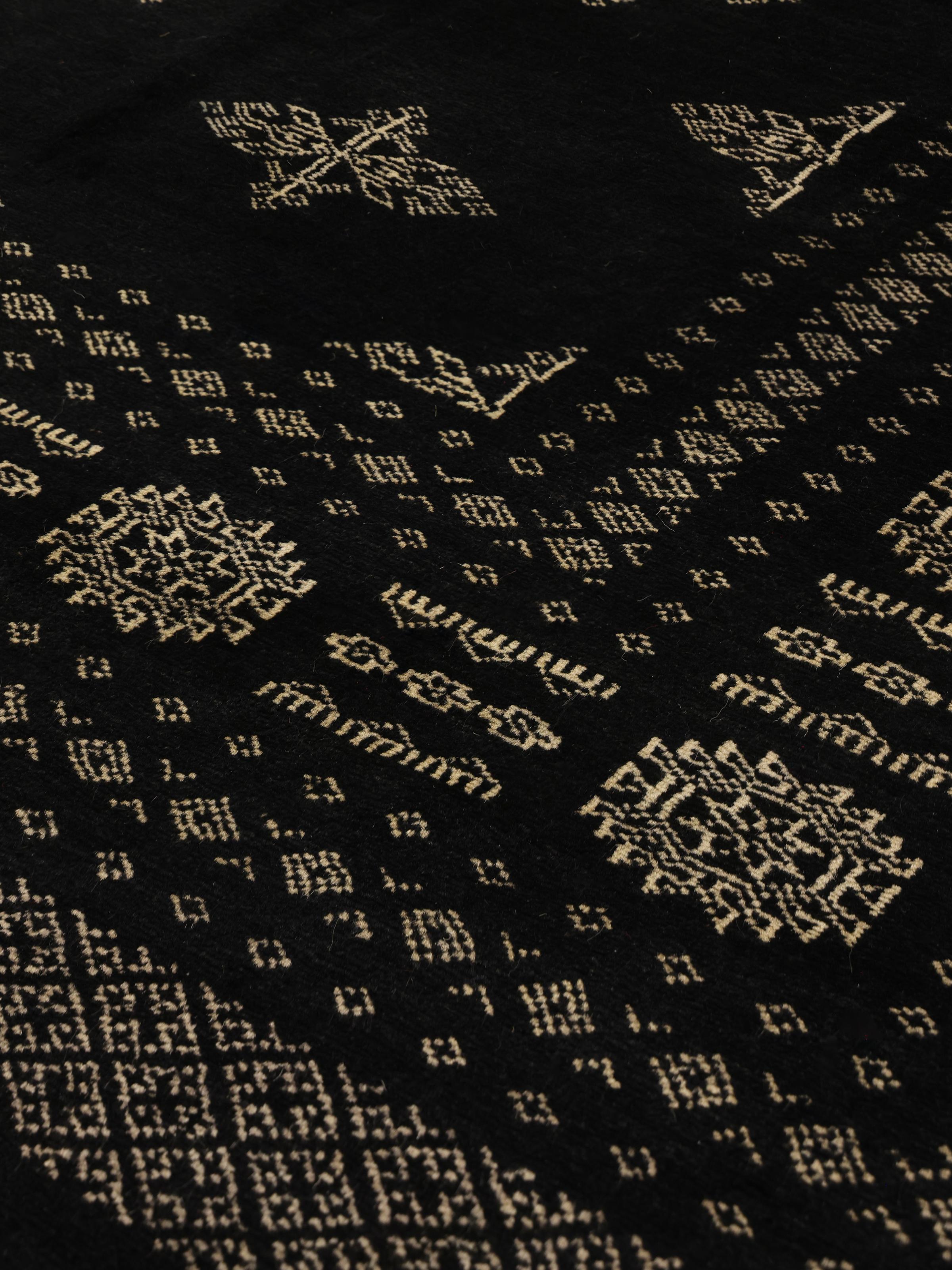
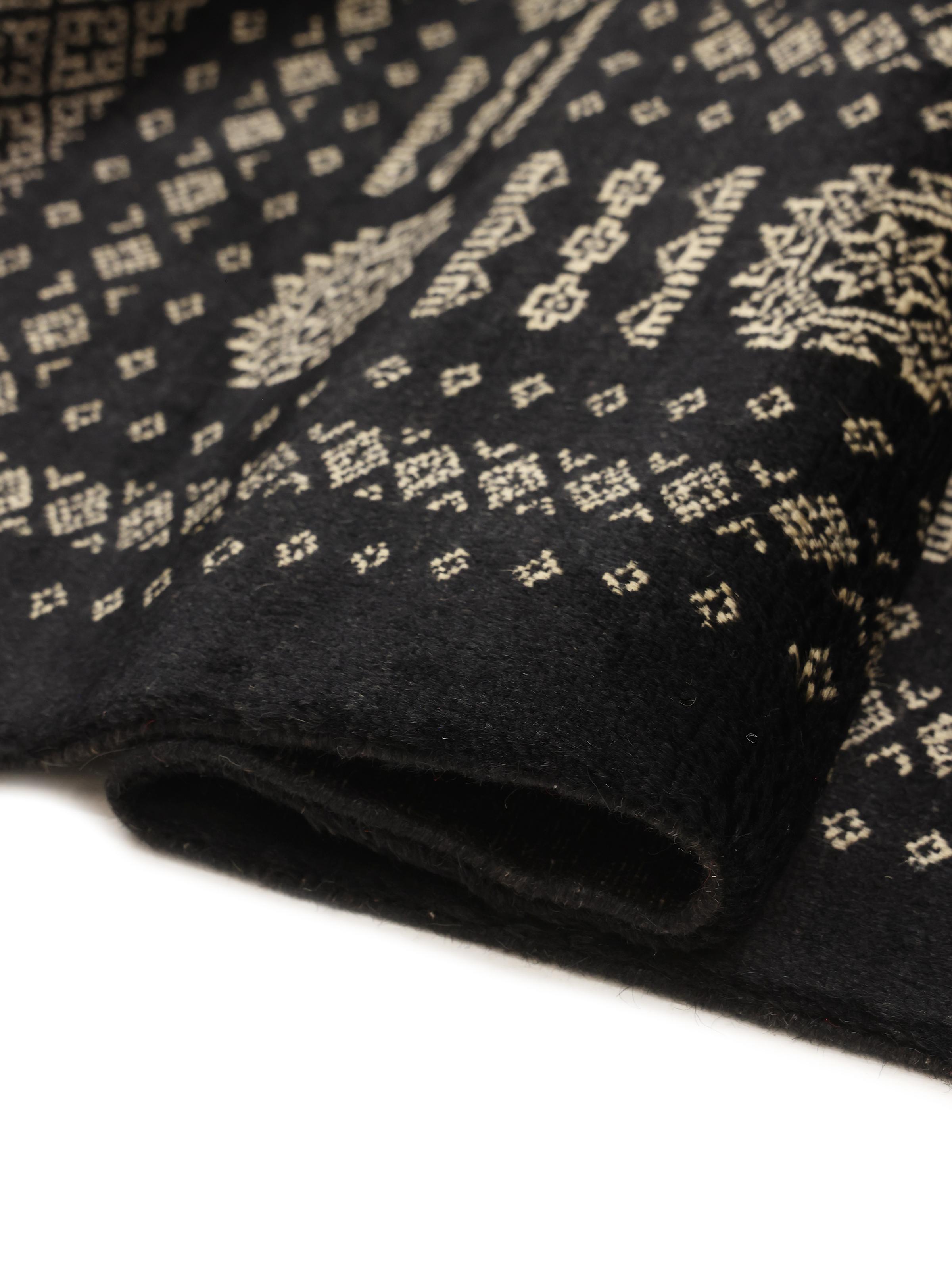
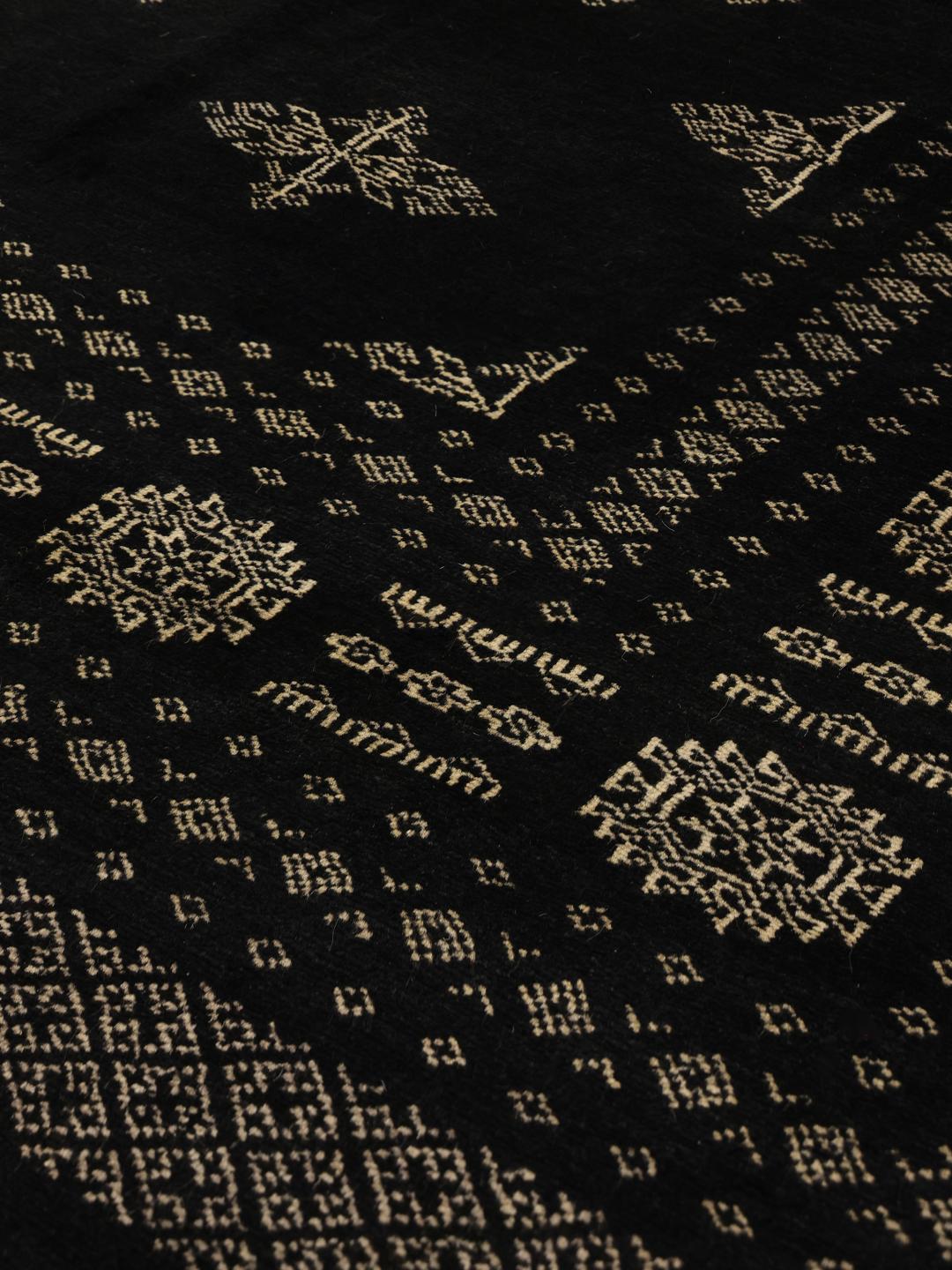
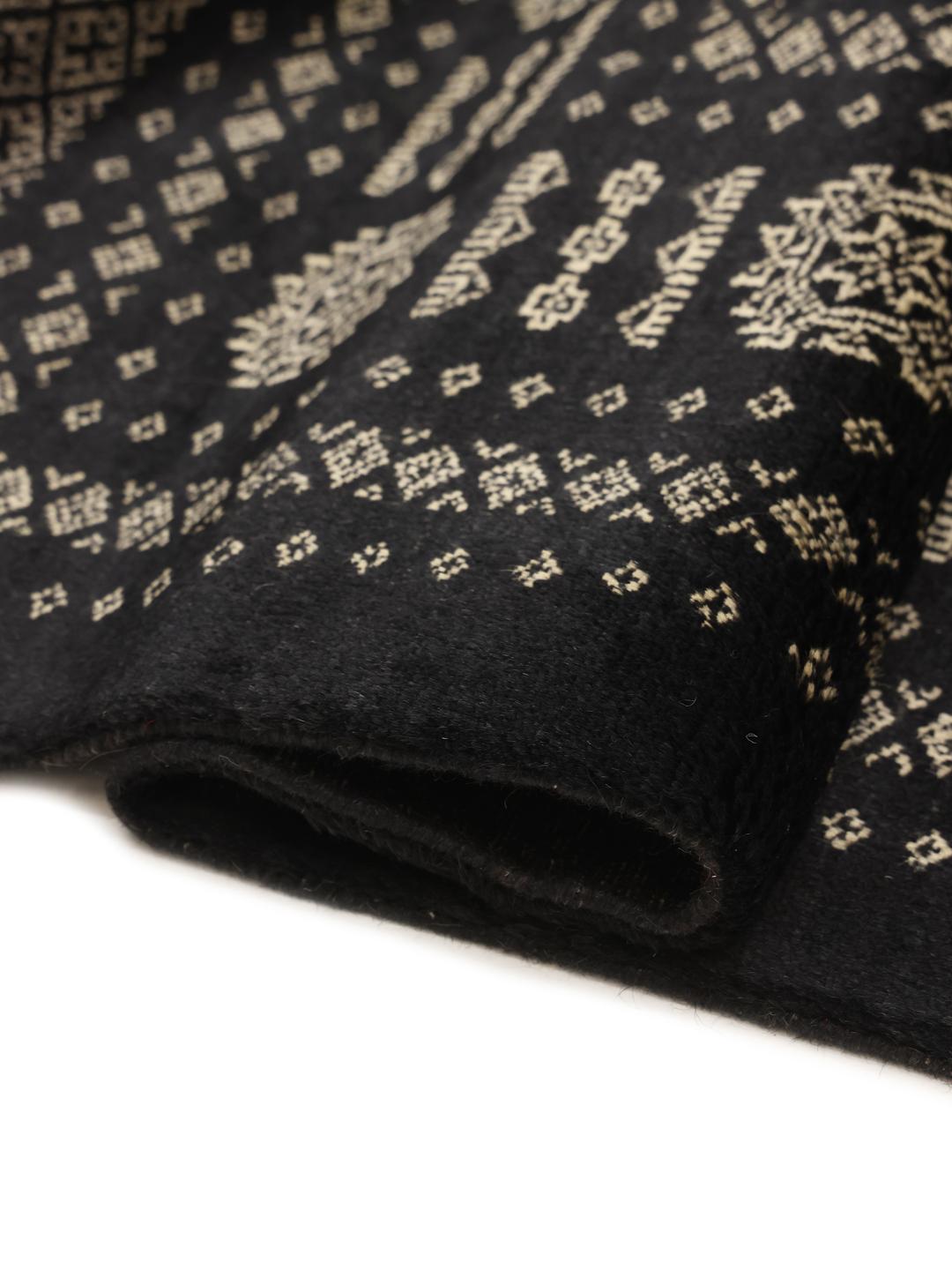
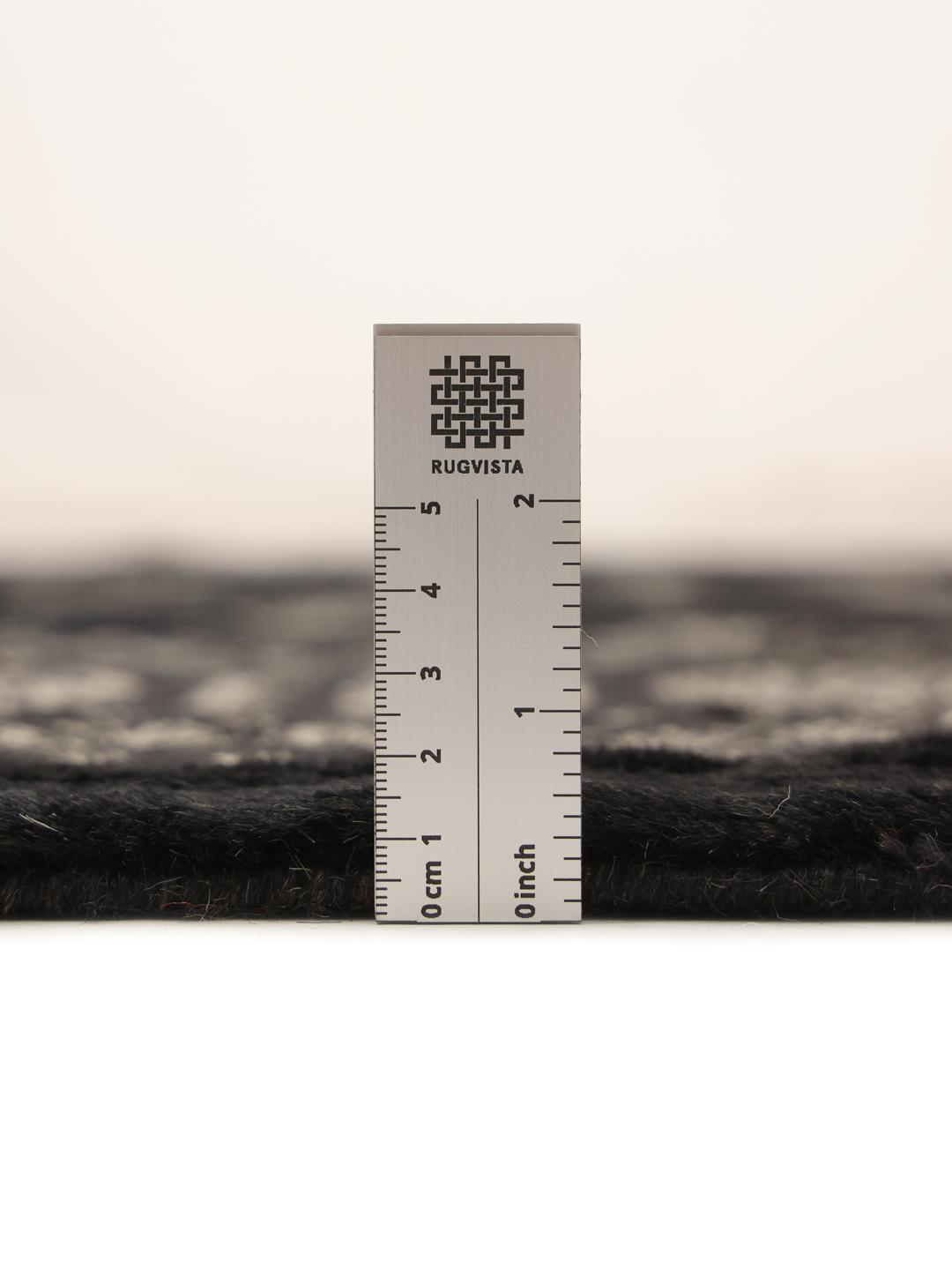
The term 2ply refers to the construction of the wool yarn, where two individual strands are twisted together before being knotted into the rug. This specific method is significant because it results in a pile that is not only denser and more lustrous but also significantly more durable than single-ply alternatives. The twist provides a resilience that helps the rug withstand daily life while maintaining its soft, inviting texture.
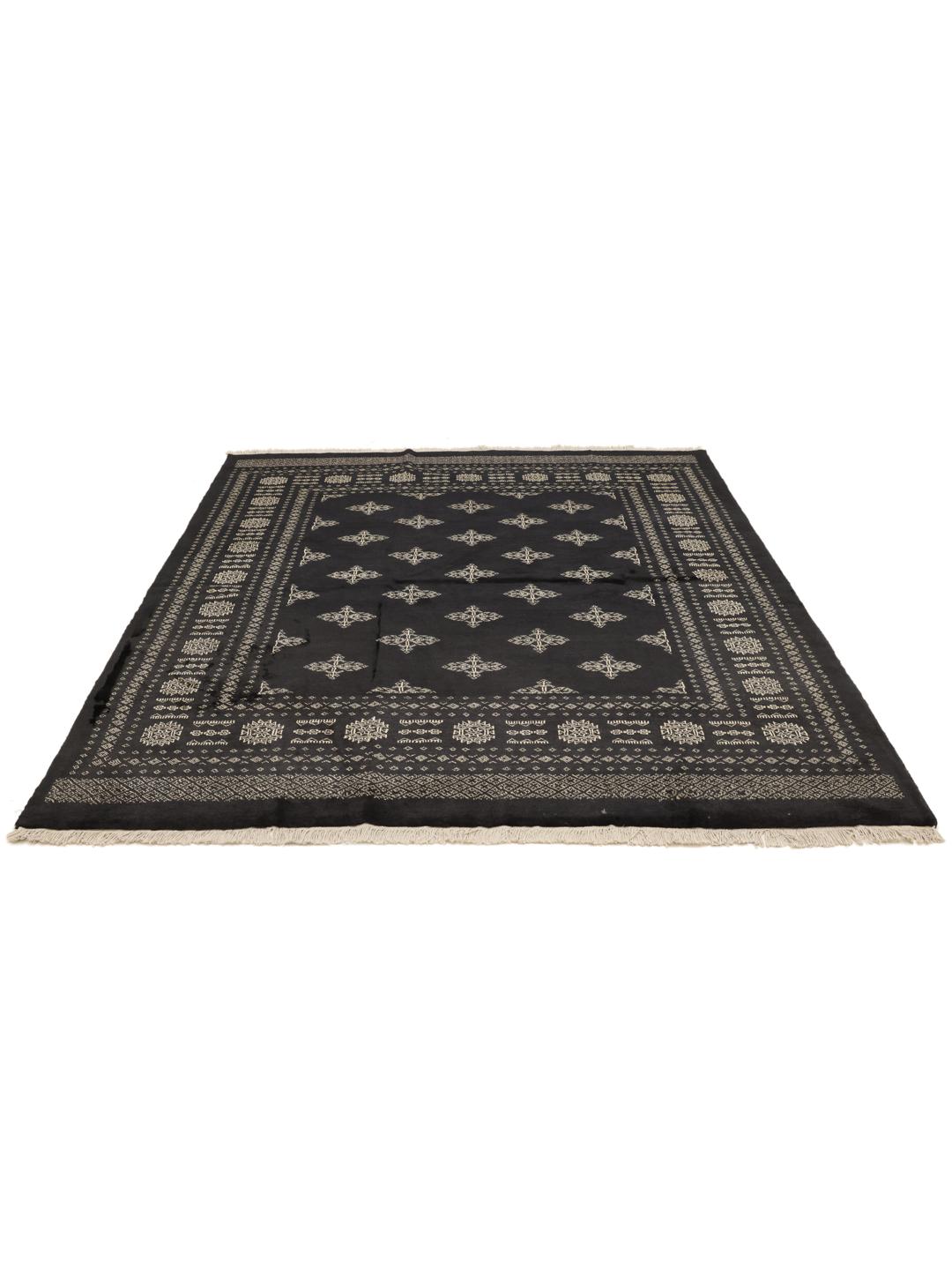
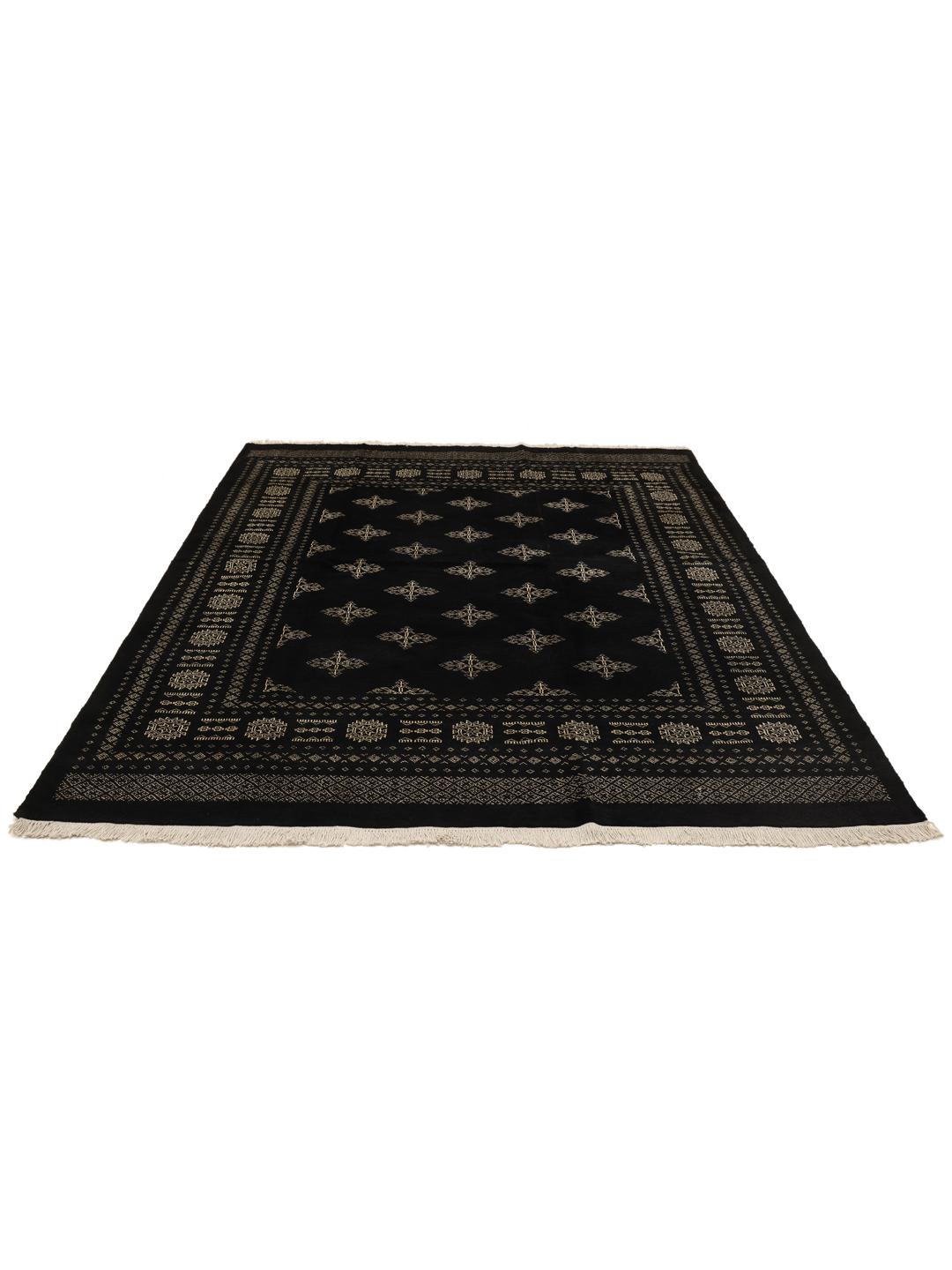
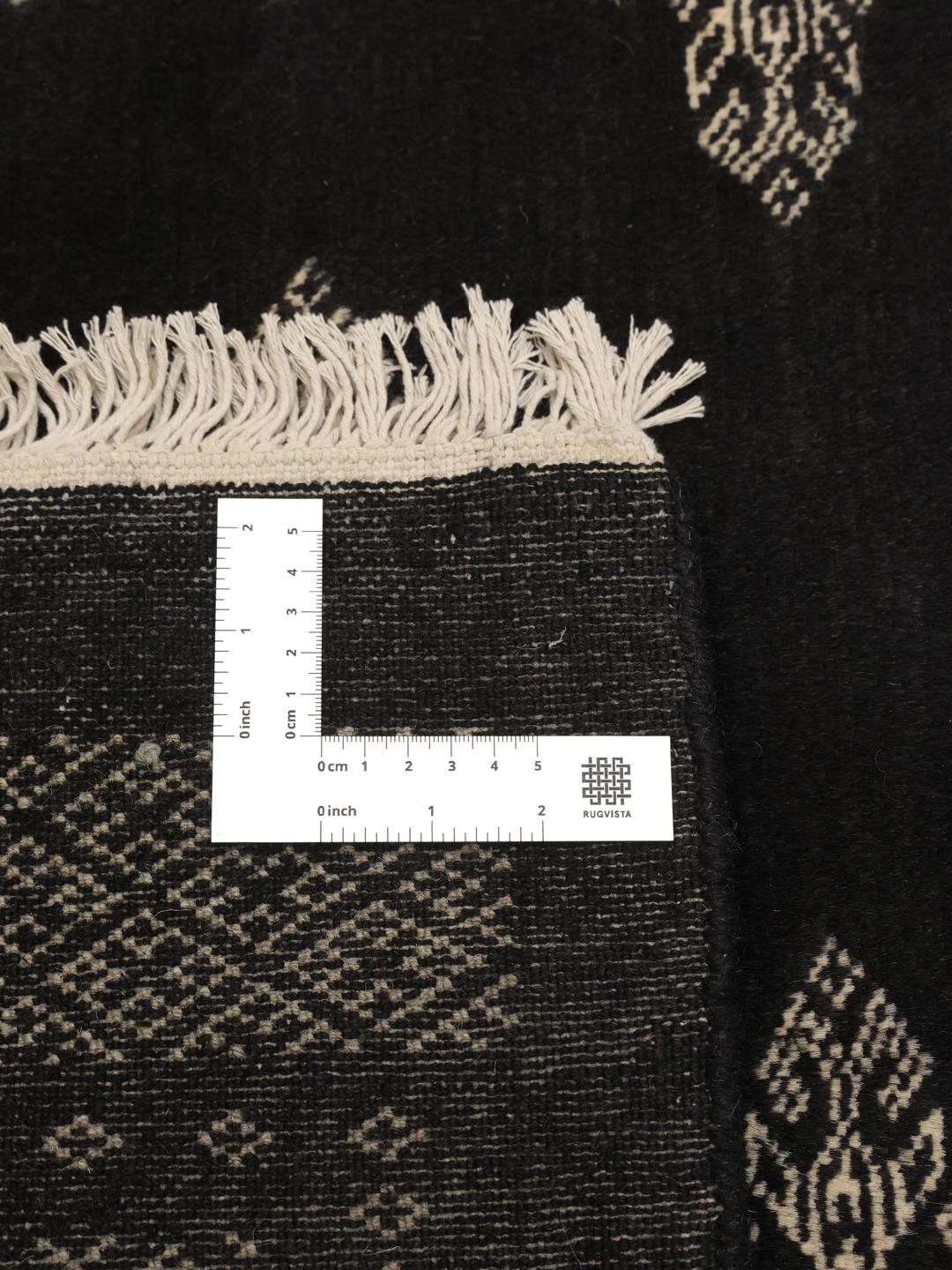
Visually, these rugs are defined by their rhythmic, repeating motifs, most notably the gul—an octagonal or elephant-foot shaped medallion. While traditional palettes often favour deep, saturated reds, this piece offers a contemporary, sophisticated take with its black field and contrasting geometric details, showcasing the versatility of the tradition.
Owning a hand-knotted rug from this lineage is an act of preserving a long-standing cultural practice. These pieces are valued by collectors and homeowners alike for their combination of heritage, skill, and lasting quality. To possess one is to connect with a legacy of craftsmanship that prioritises the human touch, ensuring that your home holds a piece with genuine cultural weight and enduring aesthetic appeal.