The Bokhara rug tradition is one of the most storied in the world of textiles, taking its name from the ancient Silk Road city of Bukhara in Central Asia. While the style originated in the nomadic tribes of the steppes, the finest examples of these rugs have been produced in Pakistan for generations, where artisans have refined the technique to achieve a level of consistency and softness that is highly prized by collectors.
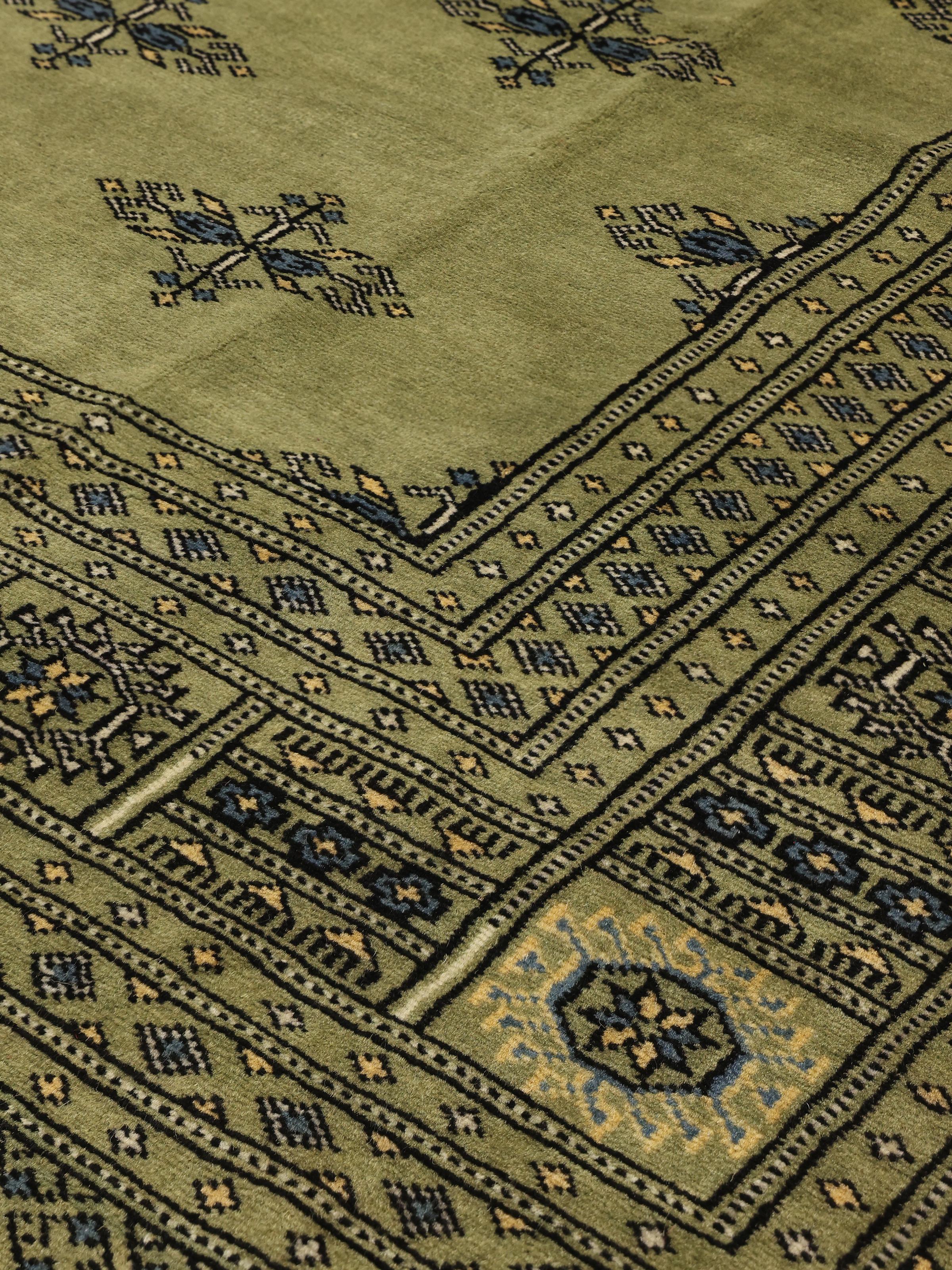
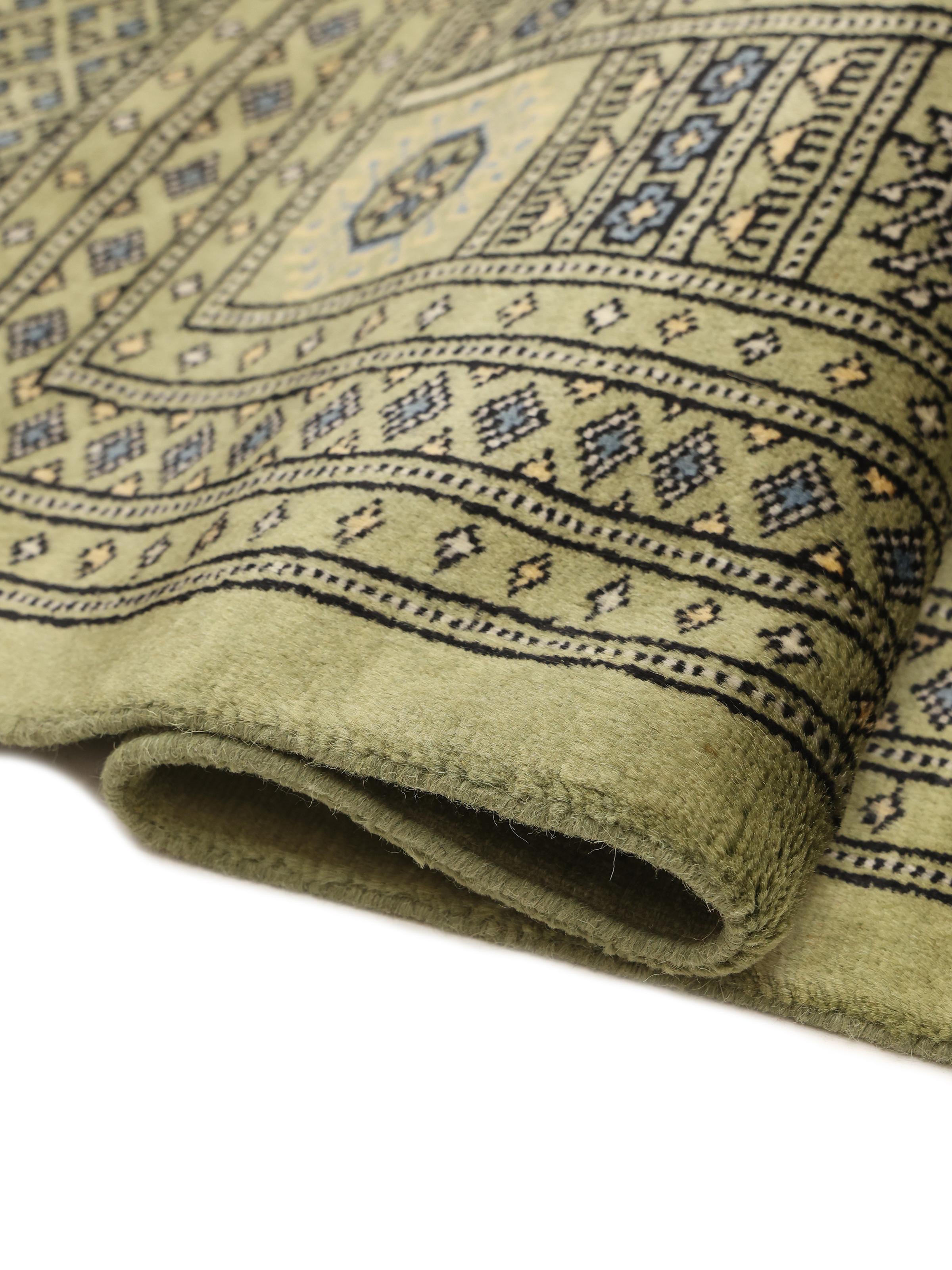
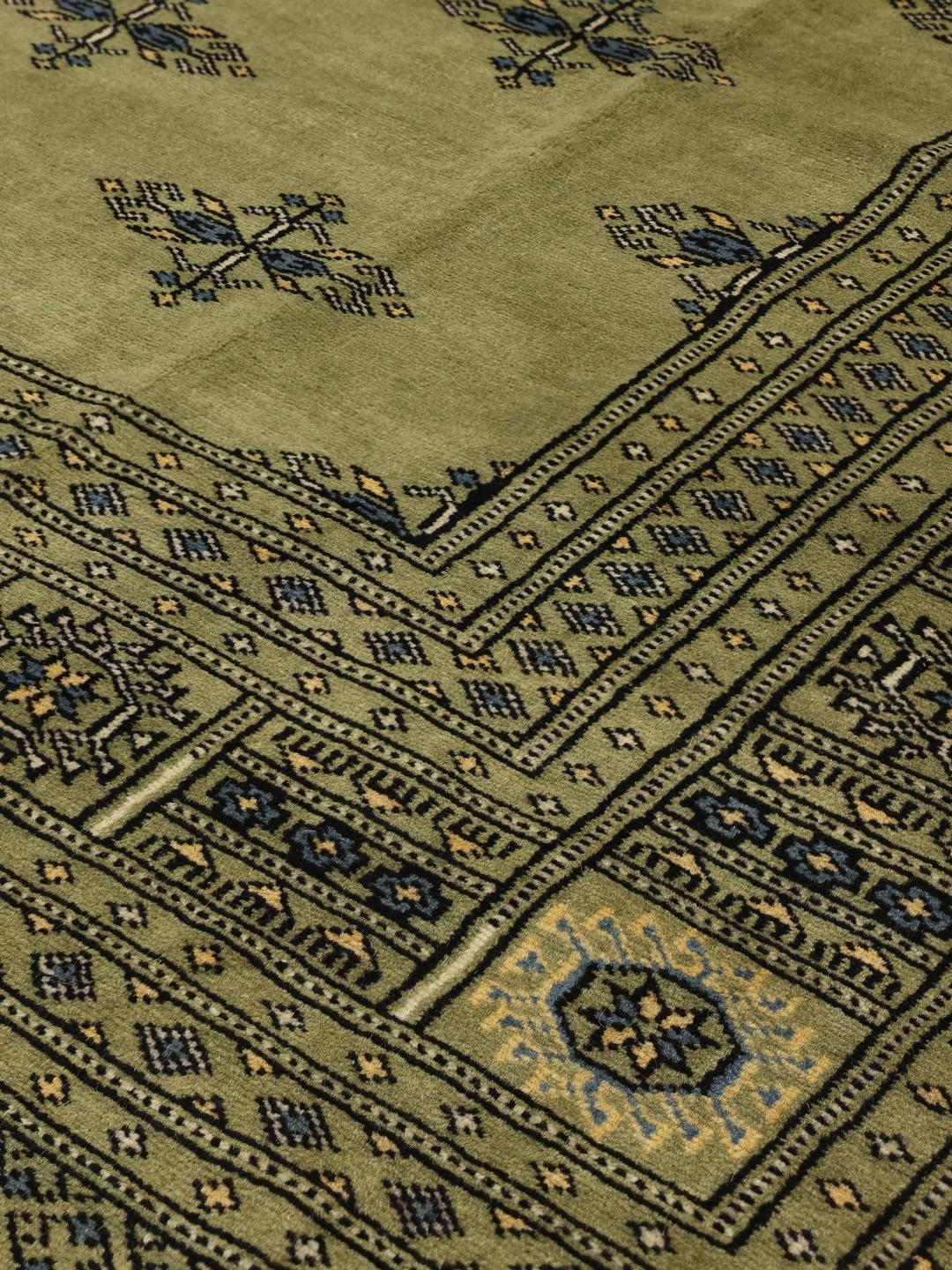
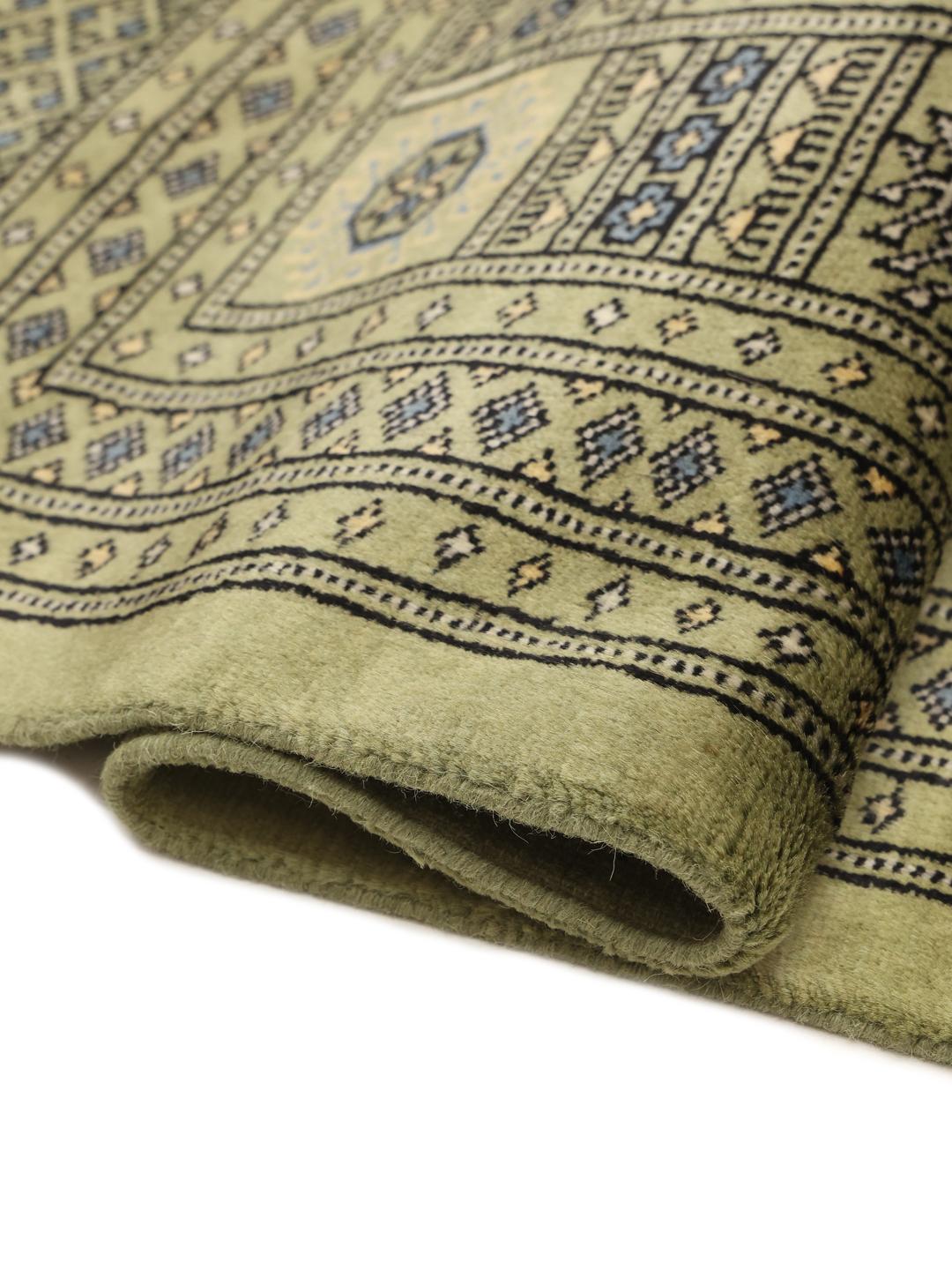
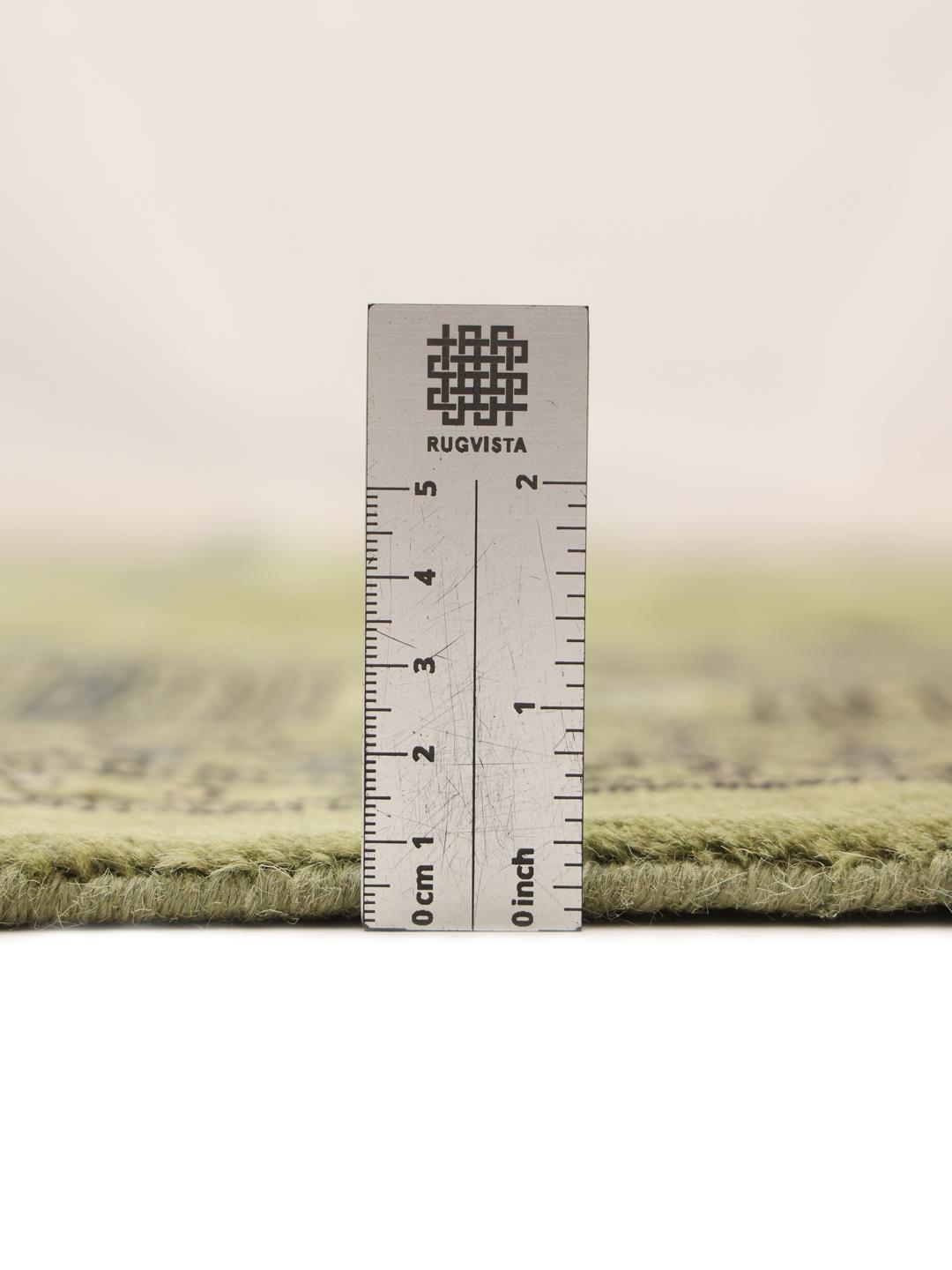
The term 2ply refers to the specific way the wool is prepared before weaving. By twisting two strands of wool together, the yarn becomes stronger and more lustrous, allowing for a denser, more durable pile that feels exceptionally soft underfoot. This technical choice is what gives the Bokhara its signature velvety appearance and long-lasting quality.
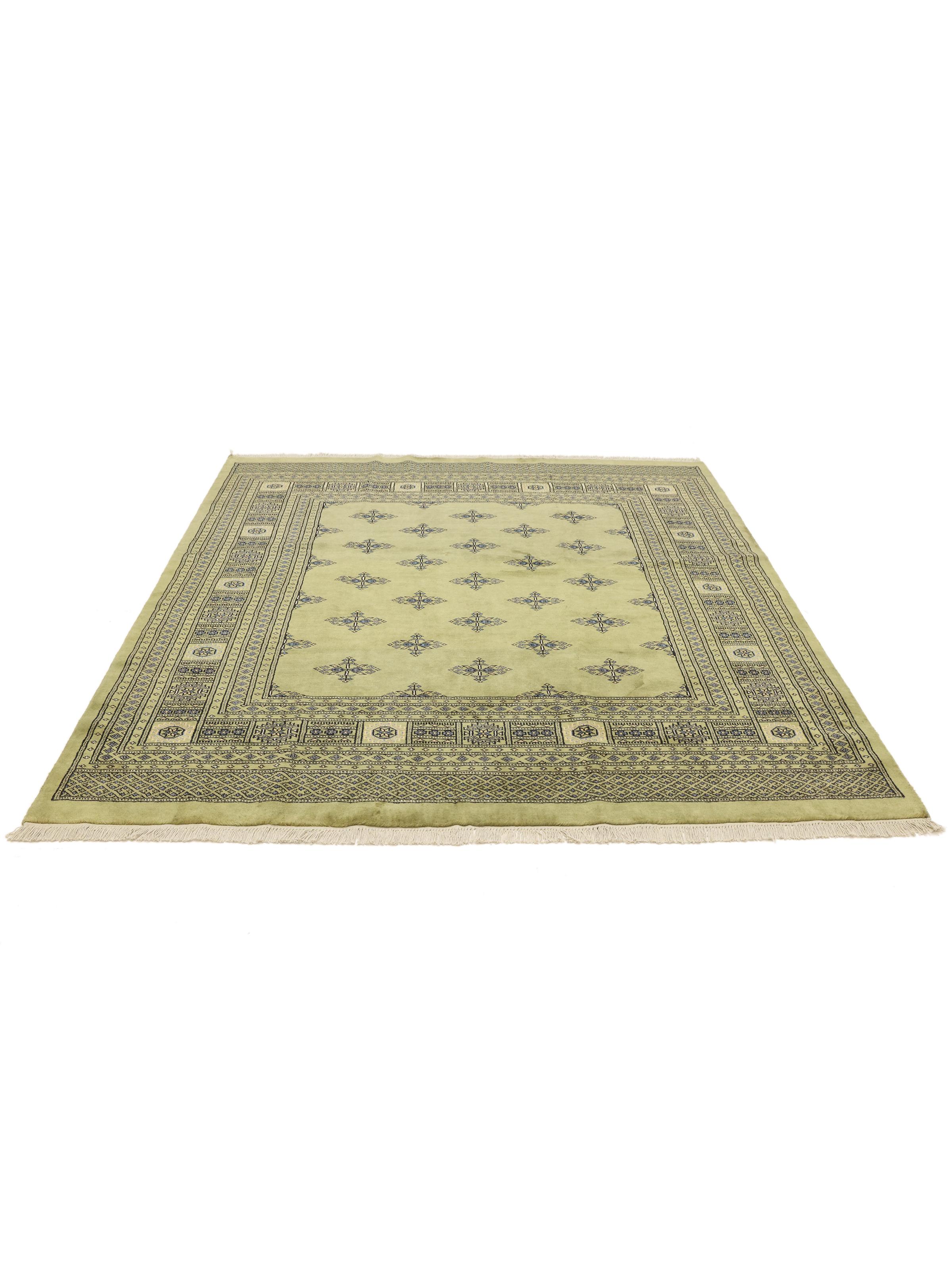
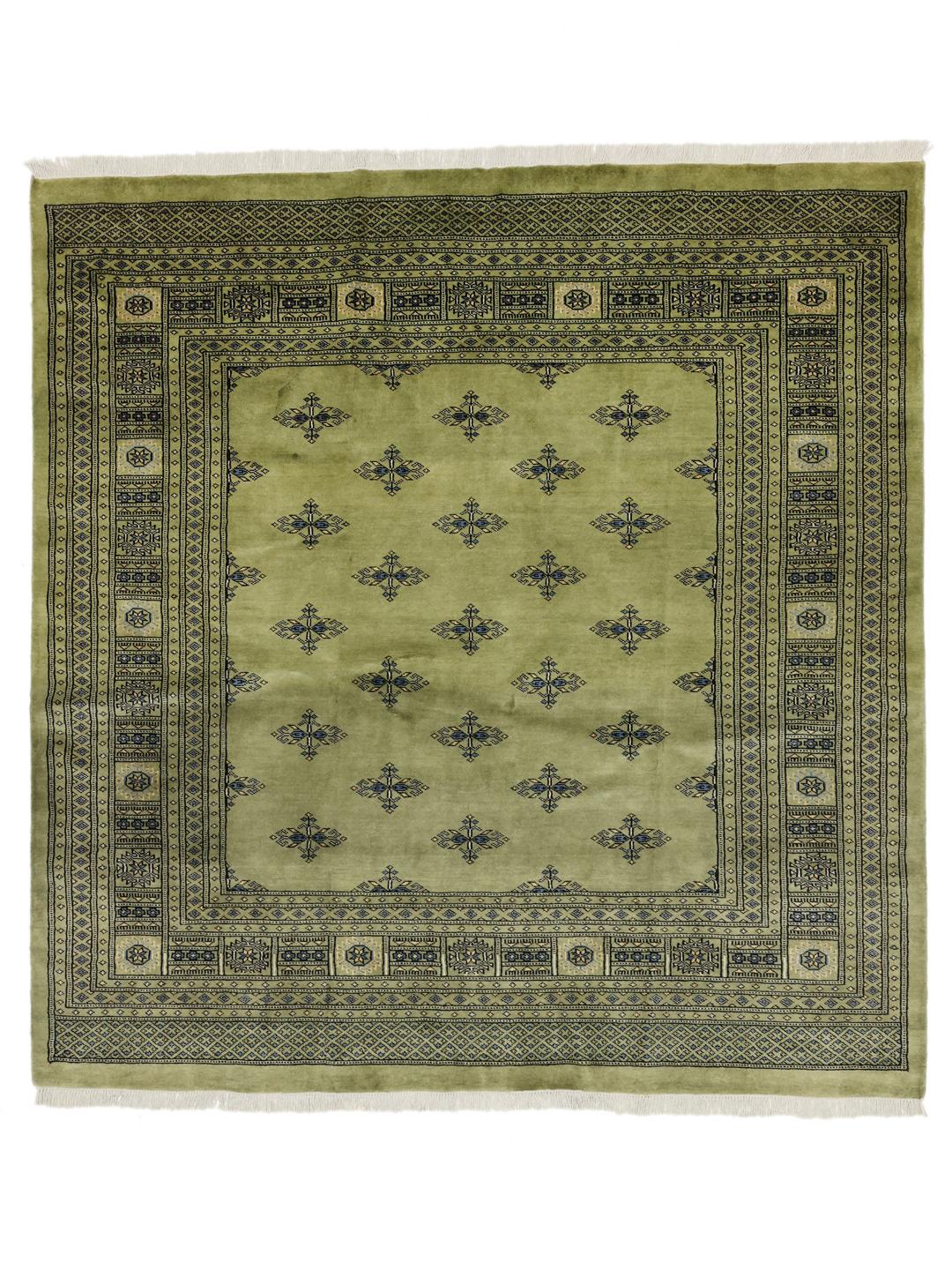
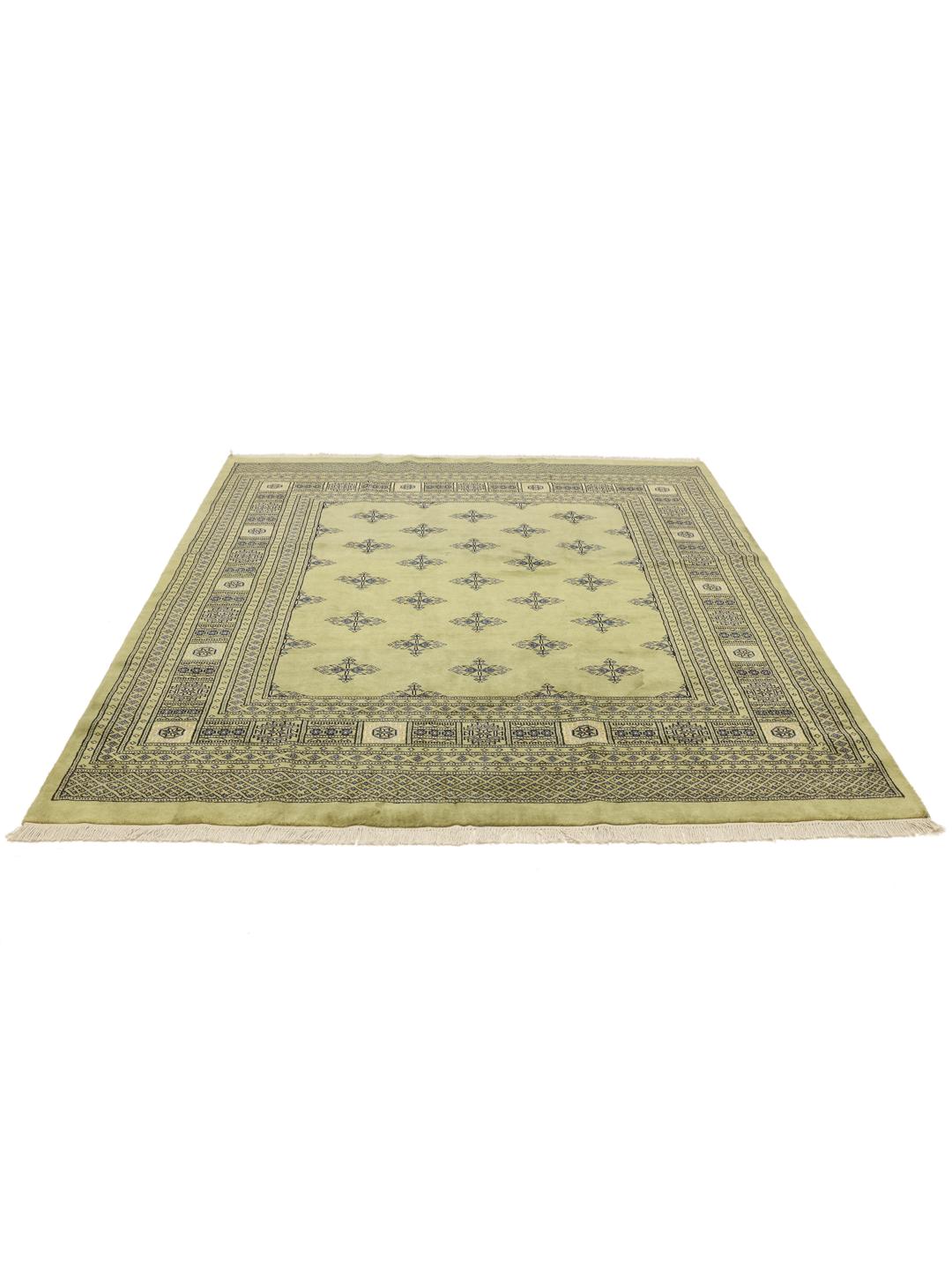
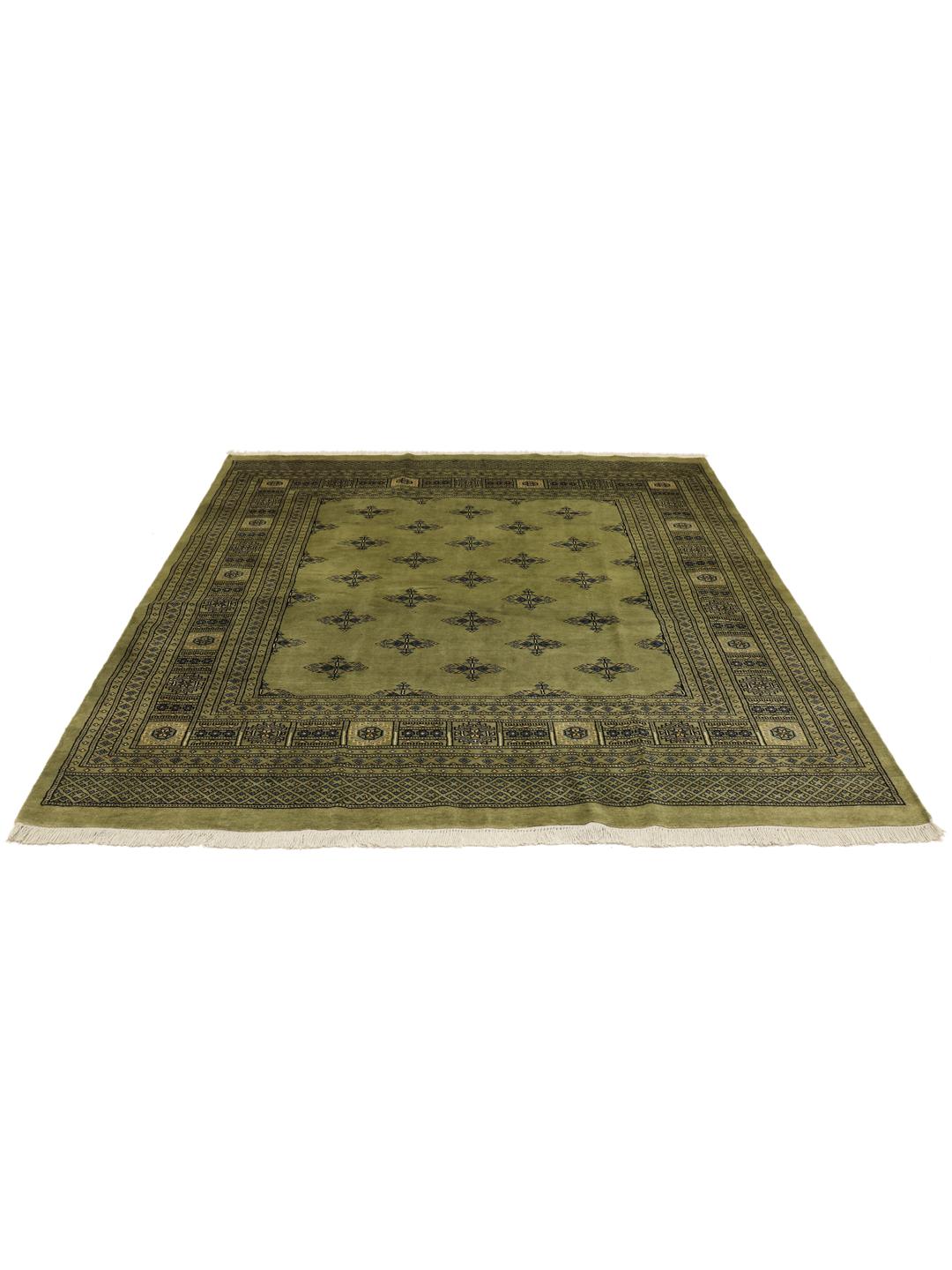
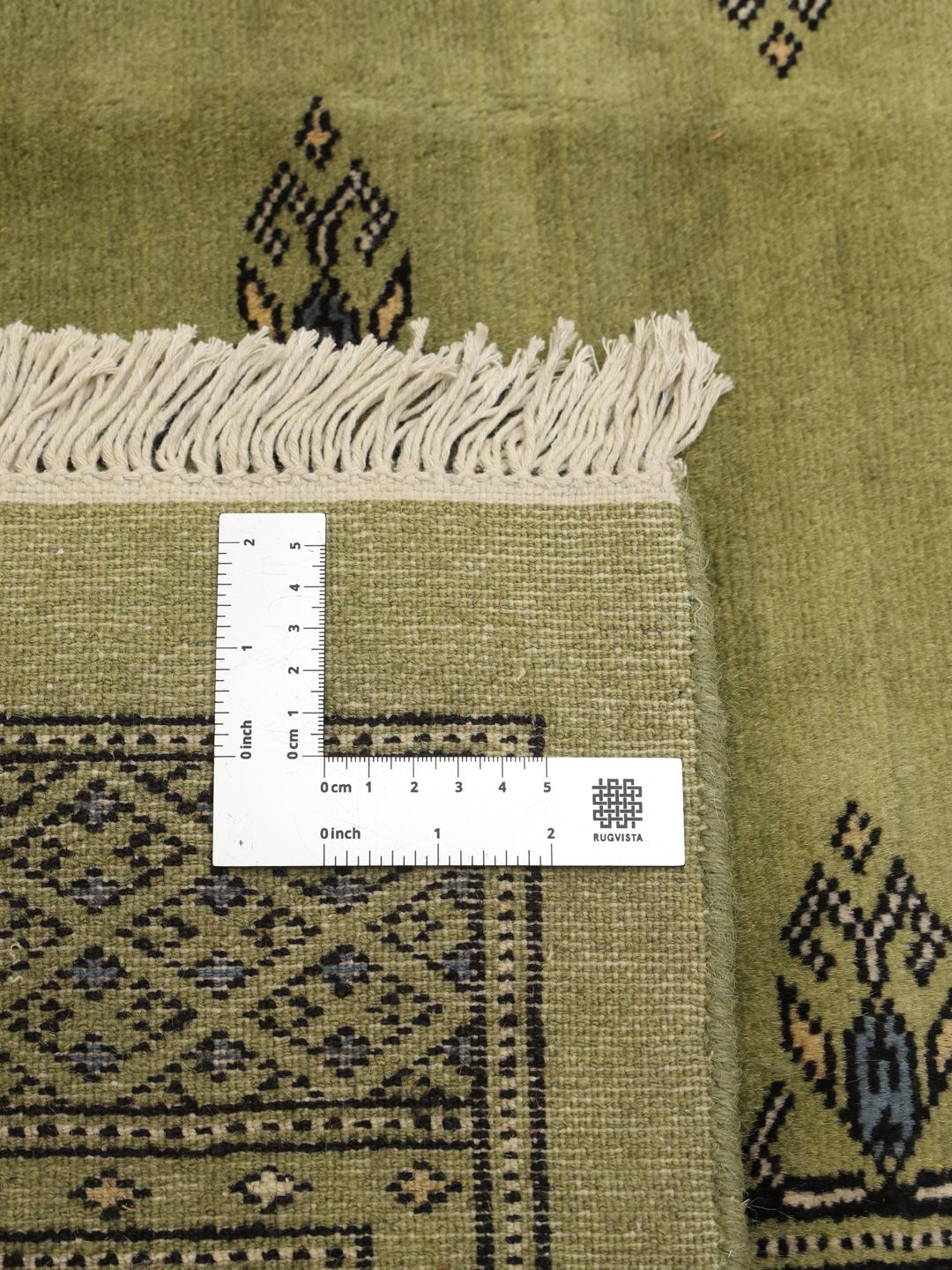
Visually, these rugs are defined by their rhythmic patterns, most notably the repeating gul motifs. These medallions, often resembling elephant footprints, are arranged in neat, orderly rows across the field. This particular piece features a striking light-green field, a refreshing departure from the traditional deep reds, which highlights the crispness of the geometric detailing and borders.
Owning a hand-knotted rug of this lineage is an investment in cultural heritage and human skill. These rugs are valued not just for their aesthetic appeal, but for the tradition they represent—a bridge between ancient nomadic artistry and the refined standards of modern interior design. To possess one is to own a durable, beautiful piece of history that remains relevant in any contemporary home.