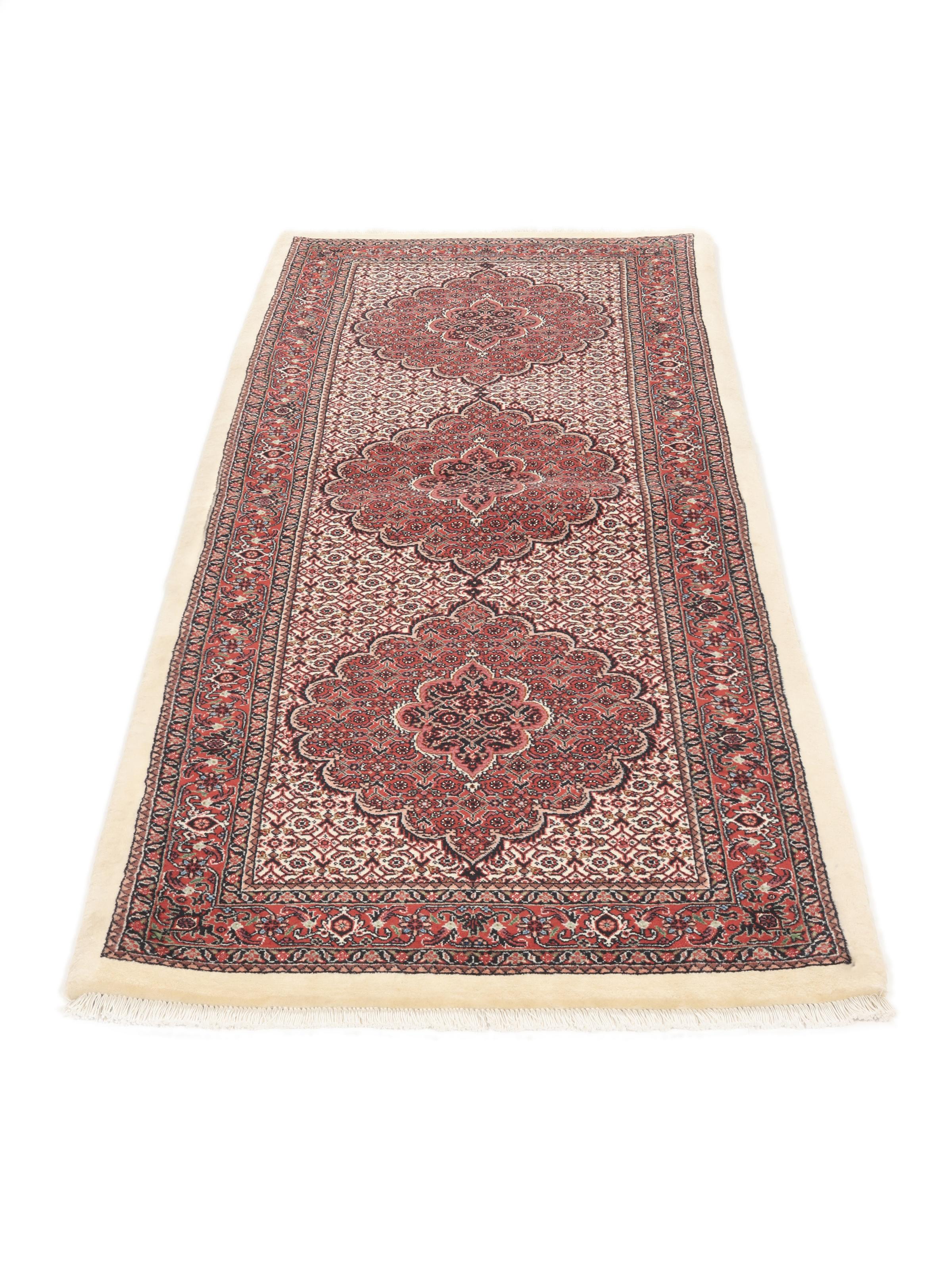
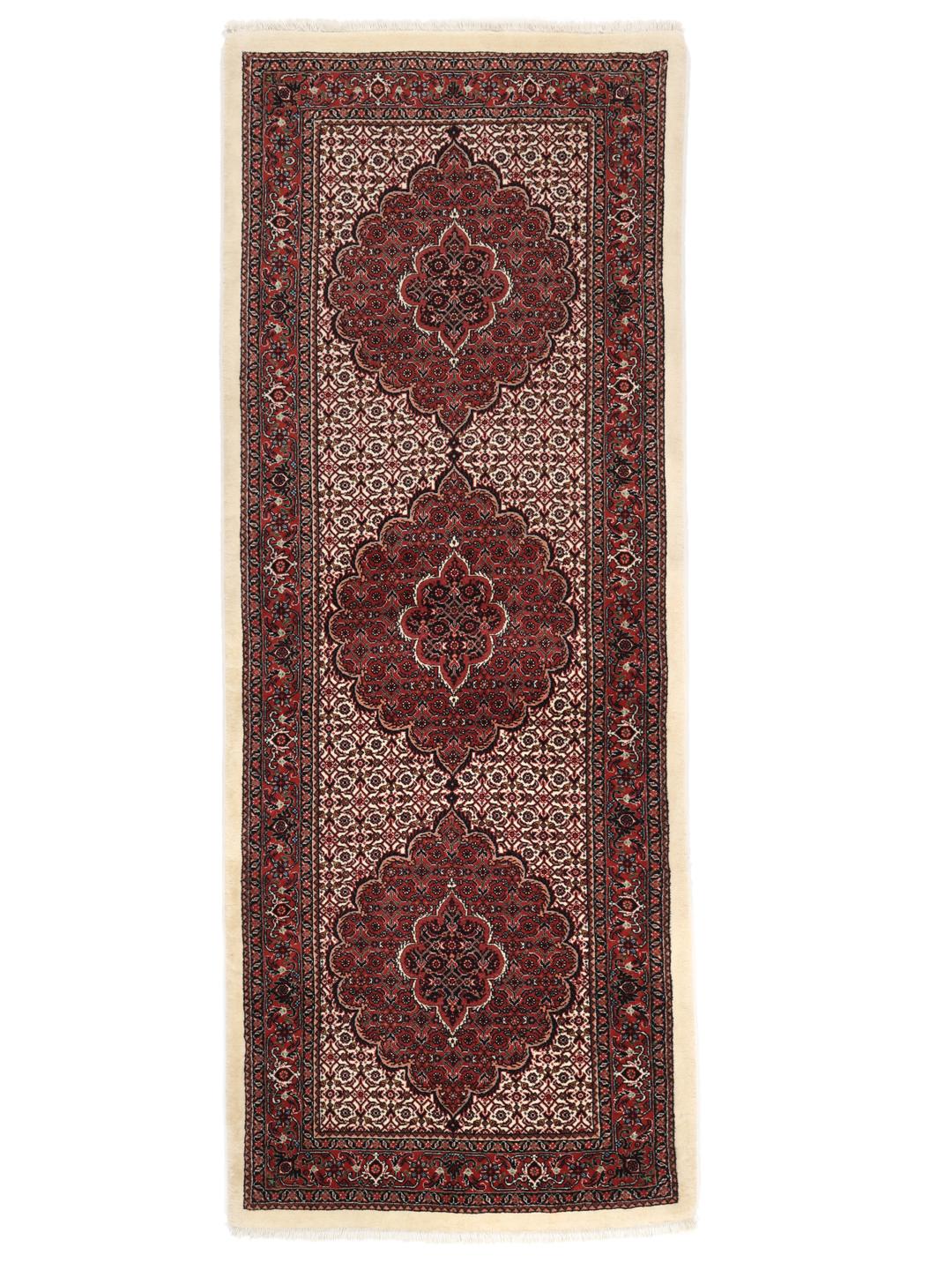
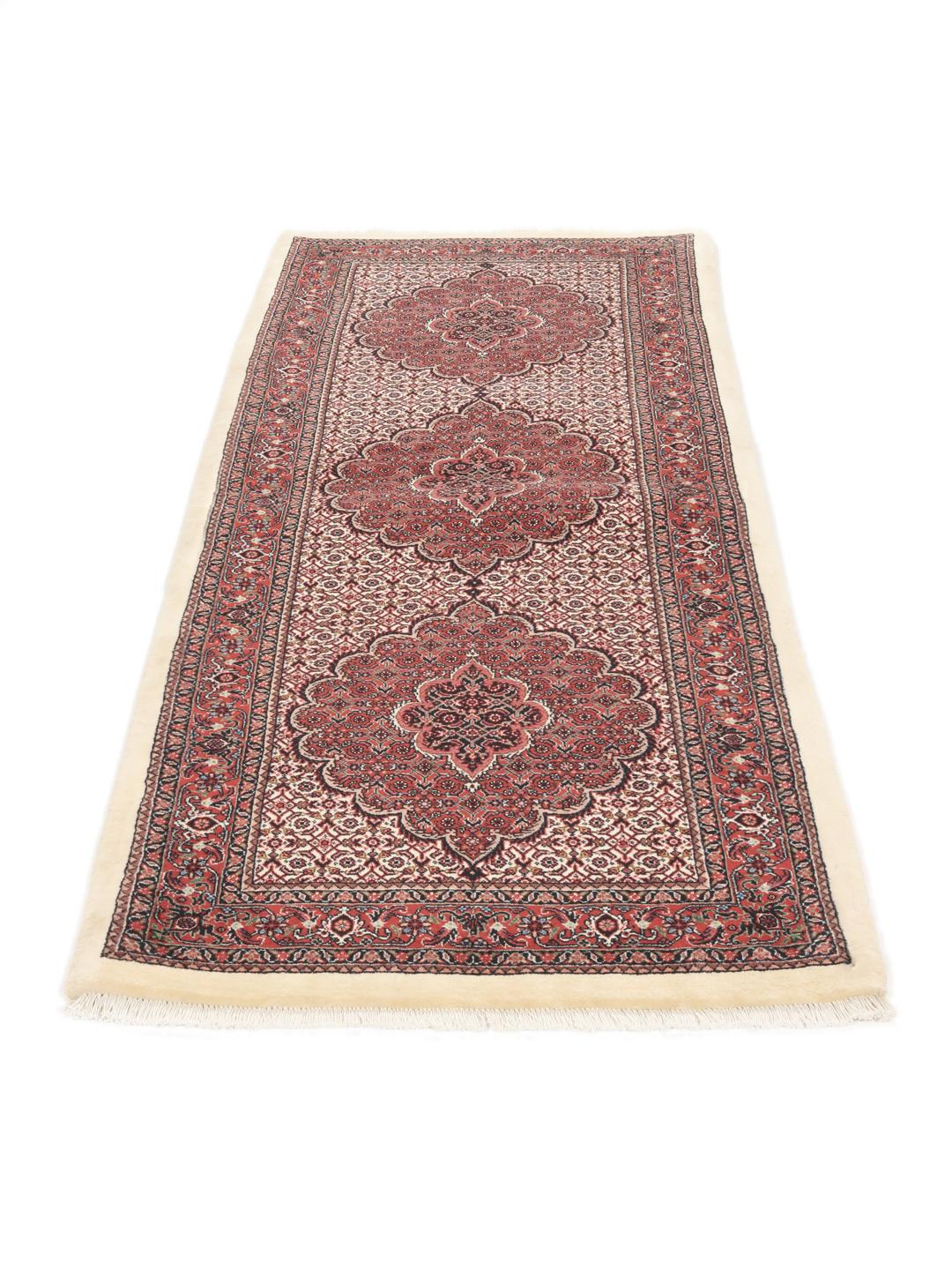
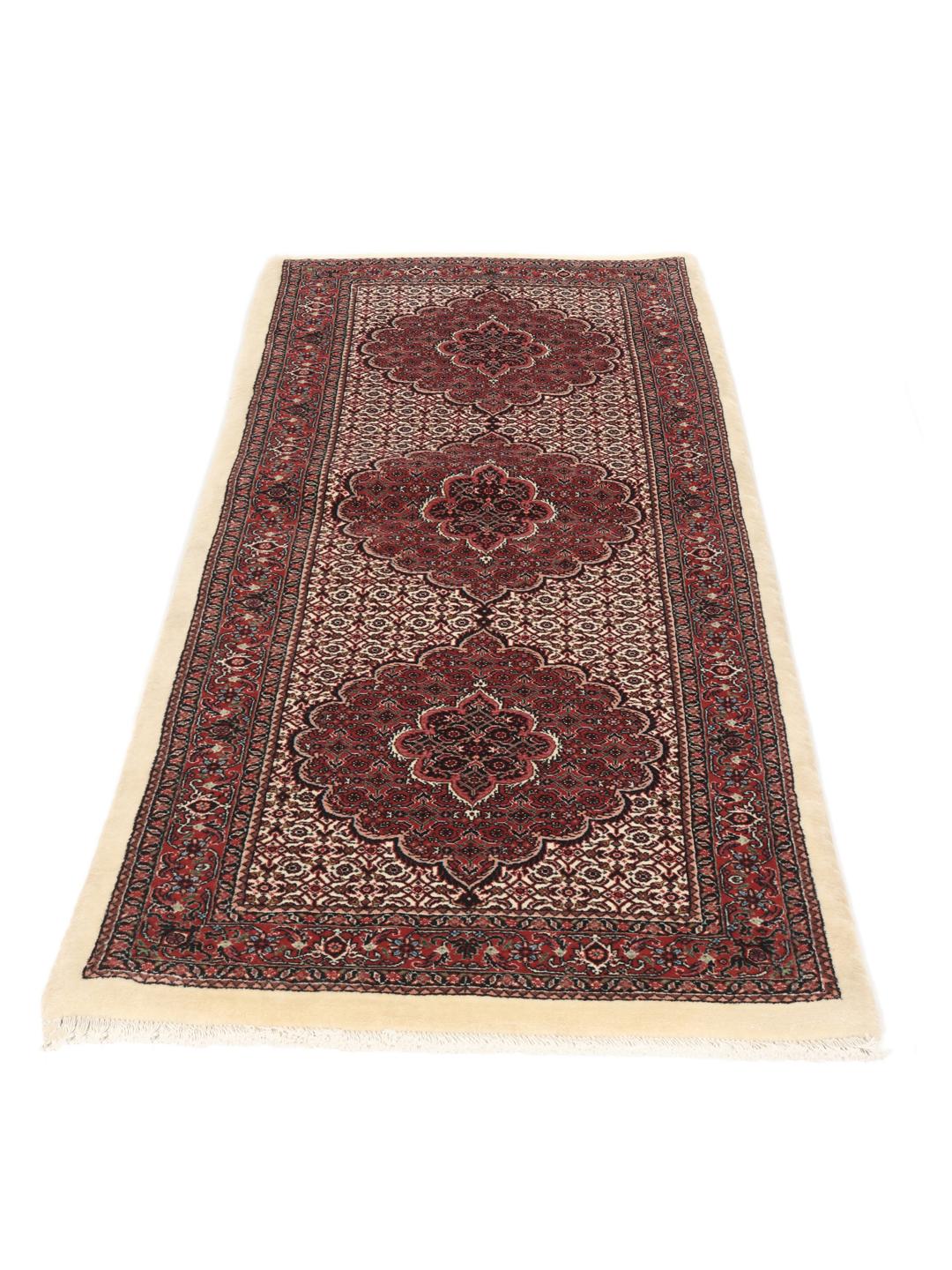
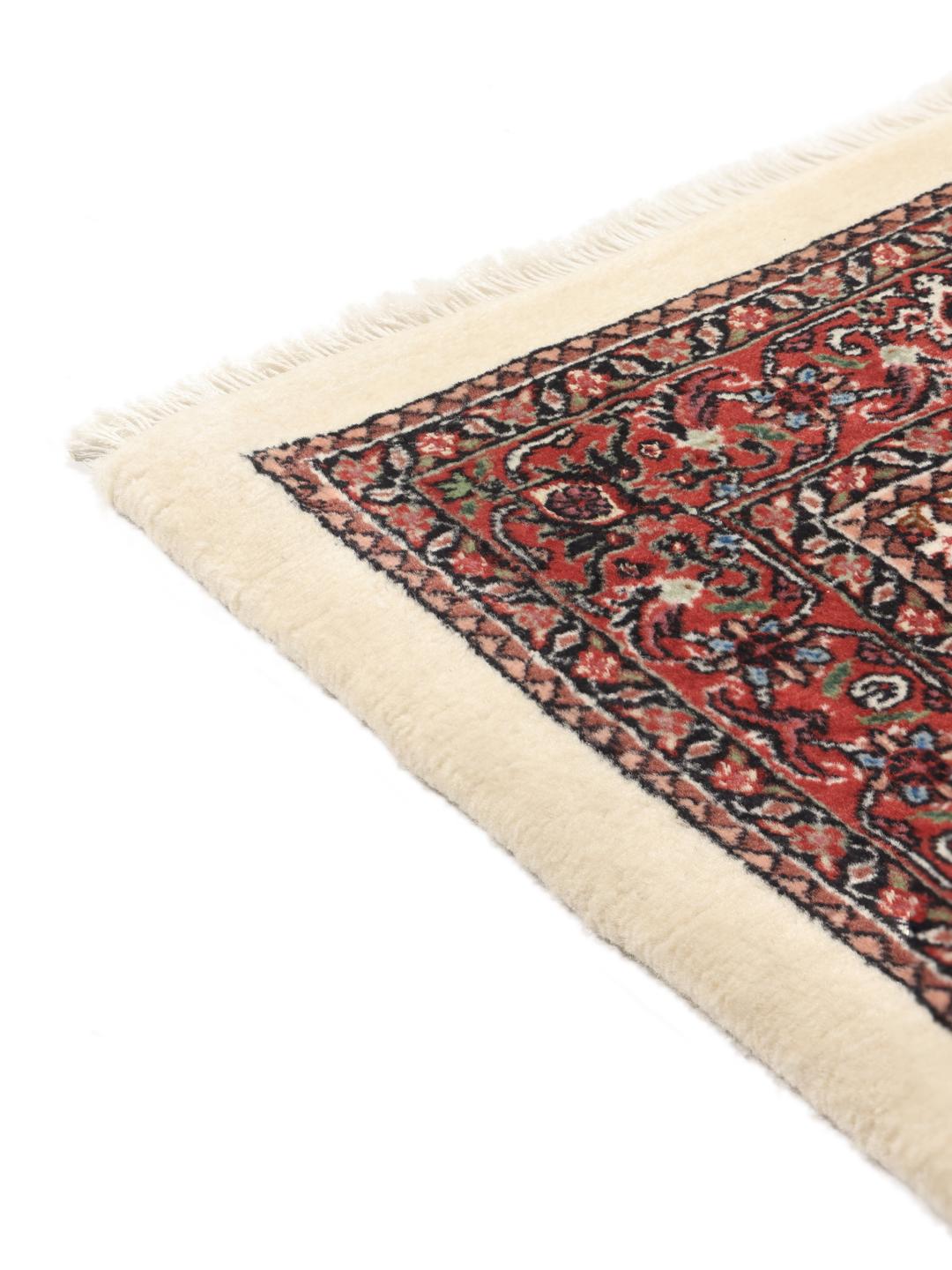
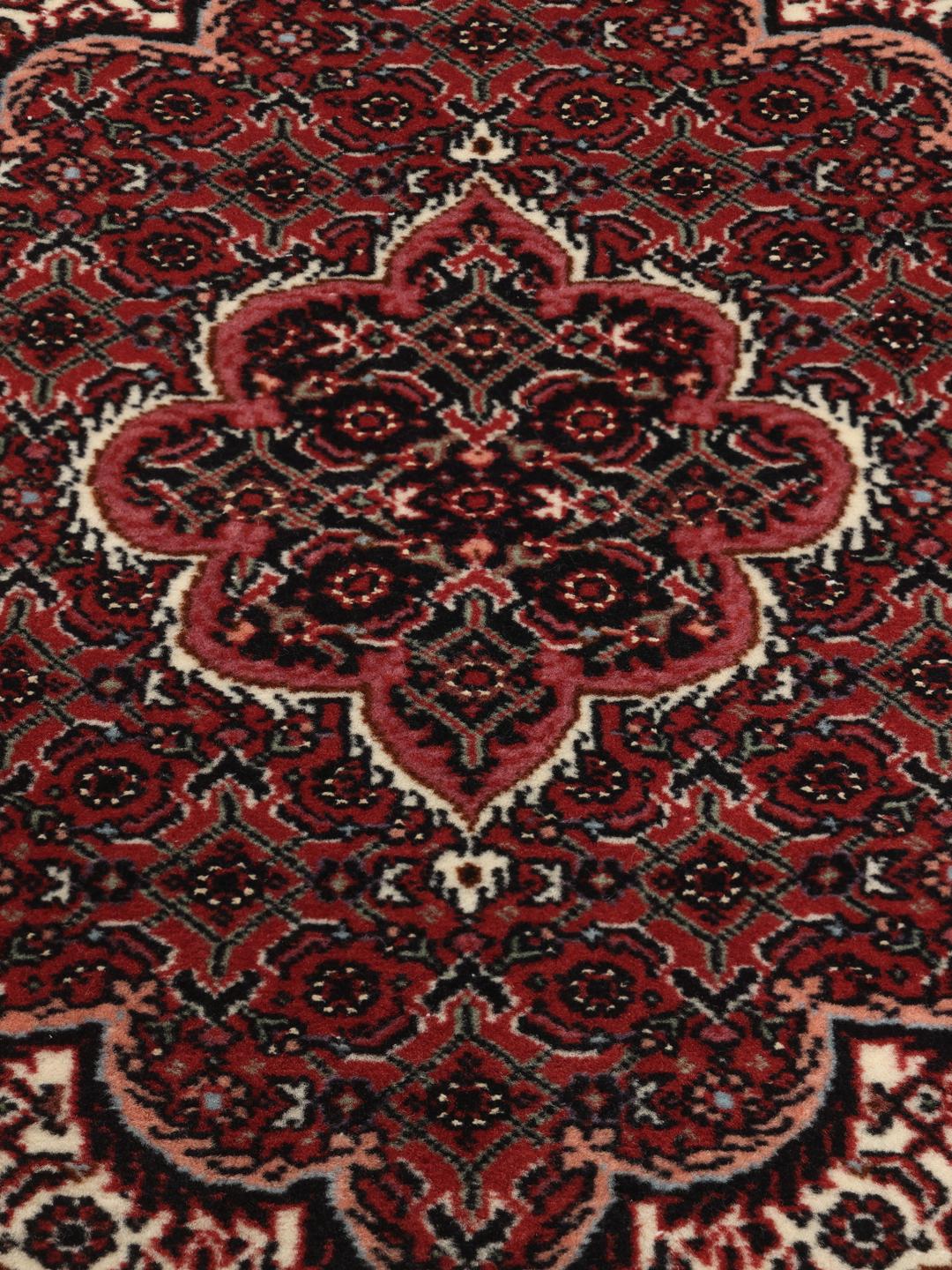
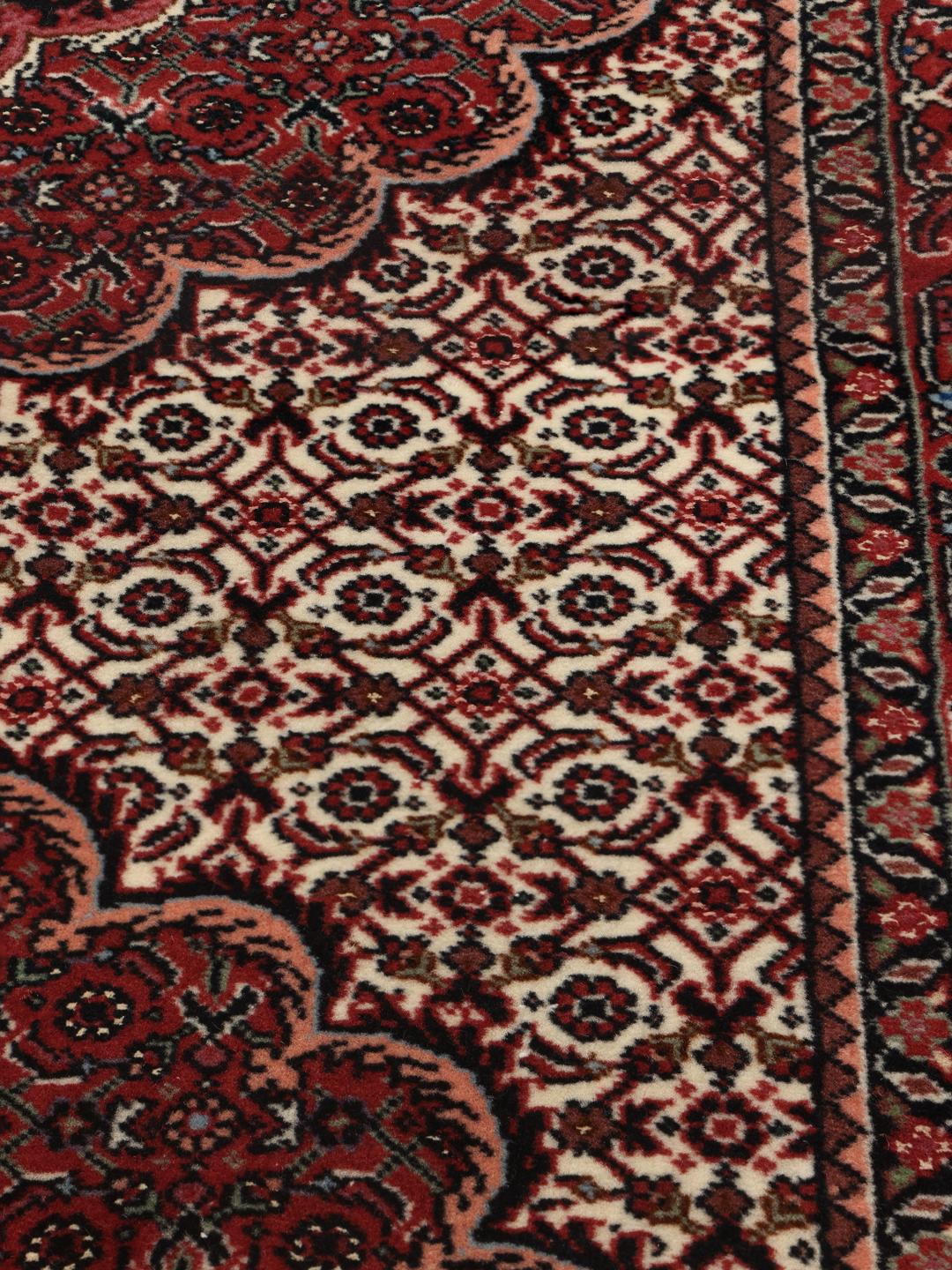
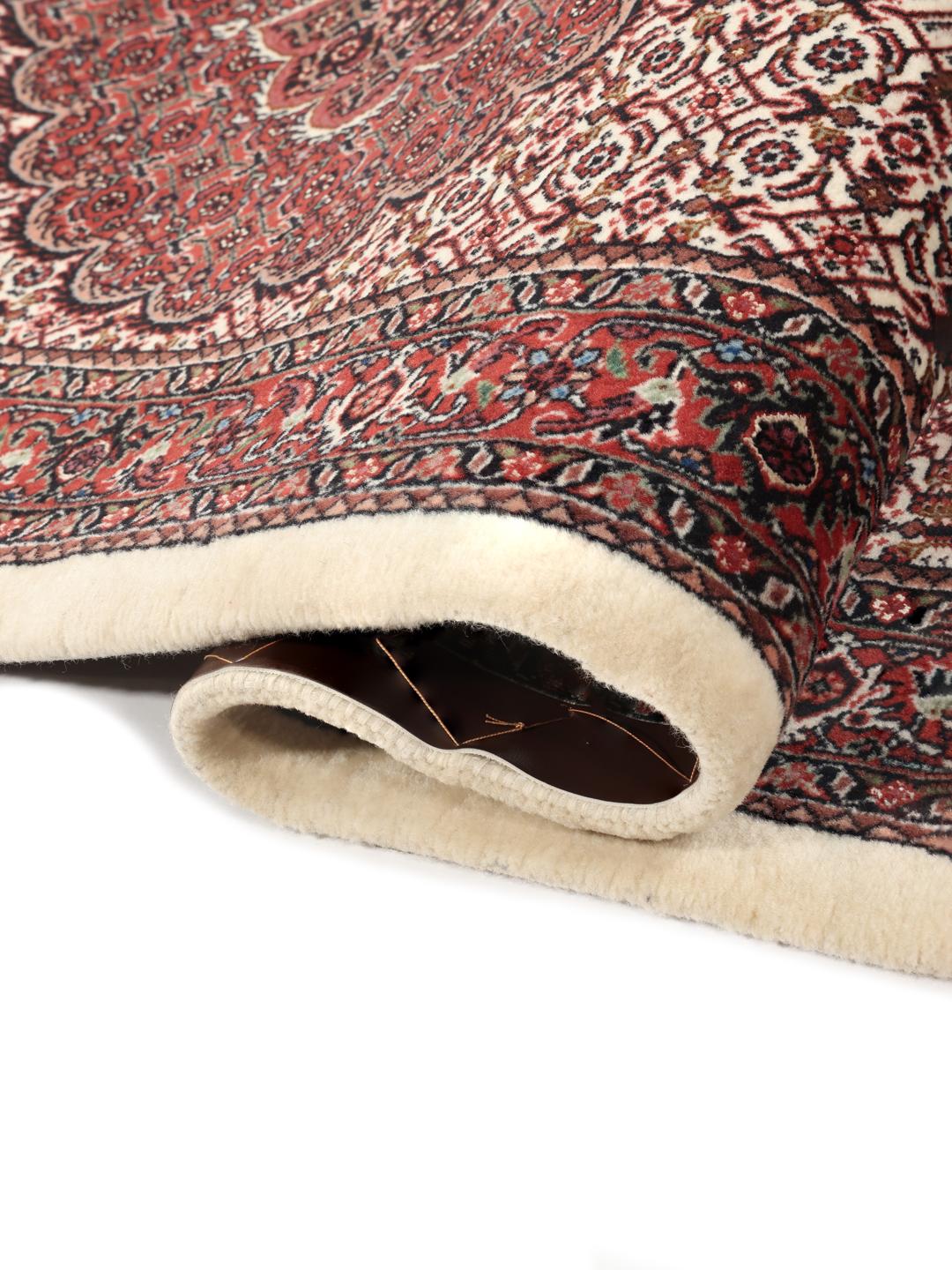
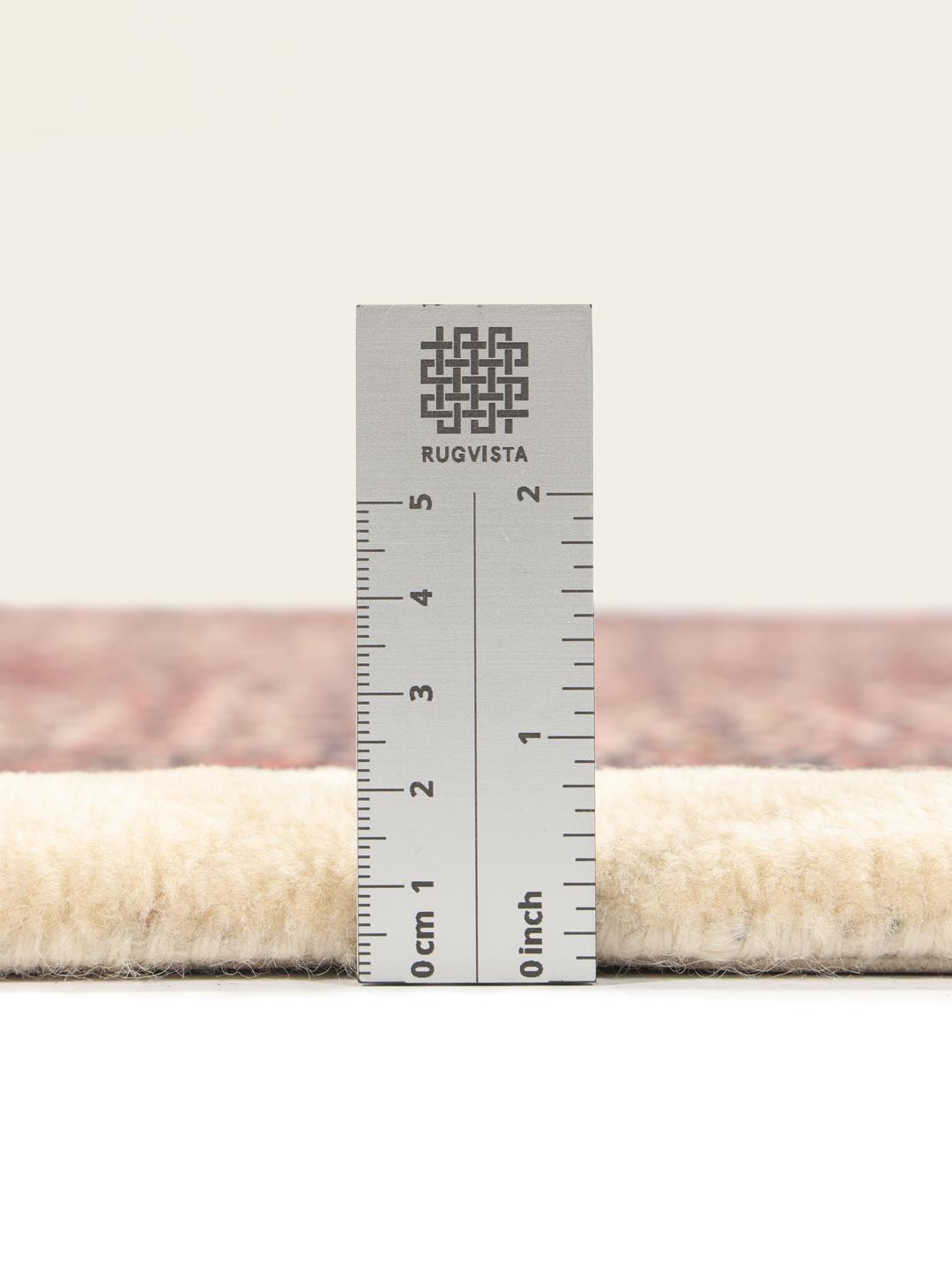
Bidjar rugs originate from the Kurdish town of the same name in the Middle East, a region renowned for producing what are often called the iron rugs of the industry. These rugs have earned their reputation through a construction method that results in an incredibly dense, heavy, and durable pile. This tradition of weaving has been passed down through generations, reflecting the resilience of the Kurdish people who created them.
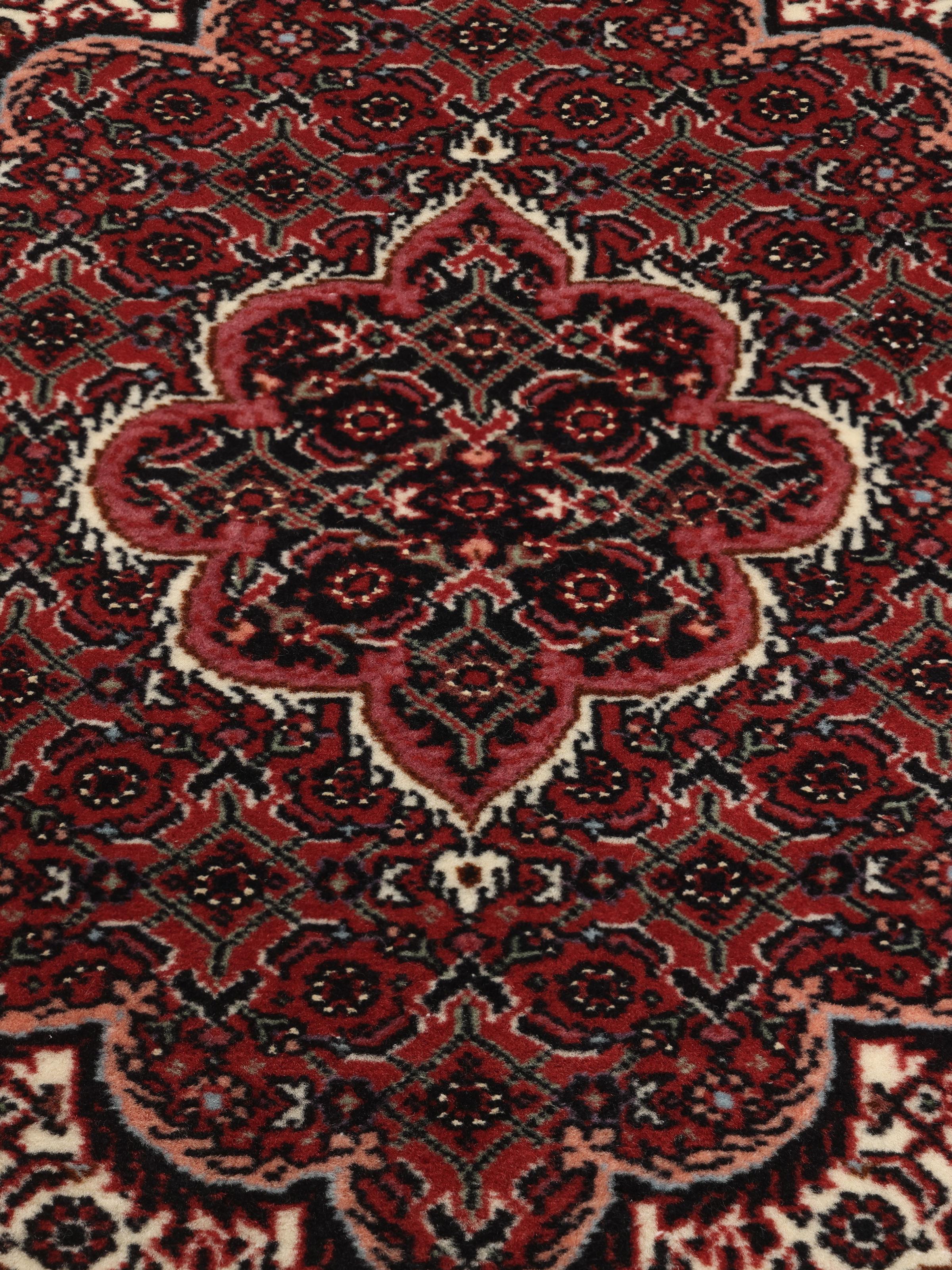
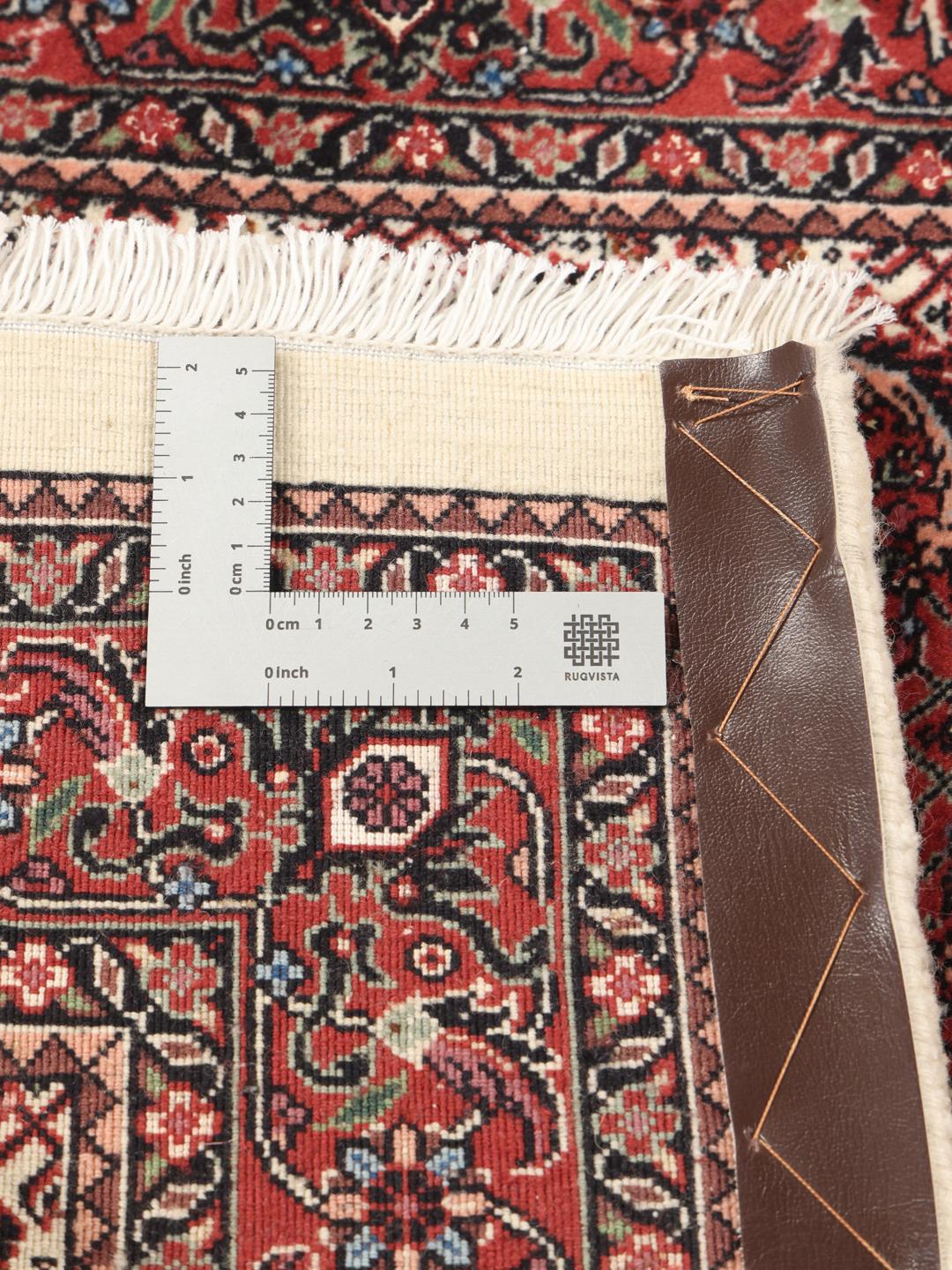
The term Bidjar refers to this specific regional style, which is characterised by a unique weaving technique that uses a heavy, wet weft to pack the knots tightly. This process creates a firm, stiff foundation that gives the rug its exceptional longevity. When silk is incorporated into the wool pile, it adds a layer of refinement and light-reflecting beauty, elevating the rug from a purely functional item to a decorative masterpiece.
The design language of a Bidjar often features bold, formal medallion patterns or dense floral arrangements that are deeply rooted in Middle Eastern artistic history. These motifs are typically framed by elaborate, multi-layered borders that provide a sense of structure and balance. The interplay of deep, rich tones and intricate, rhythmic patterns creates a visual narrative that has been admired by collectors for centuries.
Collecting a rug from this tradition is an acquisition of heritage and skill. These rugs are highly valued not only for their aesthetic power but also for their ability to endure, often becoming heirlooms that tell a story of regional craftsmanship. By bringing this piece into your home, you are participating in a long history of artistry, ensuring that the legacy of these dedicated weavers continues to be appreciated in a modern setting.