The Berber tradition is deeply rooted in the history of North African weaving, known for its emphasis on creative freedom, geometric symbolism, and the use of natural, undyed Wool. Over time, these distinct aesthetic principles have migrated and inspired artisans across various regions, including Afghanistan, where weavers have adapted these historical techniques to incorporate their own unique cultural expressions and regional materials.
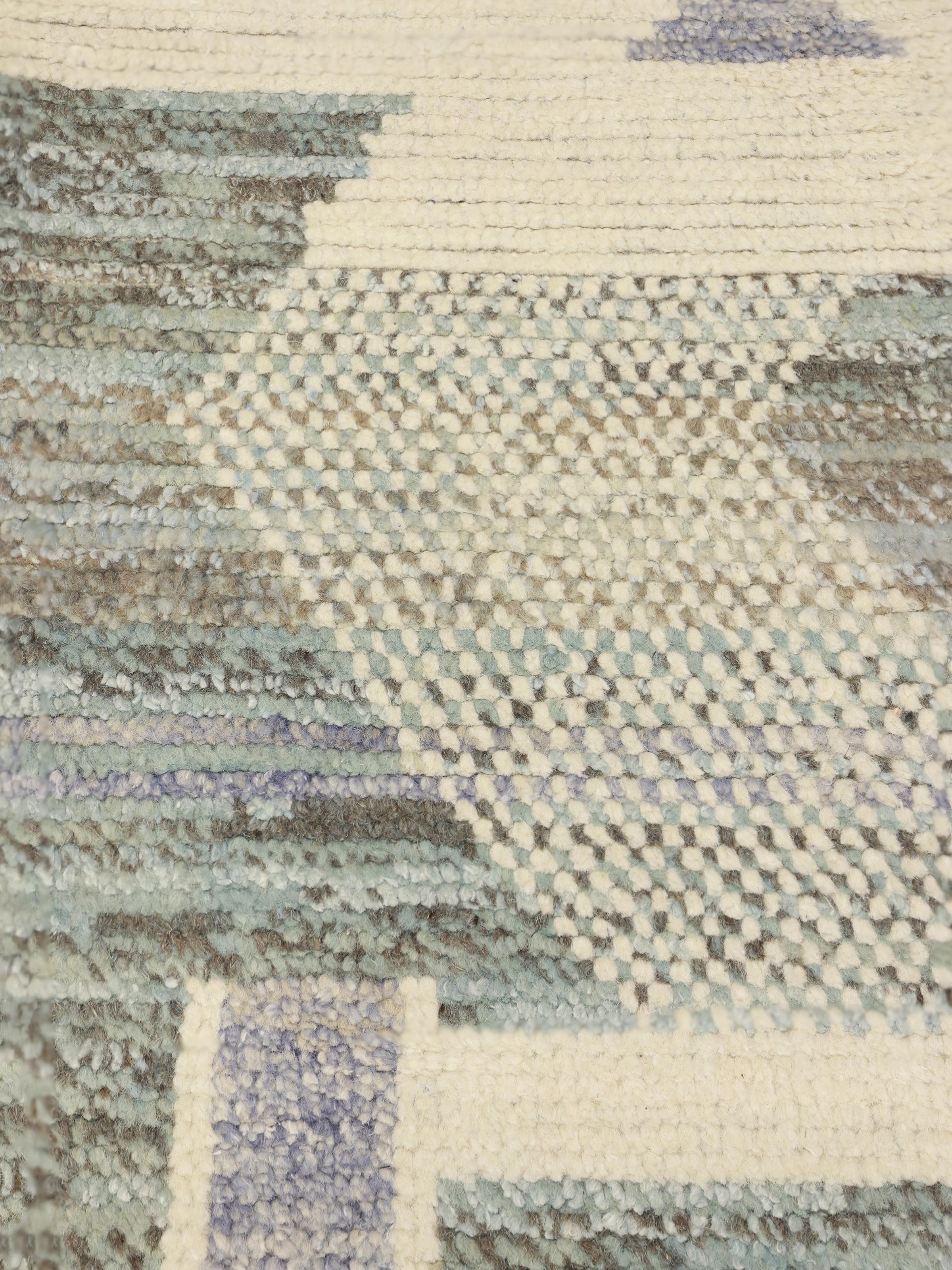
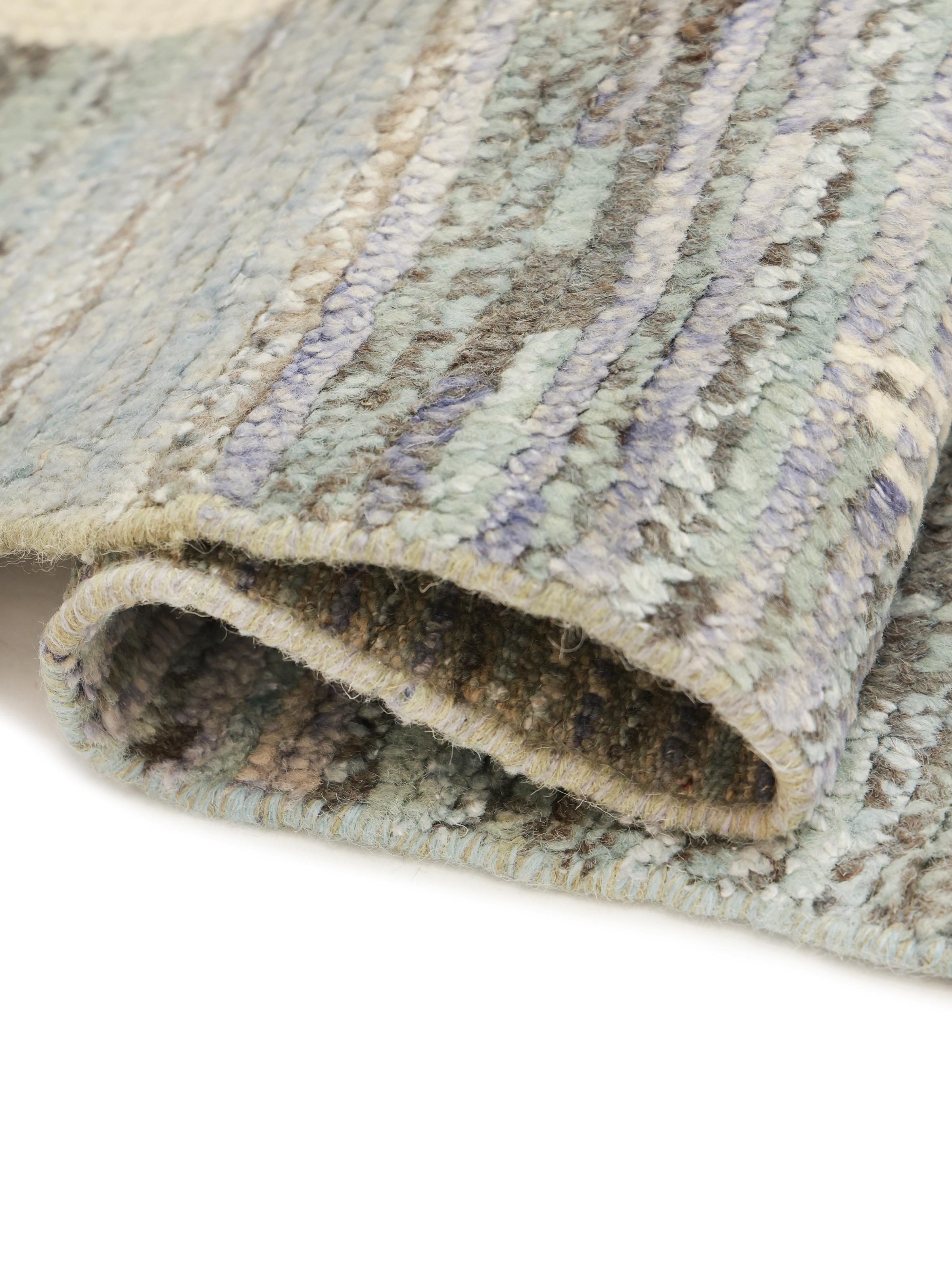
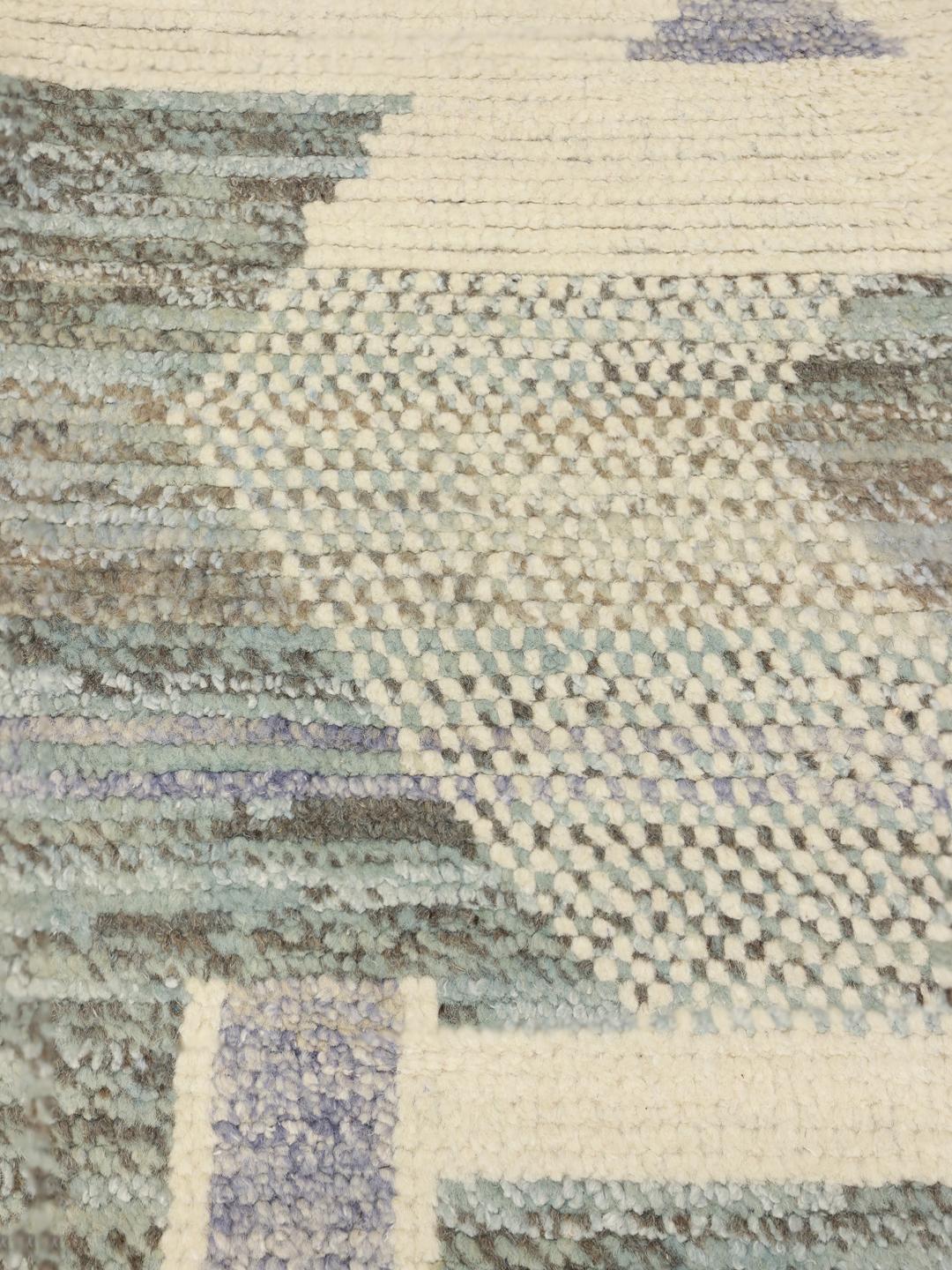
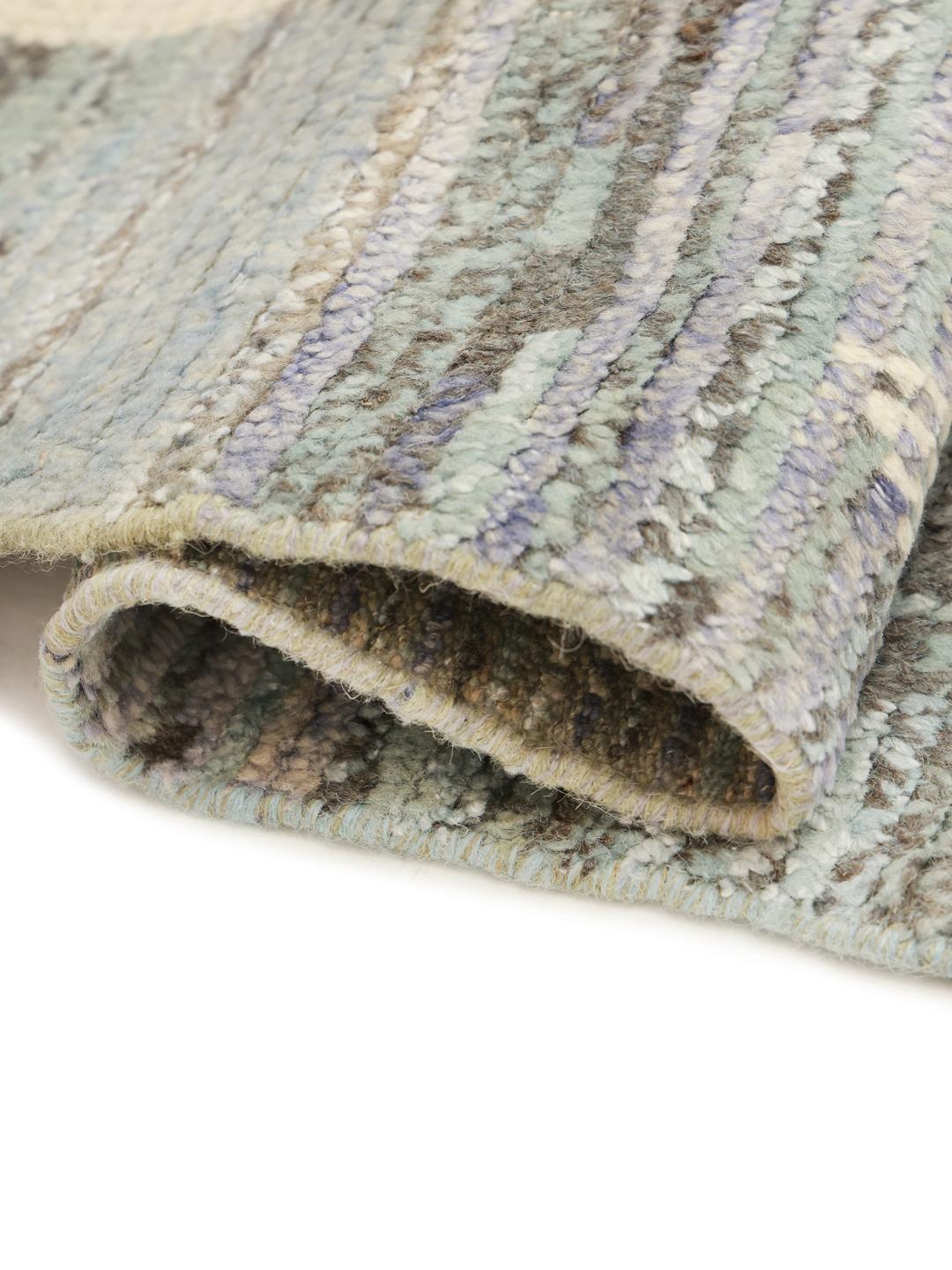
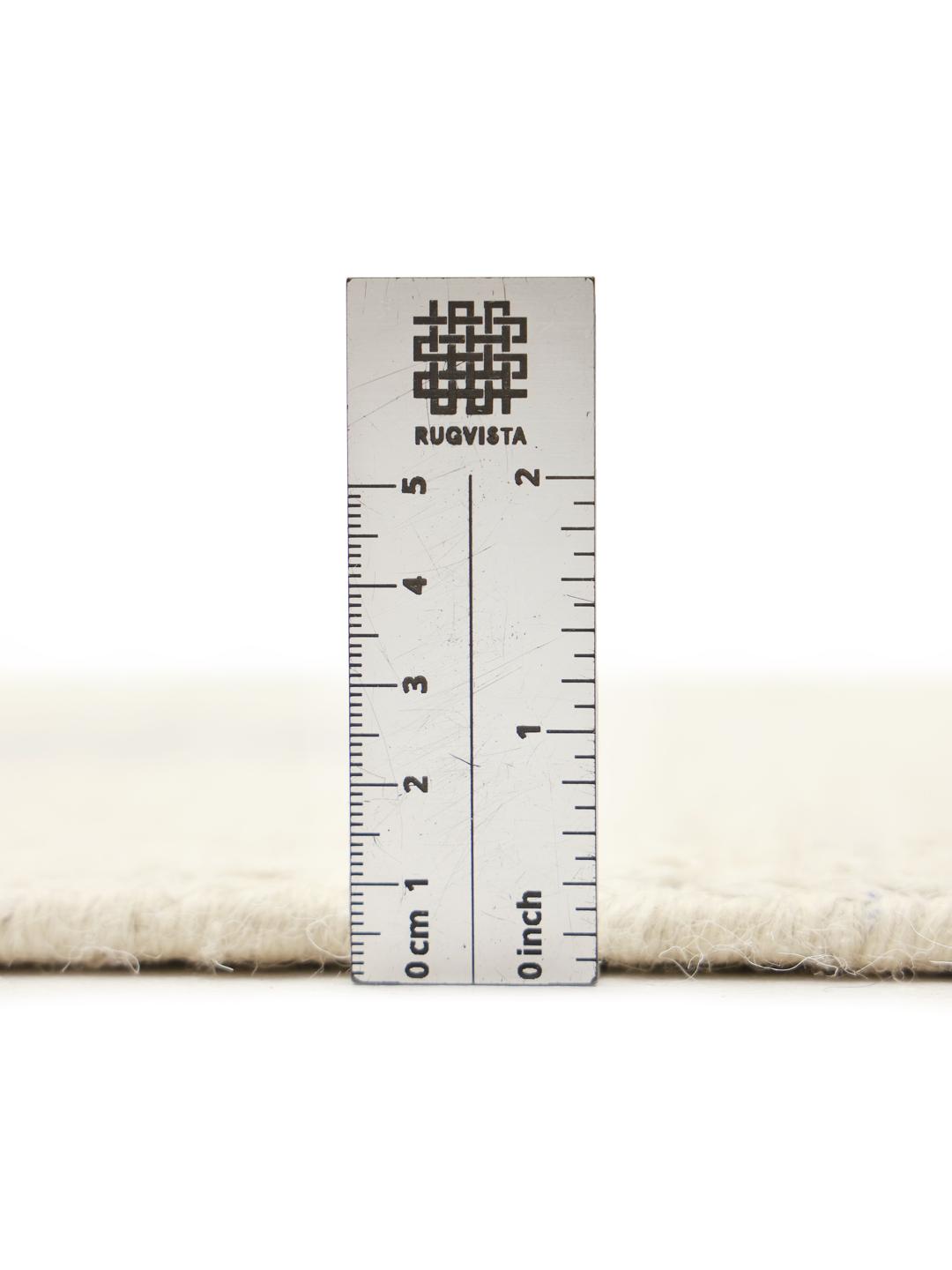
The term 'hand-knotted' refers to the traditional method of securing individual strands of Wool onto a warp, creating a pile that is not only rich in texture but also exceptionally durable. This craft requires a deep understanding of tension and pattern, as every movement of the artisan's hand directly influences the final feel and longevity of the rug. It is a slow, rhythmic process that prioritises quality over speed.
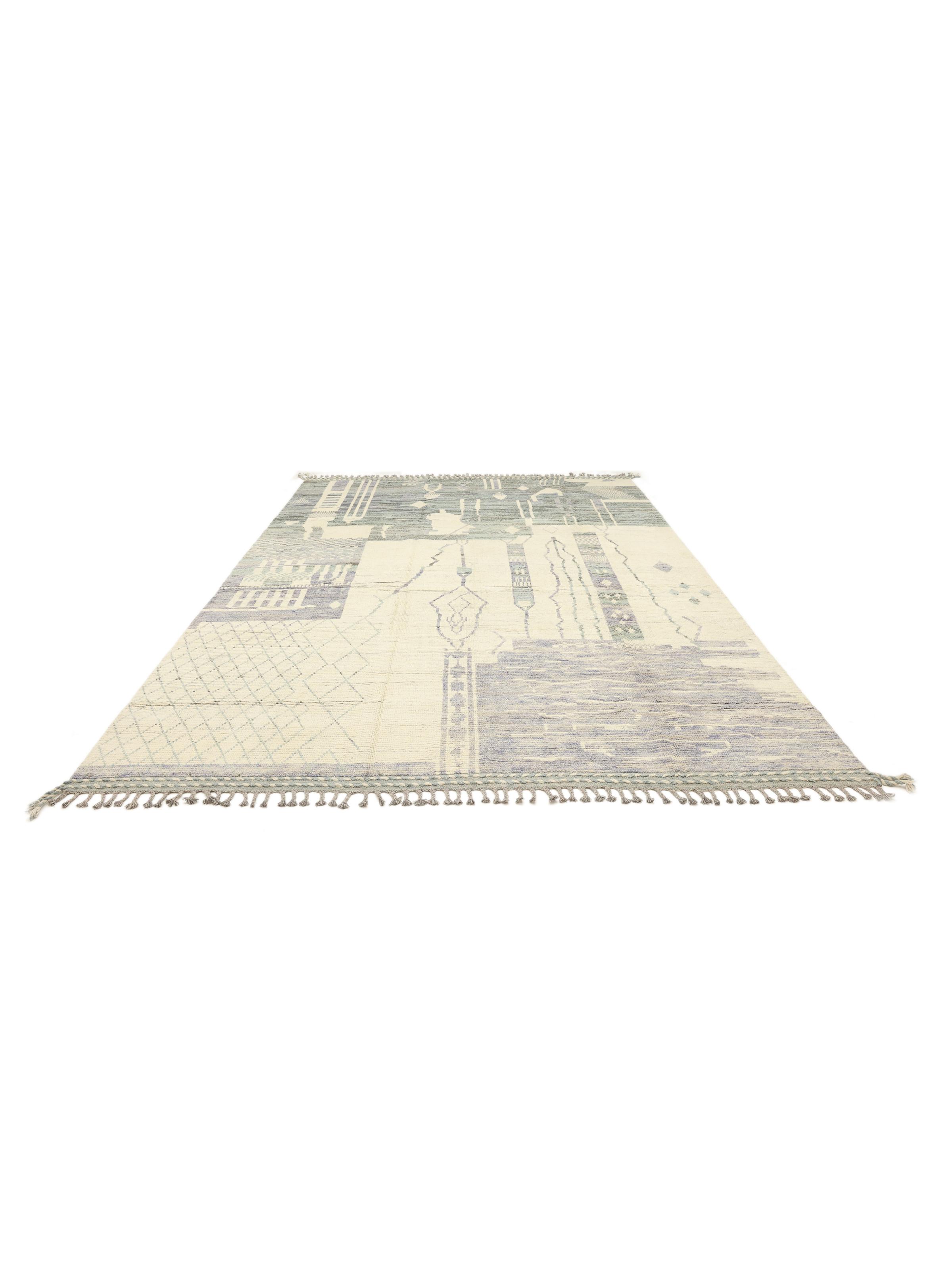
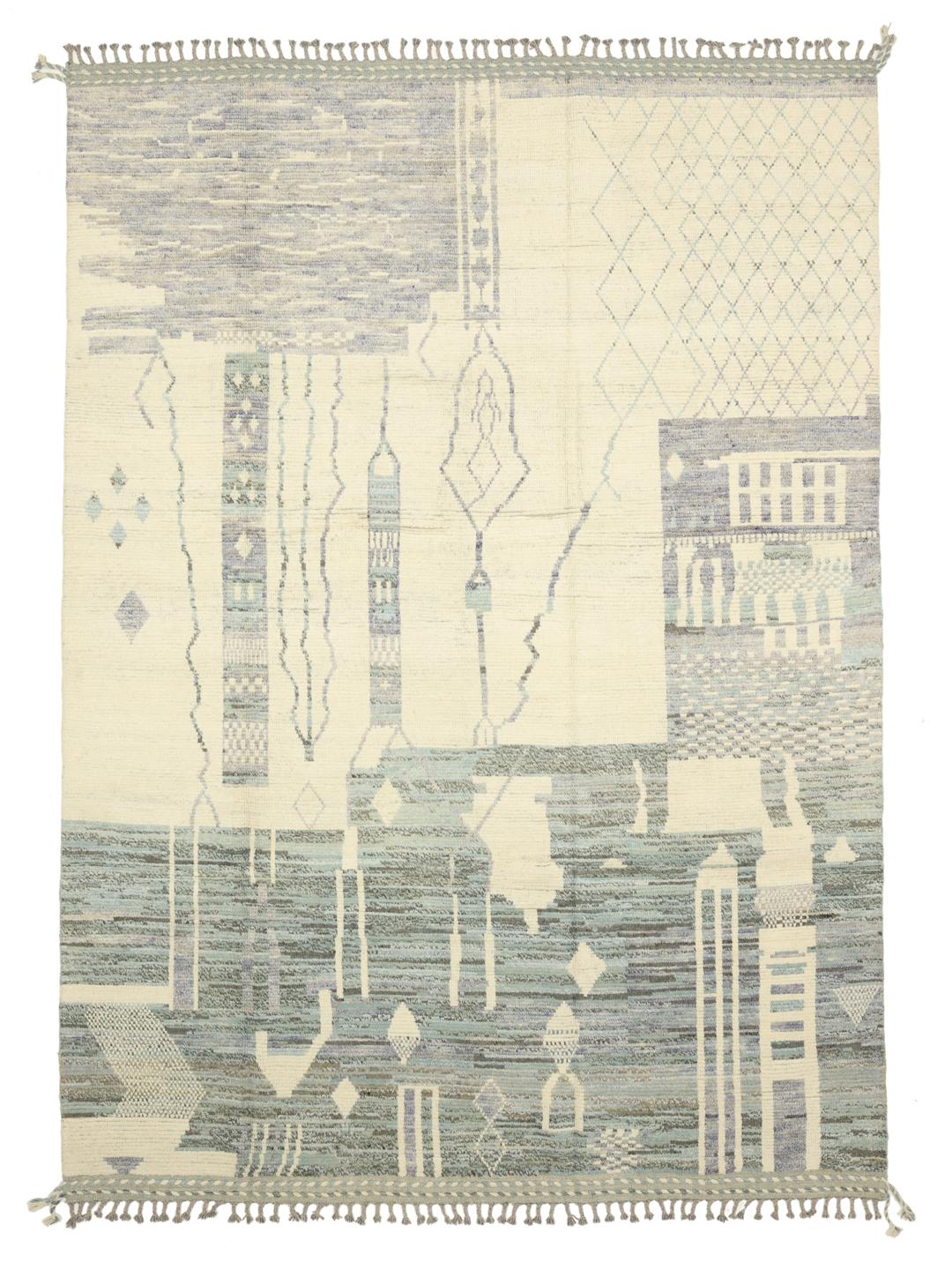
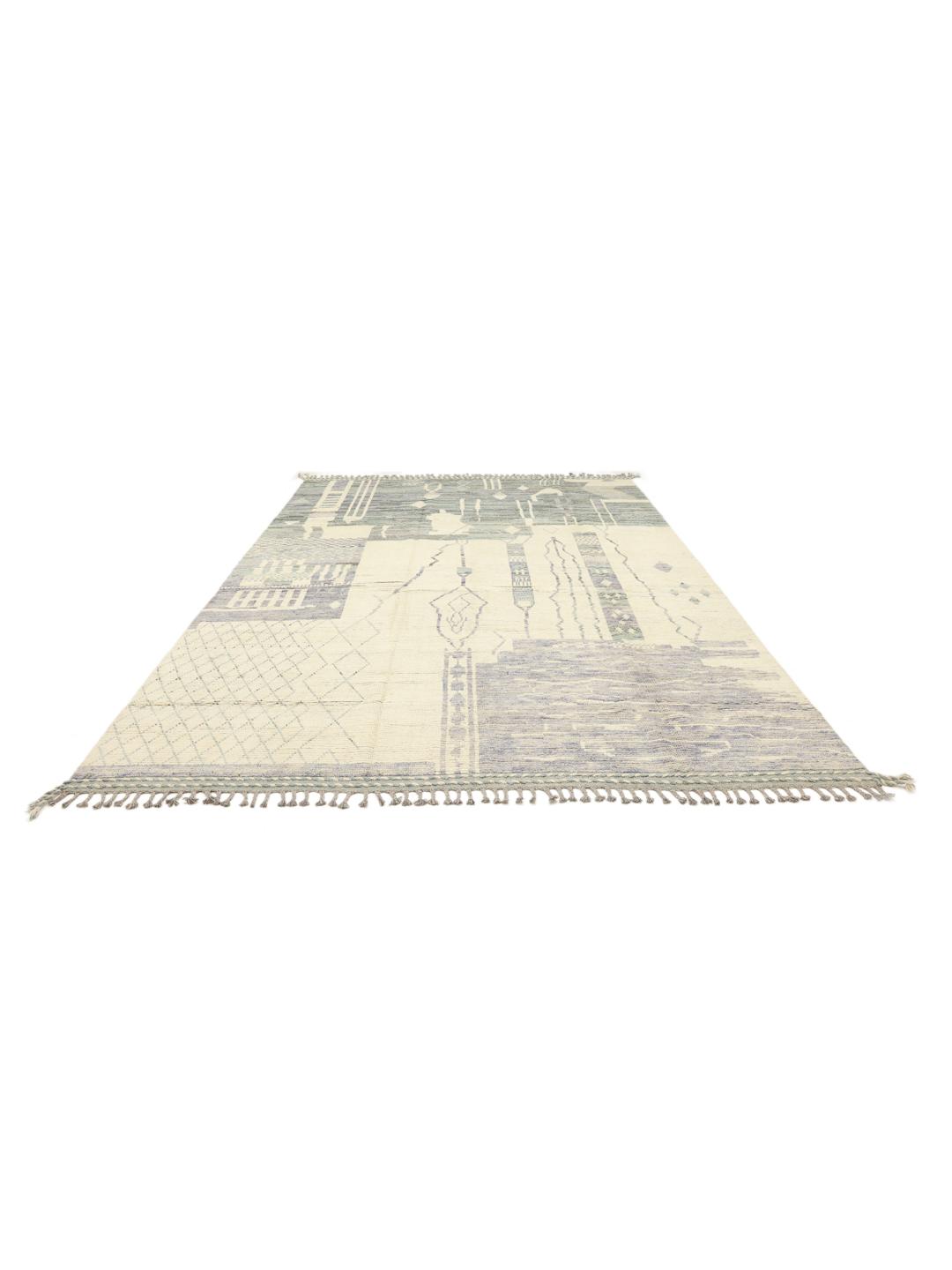
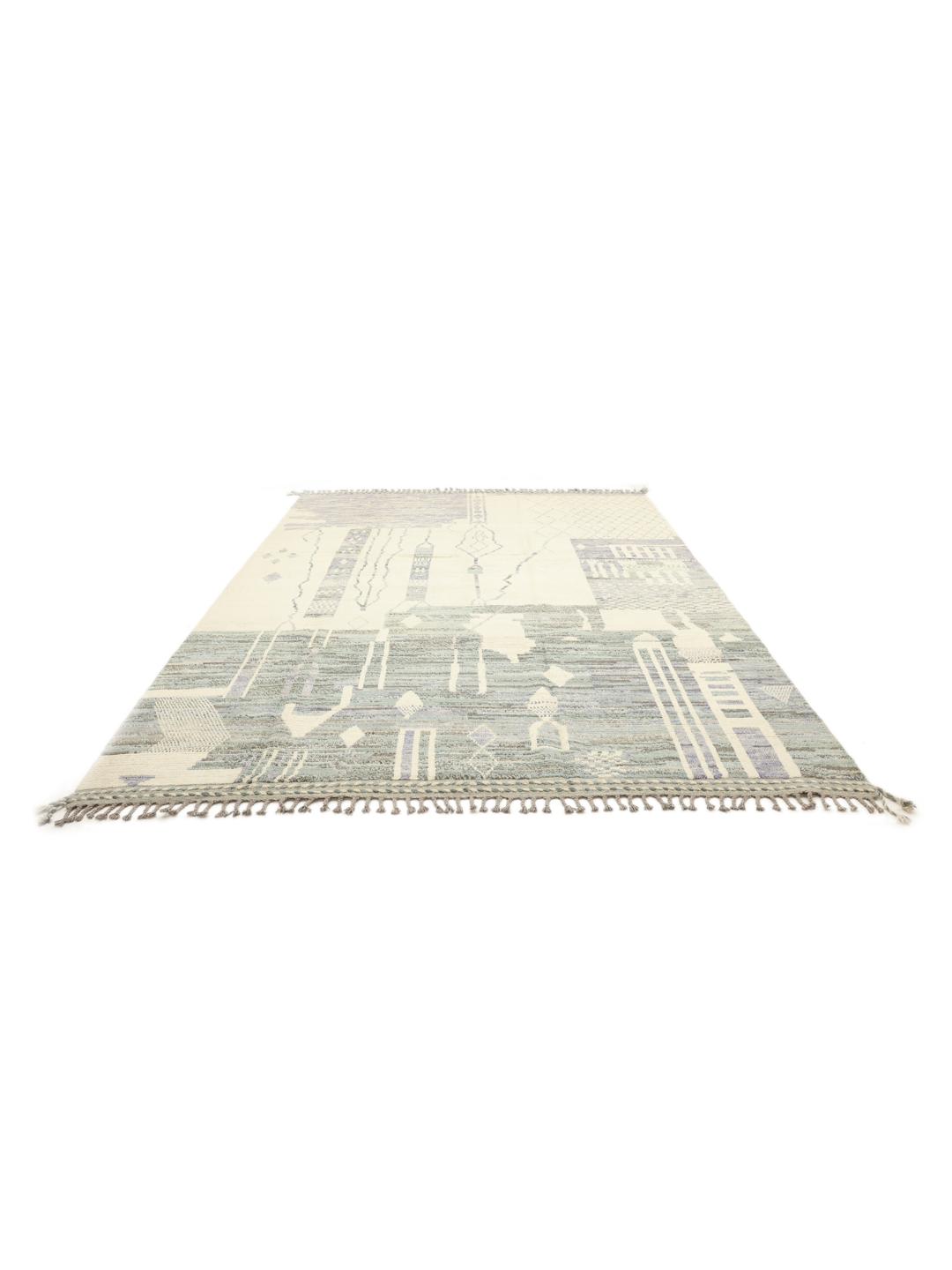
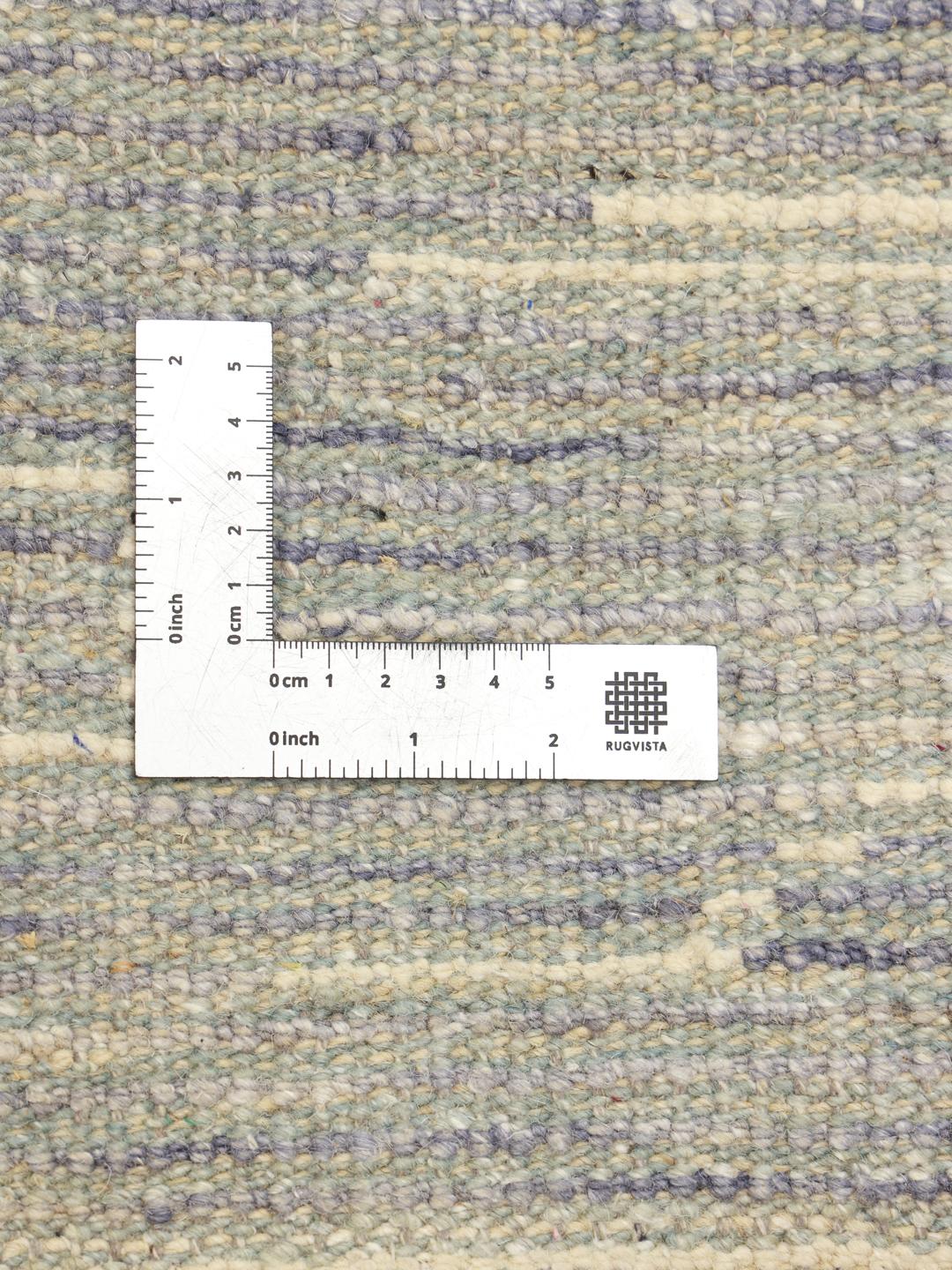
This particular piece showcases an abstract design language that departs from traditional, rigid tribal patterns in favour of a more fluid and artistic expression. The use of soft blues against a neutral cream background reflects a modern interpretation of ancient techniques, where the field is treated as a canvas for creative exploration rather than a strictly symmetrical layout.
Collecting a rug from this tradition is an investment in human skill and cultural continuity. These pieces are valued not only for their visual impact but for the story they tell of the artisan's vision and the enduring nature of hand-crafted objects. Owning one offers a sense of heritage, providing a tangible connection to the legacy of weavers who have practised this craft for centuries.