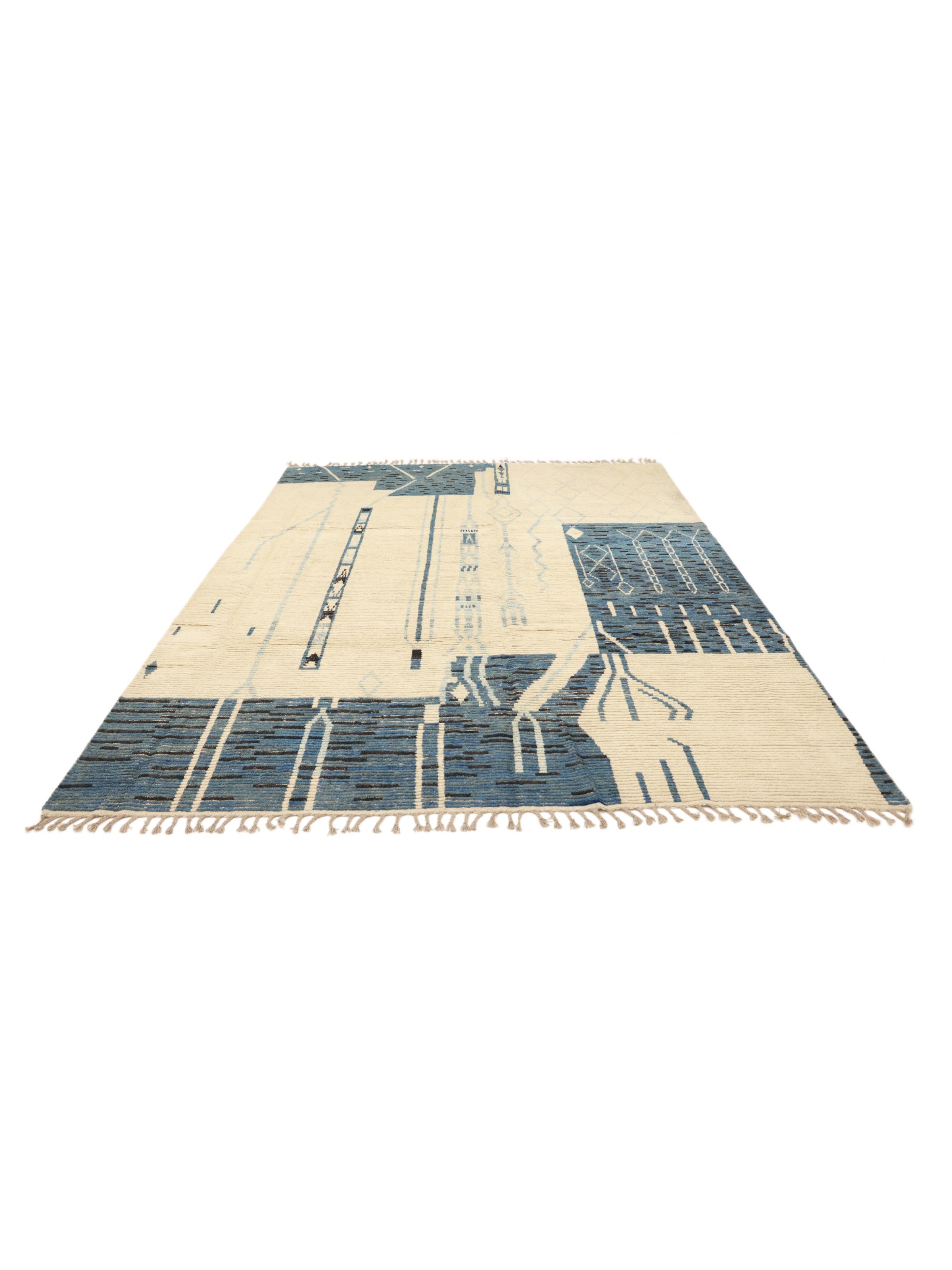
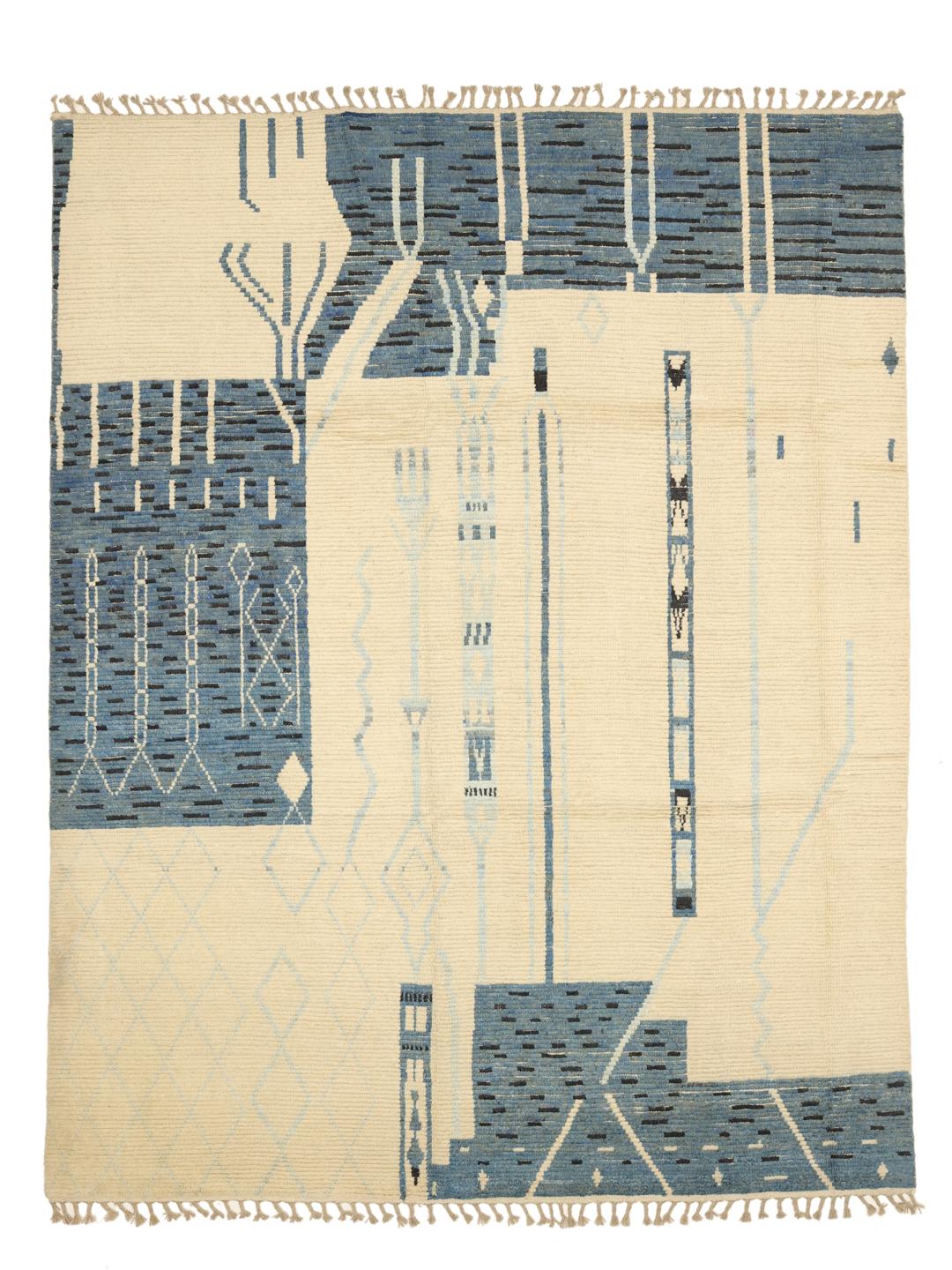
The Berber-style tradition originates from the nomadic tribes of North Africa, renowned for their ability to weave rugs that are as functional as they are symbolic. While the aesthetic has travelled far from its roots, today’s finest examples are often crafted in the mountainous regions of Afghanistan, where local artisans have adopted these time-honoured techniques to create rugs that blend ancient motifs with contemporary sensibilities.
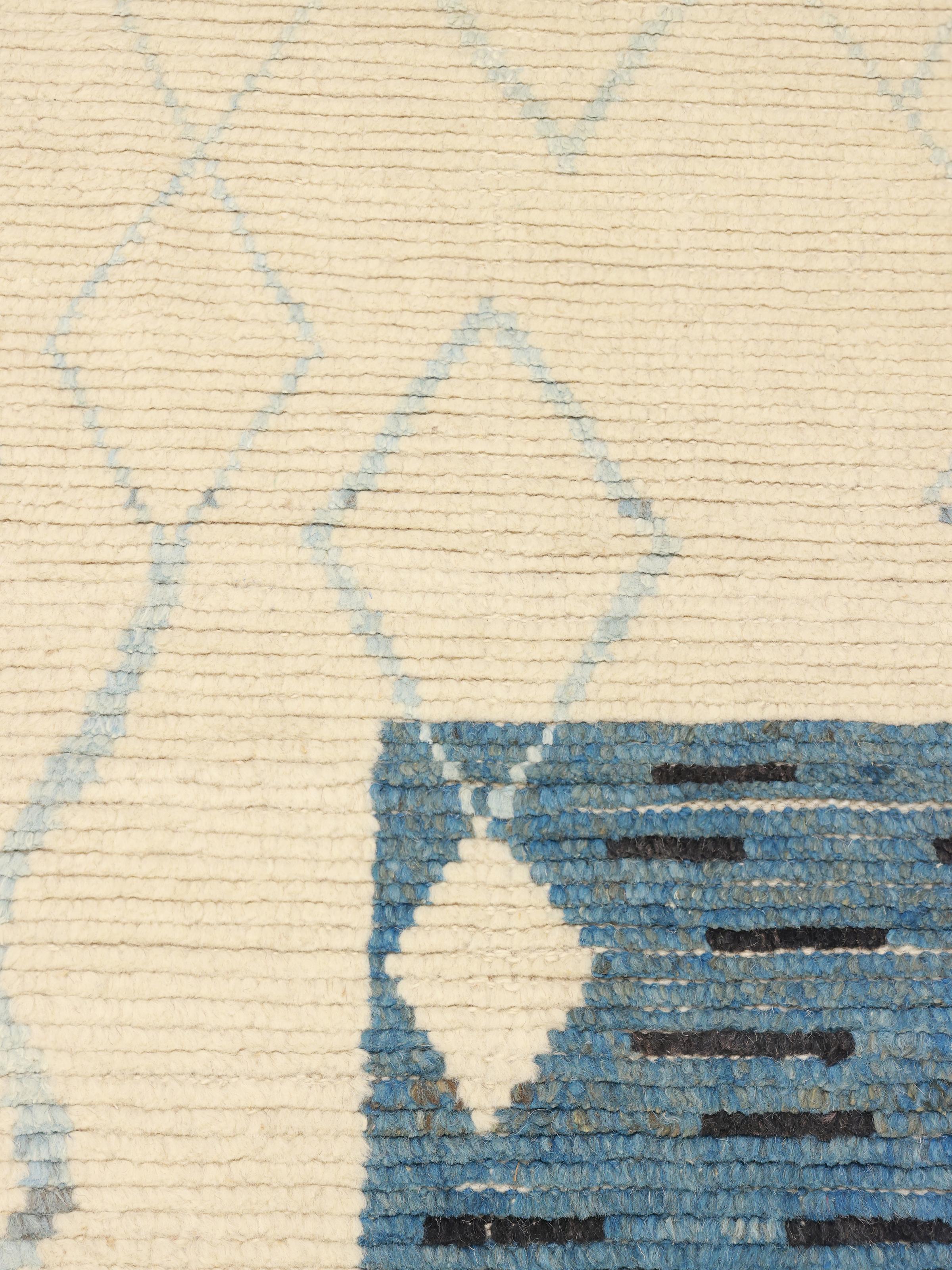
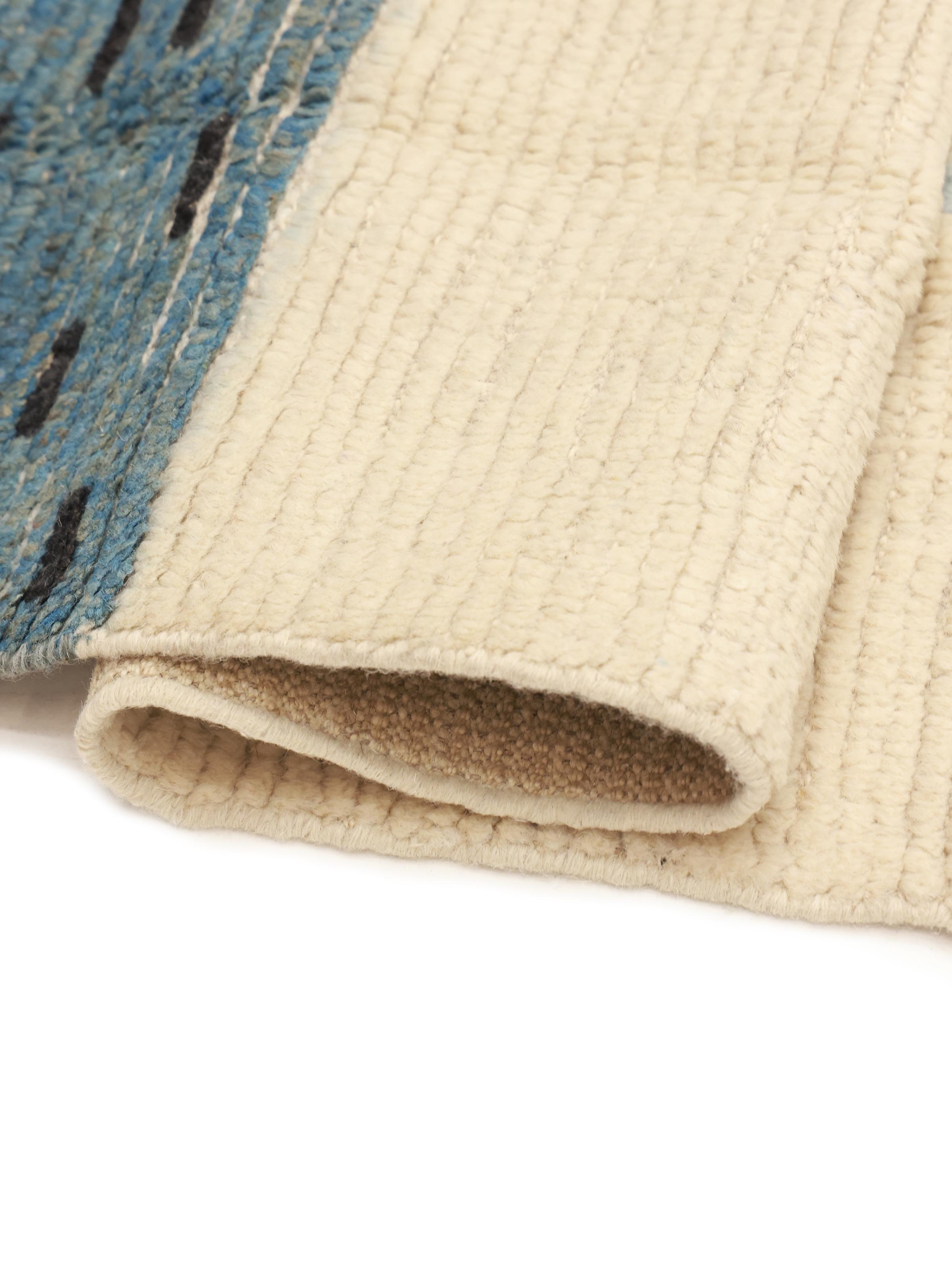
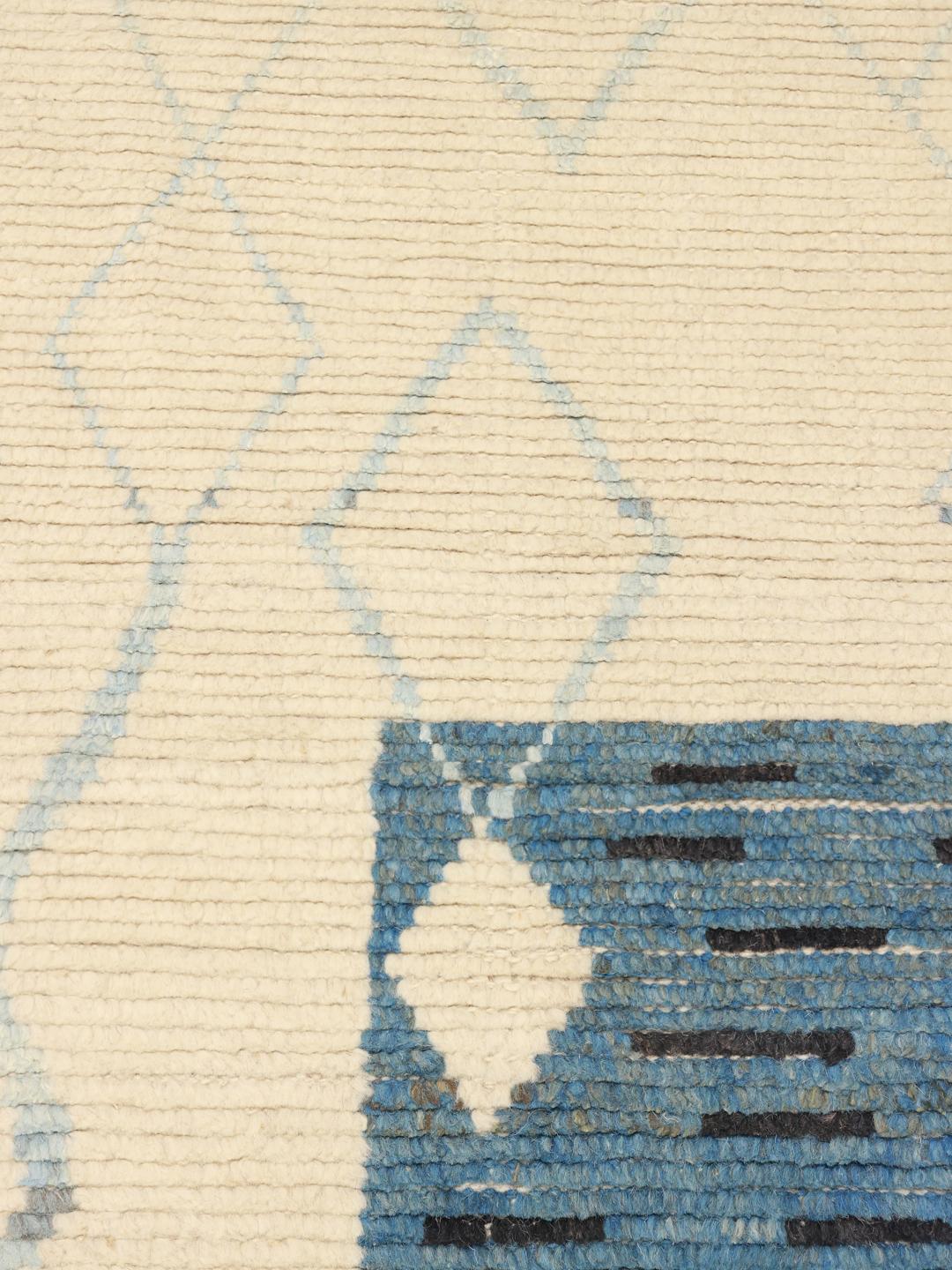
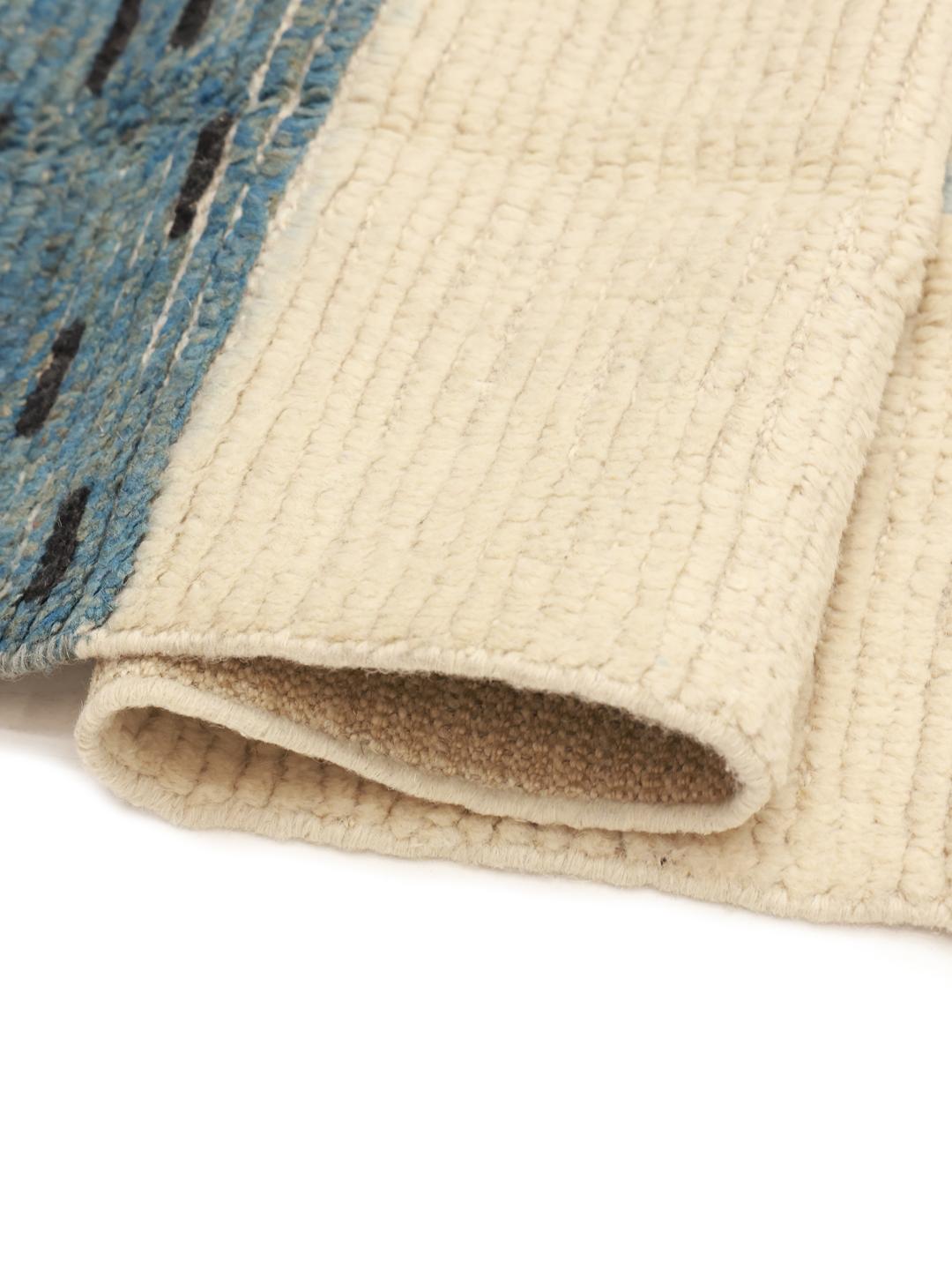
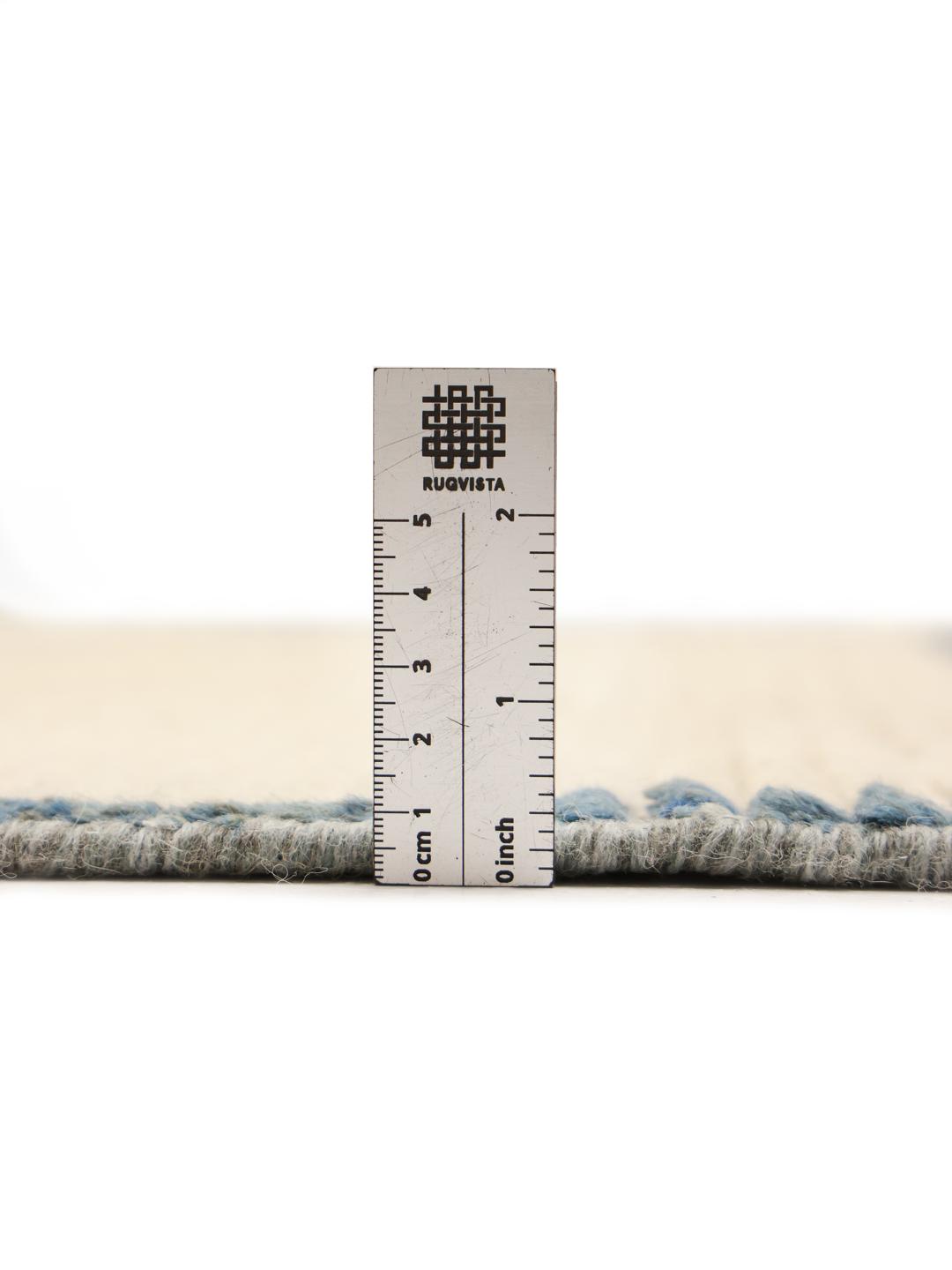
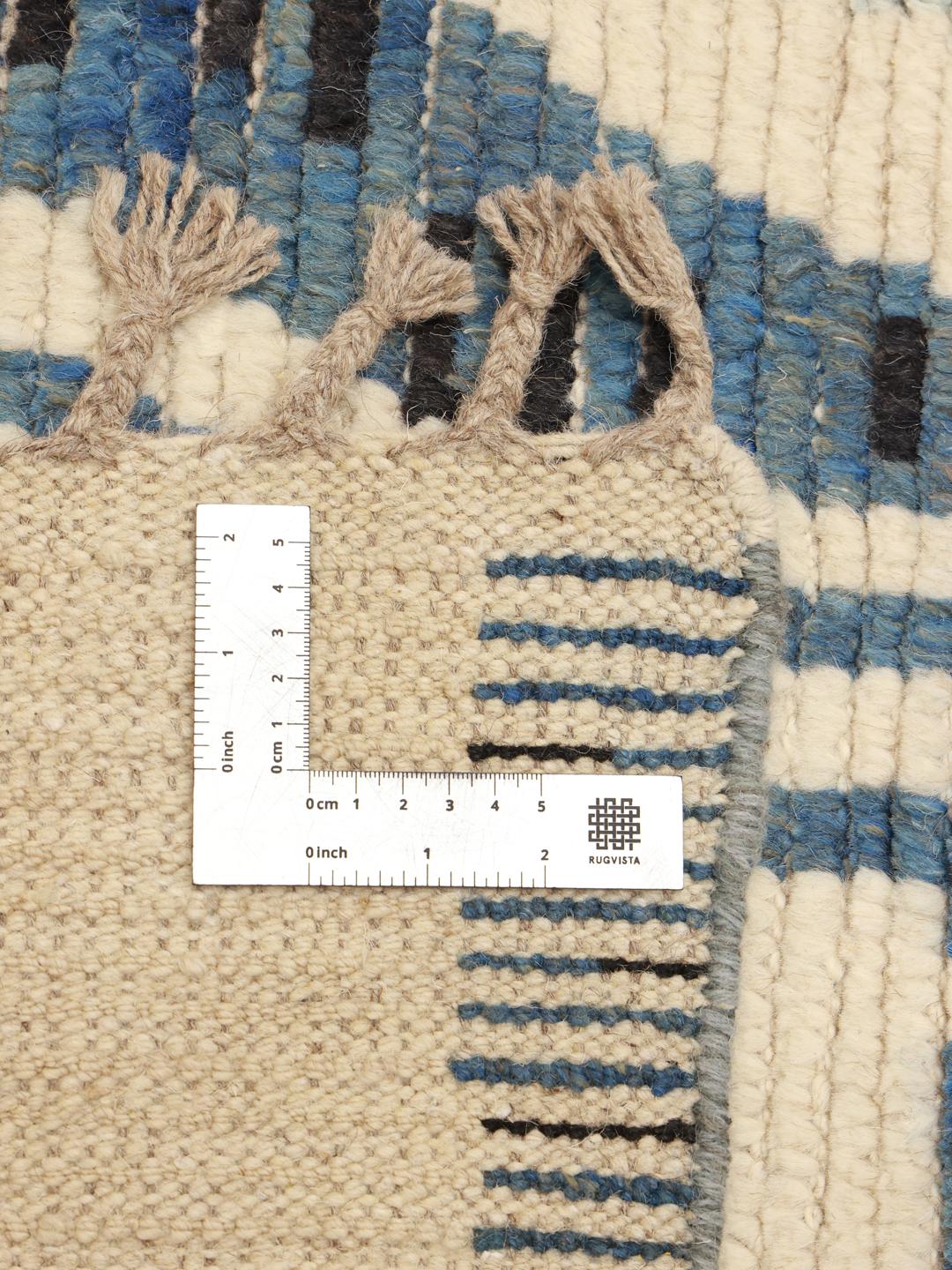
Technical quality in hand-knotted rugs is defined by the tension and consistency of the weave. In this tradition, the pile is knotted onto a durable foundation, which ensures the rug lies flat and retains its shape over many years. This method of construction is what allows the intricate geometric patterns to remain sharp and clear, providing a tactile surface that is both soft to the touch and remarkably durable.
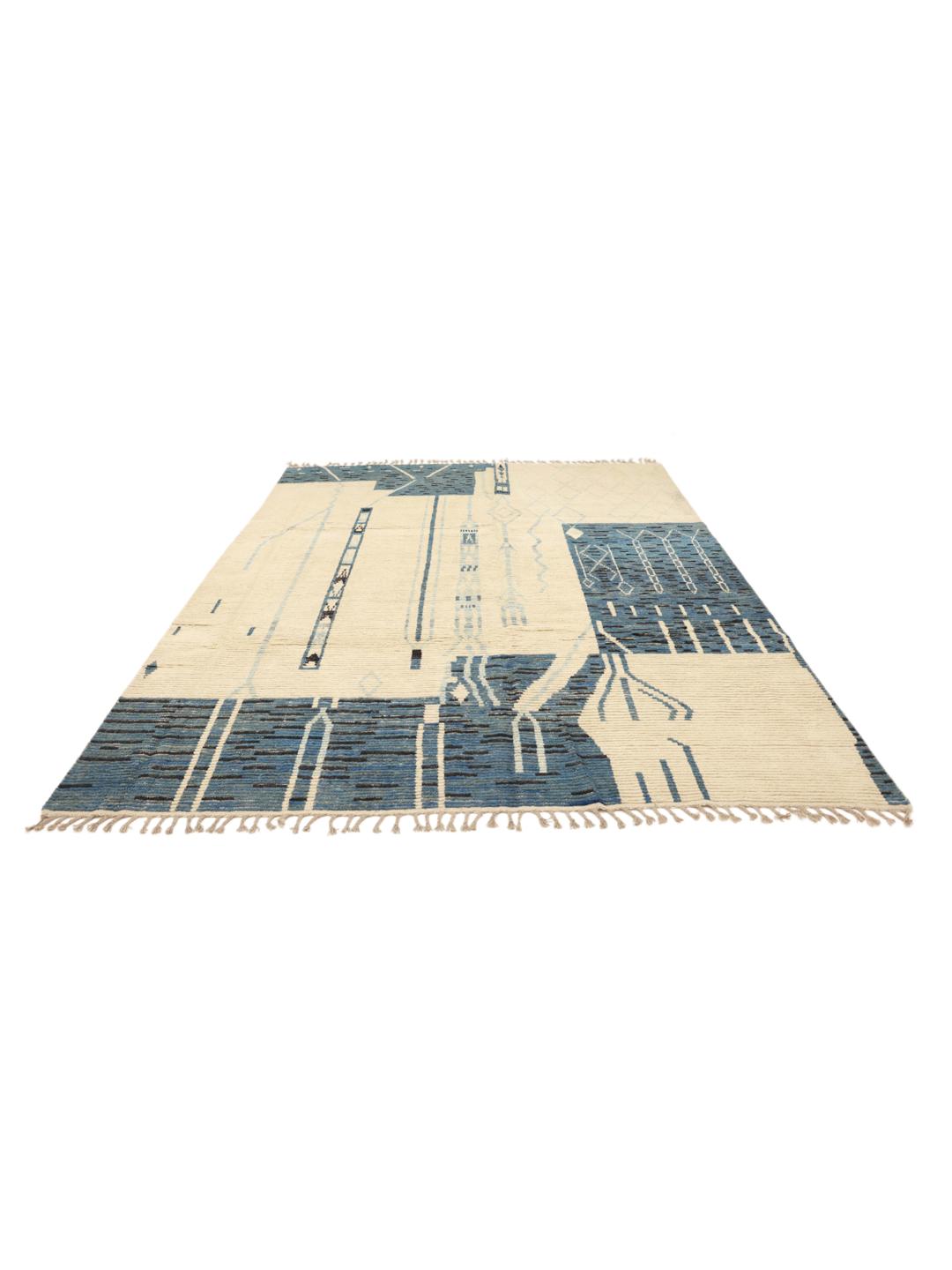
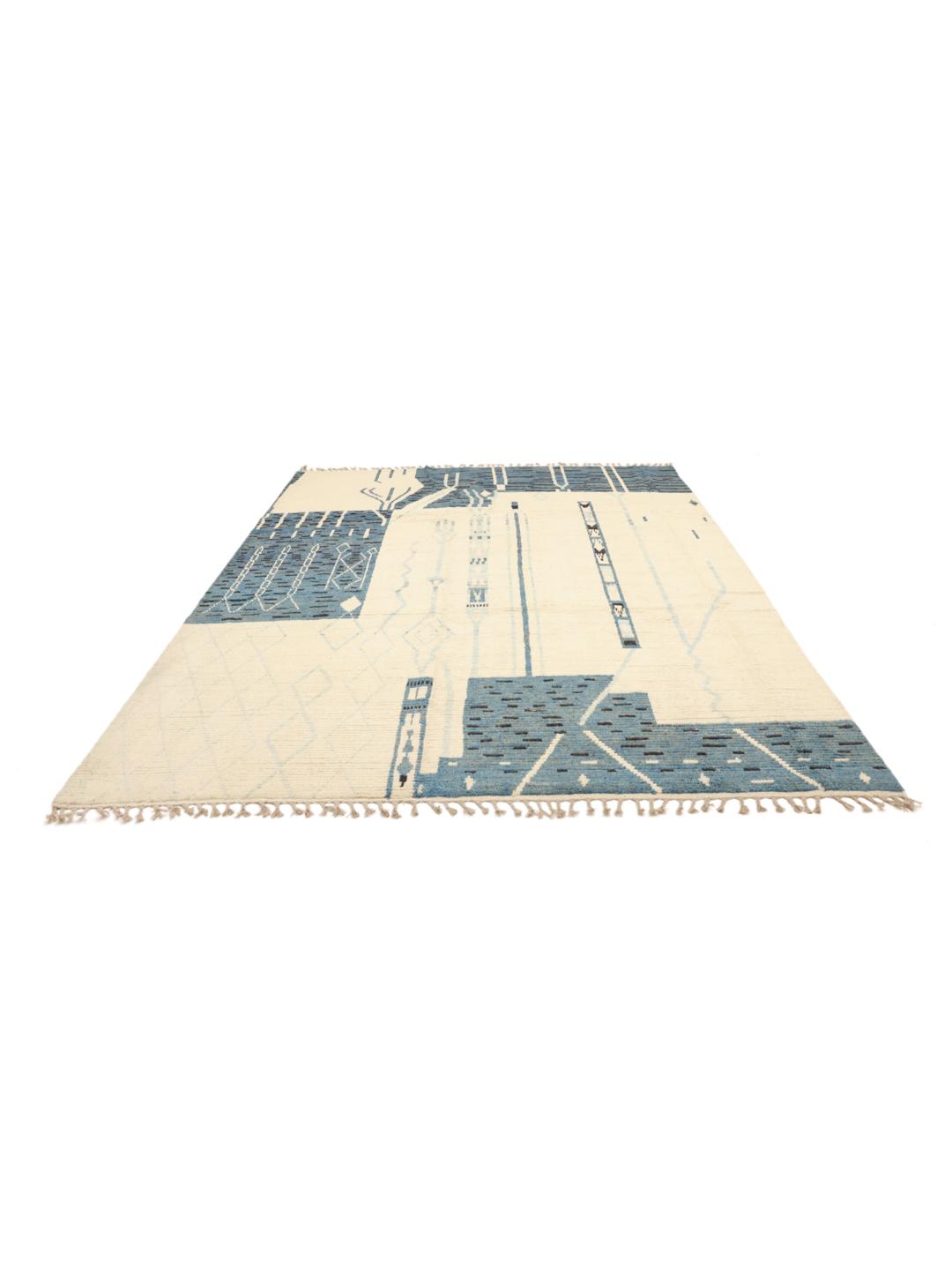
The design of this rug draws on a rich vocabulary of geometric symbols. Often, these patterns were used by weavers to tell stories or denote tribal identity, with shapes like diamonds and lines acting as a visual language. The use of a high-contrast blue and cream scheme is a modern interpretation of these classic forms, giving the piece a clean, artistic edge that feels both historic and fresh.
Collecting a hand-knotted rug of this nature is an investment in human skill. It represents a living link to a craft that has been passed down through generations, surviving the pressures of industrialisation. By choosing this piece, you are not just acquiring a floor covering; you are preserving a cultural legacy and supporting the artisans who keep these complex, beautiful traditions alive.