The rugs produced in Afghanistan today are part of a long and evolving history of textile arts in the Middle East. While historically influenced by various tribal traditions, modern Afghan rug weaving has emerged as a distinct craft that blends ancient nomadic techniques with contemporary design sensibilities. These rugs are highly regarded for their robust construction and the use of high-quality, hand-spun materials.
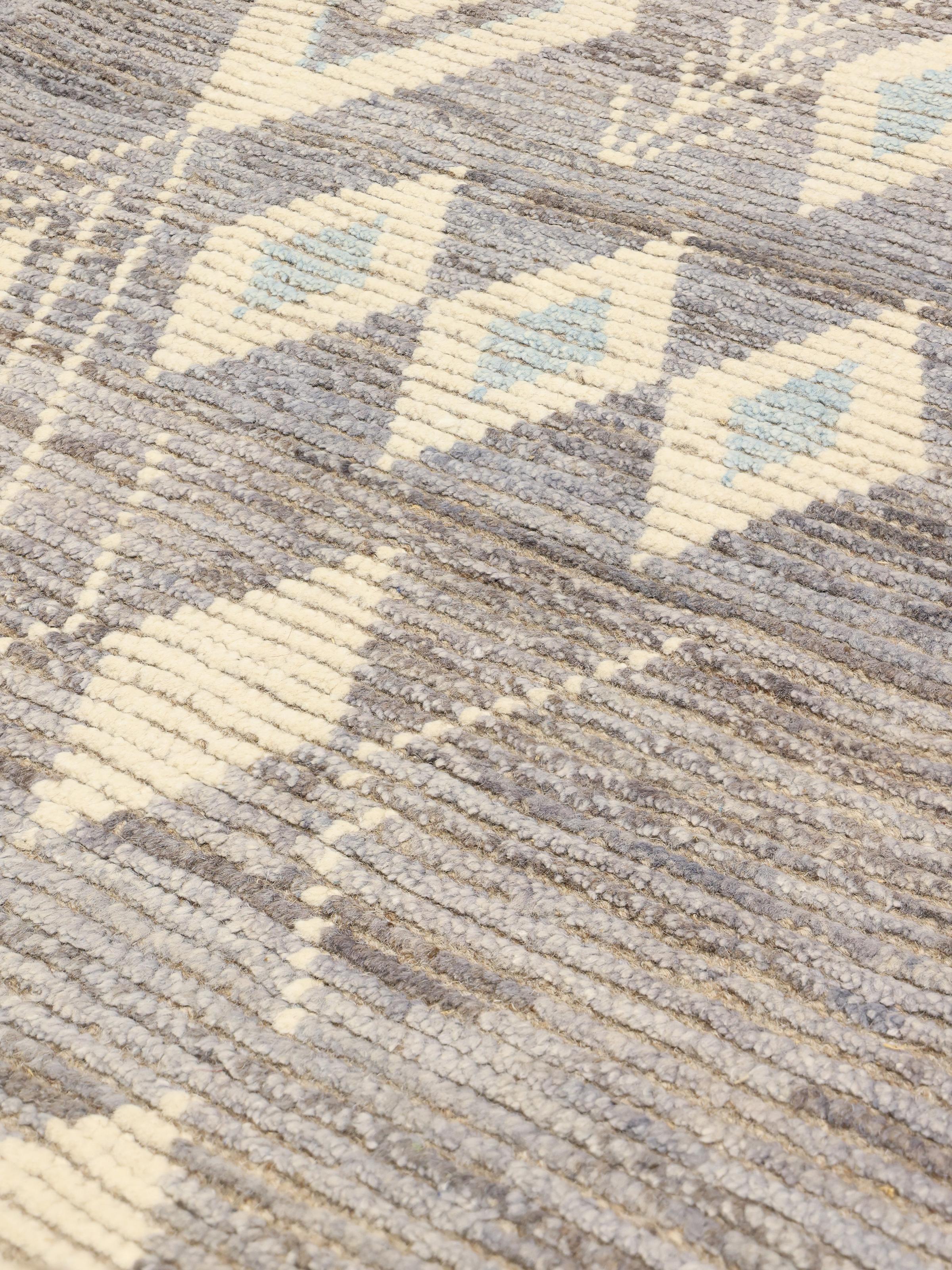
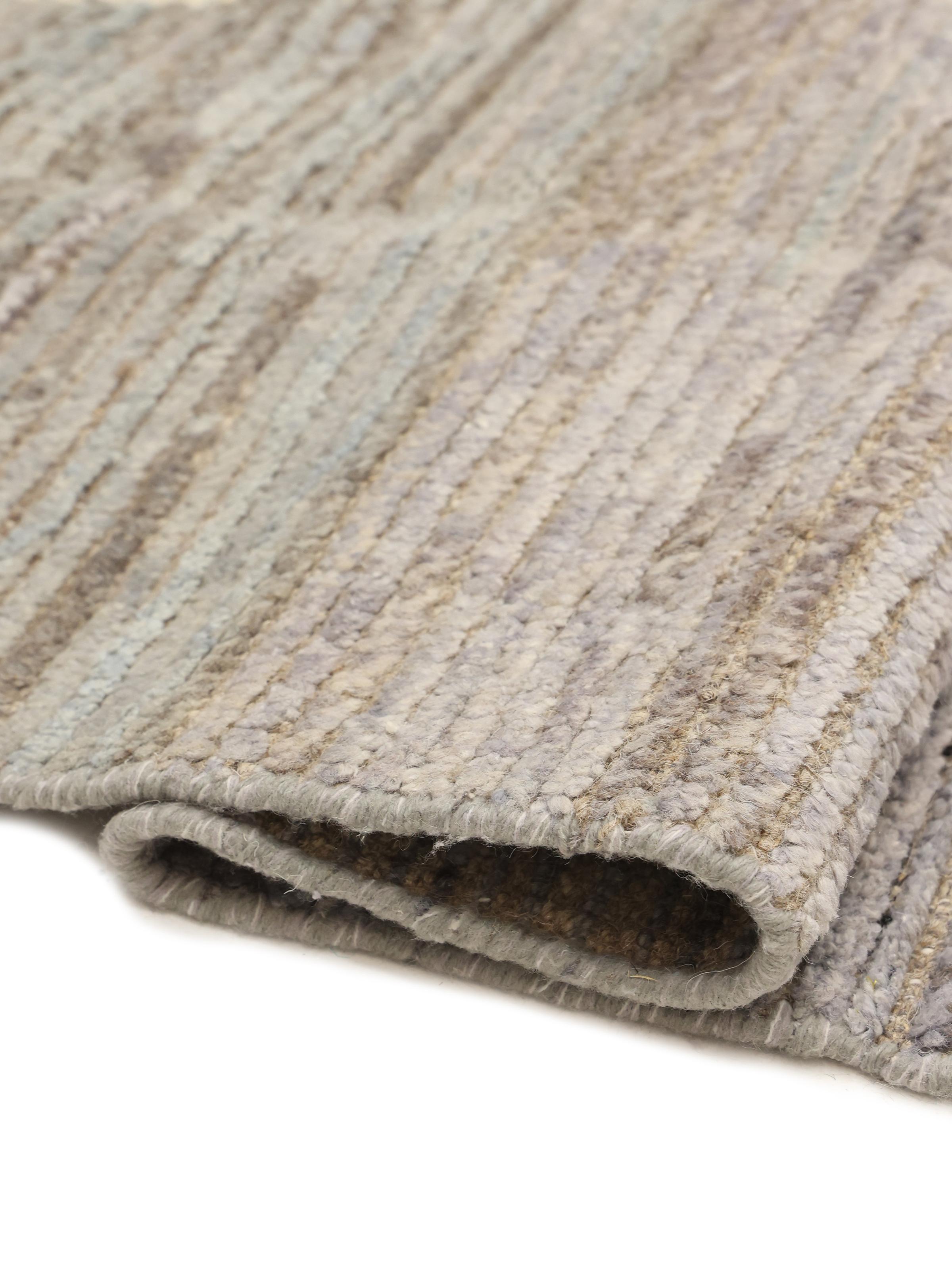
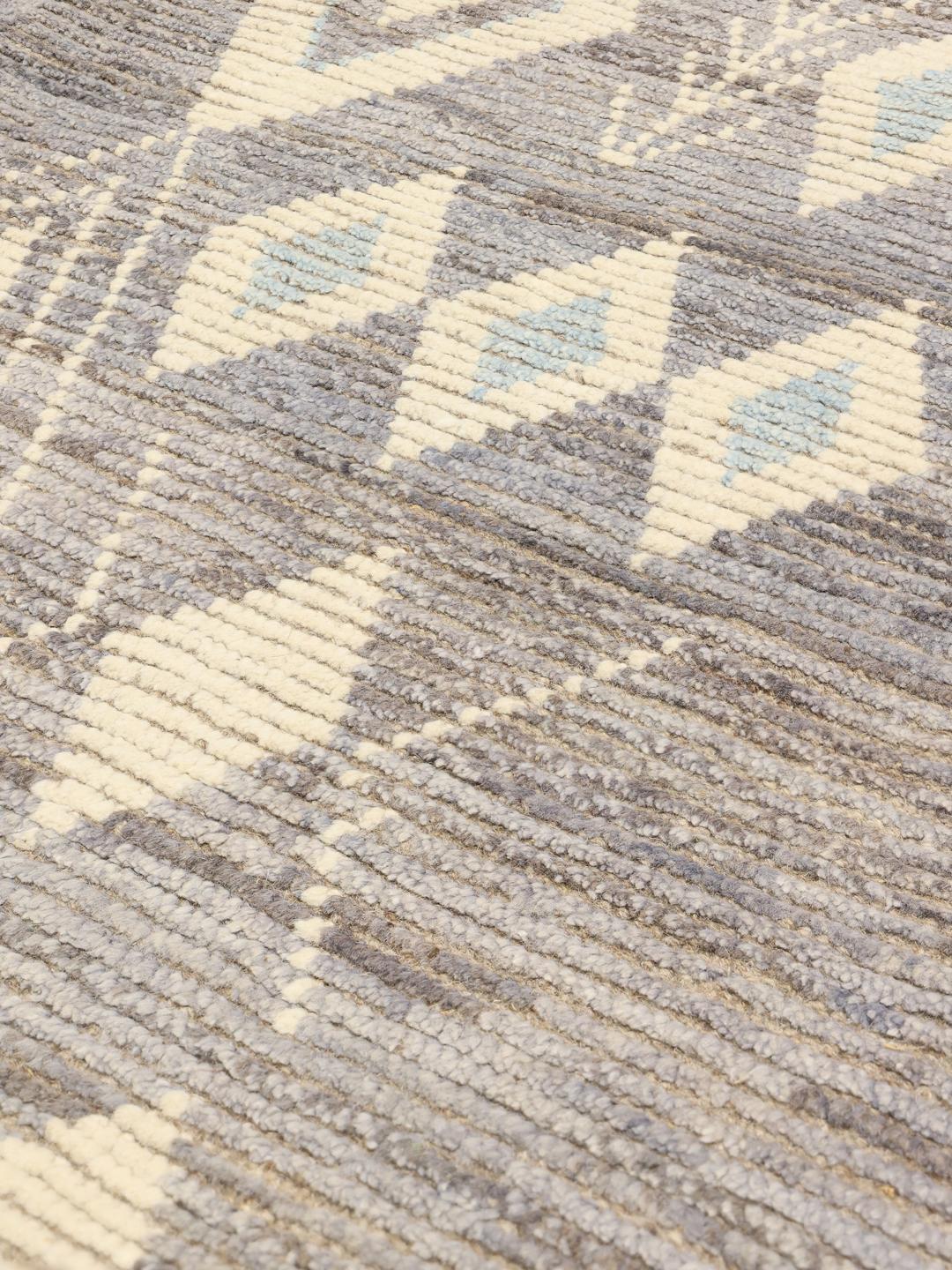
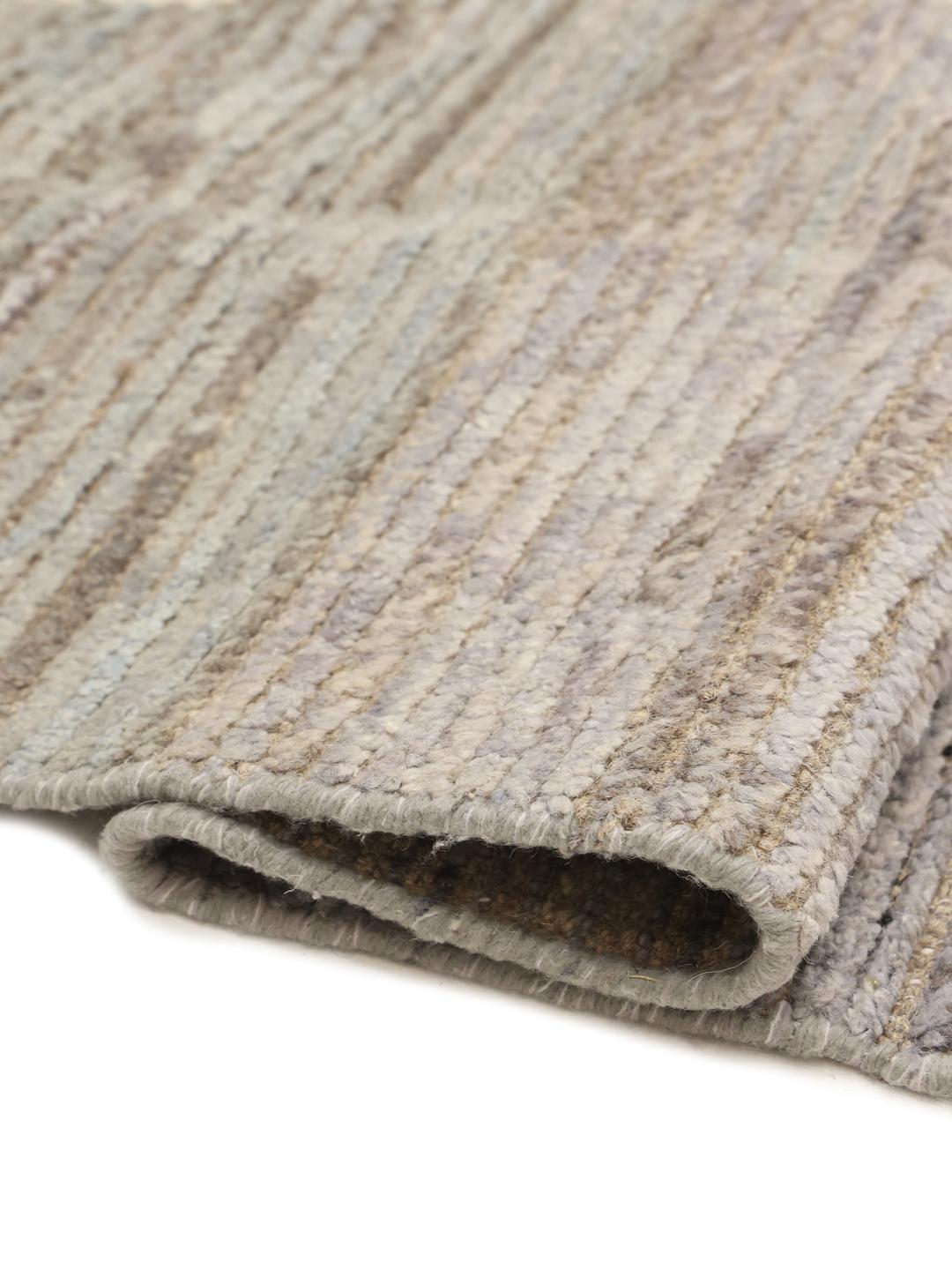
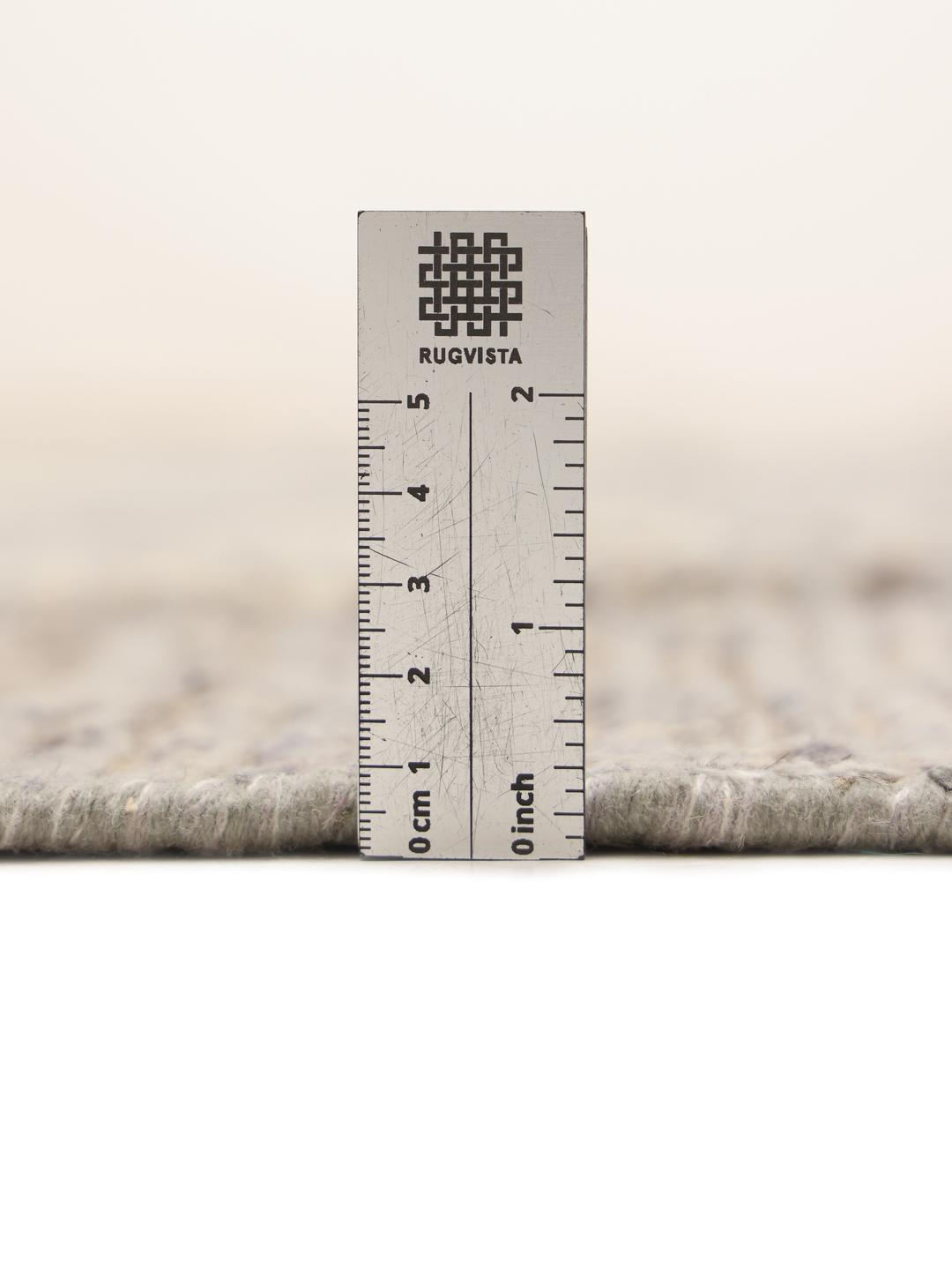
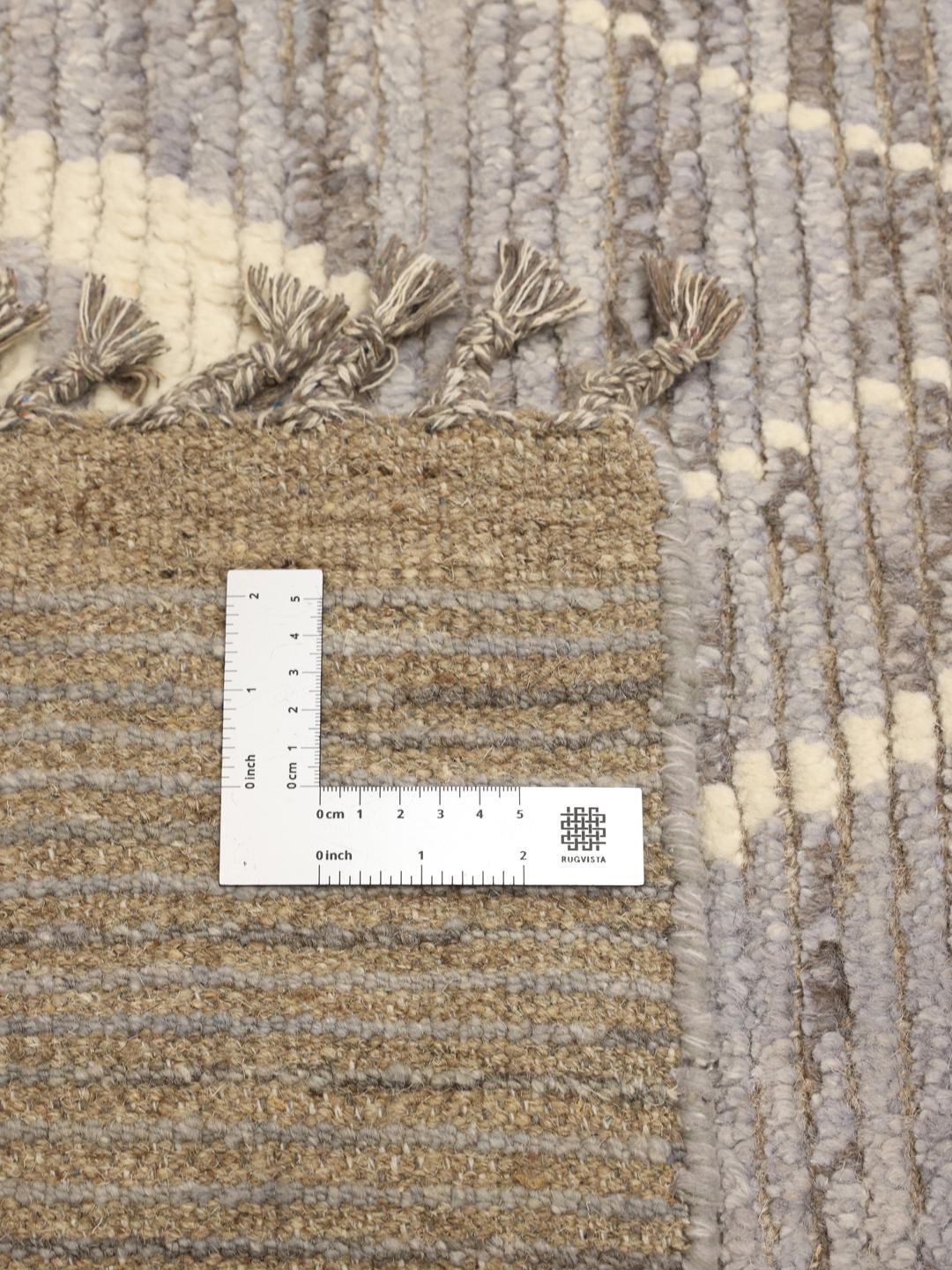
The term hand-knotted refers to the traditional method where individual strands of wool are tied by hand onto a foundation. This is a time-intensive process that determines the rug's durability and the sharpness of its pattern. By using such a technique, the weaver creates a pile that is dense and resilient, ensuring that the rug remains a functional and beautiful part of your home for decades.
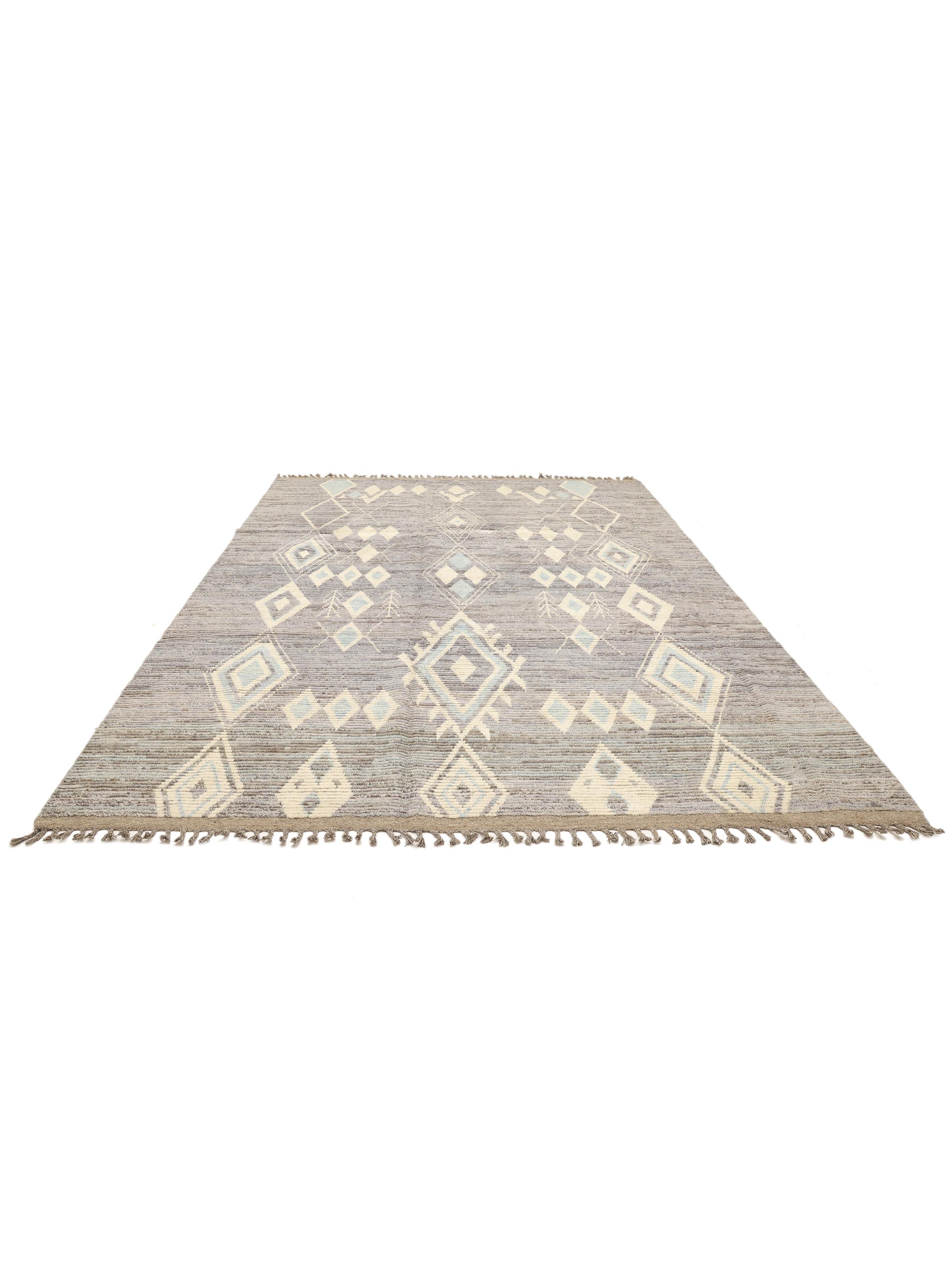
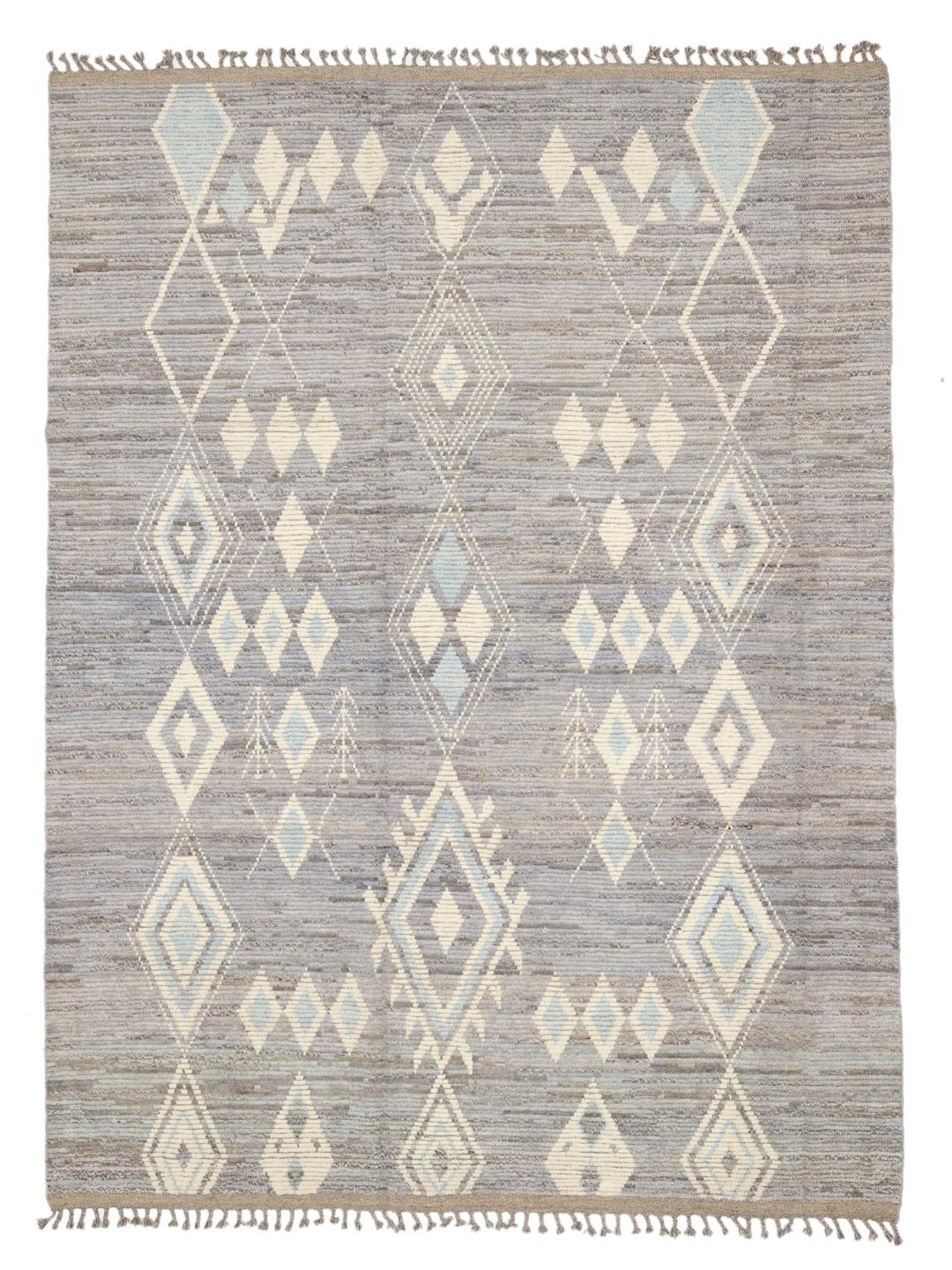
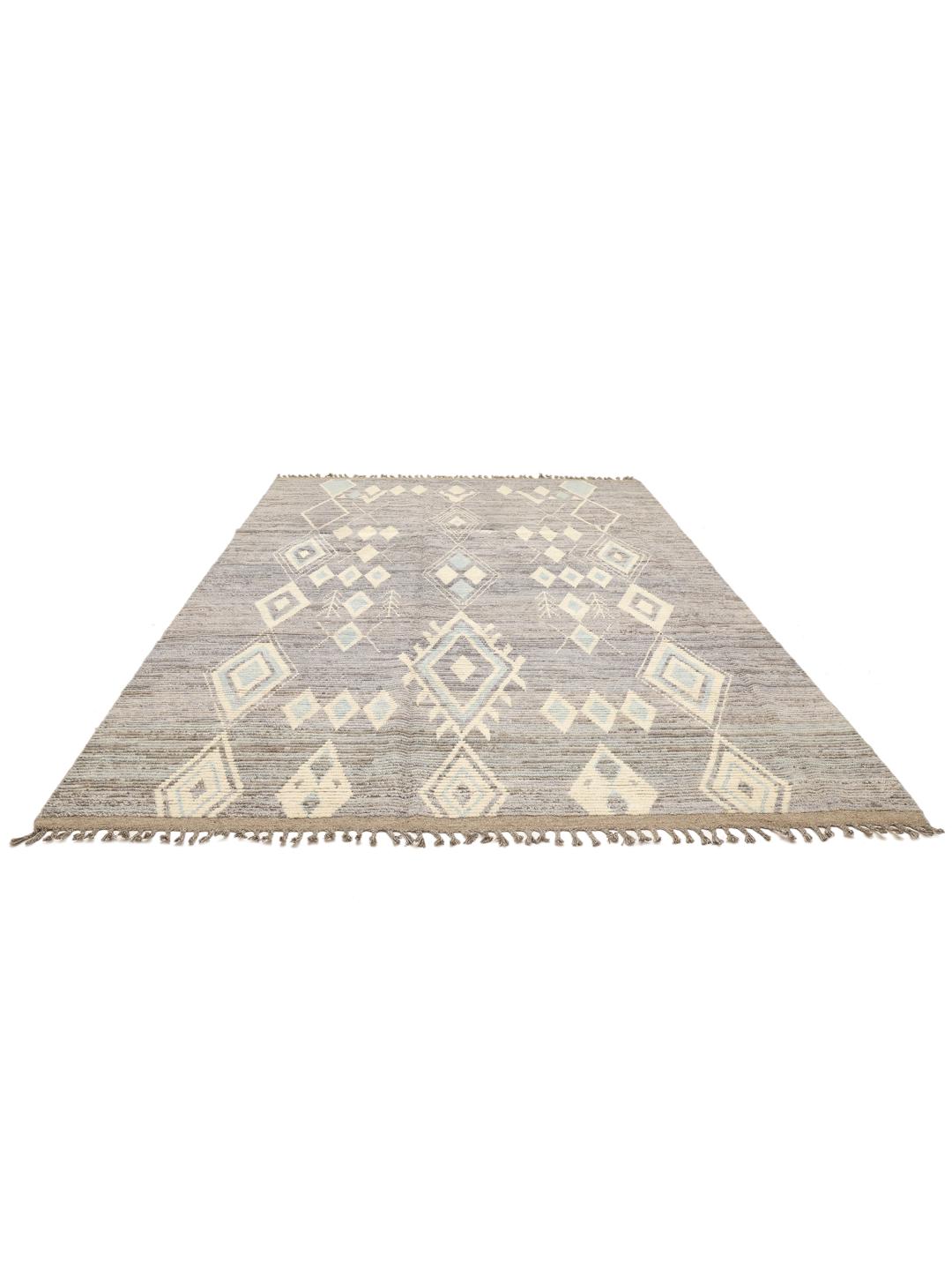
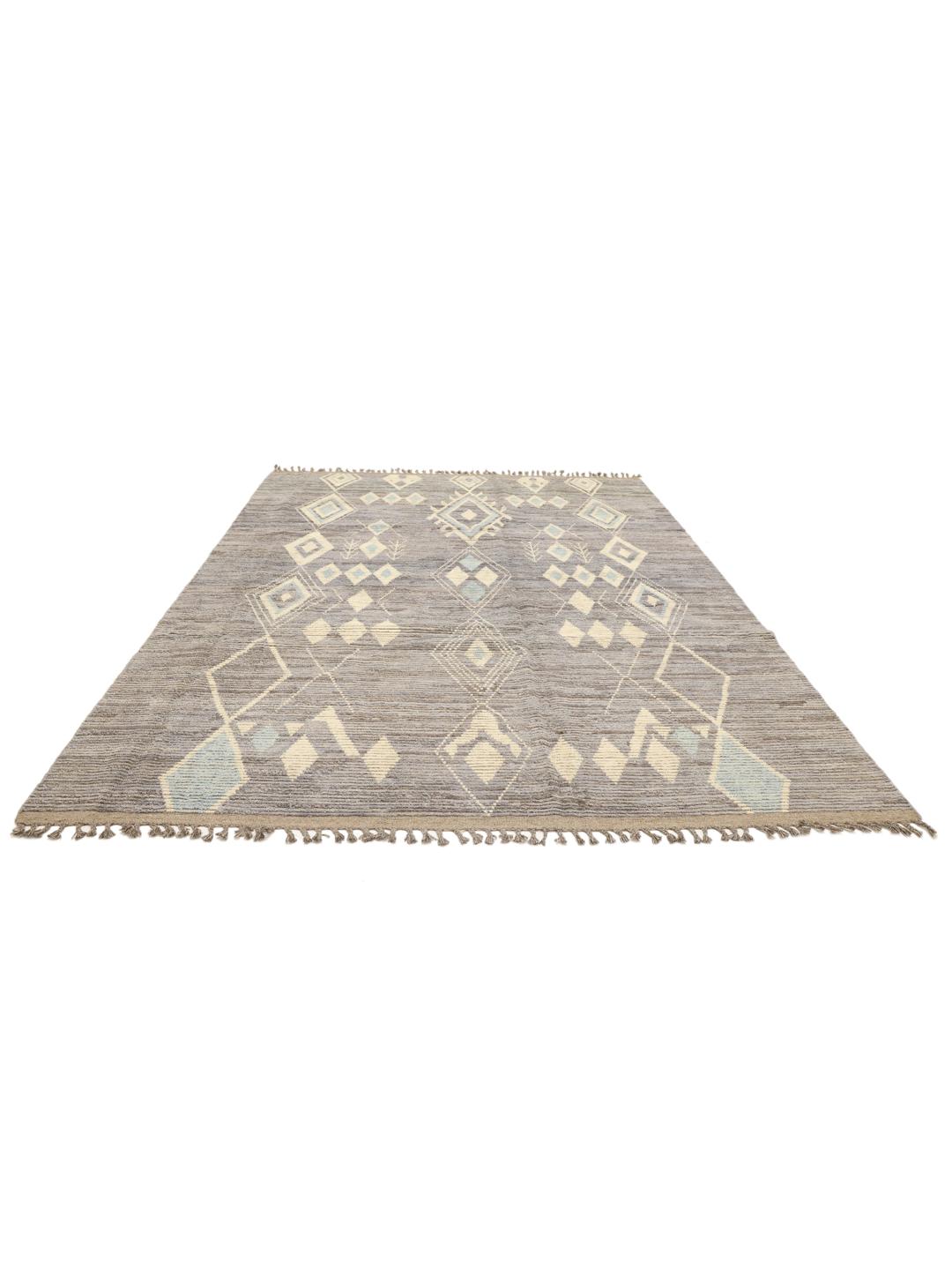
The design of this piece draws inspiration from the classic Berber aesthetic, characterised by its focus on simplicity, geometric shapes, and natural tones. The diamond motifs seen here are a signature element of this tradition, often representing protection or tribal identity. The use of a grey background is a modern evolution of the classic neutral palette, making it easier to integrate into contemporary homes while still honouring the traditional motifs.
Collecting a rug from this tradition is an investment in human skill and cultural continuity. Each piece serves as a bridge between the artisan's world and your own, carrying the weight of a craft that values patience over speed. By choosing this rug, you are supporting a legacy of weaving that prizes quality and individuality, ensuring that your home is furnished with something truly meaningful.