Berber rugs originate from the indigenous tribes of North Africa, particularly the Middle Atlas mountains of Morocco. These textiles have been woven for centuries, not merely as floor coverings, but as essential functional items for daily life, providing warmth and comfort in the harsh, cold mountain climates. The traditions surrounding their creation are deeply rooted in the cultural identity of the Berber people.
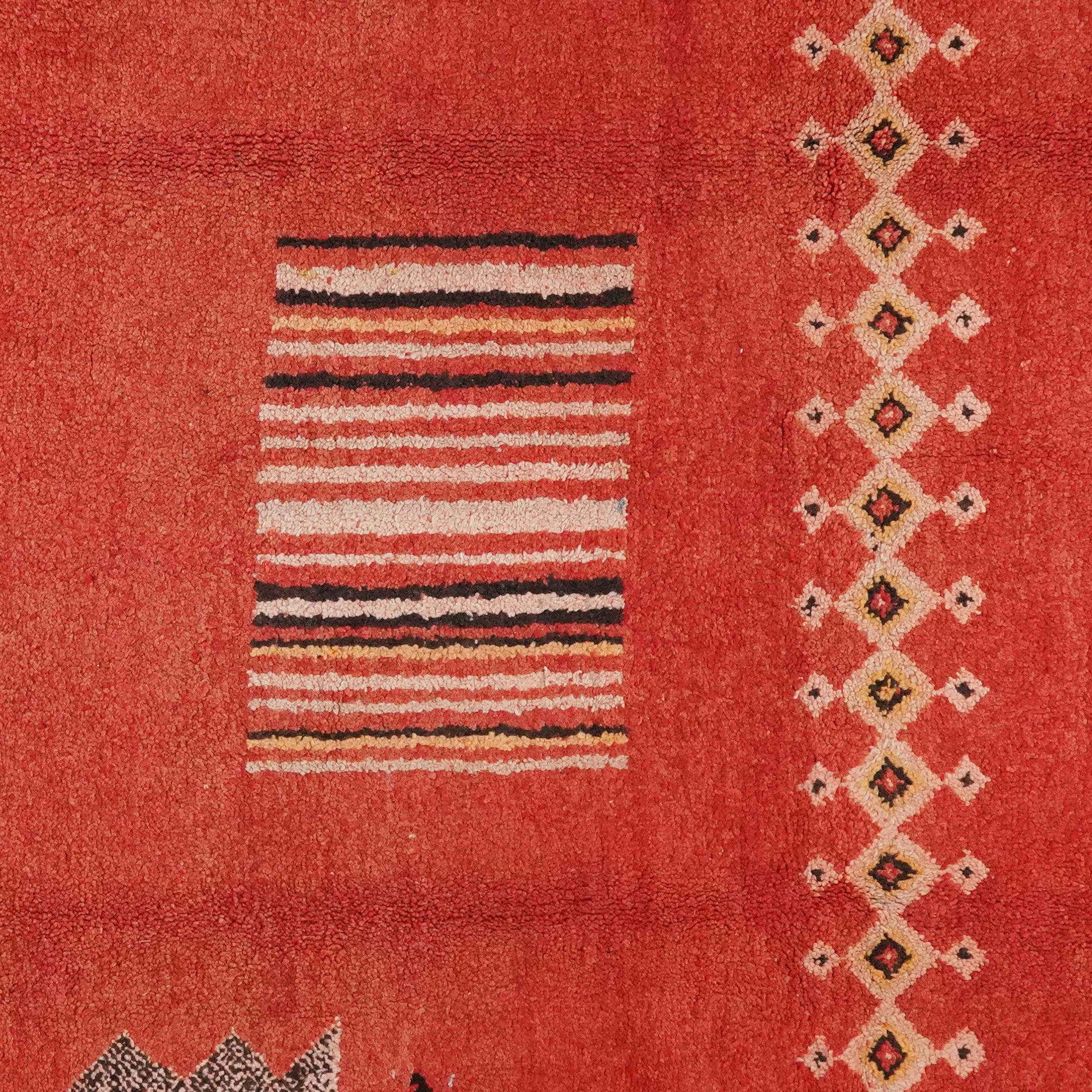
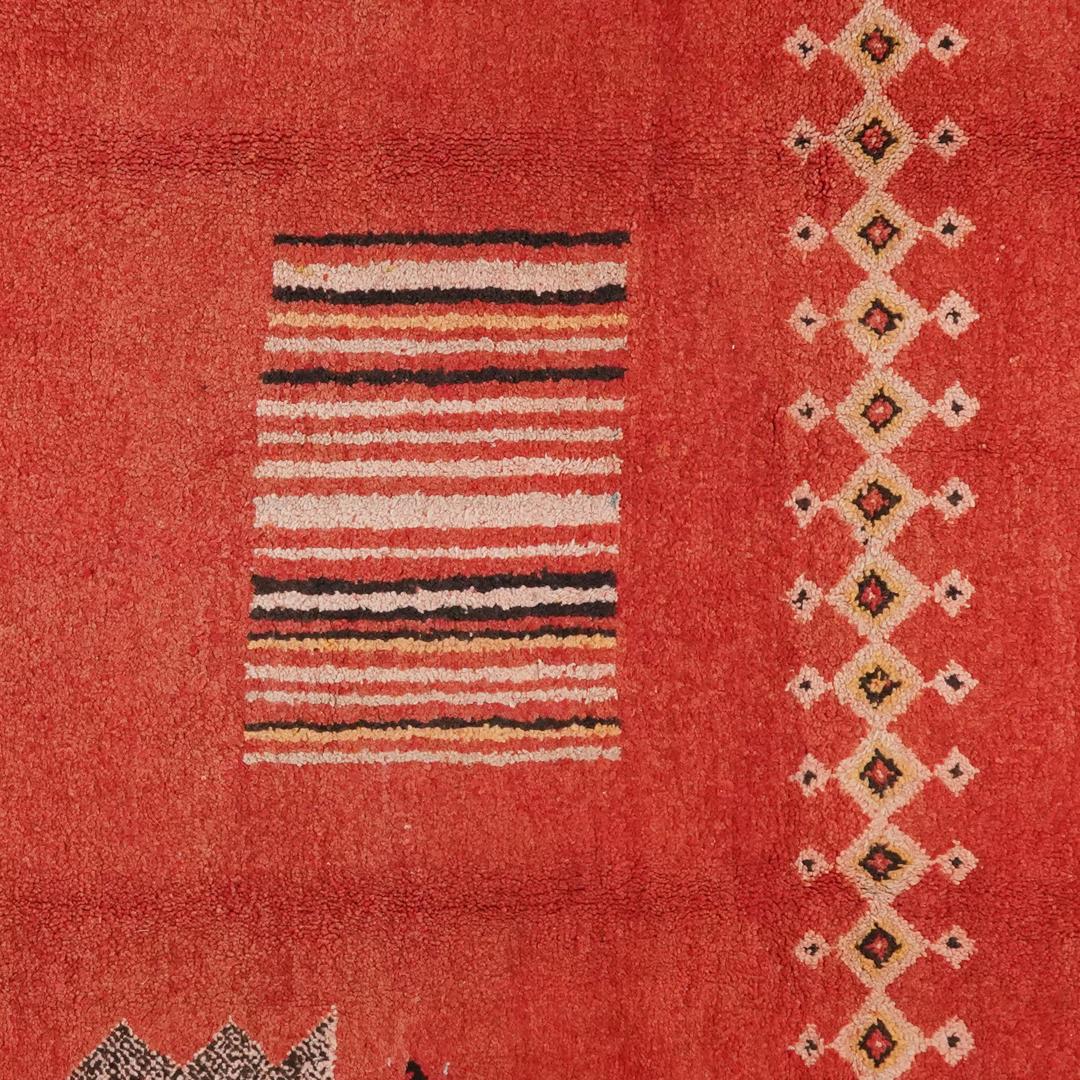
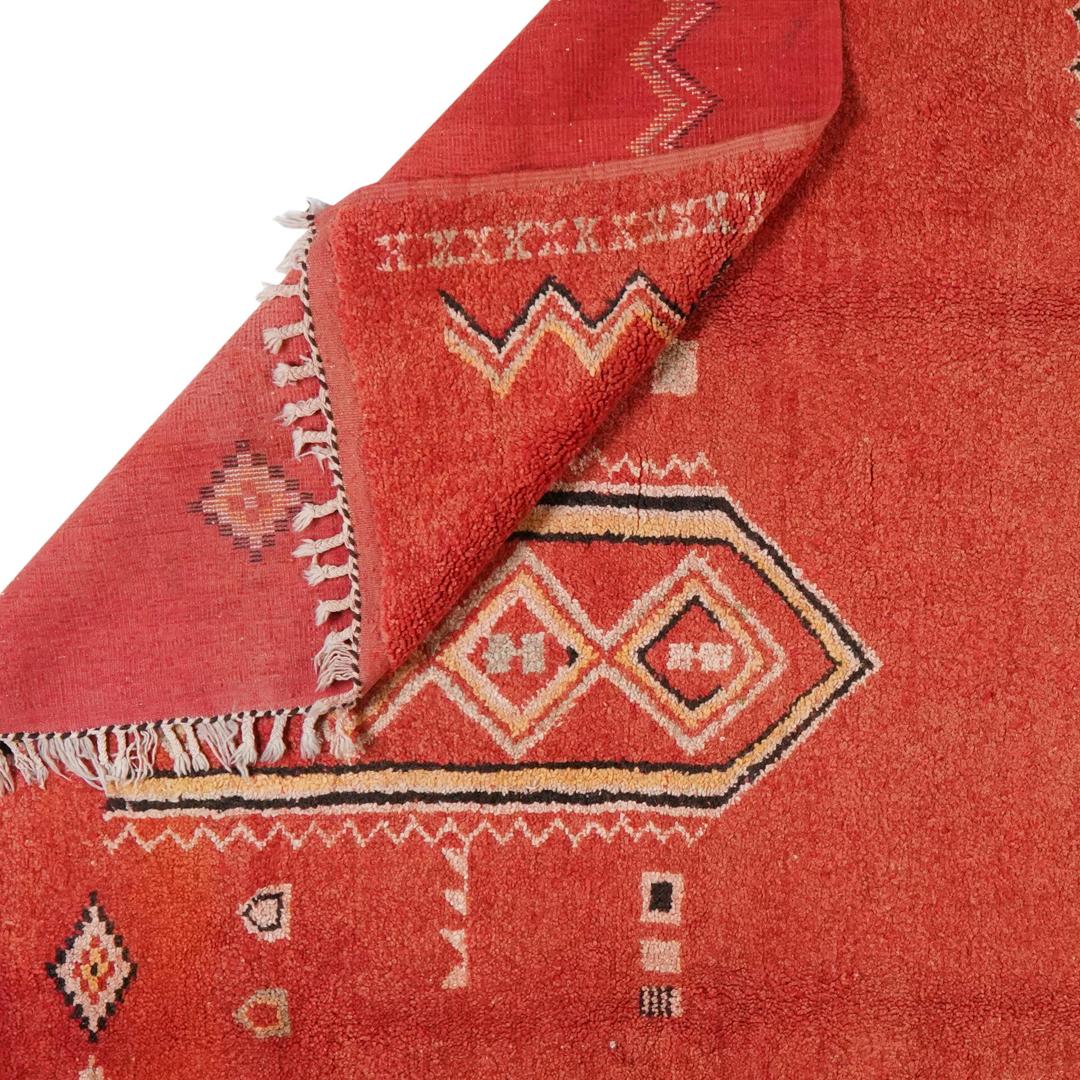
The term 'hand-knotted' refers to the traditional method where individual strands of wool are tied onto the warp and weft foundation. This labour-intensive technique is what gives these rugs their exceptional durability and texture. Because the knots are tied by hand, the resulting pile is dense, providing a rich, tactile surface that is both soft to the touch and incredibly hard-wearing, capable of lasting for generations if properly cared for.
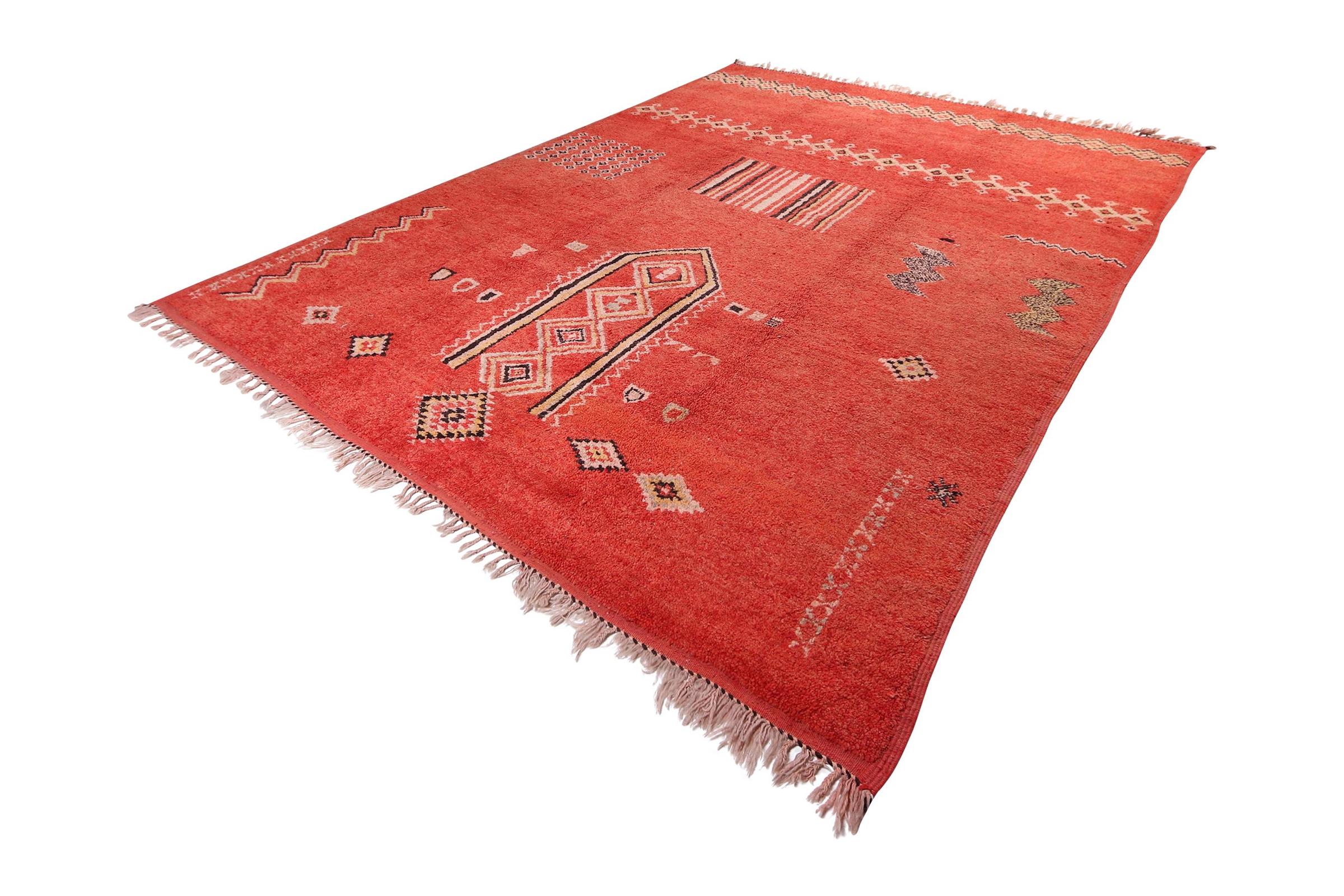
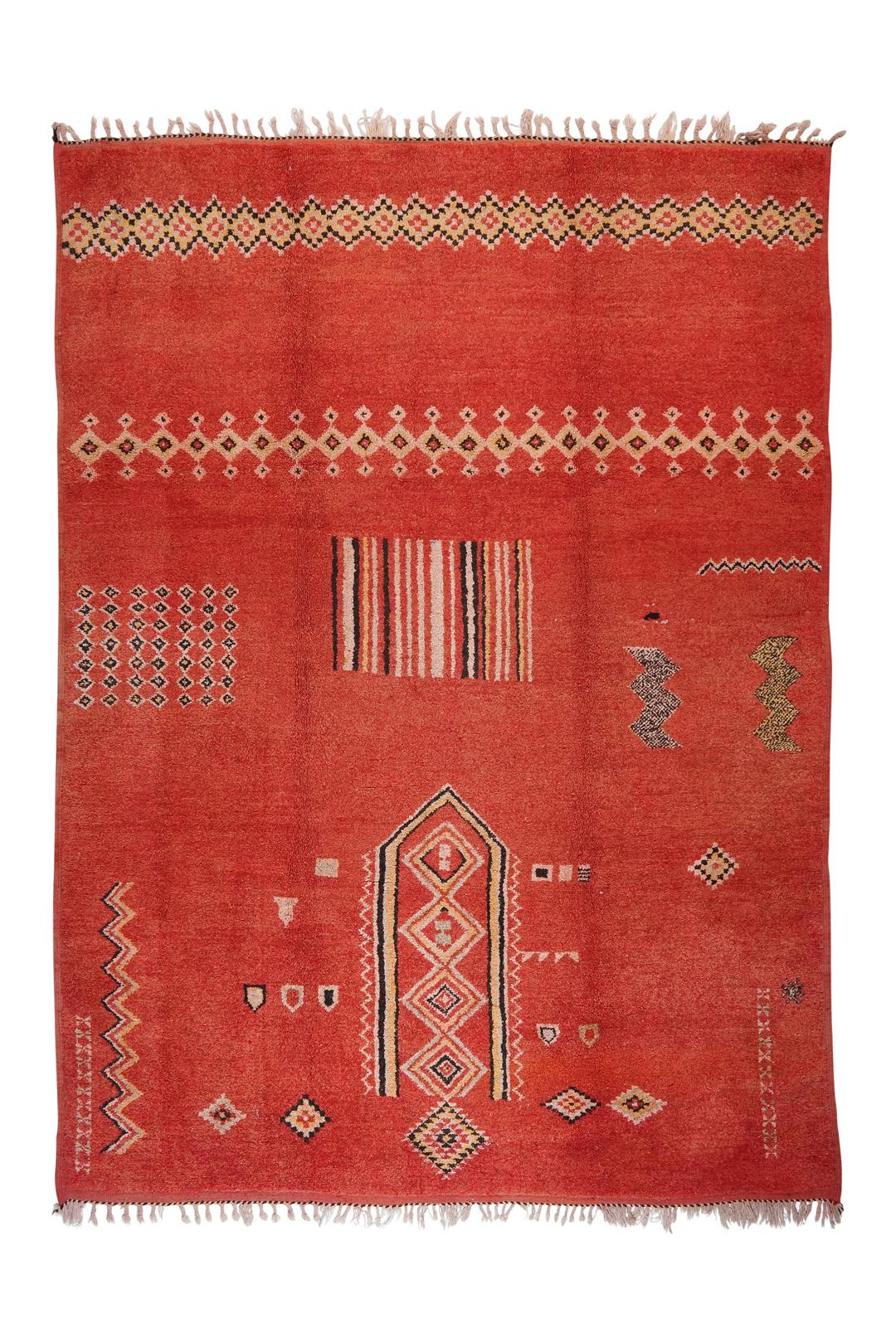
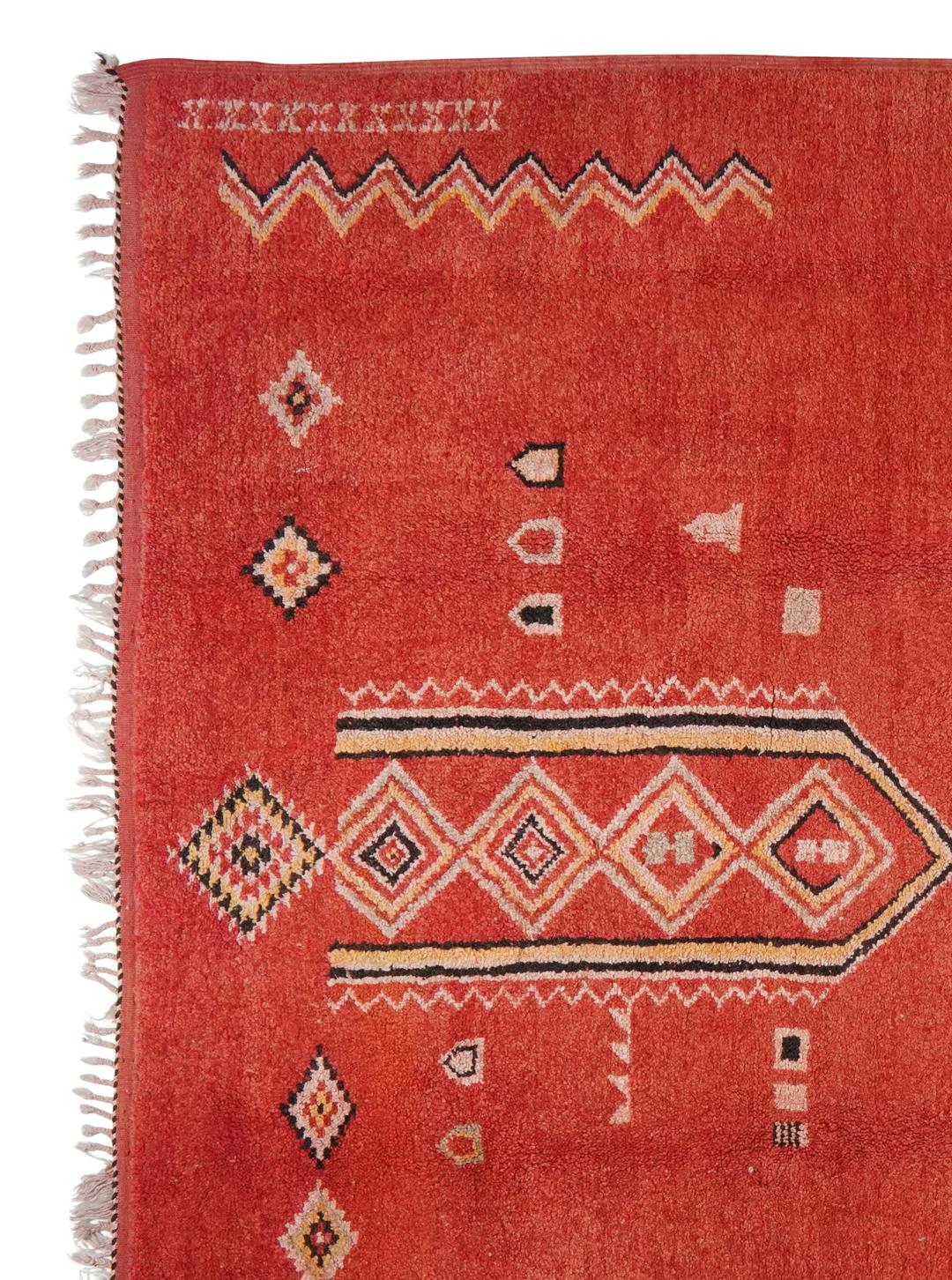
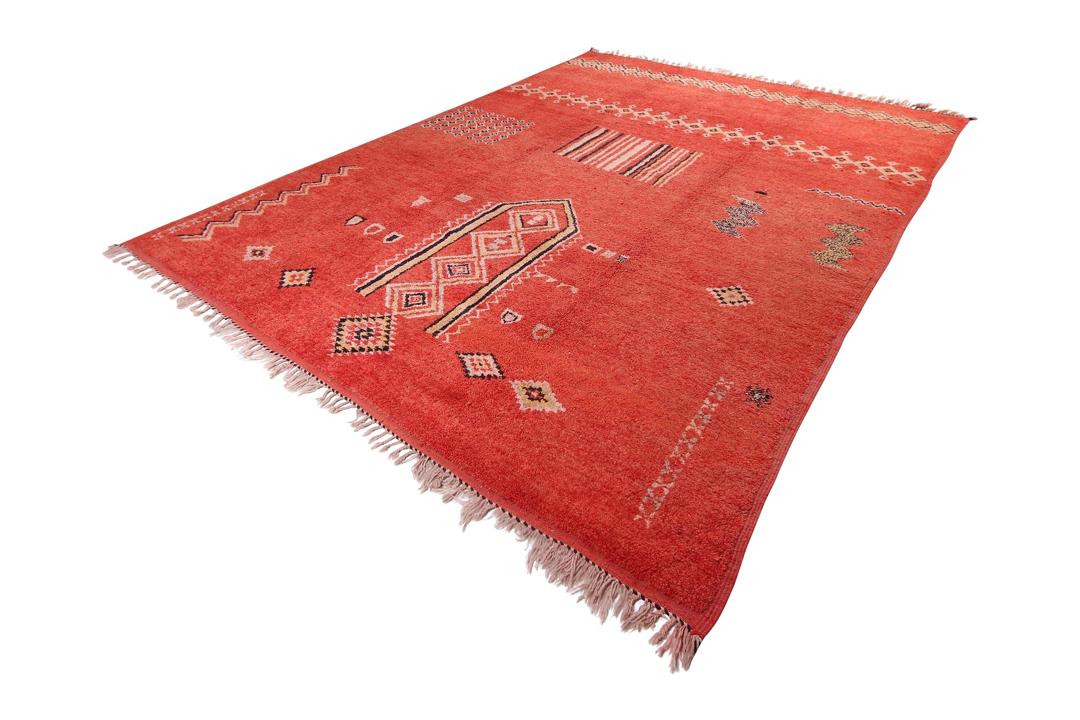
The design vocabulary of these rugs is a fascinating blend of geometric abstraction and symbolic meaning. Traditionally, motifs include diamonds, zig-zags, and stylized representations of life, fertility, and protection. While many Beni Ourain rugs are known for their minimalist cream and black palettes, this specific vintage piece showcases a bold, traditional red, which is a highly prized and distinctive choice within the broader Berber tradition.
Collecting vintage Berber rugs is a way to preserve a tangible piece of history. Each piece is a reflection of the weaver's personal expression at a specific moment in time, influenced by the nomadic or semi-nomadic lifestyle of the region. By bringing one of these rugs into your home, you are not just adding a decorative element, but a storied artifact that honours the skill and cultural depth of Moroccan craftsmanship.