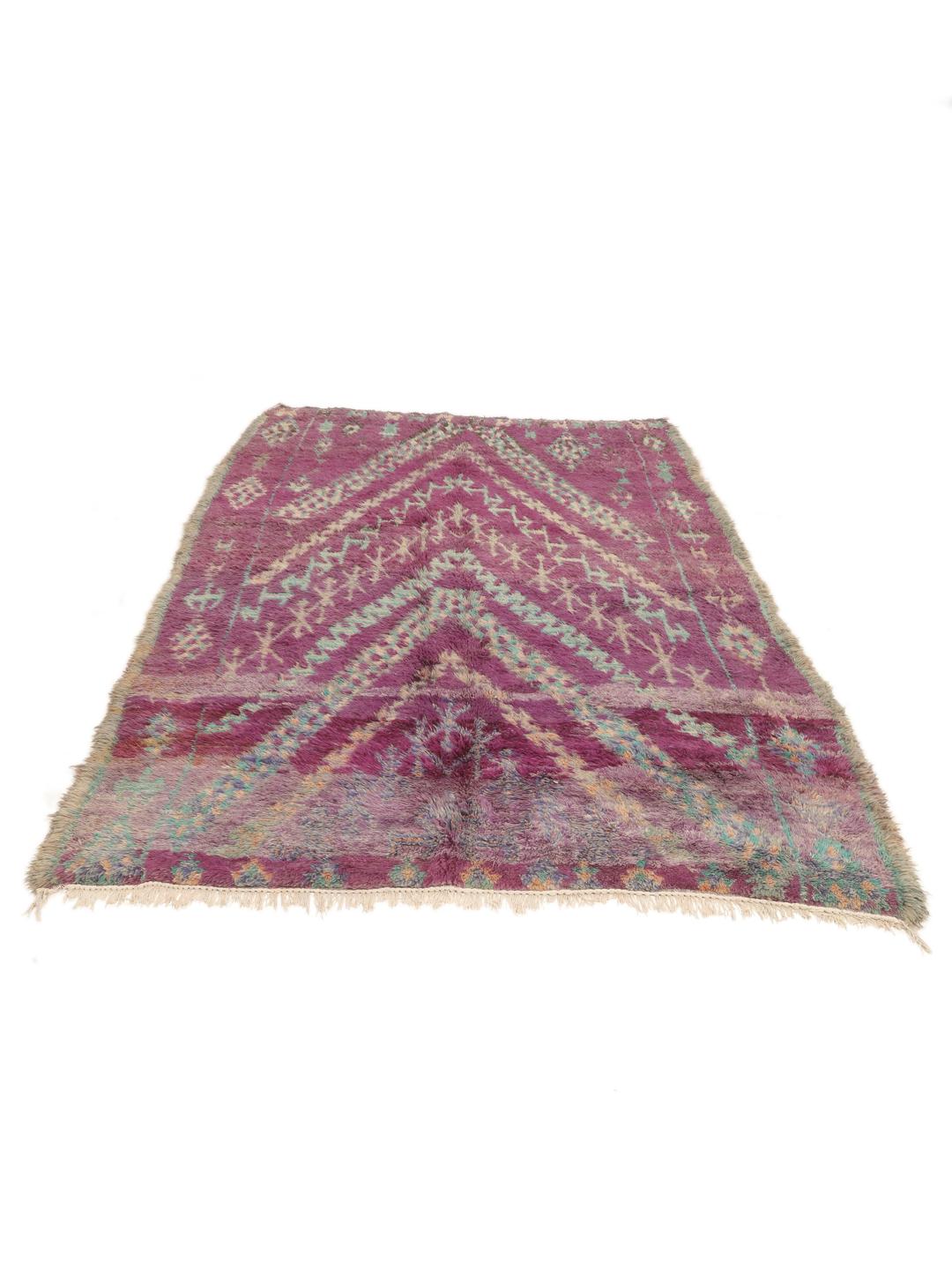
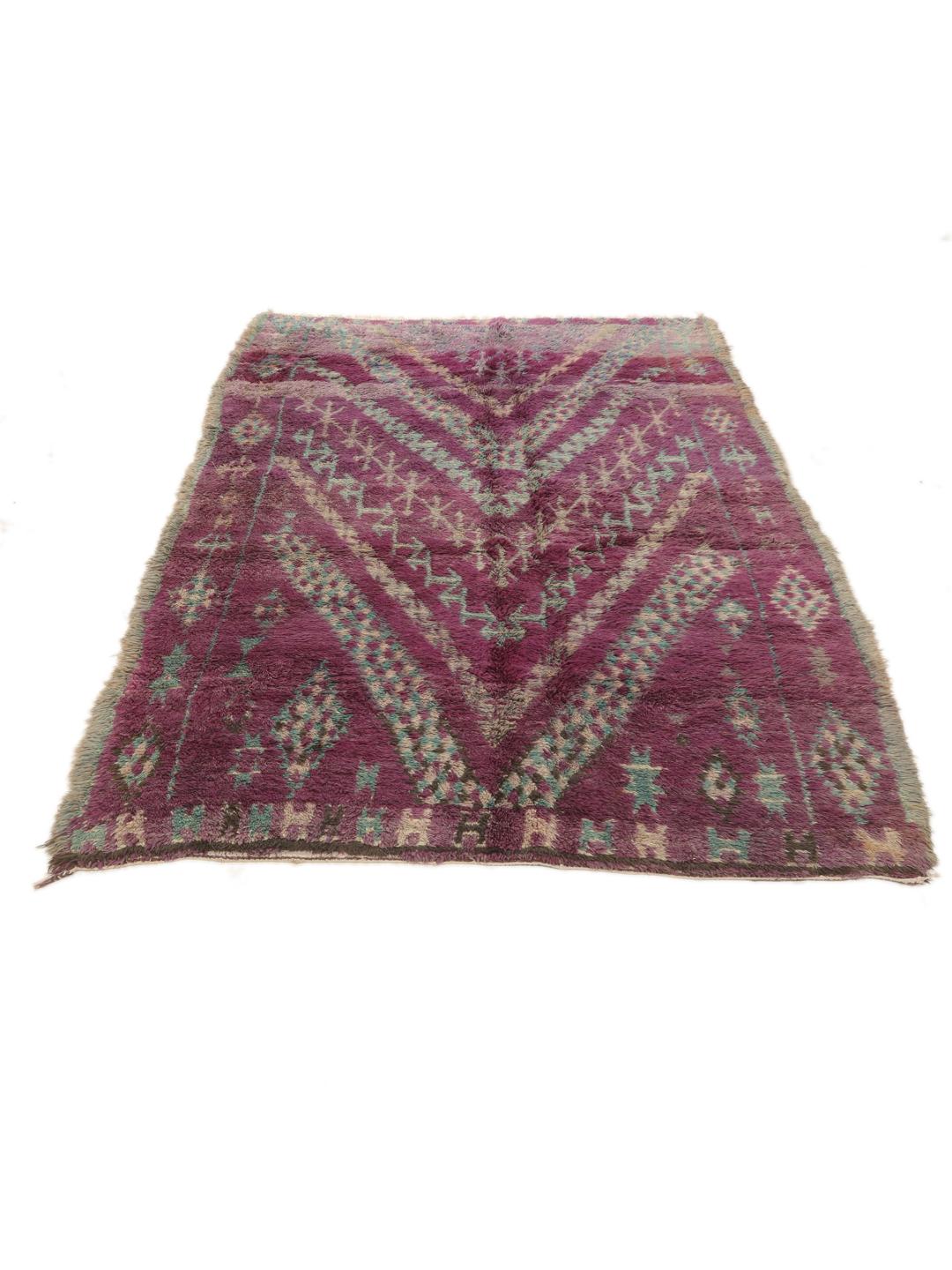
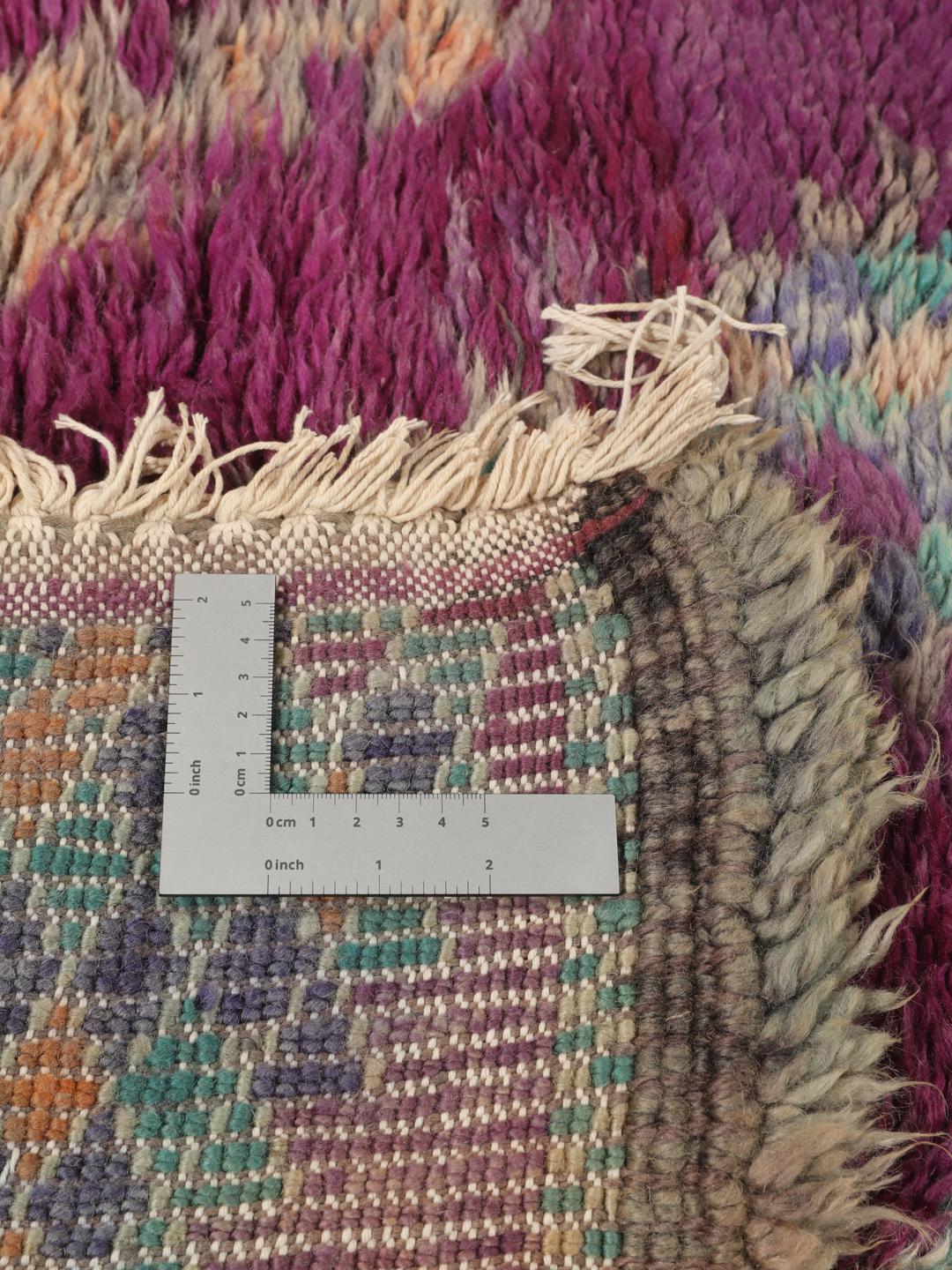
The Berber rugs of the Middle Atlas mountains in Morocco are among the most celebrated textiles in the world. For generations, these rugs have been crafted by indigenous tribal women who use them not just as floor coverings, but as essential tools for survival against the harsh mountain climate and as artistic expressions of their daily lives and beliefs.
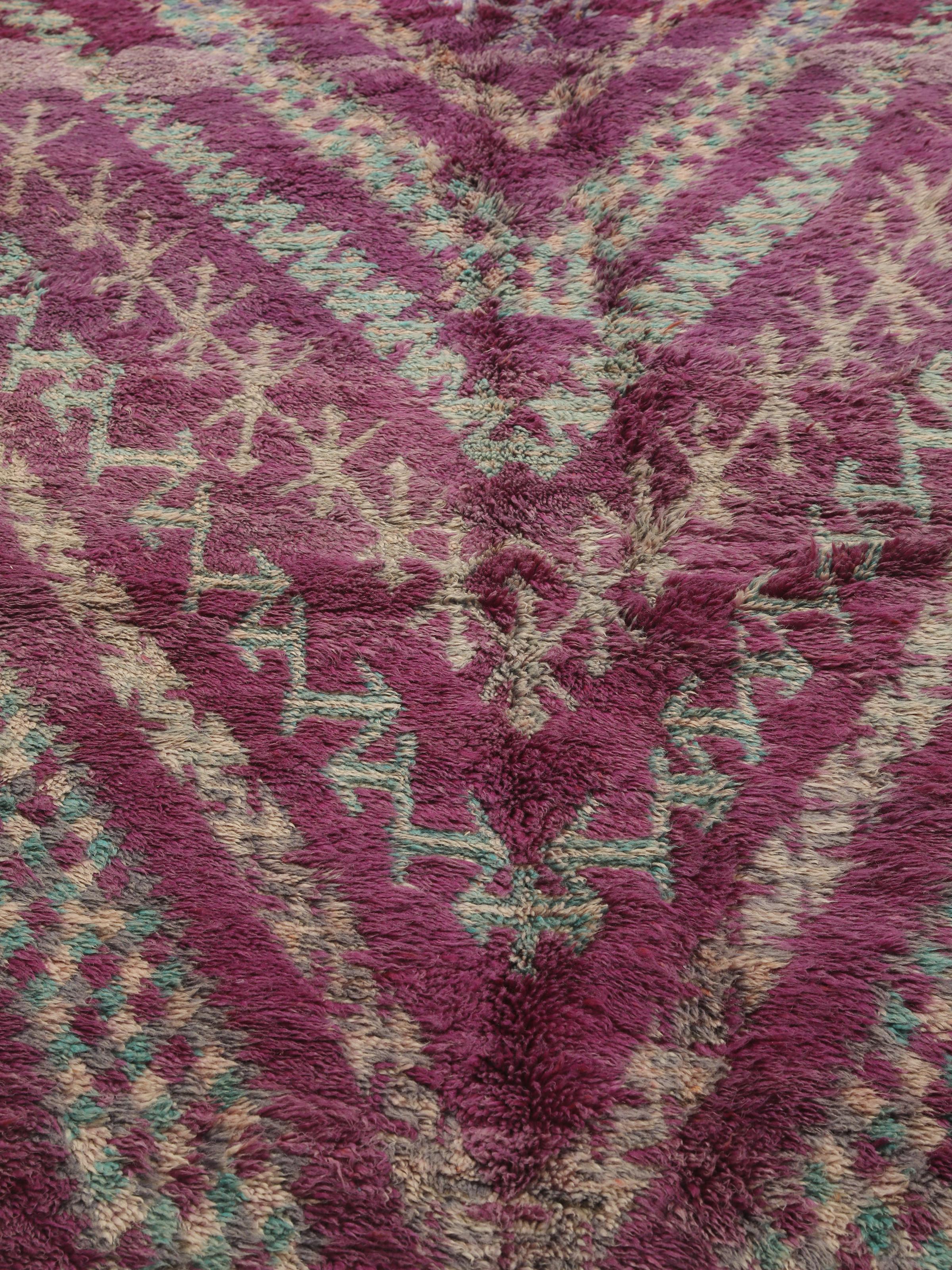
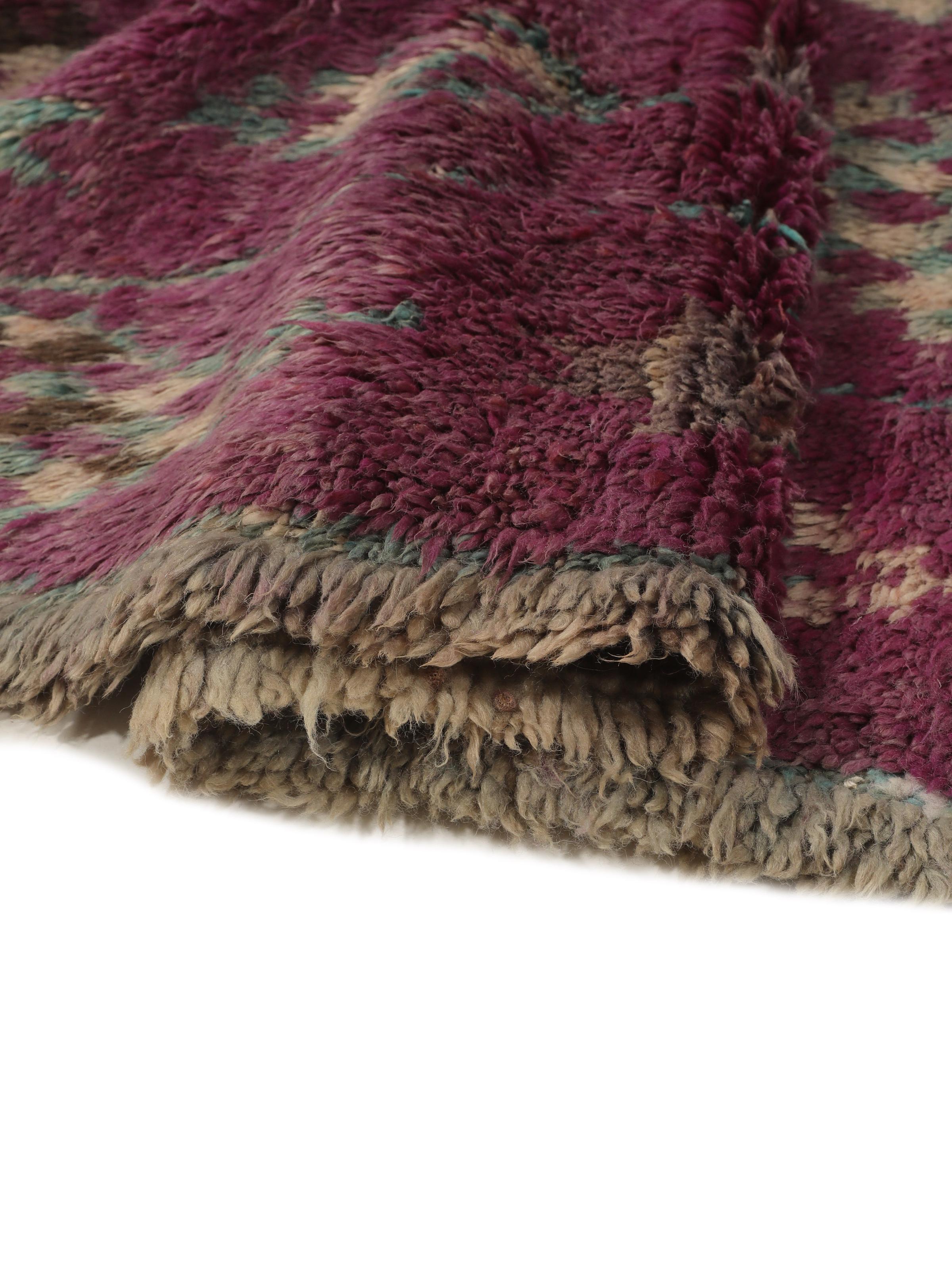
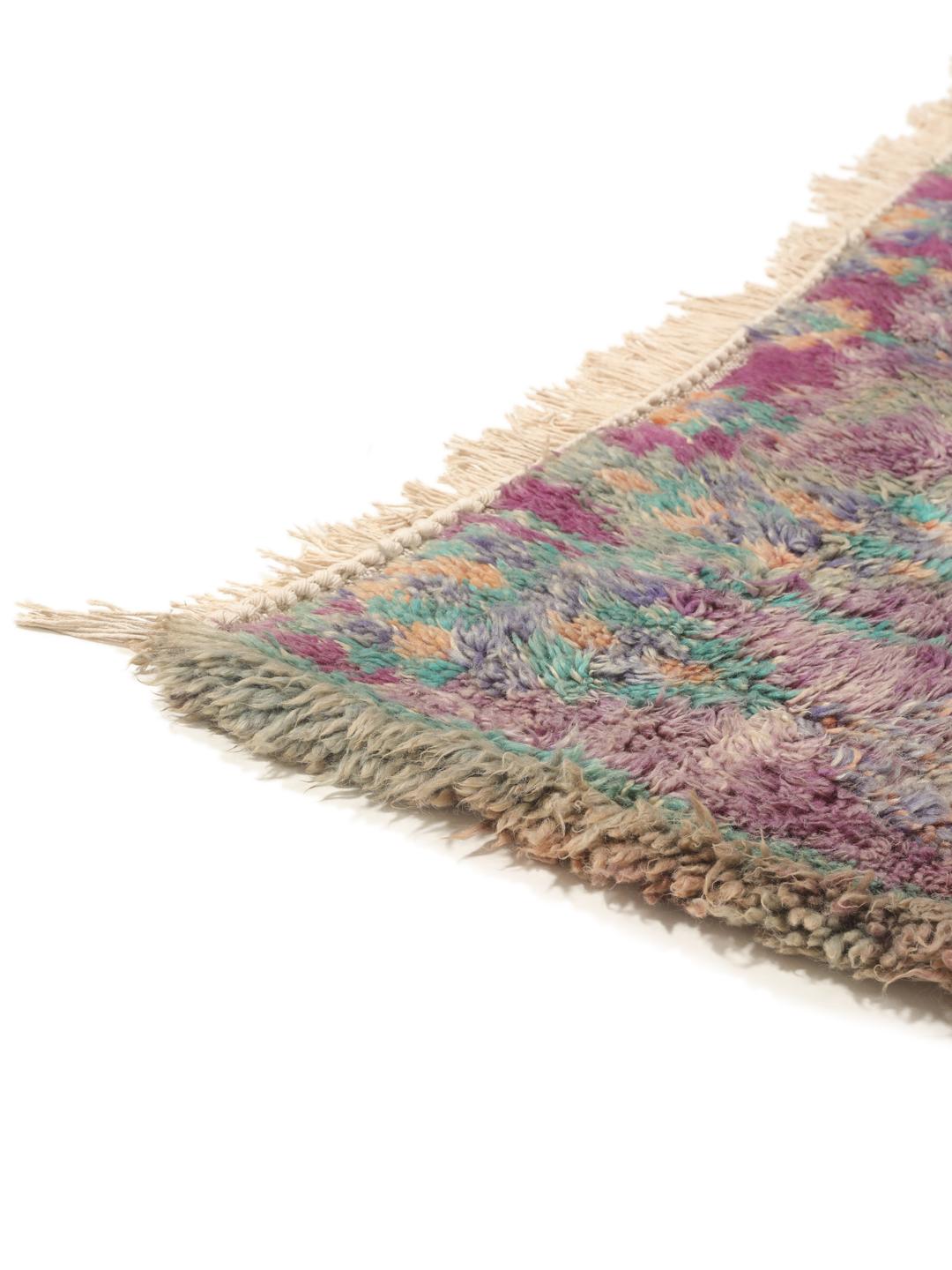
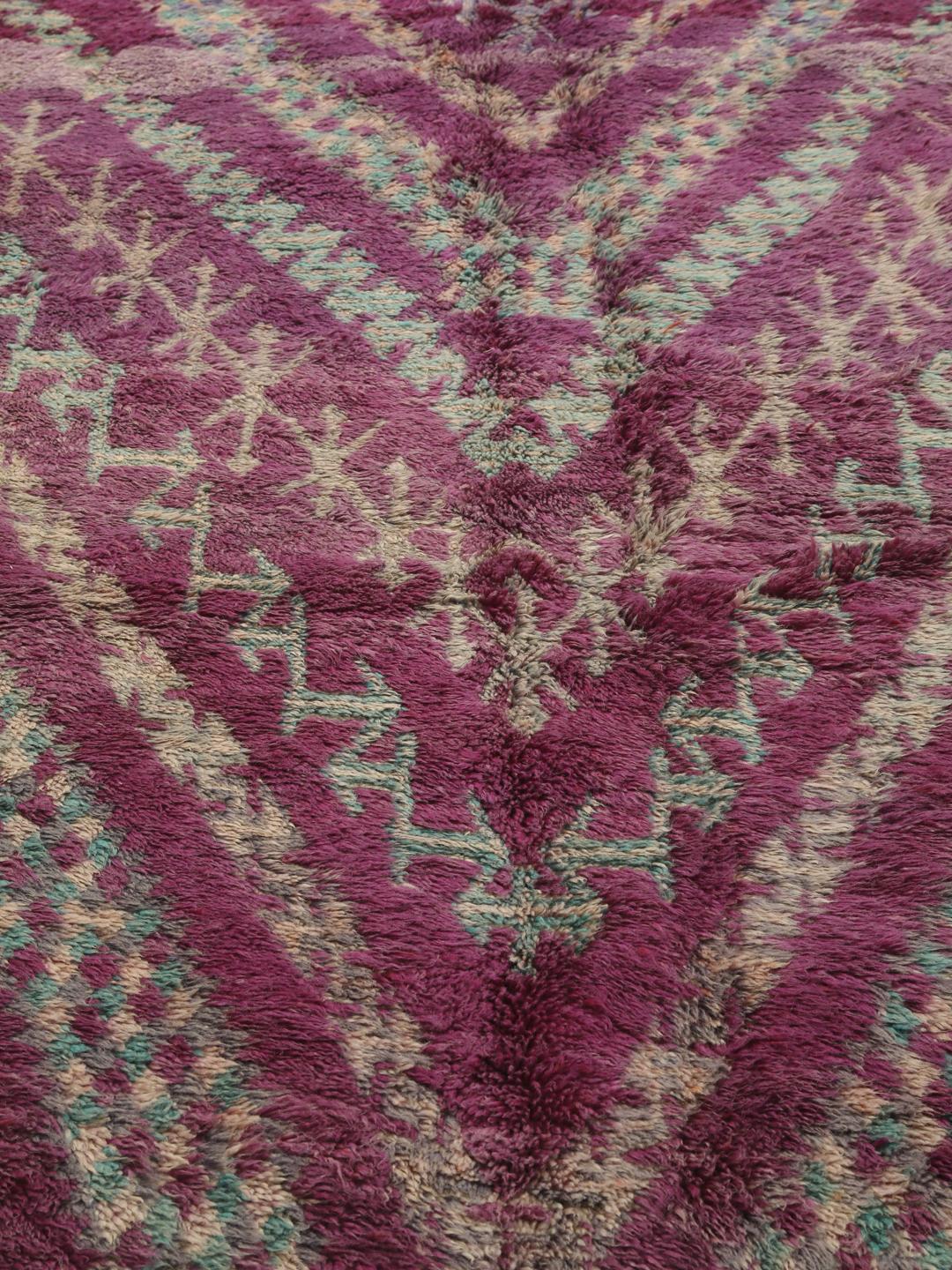
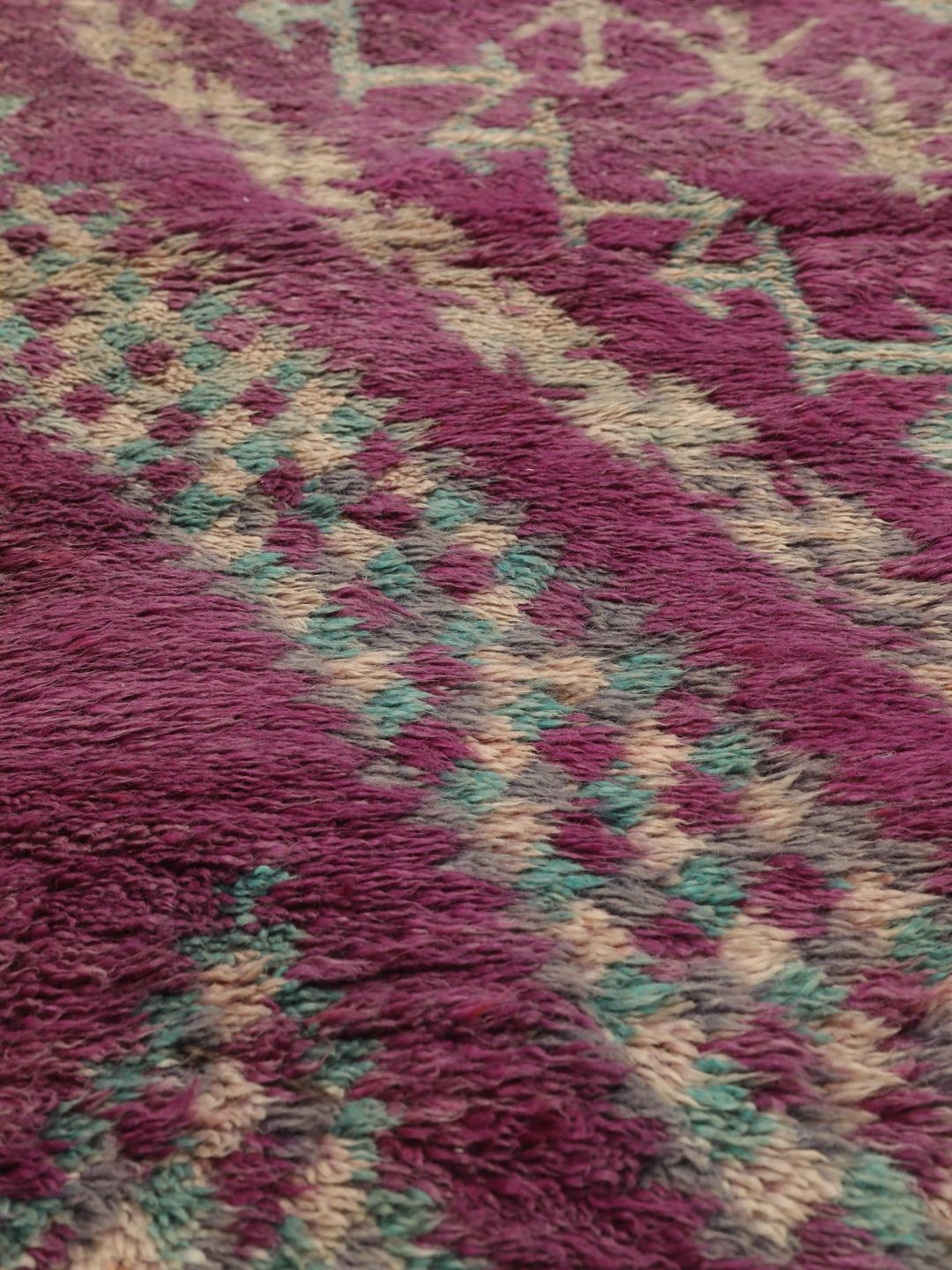
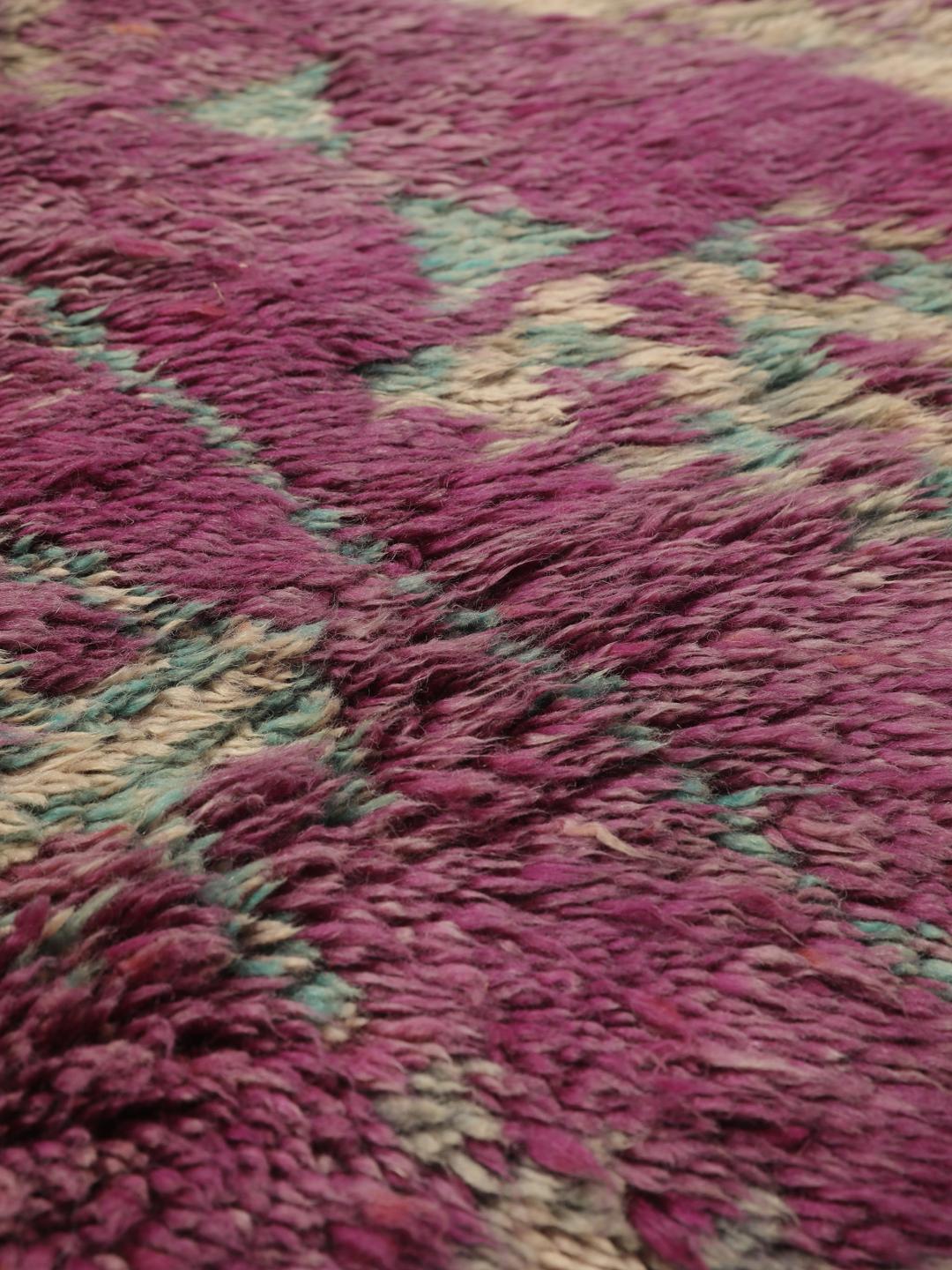
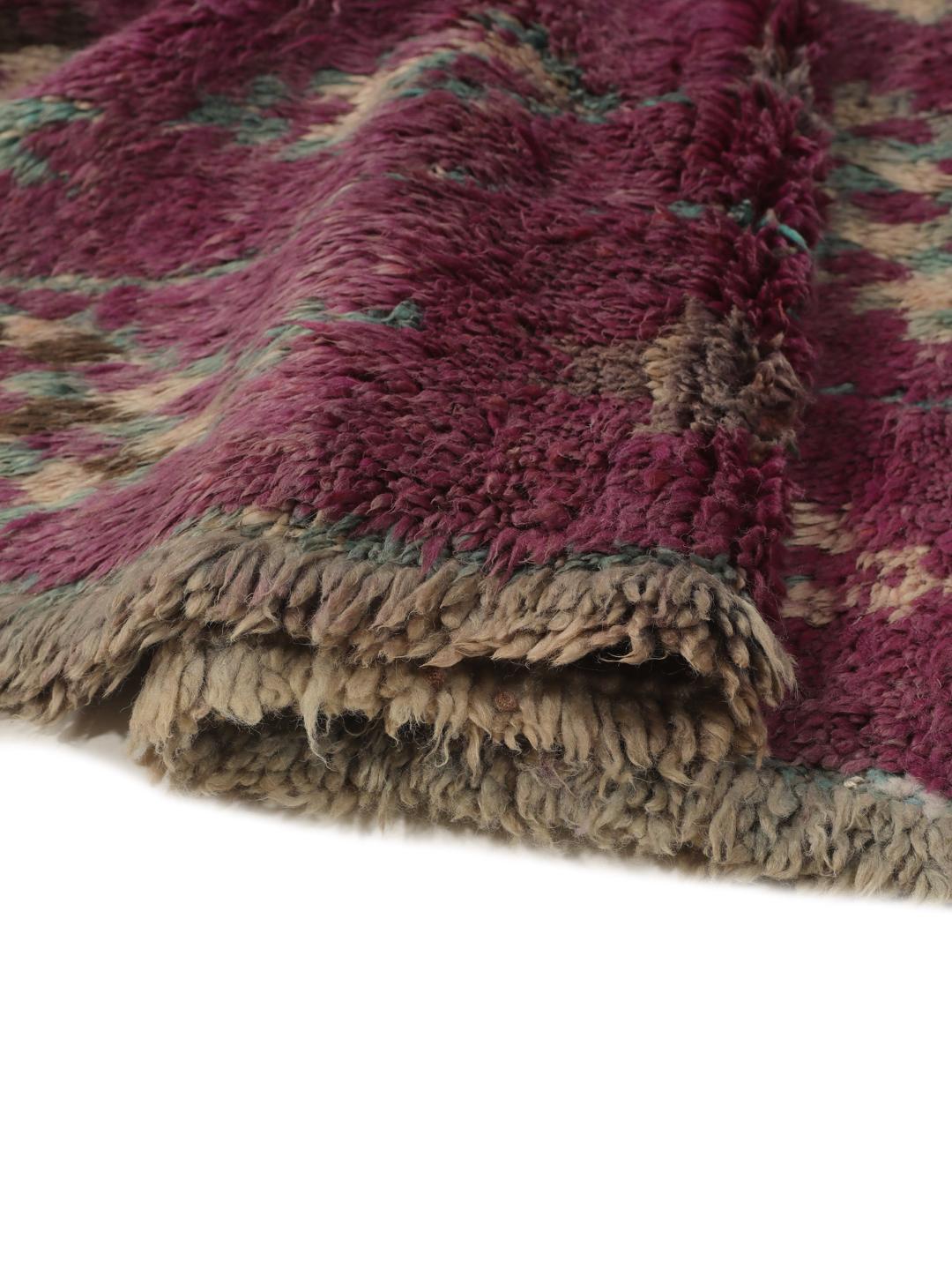
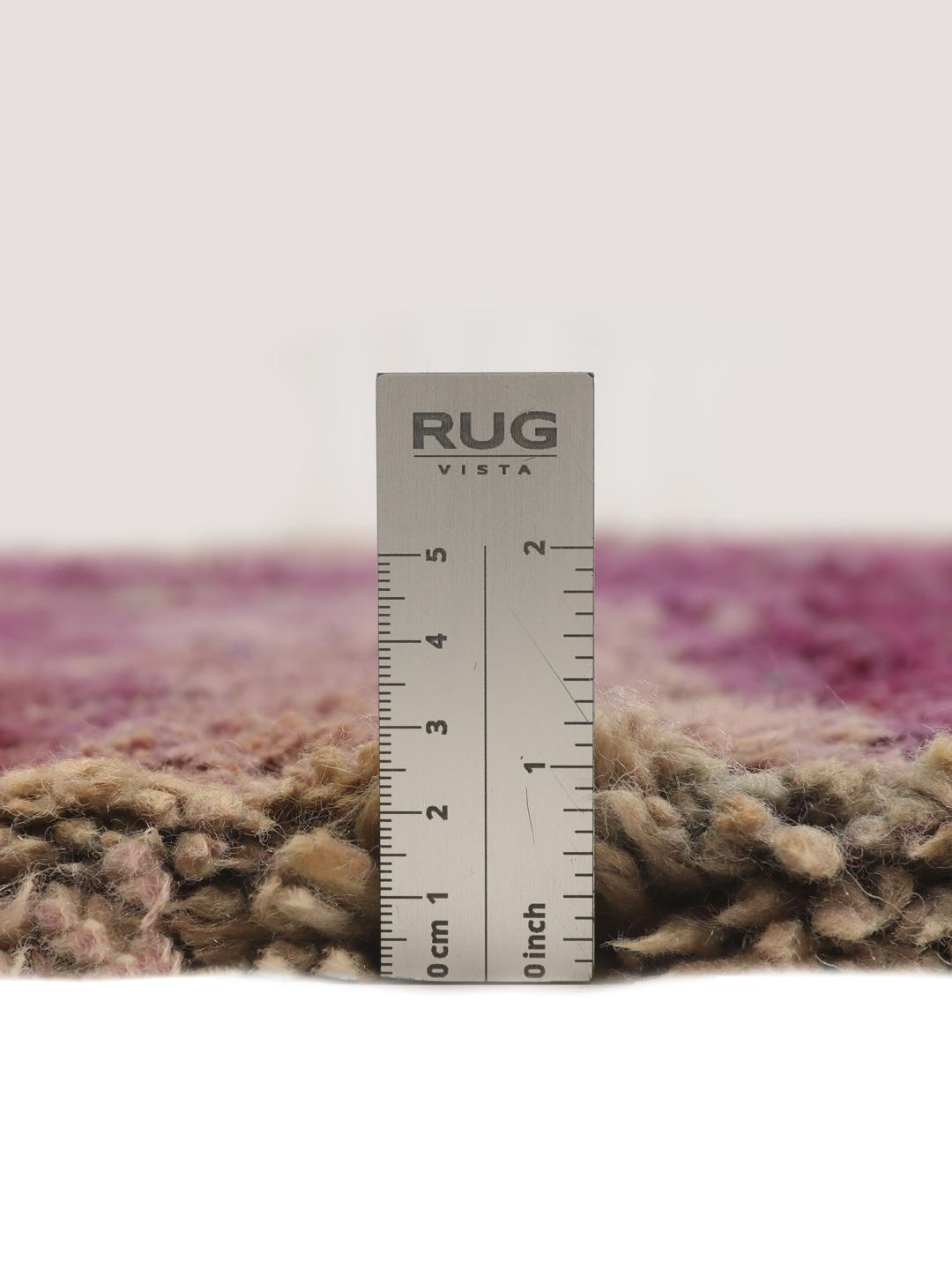
The term 'hand-knotted' refers to the traditional, time-intensive method where each knot is tied individually onto the warp and weft foundation. This method is the hallmark of quality in Moroccan weaving, as it creates a dense, durable pile that is capable of lasting for decades. The thickness and weight of this specific piece are direct indicators of the generous material usage and the meticulous effort invested by the weaver.
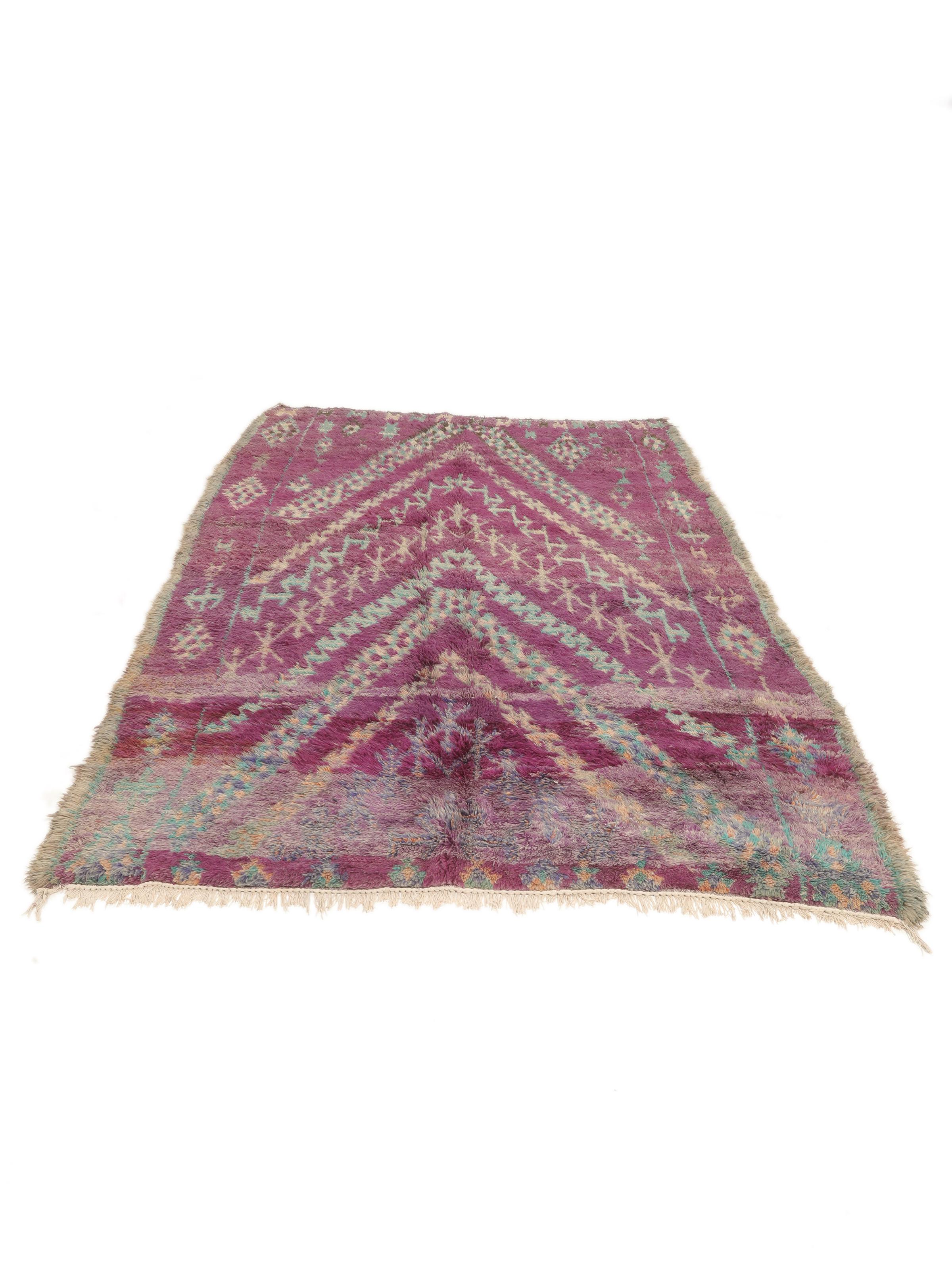
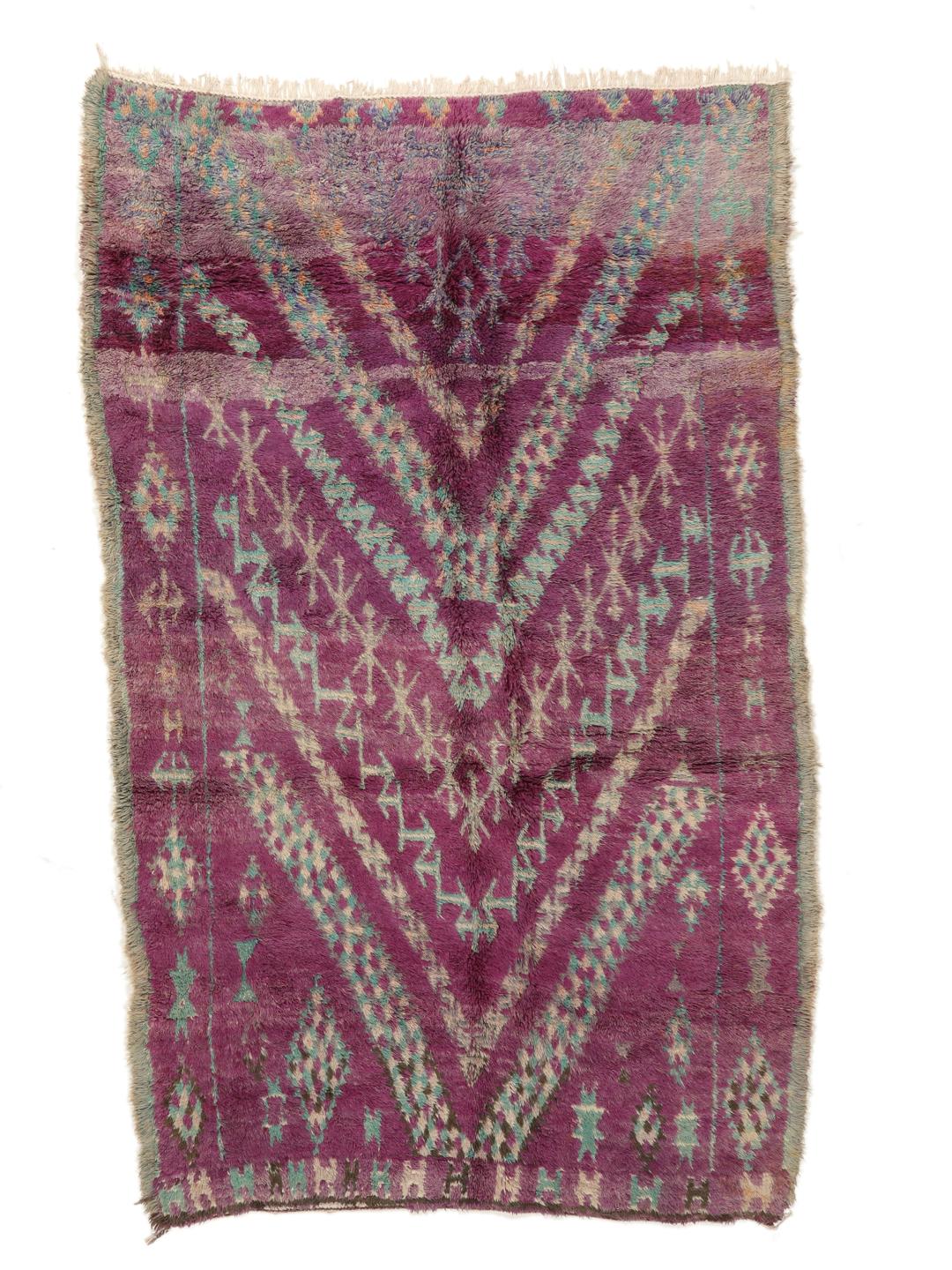
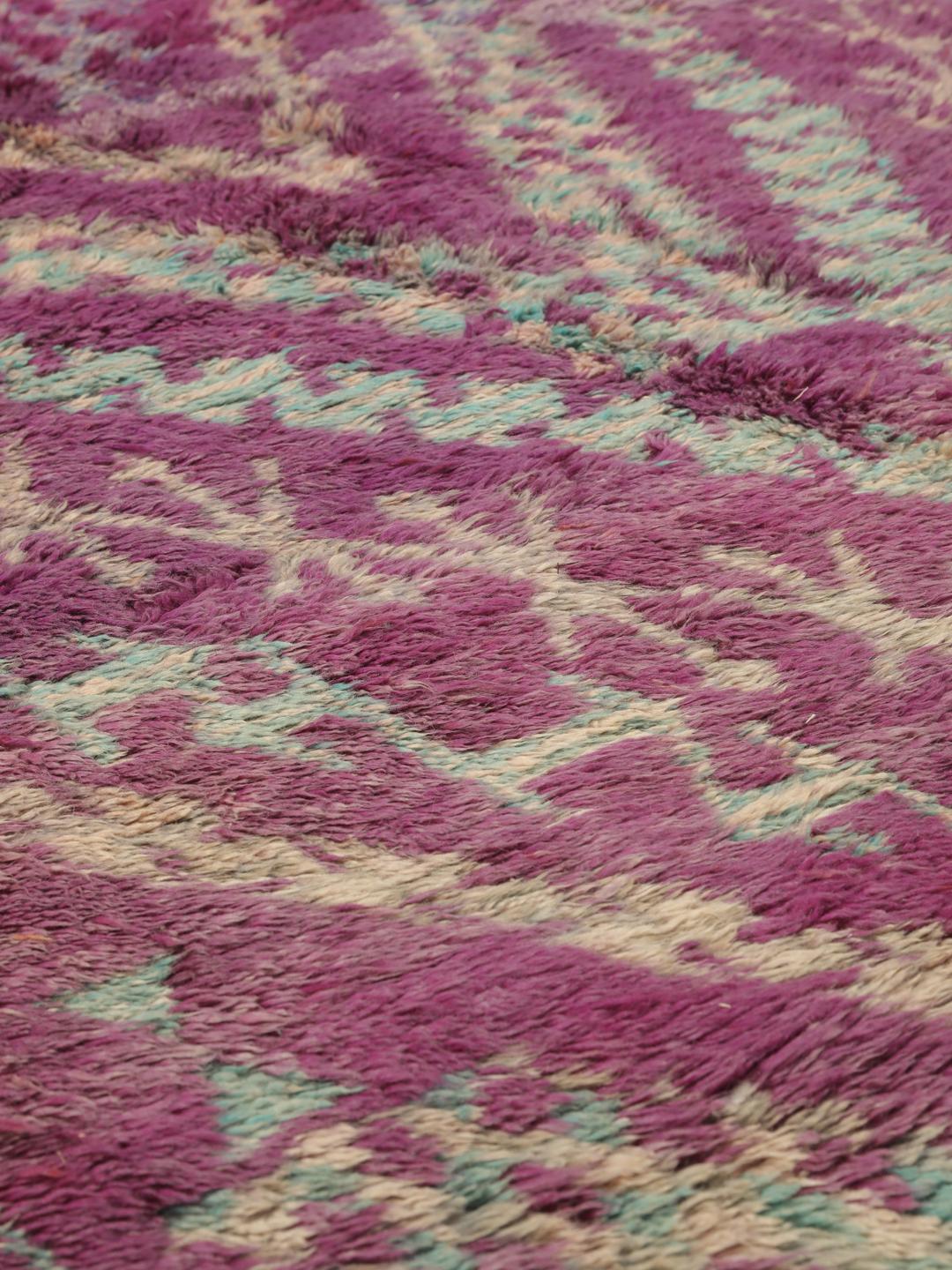
Design-wise, these rugs are defined by a language of symbols, often featuring geometric shapes, diamonds, and stylized tribal motifs. While many associate the Beni Ourain tradition with minimalist cream and brown palettes, vintage pieces frequently display bold, expressive colours and more complex, asymmetrical patterns that reflect the specific tribe or family history of the artisan. The deep purple seen here is a striking example of the artistic creativity found in regional Moroccan weaving.
Collectors value these rugs for their authenticity and the profound human story embedded in every knot. Owning a vintage piece is a way to preserve a fading tradition, connecting your modern home to the ancient, rugged landscapes of the Atlas mountains. Each rug acts as a cultural bridge, offering a unique glimpse into a way of life that prizes patience, skill, and the beauty of natural materials.