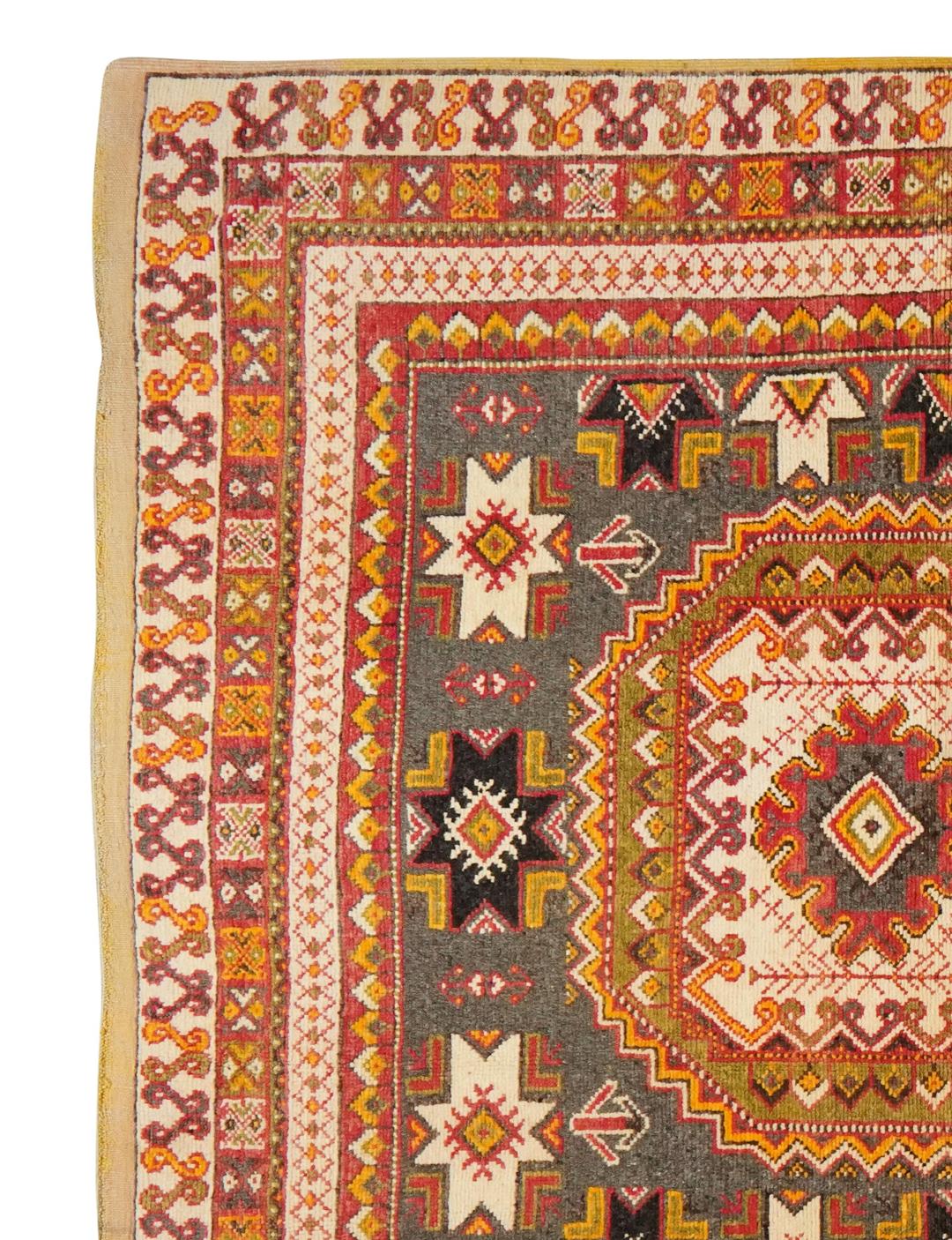
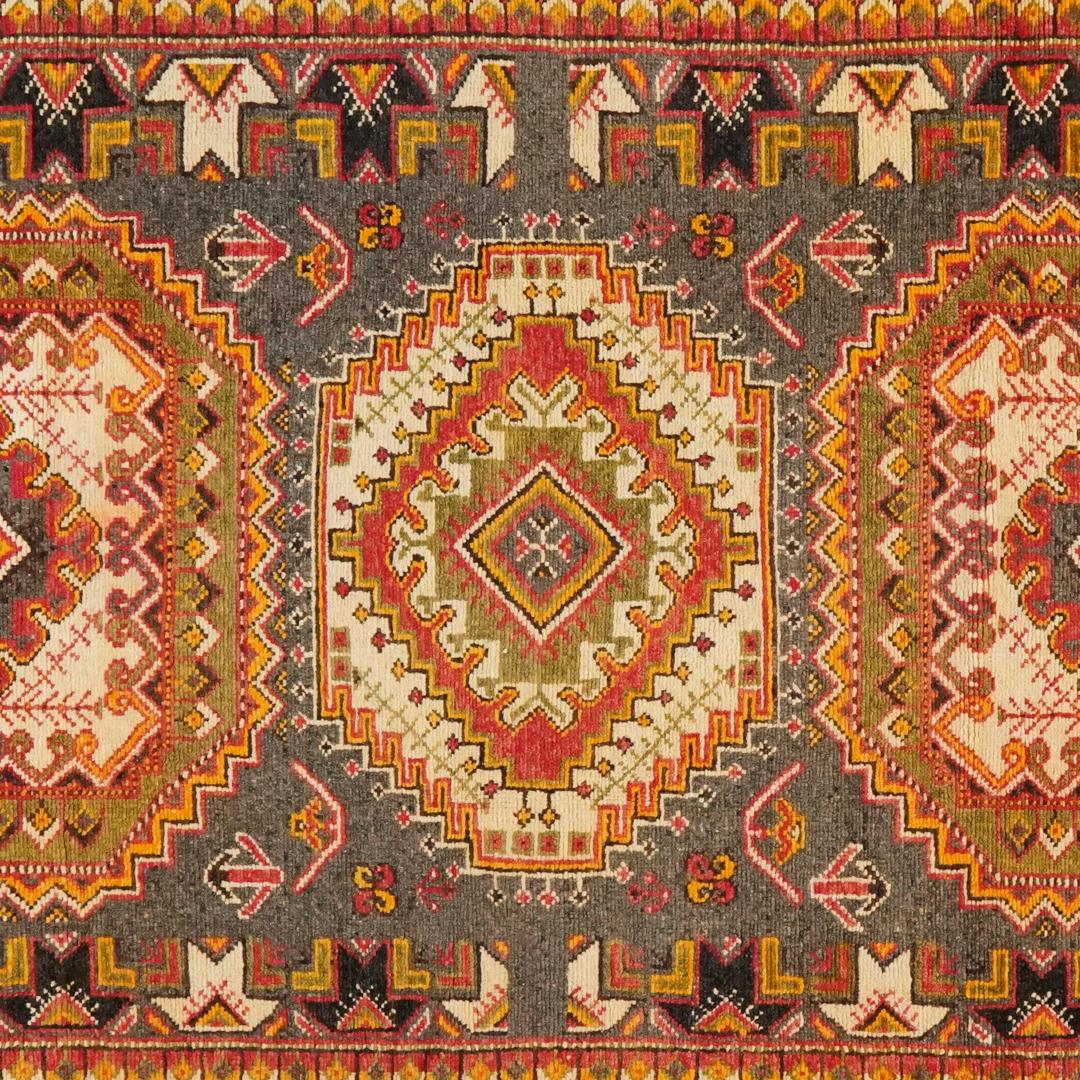
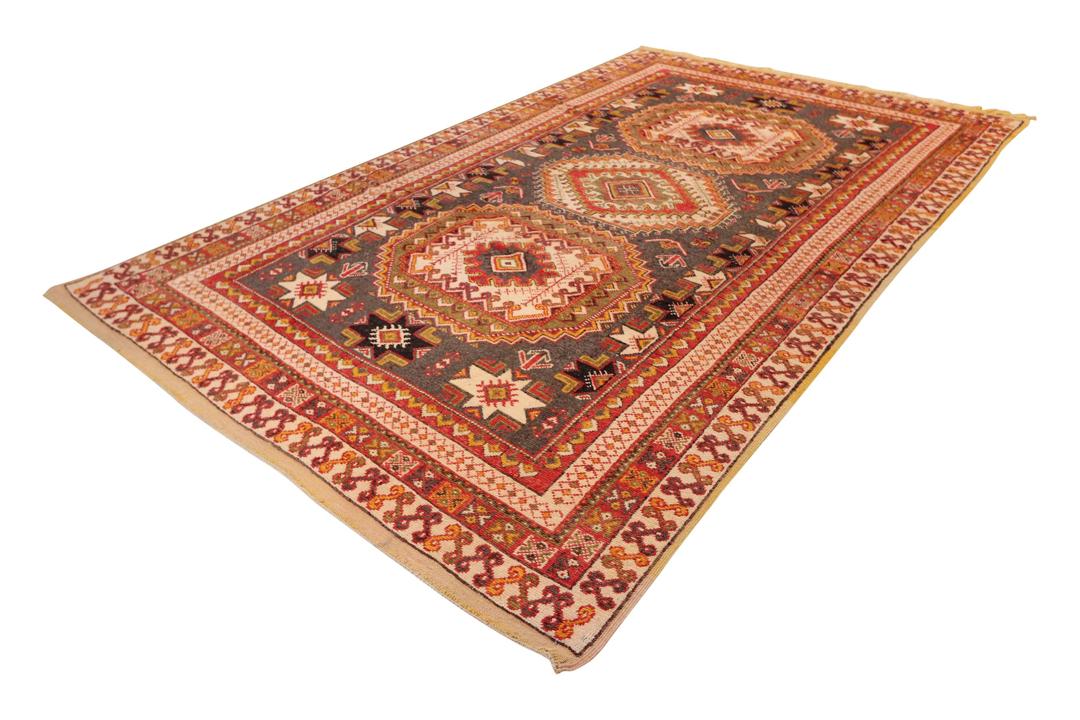
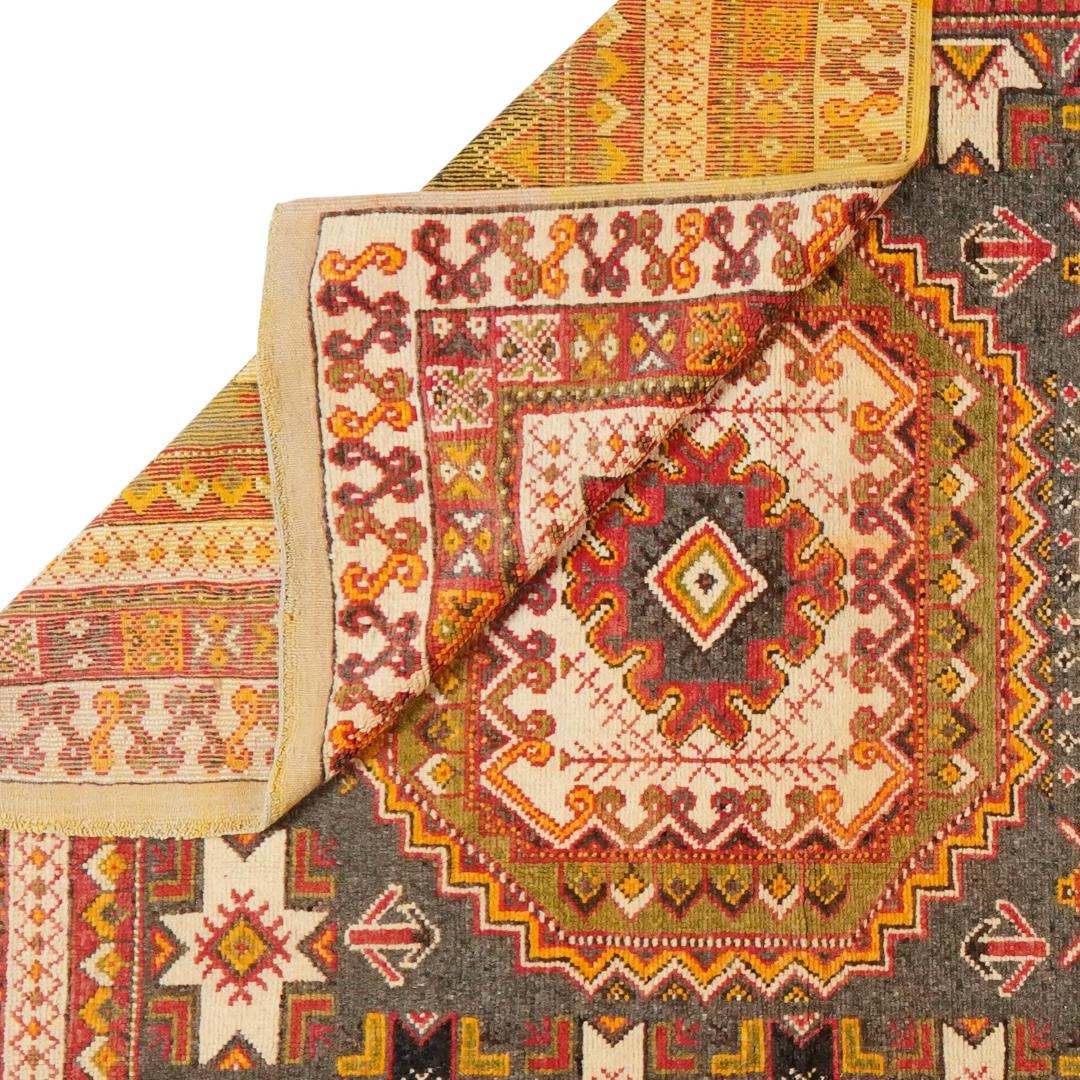
Berber rugs hail from the indigenous tribes of Morocco, particularly the communities residing in the rugged Middle Atlas mountains. For centuries, these rugs have served as essential household items, used as blankets, bedding, and floor coverings to provide warmth against the harsh mountain climate. They are deeply rooted in the daily lives and cultural identities of the tribes, with each piece traditionally reflecting the weaver's personal history, social status, and local environment.
The term 'Berber' refers to the Amazigh people, the original inhabitants of North Africa. Their weaving tradition is largely defined by the use of high-quality, local Wool, which is hand-spun to create a thick, durable yarn. This material is prized for its natural lanolin content, which gives the finished rug a soft sheen and a resistance to dirt, ensuring that the piece ages gracefully over time.
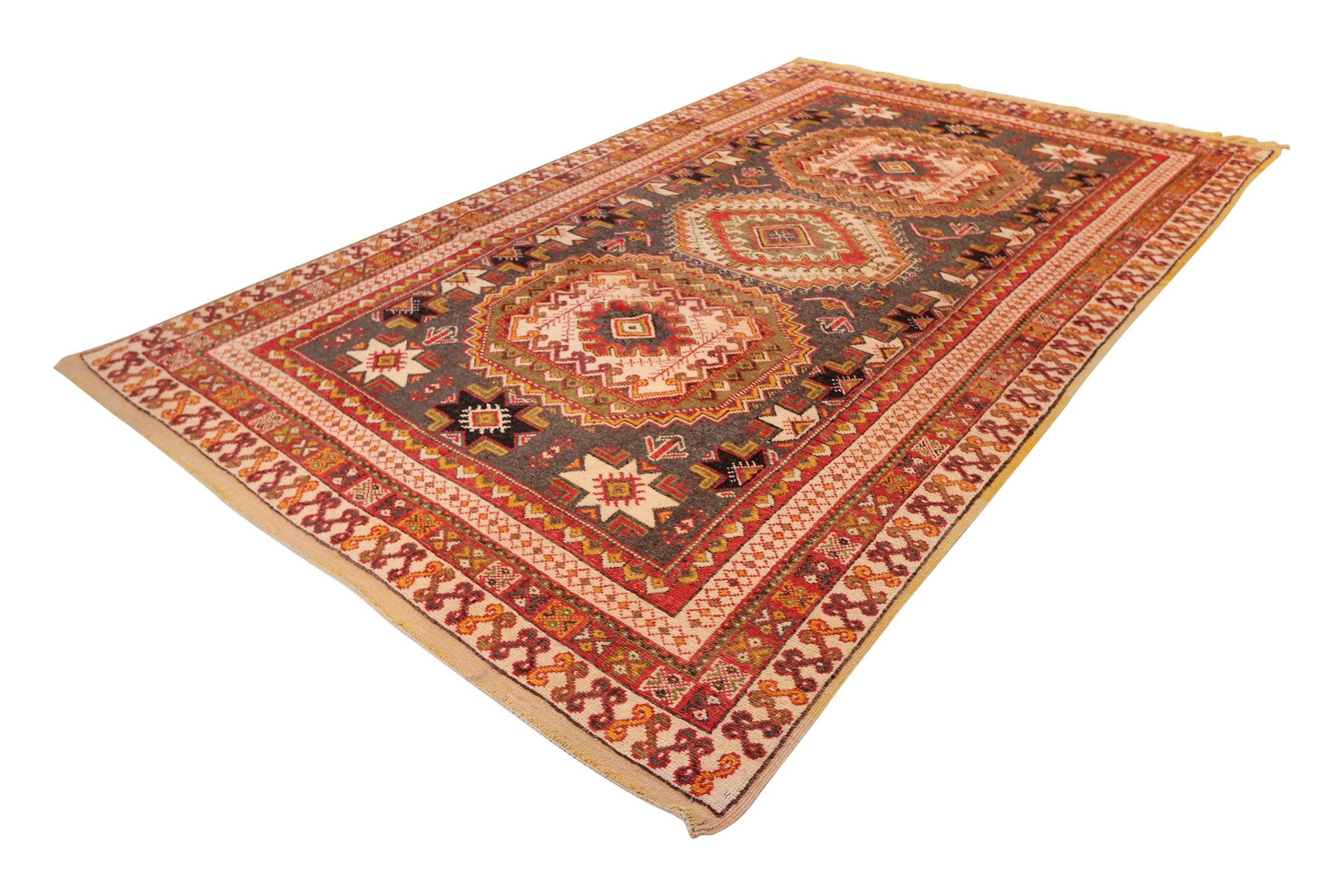
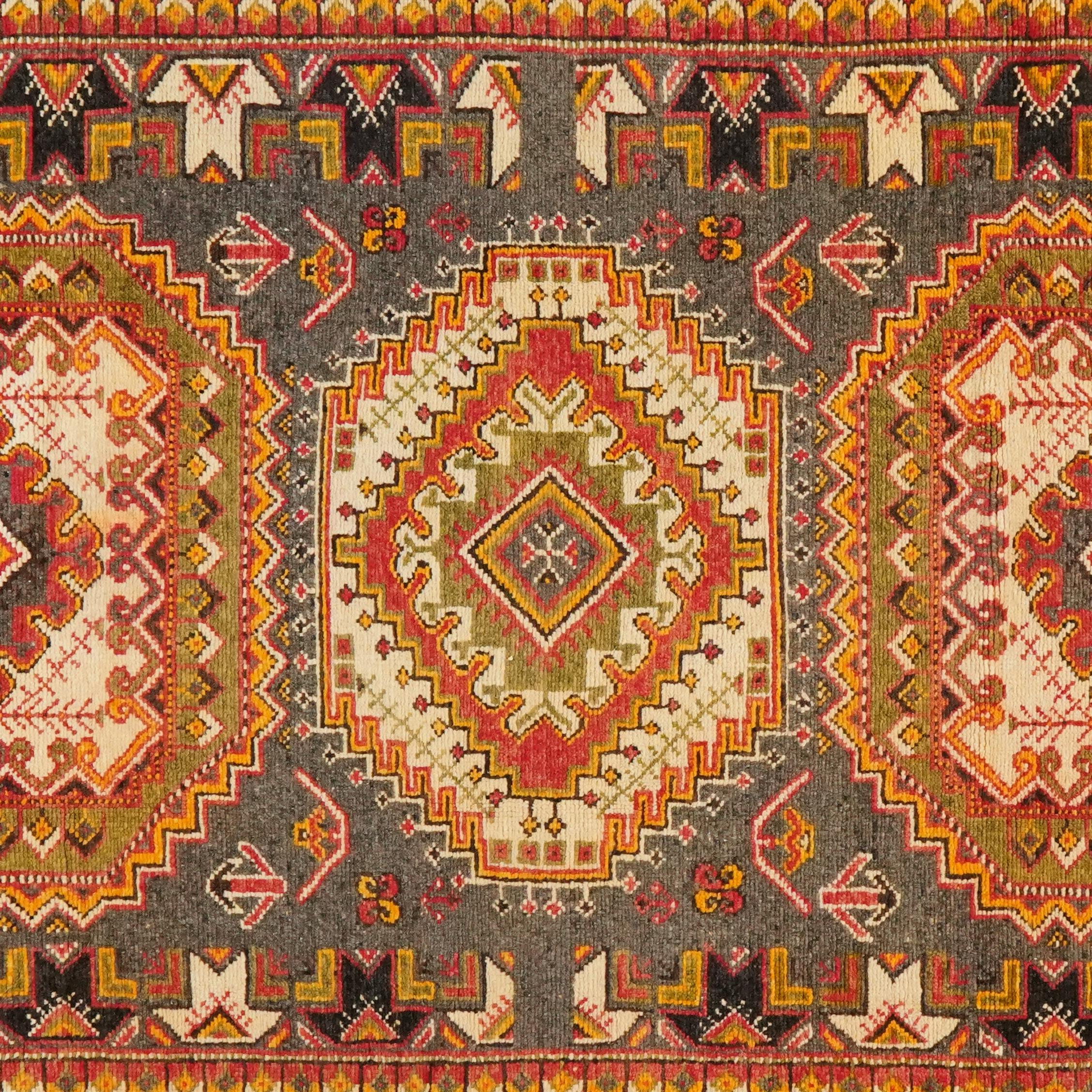
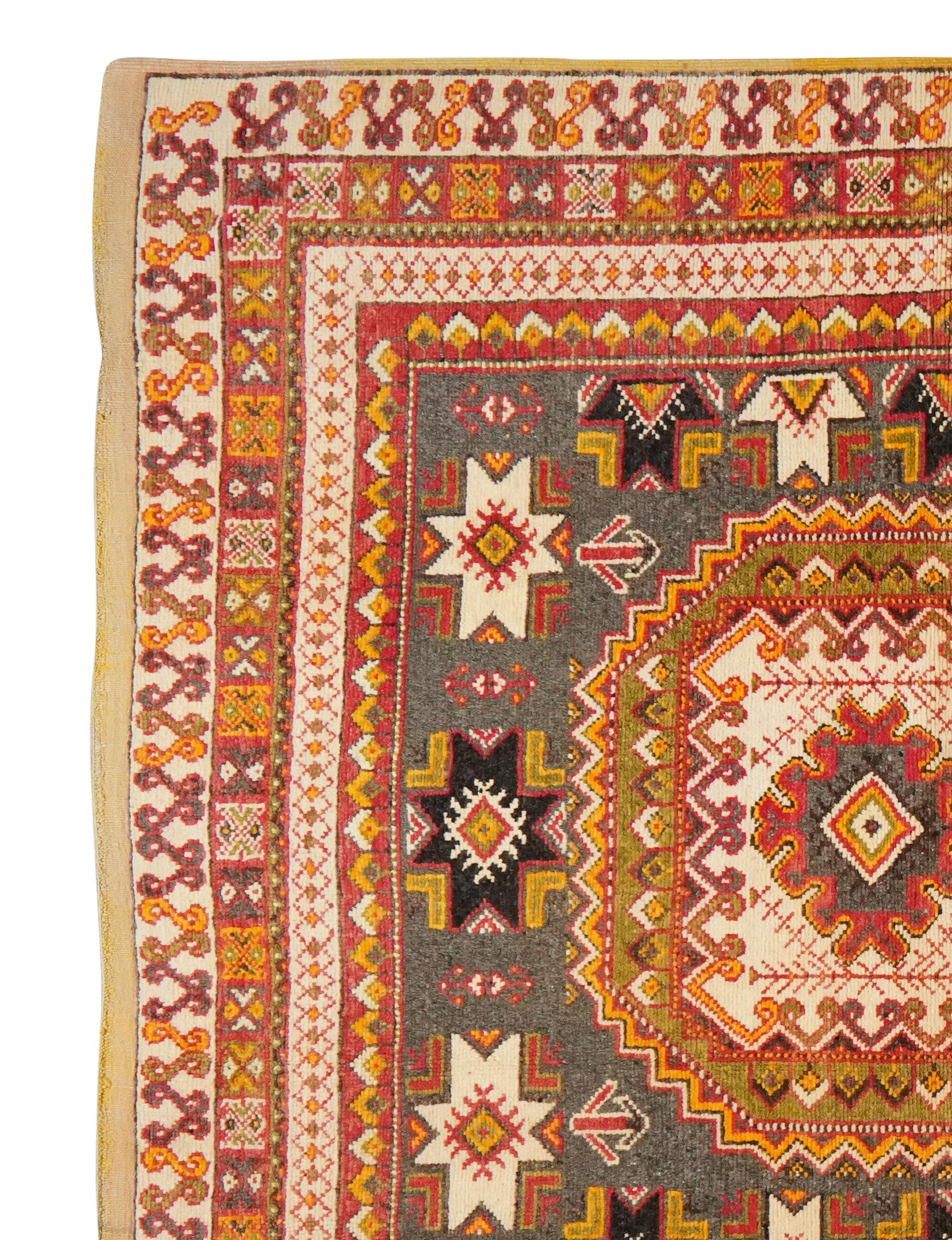
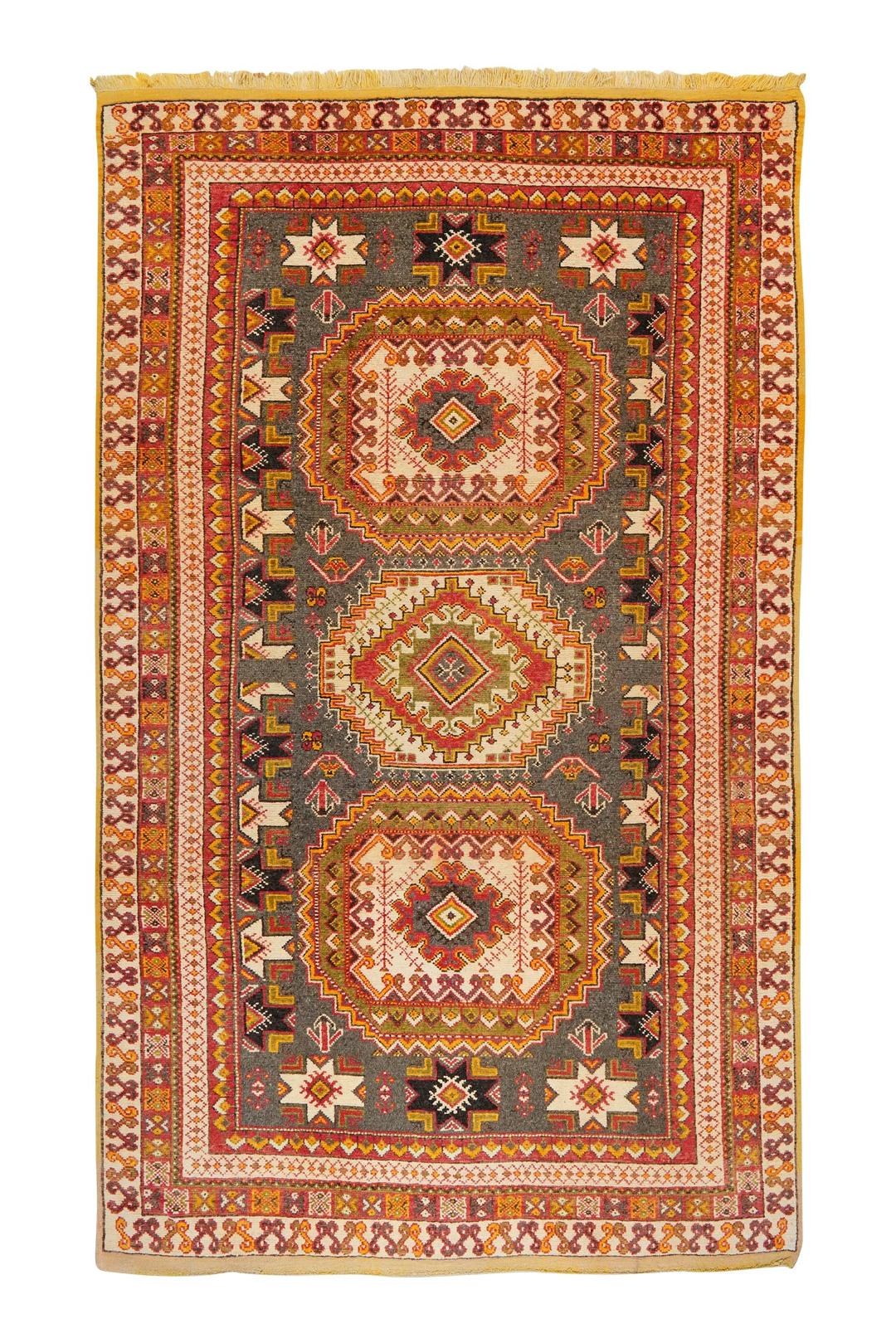
Design-wise, these rugs are celebrated for their geometric symbolism, which often includes motifs inspired by the natural world, tribal beliefs, and protection. While many are known for their minimalist, cream-coloured fields, the pieces from the Middle Atlas often feature more vibrant, complex patterns and colours. The use of repeating medallions and intricate borders in this specific piece highlights the artistic diversity found within the wider Berber tradition.
Collecting a vintage Berber rug is an act of preserving a disappearing art form. As modern life influences traditional weaving communities, authentic, hand-crafted pieces become increasingly rare. Owning one is an opportunity to hold a tangible connection to a nomadic heritage, valuing the patience and skill that have defined this craft for generations.