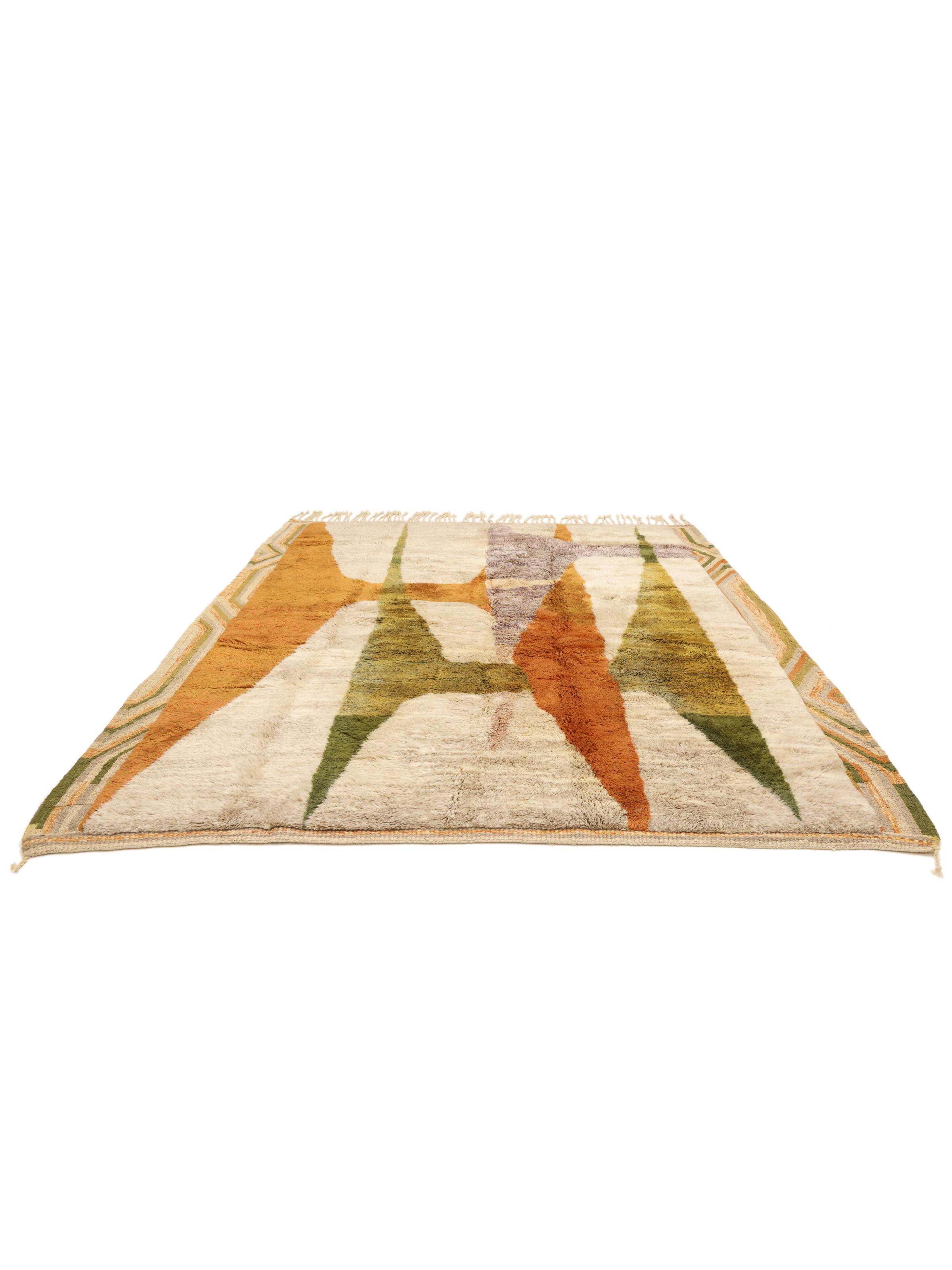
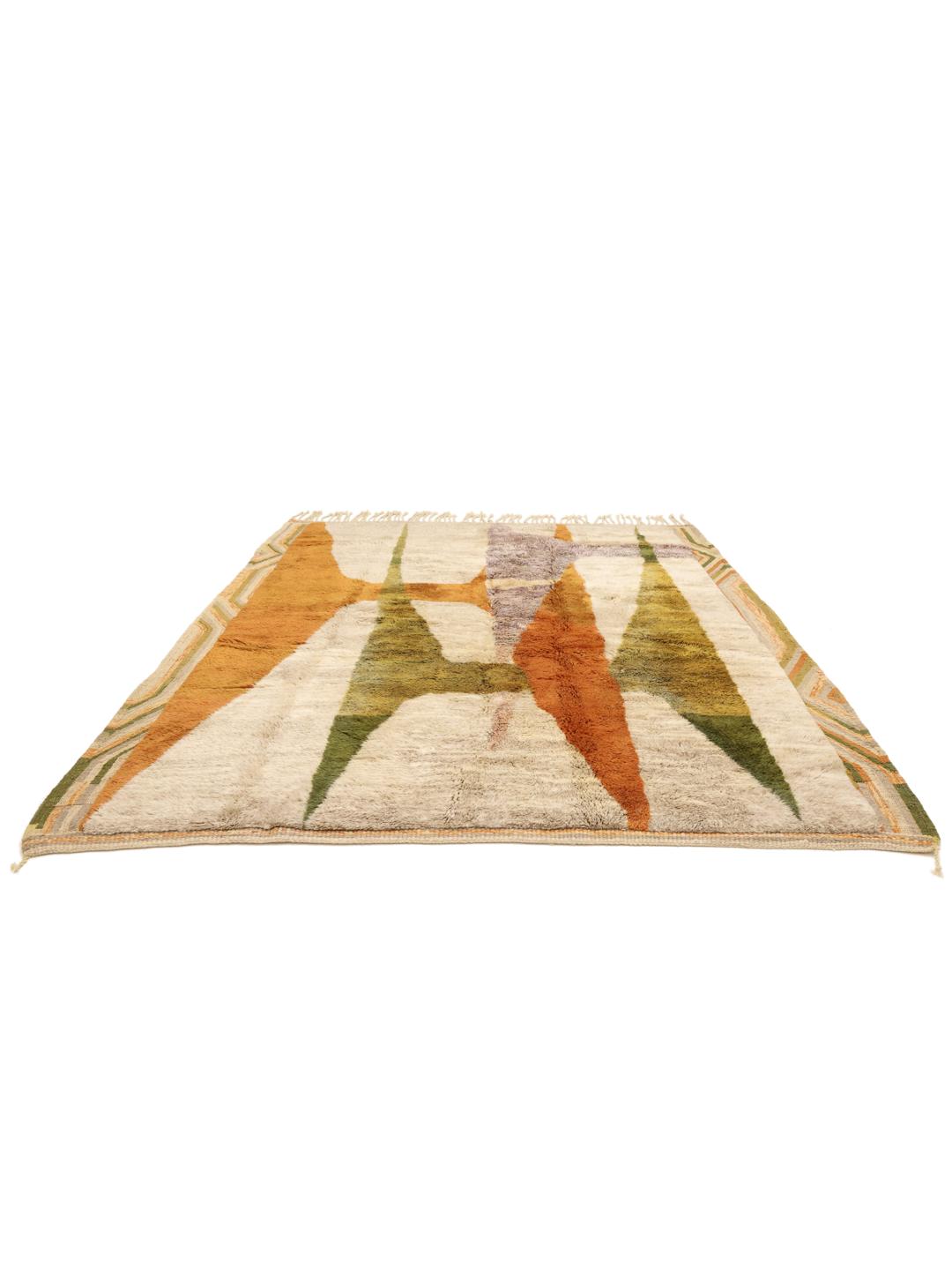
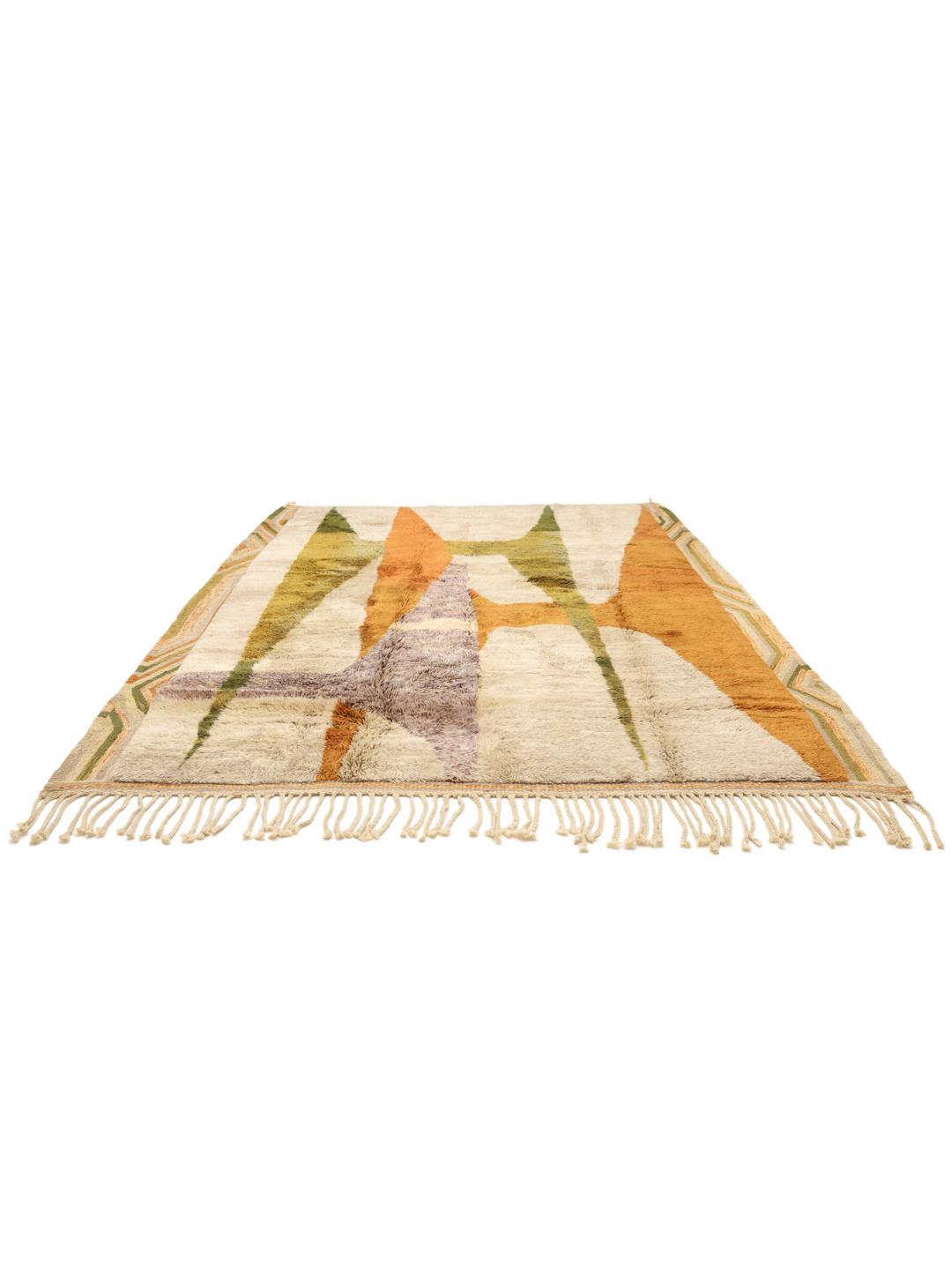
Berber rugs originate from the indigenous tribes of the Middle Atlas Mountains in the Middle East, where they have been woven for centuries to serve as functional, protective floor coverings. Historically, these rugs were not meant for display but as essential tools for survival in the harsh, cold mountain climate, providing warmth and comfort inside traditional nomadic tents and stone dwellings.
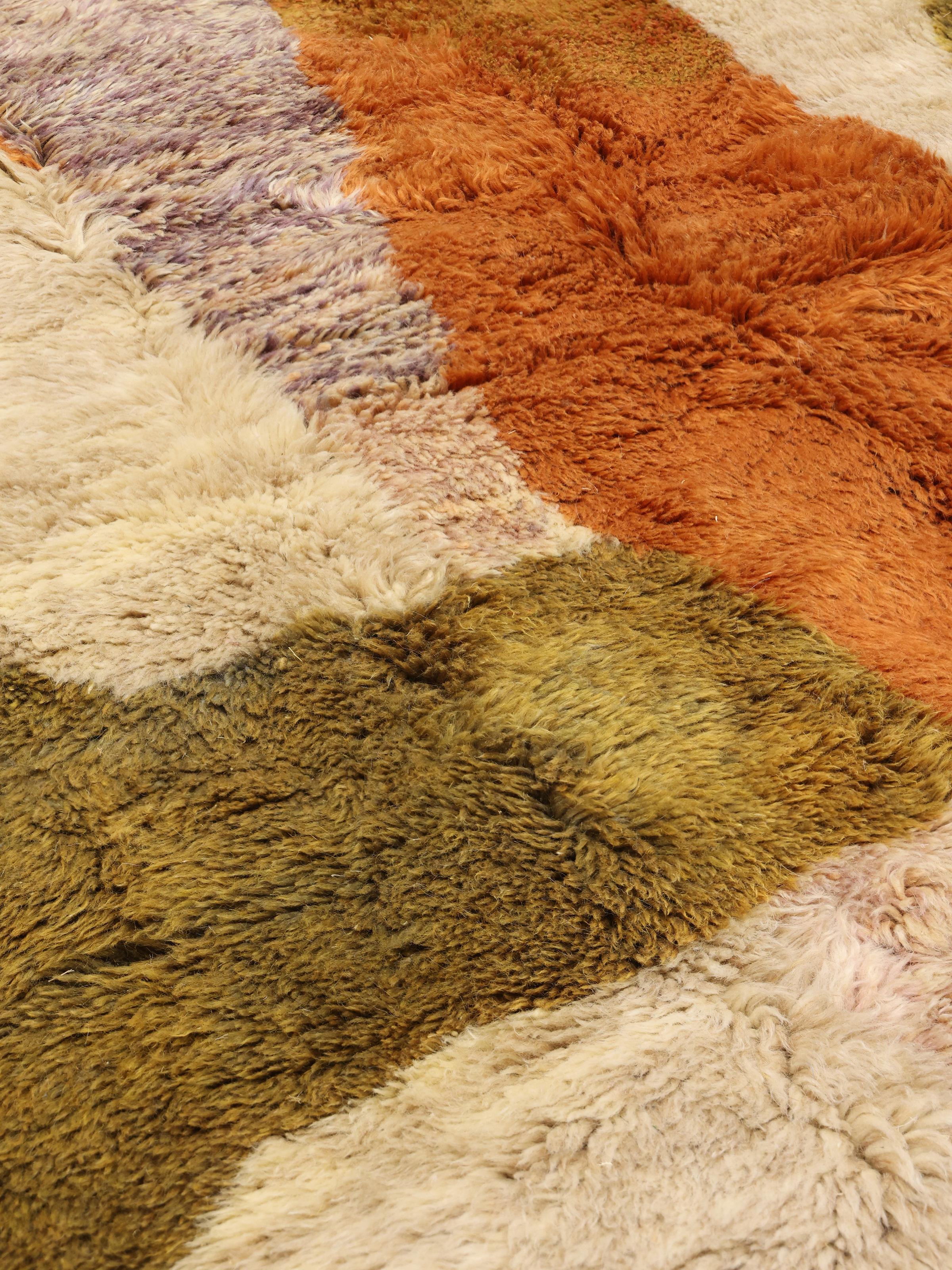
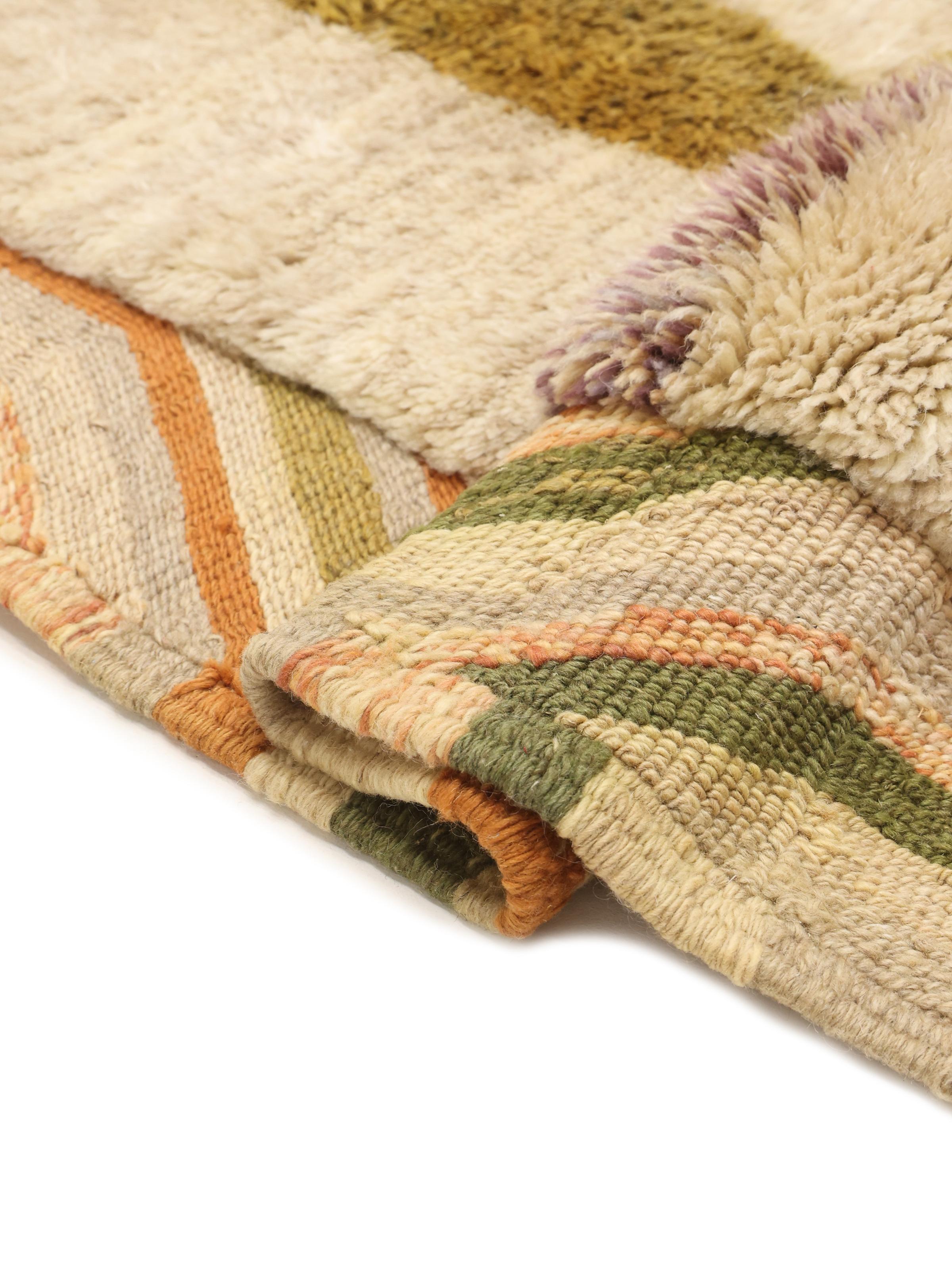
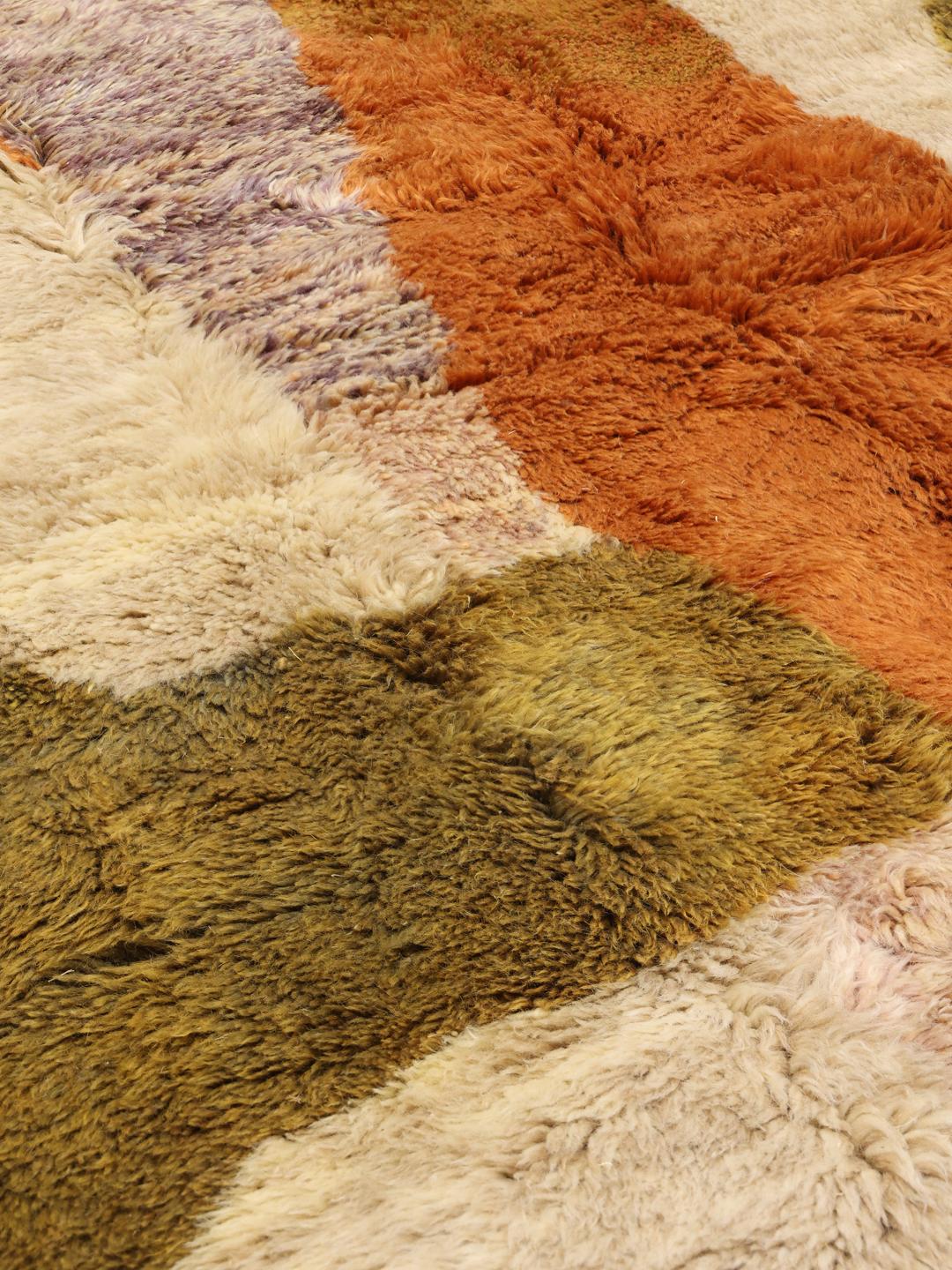
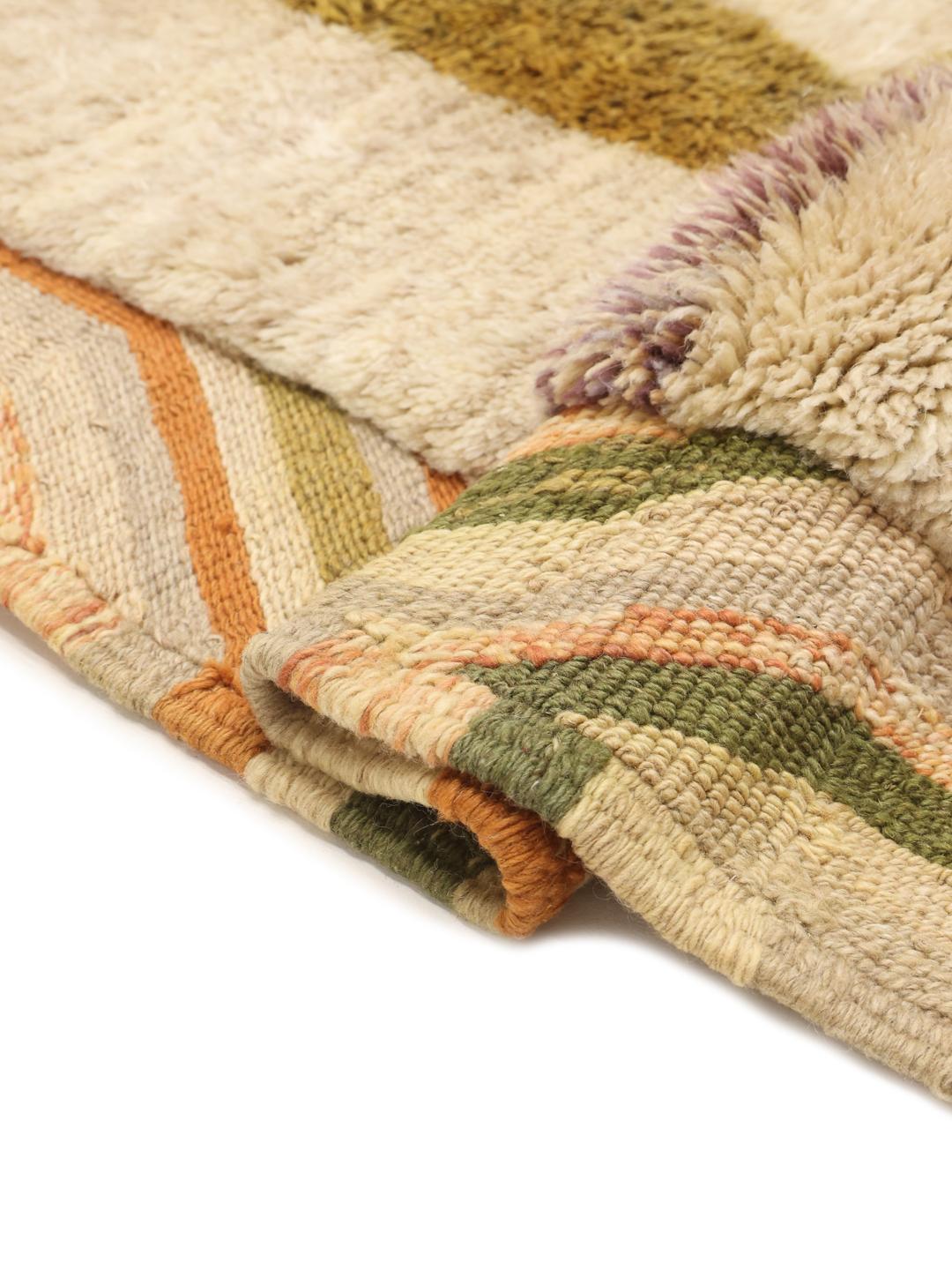
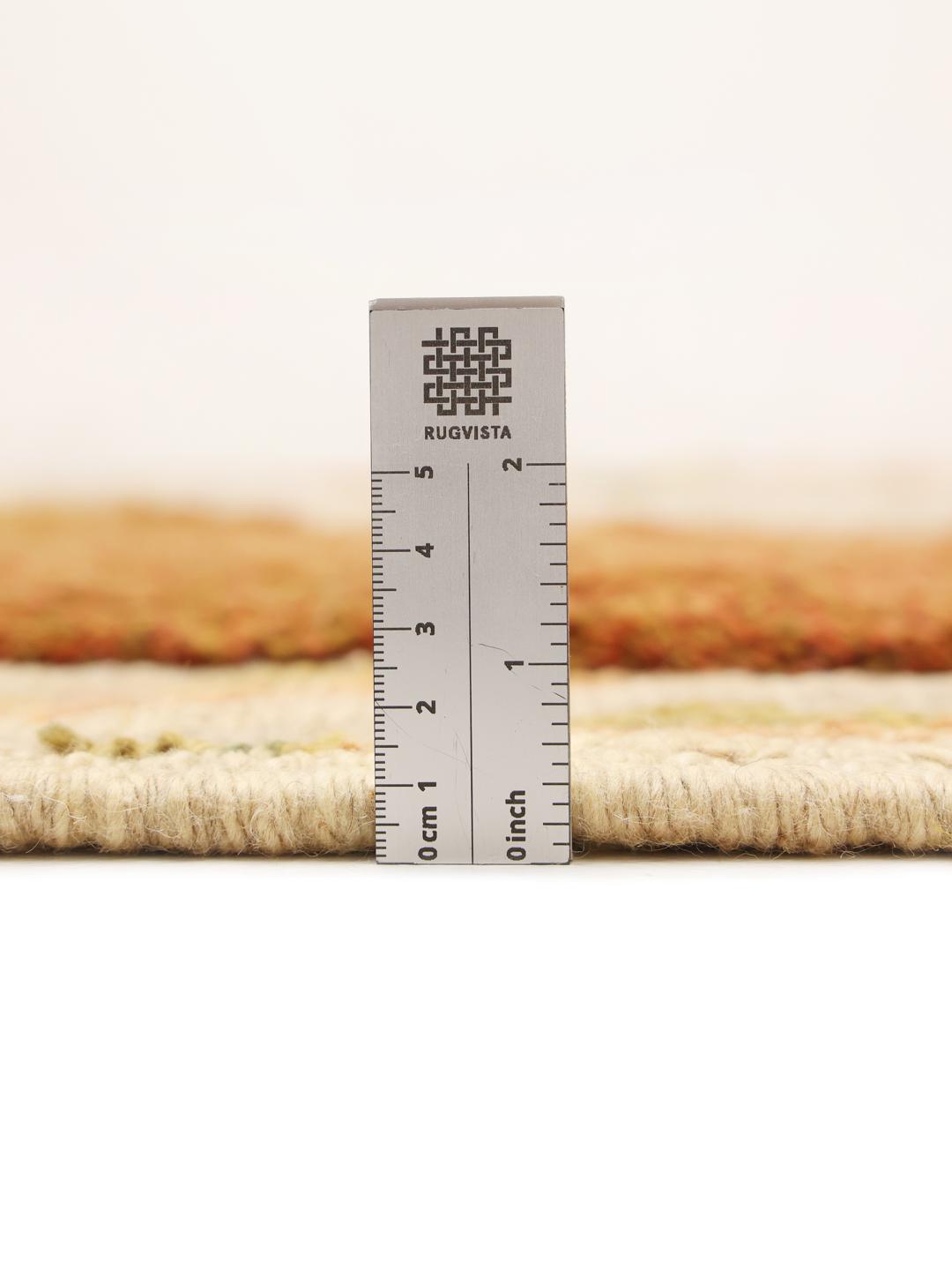
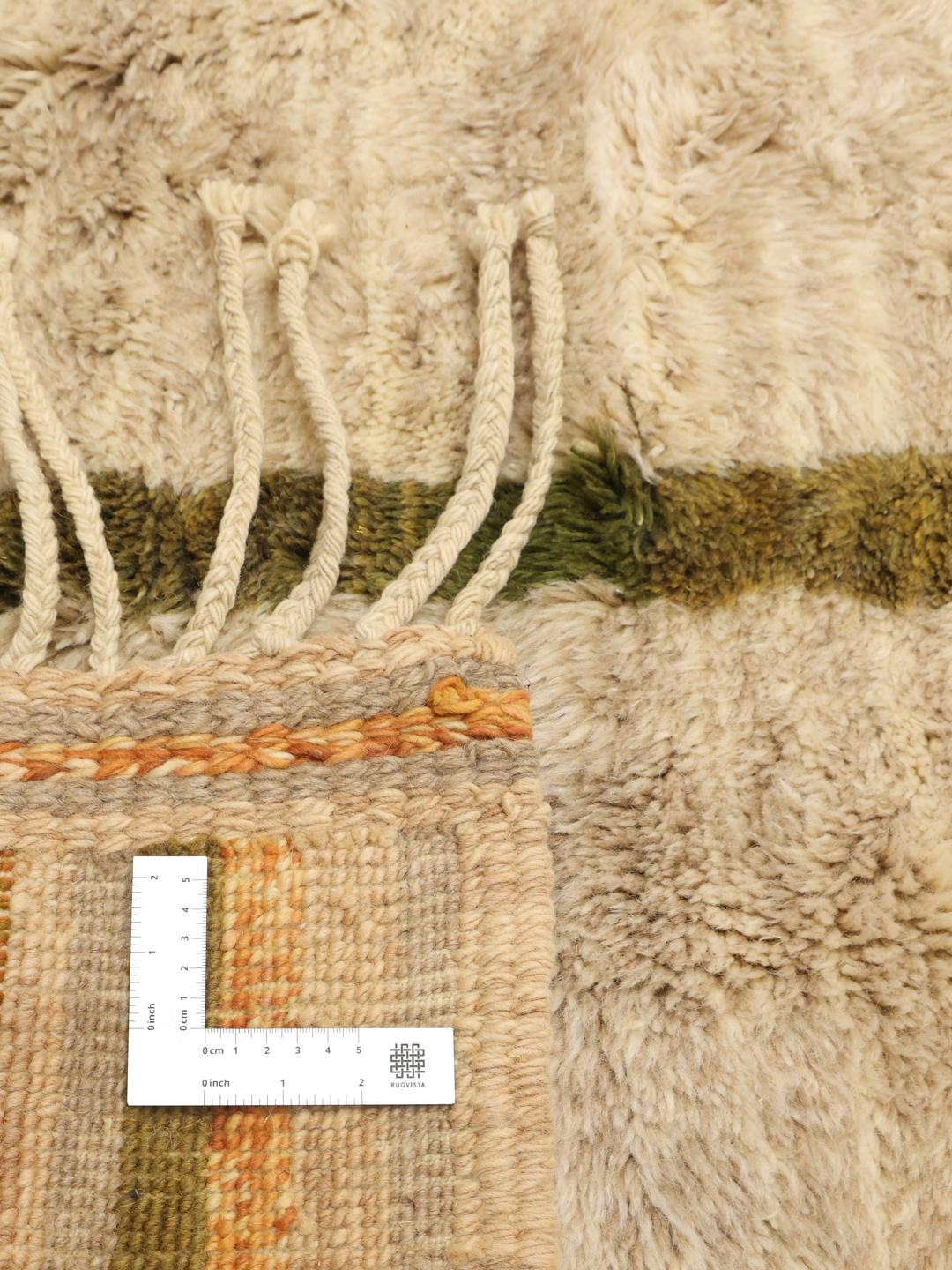
The term Beni Ourain refers to the specific confederation of tribes renowned for their mastery of wool work. These rugs are traditionally woven using a long-staple, high-quality wool that is prized for its soft, lustrous finish. The technical quality is defined by the density of the pile and the strength of the foundation, which together create a rug that is both soft to the touch and incredibly robust.
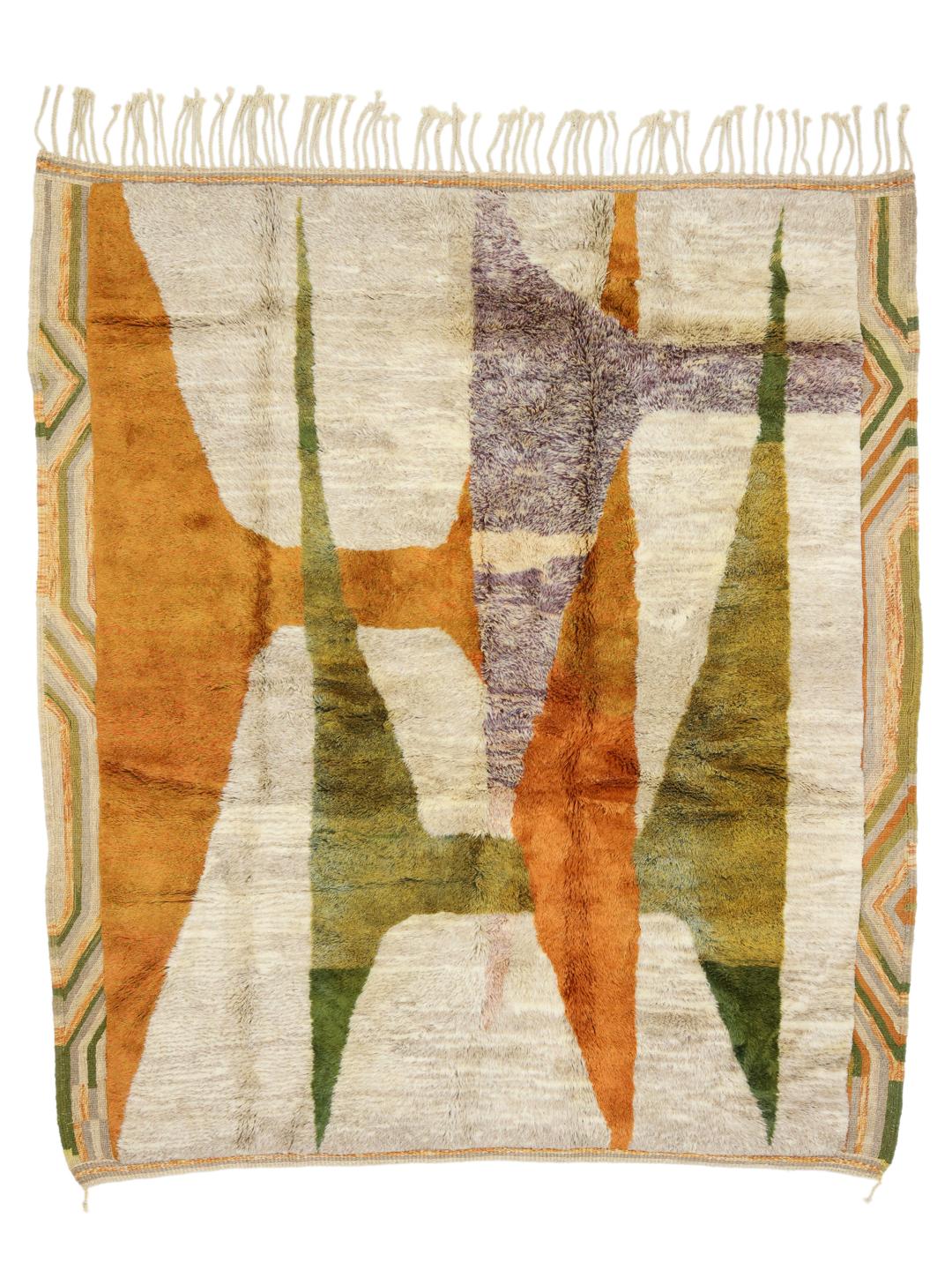
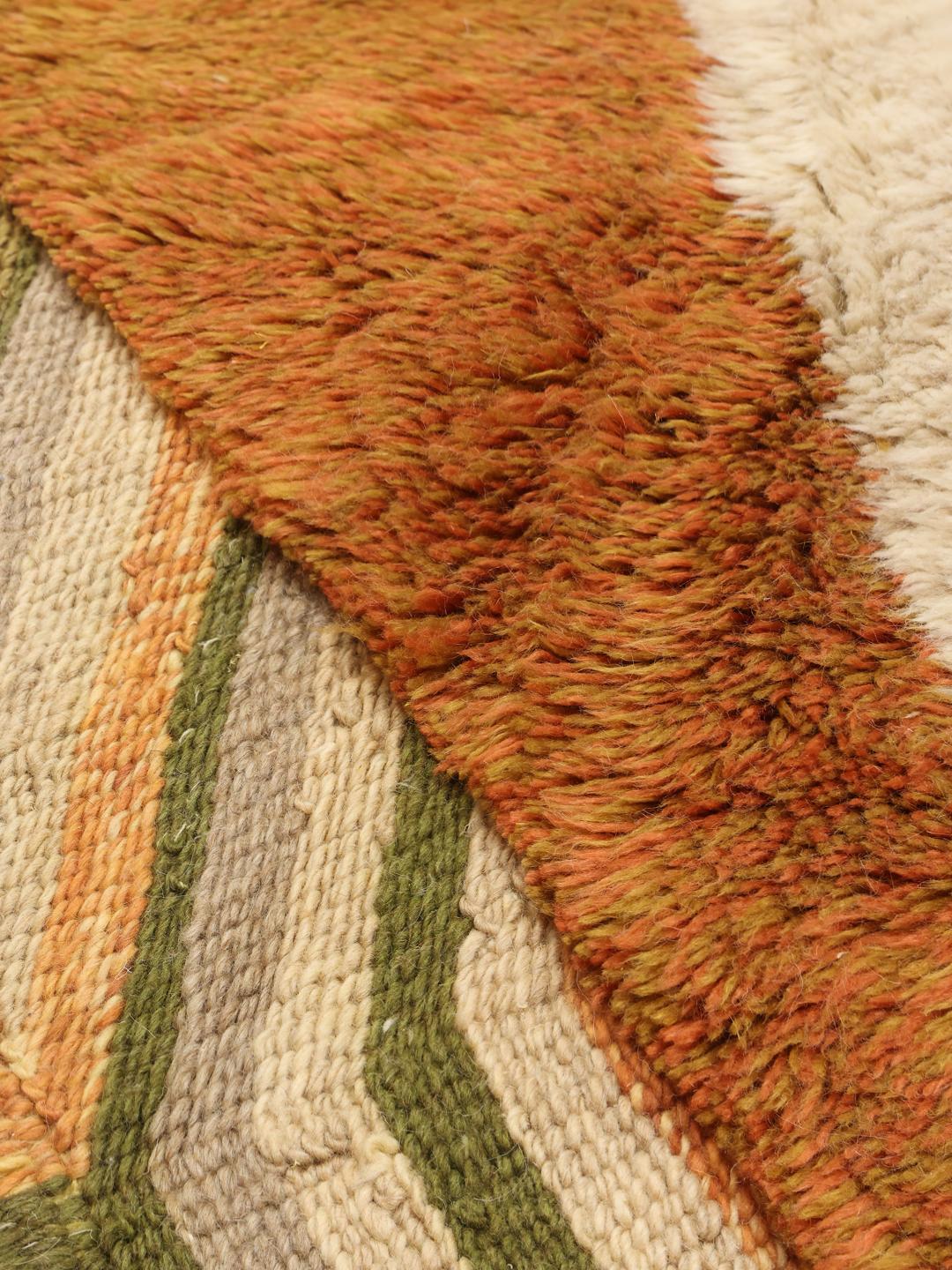
While traditional designs often feature simple geometric lines, modern iterations like this one have evolved to incorporate expressive, abstract motifs. These artistic interpretations break away from rigid formality, allowing the weaver to act as an artist. The use of vibrant, earthy dyes—derived from natural sources—creates a dialogue between the stark, neutral backgrounds and the bold, contemporary shapes.
Owning a piece from this tradition is an act of supporting a living craft. These rugs are highly valued by collectors not just for their aesthetic appeal, but for the skill and cultural history woven into every inch. Each rug acts as a record of its creator’s vision, making them cherished heirlooms that connect the modern home to ancient, artisanal roots.