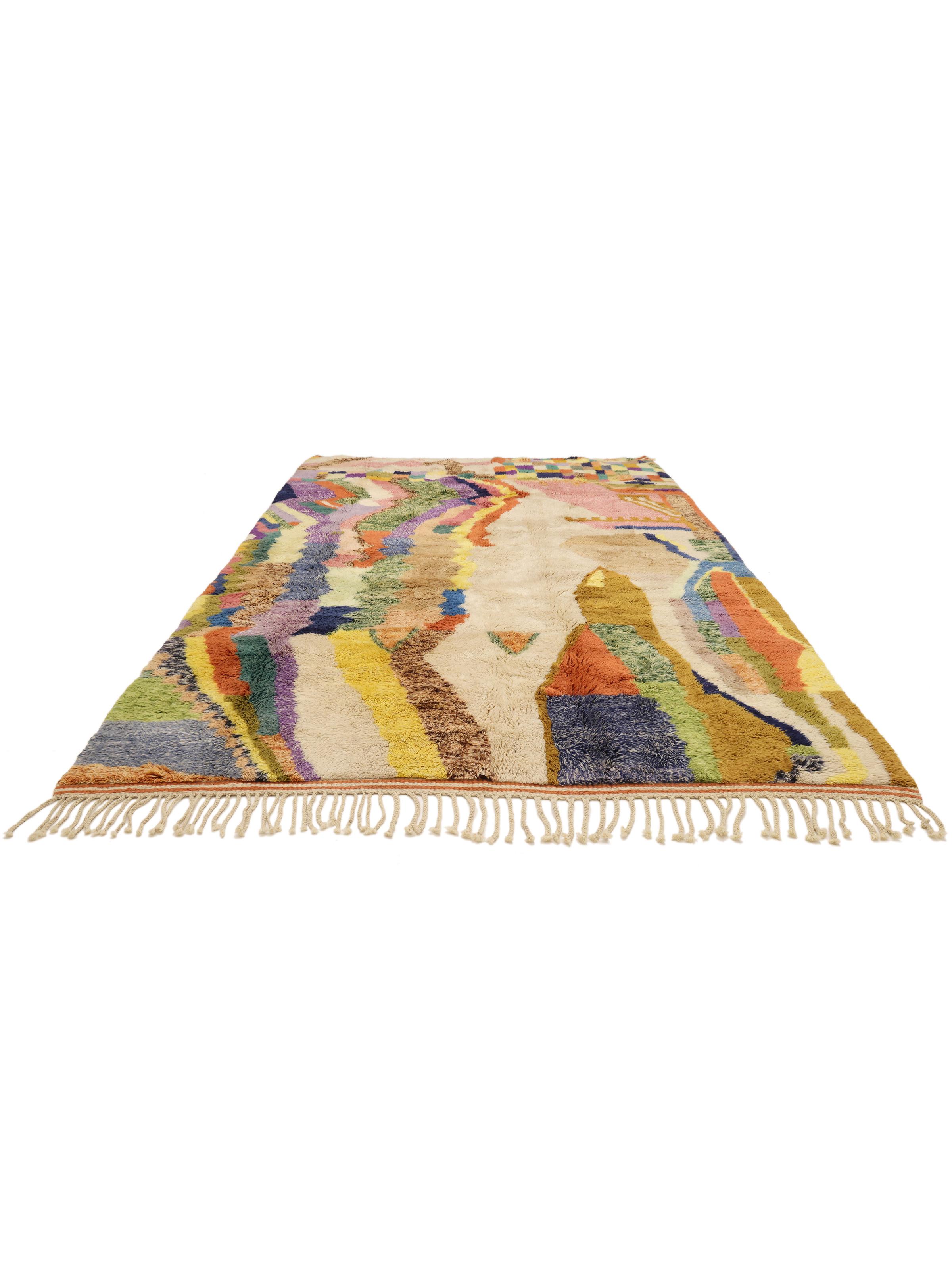
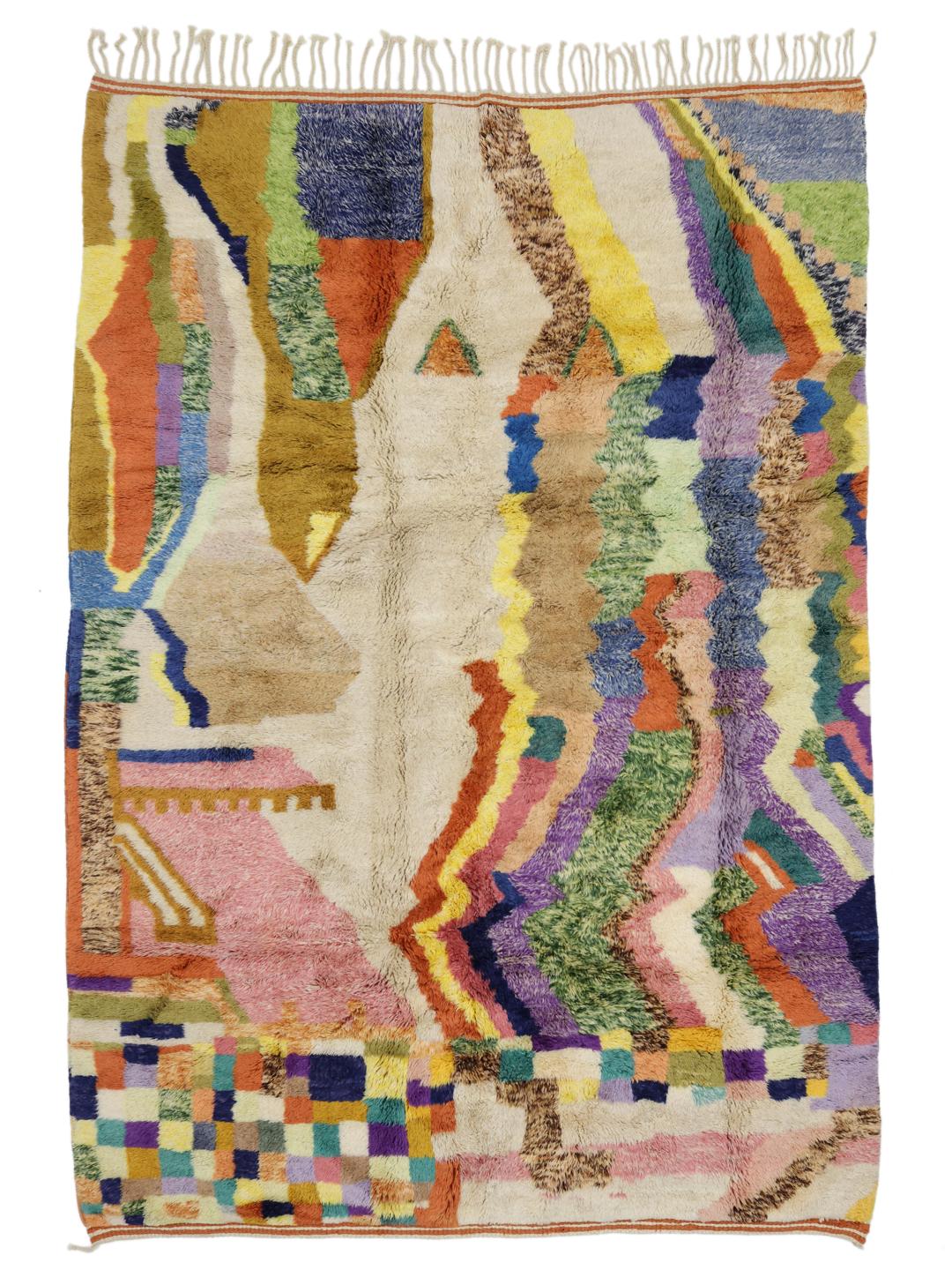
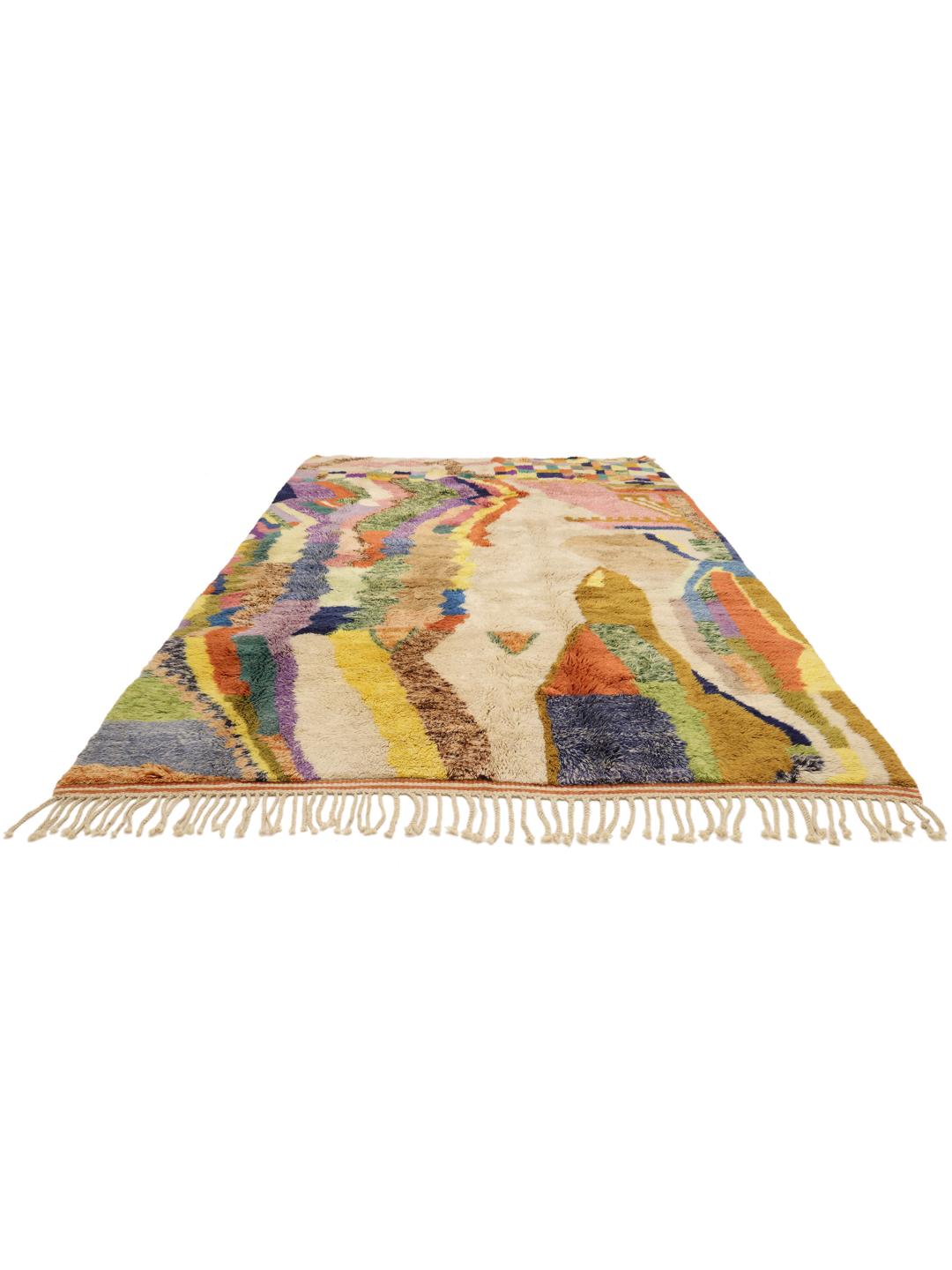
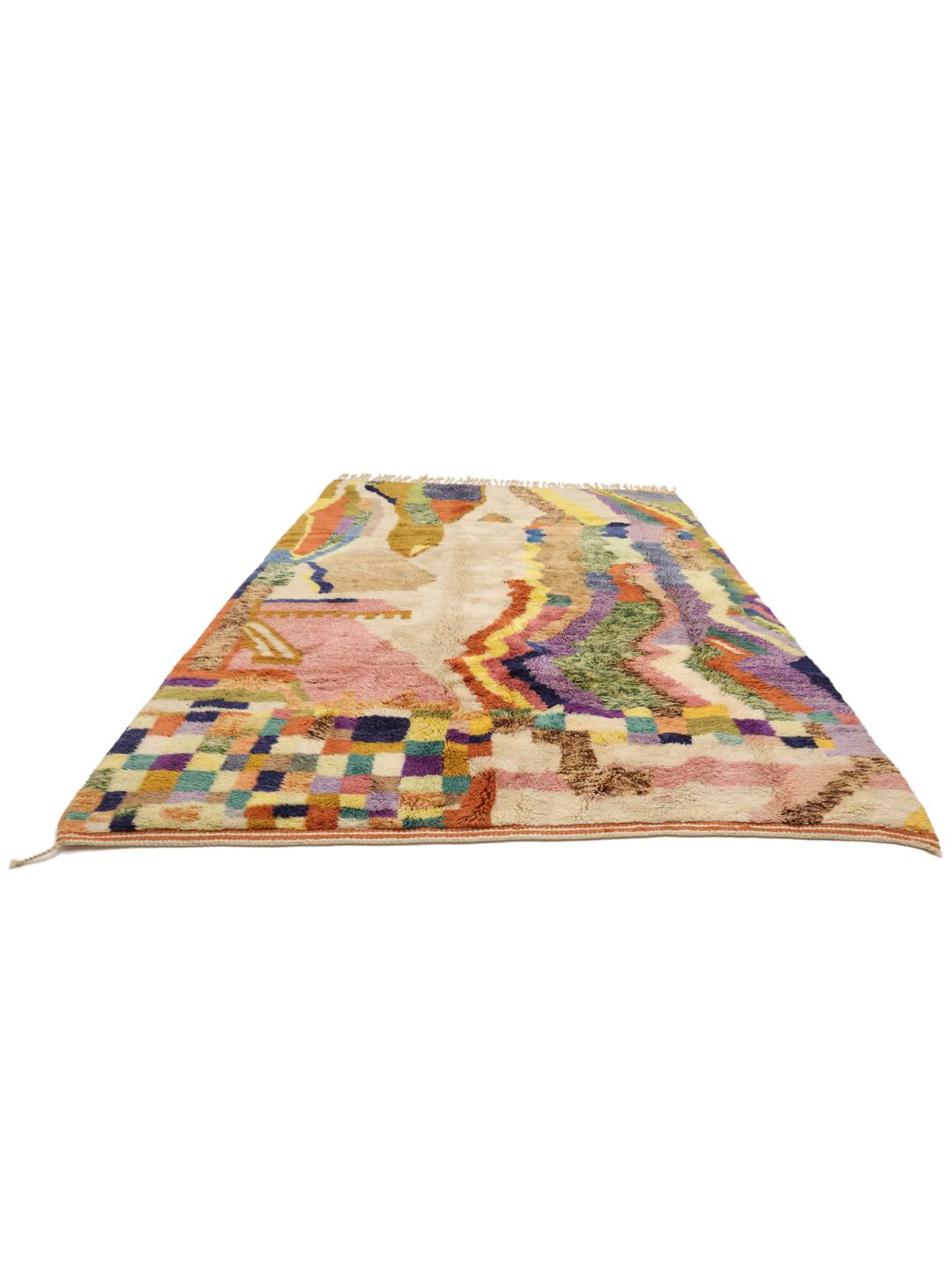
The tradition of weaving in the Middle Atlas mountains of Morocco is deeply rooted in the daily lives of the Berber tribes. For centuries, these rugs were created primarily for utility, serving as warm bedding or floor coverings in the harsh, cold climate of the mountains. The designs were often personal, reflecting the weaver's life, their environment, and the stories of their community.
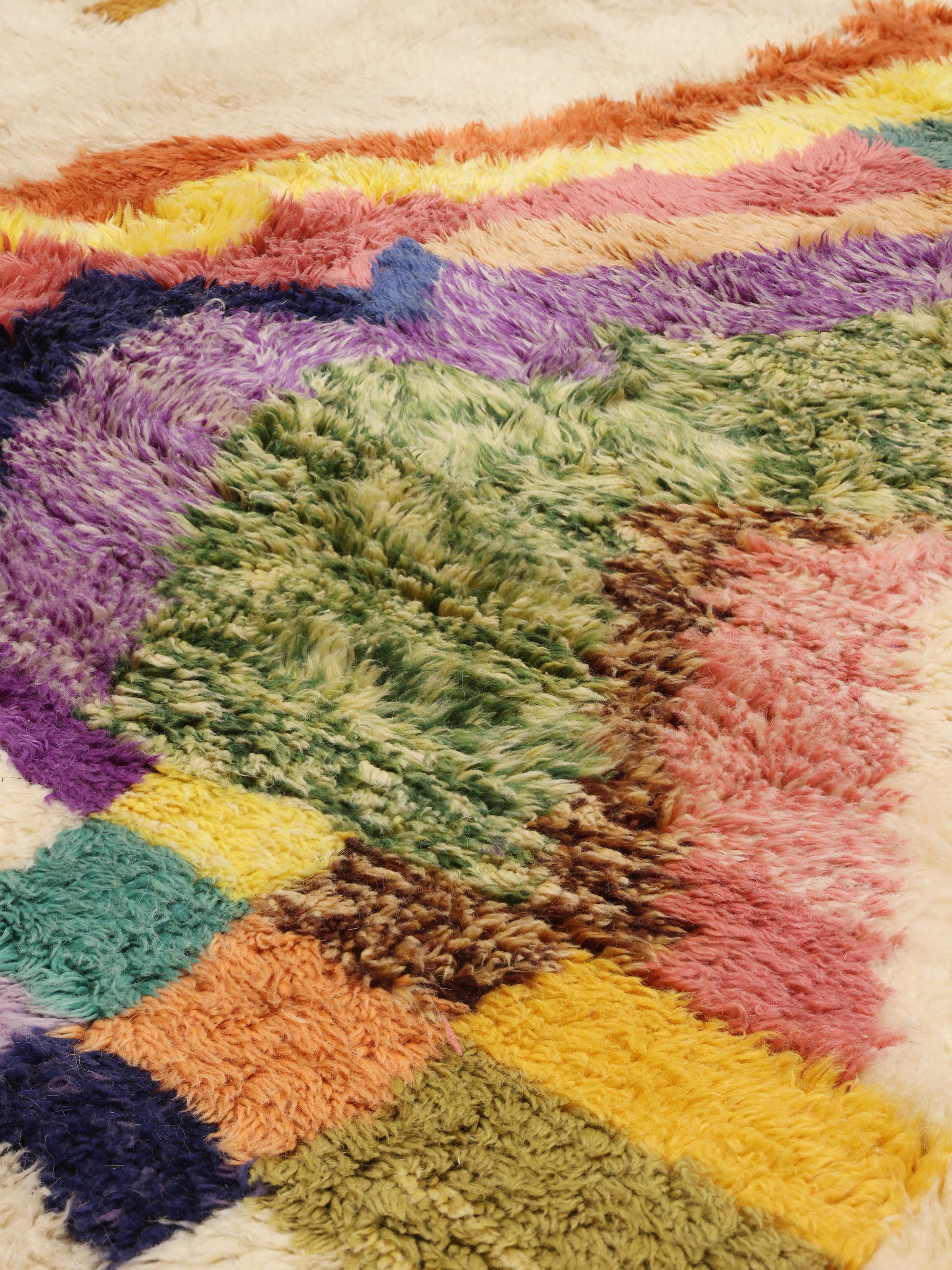
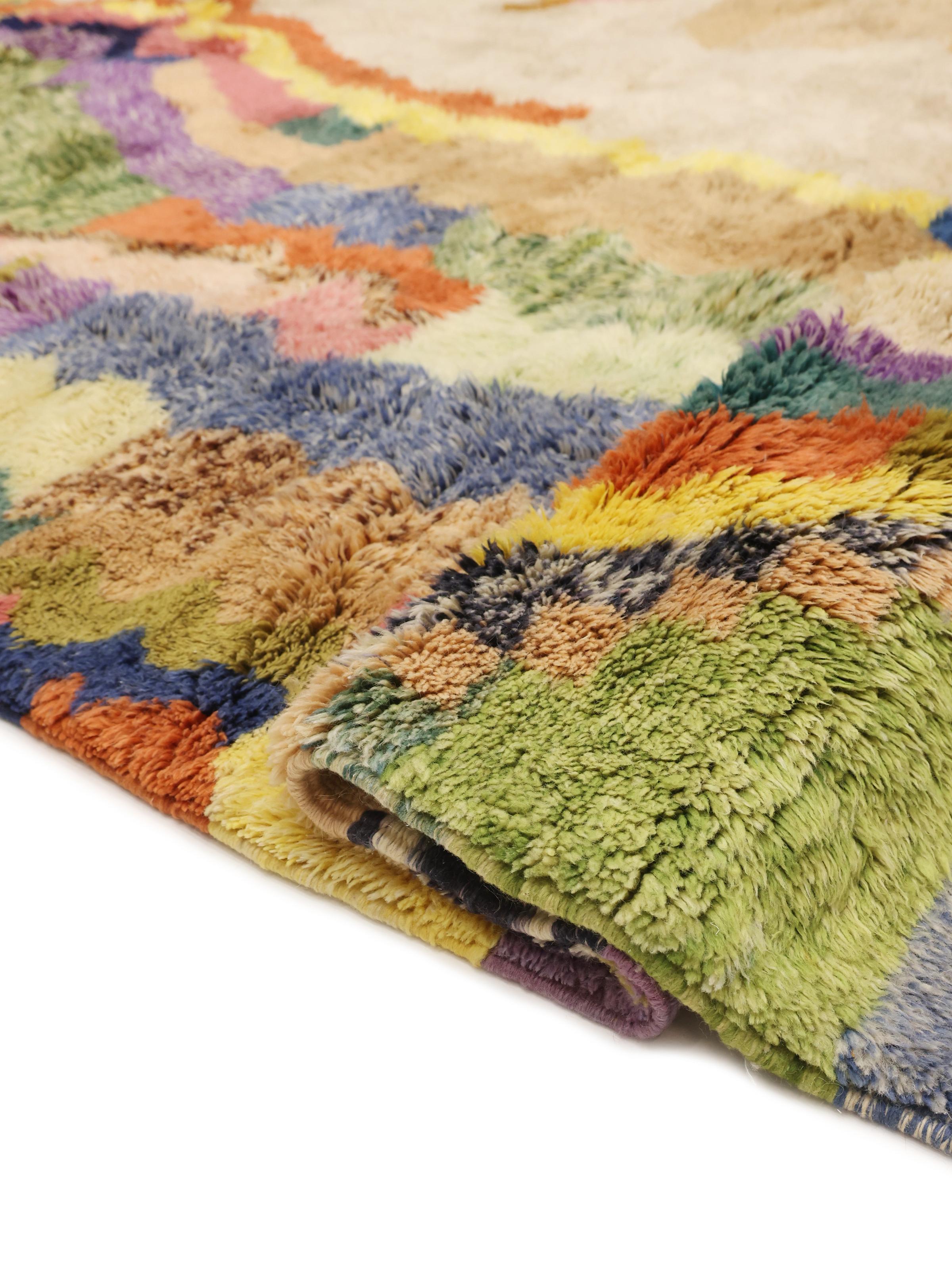
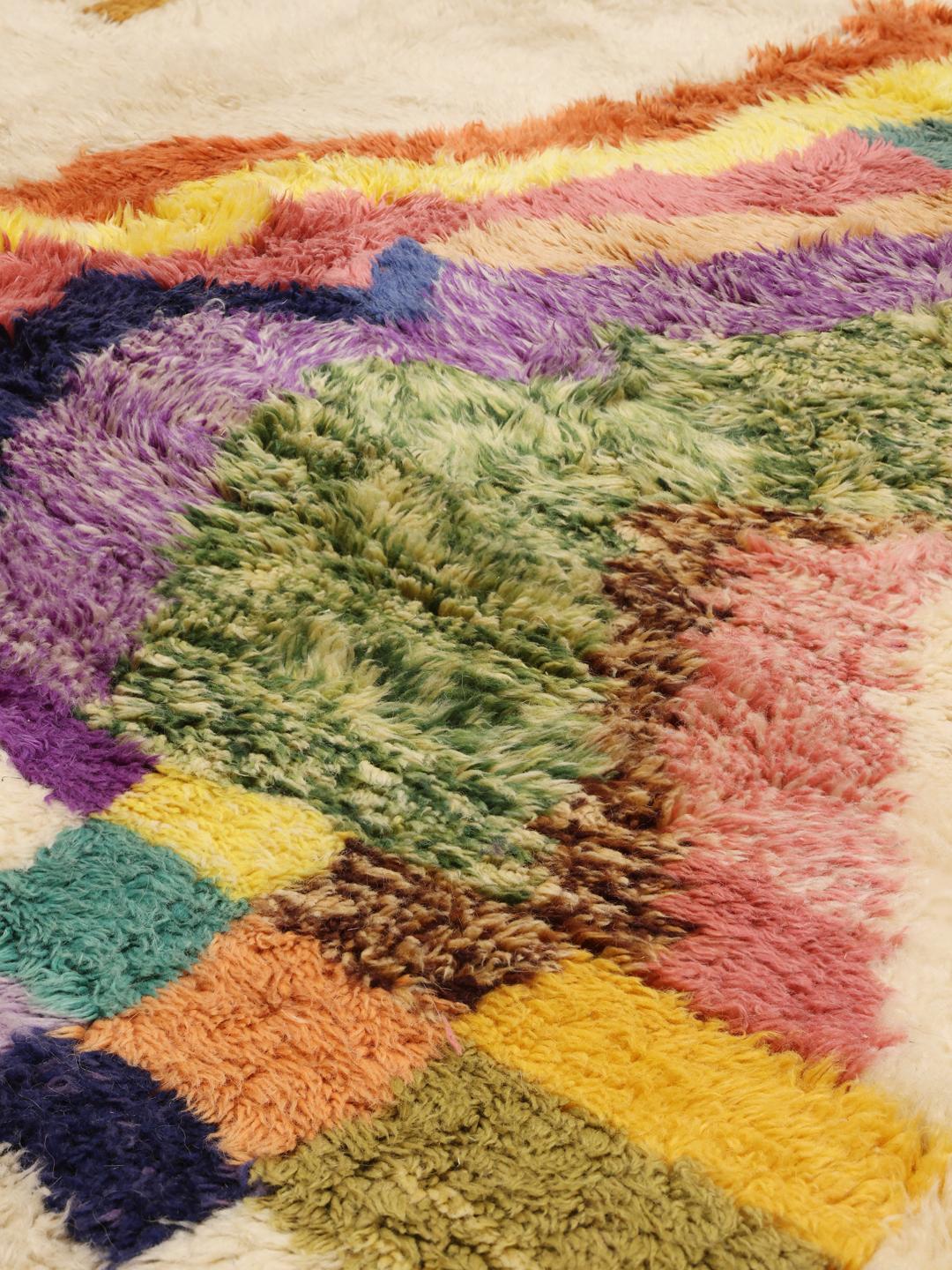
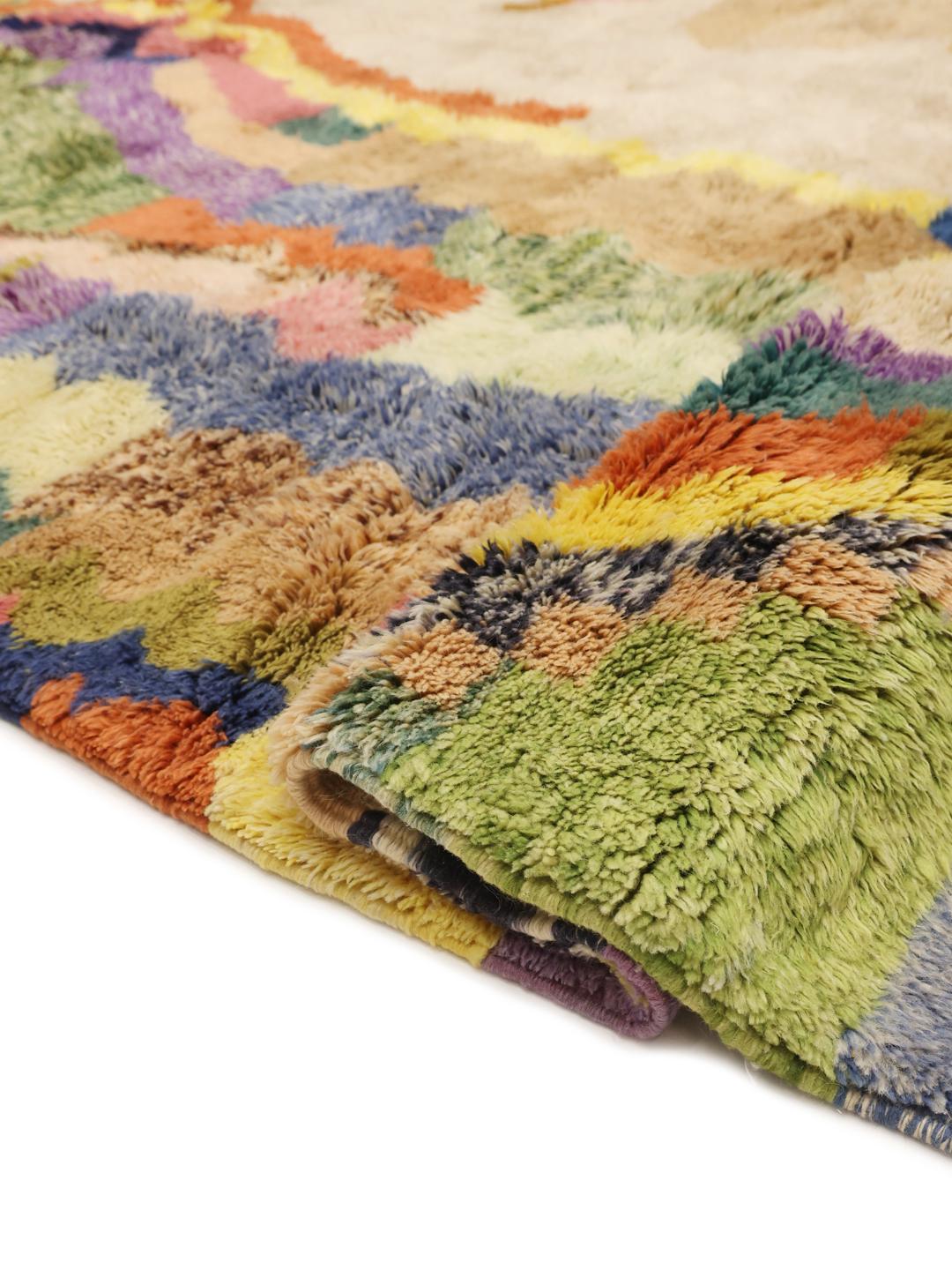
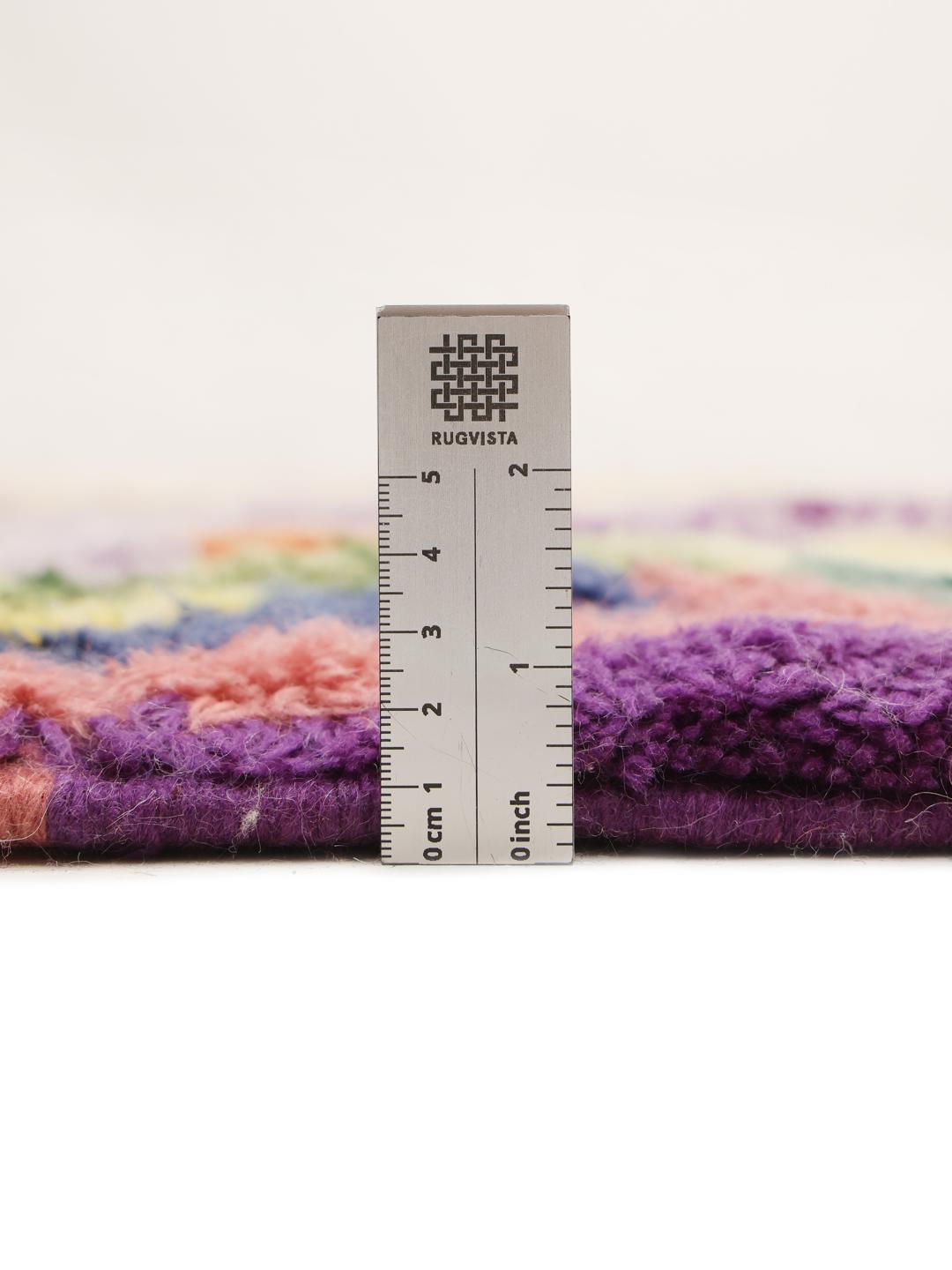
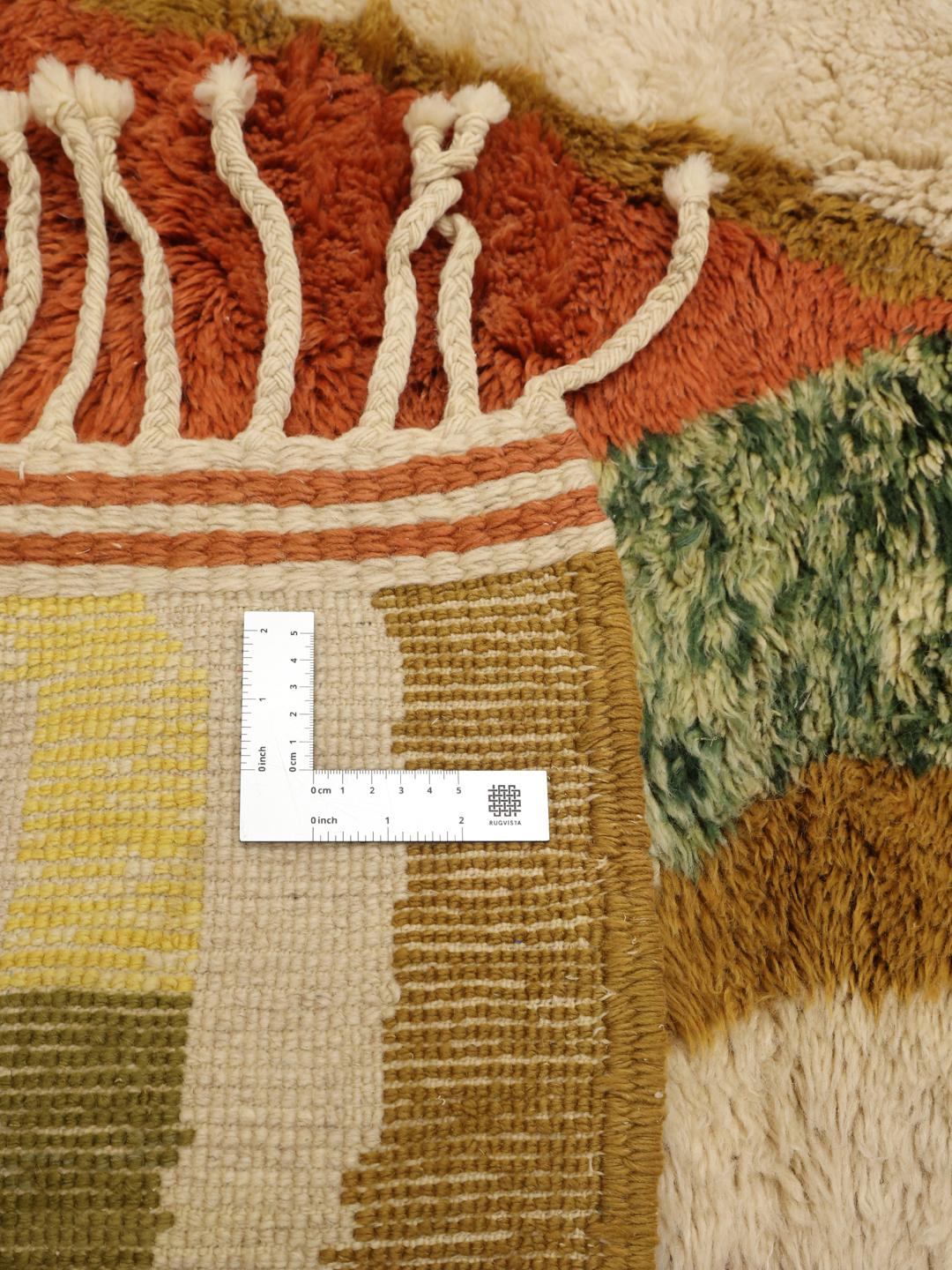
Technically, these rugs are defined by their thick, high-pile construction using resilient wool. The term hand-knotted refers to the precise method of tying individual woollen yarns onto a foundation, a technique that creates a dense, long-lasting surface. This construction is highly valued not only for its durability but also for the way it allows for complex, artistic designs to be rendered with depth and texture.
The visual language of these rugs often leans towards the abstract and the geometric, though they are frequently characterised by a sense of freedom and spontaneity. Unlike more formal urban rug traditions, the Berber style celebrates the beauty of asymmetry and the intentional use of bold, contrasting colours. This specific rug, with its vivid palette and fluid, artistic forms, stands as a modern interpretation of these ancient, expressive design traditions.
Today, these rugs are celebrated by collectors and interior enthusiasts worldwide for their cultural weight and authentic craft. Owning a piece from this tradition is more than just a decor choice; it is an act of preserving a heritage of nomadic artistry. Each rug is a testament to the skill of the individual weaver, offering a tangible connection to the history and the rugged, beautiful landscapes of Morocco.