The Berber Beni Ourain rugs originate from the Middle Atlas region of Morocco, where nomadic tribes have woven them for centuries. Traditionally, these rugs were created not just as floor coverings, but as essential tools for survival in the harsh, cold mountain climate, serving as bedding, blankets, and protection against the elements. Their history is deeply intertwined with the cultural identity of the Berber people, reflecting their connection to the land and their environment.
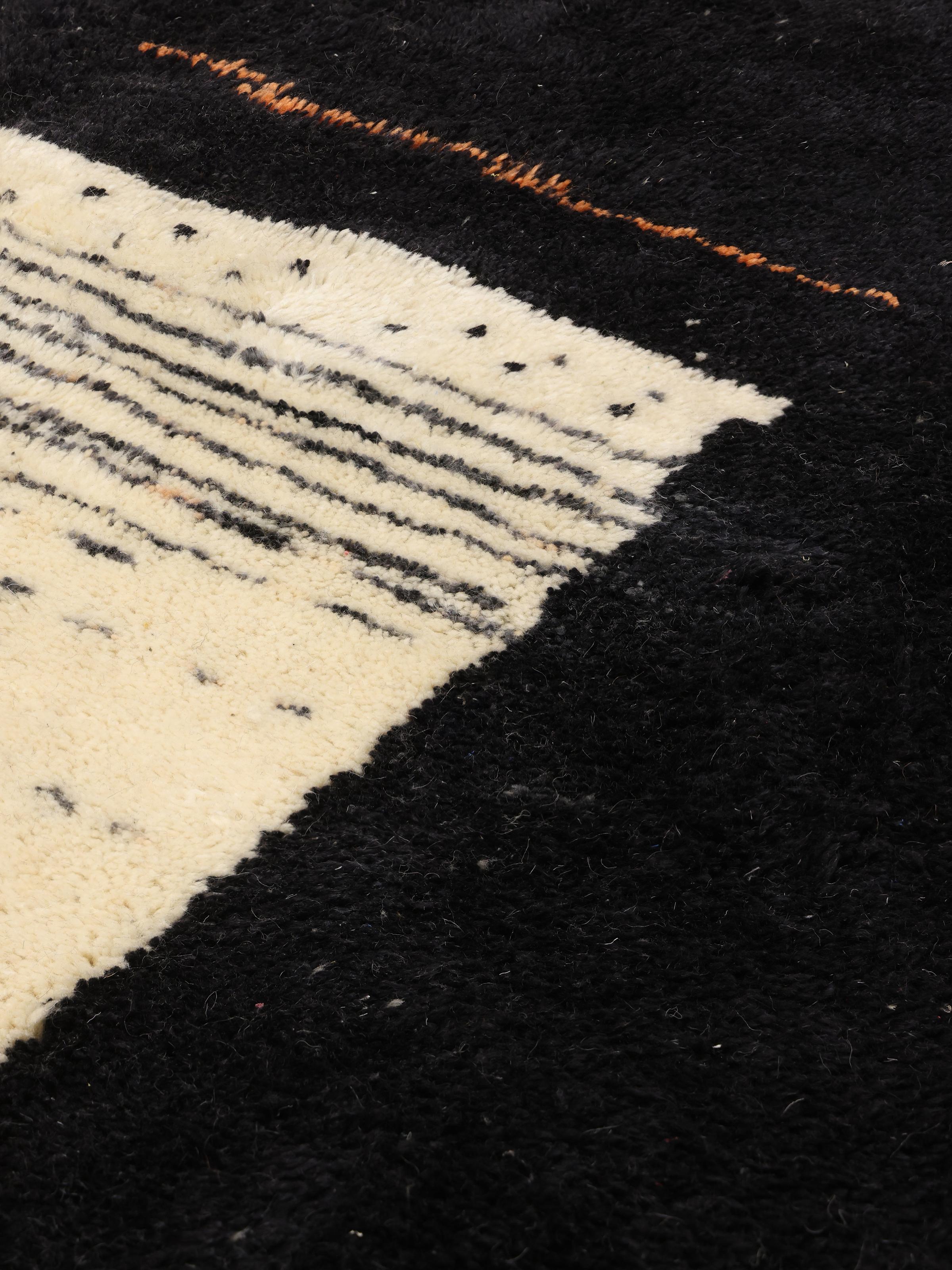
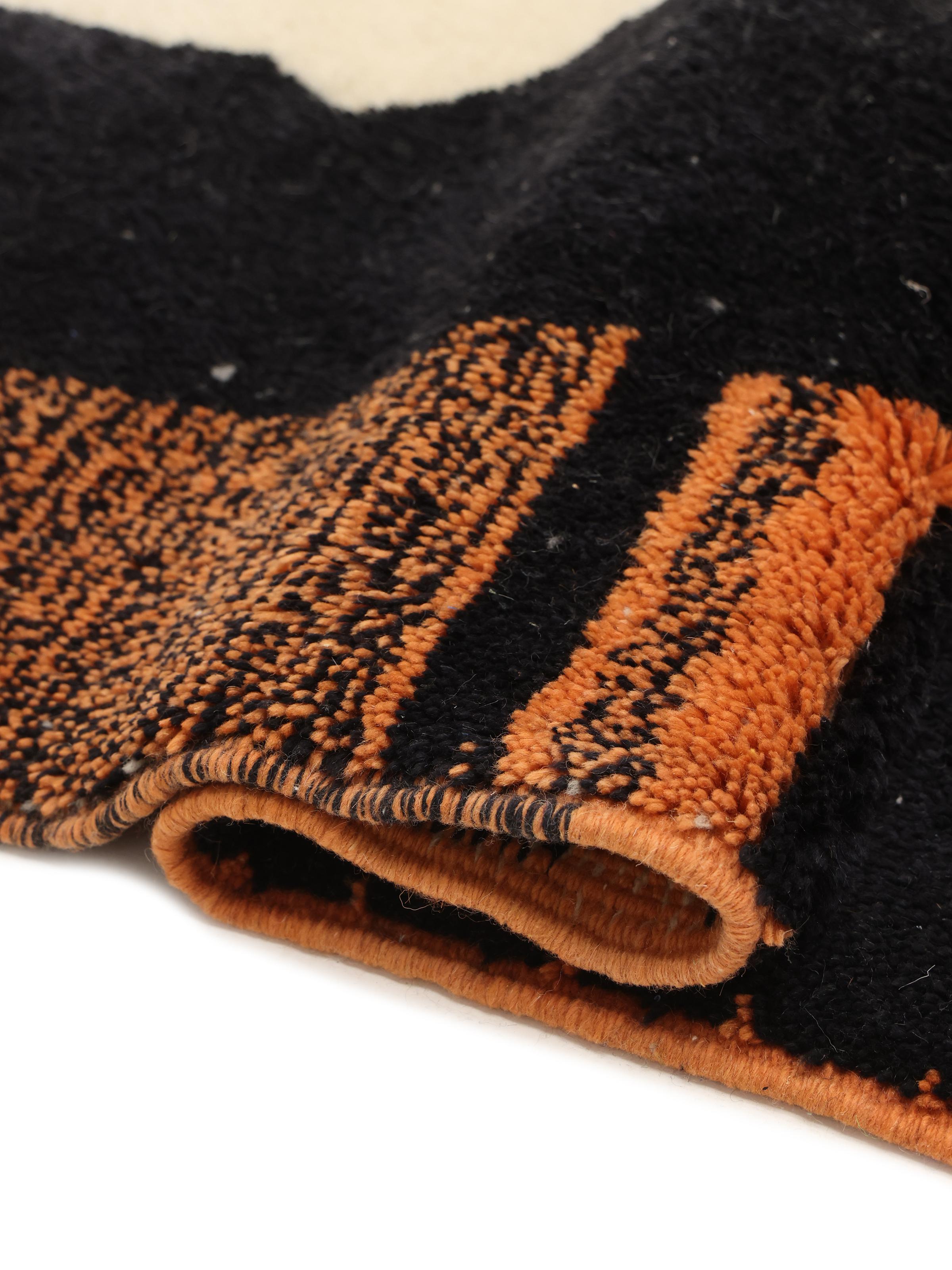
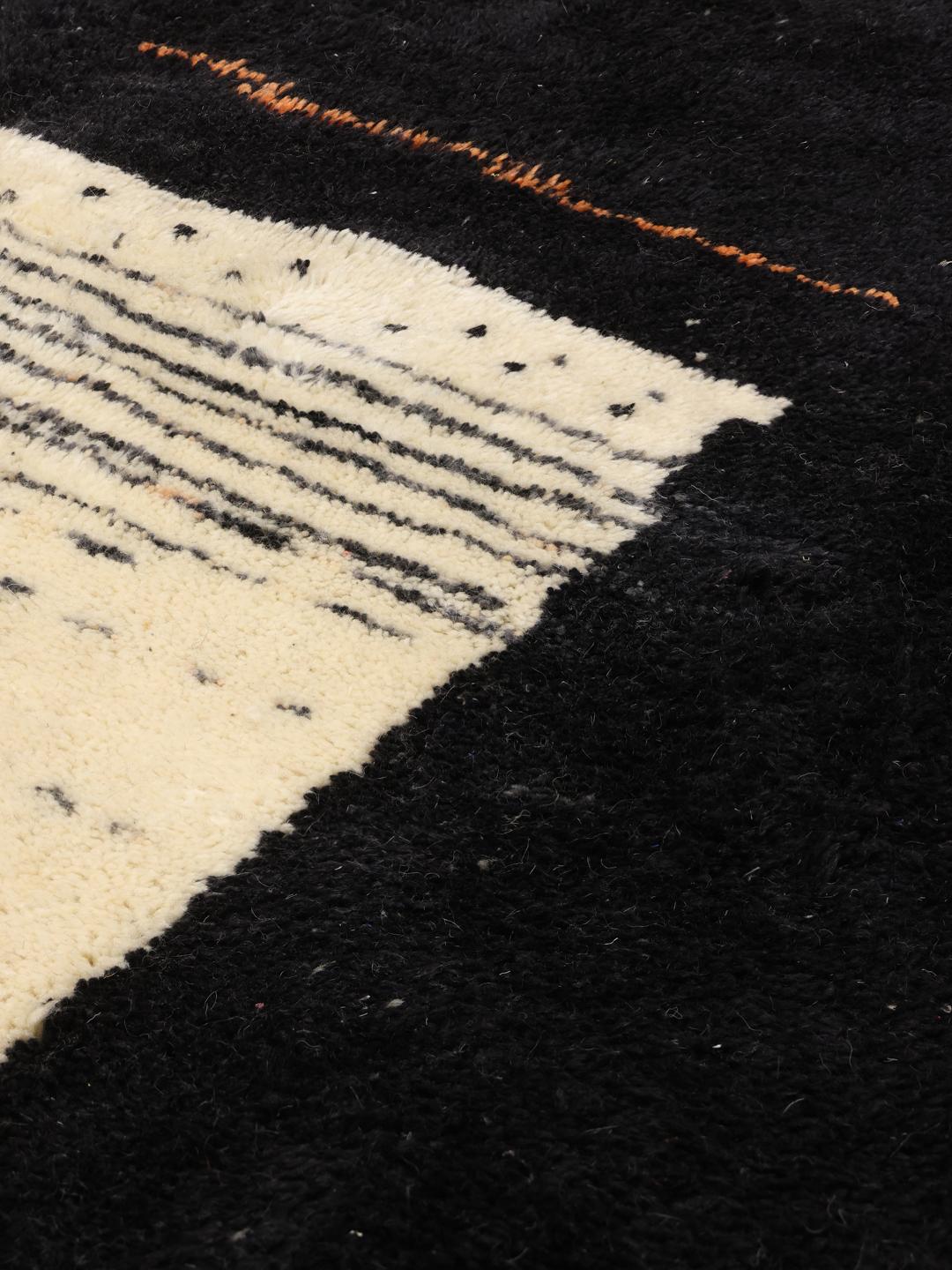
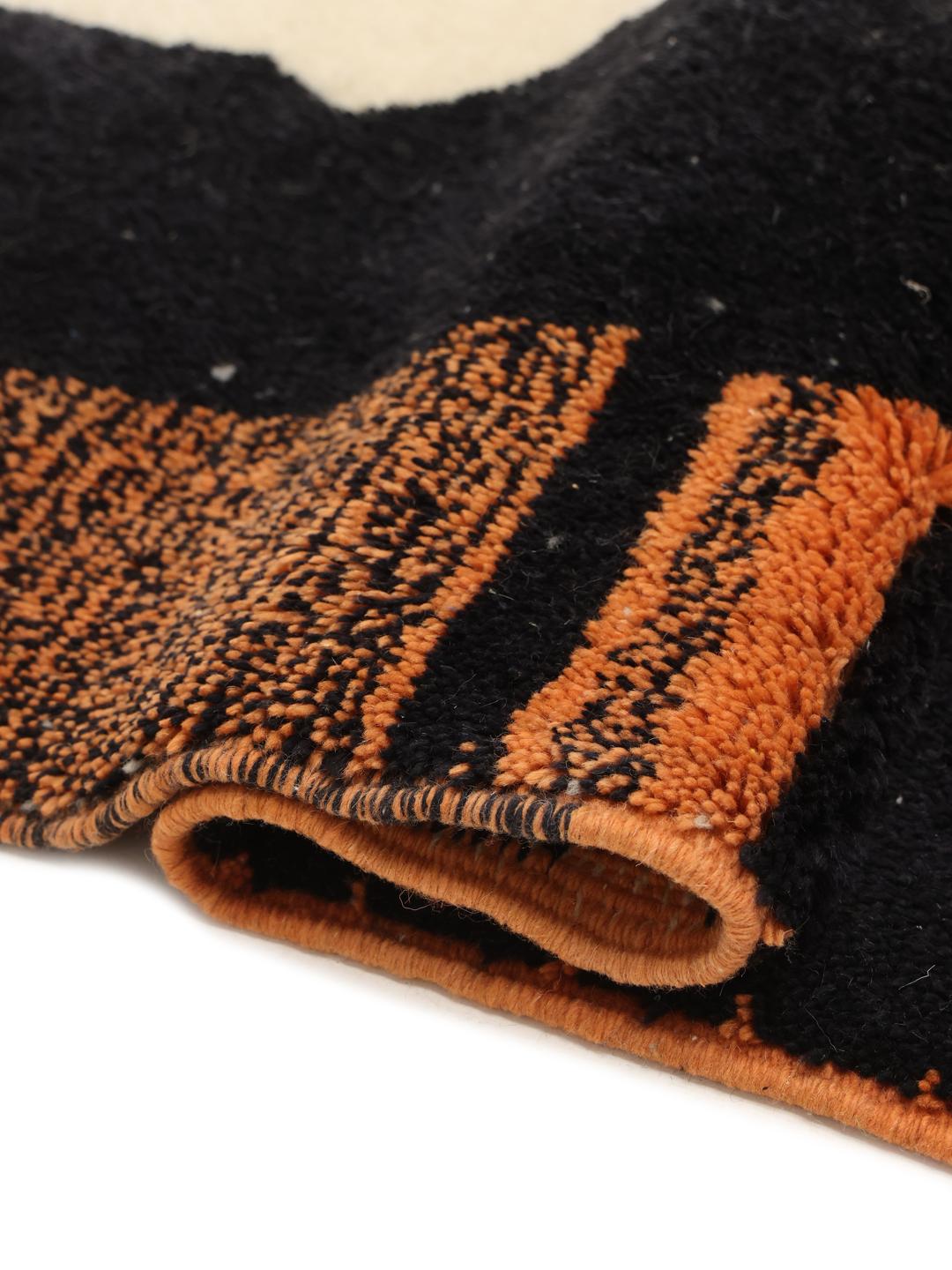
In the context of these rugs, the term 'hand-knotted' refers to the sophisticated technique of looping wool around the warp and weft threads to create a durable, pile-rich surface. This construction is vital for the rug's longevity and its ability to withstand decades of use. The dense, high-quality wool used in these pieces is sourced from local sheep, known for its resilience and softness, which is why these rugs have remained highly prized by collectors and designers worldwide.
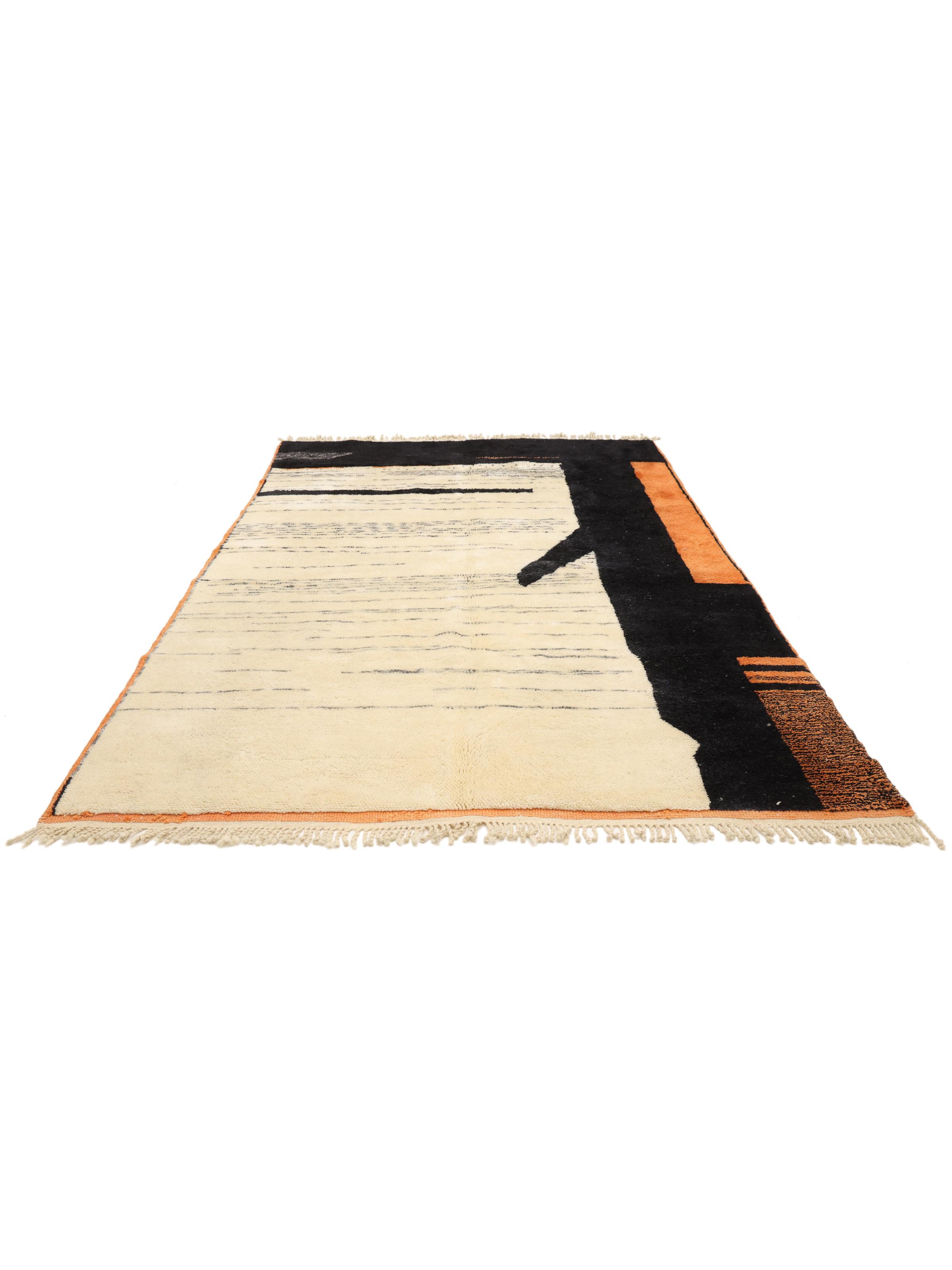
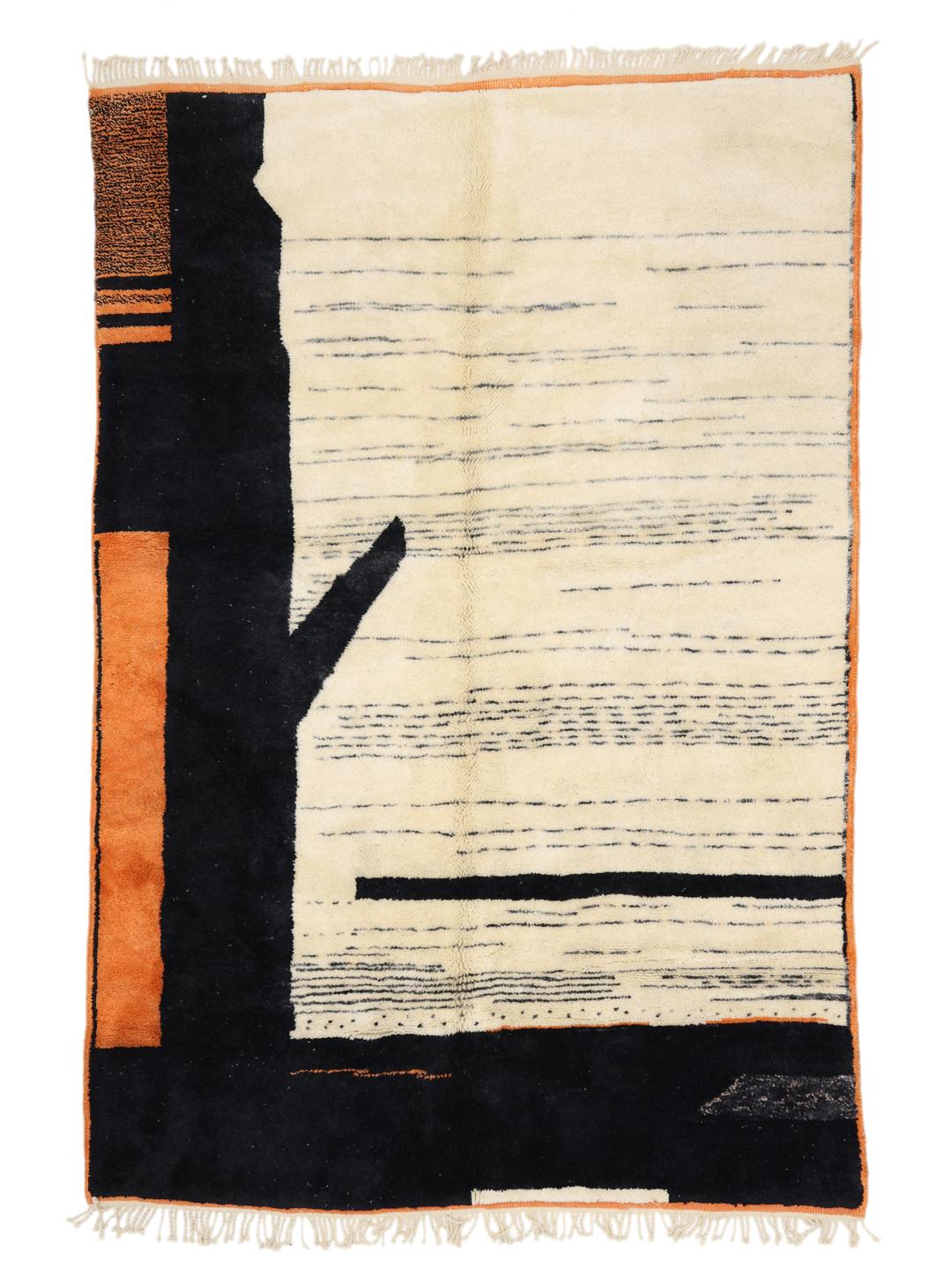
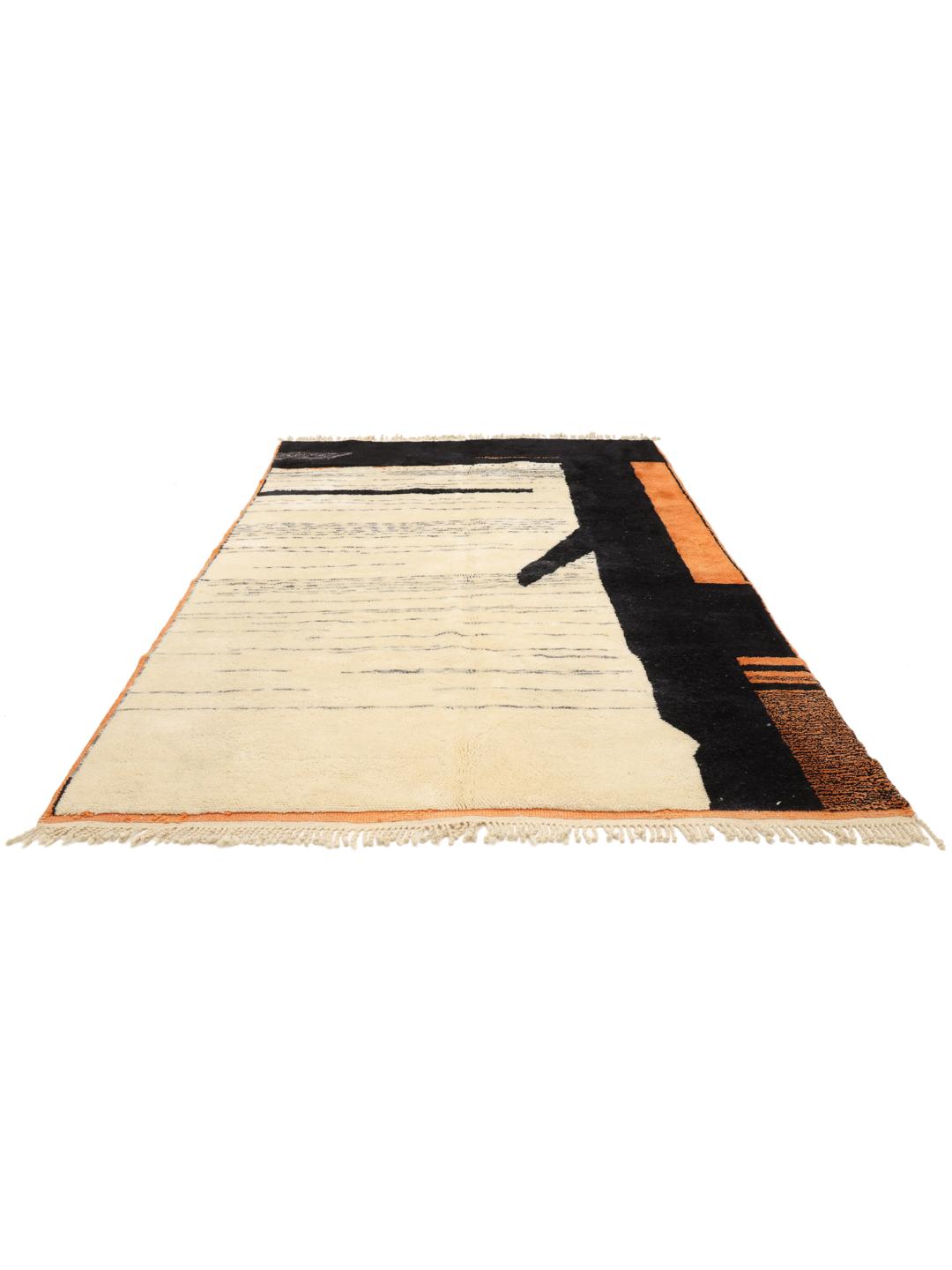
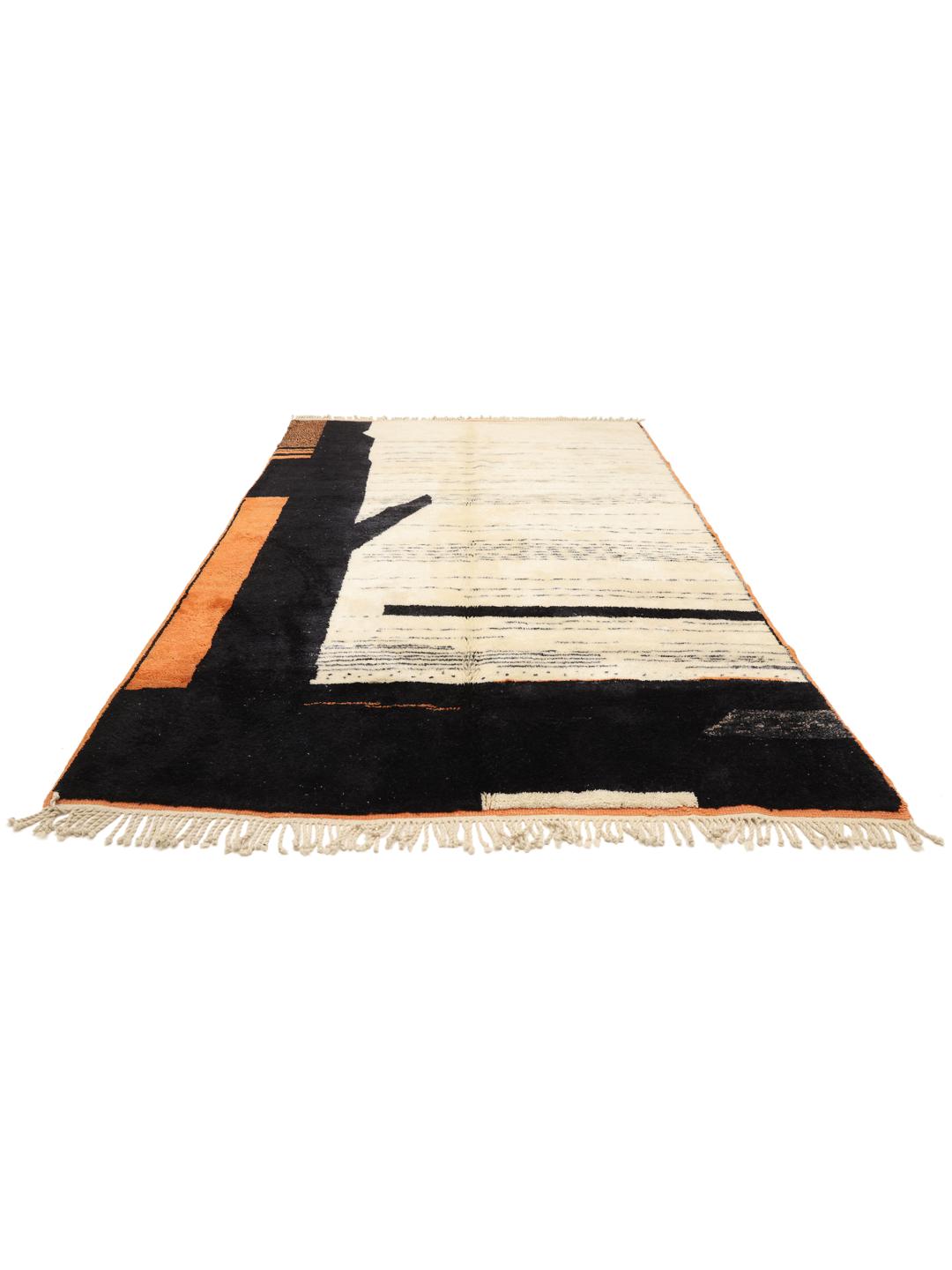
While traditional Beni Ourain rugs are known for their minimalist geometric lines, this piece demonstrates a contemporary evolution within the tradition. By incorporating bold, abstract shapes and a vibrant colour palette, it bridges the gap between ancient weaving techniques and modern artistic expression. The signature motifs, often inspired by tribal symbolism or natural elements, are here transformed into a graphic, large-scale composition that feels fresh and current.
Collecting a piece from this tradition is an act of preserving a dying art form. These rugs are valued for their authenticity and the human story behind every knot. Owning one means holding a piece of Moroccan heritage that celebrates the skill of the weaver and the legacy of a culture that has mastered the art of working with natural materials for generations.