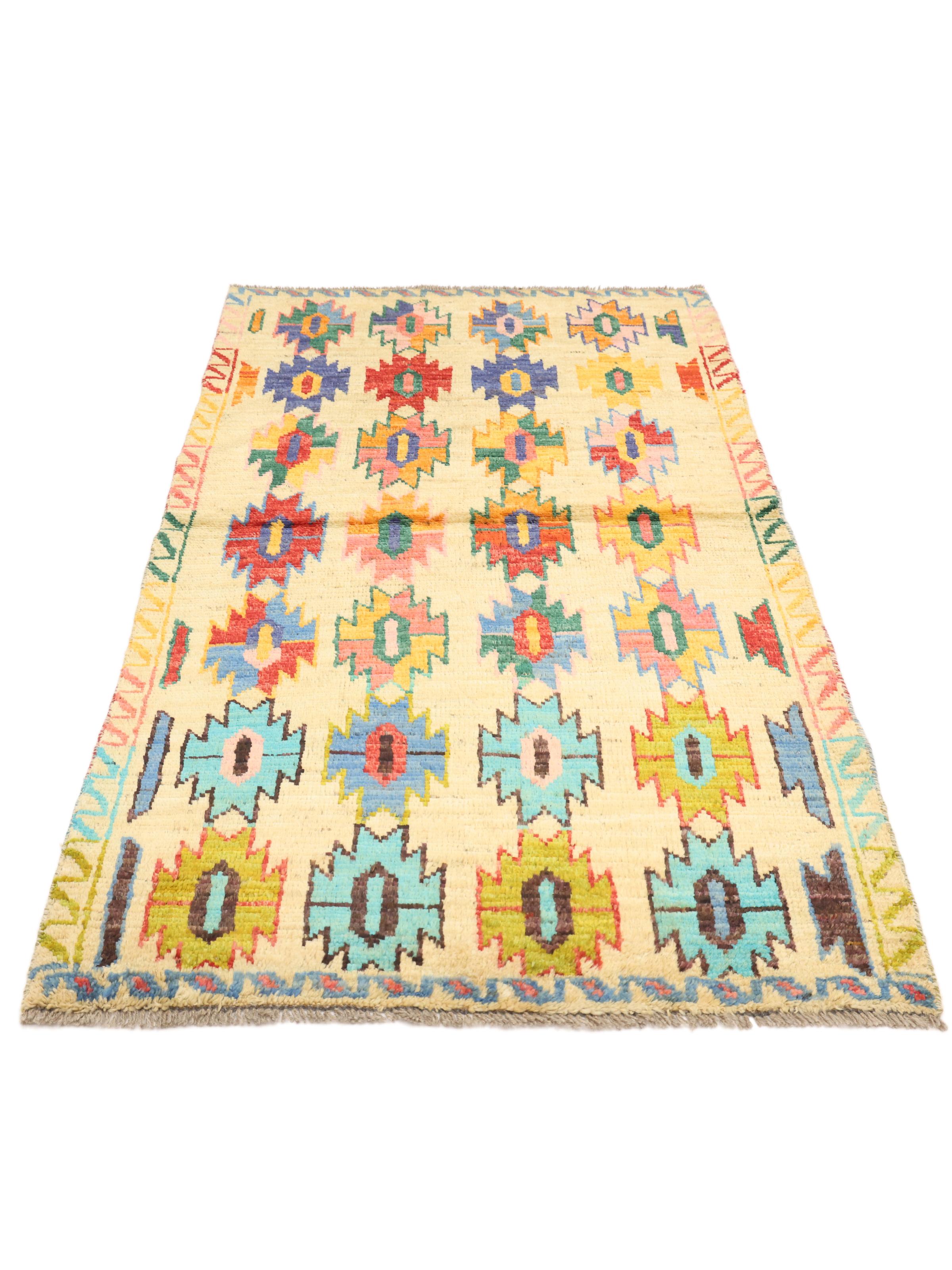
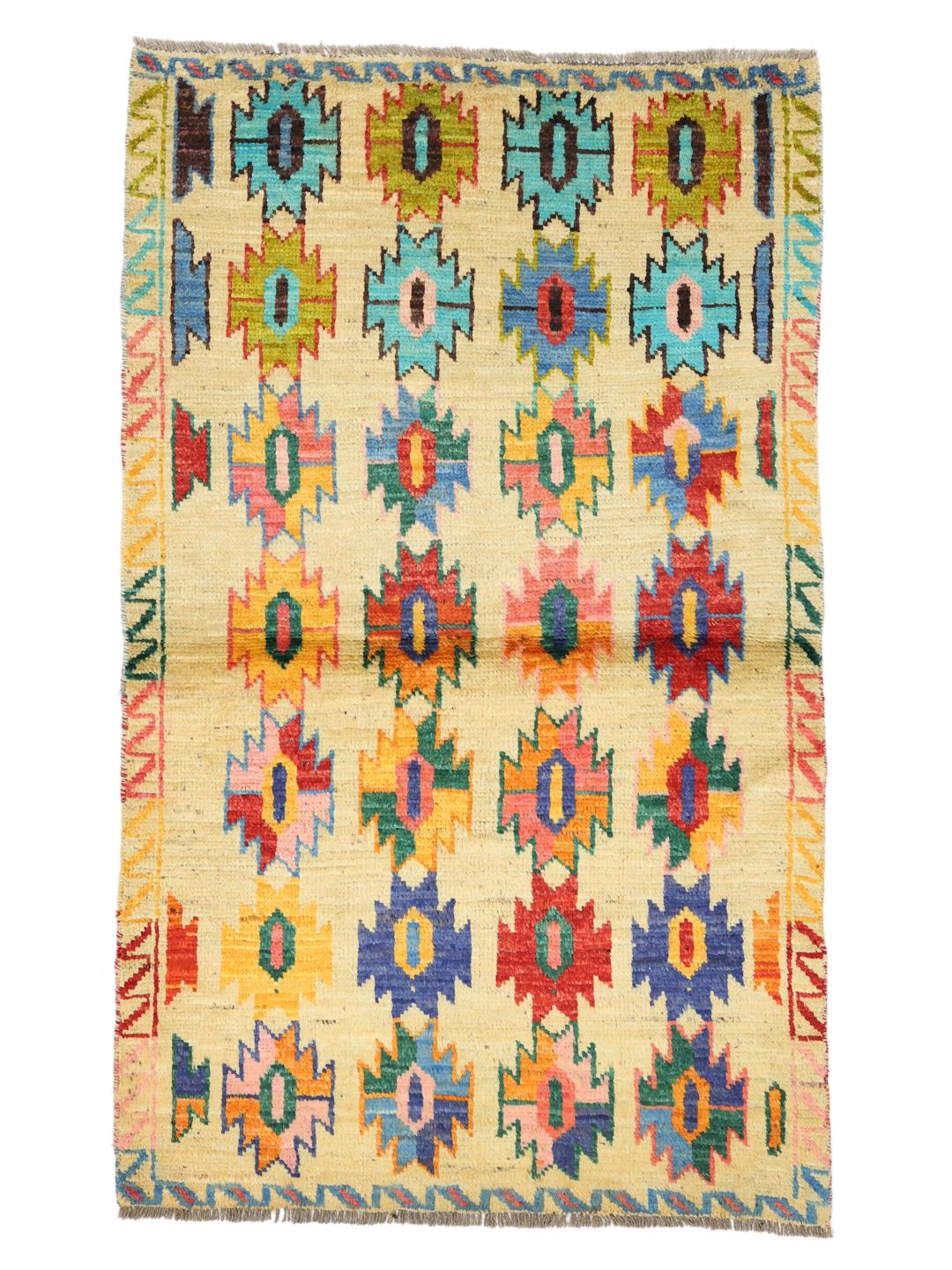
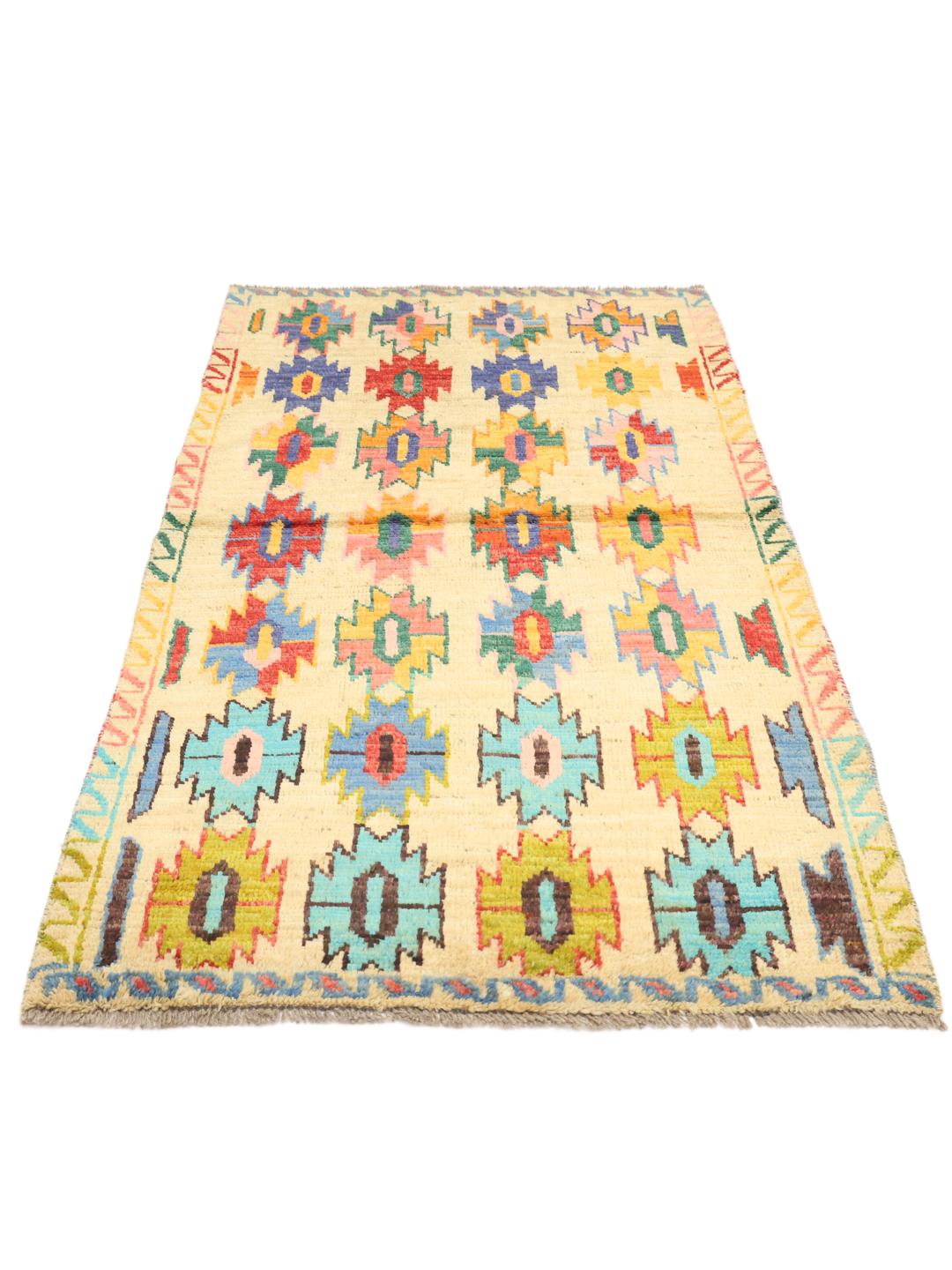
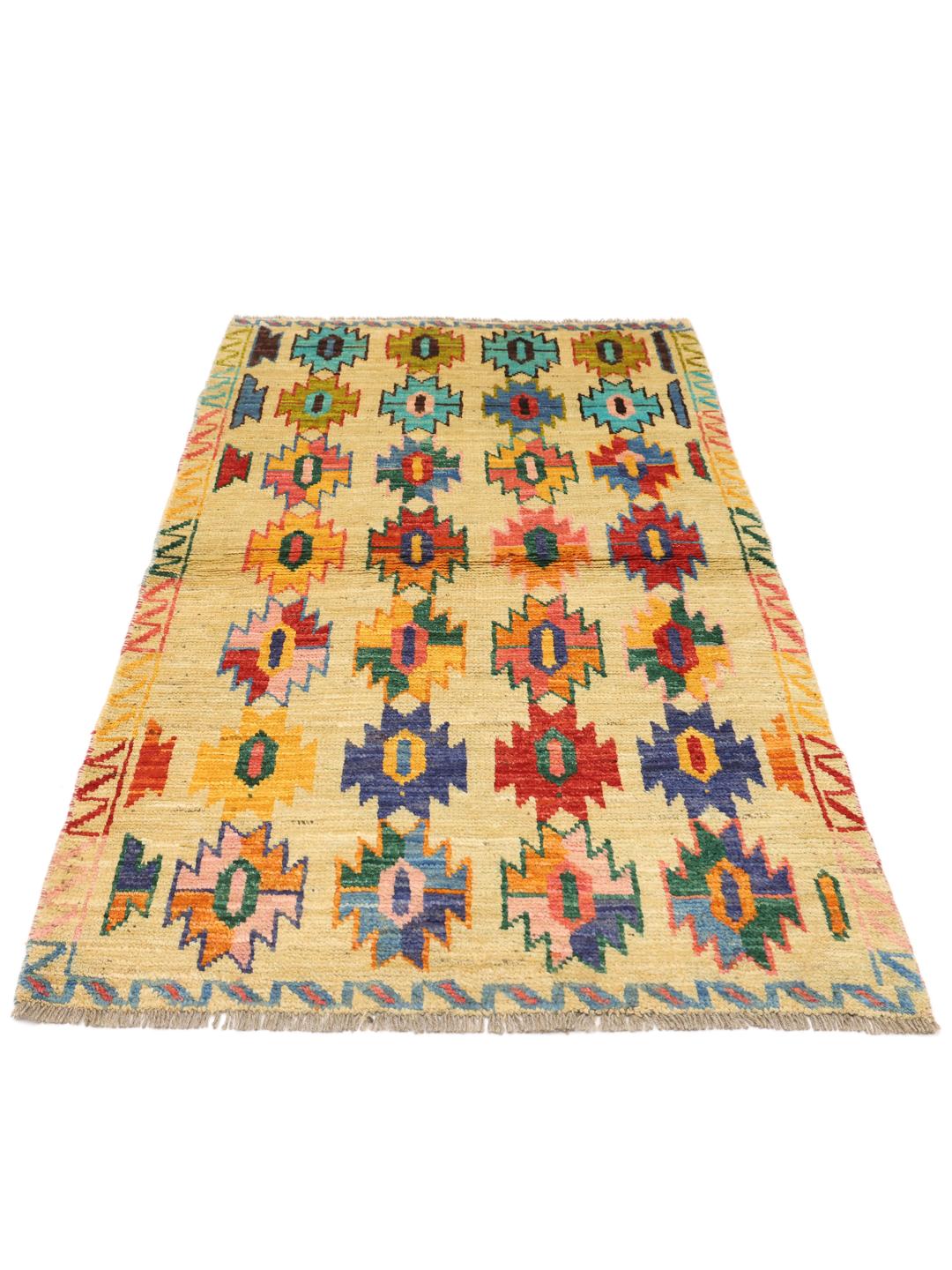
The Berber tradition is deeply rooted in the cultural heritage of nomadic and semi-nomadic tribes, known for creating textiles that are both functional and deeply symbolic. While the term Berber is historically associated with North African weaving, the style has evolved and been adopted by skilled artisans across Central Asia, including Afghanistan. This migration of design reflects the cross-cultural exchange of motifs and techniques that have defined rug-making for centuries.
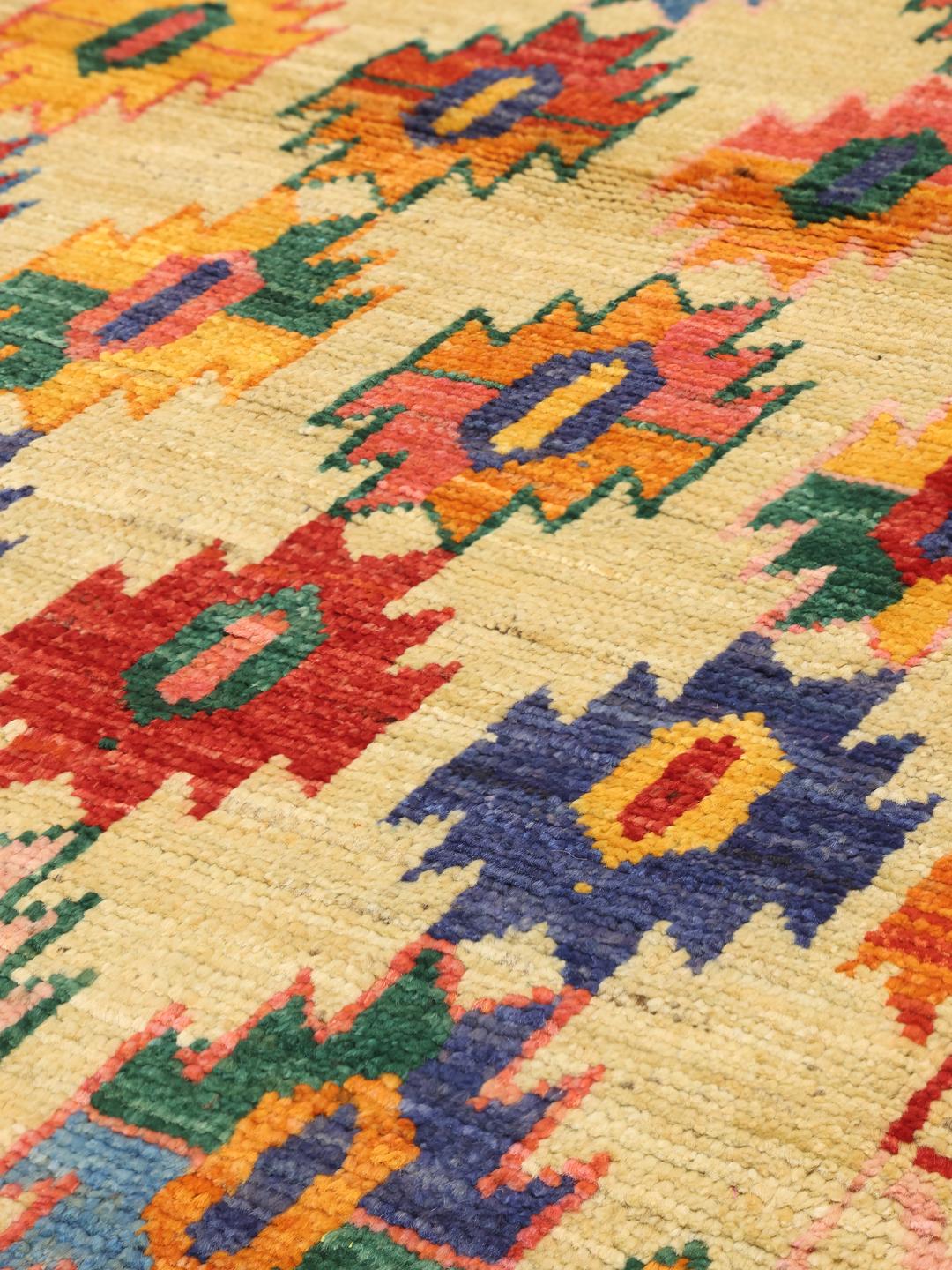
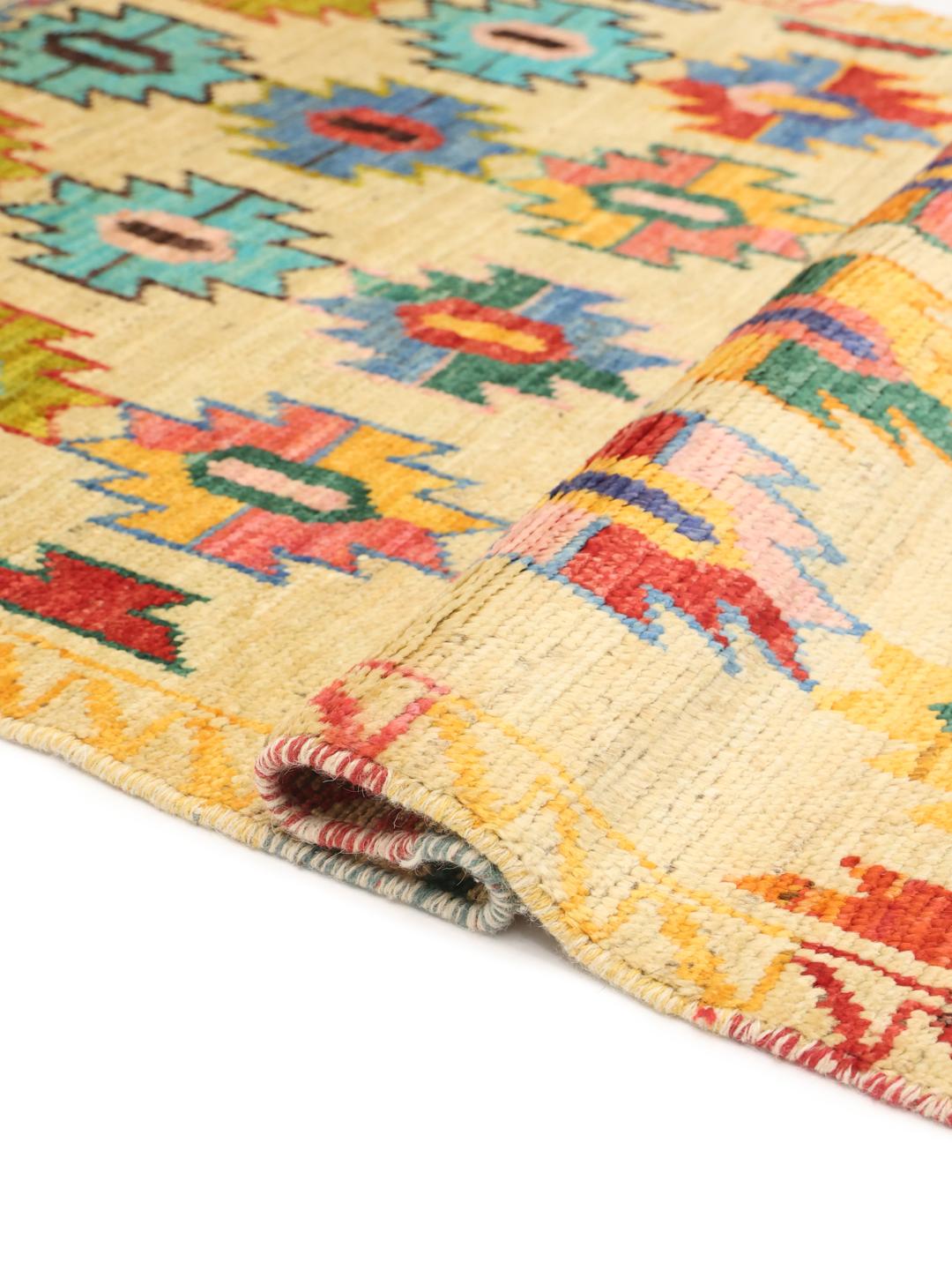
The vibrant aesthetic found in this rug is a hallmark of the Berber style, which prioritises bold, expressive colours and geometric shapes over more formal, curvilinear designs. These patterns often serve as a visual language for the weaver, incorporating symbols that reflect their environment, beliefs, and personal stories. The use of natural wool, which is hand-spun and dyed, ensures that the colours remain vivid and have a depth that synthetic alternatives cannot replicate.
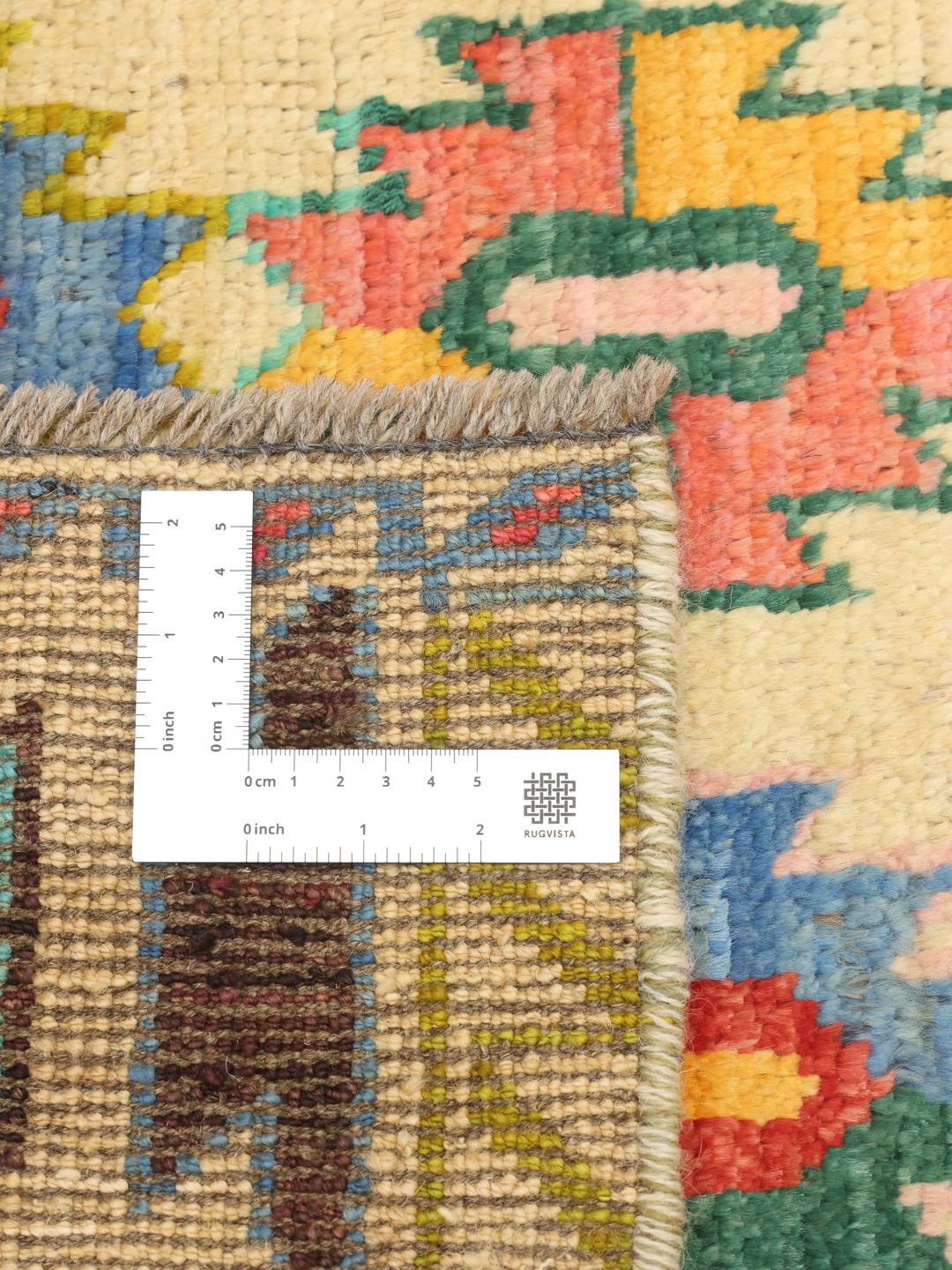
Technical elements in these rugs, such as the specific hand-knotting process, allow for a high degree of creativity within the design. The weavers are not restricted by rigid templates, which explains the unique, organic feel of each piece. This freedom of expression is what makes these rugs so sought after by collectors who value the human element in their decor—the subtle variations in line and colour are not flaws, but rather evidence of the weaver's individual hand.
Owning a Berber-inspired rug from Afghanistan is about more than just decor; it is about preserving a legacy of craftsmanship. These pieces are valued for their authenticity and the way they bring a grounded, human touch to modern interiors. By choosing a one-of-a-kind rug, you are supporting a tradition that values skill, patience, and the artistic spirit over mass production.