Berber rugs are deeply rooted in the nomadic traditions of the Middle Eastern and North African regions, where weaving was not merely a craft but a vital form of storytelling. While the term Berber is often associated with North African tribes, the tradition of weaving these shaggy, expressive floor coverings has evolved and been adopted by diverse cultures across the wider region, including the skilled artisans of Afghanistan. These rugs represent a bridge between ancient nomadic heritage and modern interior needs.
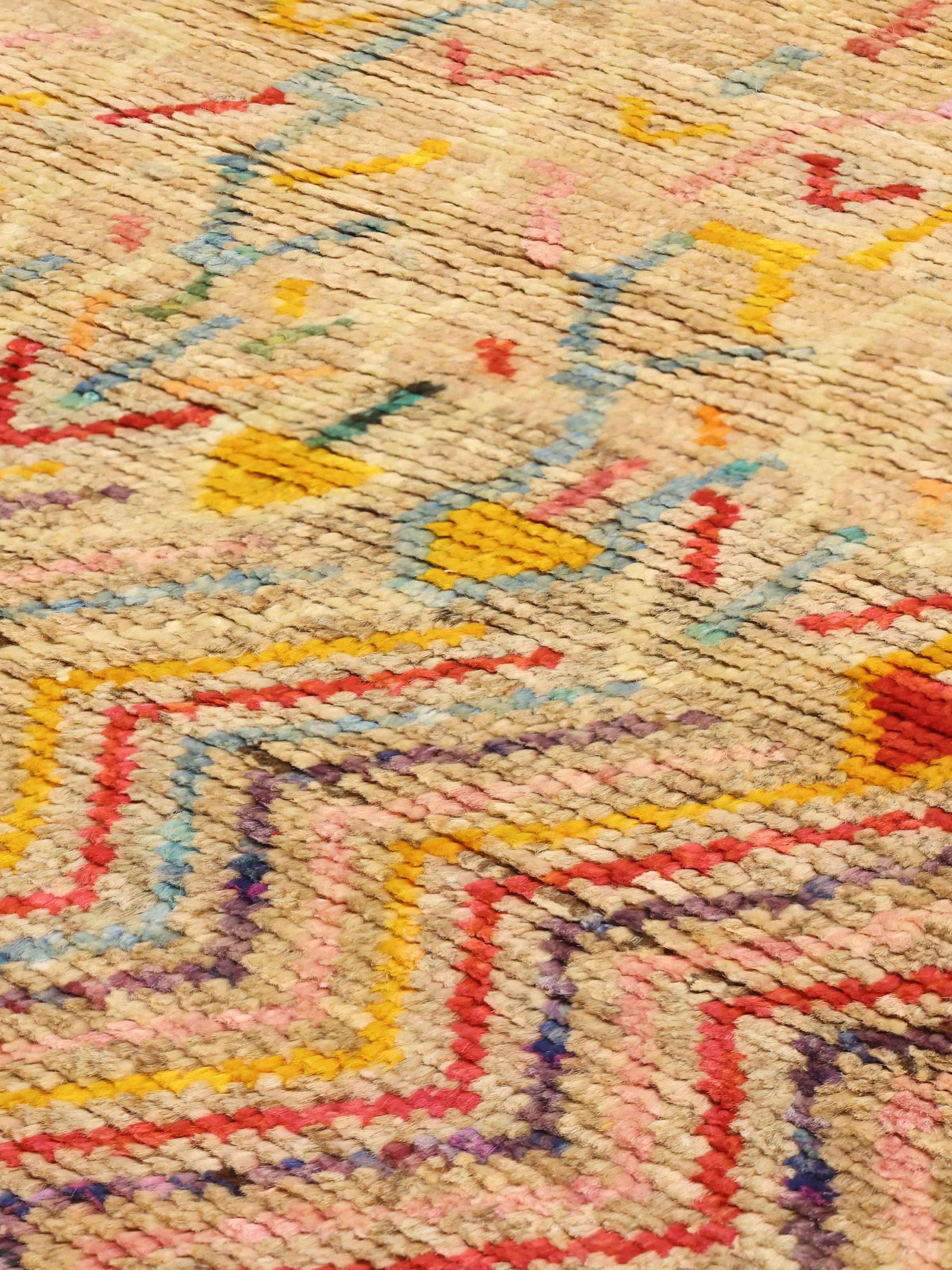
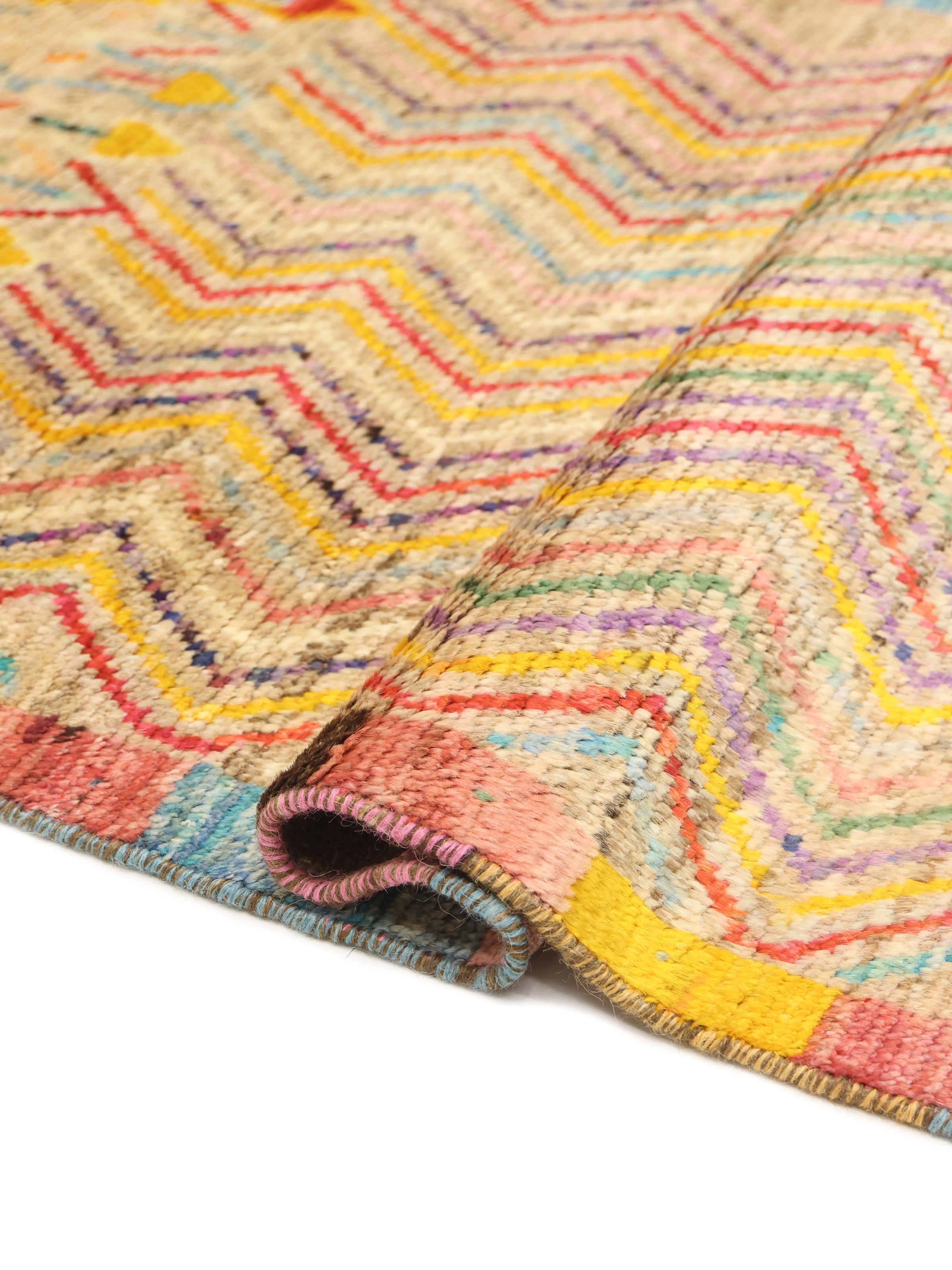
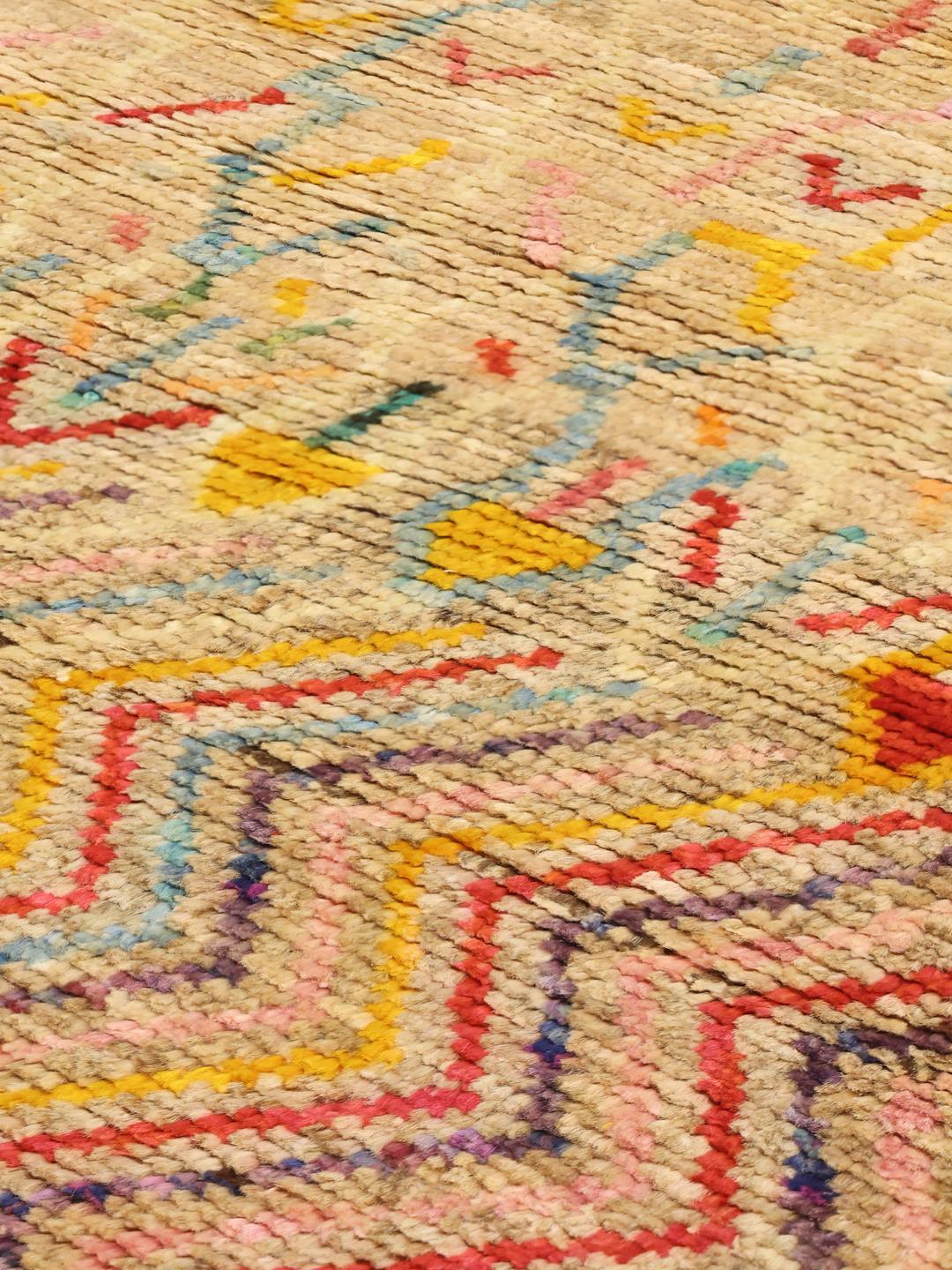
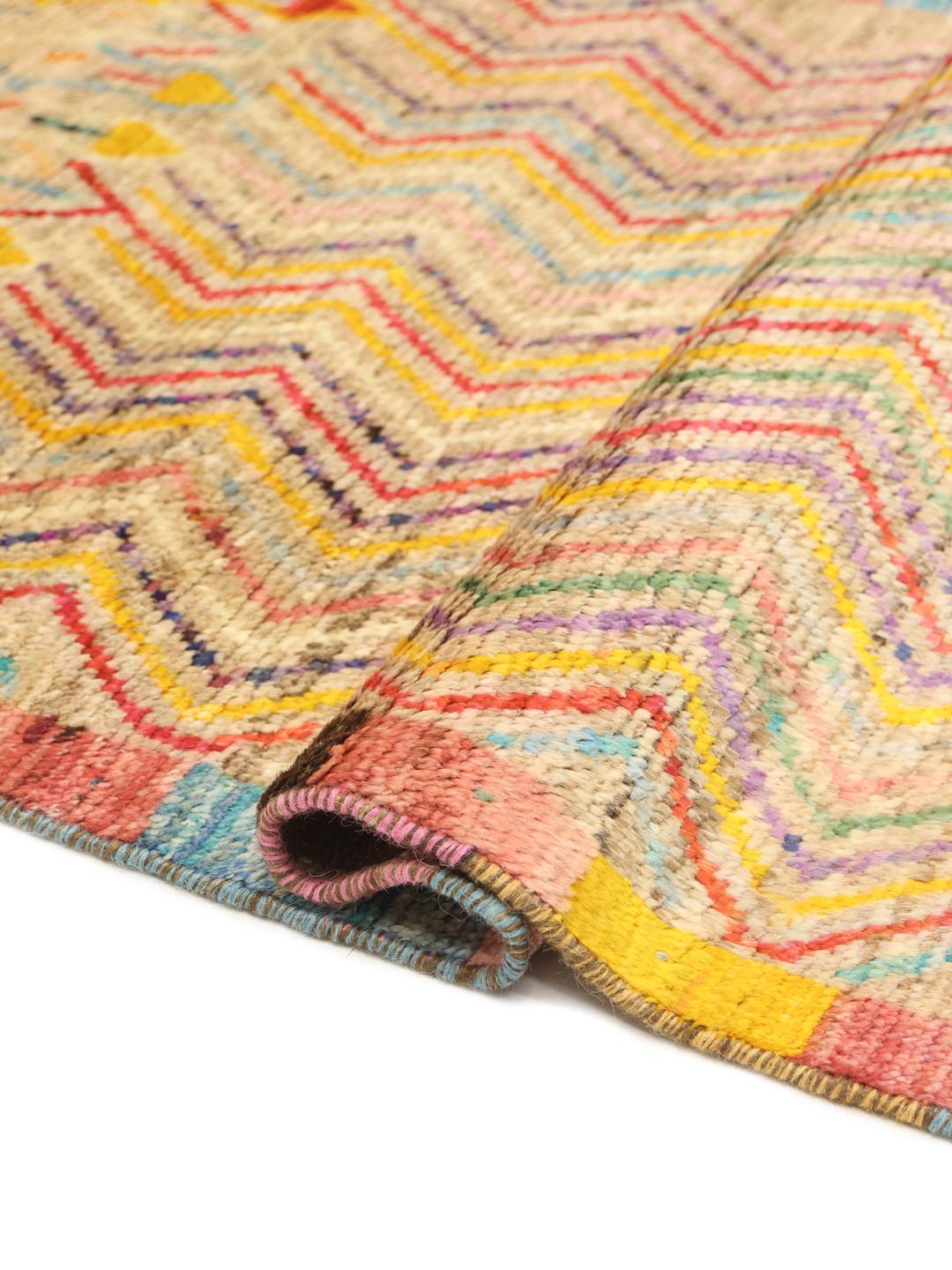
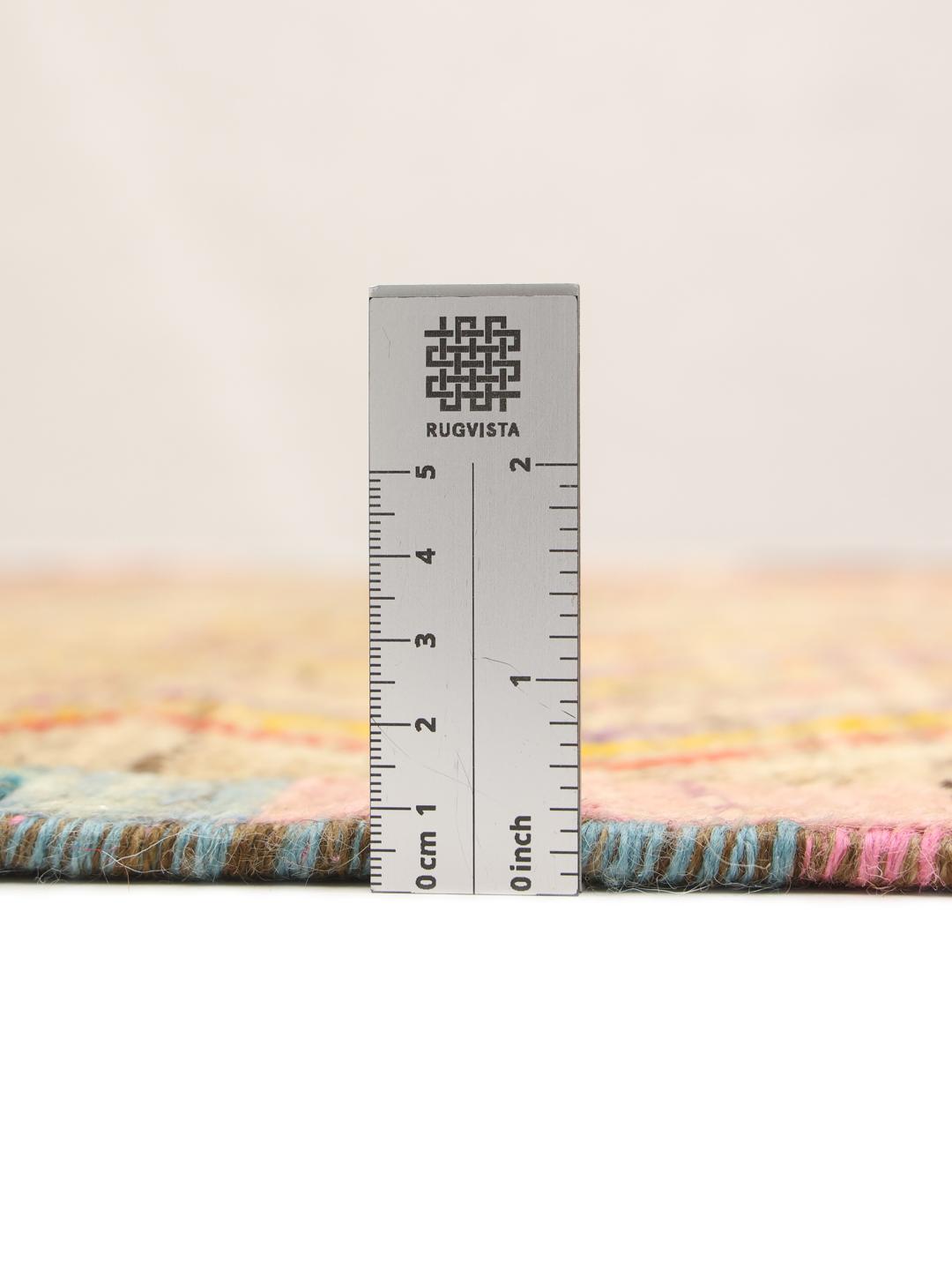
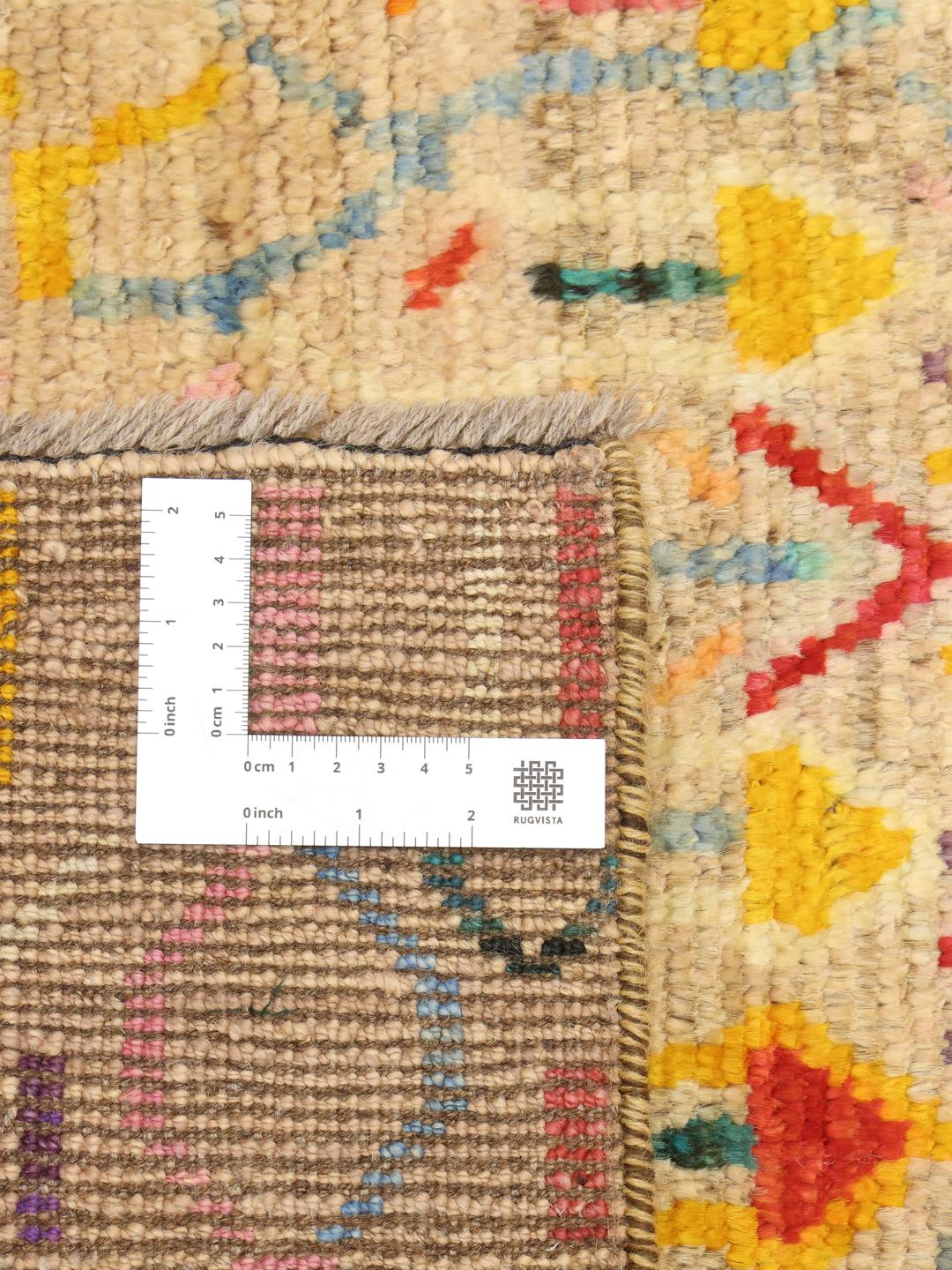
The construction of these rugs typically relies on a technique that prioritises durability and comfort. The use of hand-knotted techniques allows for a thicker, more resilient pile that can withstand the harsh conditions of nomadic life. This method of construction is significant because it results in a rug that is not only visually captivating but also structurally sound, capable of lasting for generations if properly cared for.
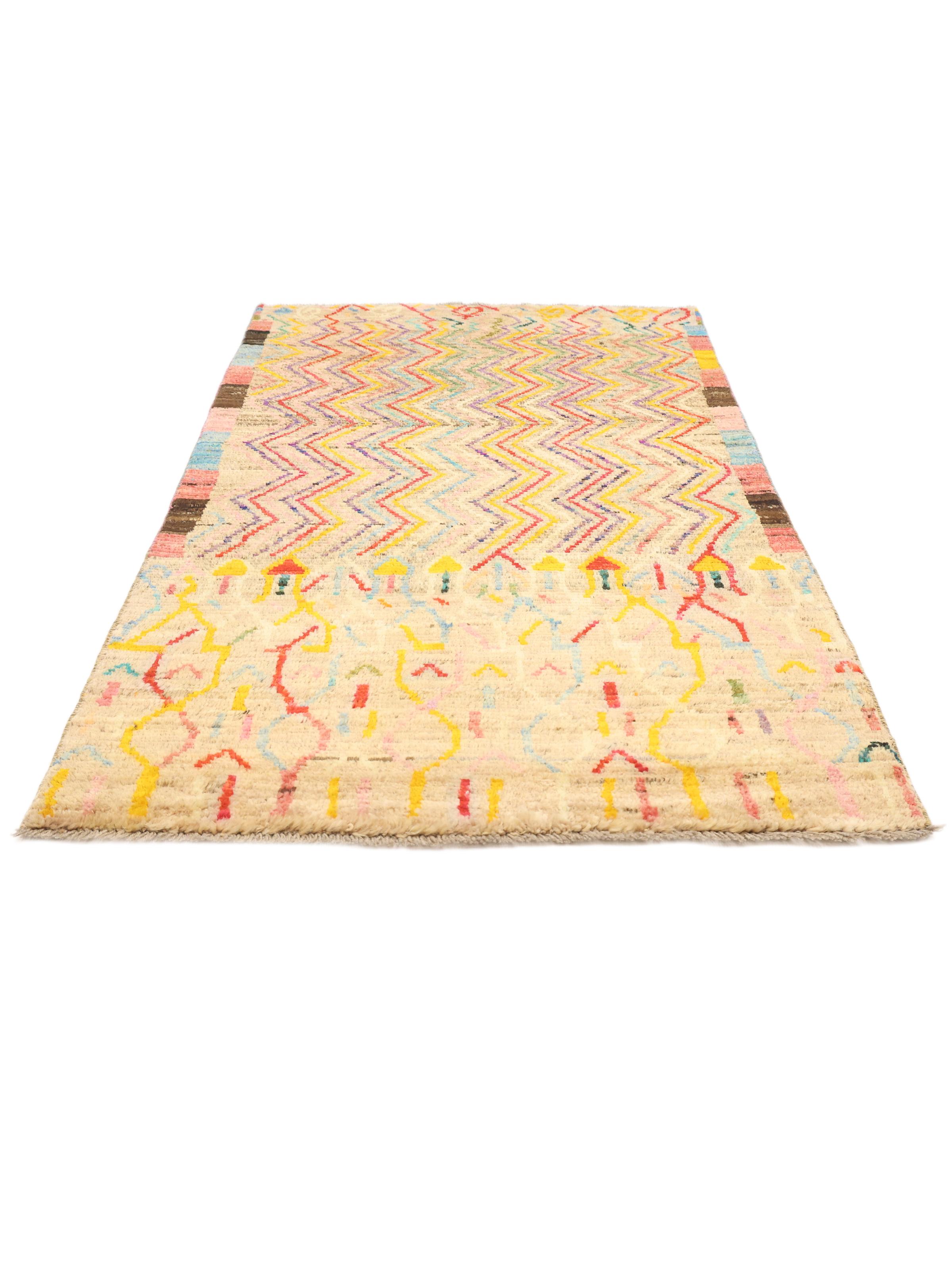
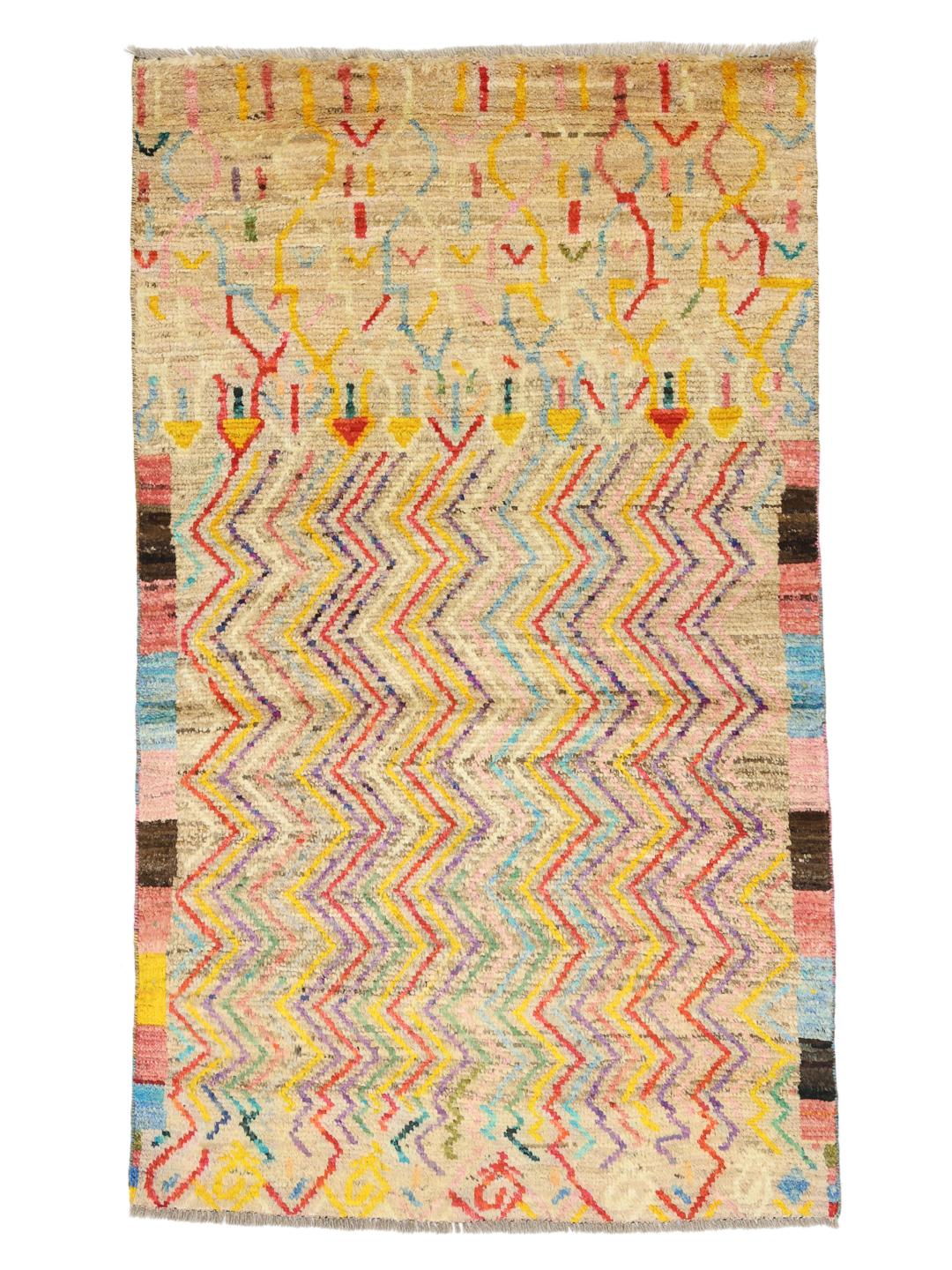
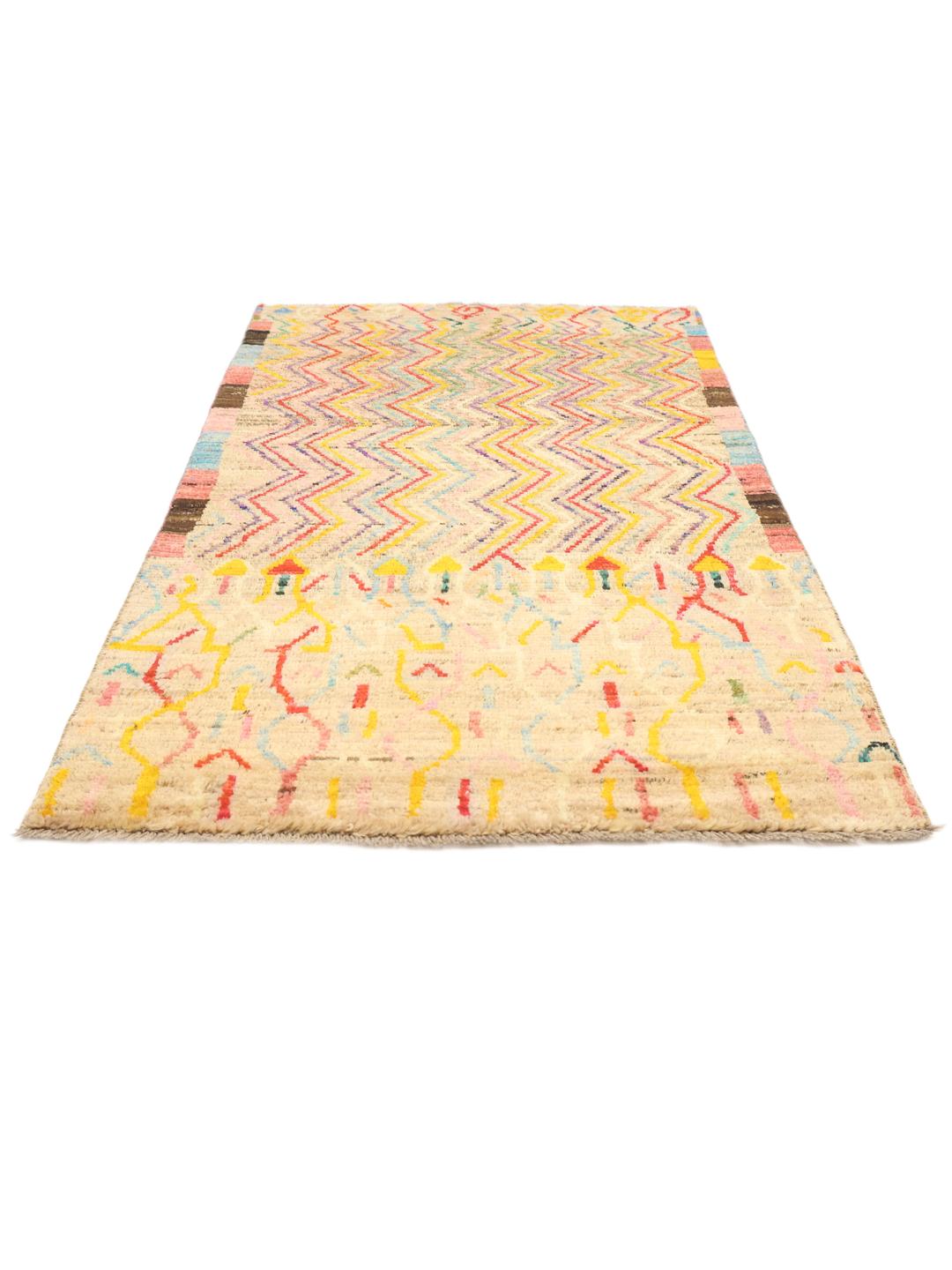
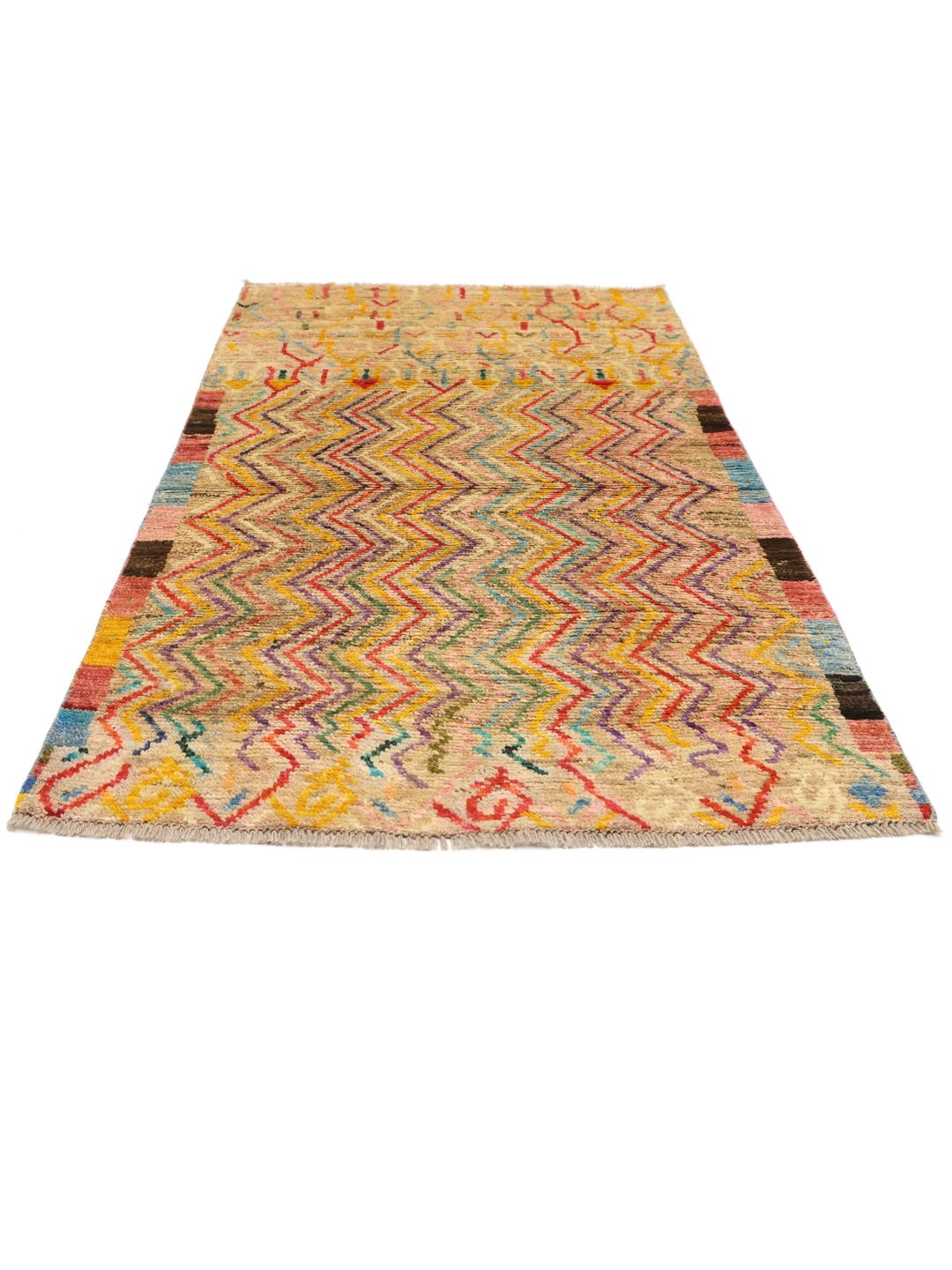
Visually, these rugs are celebrated for their bold, minimalist, and often abstract geometric motifs. Common designs include zig-zags, diamonds, and stylized tribal symbols that carry cultural meaning, often reflecting the surroundings or the personal history of the weaver. In this specific piece, the use of vibrant, multi-coloured lines against a neutral background is a classic approach that allows the artisan to express creativity while adhering to traditional design boundaries.
Collecting a hand-knotted Berber rug is an investment in cultural heritage and human skill. Because these pieces are made without the use of pre-set patterns, each rug is an authentic reflection of the weaver's intent and environment. Owning one is a way to preserve the legacy of traditional craftsmanship, bringing a piece of history and a genuine human touch into a contemporary home.