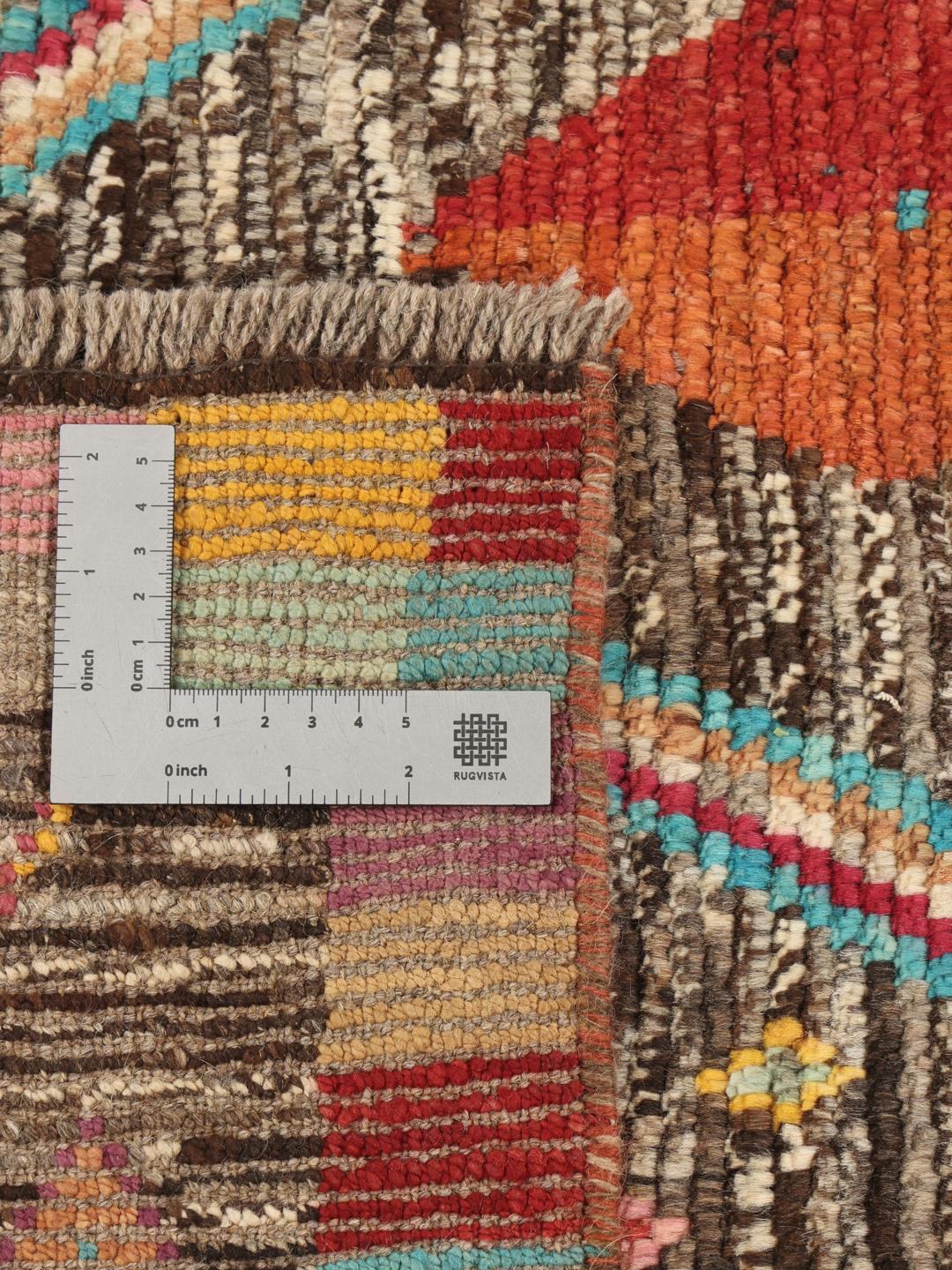
Berber rugs originate from the nomadic and semi-nomadic tribes of the Middle East and Central Asia. While the term is often associated with the Atlas Mountains, the tradition of weaving these thick, warm, and highly expressive rugs has travelled across regions, finding a deeply rooted home in the mountainous landscapes of Afghanistan. Here, the craft has evolved to incorporate local sensibilities while maintaining the ancient methods that define the Berber aesthetic.
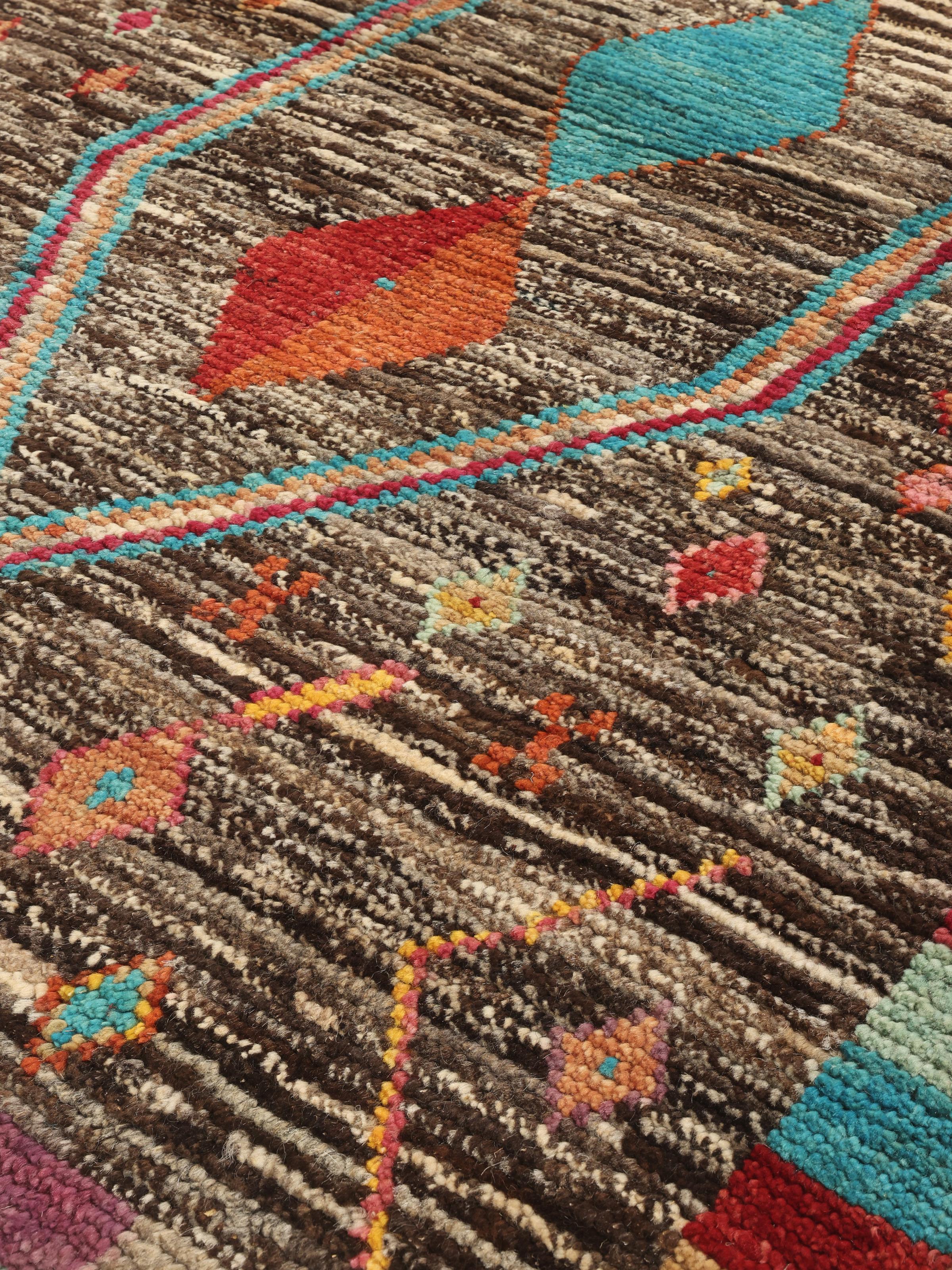
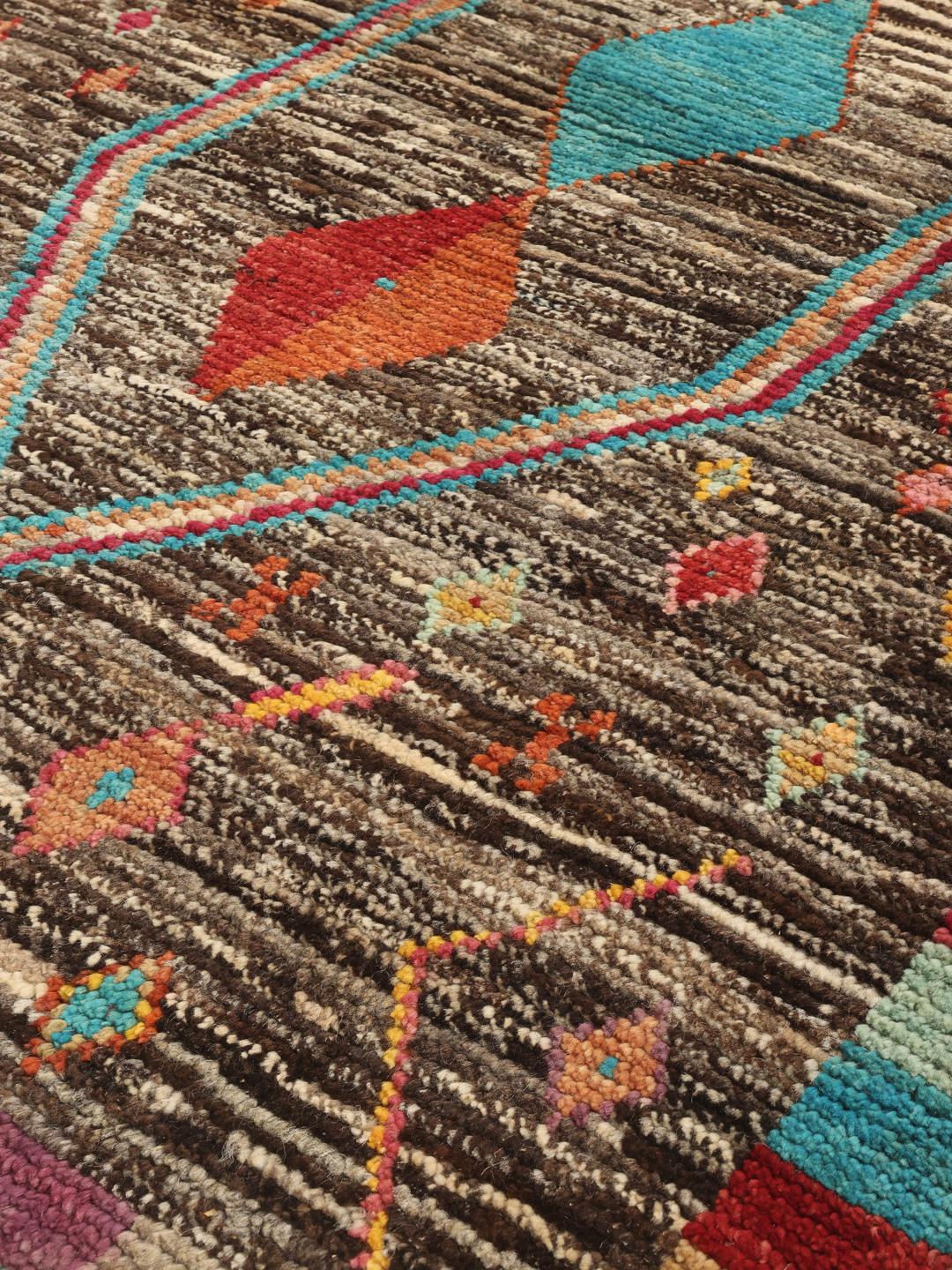
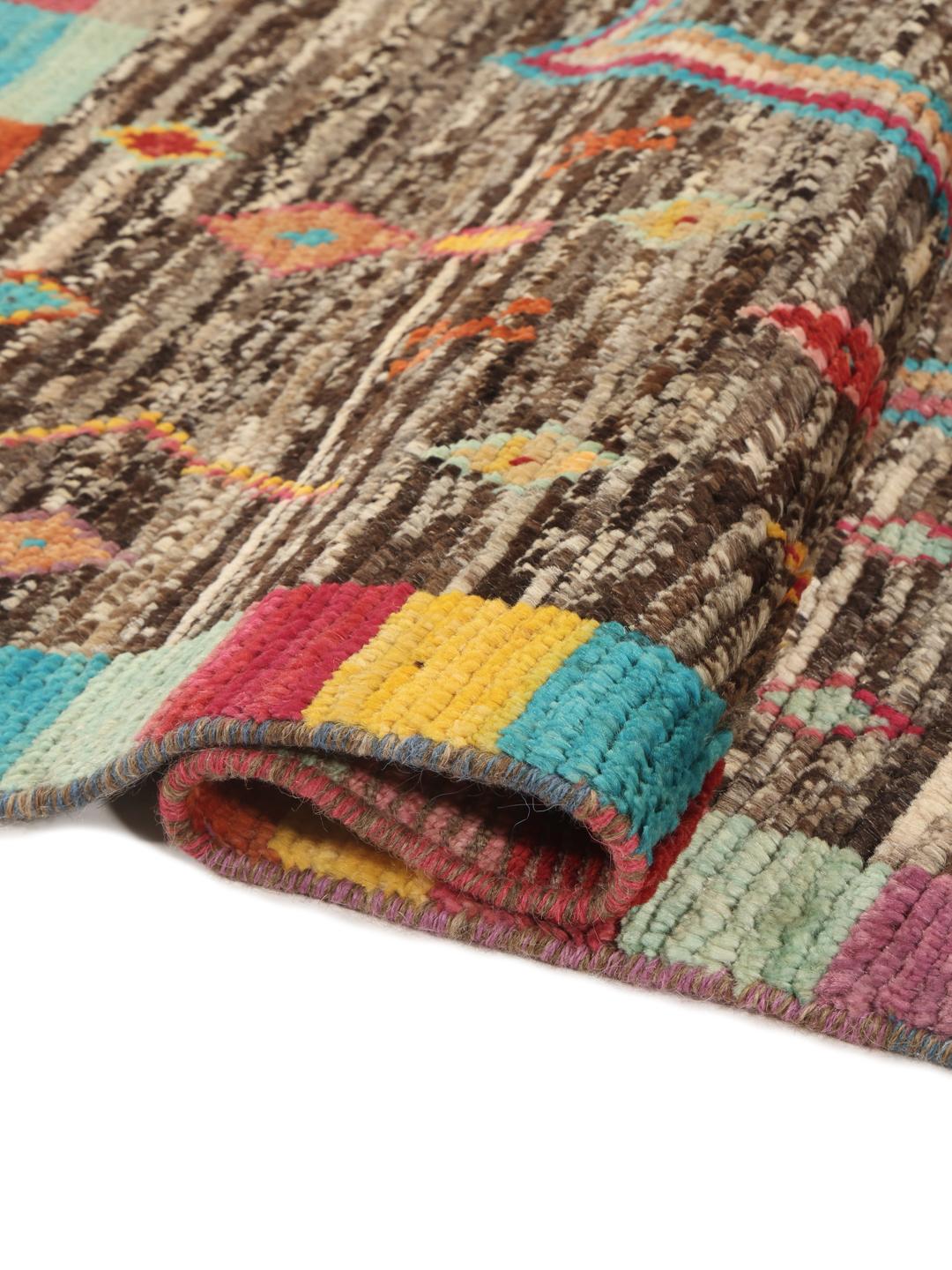
The term 'hand-knotted' refers to the traditional technique of tying individual knots of wool onto a warp and weft foundation. This is a labour-intensive process where the quality is directly proportional to the density of the knots. A higher knot density not only allows for more intricate and sharp patterns but also creates a denser, more luxurious pile that is highly resistant to wear and tear, ensuring the rug remains a beautiful fixture for generations.
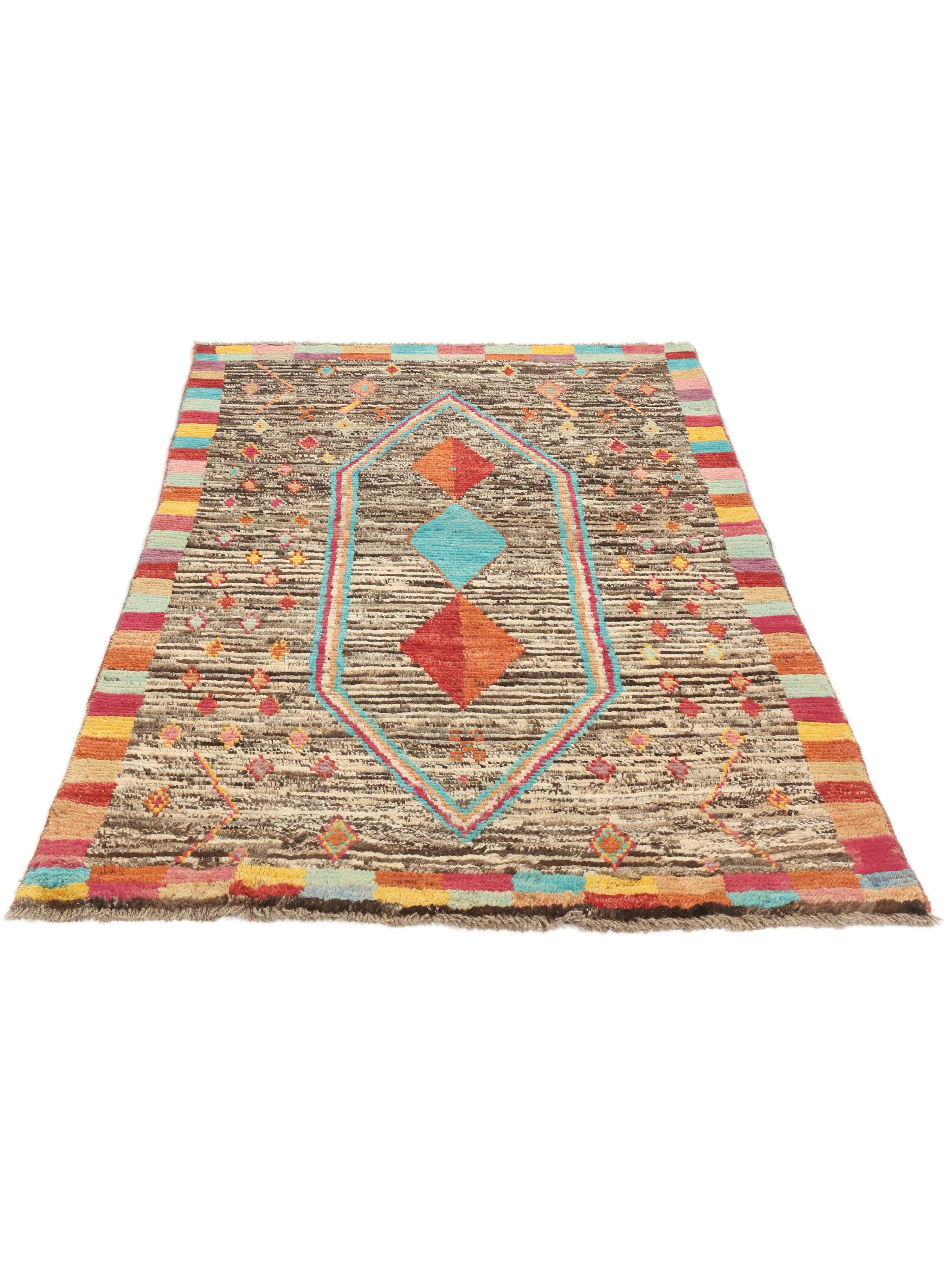
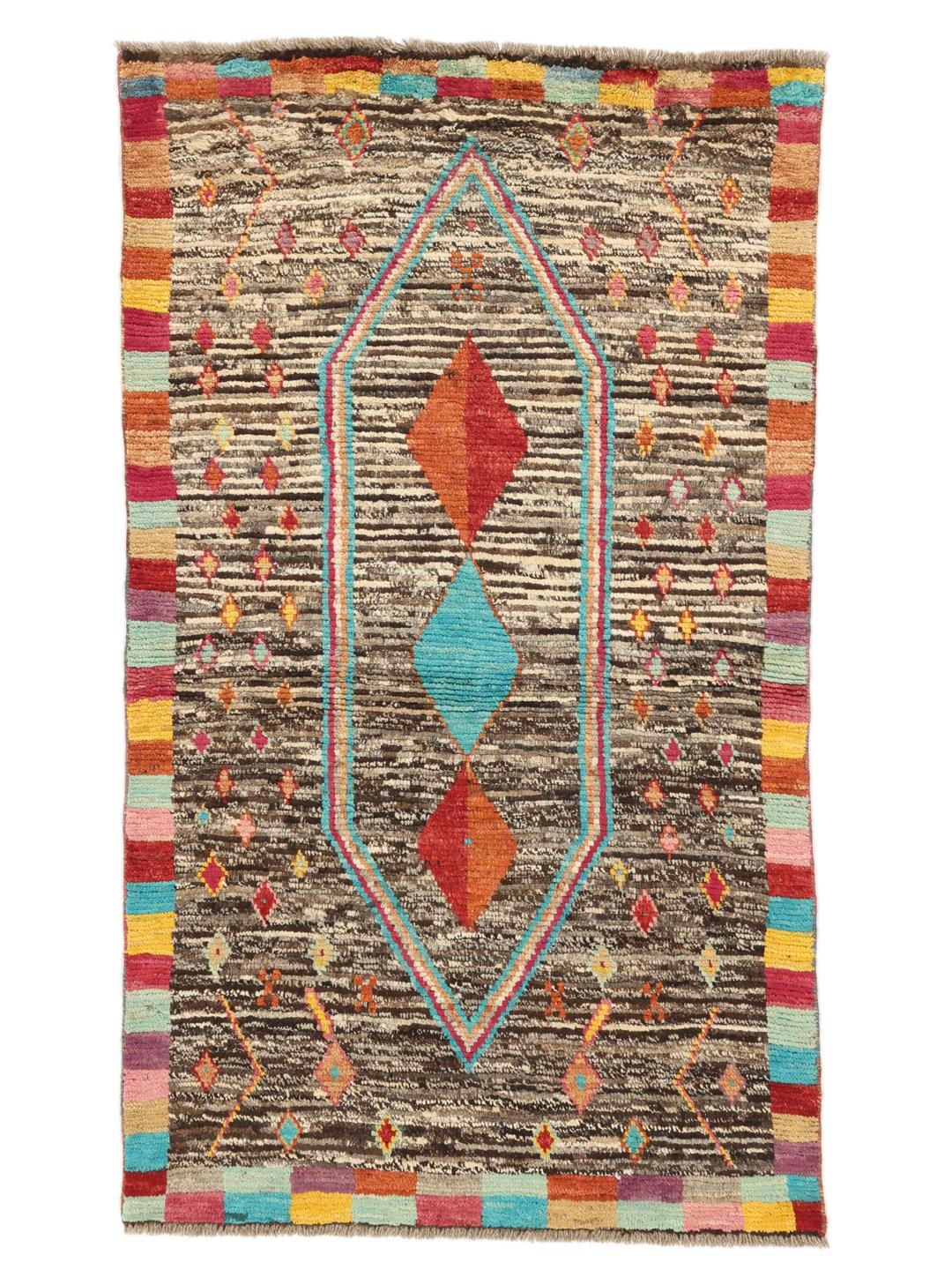
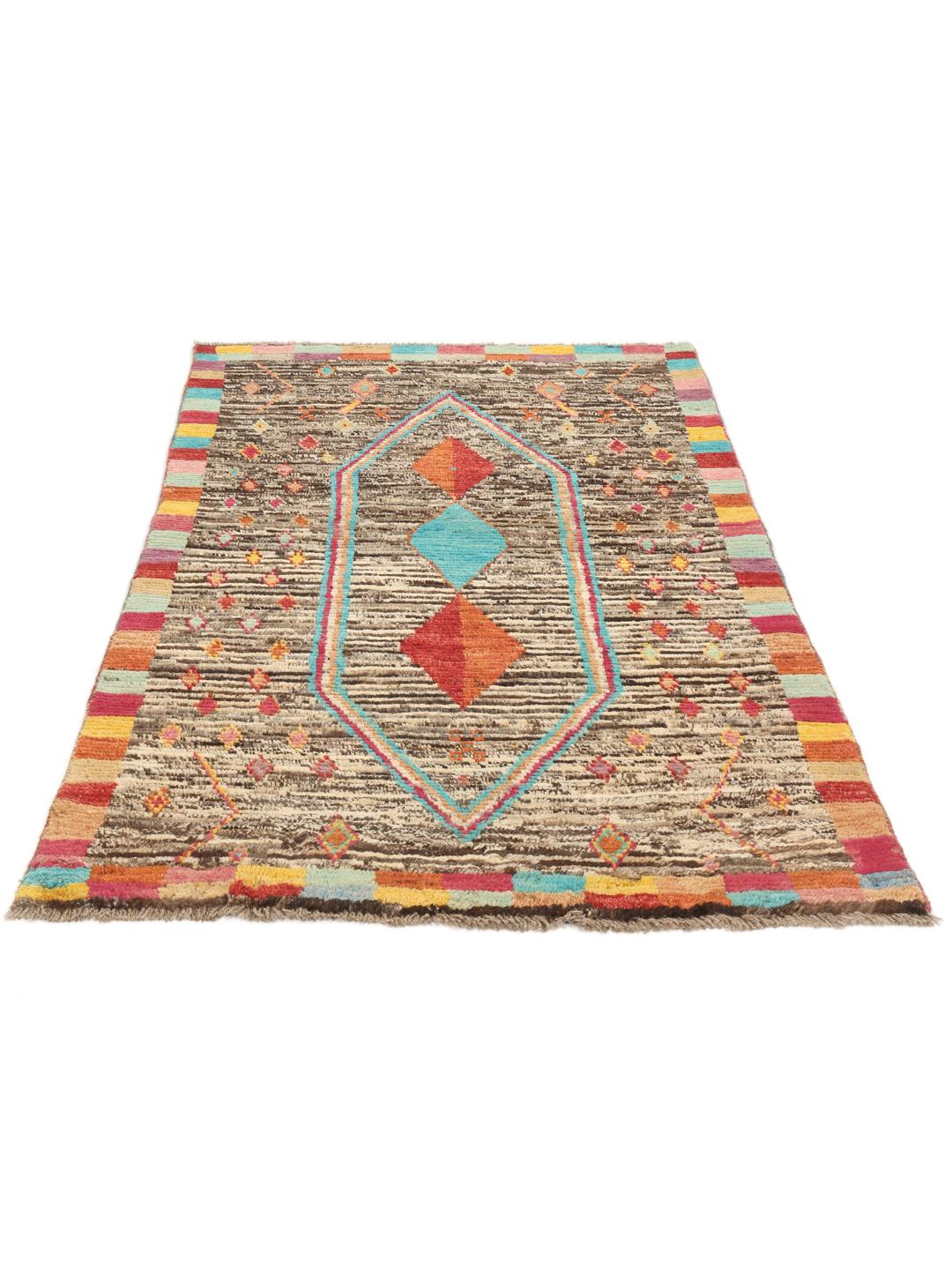
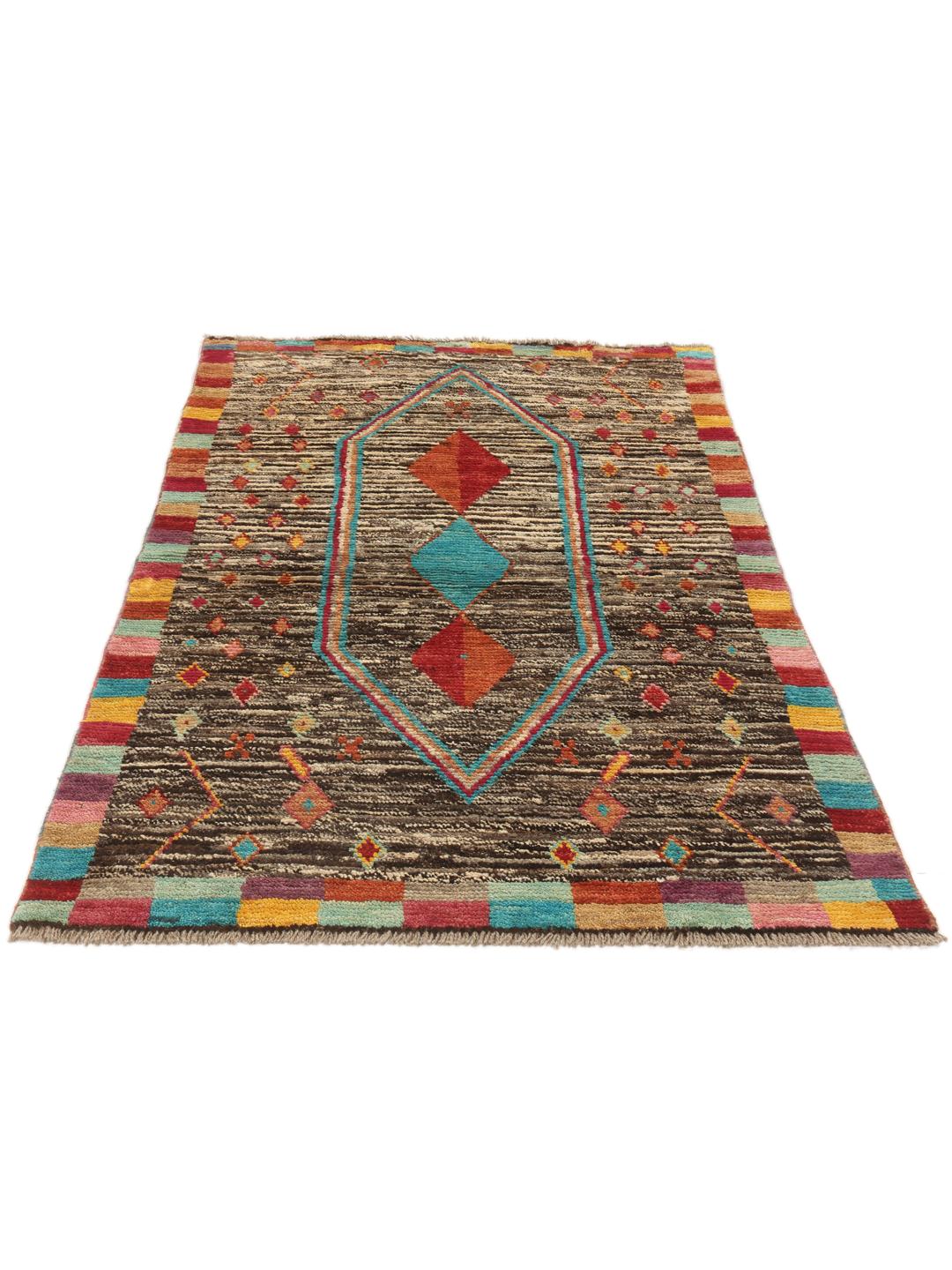
Signature design elements of these rugs often include geometric diamond motifs, which are thought to offer protection or symbolise life and fertility. The use of vibrant, contrasting colours set against a natural or dark field is a hallmark of this tradition. In this particular piece, the interplay between the deep, earthy tones of the field and the bright, saturated accents in the borders creates a sophisticated balance that is both tribal and timeless.
Owning a hand-knotted Berber rug is an invitation to connect with a legacy of artistry and skill. These rugs are highly valued by collectors not just for their aesthetic appeal, but for the human story woven into every thread. They represent a commitment to slow, intentional production, offering a sense of heritage and lasting quality that brings a grounded, authentic energy to any modern living space.