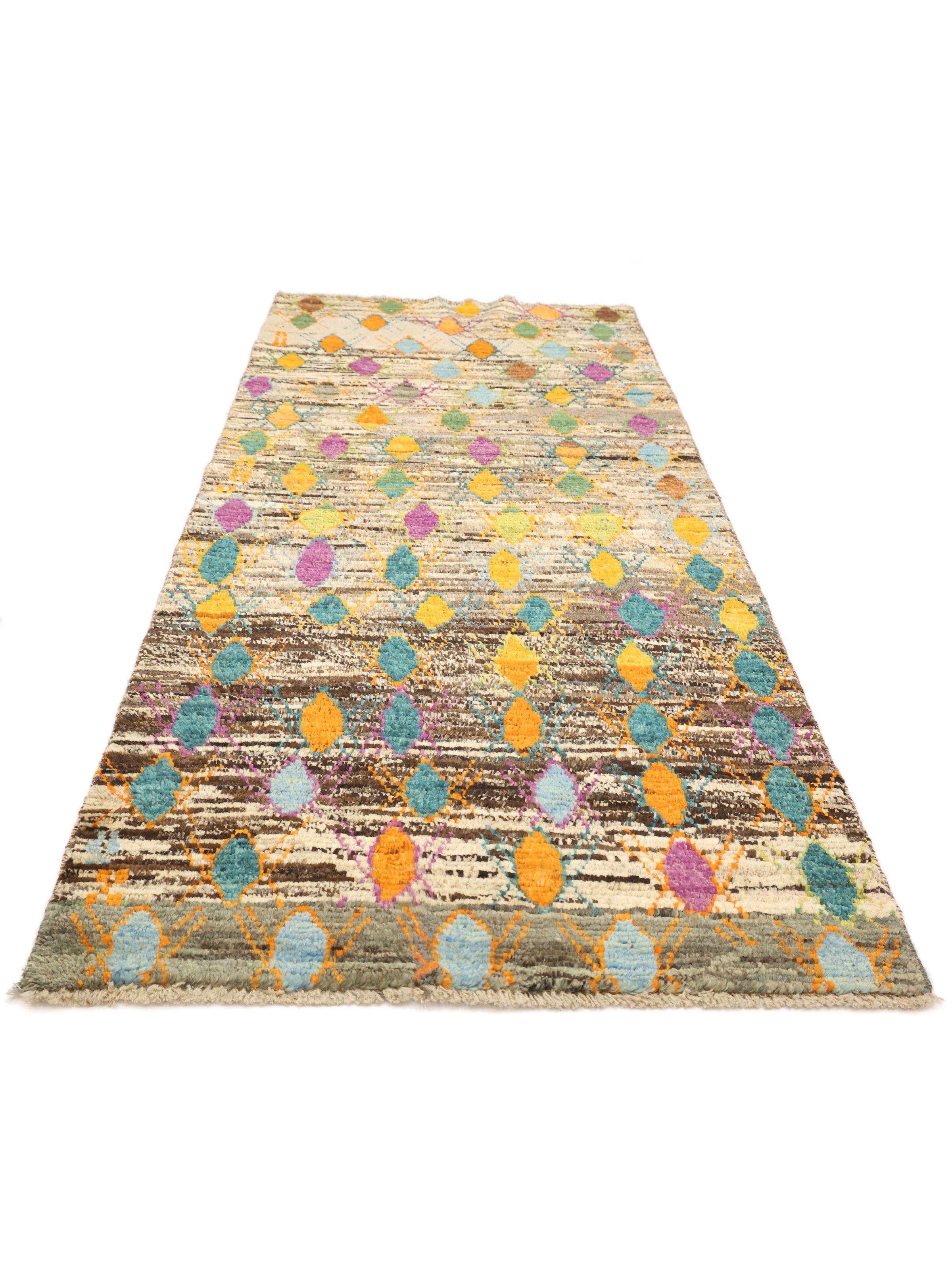
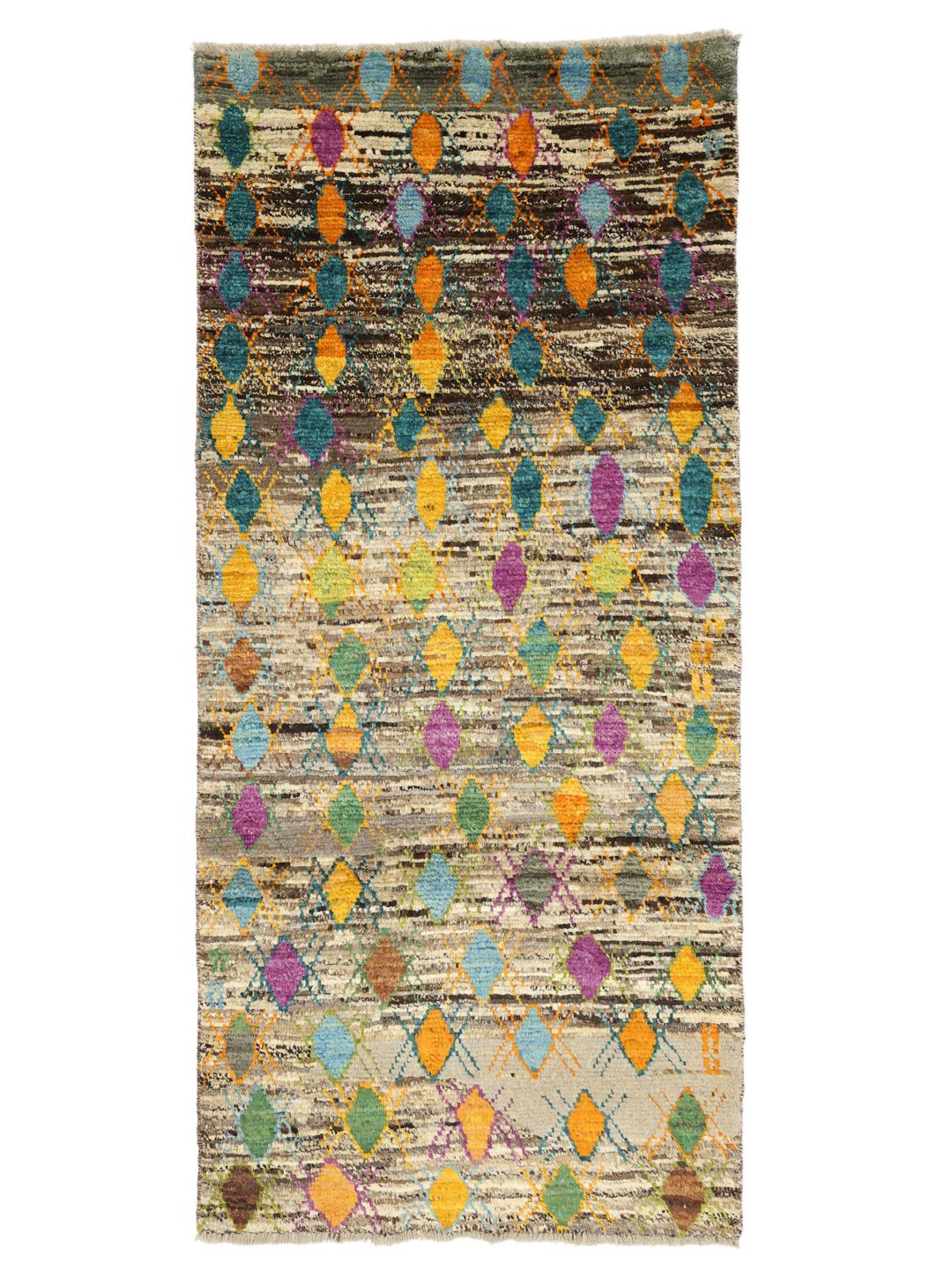
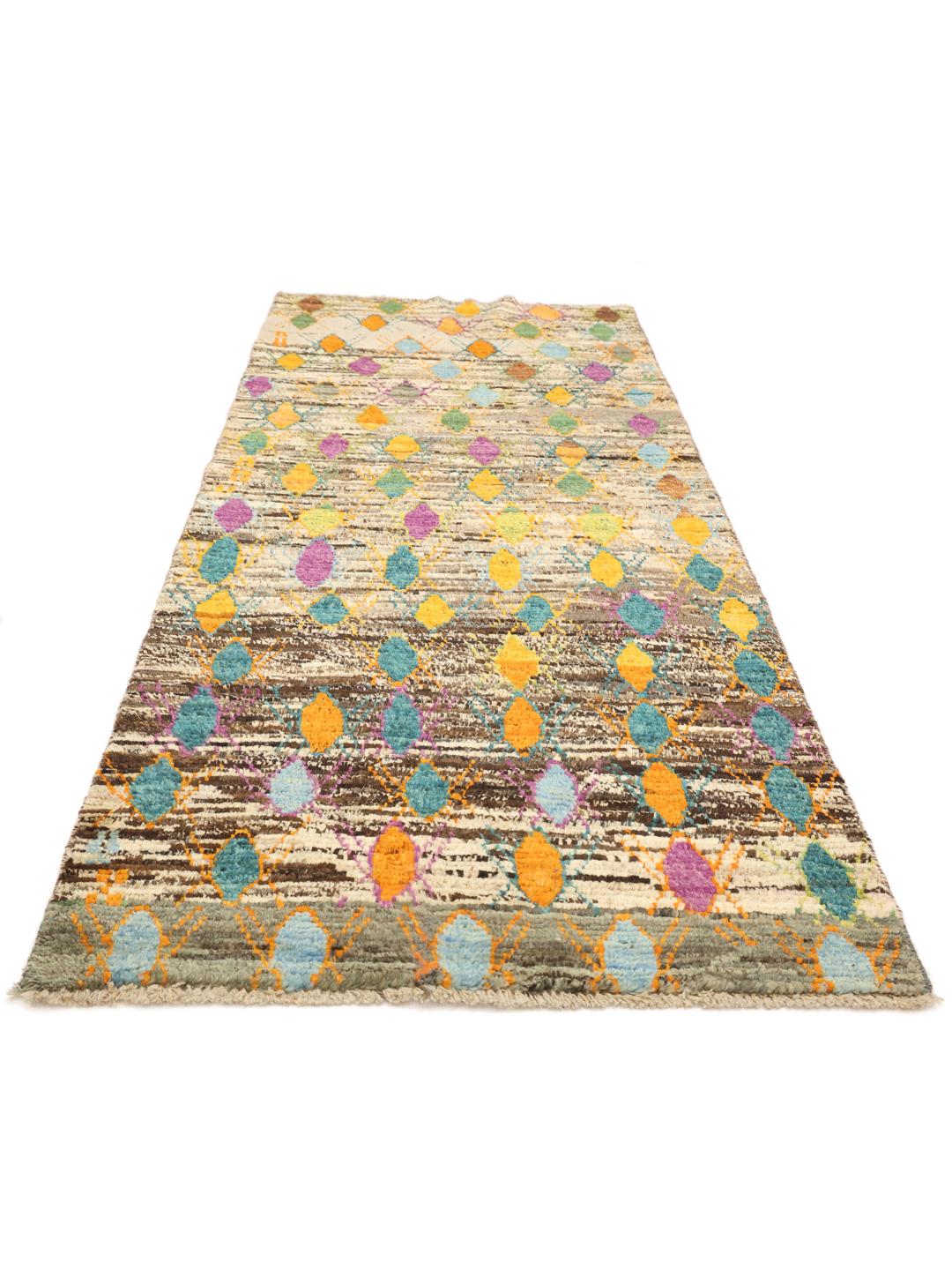
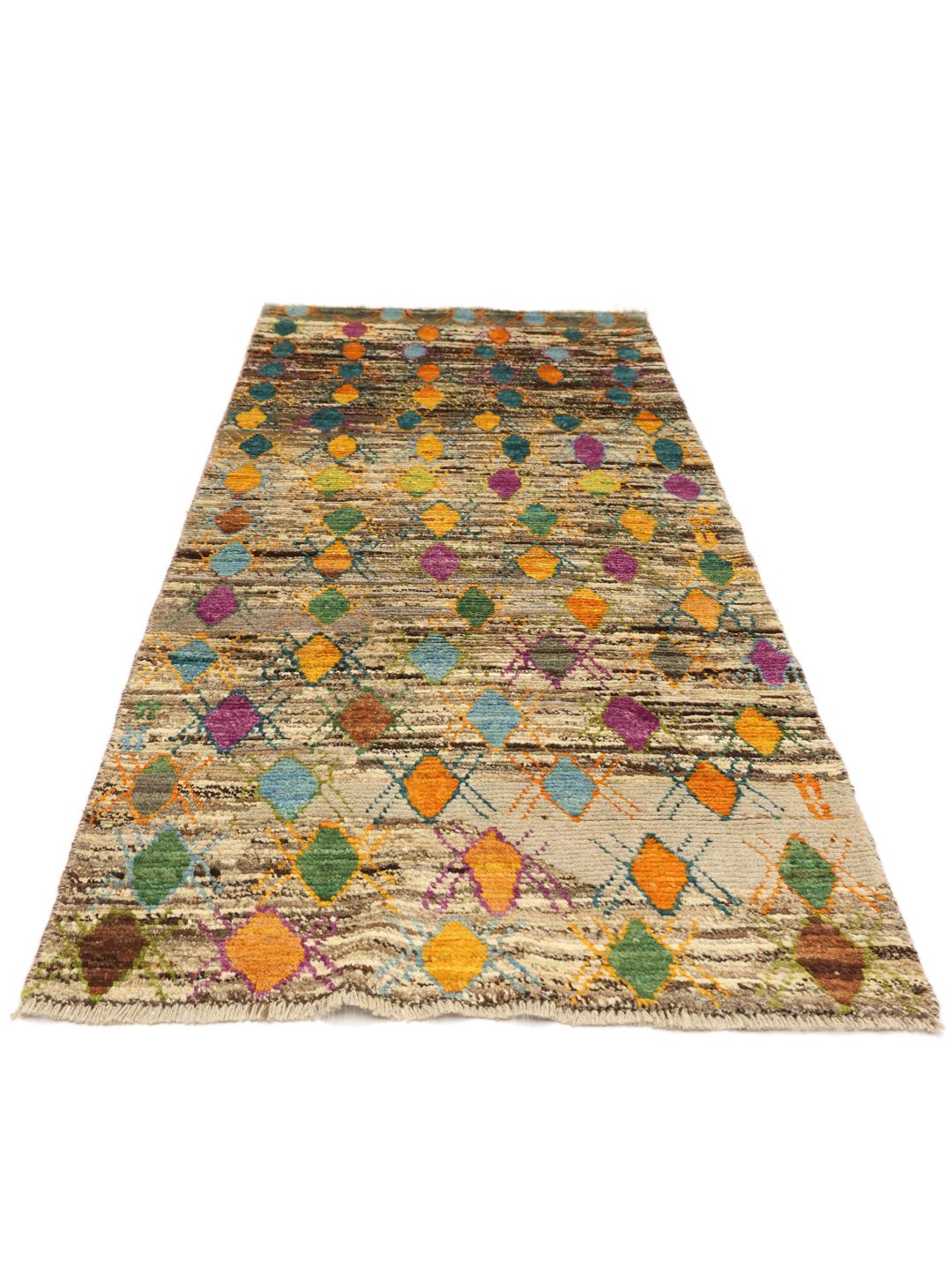
The Berber style, while traditionally associated with the nomadic tribes of North Africa, has evolved into a global design language that emphasises natural textures and expressive, geometric motifs. In recent decades, master weavers in the Middle East have embraced this tradition, infusing it with their own regional expertise and vibrant colour palettes to create rugs that bridge the gap between ancient heritage and contemporary interior design.
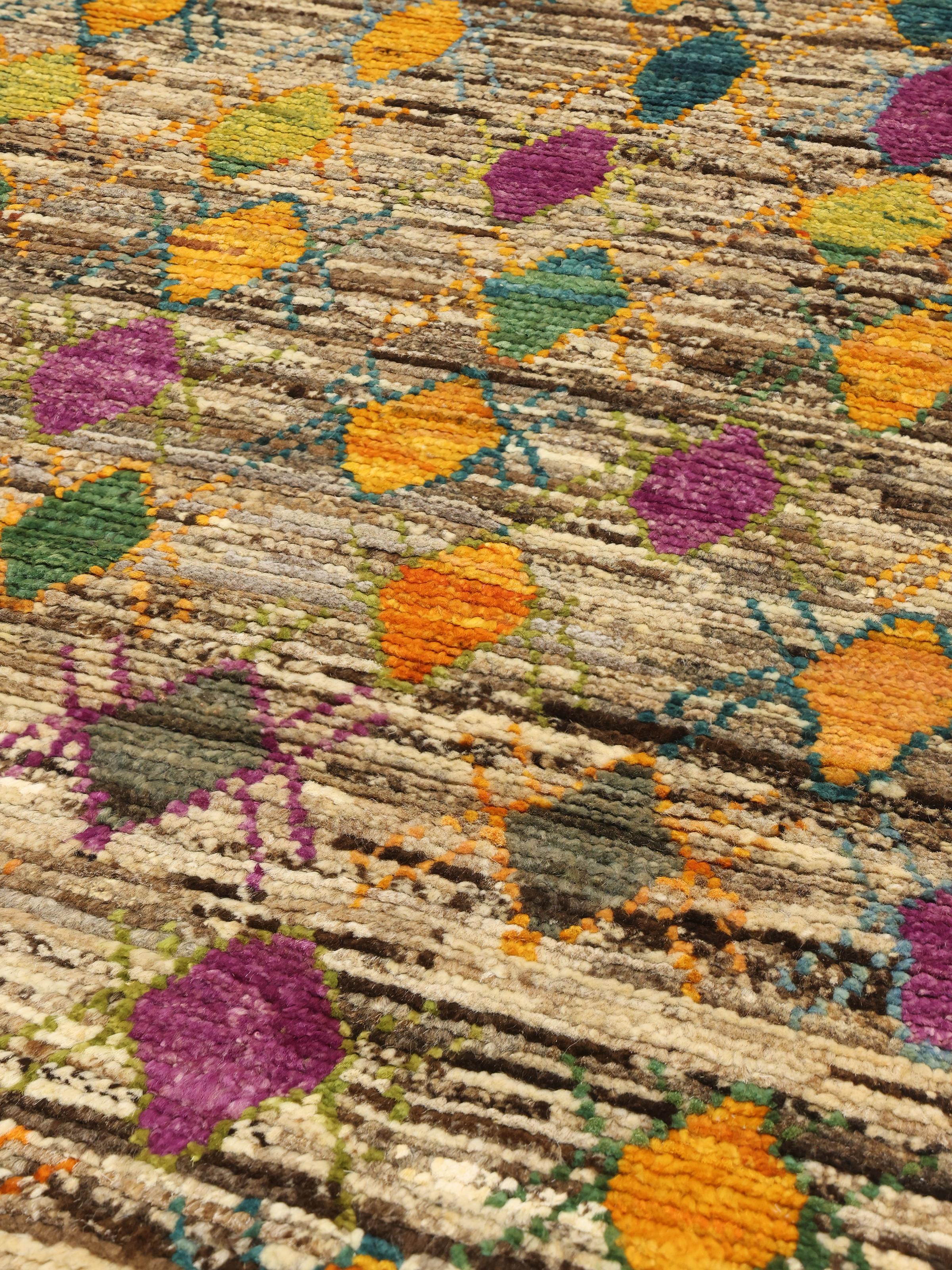
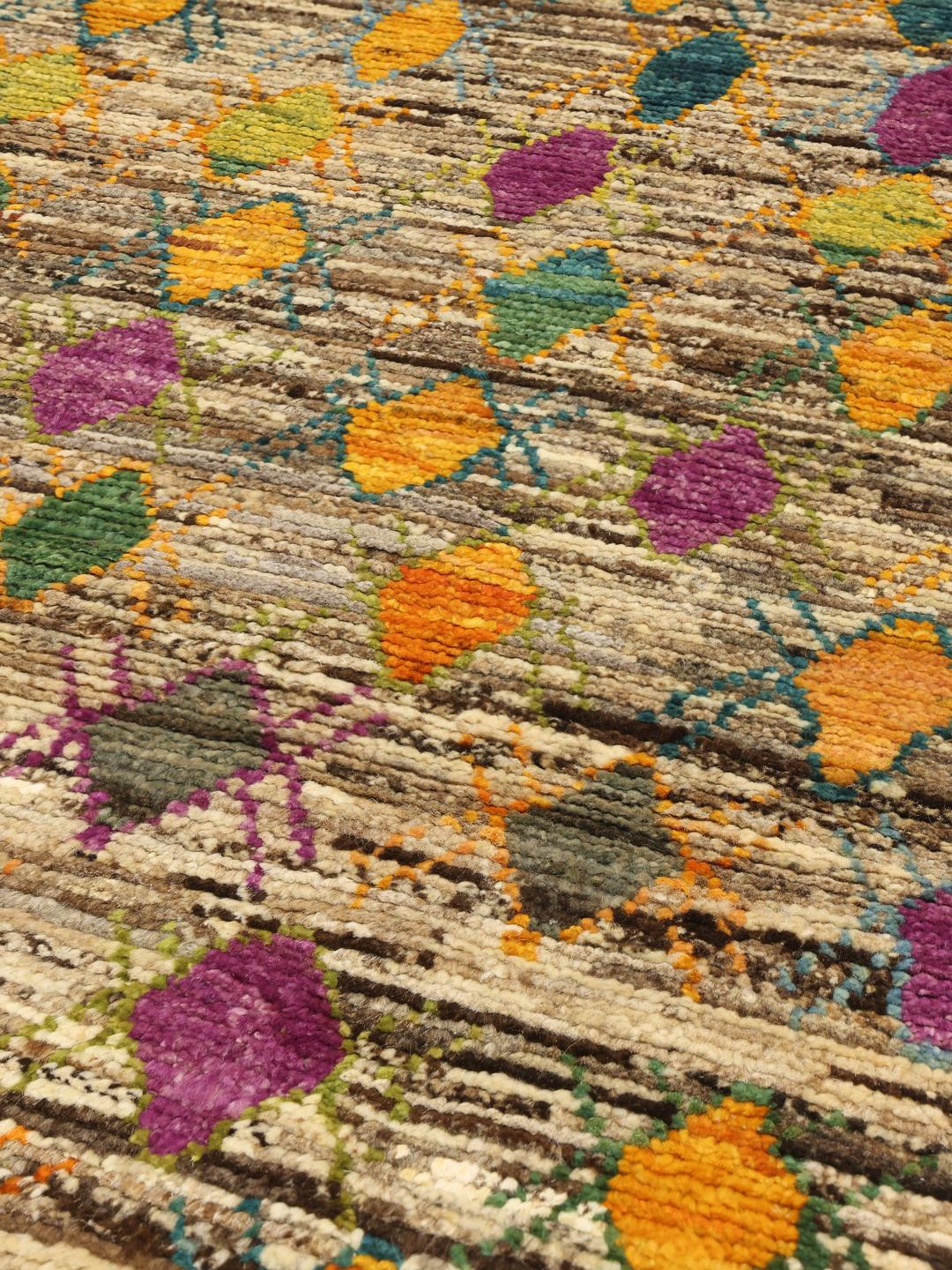
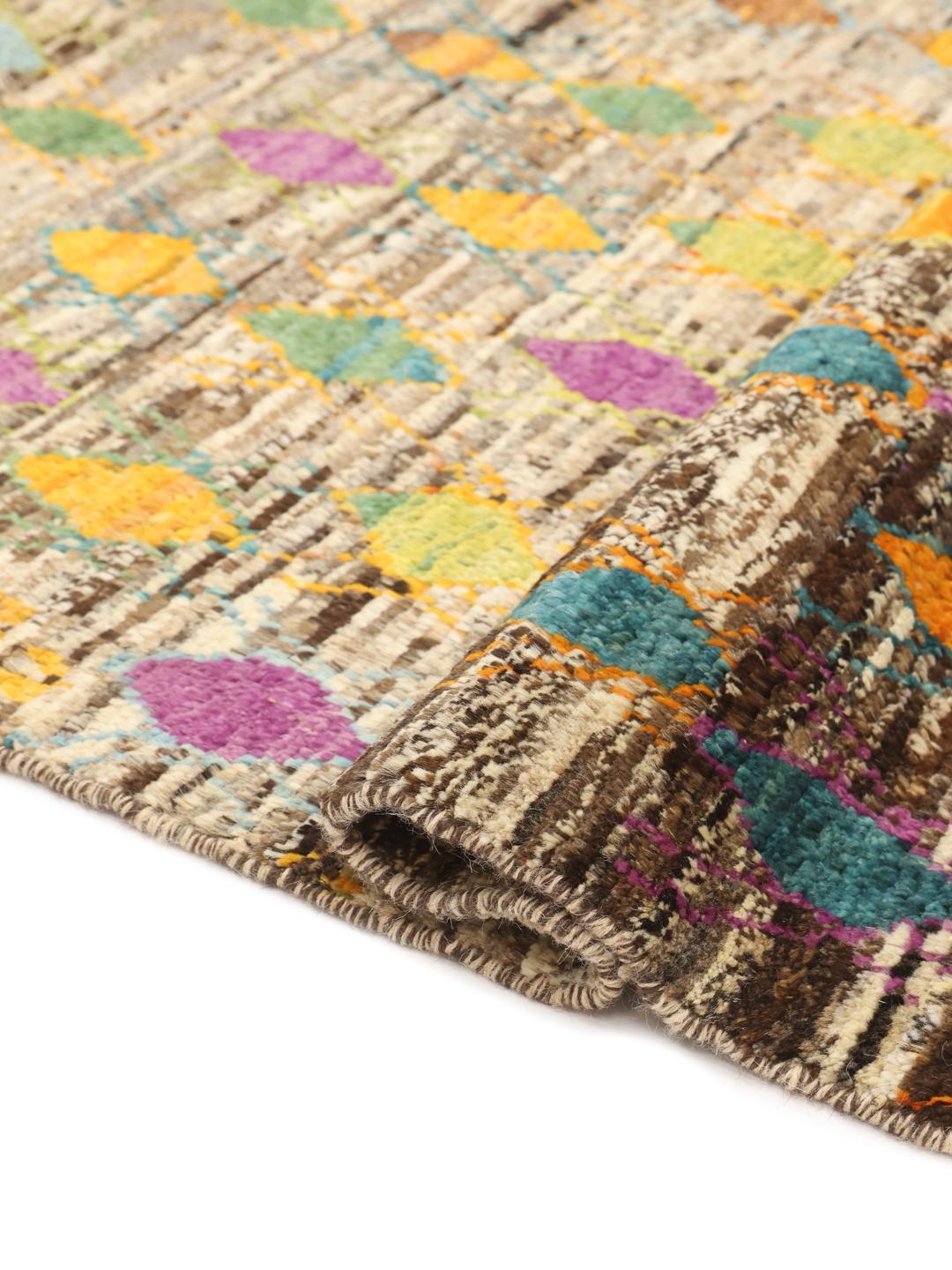
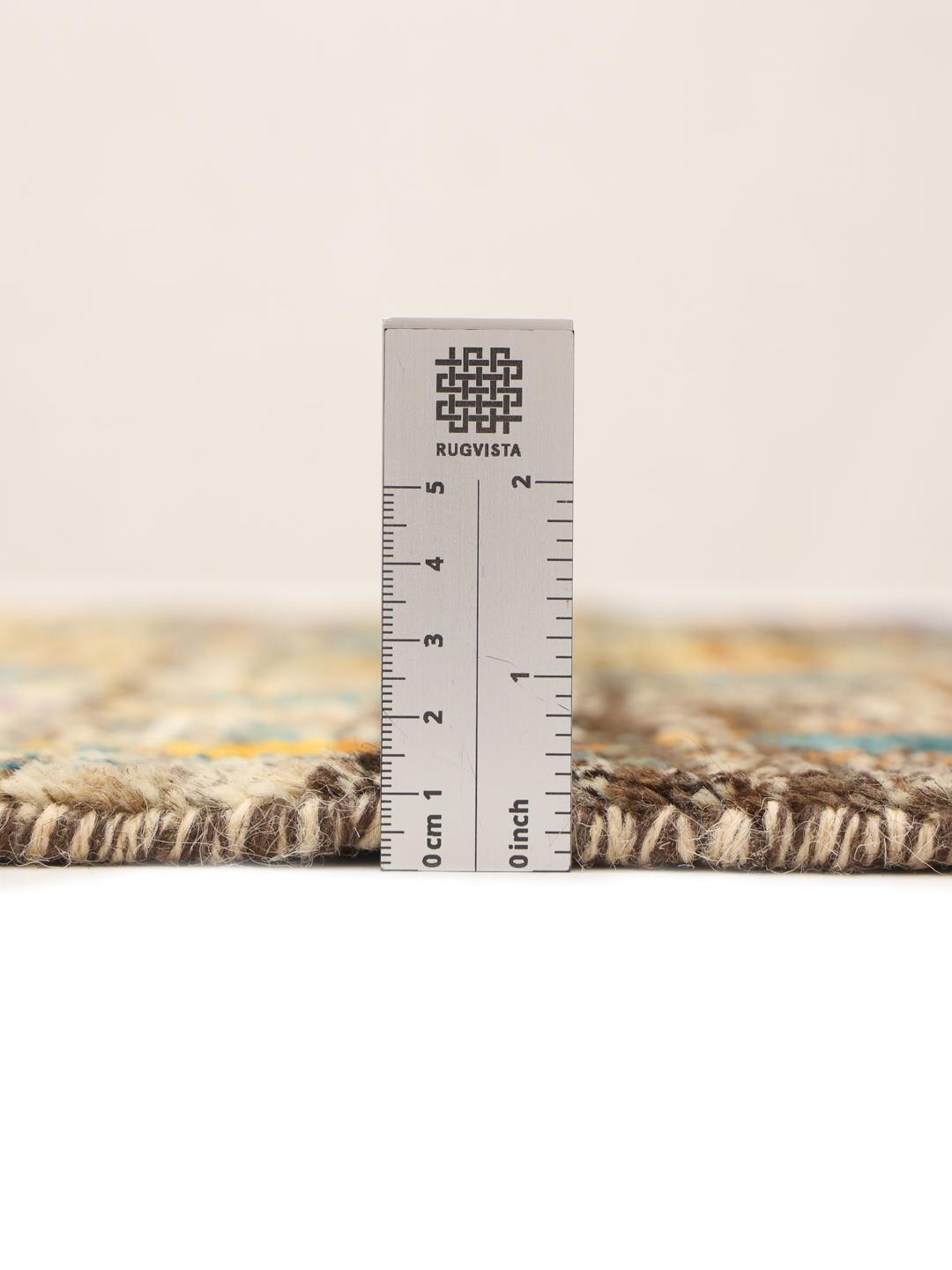
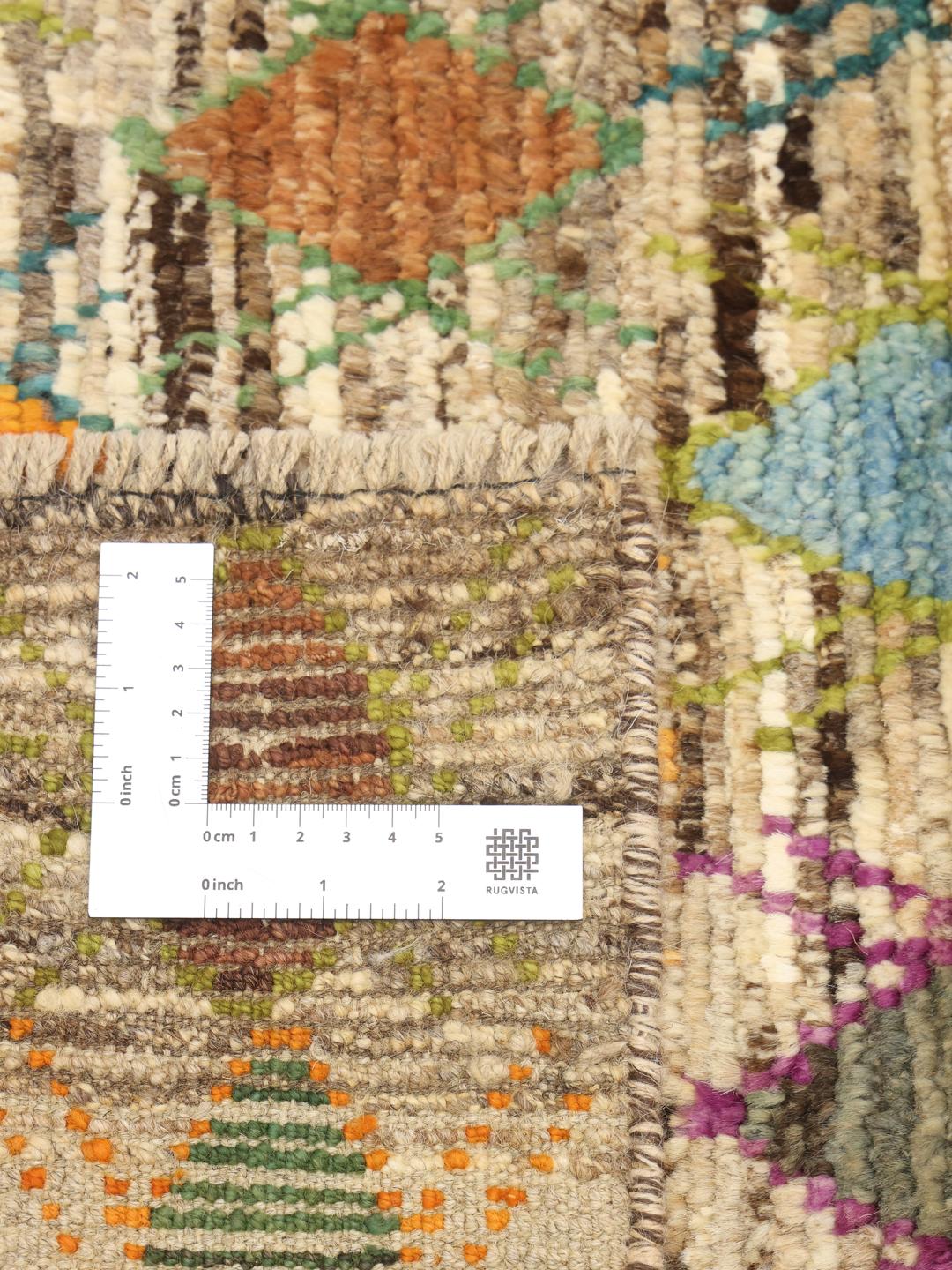
The term hand-knotted refers to the most traditional and labour-intensive method of rug making, where individual strands of Wool are tied onto a foundation to create the pile. This method is highly valued because it allows for intricate detailing and a level of durability that machine-made alternatives simply cannot achieve. The resulting pile is not only visually rich but also physically robust, designed to last for generations.
The diamond motif seen here is a classic element in tribal textile design, often used as a symbol of protection or as a representation of the natural world. In this particular runner, the use of bright, contrasting colours against a dark, textured field creates a dynamic visual rhythm. This creative departure from more muted, traditional palettes makes the rug a standout piece that feels both grounded in history and fresh for today's homes.
Collecting hand-knotted rugs is a way of preserving and honouring a craft that has been passed down through centuries. Each rug serves as a document of the maker's skill and the cultural influences of their region. By choosing this piece, you are supporting a legacy of artistry and bringing a genuine, human-made object into your home that carries a unique story and cultural weight.