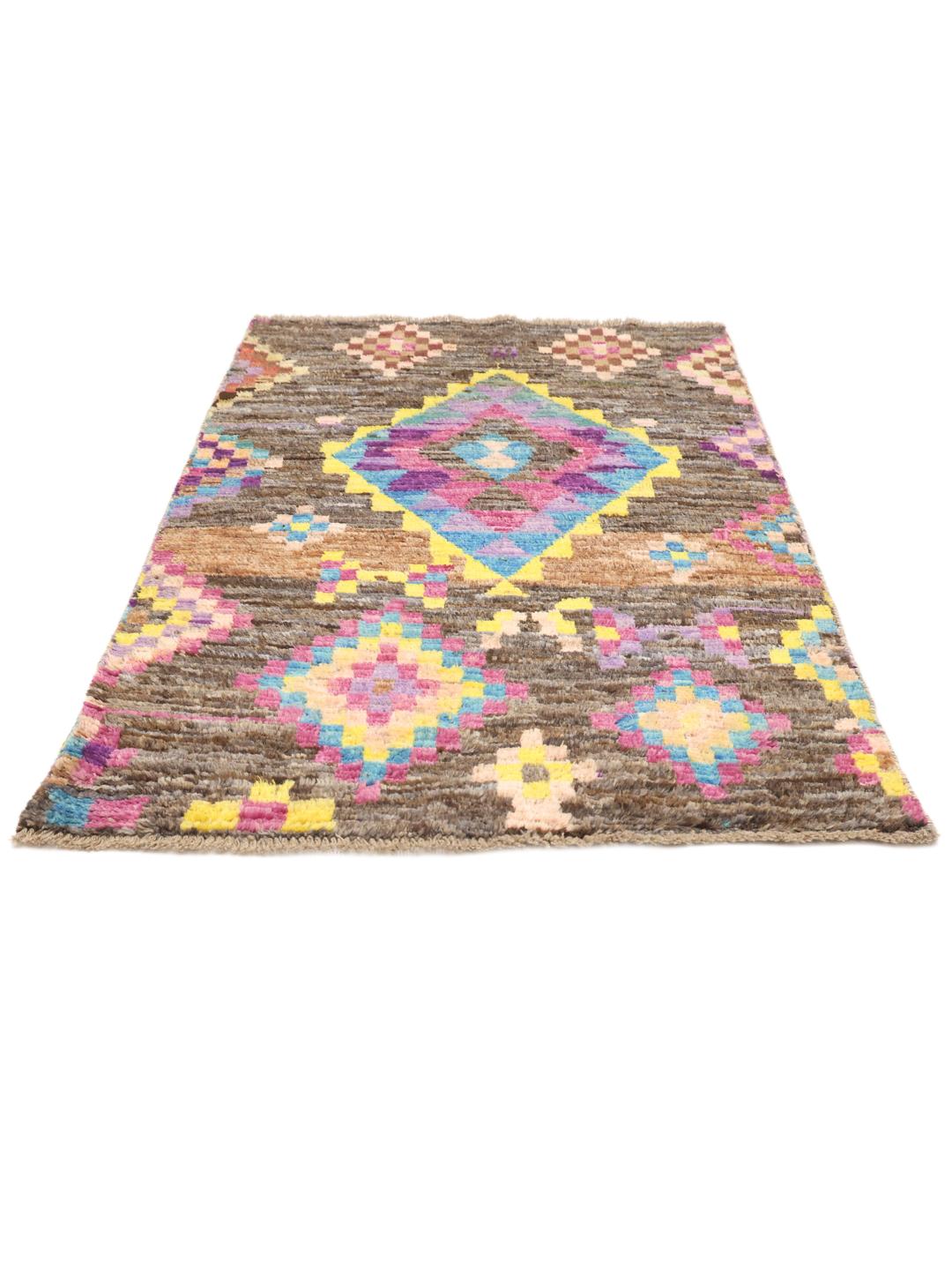
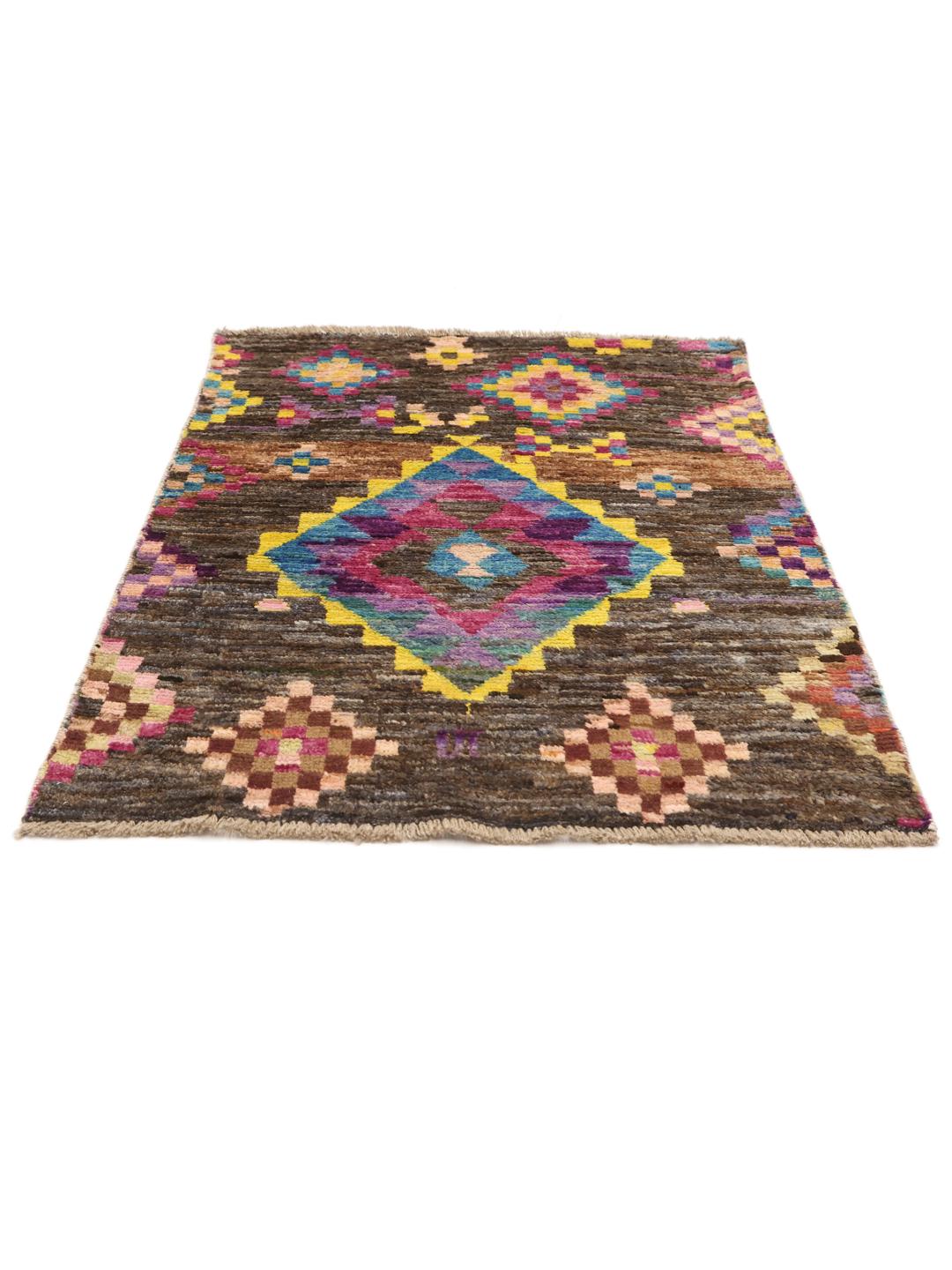
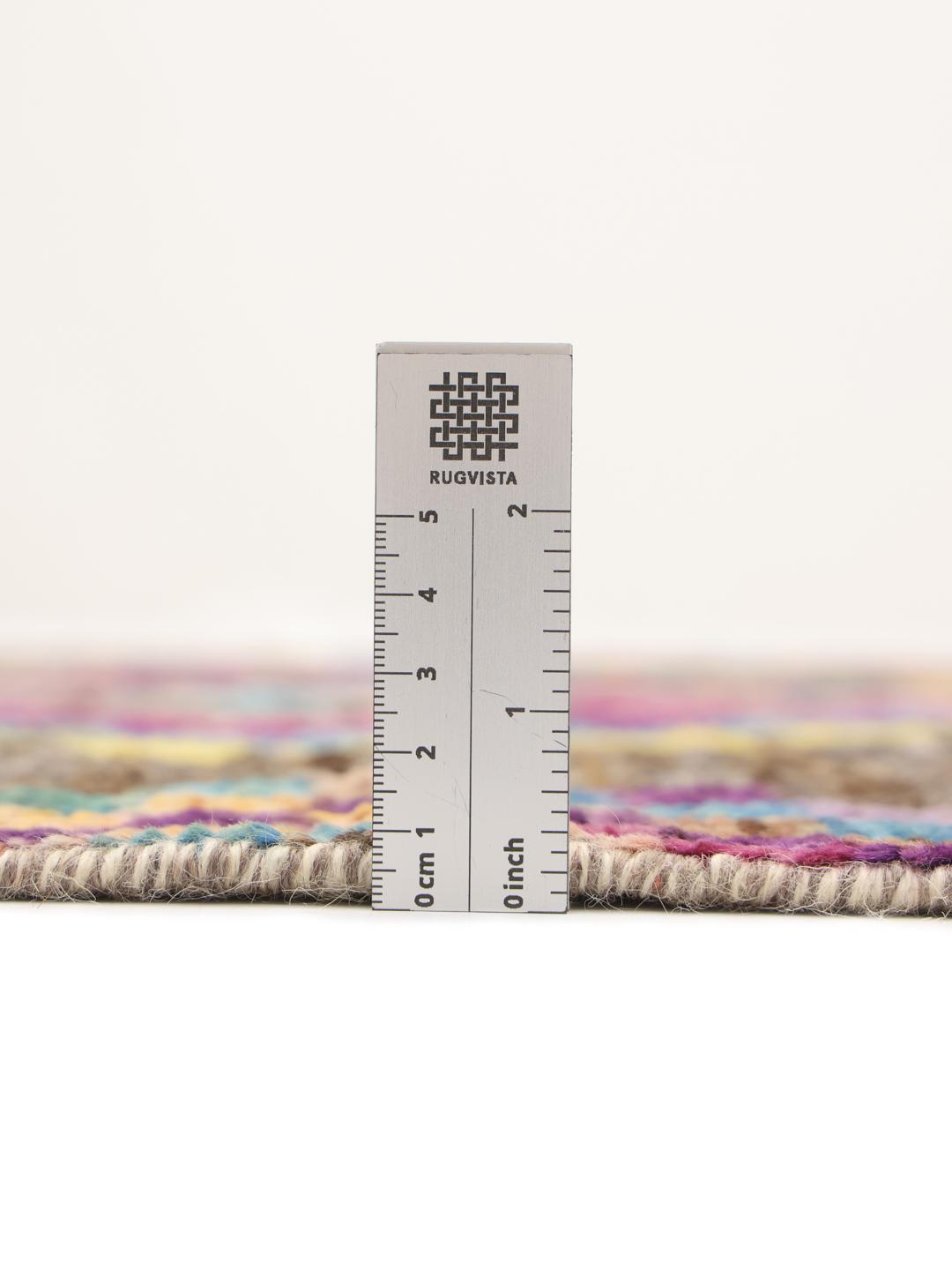
Berber-style rugs are deeply rooted in the cultural heritage of nomadic and semi-nomadic tribes, traditionally known for their resilience and artistic expression. While the term Berber is most famously associated with North Africa, the tradition of weaving rugs with these distinctive, bold geometric motifs has found a vibrant second home in Afghanistan. Here, local weavers have adapted these ancestral designs, infusing them with their own regional techniques and cultural narratives to create a style that is both familiar and distinctly Afghan.
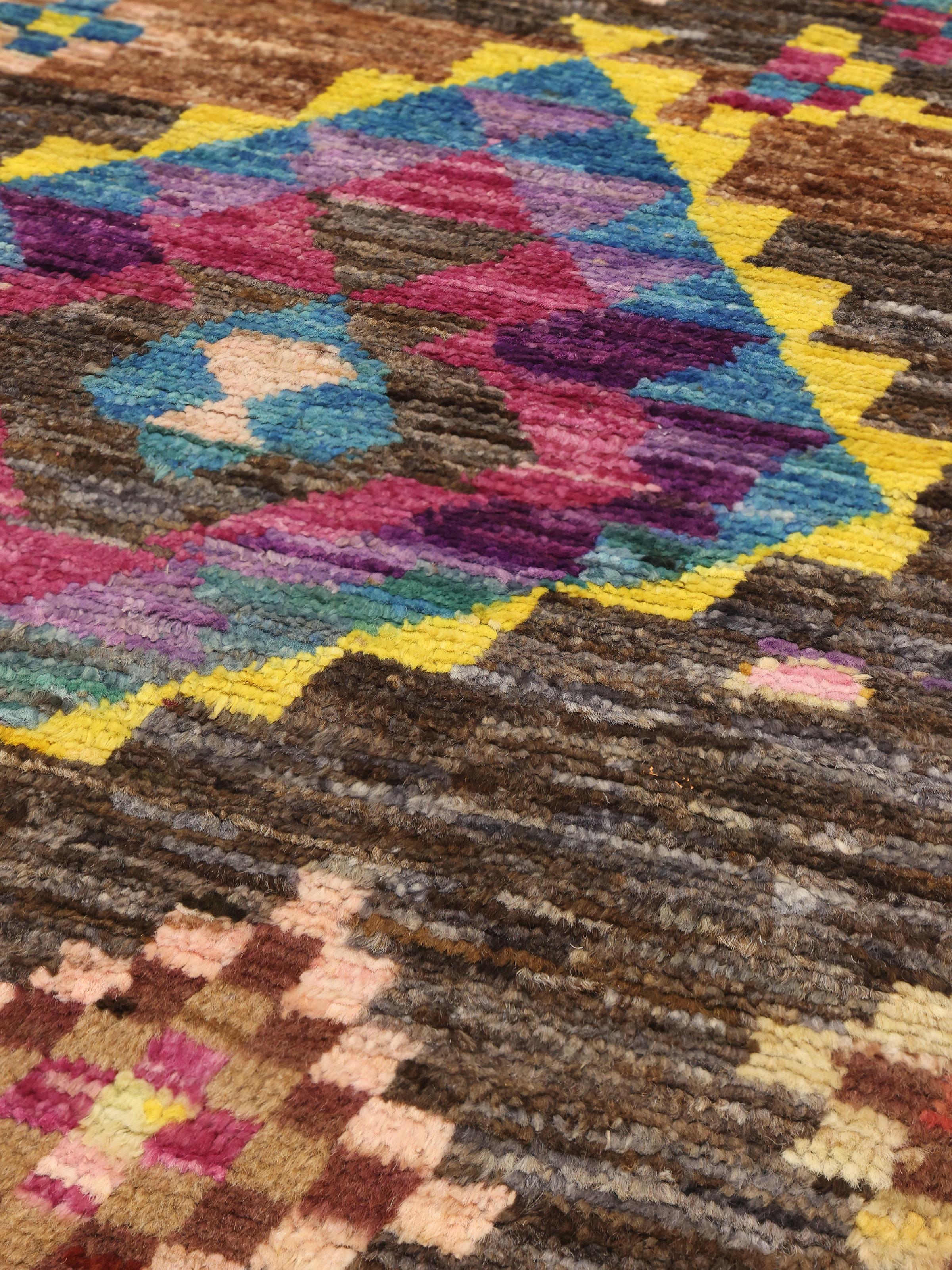
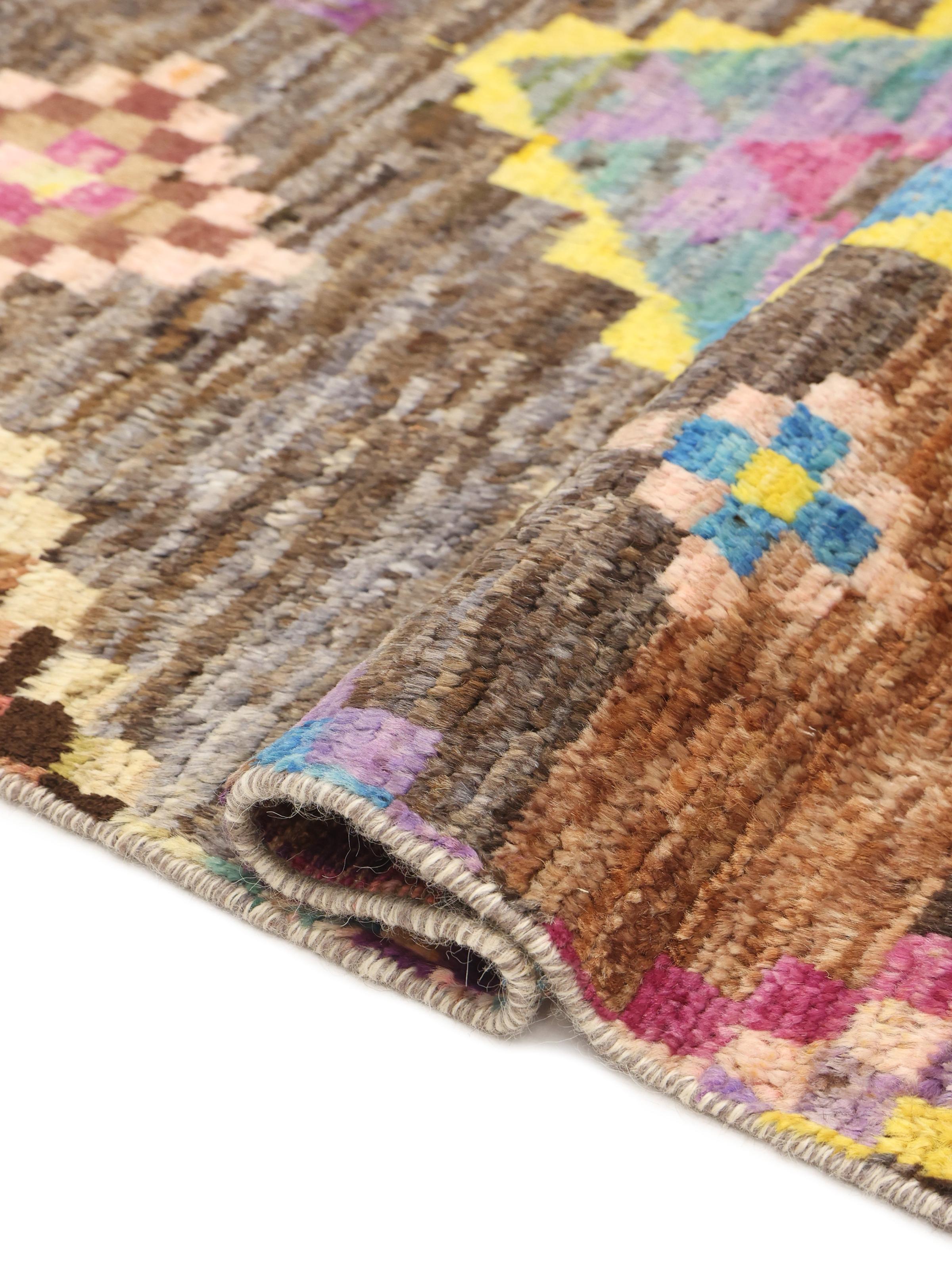
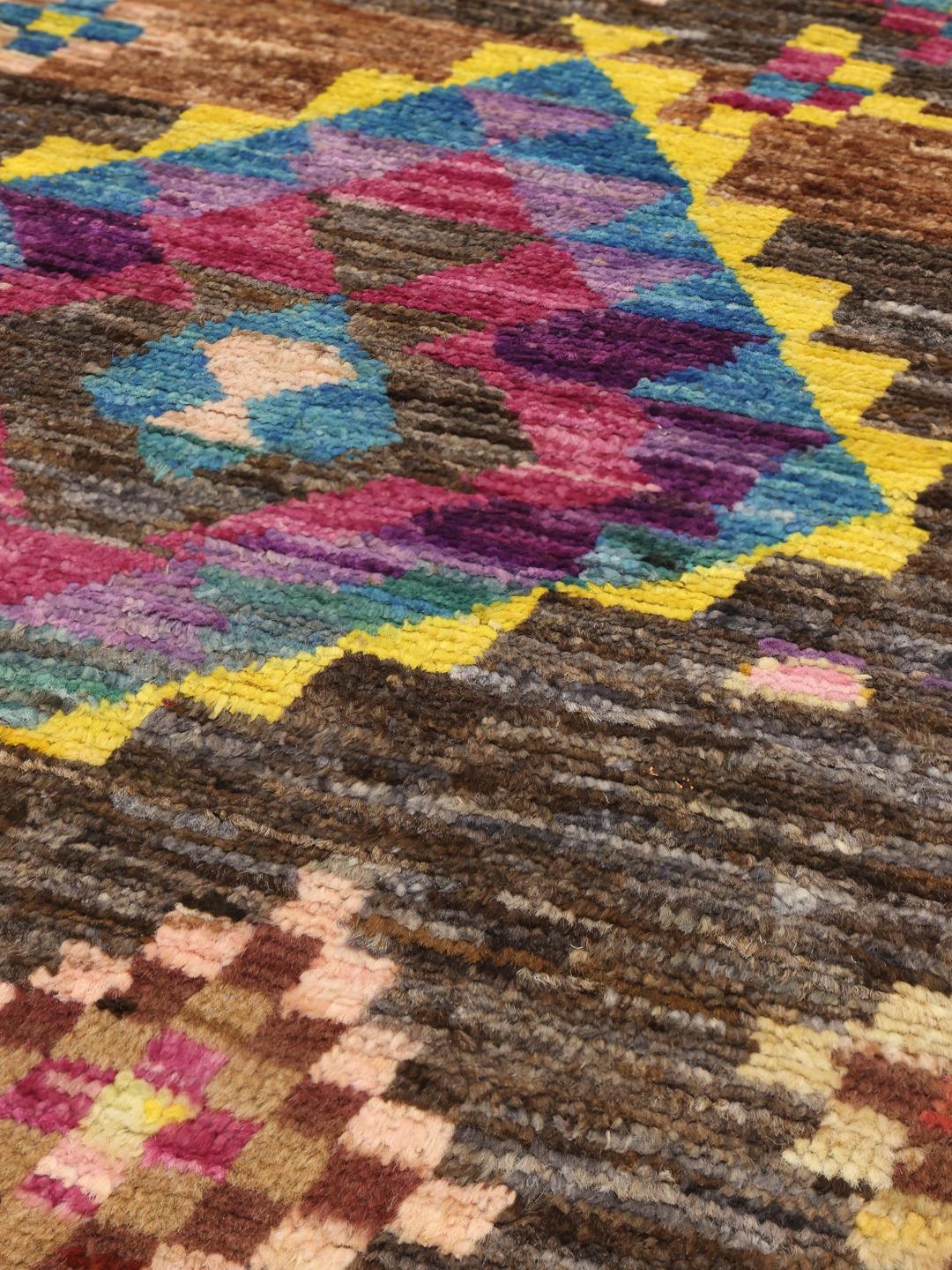
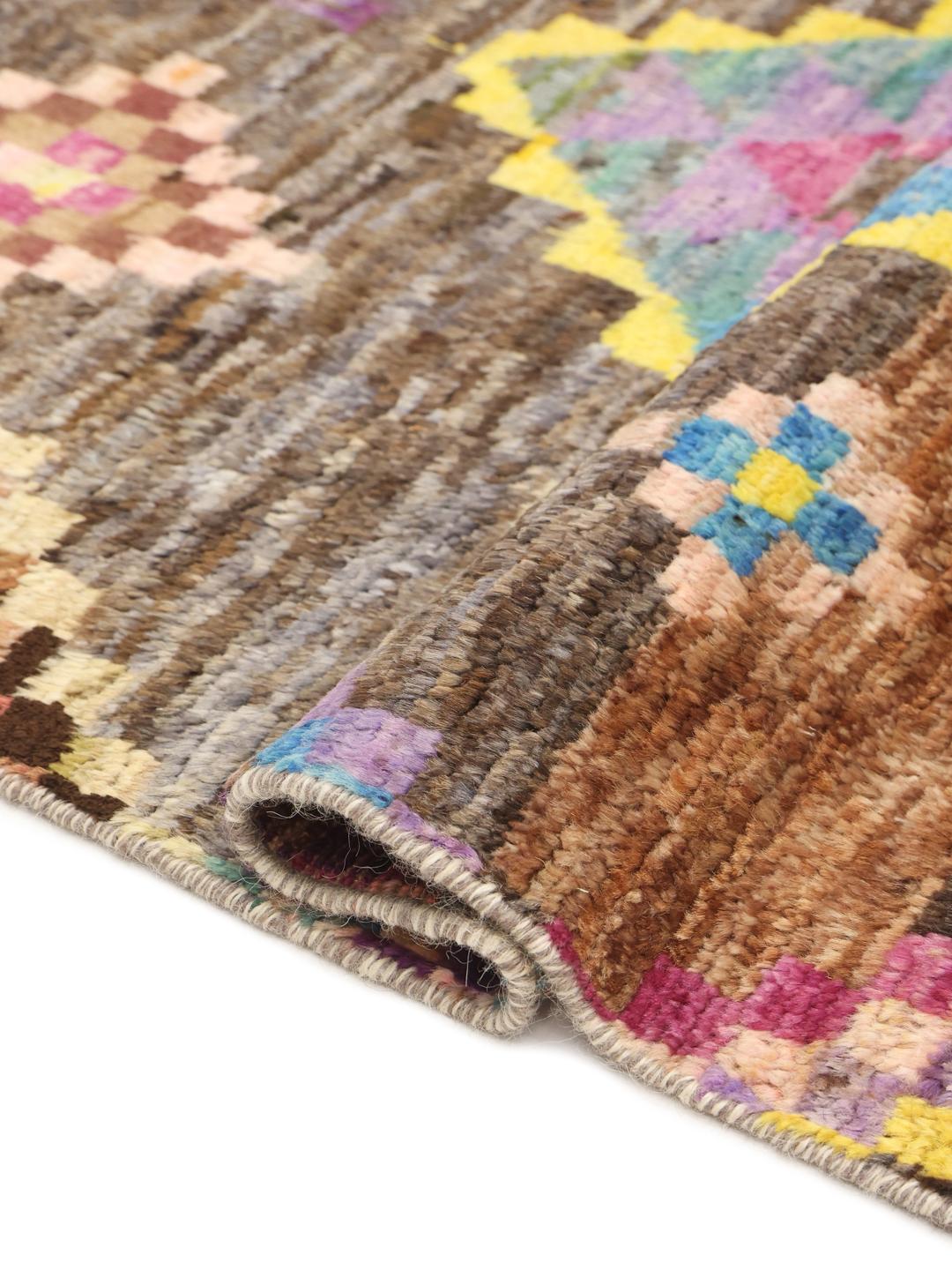
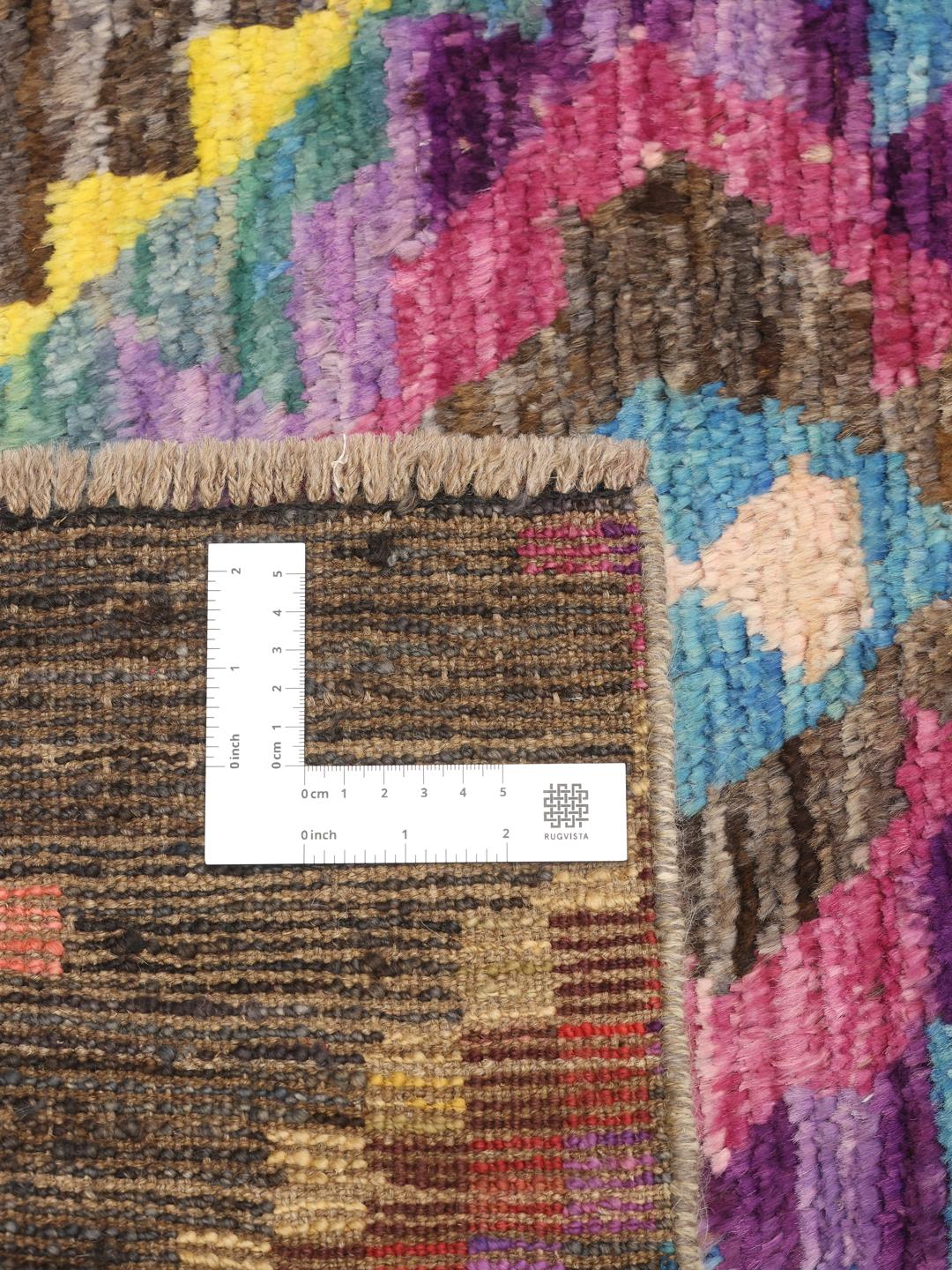
The quality of these rugs is largely defined by the manual skill involved in their creation. The term hand-knotted refers to the laborious process where each individual knot is tied by hand onto the foundation. This method is the hallmark of premium rug making, as it allows for a level of detail, pattern sharpness, and structural integrity that simply cannot be achieved by machines. It is a time-honoured craft that turns Wool into a lasting legacy.
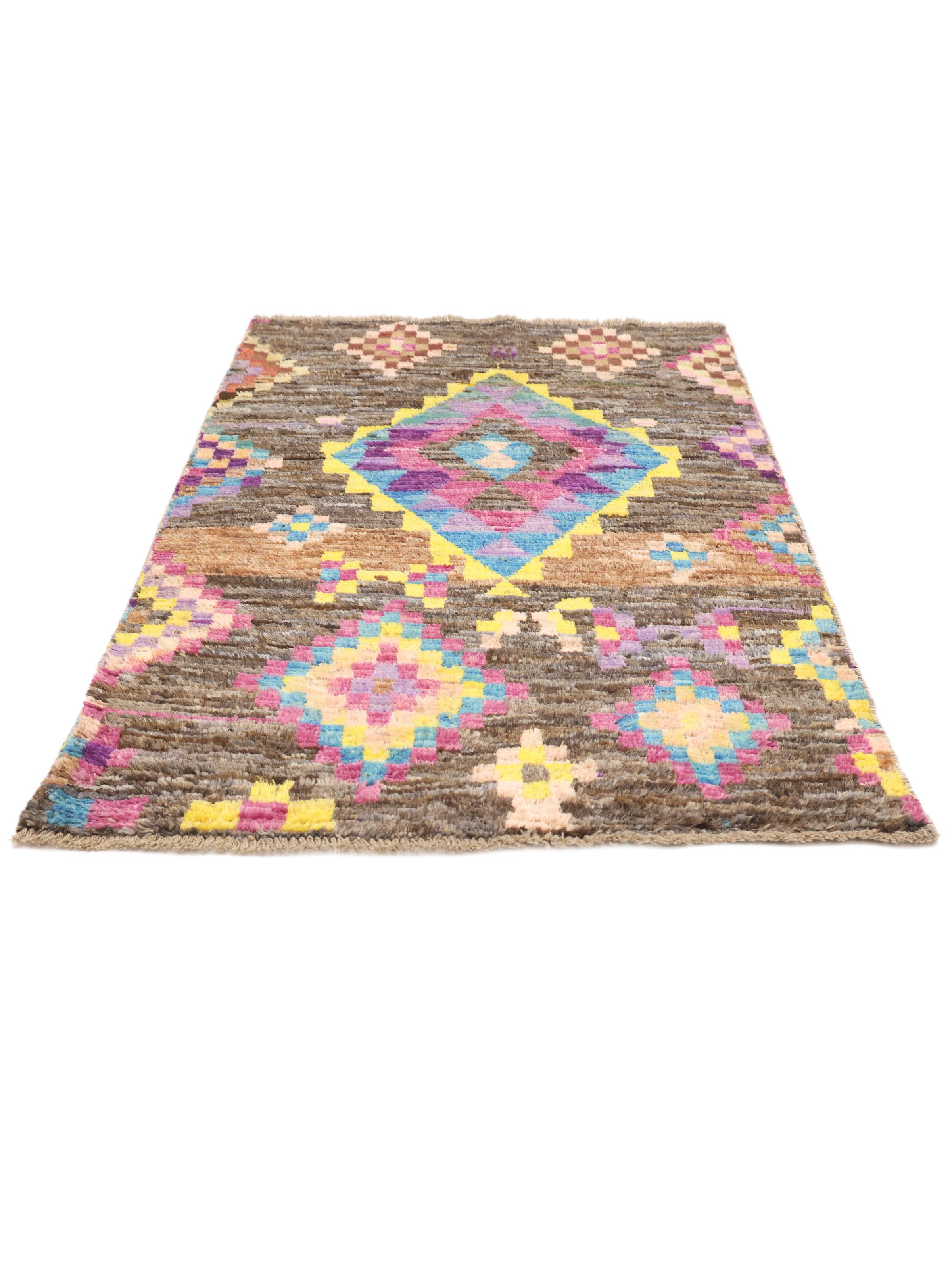
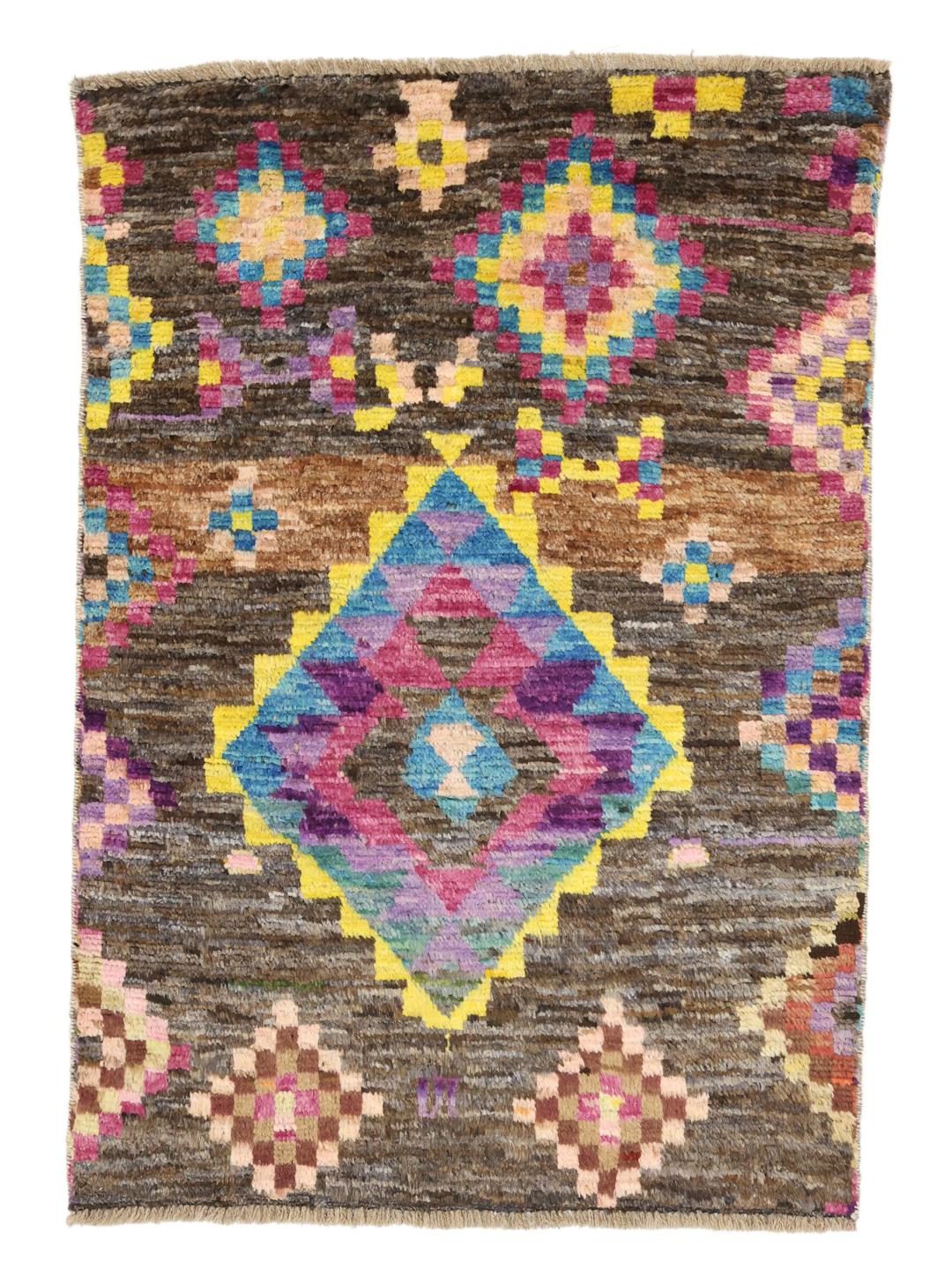
Visually, these rugs are defined by a language of symbols and shapes. The geometric patterns often feature diamonds, triangles, and stylized motifs that have been passed down through generations. While traditional Berber rugs often relied on a limited palette of natural tones, modern interpretations frequently embrace vibrant, expressive colours that contrast beautifully against dark or neutral fields. This particular piece showcases this evolution, using a spectrum of colours to bring its geometric heart to life.
Collectors and design enthusiasts value these rugs for their authenticity and the human story woven into every fibre. Owning a hand-knotted piece is an act of preserving a tradition that values slow, deliberate production over the speed of modern manufacturing. It represents a connection to the past and a commitment to quality that stands in stark contrast to our disposable culture, making these rugs cherished additions to any home.