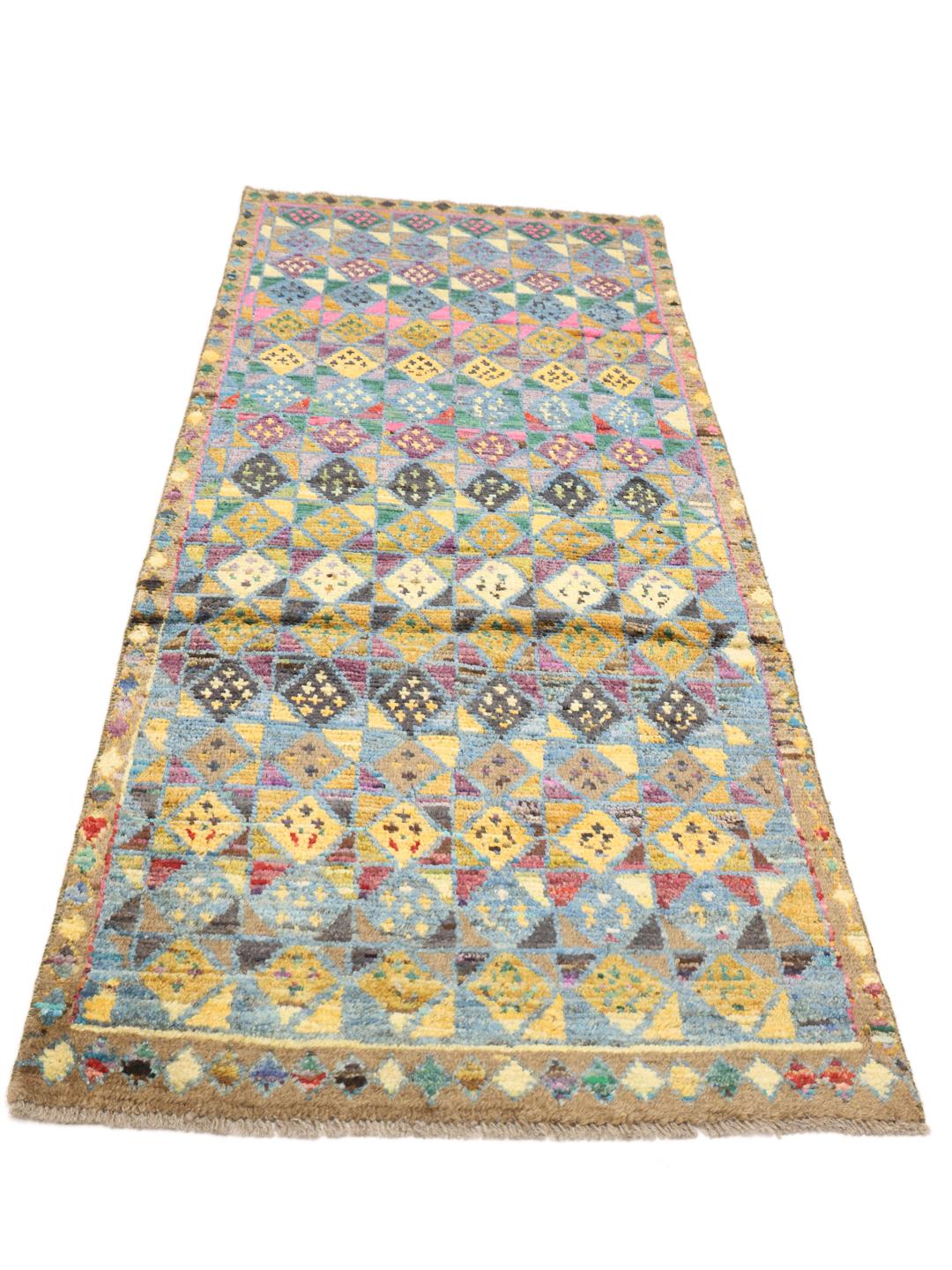
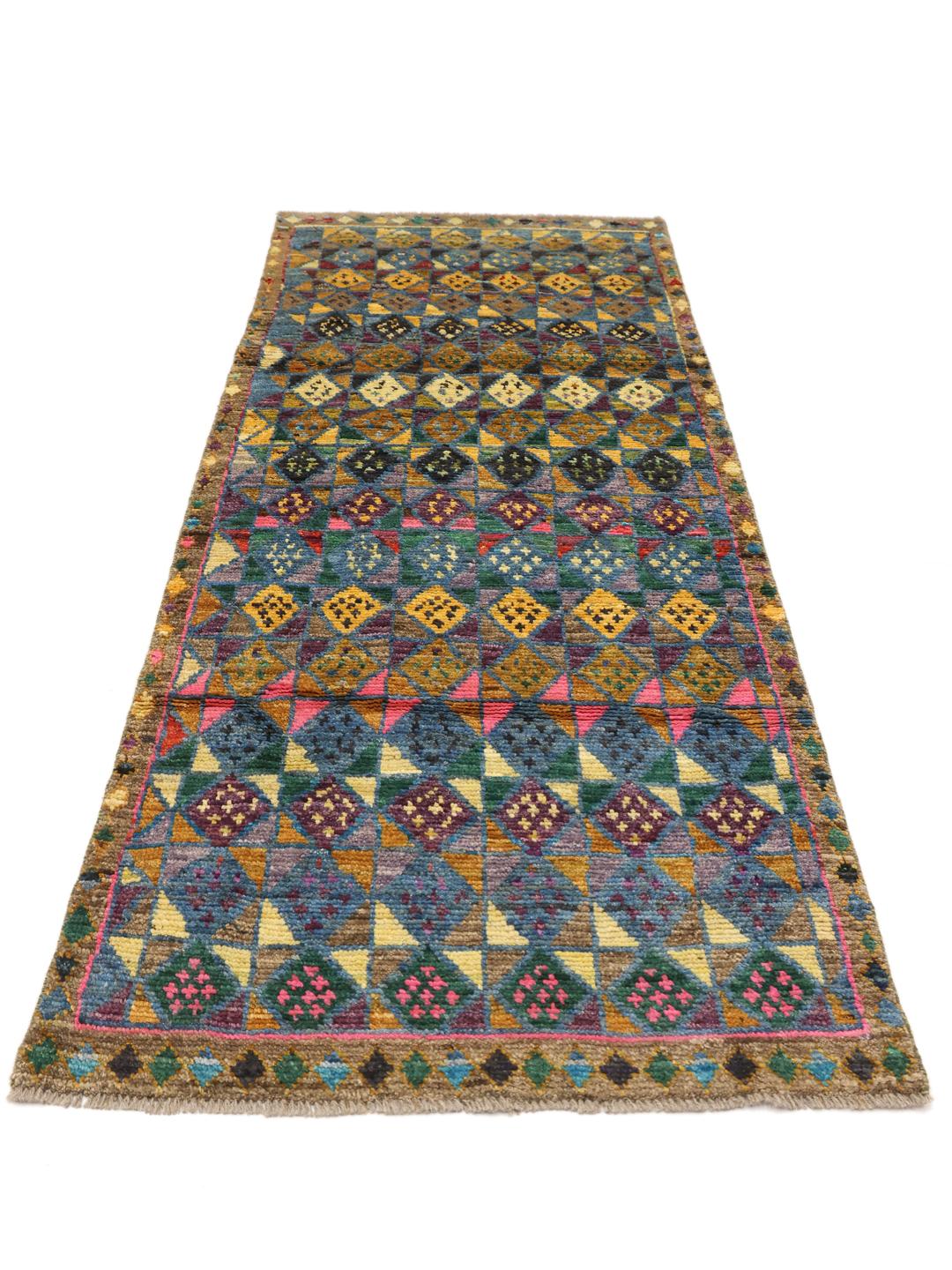
The Berber tradition originates from the indigenous peoples of North Africa, yet its influence has travelled far beyond, inspiring weavers in regions like Afghanistan to adopt these bold, geometric styles. These rugs are deeply tied to the cultural heritage of nomadic and semi-nomadic groups, who historically utilised the craft to document stories, symbols, and the natural environment of their surroundings.
The term Berber refers to a specific aesthetic language characterised by spontaneous, often tribal motifs that differ from the rigid formality of urban weaving centres. While these rugs were traditionally designed for domestic use within the home, their transition into modern interiors has highlighted the enduring appeal of their free-flowing, expressive designs and the warmth of their construction.
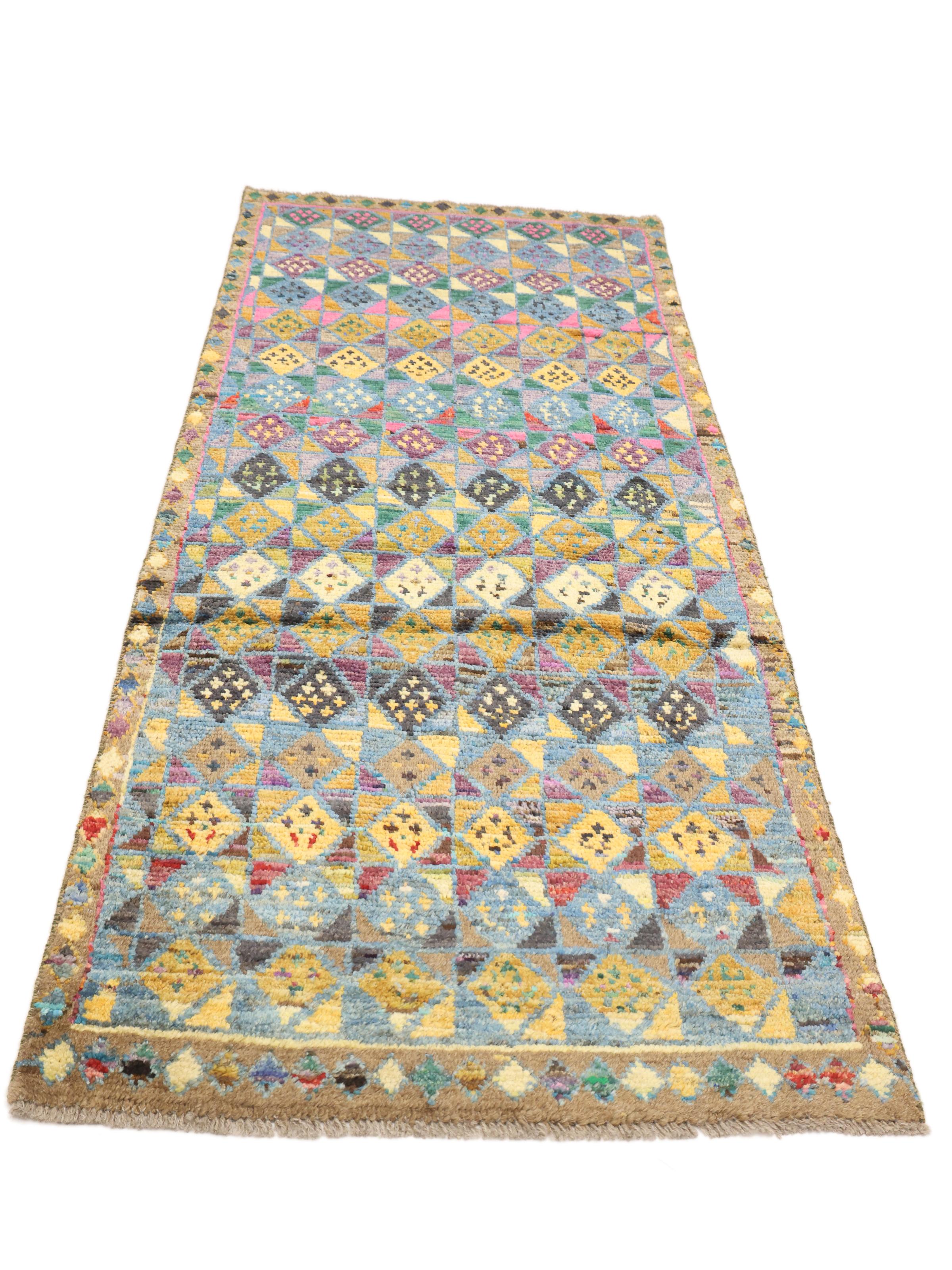
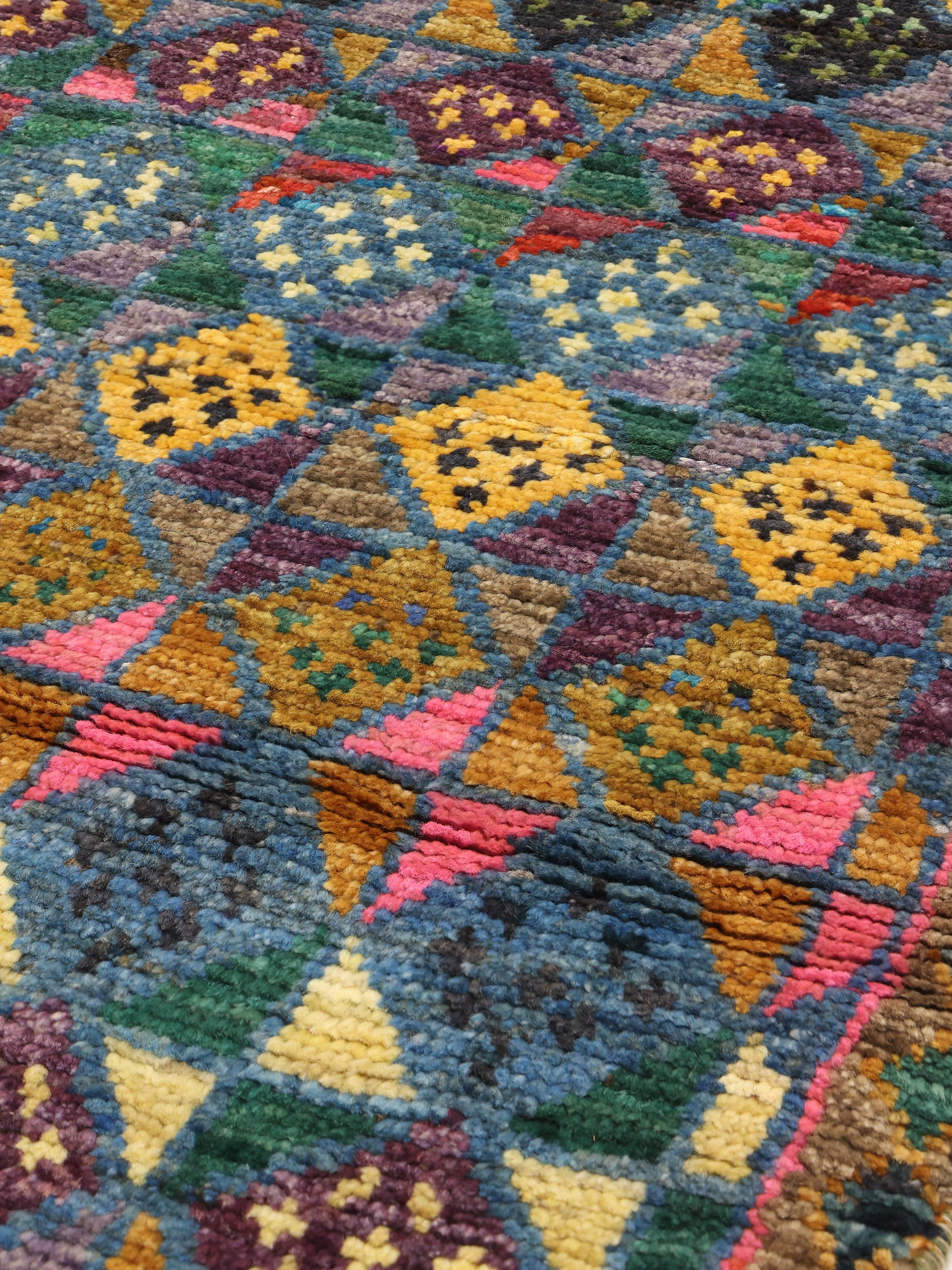
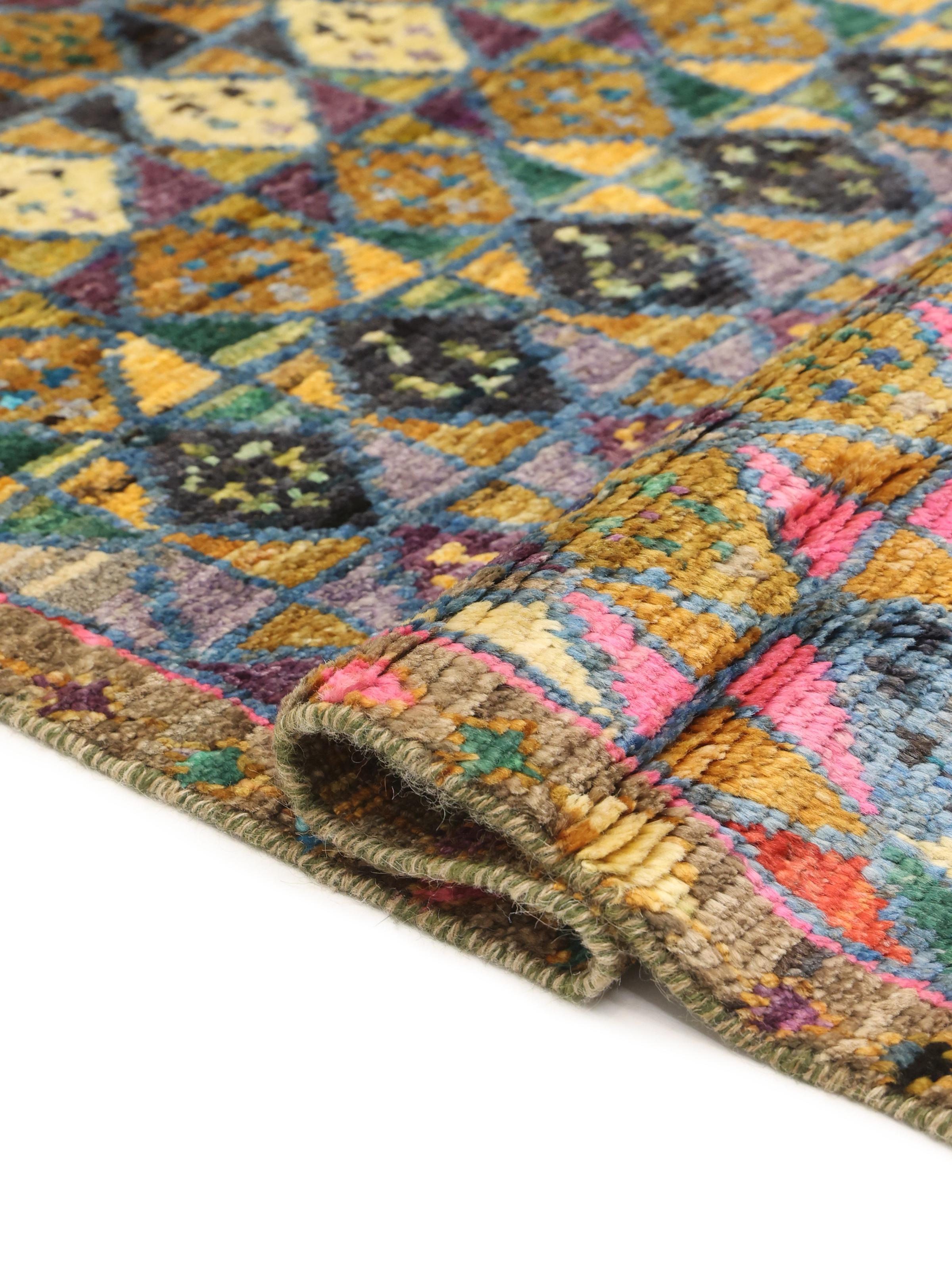
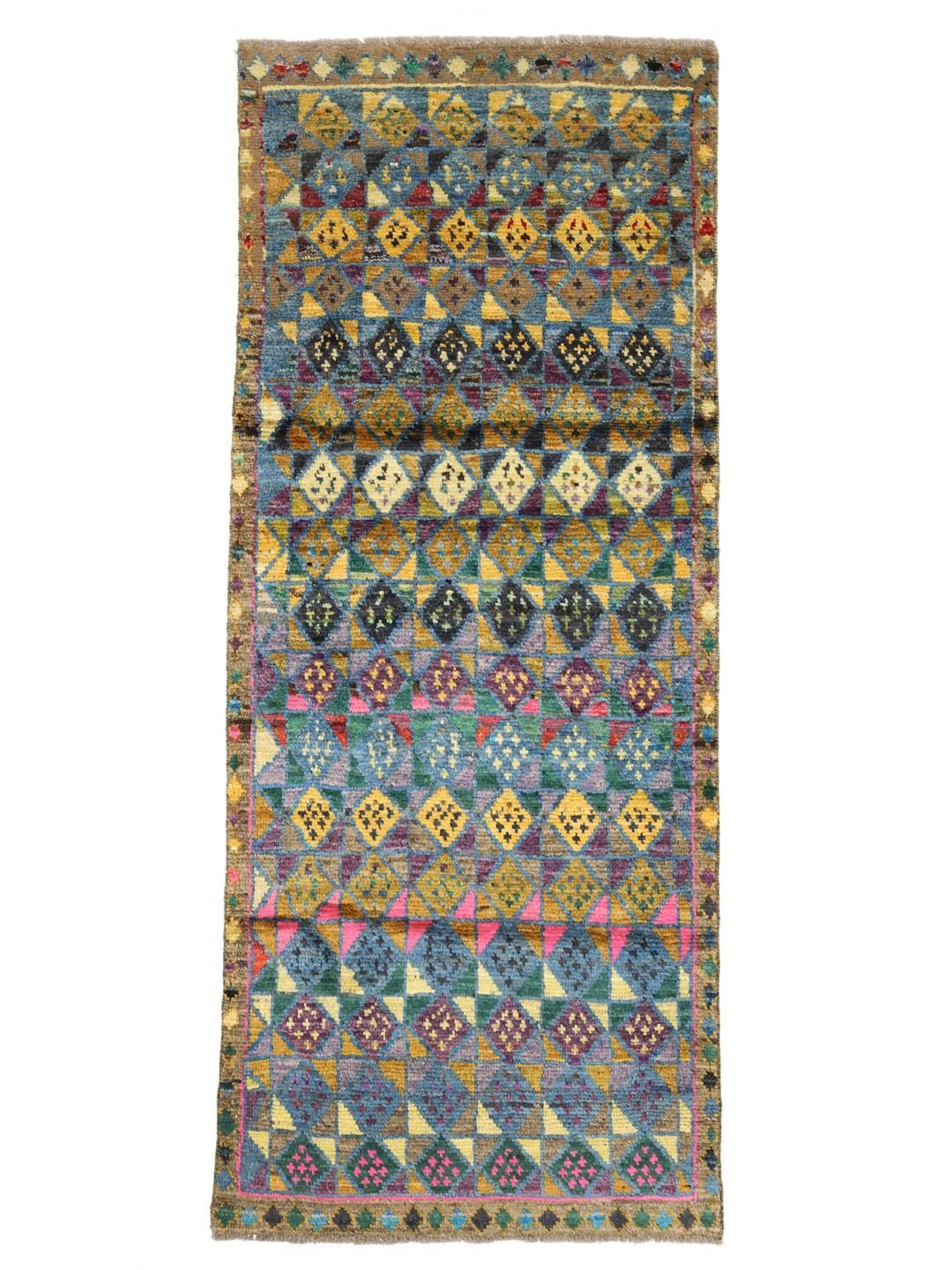
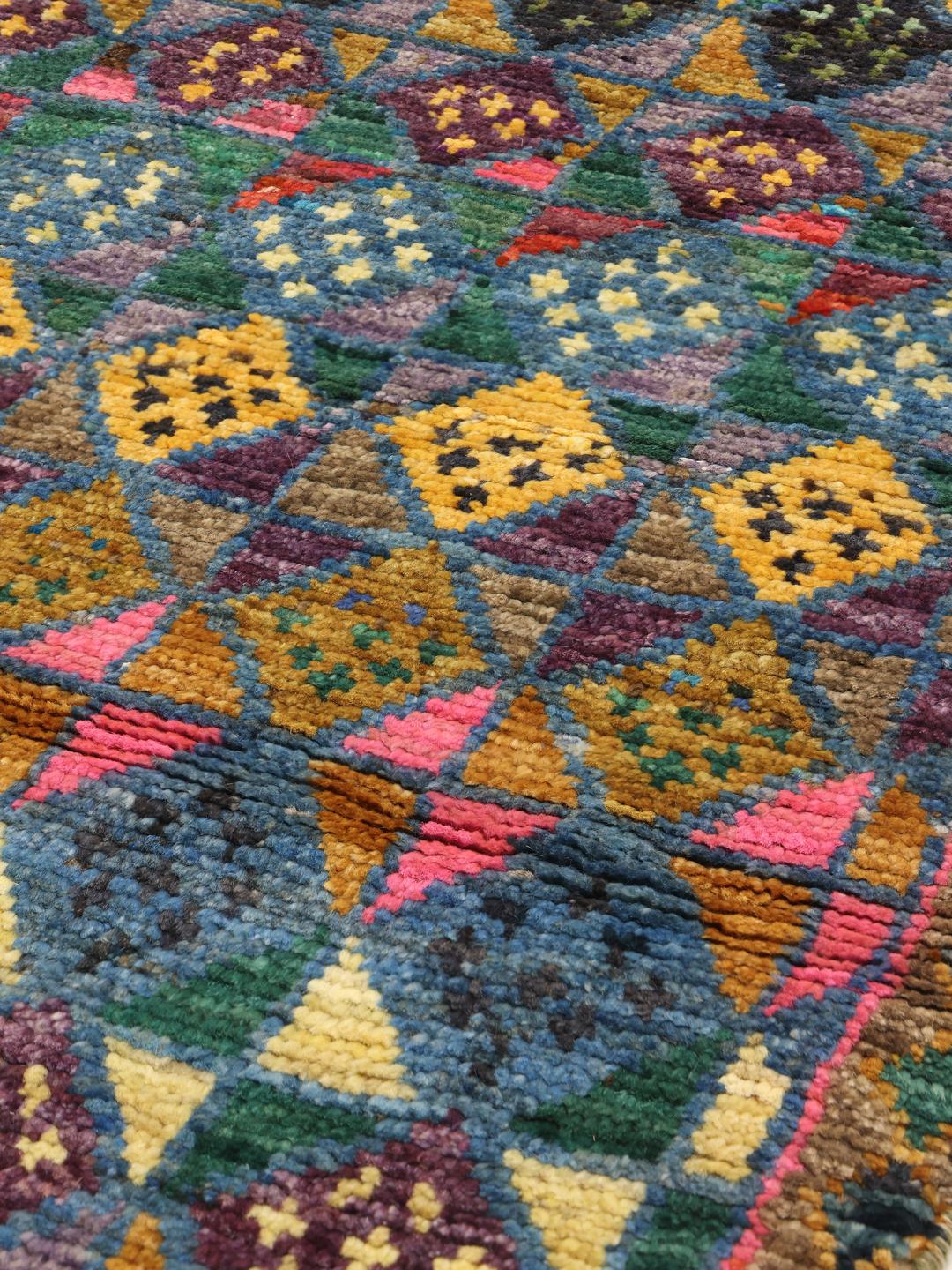
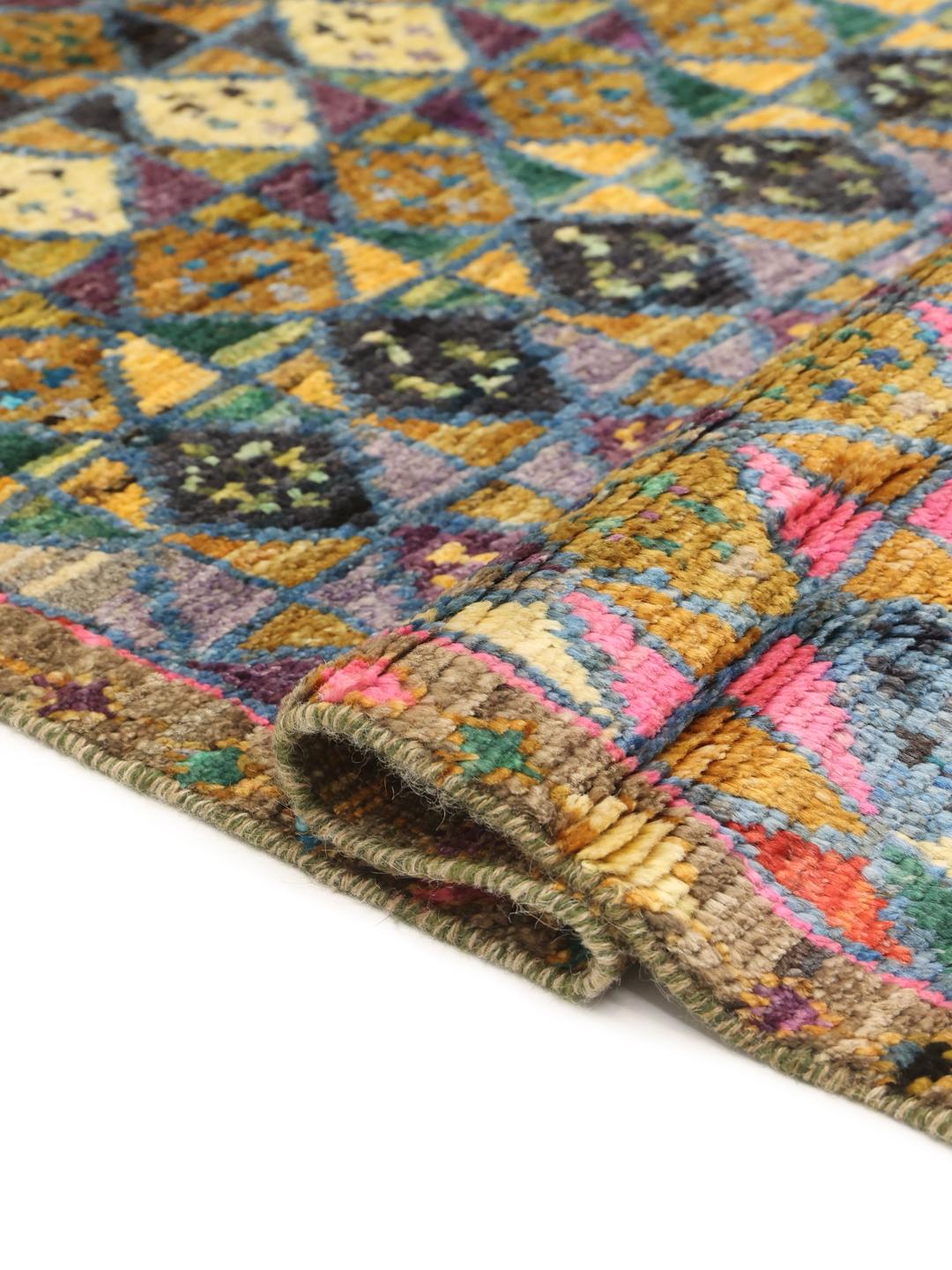
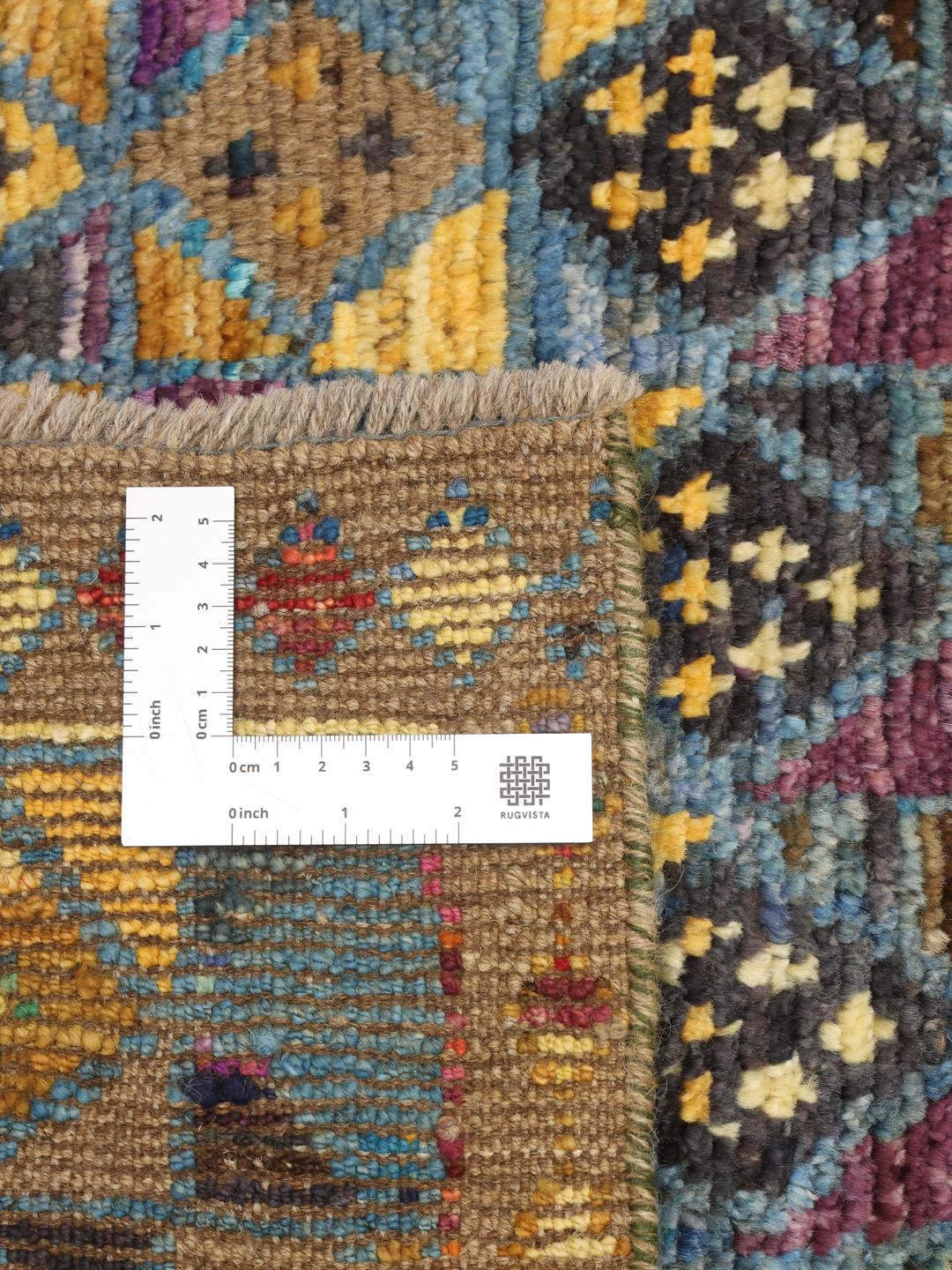
Signature elements of this tradition include the use of bold, repeating shapes like diamonds, triangles, and zig-zags, which often hold symbolic meanings related to protection, fertility, or the natural world. This specific rug showcases a vibrant colour palette that pushes the boundaries of traditional earth tones, reflecting a contemporary evolution of these ancient patterns while maintaining the soul and spirit of the original craft.
Collecting a rug from this tradition is a way to bridge the gap between historical craft and modern living. It represents a connection to a long lineage of artisans who rely on memory and intuition rather than pre-drawn templates. By owning this piece, you are supporting a legacy of skill that prioritises the human element of creation, ensuring that the ancient art of hand-knotting continues to thrive in contemporary homes.