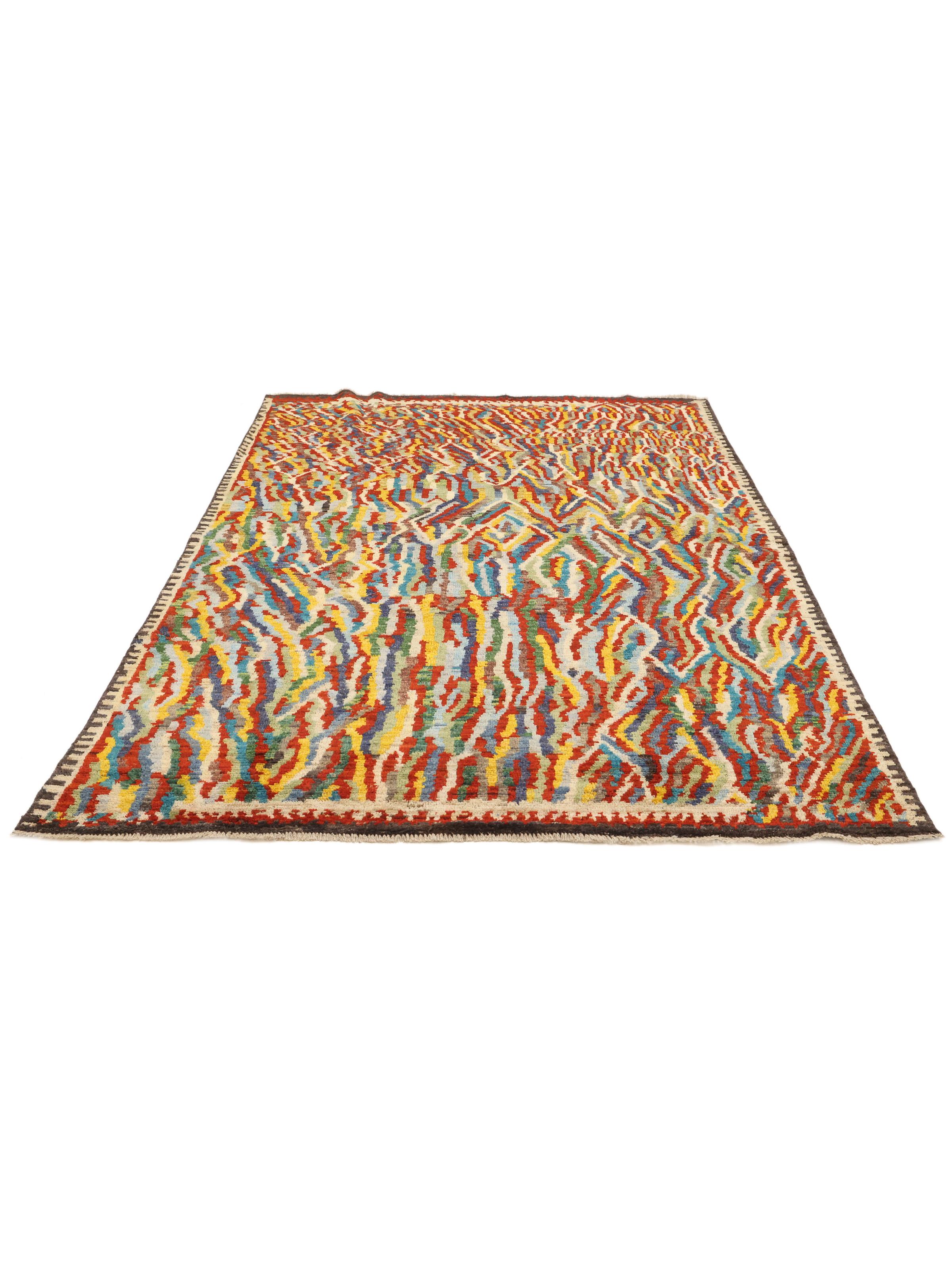
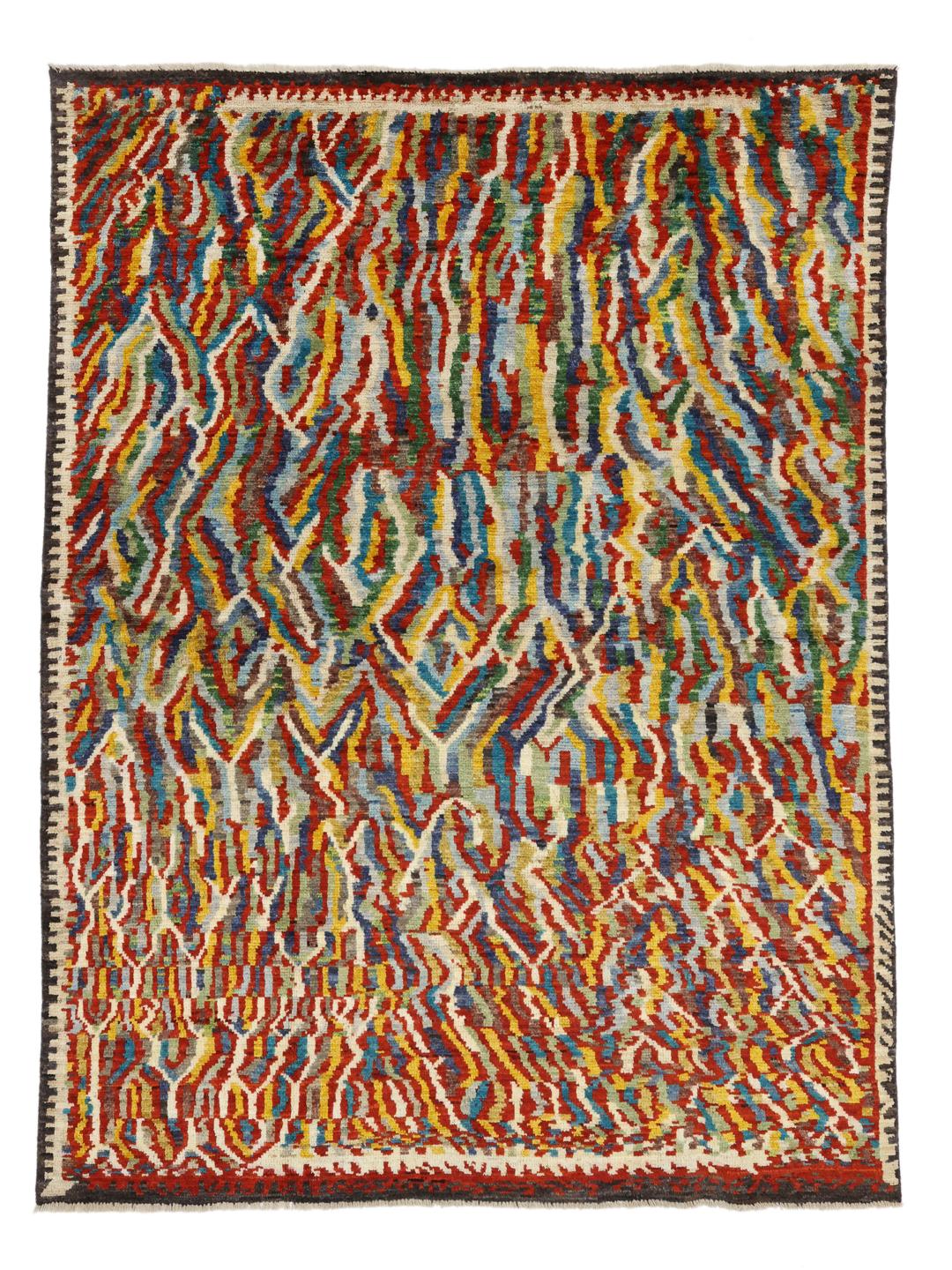
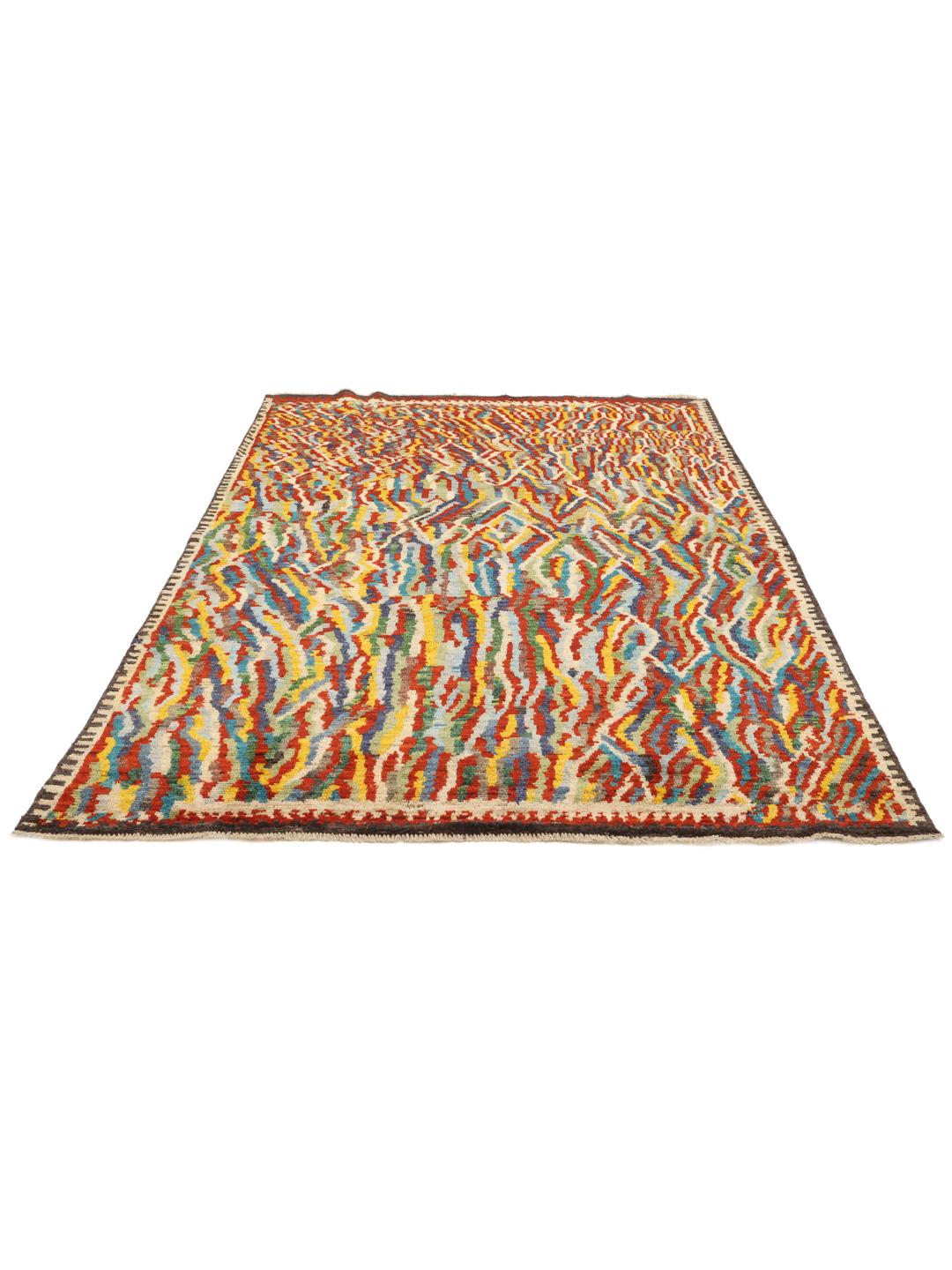
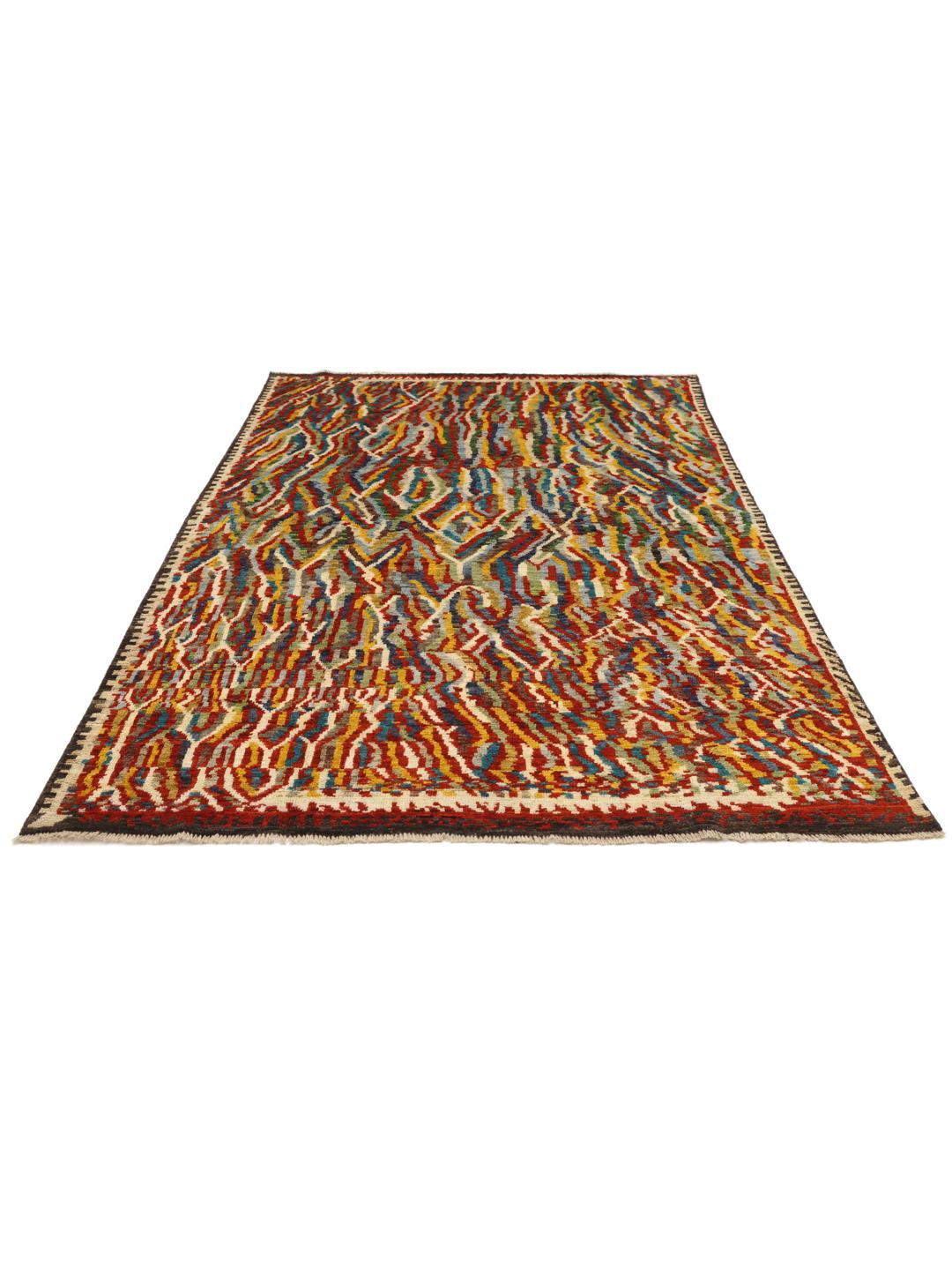
The tradition of Berber-style weaving has travelled far beyond its roots in North Africa, finding a vibrant new home in the craft communities of Afghanistan. Afghan weavers have adopted these techniques, infusing them with their own regional expertise and a distinctive use of local, high-quality wool. This cross-cultural evolution has resulted in a style that respects ancient traditions while embracing a more modern, expressive visual language.
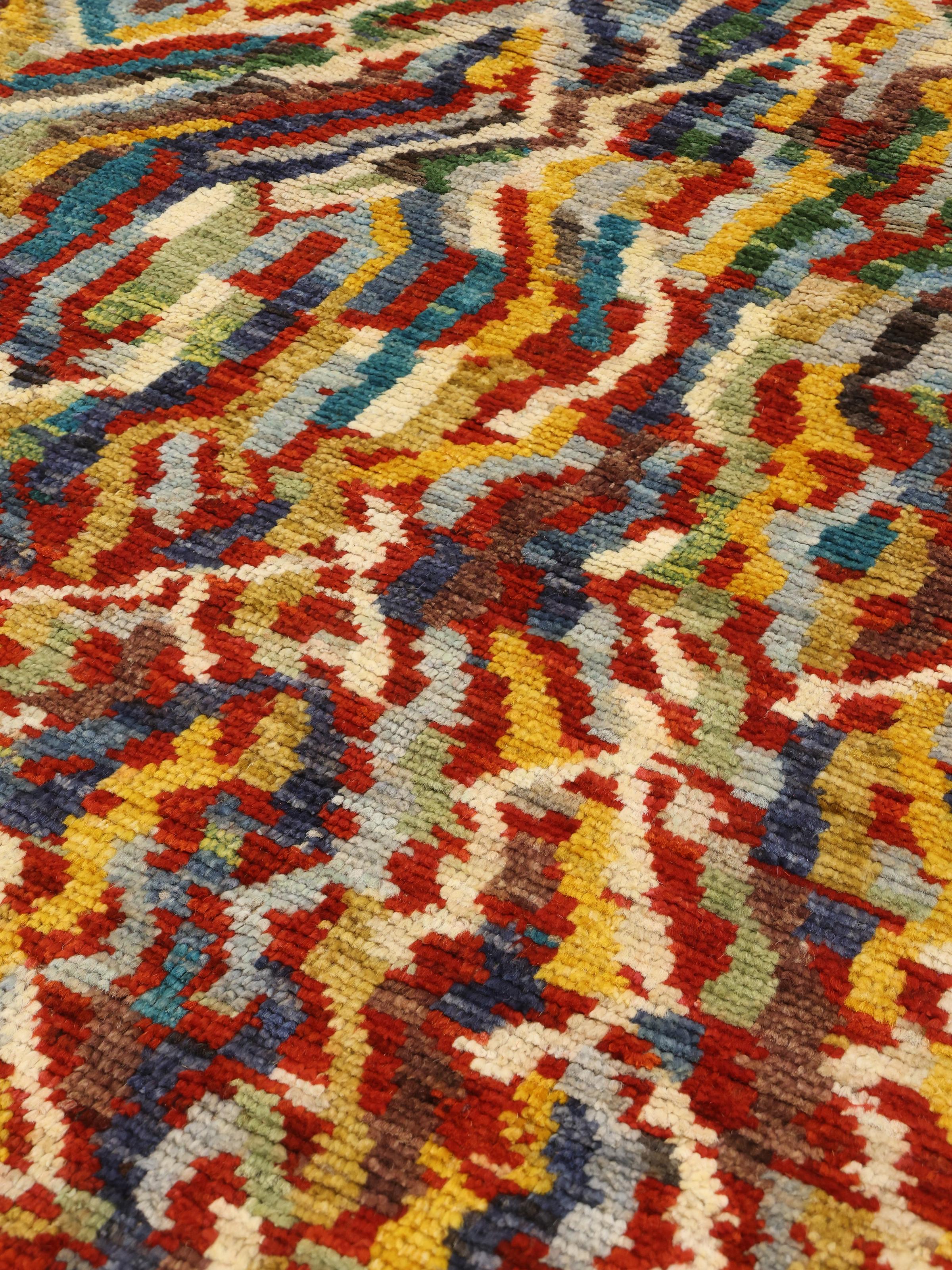
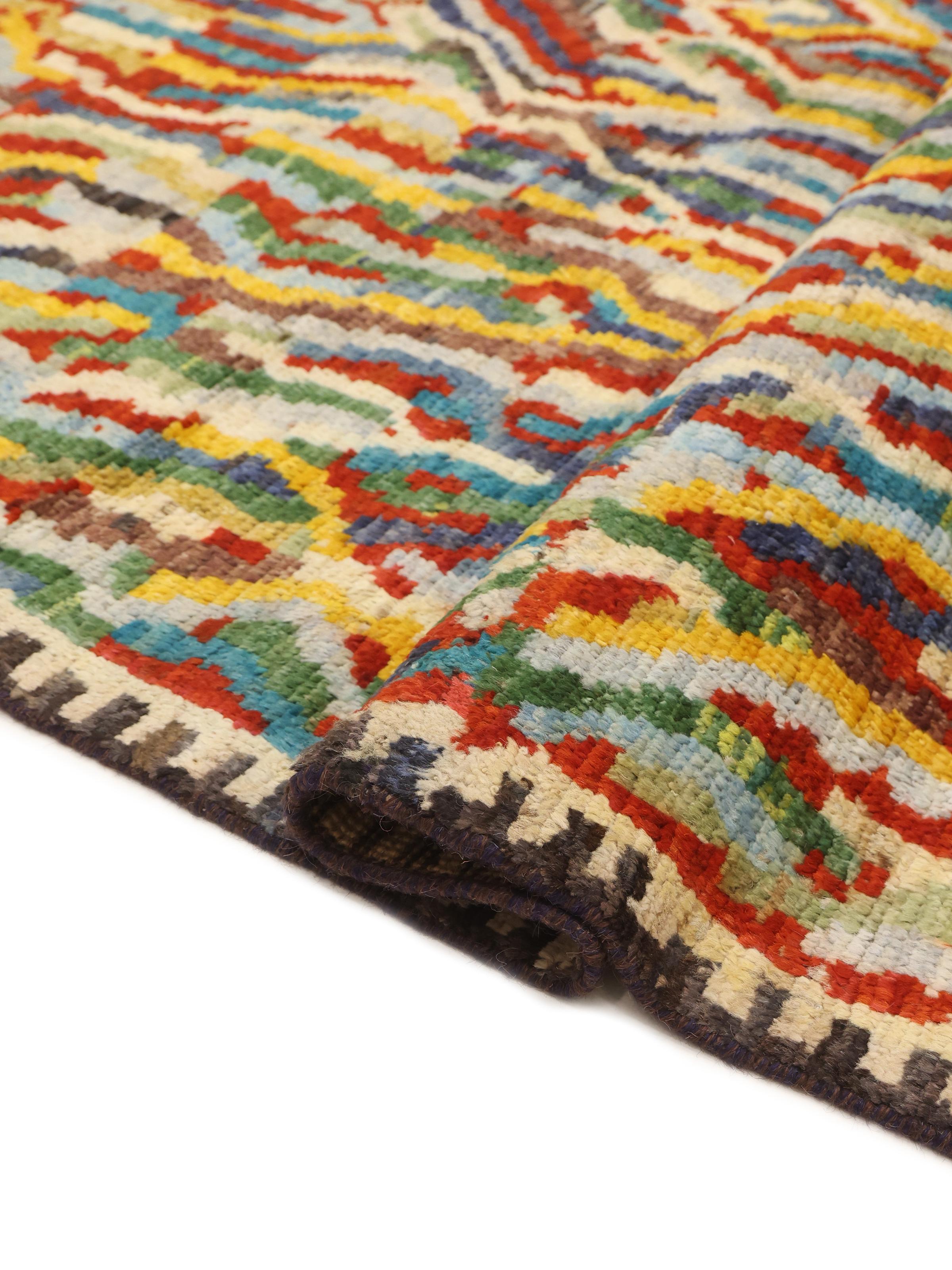
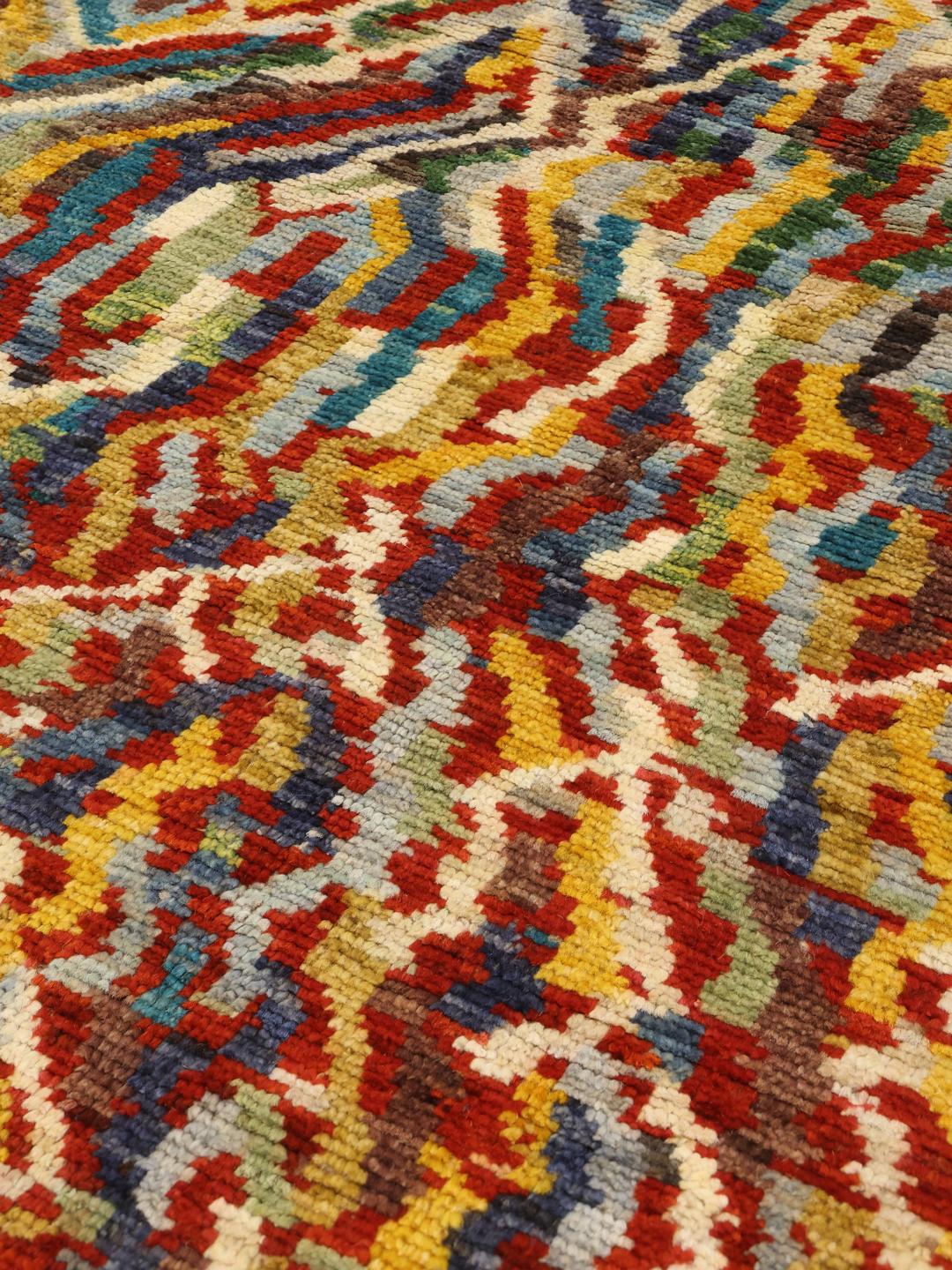
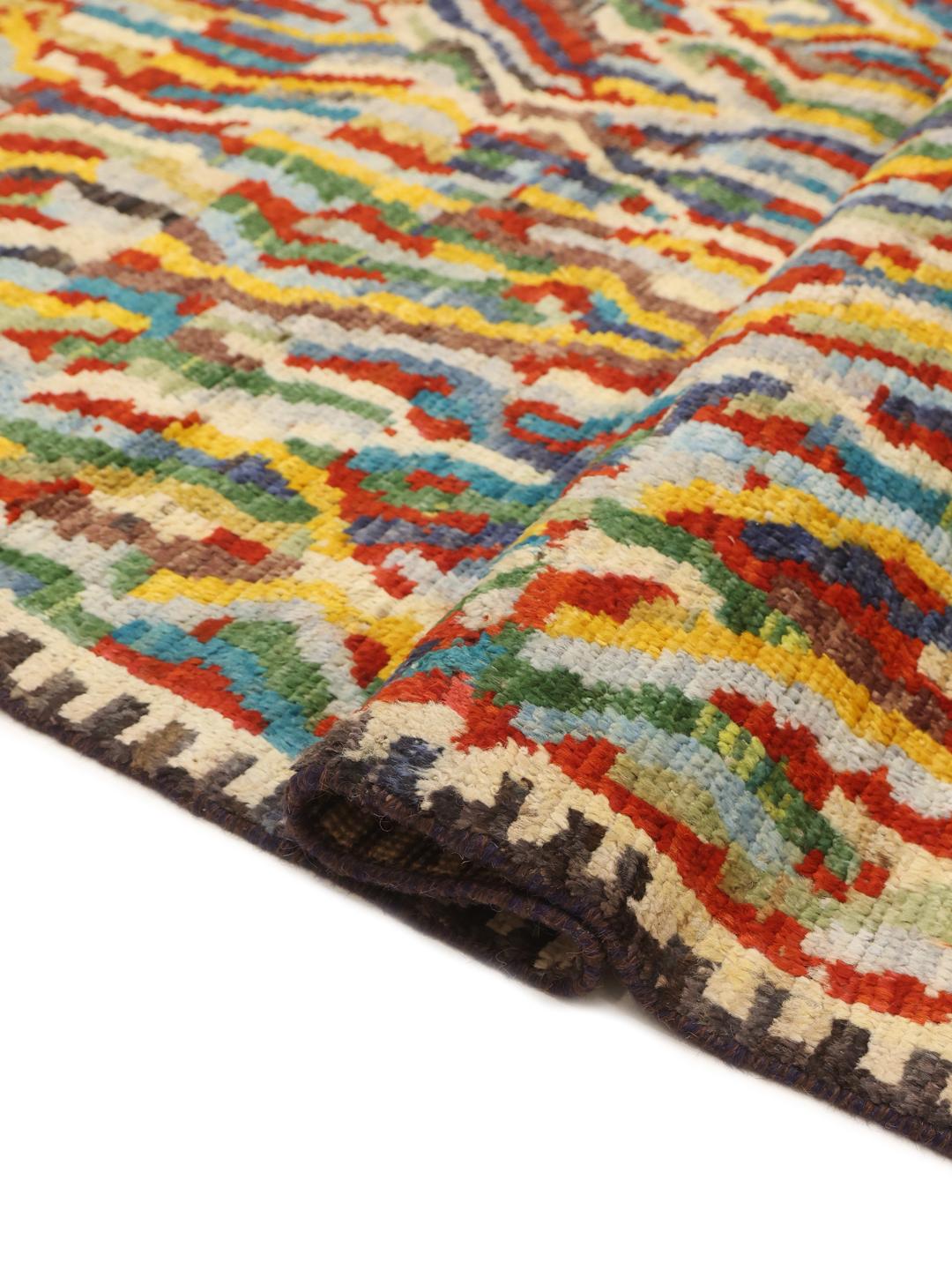
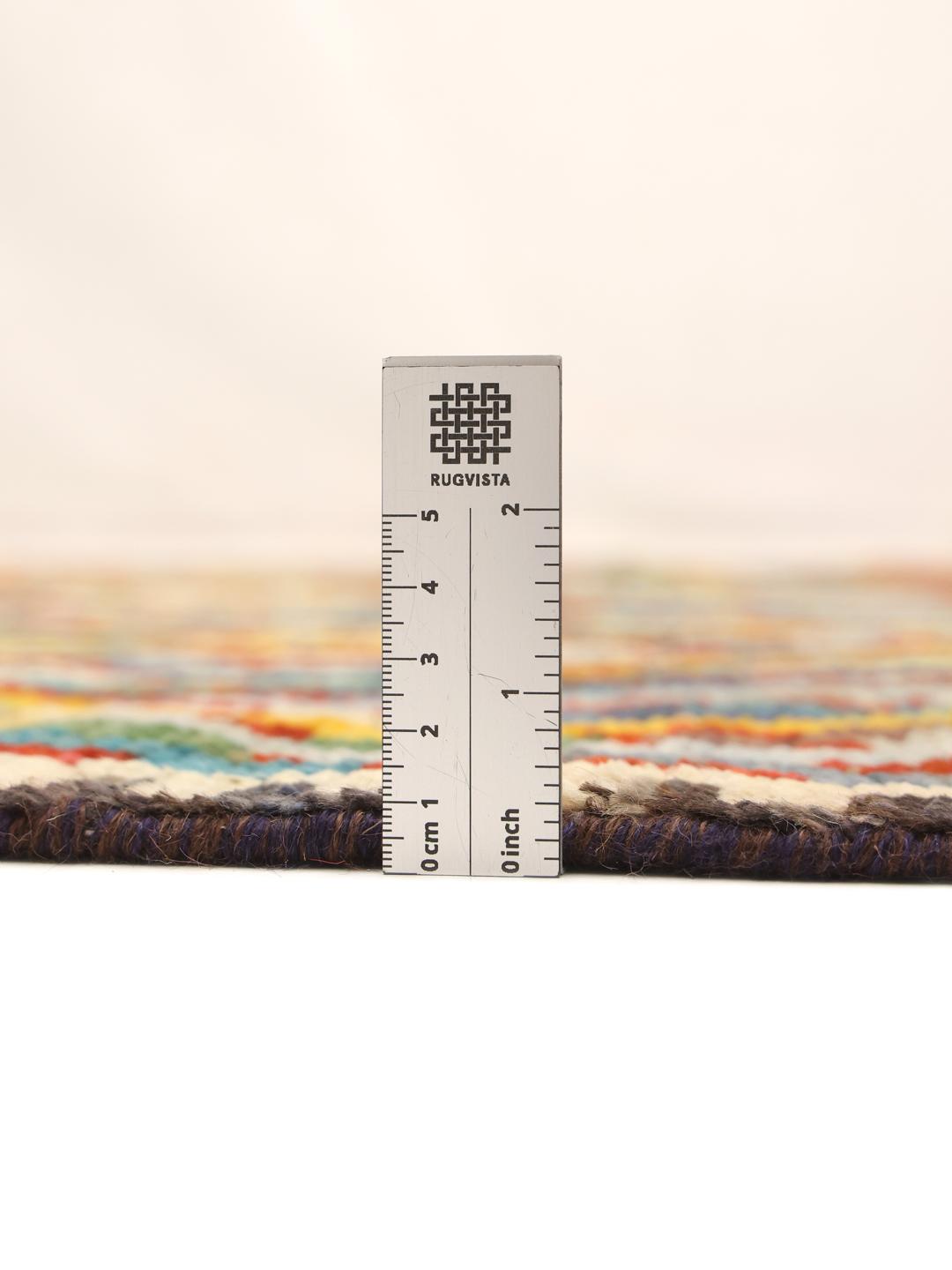
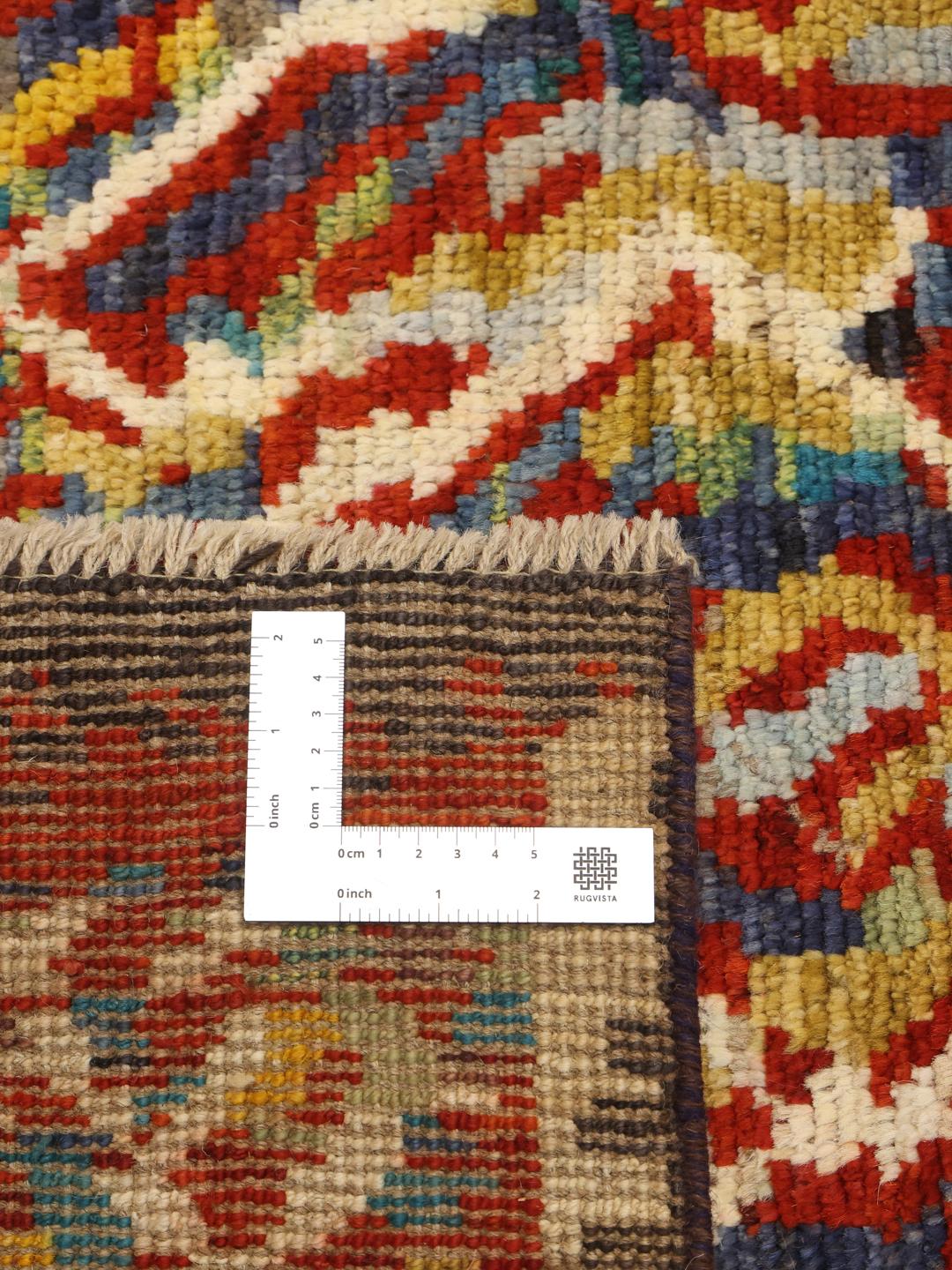
Central to the quality of these rugs is the hand-knotted construction, a technique that has been passed down through generations of Afghan families. Each knot serves as a building block for the overall design, creating a pile that is dense and resilient. This method is preferred by collectors because it allows for greater control over the pattern and a superior, long-lasting surface that resists wear even in high-traffic areas.
The signature design elements of this tradition often feature bold, abstract, and rhythmic motifs that feel both wild and controlled. Unlike more formal, symmetrical designs, these pieces often celebrate movement and colour, using a spectrum of tones that reflect the natural dyes and vibrant aesthetics of the region. This particular piece stands out for its energetic flow, showcasing a level of creativity that pushes the boundaries of traditional weaving patterns.
Owning an Afghan-made, Berber-style rug is an investment in cultural heritage and human skill. These pieces are highly valued by collectors for their authenticity and the sheer amount of time required to bring each design to life. By bringing one into your home, you are not just acquiring a floor covering but a piece of living history that tells a story of migration, adaptation, and the enduring power of manual craft.