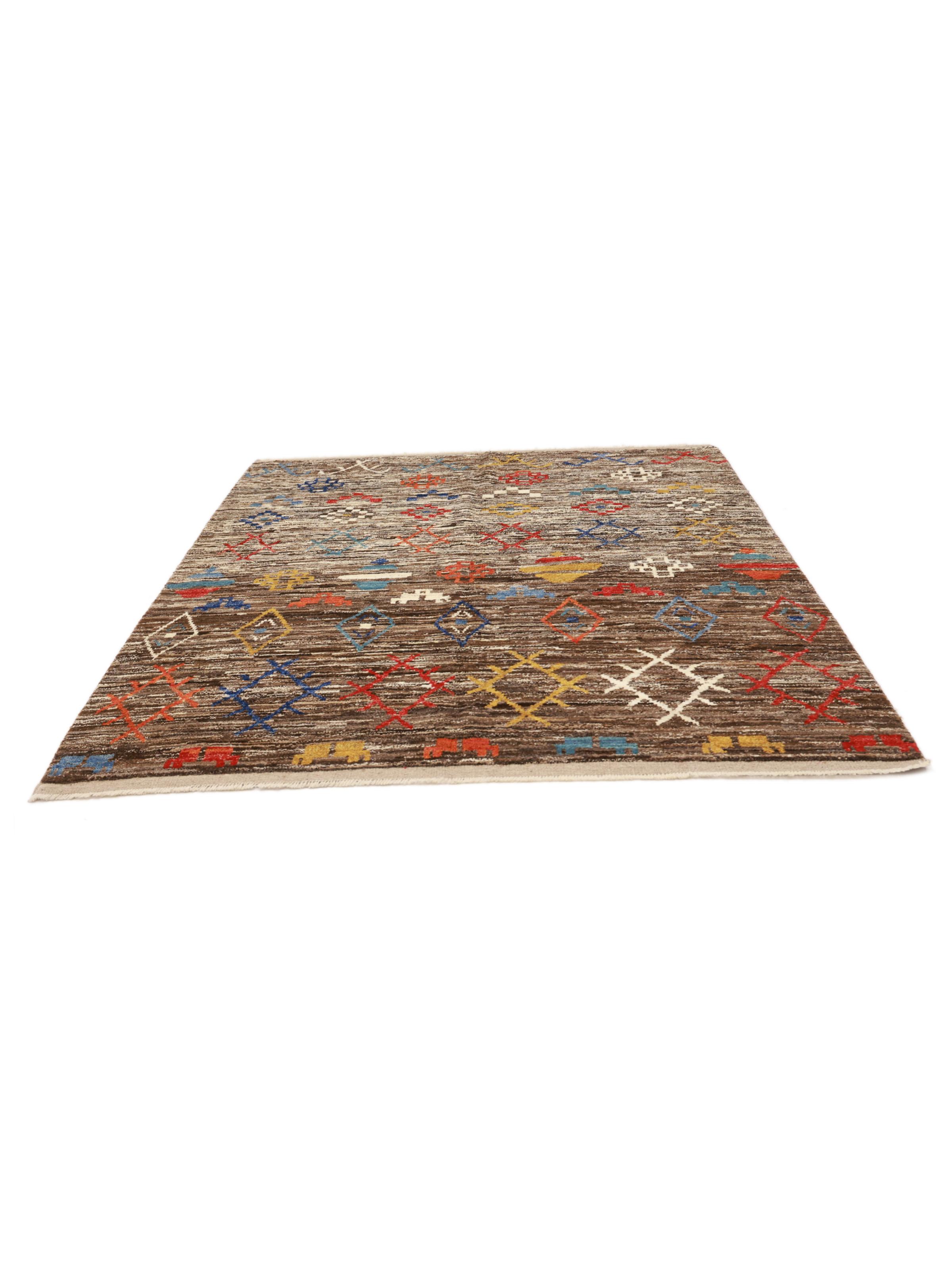
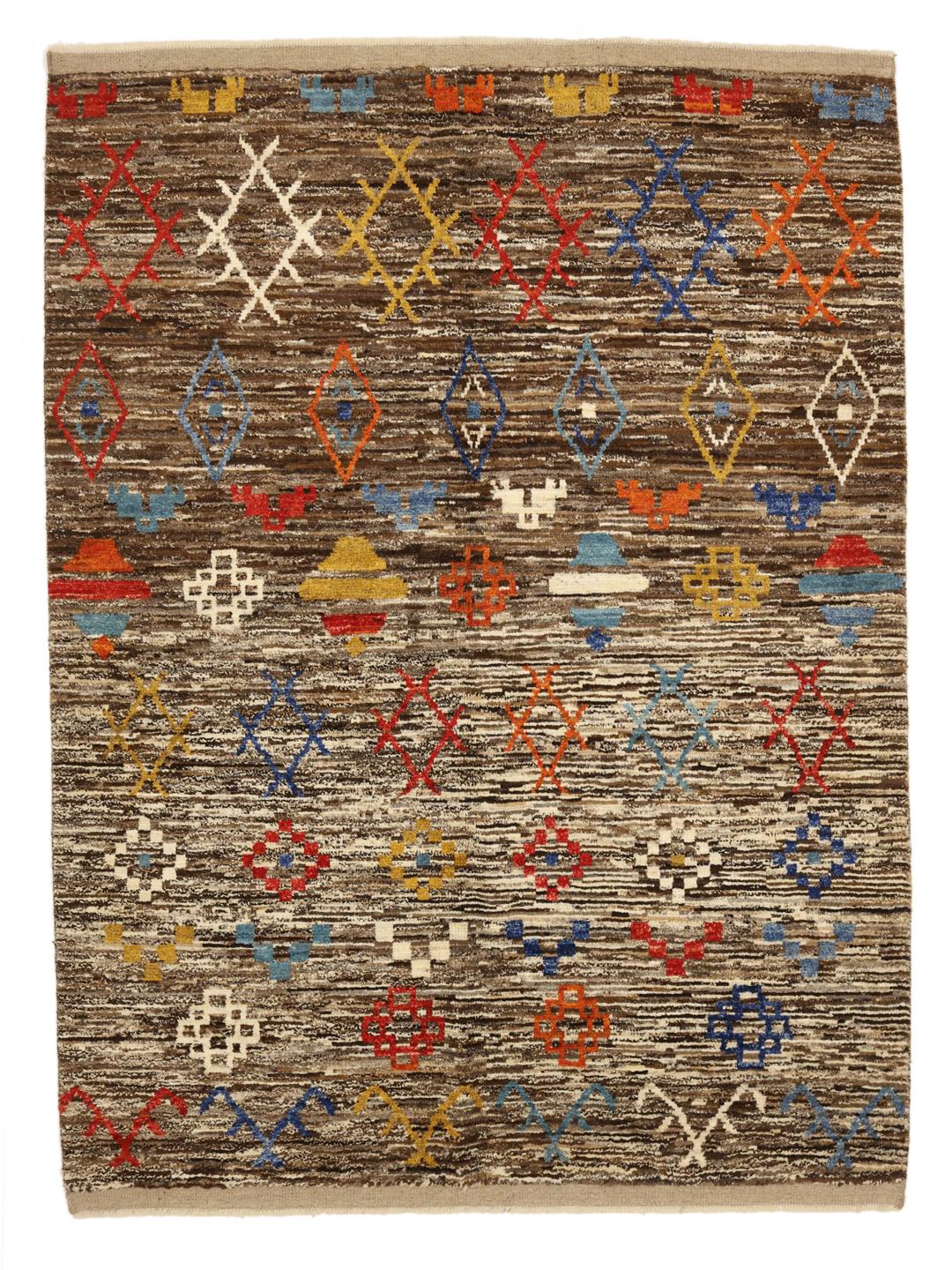
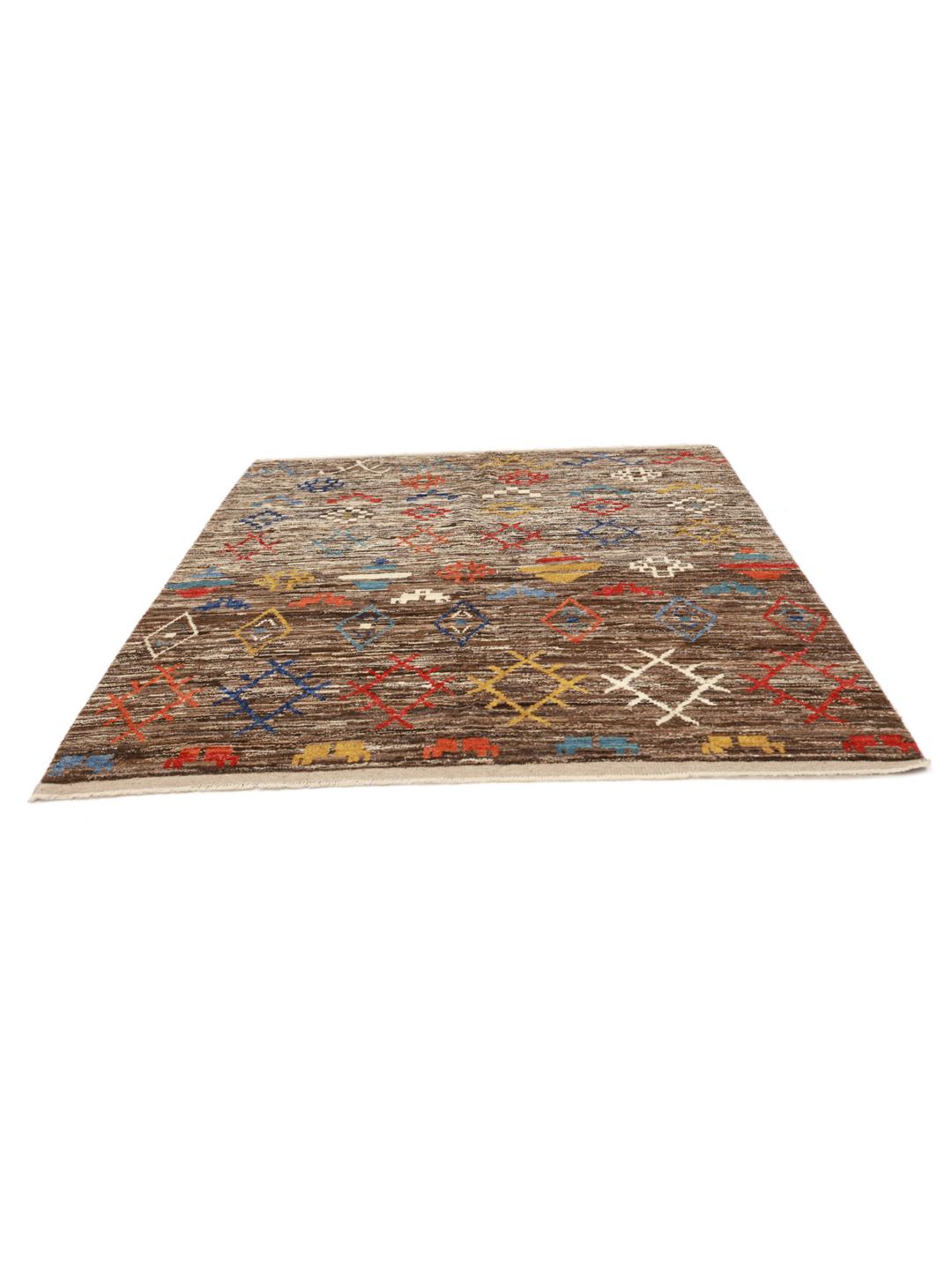
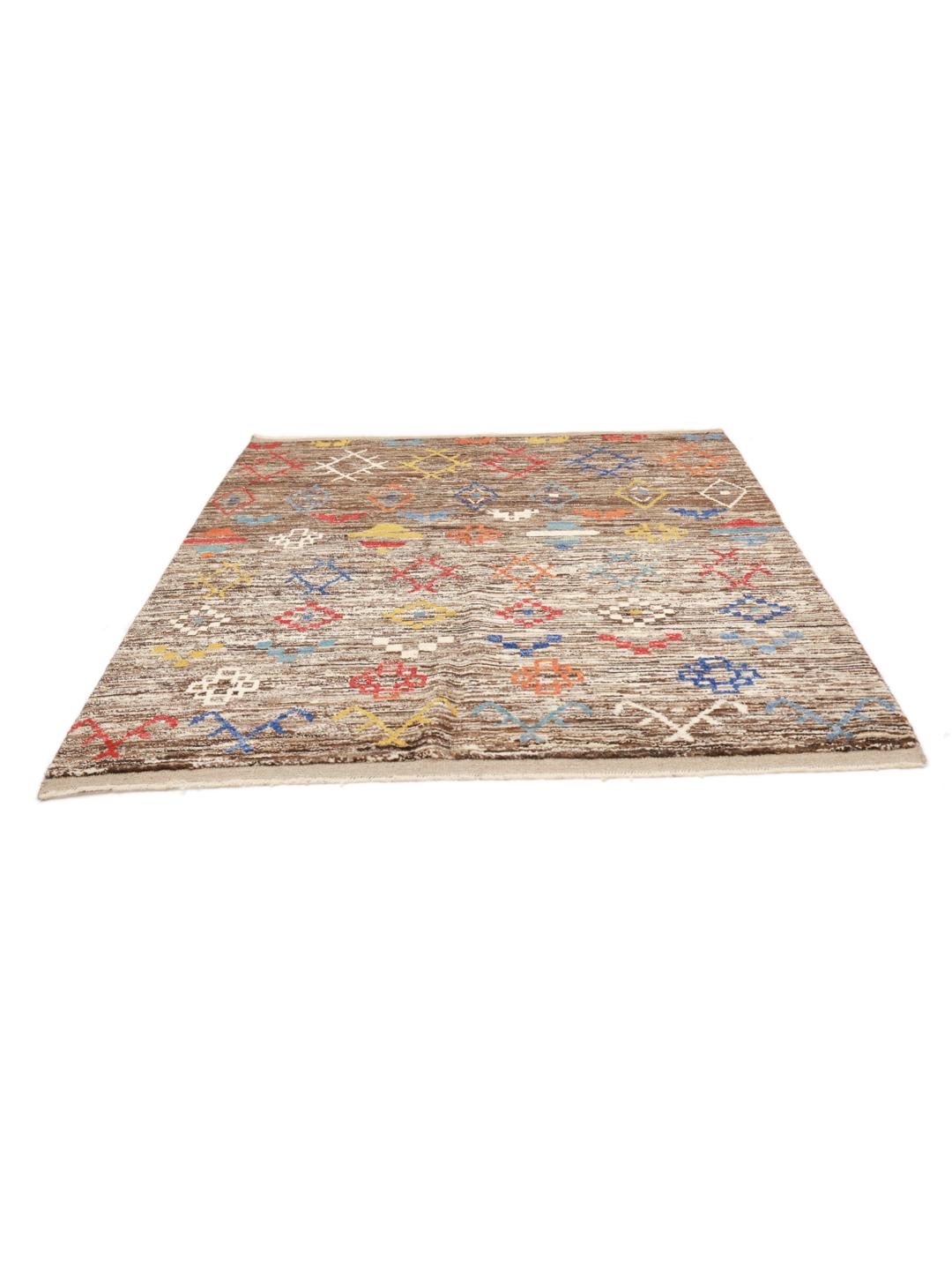
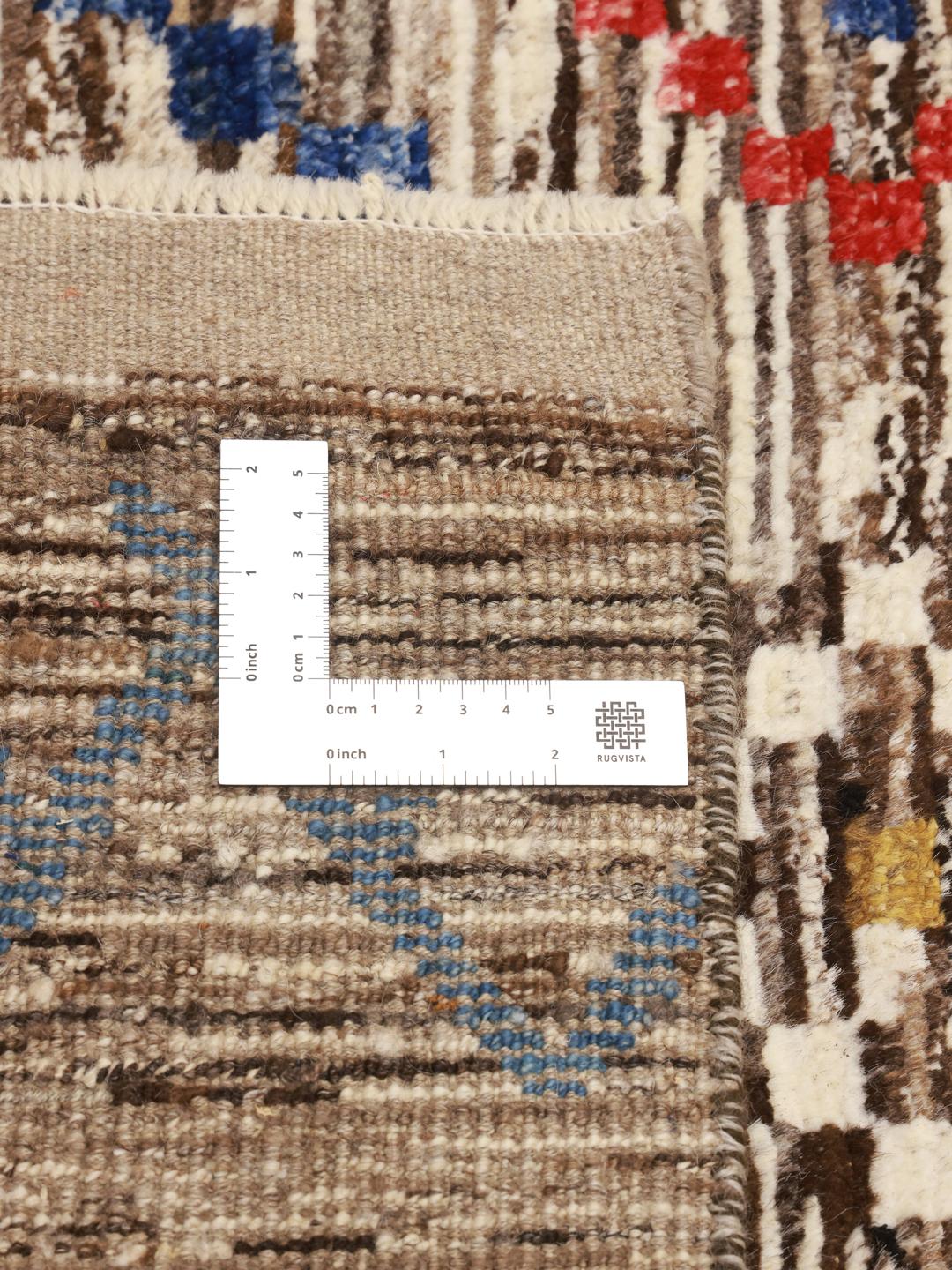
The Berber tradition, while historically rooted in the nomadic cultures of North Africa, has inspired weavers across the globe to create rugs that celebrate raw, organic textures and bold, symbolic patterns. In Afghanistan, this influence has merged with local weaving traditions to create a distinct style known for its heavy, durable wool and spirited, improvised designs that deviate from the strict formality of traditional city rugs.
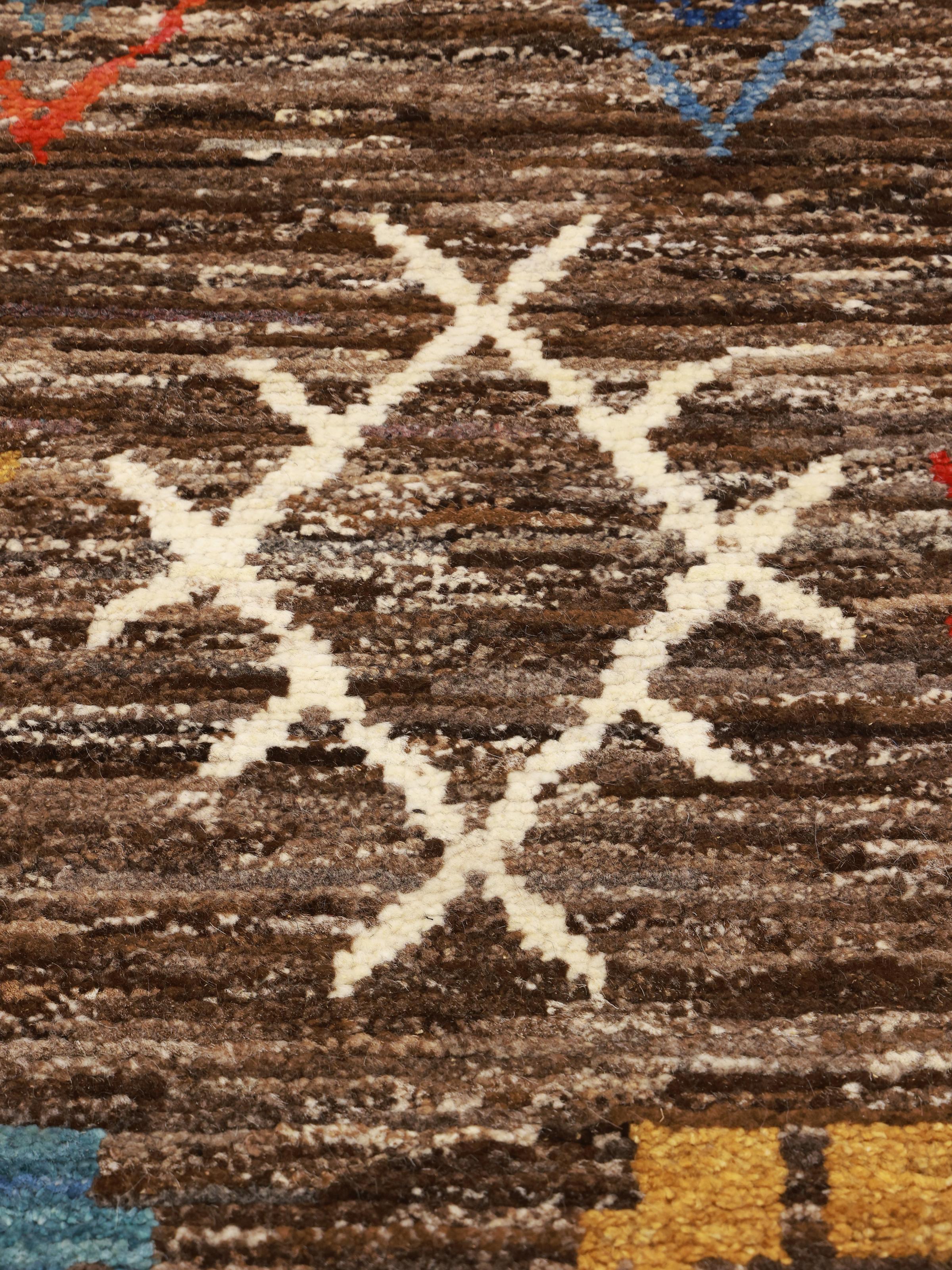
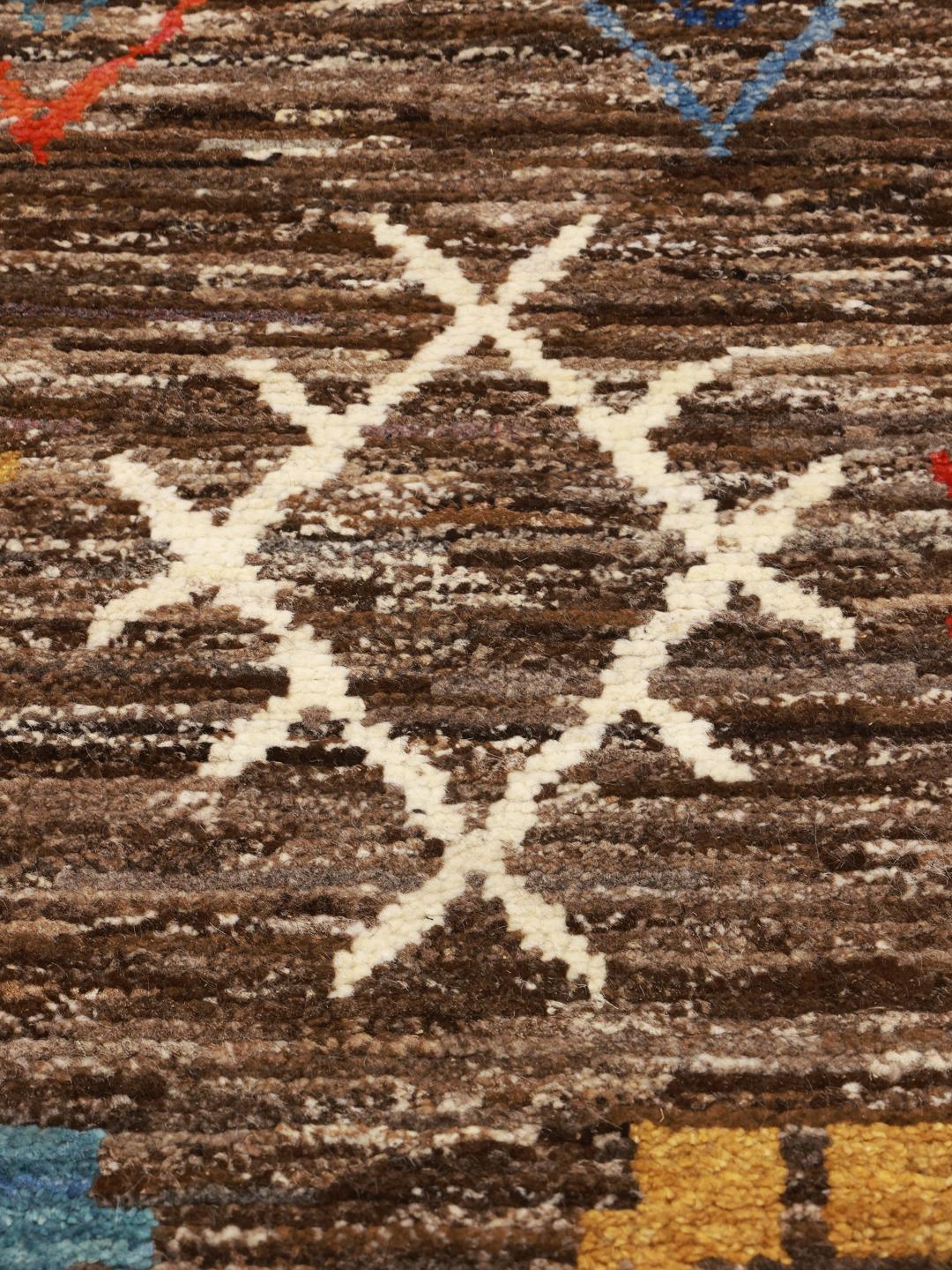
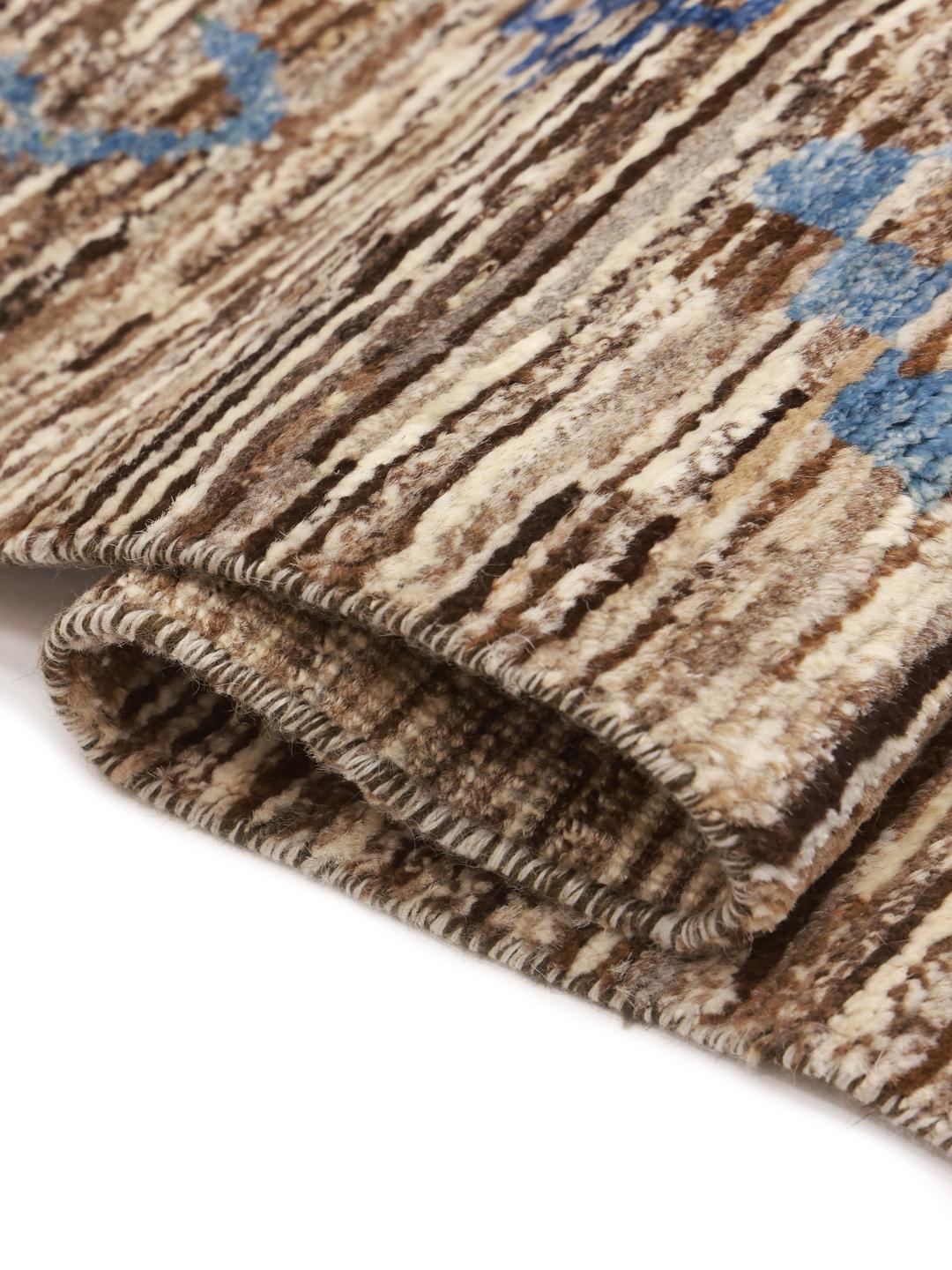
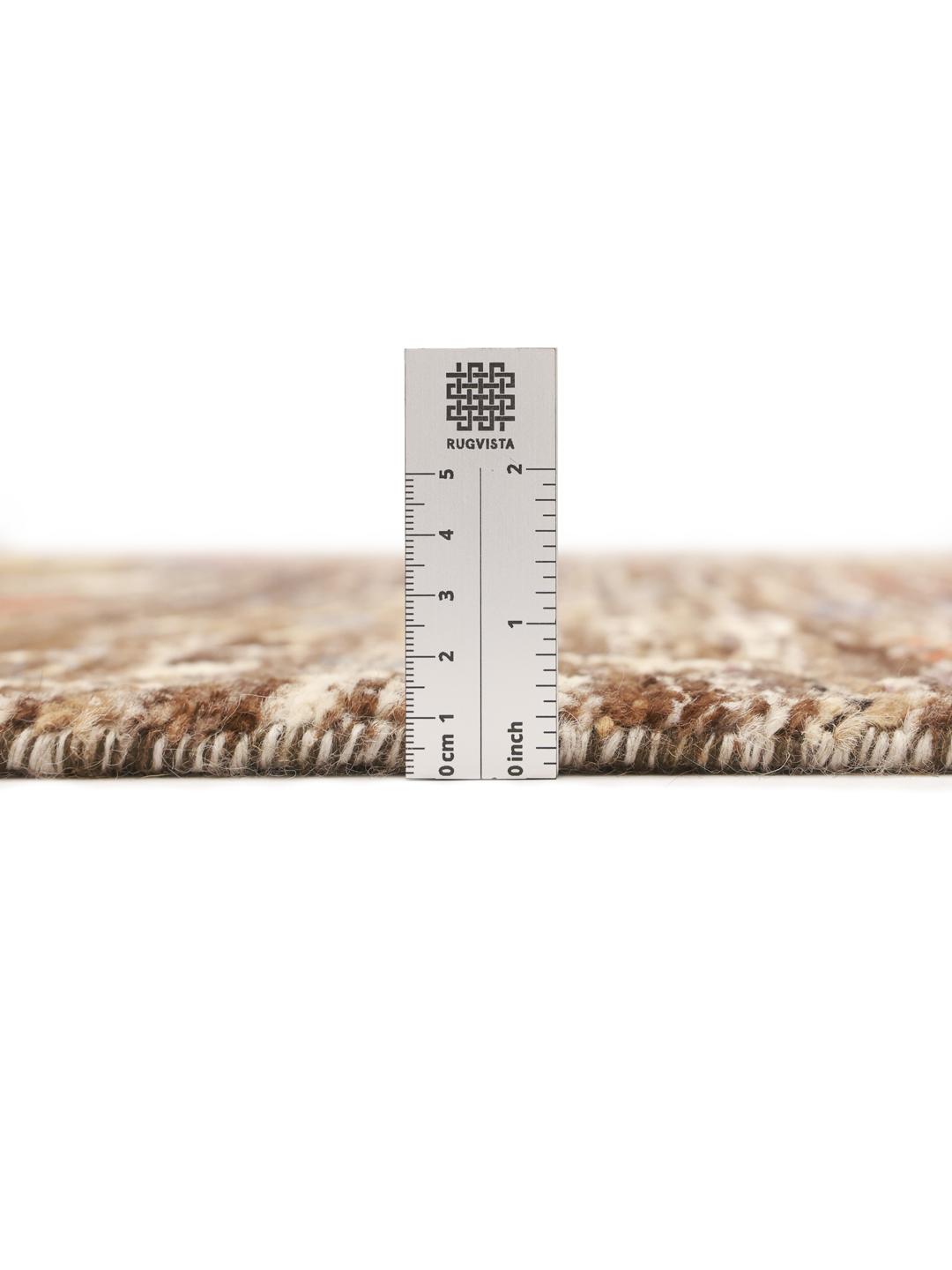
These rugs are defined by a focus on the tactile quality of the wool, often left in its most natural, robust state to provide a warm and resilient surface. The term 'Berber' in this context refers to a style of weaving that emphasises a thick, soft pile and a foundation built to withstand the rigours of daily life. This construction is highly valued for its ability to retain its shape and comfort, making it a functional choice for any home.
Visually, these rugs are characterised by a playful use of geometric motifs, including diamonds, crosses, and abstract symbols that often hold deep cultural significance for the weavers. Unlike mass-produced rugs with repetitive, uniform patterns, this style thrives on spontaneity. You will often see variations in the colour palette and the placement of symbols, reflecting the weaver's personal expression and the artistic freedom inherent in this tradition.
Collecting a rug from this tradition is about more than just floor coverage; it is about embracing a lineage of craftsmanship that values the human hand. These pieces are cherished for their authenticity and the way they bring a sense of history and warmth into a space. Owning one means participating in a long-standing dialogue between the artisan and the collector, ensuring these traditional skills continue to be appreciated and preserved.