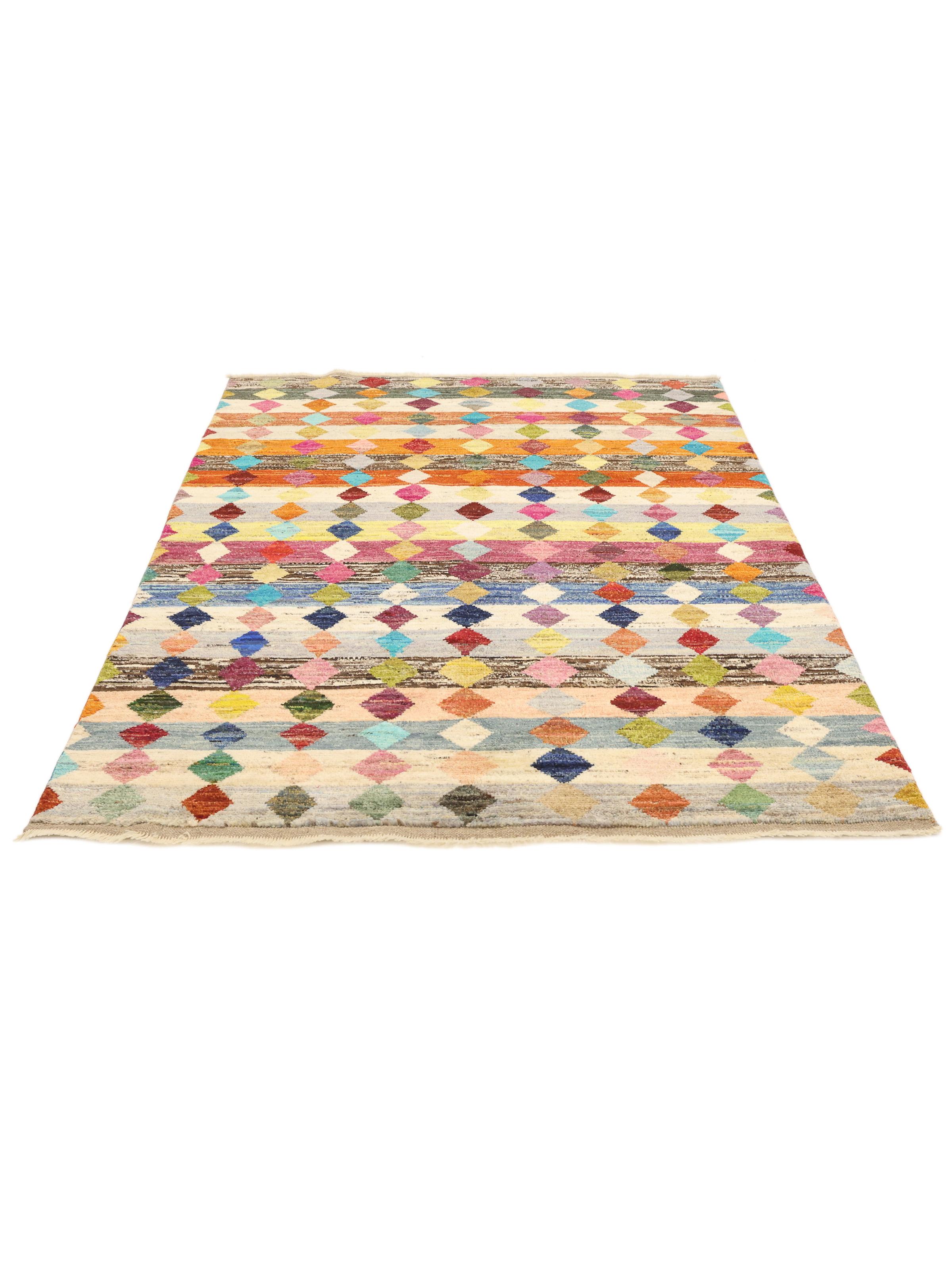
Berber-style rugs have a storied history that traces back to the nomadic tribes of North Africa, yet their influence has travelled across the globe, inspiring weaving traditions in diverse regions, including the mountain valleys of Afghanistan. These rugs were historically created by families for personal use, serving as vital household items that provided warmth in harsh climates and acted as colourful storytelling mediums.
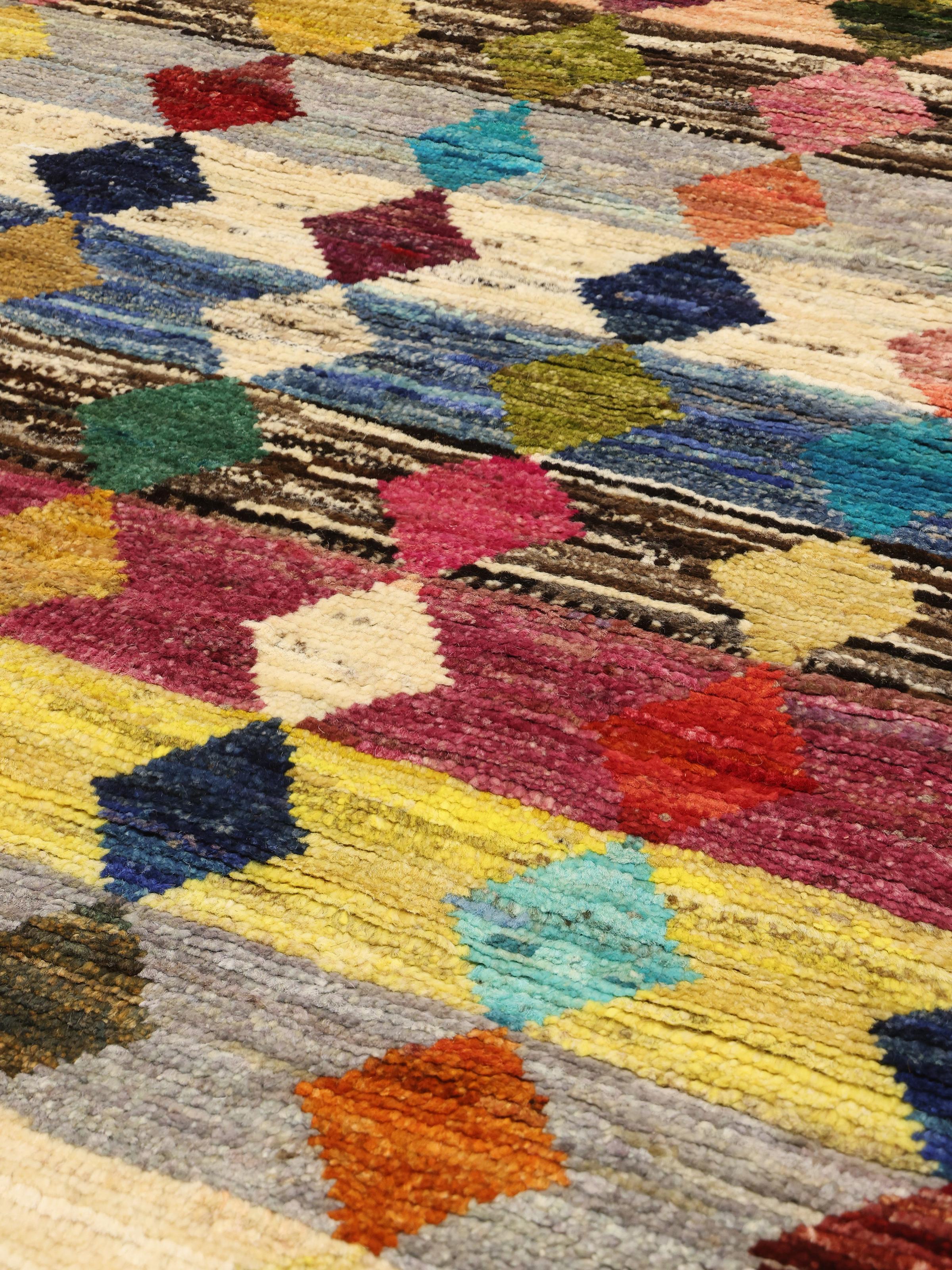
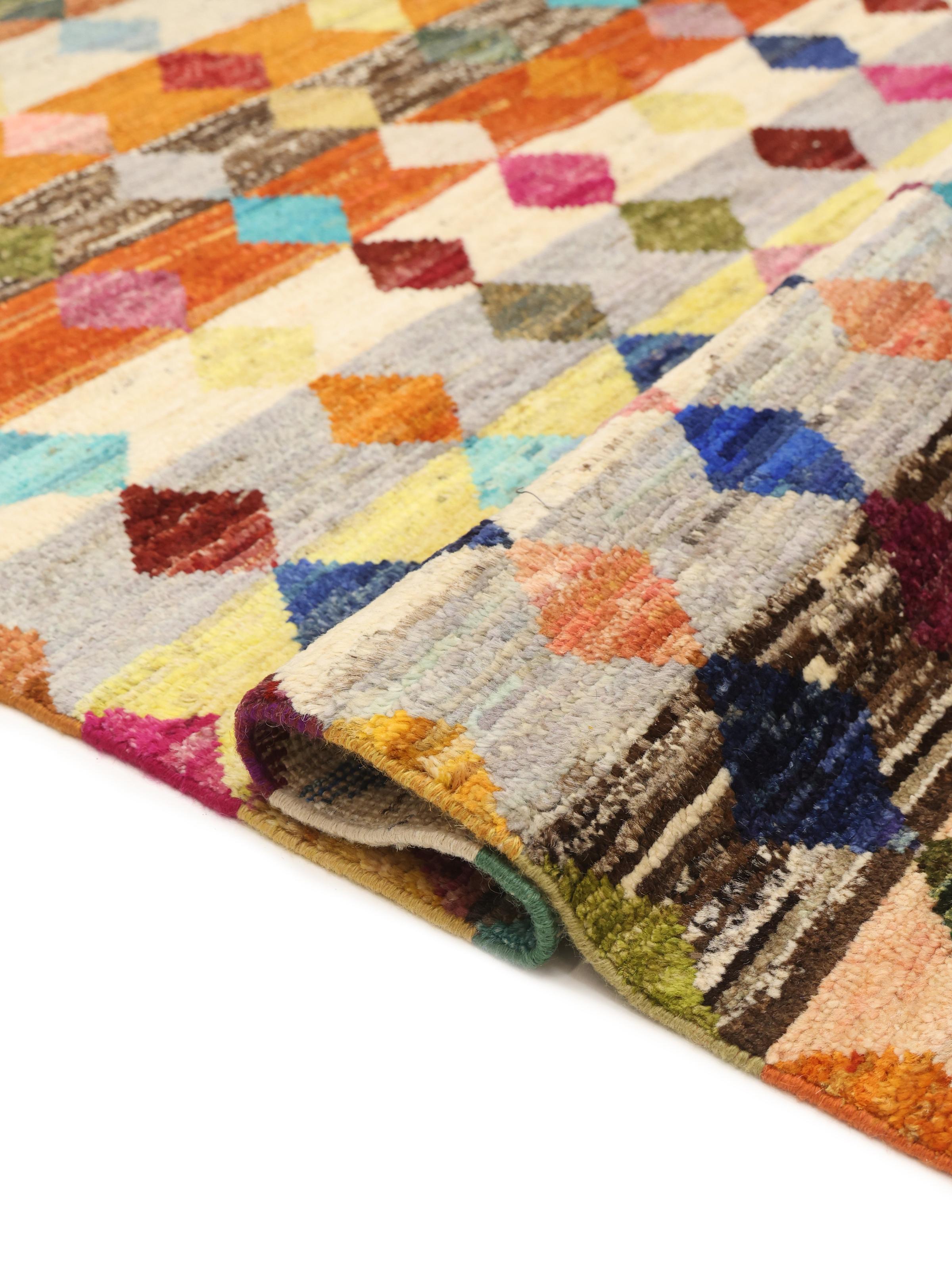
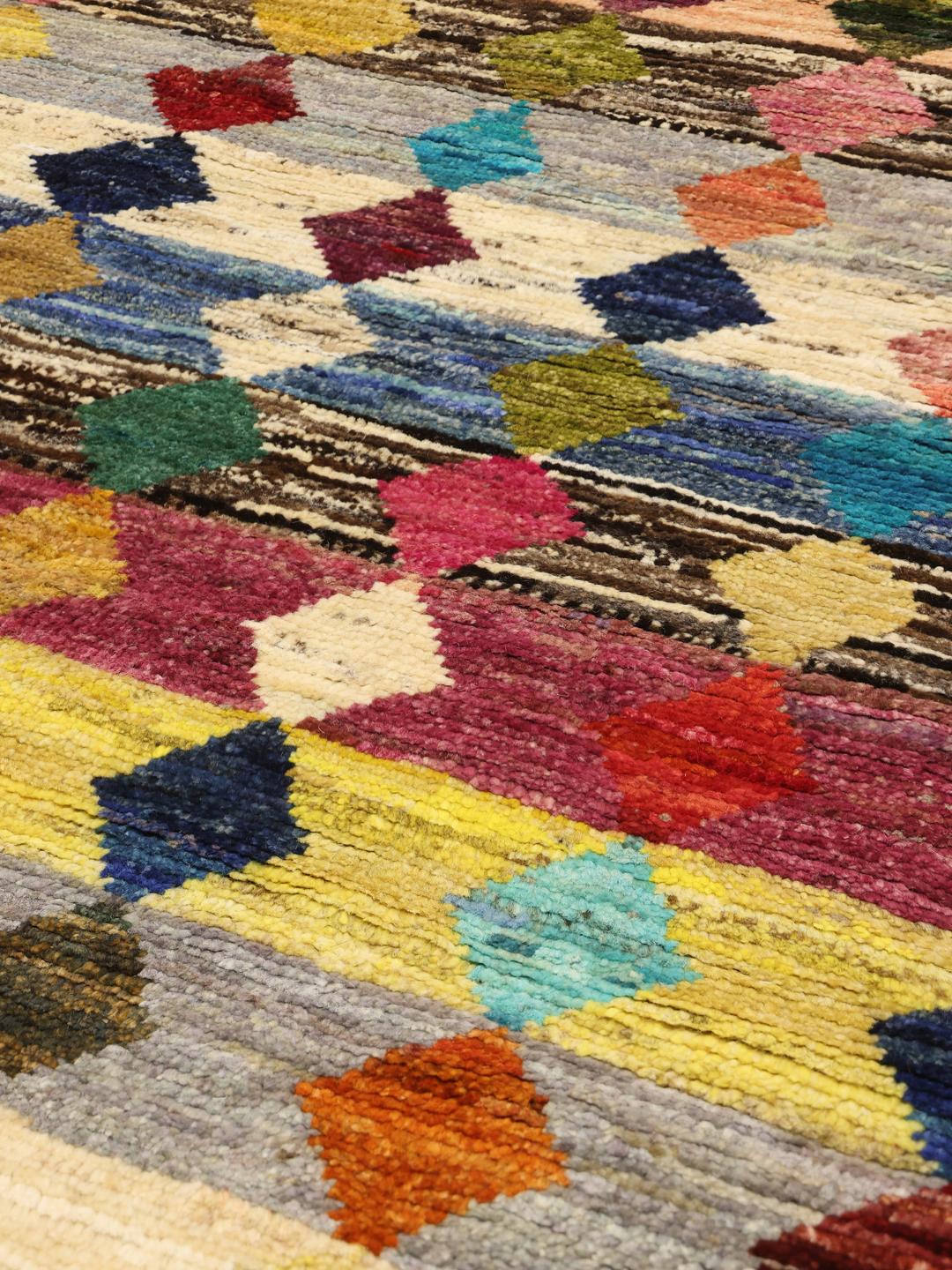
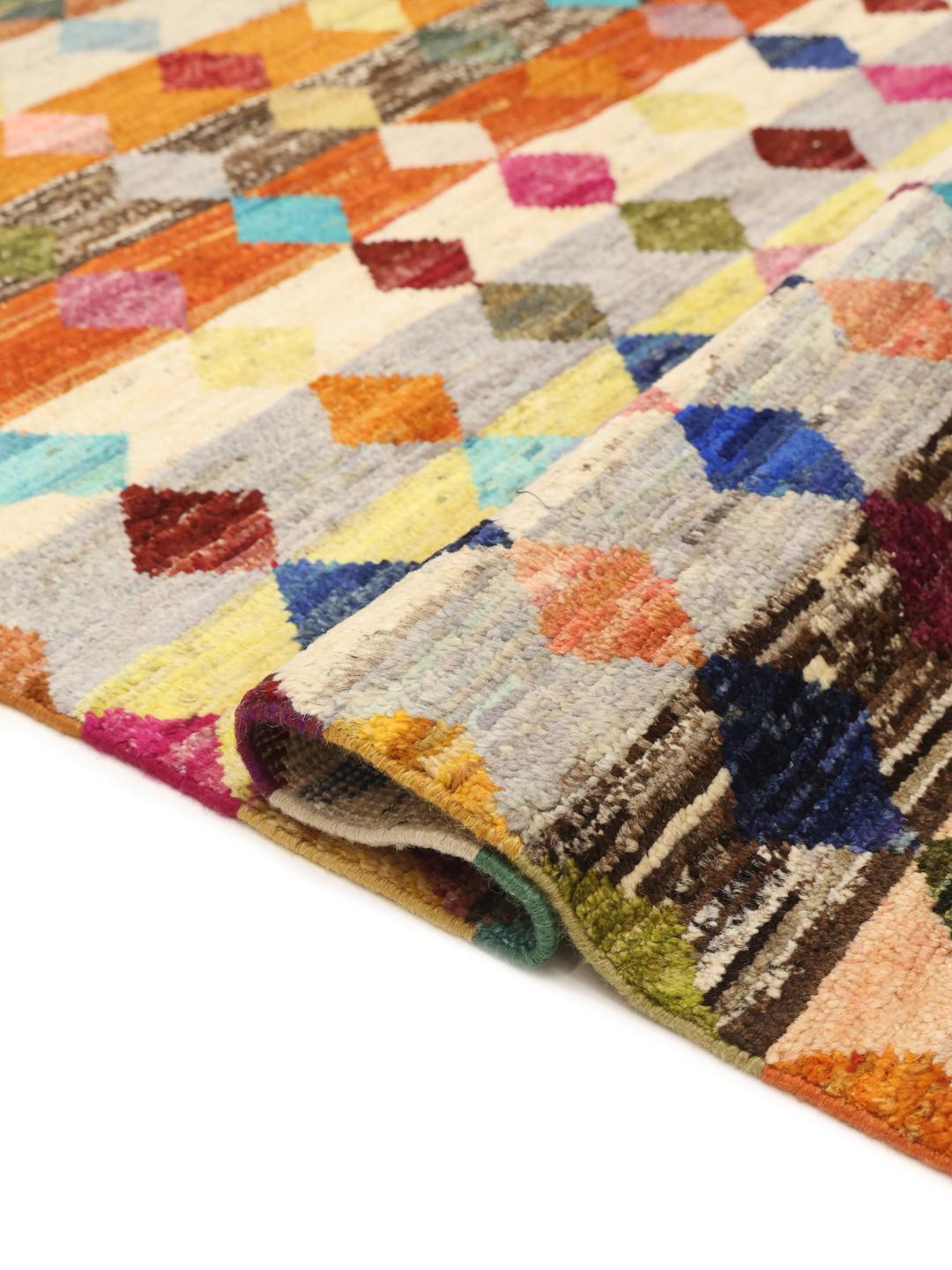
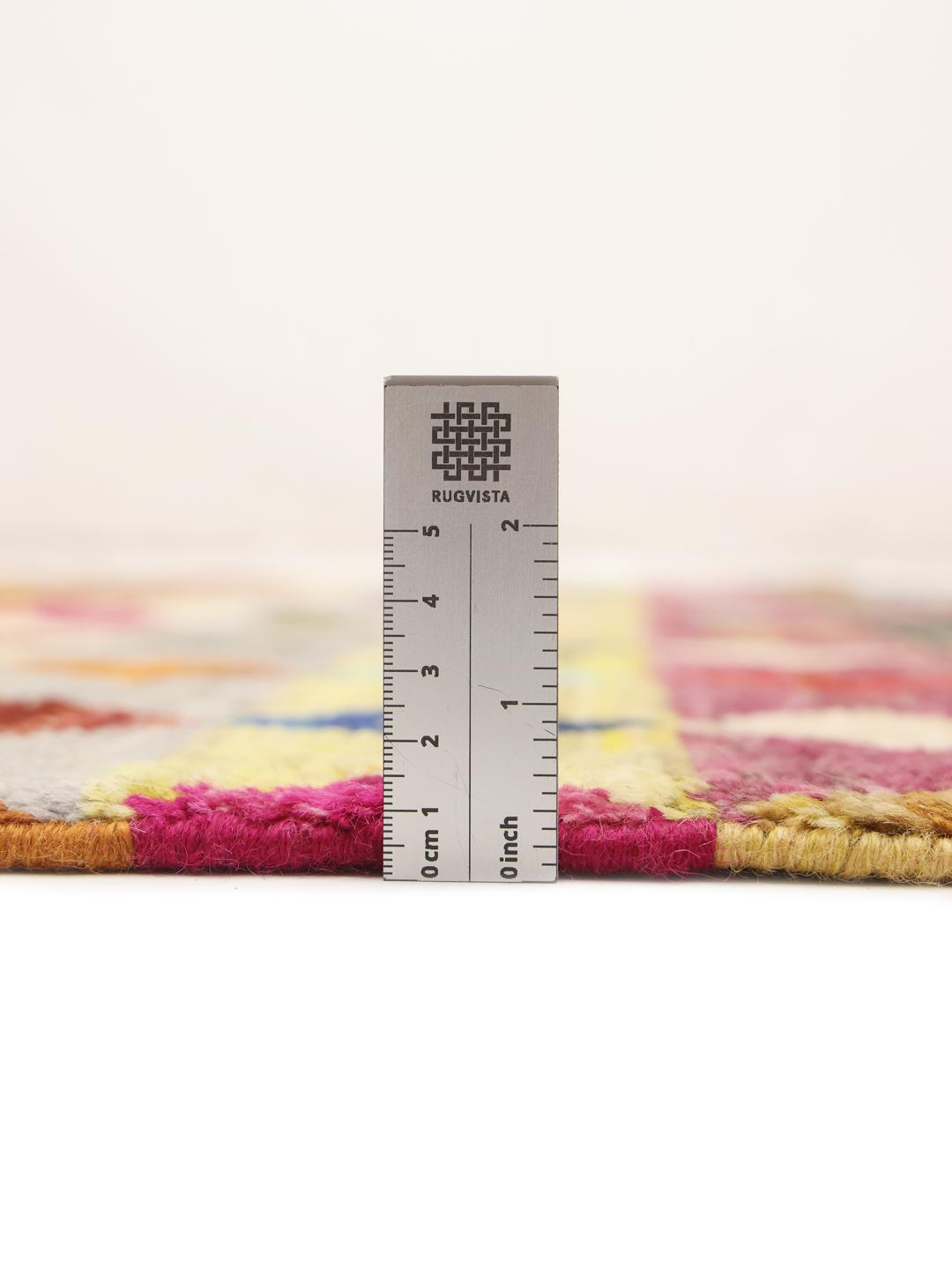
The construction of these rugs often utilises a high-pile weave, which is designed for maximum comfort and durability. The term 'hand-knotted' refers to the technique of securing individual strands of wool to the foundation, which is a hallmark of quality. This method ensures that the pile remains upright and dense, offering a level of resilience that allows the rug to withstand the foot traffic of a busy home while maintaining its soft, inviting texture.
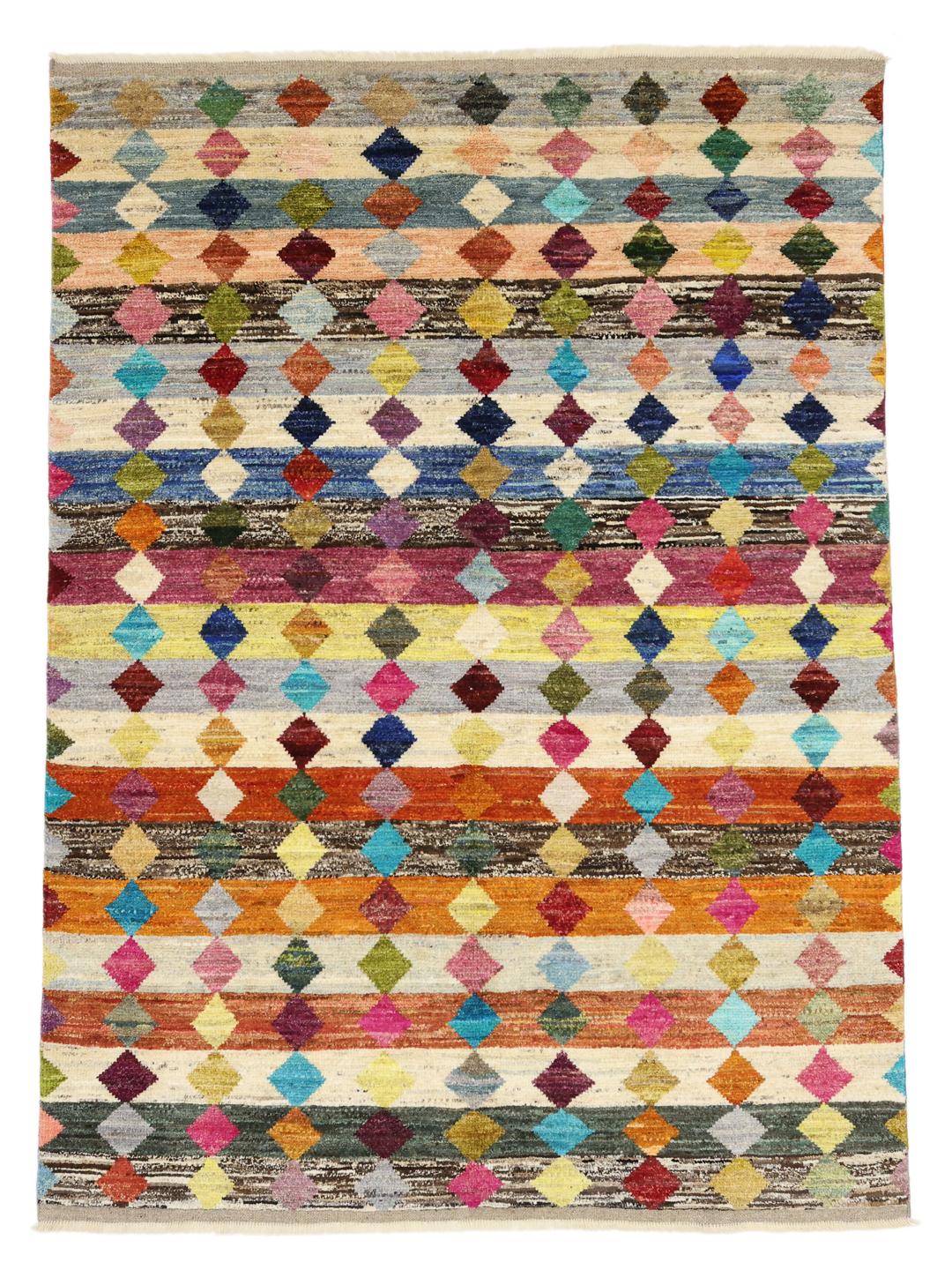
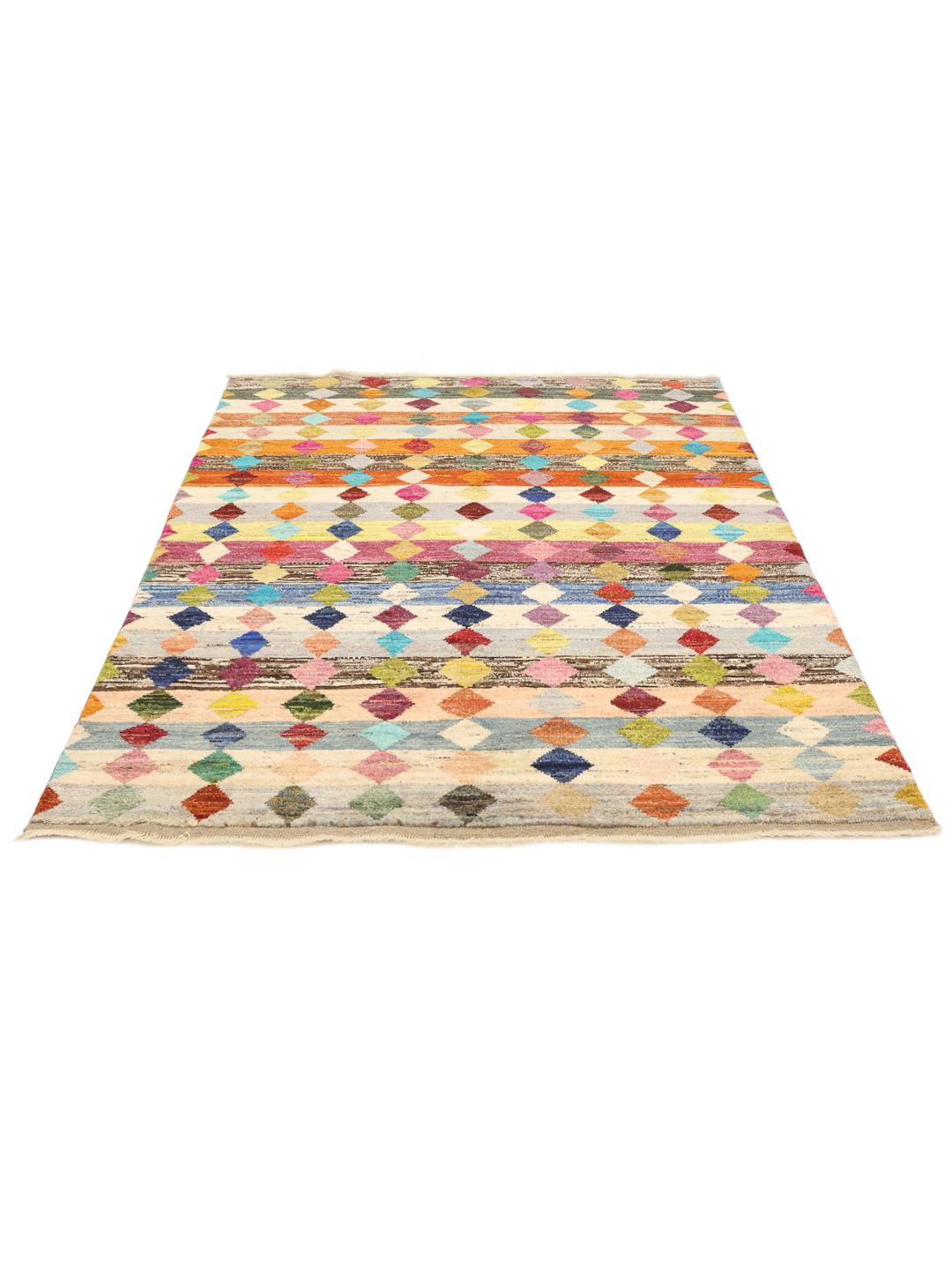
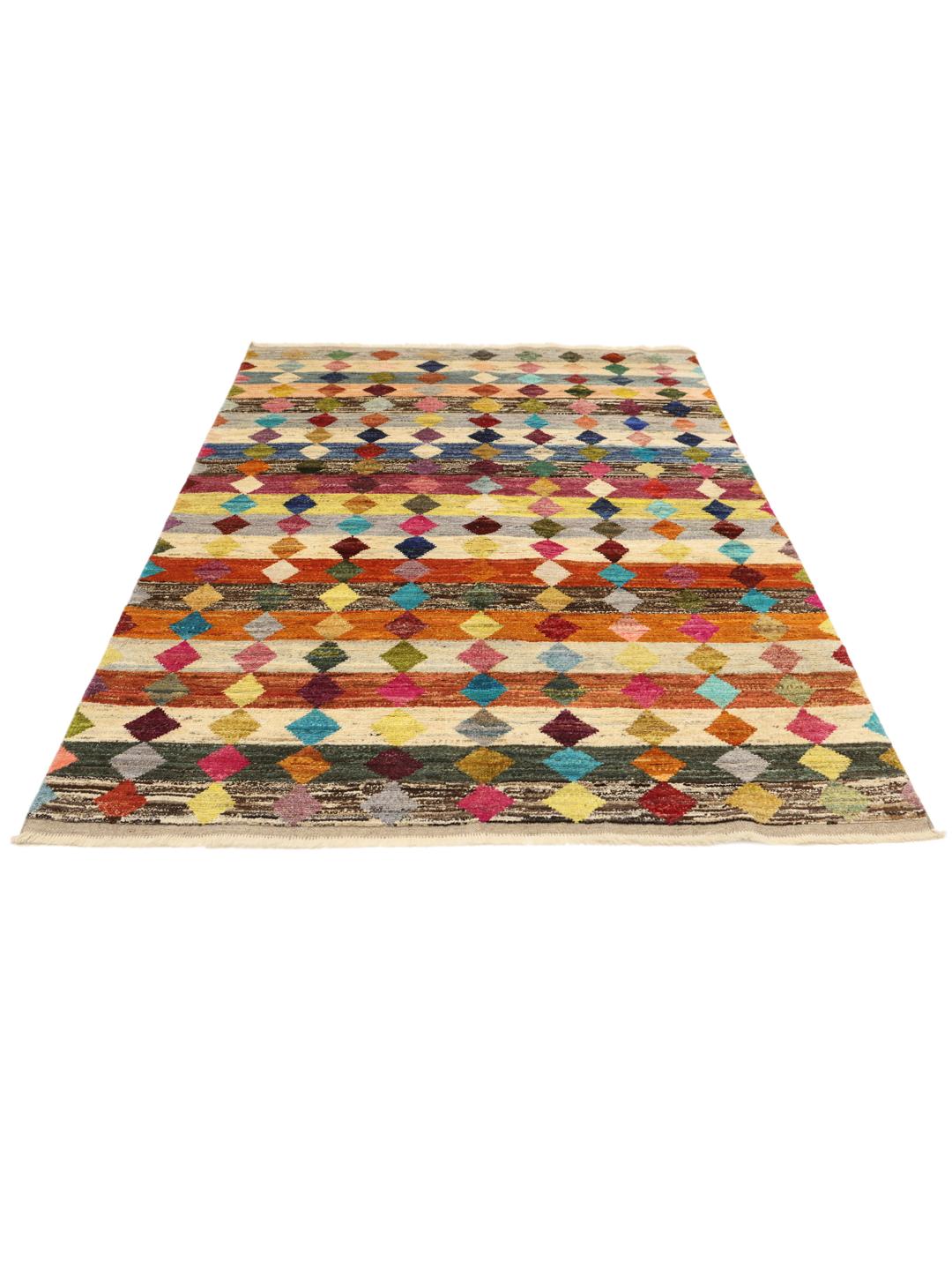
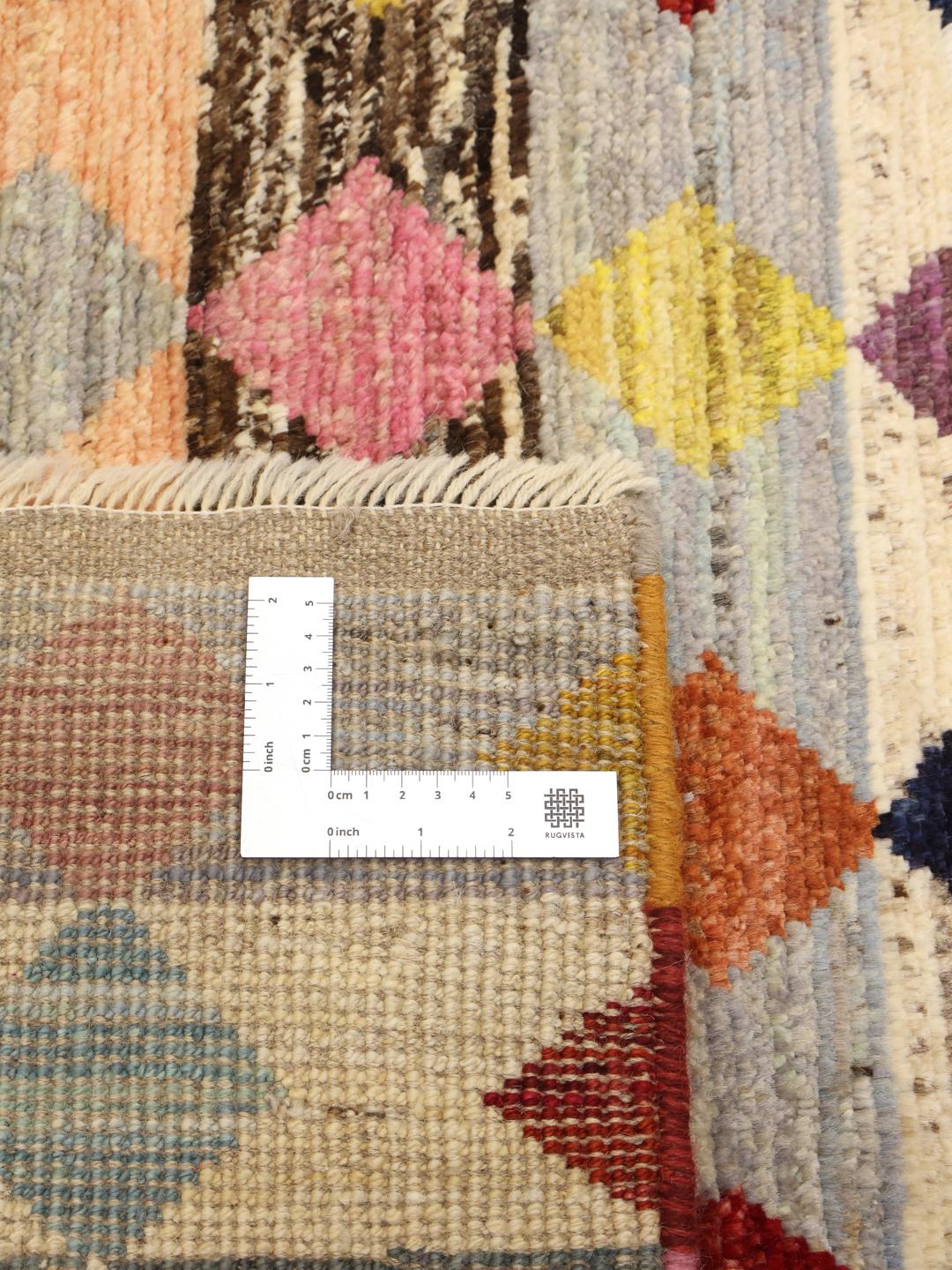
Visually, these rugs are defined by their use of geometric motifs and bold, earthy or vibrant colour palettes. The diamond pattern is a classic element, often symbolising protection or tribal identity, while the integration of stripes reflects a rhythmic, balanced aesthetic. This specific piece celebrates that tradition by combining a lively, multicolour scheme with a structured, repeating diamond layout, resulting in a design that feels both ancient and contemporary.
Owning a hand-knotted rug from this tradition is an investment in cultural heritage and individual skill. Collectors value these pieces not only for their visual impact but for the human connection they represent. By bringing such a rug into your home, you are continuing a long-standing practice of celebrating functional art that combines utility with a deep sense of place and history.