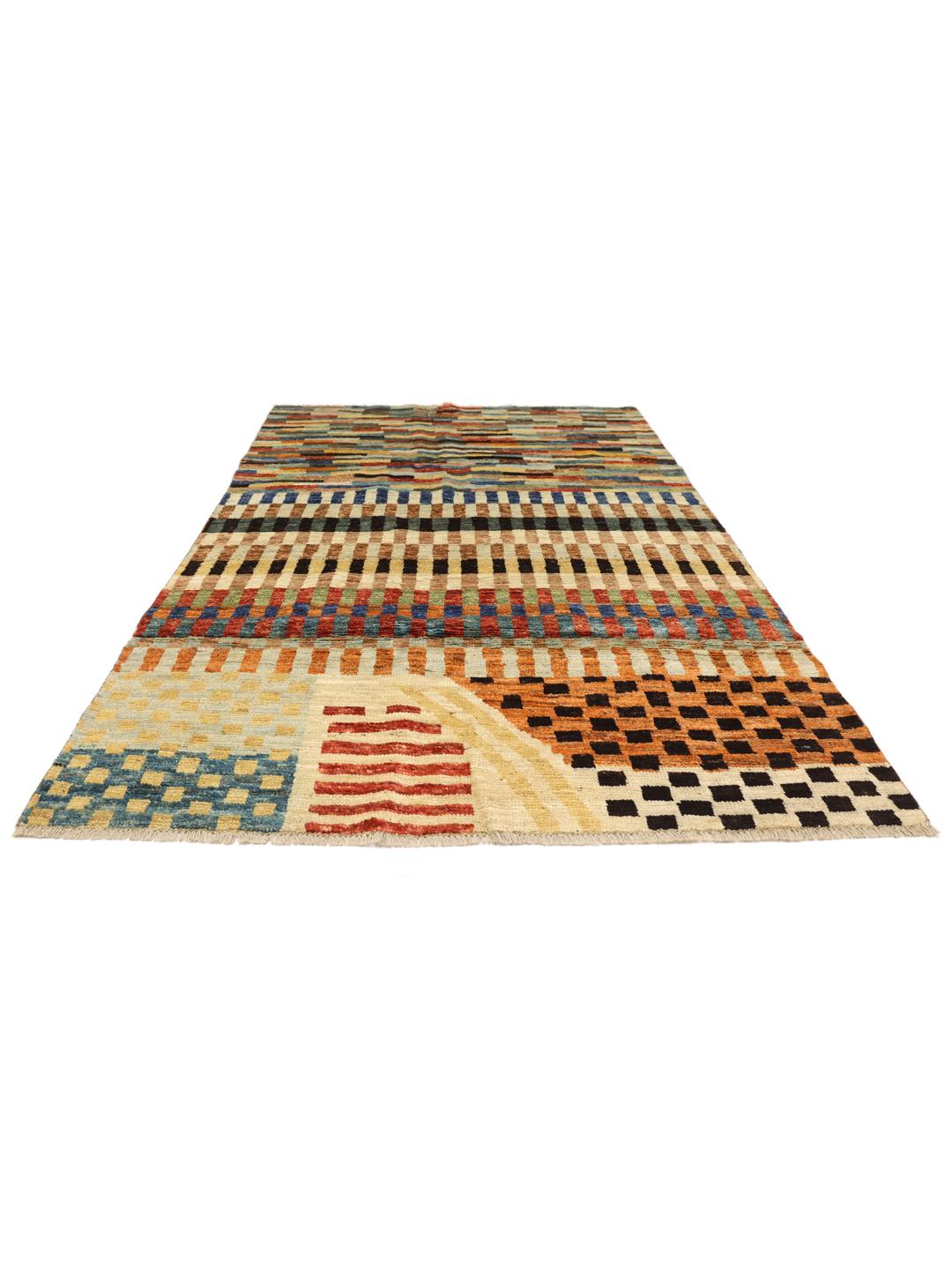
Berber-style rugs are deeply rooted in the nomadic traditions of mountain regions, historically crafted for warmth and utility in harsh climates. While the term Berber originally refers to the indigenous peoples of North Africa, the aesthetic has transcended borders, influencing weaving traditions across Central Asia, including the Middle East. Today, these rugs represent a fusion of ancient tribal motifs and modern artistic sensibilities.
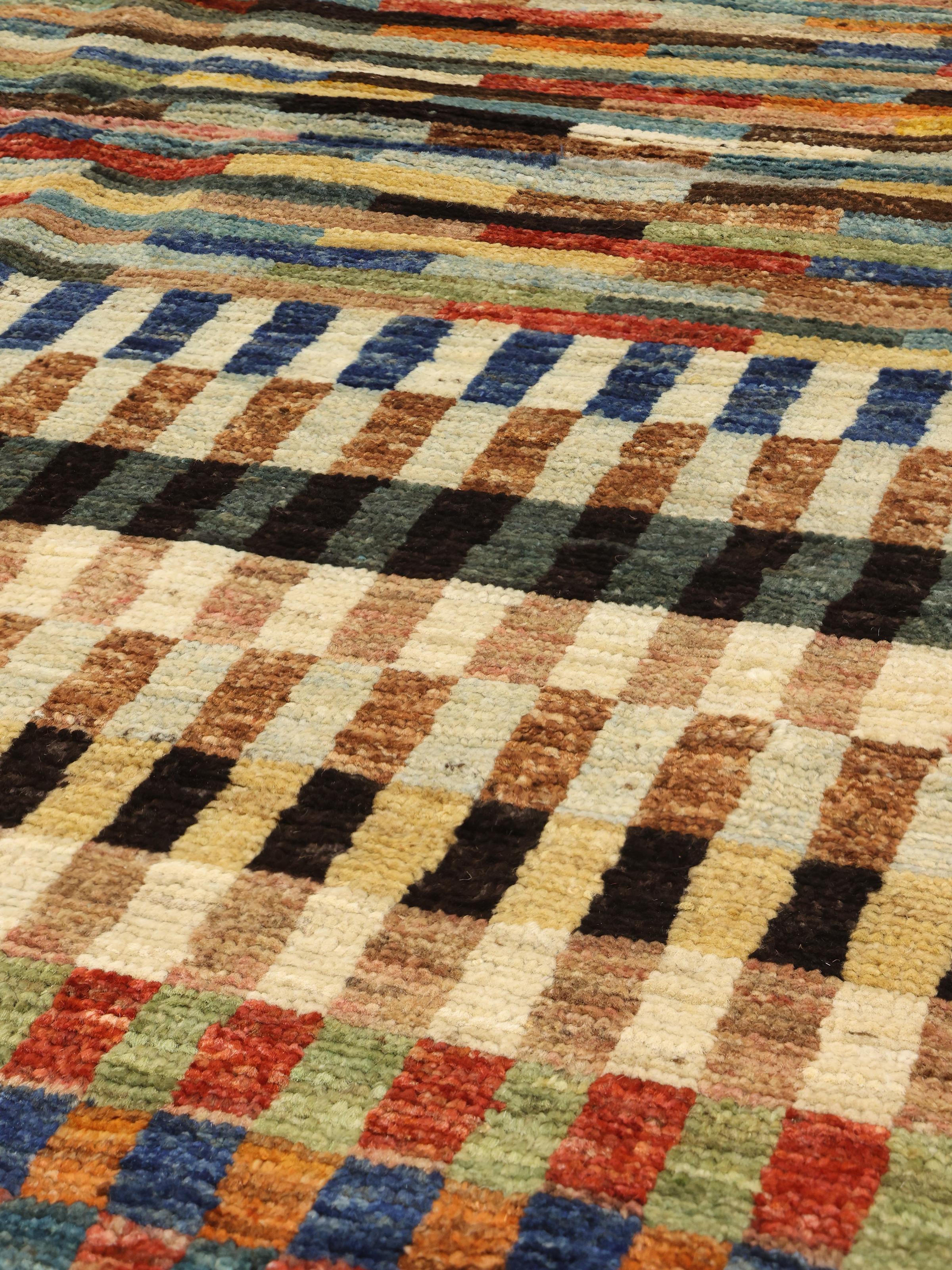
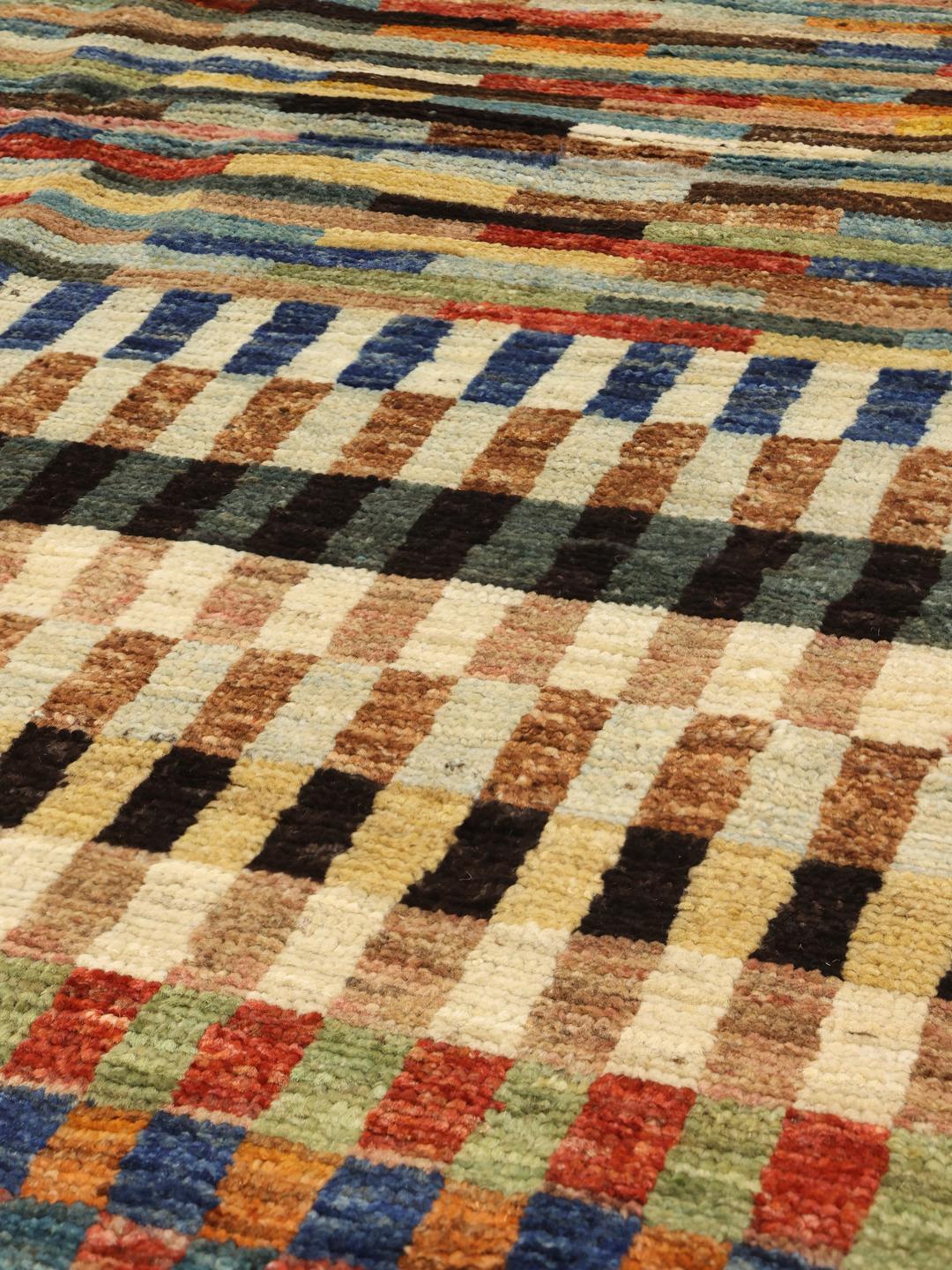
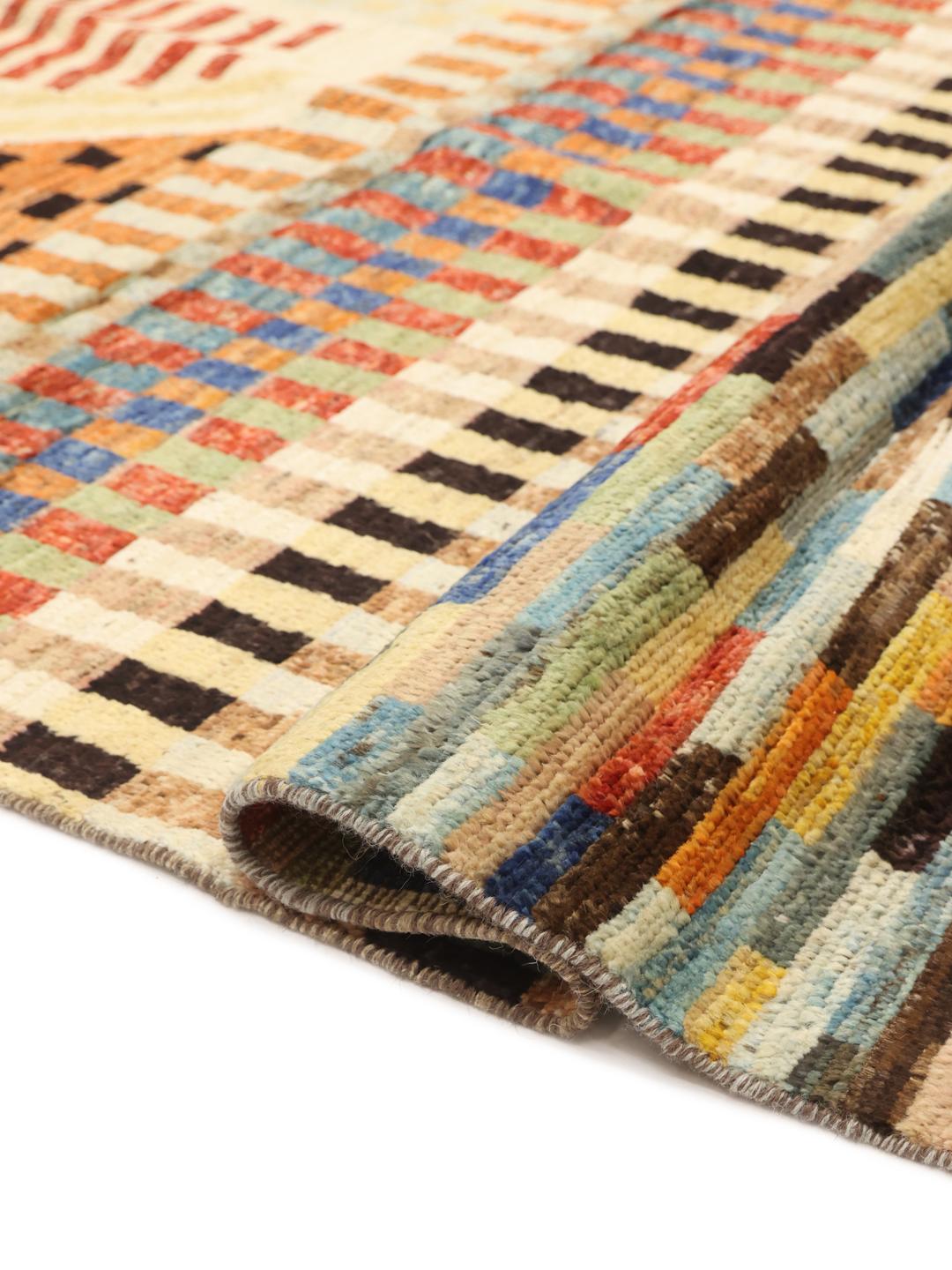
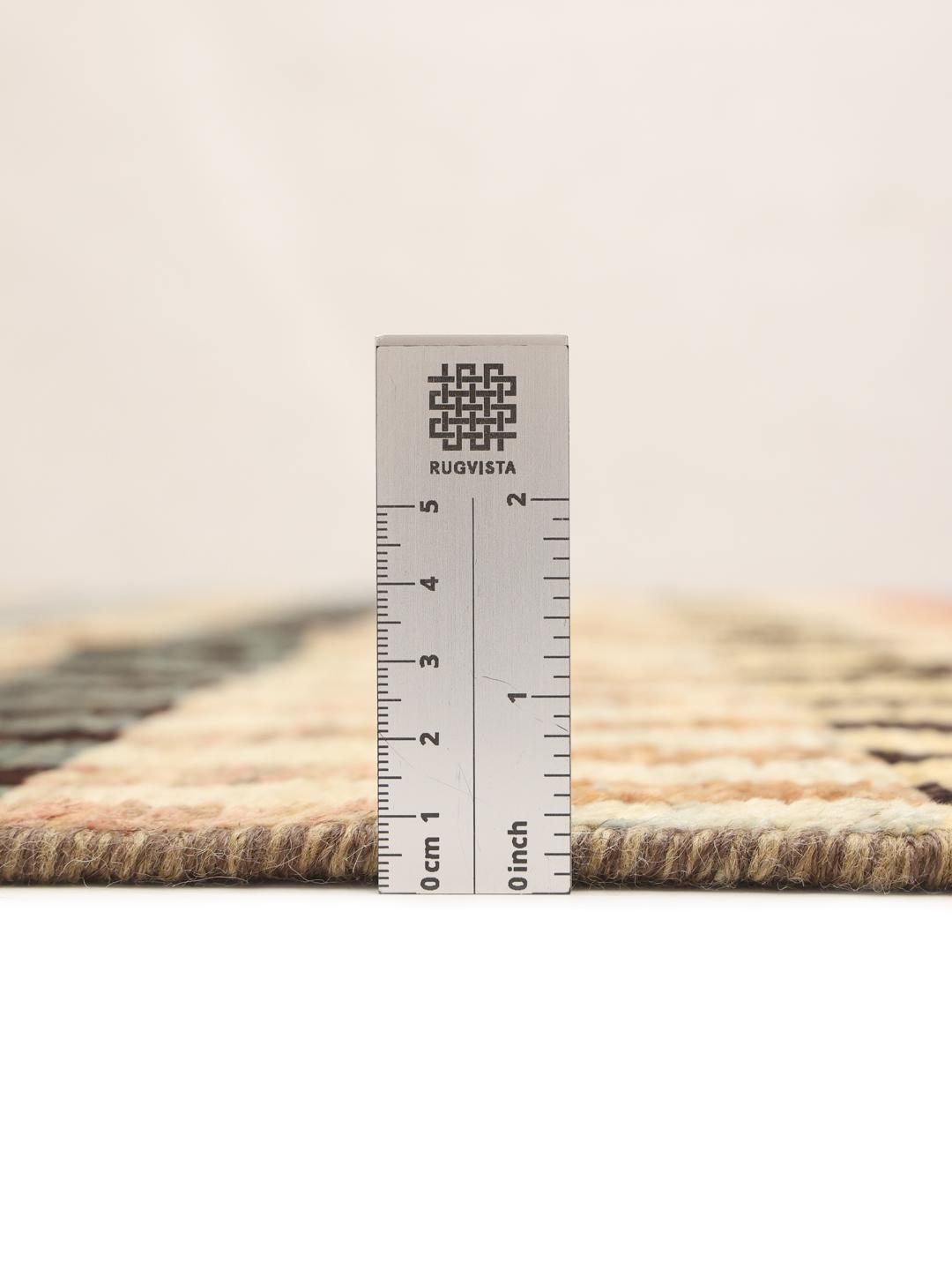
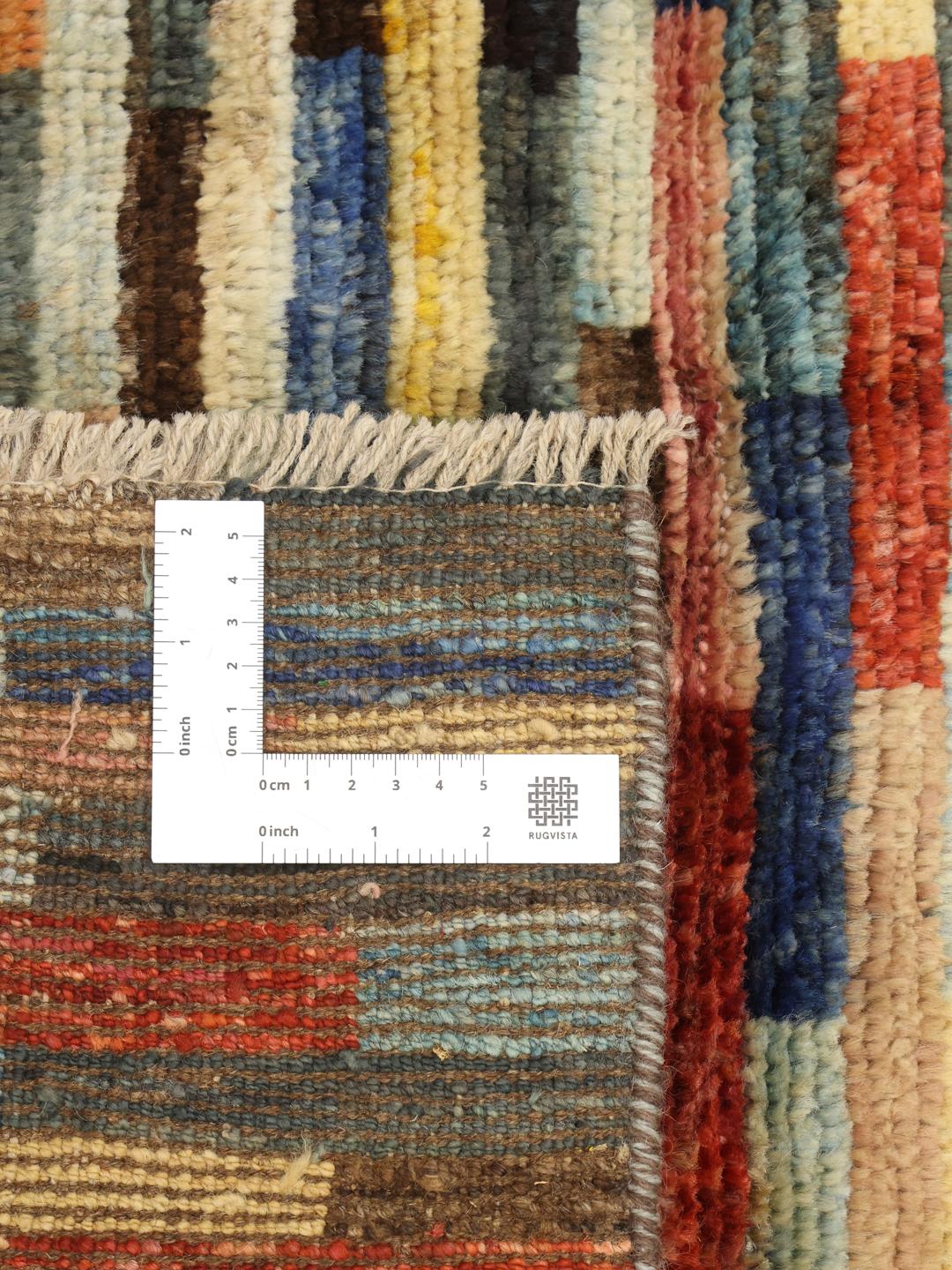
The term hand-knotted refers to the most prestigious method of rug creation, where artisans tie individual knots onto a warp and weft foundation. This technique is what distinguishes a true, lasting rug from others. The precision of the knotting process allows for the intricate geometric patterns seen in this piece, ensuring that the design remains sharp and defined while the pile remains dense and resistant to flattening.
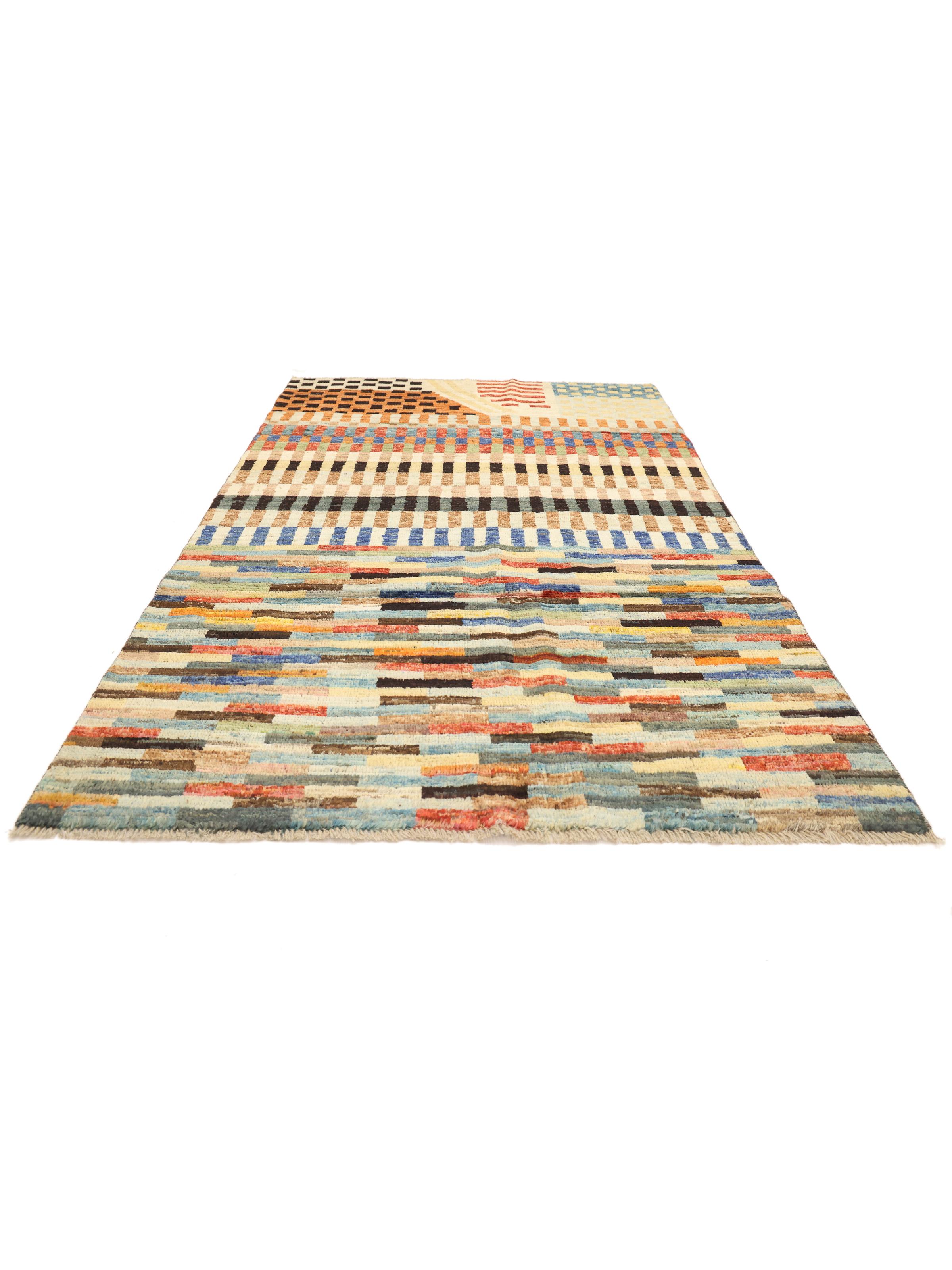
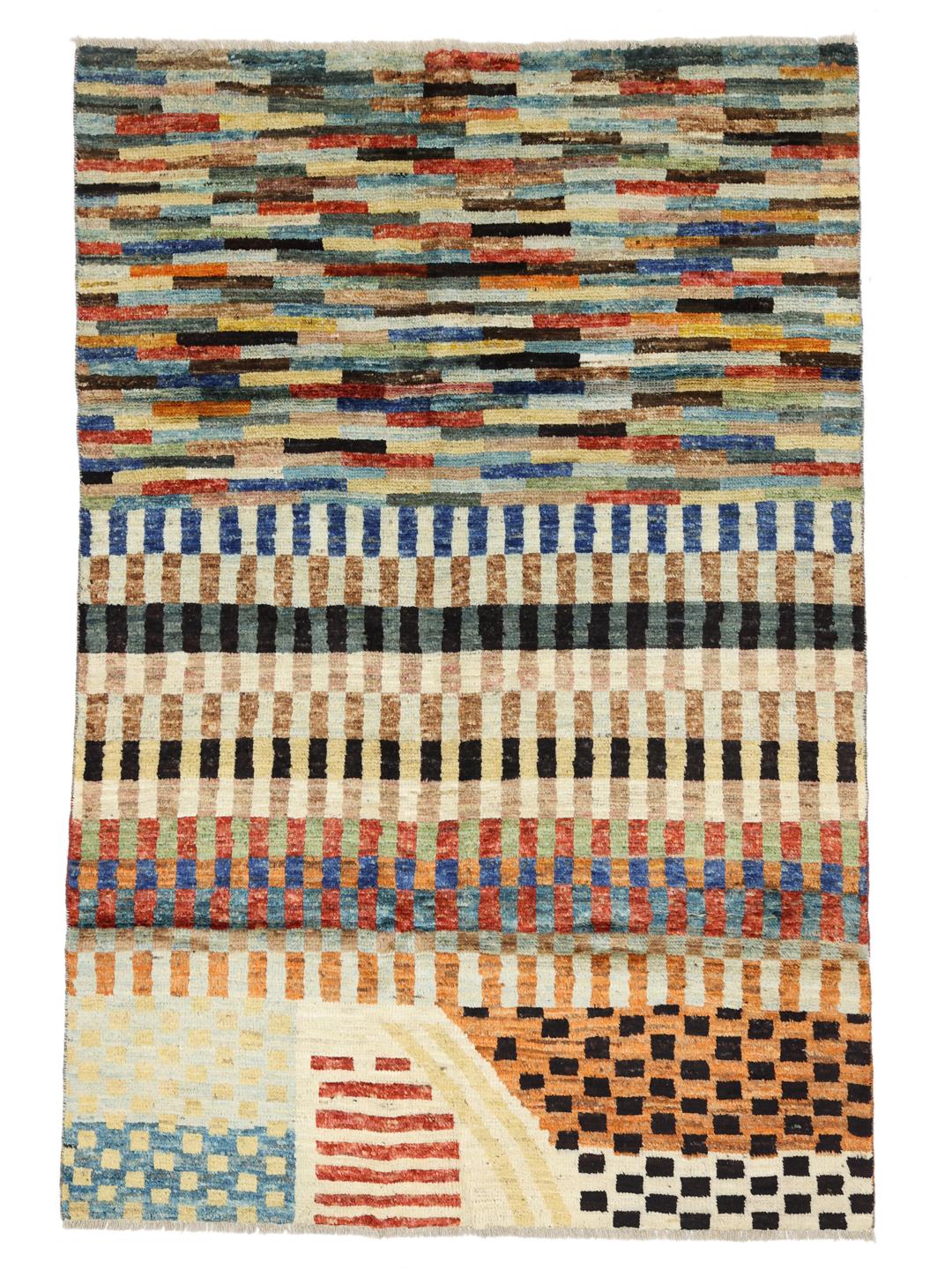
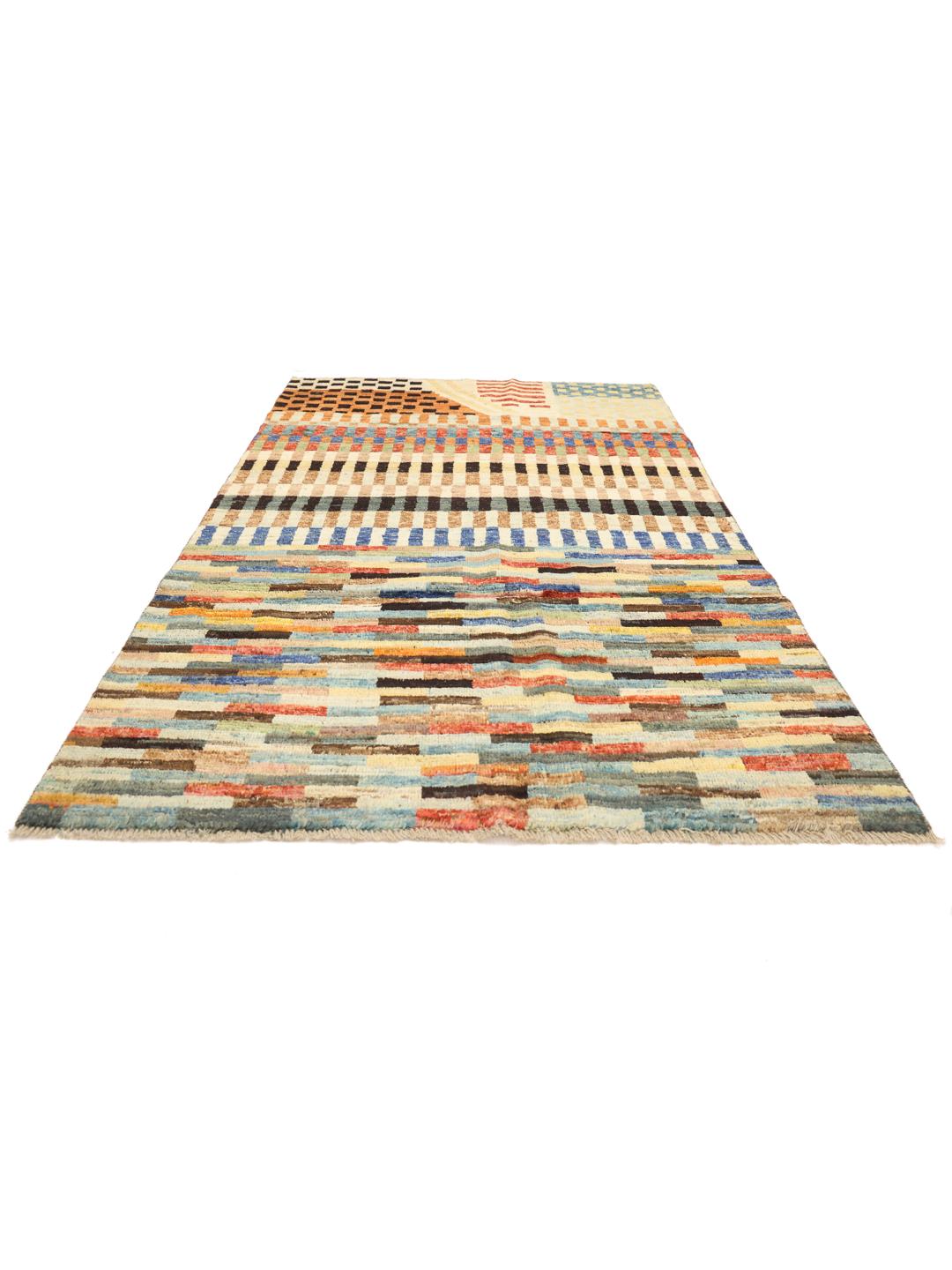
The visual language of this rug is defined by a bold, patchwork-like arrangement of shapes and colours. While traditional Berber rugs often feature muted, natural tones, this piece embraces a vibrant palette that reflects a contemporary approach to classic weaving. The inclusion of stripes and block patterns is a nod to the structural simplicity of traditional designs, reimagined here with an artistic, expressive flair.
Owning a hand-knotted rug from this tradition is a way to connect with a history of human creativity. These pieces are highly valued by collectors because they represent a marriage of skill and heritage that cannot be replicated by machinery. By choosing a unique rug, you are preserving a legacy of craft while adding a piece of cultural history to your personal sanctuary.